Singapore

New tool to help chart students’ social, emotional progress

by Ng Jing Yng, Channel News Asia  (June 13, 2013)

In line with the Singapore Ministry of Education’s efforts to implement a student-centred, values-based holistic education, it has put out a tender for vendors to develop an on-line tool to for students’ self-reporting of their socio-emotional competencies. The five areas of socio-emotional competencies to be measured are self-awareness, self-management, social awareness, relationship management and responsible decision-making. Teachers who were interviewed said that in order for the tool to be useful, the questions needed to be well-researched in order for them to yield meaningful findings about the child.

For more information:

Social and Emotional Learning (MOE)

Scanning the world: Alternatives to Public Schools

cape20.v033.i01.coverReports in both academic journals and news publications from around the world show that alternatives to conventional public schools, including migrant schools, private vocational schools, and unaccredited schools, have been a recent topic in the news as many countries try to meet the diverse needs and demands of growing populations.

In the latest issue of The Asia Pacific Journal of Education, Sang Kook Lee examines “Migrant schools in the Thailand-Burma borderland: from the informal to the formal.”  The article explores the existence of migrant schools and how they enable children to “have their own education even in the absence of proper legal status.” The growth of these schools indicate the building up of migrant education institutions. For example, since the mid-2000s, Thailand has supported migrant schools in an attempt to “regularize them as learning centers” under the guidance of the government. The article argues that government interest in these unaccredited schools does not indicate a victory of the state over migrants, and migrant schools; instead, they believe it shows the impressive growth of migrant education, which has “achieved recognition from the state as a legitimate formal institution.”

As noted in an earlier post, China has also addressed the issue of migrant schools; however, China decided to shut down the schools and change policy to allow non-native students to attend public schools. While some of these schools were deemed unsafe, parents lamented the loss of the private institutions that they believed their children to be both happy, and learning.

Recently, an article in The New York Times  titled “Trade Schools Offer Hope for Rural Migrants in China,” highlighted the issue of funding for private-run vocational schools operating in China. According to the article,

“While China has long had state-run vocational schools, critics say that they are bogged down by bureaucracy and overwhelmed by the huge number of youths who need training. Private enterprises like BN Vocational School can fill that gap, but only with the outside funding needed to be able to train poor students for free.”

Schools like BN Vocational School operate with support from charities, corporations, and both the Chinese and foreign governments.

Meanwhile, as reported in The Hankyoreh, in “More unaccredited schools popping up to offer international-style education,” South Korean parents have been paying exorbitant tuition rates send their children to unaccredited alternative educational facilities that provide an education that is “not recognized as regular schooling by the Ministry of Education.” Since these schools do not have to report what they teach or register with the government, they are not subject to regulations. Many focus on international education and immersive English education, and charge such high tuition that they are not available for low-income families. While some have called for the government to regulate the excessively high cost of these schools, the government is searching for ways to satisfy the demand for alternative education through public schools, and “help unaccredited alternative schools become places that can serve the interests of the entire public.”

Scan of news: Teachers

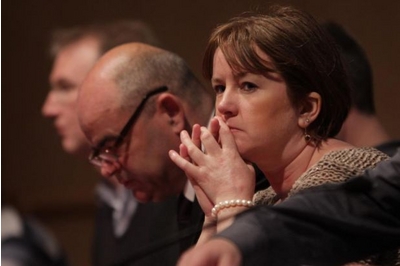
Scotland: Susan Quinn, Union president, highlighted members' concerns.

Scotland: Susan Quinn, Union president, highlighted members’ concerns.

Over the past month, reports from various countries have shown both the concerns of teachers and concern about teachers. For example, reports of teacher concerns include India and Argentina, where teachers are looking for reliable salary payments, decent facilities, and quality education for allFinland, where teachers are concerned about a sharp increase in violent student behavior in the classroom; and Greece, where teachers are fighting for the right to protest in the midst of austerity measures that threaten the country’s education system itself. Additionally, in Scotland teachers are protesting a new curriculum and an unmanageable workload.

Reports of concerns about teachers include Lithuania, where students recently outperformed teachers on an exam created by the European Union; Israel, where teachers’ lack of expertise in mathematics has been blamed for student difficulties with the subject; and Malaysia, where the Education Ministry plans to conduct diagnostic exercises to benchmark Science teachers in terms of their content knowledge and pedagogical skills in the field.

Scan of news: Access and Funding

Sources in many countries over the past few weeks highlight issues ranging from educational access and funding, to quality curriculum and government corruption. Here is a quick glimpse of what we’ve seen on the issues of access and funding:

Pia Philip Michael and Bridget Nagomoro visited the UK to discuss the challenges to girls' education in South Sudan. Photograph: Leapfrog Public Relations

Pia Philip Michael and Bridget Nagomoro visited the UK to discuss the challenges to girls’ education in South Sudan. Photograph: Leapfrog Public Relations

Reports have shown that the United Arab Emirates is struggling with the issue of high tuition and long student wait lists, while Singapore’s Senior Minister of State for Education has suggested that the government link educational subsidies with evidence of high quality. Australia and the Philippines seek to increase investment in educational research by launching a partnership that aims to raise the quality of education in the Philippines through investing in research to support K-12 education. Meanwhile, union leaders in Peru met to develop policies that would defend the right of indigenous peoples to public education. Sudan aims to keep young girls in primary school by involving officials in the effort to spread the national message on educating girls. India is about to launch the second round of the Right to Education Act admissions, which will include a reservation of 25% seats in private schools for disadvantaged groups; however, reports reveals that word has not yet reached parents who would benefit most from the new provision. 

India

CBSE introduces Contemporary Comprehensive Education

The Times of India (June 6, 2013)

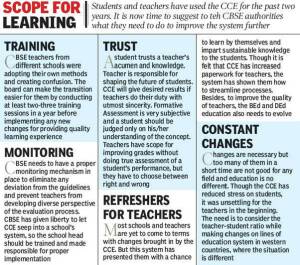
20453381.cmsThe Continuous Comprehensive Evaluation, introduced by the Central Board of Secondary Education (CBSE), was designed with the intention of reducing stress on students and evaluating them “in a more rounded way”; however, the system is being criticized for adding a layer of bureaucracy that reveals a distrust for schools and teachers, adding tremendous paperwork. Some say the process can be streamlined, and once members receive training the new process seems like less of a burden. Students seem to be heavily in favor of the system, which has turned the academic year into two semesters and, as one student said, “made even boring topics interesting through various projects.” Parents are also supportive, saying, “Students are not cramming notes like we had to. Their interpersonal and co-scholastic skills are better and they become better leaders.”

For more information:

A study on implementation of the Contemporary Comprehensive evaluation in upper primary schools of Kerala

Austria

Viennese reading test: Every Fifth Student Reads Poorly

Bernadette Bayrhammer, Die Presse (May 20th, 2013)

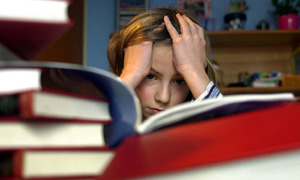
SCHULPSYCHOLOGEN-HELFEN-BEI-ZEUGNISANGST_1369933642716572The results of this year’s Viennese reading tests are similar to those of previous years – with a little bit of hope. Approximately one in five 10-to 14-year-old student is a poor reader. In elementary school, the group of pupils at risk has declined by two percentage points, and remained about the same size at the academic secondary school and lower secondary school. About 40 percent of students in grade 4 and grade 8 are good readers.

For the test, 15,000 children fourth graders and 16,000 eighth graders were tested the third time. In addition, students who had performed poorly in elementary school in 2012 were tested, and these students provide positive messages. Students who were particularly poor readers in the previous year and were promoted, did well this year: 60 percent reached a higher reading level, and about four percent are now even considered strong readers. For this reason, there is hope that special promotion can work.

For more information:

Educational Standards first tested in Primary School

Equality of access in math and science in Finland, Sweden, and the United State

In a recent paper presented at the American Educational Research Association, “Moving on up? A framework for evaluating equality of access in education, with illustrations from Finland, Sweden and the United States,” Jennifer von Reis Saari shared the results of a study of the ways in which schools in Finland, Sweden, and the United States, track students in math and science. In this post, von Reis Saari briefly describes some of the current concerns about inequality in Sweden and Finland, as well as some of the differences she has documented in the way these countries, and the US, approach tracking.

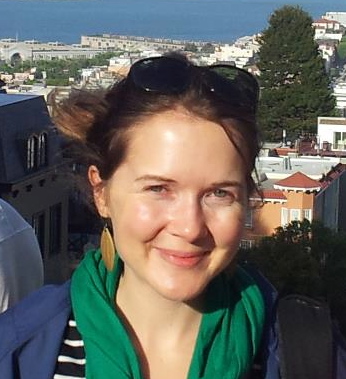
Jennifer von Reis Saari

Jennifer von Reis Saari

The recent riots in Sweden are drawing attention to how the assumption that Nordic countries, as well as their school systems, are equitable is oversimplified. Finland, for example, is often considered untracked.  However, visitors to Finland are sometimes surprised that the country has a system of competitive school choice at the upper-secondary level, after age 16.   In fact, despite the Finnish Minister of Education, Krista Kiuru’s resistance to the publishing of league tables of individual school performance, savvy students and parents are well aware of school rankings, and lists of upper-secondary school averages on national exams are published at the end of May each year. In addition, there is an increasing appetite for more differentiation and choice.  In neighboring Sweden, comparatively liberal school choice policies and the allowance of for-profit, publicly funded schools, have coincided with increasing social disparities in educational outcomes.  In a study of student persistence in mathematics and science, I found that students I surveyed and interviewed in both countries experienced ability grouping and tracking in mathematics and science during both compulsory school, and upper-secondary school. To characterize Finnish or Swedish school systems as equal, or un-stratified, obscures the ways these systems react to, and create, inequalities.

A closer look at the experiences of students I interviewed in Finland, Sweden, and the United States, however, highlights how critical aspects of these choice and tracking systems, such as the mechanism for allocation (the how, why, and when students choose, or are selected into, particular schools or tracks), the transparency of the system (how clear the different educational choices and their consequences are), and the permeability (the degree of mobility allowed between tracks and schools), can either promote or obstruct the pathways of students who aspire to careers in mathematics and science related fields. In particular, the Finnish education system can be described as more permeable than either Sweden or the United States; the Finnish secondary school students I studied could more freely choose advanced mathematics and science courses and tracks in contrast to their counterparts in Sweden or the United States.  They could make these choices even if they were not in advanced mathematics tracks before they reached the secondary level.   This seemed to result in a greater retention of passionate, interested students, particularly young men who may have struggled earlier in their school careers.

Focusing on permeability is important not only from a standpoint of equity, but also in terms of efficiency, for retaining and fostering skilled talent in STEM fields.   The lack of permeability of math and science tracks may be a particular concern in the United States, where the high cost of post-secondary education and widening disparities between universities and community colleges, which once served to increase opportunities for mobility, compounds lost opportunities during primary and secondary school. Fostering passion for mathematics and science among students may require structures that respond to increasing commitment and performance by providing clear, built-in pathways for upward mobility.

For more information:

“Equity trends in the Swedish school system: A quantitative analysis of variation in student performance and equity from a time perspective”

“School choice and its effects in Sweden”

“Middle class children’s choices to avoid local schools”

“Tracking Effects Depend on Tracking Type: An International Comparison of Students’ Mathematics Self-Concept”
 

Instructional Practice in Singapore in Review of Education

coverThe most recent issue of Review of Education: An International Journal of Major Studies in Education, includes a study that explores how Singapore has been able to achieve a relatively high level of school success in recent years. In “Assessment and the logic of instructional practice in Secondary 3 English and mathematics classrooms in Singapore,” authors David Hogan, Melvin Chan, Ridzuan Rahim, Dennis Kwek, Khin Maung Aye, Siok Chen Loo, Yee Zher Sheng, and Wenshu Luo, draw on data collected in 2010 to analyze methods of instruction in secondary math and English classrooms that range from the more traditional models, which focus on memorization and tight control over student behavior, to the more student-centered models, which focus on comprehension and collaboration. The authors argue that teachers in Singapore draw from a variety of instructional practices, and that national high stakes testing has both shaped and constrained what teachers can do in the classroom.

Japan

Interview with the Minister of Education

Ministry of Education, Culture, Sports, Science, and Technology (May 7, 2013)

Japan's Education Minister Hakubun Shimomura. REUTERS photo

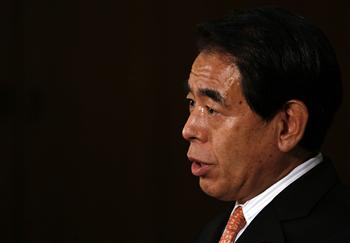
Japan’s Education Minister Hakubun Shimomura. REUTERS photo

Mr. Shimomura, the Minister of Education, Culture , Sports, Science, and Technology, has just returned form his visit to European nations. Reflecting on his tour, he commented on the urgent necessity of shifting the paradigm of Japanese language education abroad. In the past, the target population of Japanese language education abroad was children of Japanese citizens, who intended to return to Japan in the near future. Recently, there has been an increase in the number of Japanese children who are not planning to return to Japan. Many of these children are biracial, having a Japanese parent who hopes to instill and nurture his/her children’s identity as Japanese. In response to this need, the MEXT will generate an plan on how to spread Japanese language education globally.
In addition, the MEXT plans to suggest other nations to teach Japanese in public schools. For example, the UK, has a plan of teaching seven foreign languages in elementary schools soon. However, in the current plan, Japanese is not included as one of those seven languages. The MEXT will communicate the ministry of education in the U.K about how important it is to teach Japanese to prepare global citizens, who can contribute to the world economy.

For more information:

Council proposes lowering age for English education

Japan’s ambitious proposals for higher education and language sectors

LDP takes aim at English education, seeks to boost TOEFL levels

Professional Learning Communities and Collaboration

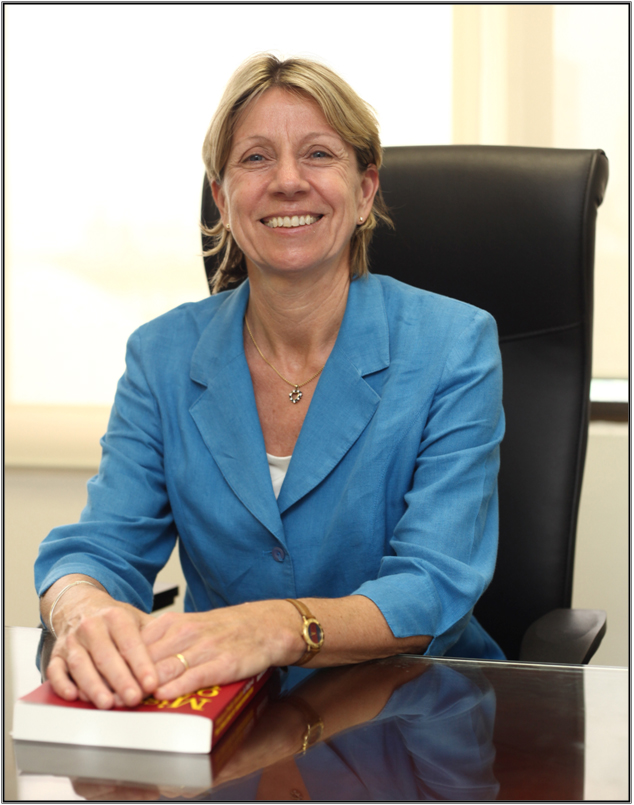
In “Leading educational transformation in Asia: Sustaining the knowledge society,” recently published in the Asia Pacific Journal of Education, Alma Harris, Michelle Jones, Sailesh Sharma, and Sathiamoorthy Kannan explore the role of professional learning communities and professional collaboration in developing and sustaining the knowledge society. In this post, Harris, currently the Director of the Institute of Educational Leadership at the University of Malaya, briefly describes how several different countries are approaching work on professional collaboration at scale, some of the issues currently being debated, and what to look out for in the next few years.

Professor Dr. Alma Harris Director Institute of Educational Leadership University of Malaya

Professor Dr. Alma Harris
Director
Institute of Educational Leadership
University of Malaya

Professional collaboration is increasingly being used in various countries to raise the performance of teachers and to improve student achievement and outcomes. Different countries are inevitably approaching this in their own way but the common denominator factor is inter-dependent professional learning. In some countries, like Singapore, Wales, Finland, and parts of Canada (e.g. Ontario), professional collaboration, in the form of professional learning communities, is a mandated part of the school reform process supported at the Ministerial level. In other countries such as Russia, Australia and Malaysia, professional collaboration is being promoted as a means of improving teacher quality and maintaining the highest standards but is not yet a national expectation.

The debates about professional collaboration range from discussions about the best models to follow, about the time and resources available to support these activities, and the issue of impact. It is important that countries investing in professional collaboration see a return on their investment in terms of better learning and better teaching.

In the next few years, it will be important to look out for how countries that engage in collaborative professional learning fare in international comparisons of educational performance like PISA, PERLS and TIMMs. Looking at high performing systems like Finland,Ontario, Shanghai, Hong Kong, and Singapore, that all invest in collaborative and focused professional learning, it would suggest that this is a potentially important and powerful lever of educational change and improvement.