Scan of Ed News: 5/1/13 – 5/15/13

International-Travel-Agency-262545-262545-1soOver the past two weeks, reports in the news have revealed that many countries around the world are addressing issues of curriculum, and teacher and student protests.

Curriculum:

Upon surveying primary teachers, the Scottish government has discovered deep concerns over the level of resources the government will provide to support the new Curriculum of Excellence. In Denmark and France, academics are concerned about plans to teach in English, yet Malaysia is introducing new English tests for young teens. The French government plans to give children lessons on “dignity, freedom and equality,” while in Japan and Russia, debate rages over the content of history textbooks.

Protests:

On April 2, Danish teachers were “locked-out” of school by the Social Democratic Party government because they rejected demands that they work extra teaching hours. With nearly 69,000 teachers barred from classrooms, 900,000 students could not go to school for almost one month. As a result, Denmark saw teacher protests and a recent survey revealed that Danish teachers have lost faith in their government.

In Chile, students have been protesting private universitiesfighting for an improved and free education, which has led them to be called  a “generation without fear.” Meanwhile, teachers in Mexico showed their anger with recent state education reforms by storming the offices of four different political parties. Spain’s education community is planning a peaceful strike for May 9th in rejection of the Education Ministry’s reform plans.

Scan of Ed News: Testing

Since 1995, children have been required to sit literacy and numeracy tests in their last year of primary school. Photograph: Martin Godwin for the Guardian

Since 1995, children have been required to sit literacy and numeracy tests in their last year of primary school. Photograph: Martin Godwin for the Guardian

Over the past month, a number of reports indicate a variety of concerns about testing around the world.  For example, Israel’s new Education Minister, Shai Pironhas decided to introduce reforms that would de-emphasize testing in order to “promote learning.” Similarly, China is taking small steps towards allowing educators to have input in test design (as opposed to government only). In contrast, the British government is acting in opposition to educators and parents to fight off an unprecedented alliance of hundreds of students, schools, local councils, and teaching unions, who brought a legal challenge over last year’s GCSE English exam grades. UK teachers are also protesting primary literacy exams, which they say leave little time for art, music, and books, and make children feel like failures. Chile has announced sweeping changes to the country’s university entrance exam, which has received criticism for flaws and bias; however, the concern in this case was not raised by educators and parents, but by Pearson, a company that describes itself as a leading provider of test development, processing and scoring services to educational institutions, corporations and professional bodies around the world. Pearson’s analysis revealed significant flaws and bias in the design of the exam.

In Singapore, surveys recently revealed that many educators and parents feel that students experience too much testing and a report on a recent visit by Dr. Dennis Shirley highlighted his suggestion that  the task of student assessment be handed over to the teachers, so that they can design their own modes of testing.  While the Singapore government has proposed several initiatives aimed at strengthening efforts to help every student succeed, none yet include substantial modifications to testing. While it might seem that the decision made by five schools in the town of Alesund, Norway, to change the date of the midterm exams so that students could attend a Justin Bieber concert in Olso, was an effort to modify testing to meet the needs of the students, it was also one for which officials saw no alternative. As one principal explained, they expected Mr. Bieber’s show would lead to sparse classroom attendance. “We considered that this was a battle that we could not win this time,” he said.

Norway

“Halvorsen get both praise and criticism for school reform”

NTB, Dagen (March 15, 2013)

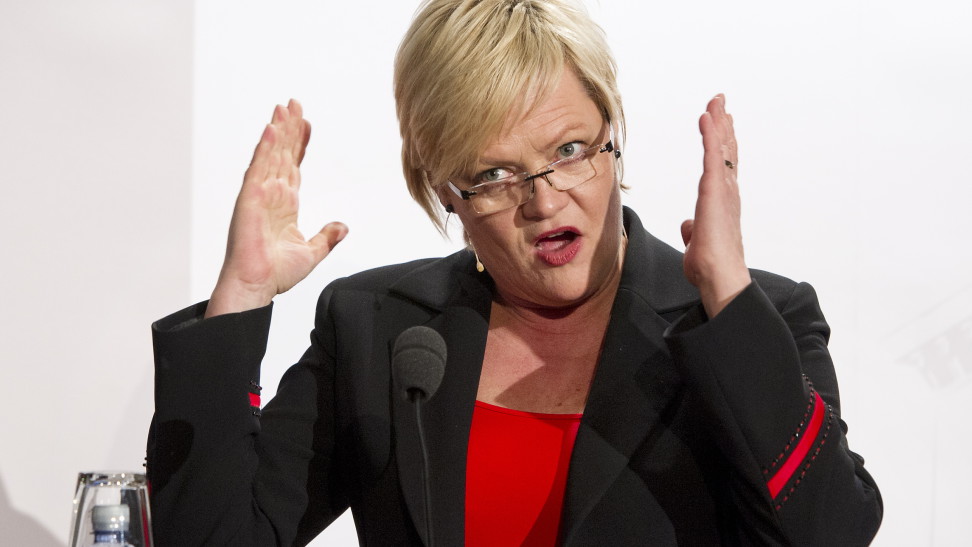
Minister Kristin Halvorsen get much praise even from opposition parties, the message of reform in secondary school. The image is from the University of Bergen, where she presented the research report last week Photo: Marit Hommedal / NTB Scanpix

Minister Kristin Halvorsen get much praise even from opposition parties, the message of reform in secondary school. The image is from the University of Bergen, where she presented the research report last week Photo: Marit Hommedal / NTB Scanpix

On March 15th, the government of Norway released a white paper report proposing that education be made more practical and relevant. The report, titled “On the Right Path: Quality and Diversity in Public Schools,” calls for students to have greater freedom to move subjects between grade levels, and between academic and workplace settings. Vocational education is under review for ways in which it can produce students who are better prepared for professional work, thereby yielding a greater impact on the labor market. In order to ensure that the curriculum meets the needs of the students, the government will appoint a committee to assess the extent to which today’s school subjects cover competencies and skills the students require.

In addition to vocational training, the government aims to focus on issues related to multicultural diversity of the population, such as bilingualism, by teaching democratic principles such as tolerance and inclusion, and introducing early intervention for children in kindergarten programs tailored to their needs. In particular, nursery staff will need to have expertise in multilingual education, and teachers will need to be prepared to introduce Norwegian as a second language and adapt instruction in all subjects. Newly arrived students of all ages will be assessed for language skills and receive customized training programs on the primary and secondary level. In addition, newly arrived adults who do not speak the language will be eligible for prolonged second language training.

The latest calls for improving the educational system in Norway follow a series of reforms over the past ten years that included the development of national tests and other means of monitoring the performance of the educational system.  While that emphasis reflects rising demands for accountability around the world, in an article in the latest issue of the Journal of Educational Change and a previous blog postIEN editor Thomas Hatch argues that the Norwegian reforms demonstrate a different approach. Rather than relying primarily on rewards and consequences, Hatch shows how the Norwegian reforms attempt to balance the need for individual accountability with efforts to foster individual and collective responsibility.

For more information:

*links in Norwegian

New impetus for future artisans

Commentary: The dance over Norwegian youth

Scan of Ed News: University Rankings, Curriculum, and Teacher Training

(links are embedded as hyperlinks)International-Travel-Agency-262545-262545-1so

Beyond the issues of protests, unions, and funding, which were highlighted in the first part of this monthly scan, part II brings together links to a number of recent articles and reports that touch on the kinds of issues raised by the latest Academic Reputation Survey.

Academic Reputation Survey

Each year, Times Higher Education and Thomson Reuters sends an email to thousands of academics worldwide inviting them to participate in the annual Academic Reputation Survey, which aims to gain insight on the reputations of academic institutions within the academic community. While this method of ranking has been controversial, education news reports show that many countries take these rankings very seriously, making improvements to their education systems that they hope will elevate their national reputation on a global scale.

In their effort to produce the most college-ready students in the world, many countries are focused inward on issues such as language and curriculum, teacher training and evaluation, and school accountability, while also paying close attention to competitive outward measures.

Language Requirements in Higher Education

Of the top 20 schools, the only one from a non-English-speaking country is Japan’s University of Tokyo; all other schools are located in the US, the UK, Australia or Canada. Since 2006, Prime Minister Abe’s has focused on fostering “global talent to reverse the nation’s declining competitiveness on the world stage,” an effort that has led him to target English-language studies as an area of improvement. His plan would mandate that people reach certain scores on the Test of English as a Foreign Language (TOEFL) to gain college admission, graduation, and to qualify for government jobs.

Seen in Beijing, a T-shirt mocking poorly spoken English. Photo: AFP

Seen in Beijing, a T-shirt mocking poorly spoken English. Photo: AFP

Meanwhile, in China, a 2010 survey showed 80% of people polled agreed that there is a language crisis. “Because students devote more effort into passing English tests, they spend less time studying for courses for their major, dealing a ‘heavy blow’ to overall education,” said Zhang Shuhua, head of the Intelligence Research Academy. In March, some of China’s top universities dropped the requirement of an English test as part of their recruitment exams, yet over 40,000 Chinese students poured into Hong Kong to take the SAT exam, and the best are opting to study at foreign universities. This “brain drain” is a trend the leadership is seeking to reverse.

Similarly, Russia will begin testing foreign migrants in the Russian language and establish a “universal history textbook,” a fact that has many concerned. Education Minister Livanov said, “A history manual must not interpret events, but list a sequence of historical facts,” and indicated that it will be the teacher’s job to assess the facts and the logic behind them.

Teacher Training and Evaluation
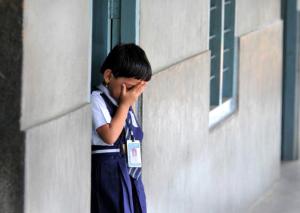
REPORT CARD: While most schools have adequate numbers of classrooms, separate toilet facilities for girls and boys, the availability of playground, school ramp, kitchen shed and boundary wall remains a major challenge in many States. Photo: K.R. Deepak

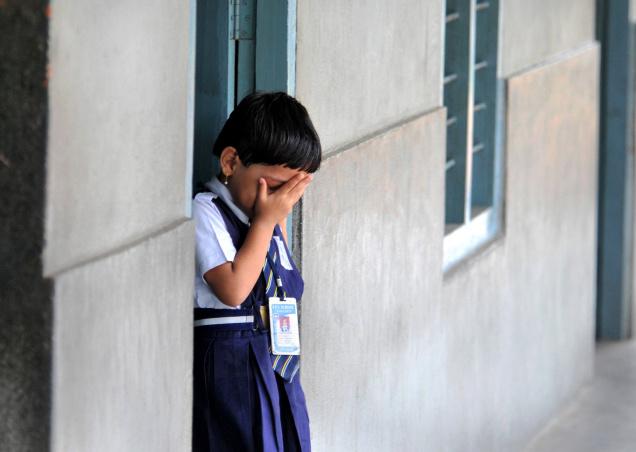
REPORT CARD: While most schools have adequate numbers of classrooms, separate toilet facilities for girls and boys, the availability of playground, school ramp, kitchen shed and boundary wall remains a major challenge in many States. Photo: K.R. Deepak

In India, low test scores on basic math and literacy assessments have led to calls for a higher standard for teacher training. Yet, private schools, which many feel provide a superior education, do not offer their teachers the same level of training. According to child rights activist Vasudev Sharma, the disparity in teacher training “is one of the major differences between private and government schools,” yet parents continue to rely on the reputation of private schools.

In a similar move to raise the bar for teachers, Australia will require all future teachers to score in the top 30% of a literacy and numeracy test, and Scotland will require that teachers become content area specialists as well as pedagogues. Yet, as we have seen in Guatemala, efforts to enforce higher standards for teachers leads to concerns about exclusion. Ireland is pushing back against this notion. According to Education Minister Quinn, “a diverse society needs a diversity of teachers, not a ‘one size fits all’ approach which ‘streamlines a particular cohort into teaching’.” At the International Summit on the Teaching ProfessionJohn Bangs went a step further, stating that “a national teacher appraisal scheme is not essential to an education system’s success…. For appraisal to work, therefore, it must be valued by teachers and be seen as a welcome addition to their professional lives.” We have seen further examples of this notion in recent research conducted in Korea, Mexico, and India.

Data Manipulation
Phil Baty, Times Higher Education

Phil Baty, Times Higher Education

While teachers might struggle to see evaluations as essential to an educational system’s success, universities seem to have accepted the importance of the international ranking systems – so much so that they will go to extreme lengths. In response to the University of Cork’s recent attempt to manipulate the data, Phil Baty, editor of the international rankings of Times Higher Education, explained, “Global university rankings have become phenomenally influential in recent years – not only helping students to decide where to invest many thousands of dollars in tuition fees, but also in helping university leaders shape strategies and in helping governments to make multimillion-dollar funding decisions in some parts of the world.” Additionally, as seen in another recent example of educators manipulating data in the US, intense pressure to be successful within systems that value strict measures of evaluation can also lead to unintended outcomes.

Scan of Ed News: Protests, Unions, and Educational Funding

(links to articles are embedded as hyperlinks)International-Travel-Agency-262545-262545-1so

This month’s scan of recent educational research and news reveals a number of inter-connected issues that are arising in different places around the world.  In part one of this month’s scan, we highlight teacher and student protests, the role of teacher unions, and the uses of educational funding. Part II, which will appear later this week, will share reporting on issues of curriculum, testing, teacher and school evaluations, and higher education.

Teacher and Student Protests:

Ongoing protests highlight a globalized concern surrounding the issue of access to high quality education. Student protests in countries such as Portugal, Chile, Bulgaria, and Spain, focus on changing the system in ways that allow greater opportunity for access, while teacher protests Spain, Greece, and France, aim to preserve an established system now threatened by austerity measures. These protests highlight issues dominant in global news reports in recent weeks, such as the role of teacher unions and educational funding.

The Role of Teacher Unions in Ed Reform: Mexico and South Korea

The Hankyoreh

Korea Teachers and Education Workers’ Union (KTU), The Hankyoreh

Mexico recently witnessed the arrest of Elba Esther Gordillo, long-time president of Mexico’s teachers’ union. Charged with organized crime, Ms. Gordillo’s arrest was widely seen as a boon to education reformists and government officials because it called into question the integrity of unions and provided an example of the disruption of “business-as-usual,” at a time when the government is imposing drastic new reformsUnion leaders say these reforms will lead to students having no guarantee of free public schooling; however, the arrest of Gordillo highlights Mexico’s struggle with corruption, seen by many to be the main prohibitor of change. Two recent studies published by the Asia Pacific Journal of Education, found that school reformers should be “advised to rethink the school change model design in a way of fully capturing human aspects in the reform process.” Nevertheless, we can see direct examples of government threats against unions in South Korea, where teachers are now fighting against government efforts to withdraw recognition of the teachers’ union, and in South Africa, where politicians and lawyers are fighting to have education declared an “essential service,” a move that would make it illegal for teachers to go on strike.

Educational Funding:

While most student protests demand affordable higher education, many governments are focused on providing free education to children of all ages. One example is India, where the Karnataka High Court has declared that all private school students between six and 14 years of age are eligible for free education, not just those from poor families gaining admission under a 25% quota fixed by the Right to Free and Compulsory Education Act. However, it is also interesting to note that India’s private schools are expanding and raising their tuition rates. According to L.R. Shivarame Gowda, chairperson of the Joint Action Committee of Private Schools, tuition hikes are necessary for providing quality education: “The numbers of private schools in the city are multiplying, so schools need to provide better facilities to keep in pace with the development and retain students.”  In Japan, the issue of educational funding has become more political, as the government has decided to deny North Korean schools access to their tuition-free program. Education Minister Shimomura presented his view that schools under the influence of the General Association of Korean Residents in Japan conflict with the Fundamental Law of Education which calls for education free from any undue political influence. As reported in the International Review of Education, China’s private universities offer an example of institutions that struggle financially, yet provide the people with alternatives that might ultimately allow more students to benefit from the advantages of higher education; however, China also provides an example of how funding alone might not provide children with the education they deserve. The country’s system of residential registers favors those who live in big cities – a holdover from the era of a planned economy, originally used as the basis for rationing of food and other necessities – is fast developing into a serious social issue.

The Hindu

The Hindu


School Inspections in Educational Assessment, Evaluation and Accountability

Educational Assessment, Evaluation and Accountability

Educational Assessment, Evaluation and Accountability

In a recent article in Educational Assessment, Evaluation and Accountability, Melanie Ehren, Herbert Altrichter, Gerry McNamara, and Joe OHara describe the similarities and differences in school inspections in England, the Netherlands, Sweden, Austria, Ireland and the Czech Republic.  In this post, IEN Contributor Ehren briefly describes a key difference emerging in the way that these countries use data on student performance as part of the inspection process. 

School inspections have long been a key means of quality assurance and accountability in Europe. Inspectorates of Education assess the quality of education and hold schools accountable for a broad range of goals related to student achievement, teaching, organization and leadership in schools. Assessments of schools have traditionally included regular visits to schools by one or more inspectors who observe lessons, interview school staff, analyze school documents against a standardized inspection framework, and write up a report.

In recent years, however, two different approaches to school inspections are starting to emerge: some countries, such as Austria and Germany, are continuing to carry out traditional inspections in all schools on a regular basis, while other countries, particularly those that have had traditional inspection systems for many years but have now built extensive databases with school performance data, are developing more targeted methods of school inspections. Examples are England and the Netherlands, where results from previous inspections visits, school documents (such as self-evaluations of schools), or student achievement data are used to visit schools “proportional to their need.”  As a consequence, rather than visiting all schools on a regular basis, in these countries, schools that are performing poorly are inspected much more frequently than other schools.

In this “proportional model,” student achievement data is becoming more and more central to the whole inspection process. Not only is student achievement data used to target inspection visits, it is also becoming a more central part of the inspection assessment itself. In the Netherlands, for example, student achievement data is used as the key indicator to assess whether or not a school is failing, and whether or not the school should be inspected more frequently. Similarly, in England, the publication of data dashboards by the Inspectorate of Education, Ofsted, emphasizes that the schools’ test and exam results are the main measure of good performance.

Those pursuing these changes explain that they are motivated by a need to increase the effectiveness and efficiency of inspections, but also by a need to counterbalance high levels of school autonomy with systematic evaluations of the output of schools. Amidst these changes is a continuous discussion on the purpose and role of school inspections in the improvement of schools and how such an improvement role can effectively be combined with high stakes inspection and assessment. In England in particular, teachers have also raised serious concerns about the direction the inspections are taking and have even threatened a boycott.

For more information:

School Inspections: Studying the impact of school inspection on improvement of schools

The Dutch Inspectorate of Education

Reforms in Korea in the Asia Pacific Journal of Education

Asia Pacific Journal of Education

Asia Pacific Journal of Education

In the most recent issue of the Asia Pacific Journal of Education, two studies highlighted teachers’ perceptions of, and resistance to, the Korean National Curriculum reform of 2011. In “Teachers’ perceptions of the recent curriculum reforms and their implementation: What can we learn from the case of Korean elementary teachers?”, Minjeong Park and Youl-Kwan Sung examine how and why Korean elementary teachers have negative feelings about the recent curriculum reform, and suggest that teachers need effective professional development programs, opportunities to work with peer teachers, and that context and culture be considered in the implementation process.

In “School reforms, principal leadership, and teacher resistance: Evidence from Korea,” Joo-Ho Park and Dong Wook Jeong, studied the relationship between principal leadership and teacher resistance to school changes, finding that “a principal’s initiative leadership is significantly related to the reduction of teacher resistance to change, in particular on the emotional and behavioural dimensions.” They emphasized the importance of human aspects in the reform process, concluding that school reformers should be “advised to rethink the school change model design in a way of fully capturing human aspects in the reform process.”

Reforms in China in the International Review of Education

International Review of Education

International Review of Education

The latest issue of the International Review of Education includes an examination of what some may see as the surprising failure of many private institutions of higher education in China. In “Turning around low-performing private universities in China,” Xiaofan Li explains that while most private colleges and universities in China disappeared after the establishment of the People’s Republic of China in 1949, China’s marketization and privatization efforts included the re-opening of higher education to the private sector in the 1990’s. By 2009, statistics published by the Ministry of Education showed that there were 3,101 public universities in China as well as 812 private universities; however, Li reports that many of these “people-run” institutions are struggling, with approximately 500 of them shut down between 2000 and 2009 for financial, legal or other reasons. Of those private universities that have survived, the quality varies substantially, and they are not viewed as being on par with most public universities. Yet, in a country of more than a billion people, these institutions have opened up many new options for those who have been unable to get a place in public universities either because of their age, lack of qualifications, or the limited number of places. At the same time, quality assurance has been and will continue to be the most pronounced and crucial issue that private universities wrestle with. As Stephen Roche explains in the introduction to the issue, Li “considers several factors that contributed to poor performance, including insufficient resources, heavy government control, insufficient enrollments, lack of qualified teachers, limited programme breadth, and problems of scale,” and goes on to examine strategies for turning around low-performing private institutions and helping the government achieve its target of a 40% participation rate in higher education by 2020.

For more information:

2012 China Private University Rankings Announced (link in Chinese)

Boosting Migrants’ Education

Singapore

14295425_0The Singapore Ministry of Education has been surveying educators and parents about their concerns with the Singapore education system. The results reveal worries about a perceived over-emphasis on exams and grades that contribute to a high stress education system that overlooks non-academic talents. Additional concerns include anxiety about declining social mobility and rates of inclusion due to disparities in access to education that favors privileged children who can afford tuition.

In response to these kinds of concerns, the Ministry of Education has launched initiatives aimed at strengthening efforts to help every student succeed by:

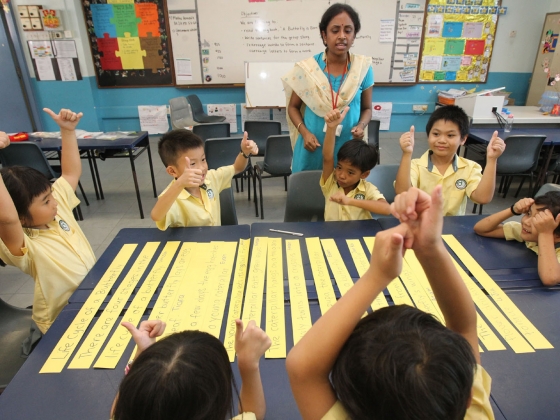
  • building a strong foundation in literacy and numeracy, from the kindergarten level to secondary level. For the primary and secondary school levels, the existing Learning Suppport Programme for Primary 1 and Primary 2 students will be extended through all 6 years of primary education and even to secondary level.
  • providing teachers with professional development opportunities to learn clear research-based principles to reach out to “low-progress learners.” These measures will help ensure that all students benefit from the best opportunities in education regardless of their background and pace of development.
  • piloting 15 kindergartens in working class neighborhoods in Singapore and providing further support to the pre-school sector, which the MOE has traditionally not been overseeing.
  • expanding support for students with special needs by providing additional post-diagnosis services for parents, streamlining the application and enrollment process for special education schools, and increasing funding for low-income students with special needs.

For more information:

More help in Math, English for weaker students

Helping every student succeed (MOE)

Get back to basics of education: Heng Swee Keat

More support for students with special needs (MOE)

Exams and streaming: Recalibrating our education system (commentary)

Japan

Report on Problematic Behaviors of Public School Students

The Ministry of Education (March 13, 2013)


Ministry of Education, Culture, Sports, Science and Technology: Japan

Ministry of Education, Culture, Sports, Science and Technology: Japan

The Ministry of Education, Culture, Sports, Science and Technology (MEXT) in Japan published an updated version of a national survey, titled “Problematic Behaviors of Public School Students (1-12).”  According to the survey, violence against peers and teachers in schools decreased across all grade levels. The number of truant students decreased by 2,000 in elementary and junior high school compared to last year; however, the number of truant students increased by 600 at the high school level. In addition, the number of 1- 12 grade students who committed suicide was 202. This is a 29.5% increase compared to last year. The survey follows a report last month from the National Police Agency that revealed the number of bullying incidents reported in 2012 more than doubled to 260 from the year before. The report also showed that 511 students were arrested or taken into custody in 2012.  A special commission on education reform is expected to address these issues by recommending, among other things, that “moral education” be made a regular subject.

For more information:

Japanese City Takes on Bullies

Harumafuji saddened by bullying incidents