Japan

10 bil. yen for science education / Govt plans to raise subsidies for primary, middle school materials

Daily Yomiuri (January 8, 2013)

Japan’s education ministry, prompted by Democratic Party of Japan proposals, has increased subsidies for the purpose of providing more funds for science education in primary and middle schools. The plan is to fund teaching science as well as provide the supplies and books to conduct experiments inside more classrooms. Based on recent IEA (International Association for the Evaluation of Educational Achievement) global surveys, when middle school students are asked what kind of jobs they wished to pursue, 20% of middle school students responded “want to find jobs utilizing scientific knowledge,” which is significantly lower than the international average of 56%.

China

Boosting migrants’ education

By Cheng Yingqi, China Daily (January 14, 2013)

Xue Jun/For China Daily

Xue Jun/For China Daily

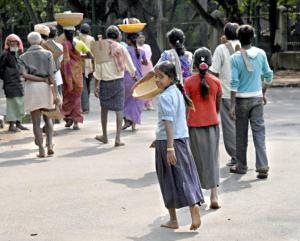
In an effort to improve the quality of education for migrant workers in China, the education authority in Beijing’s Chaoyang district will shut down non-government run schools and guarantee that migrant workers’ children will attend public schools. Private schools for the children of migrant workers have sprung up in Beijing, Shanghai and other large cities where the public schools do not accept children who do not have residence permits; however, many of these schools have been deemed unsafe for schooling and have not been officially authorized to operate.

According to this article, “Over the past six years the Chaoyang education commission cut the number of schools for migrant workers’ children from 135 schools teaching more than 50,000 students, to 25 schools teaching 11,000 students.” These closures worry parents who fear their children will have trouble adapting to the public school environment.

For more information:

Migrant Education in China (OECD Report)

Chinese cities to relax school entry for rural migrants

More regions to reform migrant education system

Chile & Haiti

Chilean preschool curriculum to be implemented as public policy in Haiti

Latercera (January 10, 2012)

*link in Spanish

As a result of the work produced by two Early Childhood Education Pilot Programs in Haiti, the Chilean National Intercultural Preschool Education Board (JUNJI), designed a Preschool Curricular Plan for Haiti with the help of the Chilean Agency for International Cooperation (AGCI). This month, AGCI’s executive director, Ambassador Jorge Daccarett, will visit some of the educational establishments before meeting with Haiti’s Education Minister Sr. Vanneur Pierre to advance the implementation of this curricular proposal.

Formal education in Haiti begins at the age of six. Chile’s push for the implementation of preschool establishments began in 2009 with the creation of two Preschool Centers. JUNJI’s vice-president, Maria Francisca Correa, maintains that being able to contribute to the development of this preschool curricular proposal for Haiti is very inspiring since she is convinced of the vital importance of early childhood education.

Japan

5,274 Teachers Took A Leave From Work Due to Mental Health Reasons

Nikkei Shinbun (December 24, 2012)

*Link in Japanese

The Ministry of Education, Culture, Sports, Science and Technology (MEXT) reported that the number of public school teachers who took a leave from their schools due to mental health reasons in year 2011 was 5,274. While this number is down 2.4% since 2010, the number is still twice as many compared to 10 years ago. The main reason for the increasing depression is a decrease in a healthy work-life balance.To improve the working environment for teachers, the ministry proposed two plans. One is to assign experienced teachers to new teachers as mentors. The second is to implement training programs for returning teachers, who took a leave from their work, to facilitate their re-entry.

For more information:

Depression, mental illness among Japan’s public school teachers increasing

Teachers too busy to deal with struggling students


India: Funding the Right to Education (RTE) Act

Photo: The Hindu

Photo: The Hindu

In an effort to improve the country’s economy, the Indian government has cut funding to the Right to Education (RTE) Act, which aims to provide every child between the ages of six and 14 with an elementary education. Cuts are expected to total 2-3% of the total RTE budget for 2012-2013, a substantive deduction that will affect the implementation of the RTE legislation. Civic bodies, such as Brihanmumbai Municipal Corporation (BMC), have reported that they simply cannot afford to meet the requirements of RTE.  The decrease in funding is expected to affect many, such as disabled children who rely on government supported transportation, and children in areas of conflict.

Meanwhile, cities such as Nagpur are holding seminars to inform and educate local principals about RTE implementation, in the hope of improving student achievement country-wide. Tripura is a rare example of a state that has been able to meet the requirements of RTE. Tripura admitted 44,000 students under the RTE quota this year, and plans to increase the age of students who qualify to receive a free education. Tapan Chakraborty, School Education Minister, pointed out that the Left Front government has been spending more than 20% of its annual budget on education, while the central government has spent less than 10%.

Students will begin applying to schools under RTE on January 10, 2012; however, member schools of the Karnataka State Private School Management’s Federation (KSPSMF) have warned that they will not admit disadvantaged students if the government does not reimburse them.

Ireland

Ruairí Quinn calls for “inclusive debate” on education in Ireland

Donal Walsh, SchoolDays.ie (December 18, 2012)

Ireland: Google Images

In response to the recently released TIMSS and PIRLS scores, Ruairí Quinn, Ireland’s Education Minister, wants to reassess the amount of time students spend studying each subject. While Irish students performed at an above average level, the students of Northern Ireland achieved better results in mathematics. Quinn believes that the solution is to ensure a higher standard of knowledge amongst primary school teachers, and to increase the amount of time the students spend studying math and science. He said: “I have asked the National Council for Curriculum and Assessment to review the recommended time allocations for all subjects in the primary school.”

For more information:

What will happen in education in 2013?

TIMSS and PIRLS

International-Travel-Agency-262545-262545-1soOn December 11, 2012, the TIMSS and PIRLS International Study Center released the results of the Trends in International Mathematics and Science Study (TIMSS) and the Progress in International Reading Literacy Study (PIRLS), and news reports from around the world are already trying to interpret the results.

Reports in Norway note that students are performing better in reading, mathematics and science, and that (particularly in 4th grade math scores) they are catching up with Finland. Drastic improvements made the news in Russia and Israel, although in Israel a dramatic gap between Hebrew-speaking and Arabic-speaking students was also recognized.

In Australia, the results were considered a disappointment, especially in consideration of the Prime Minister’s ambitious education goals and plans for additional school funding. In response to the unexpectedly low scores, Geoff Masters (Chief Executive of the Australian Council for Educational Research) explained on Australia’s AM radio program, “We know from international research and experience ourselves that what really makes a difference is the quality of the teaching that’s occurring in classrooms, the quality of the leadership of schools.”

Northern Ireland emerged as Europe’s top performing education system for primary maths. Students in the Republic of Ireland performed nicely as well, ranking 10th in reading out of 45 countries, 17th in maths out of 50 countries, and 22nd in science out of 50 countries; however, Ireland is not ranked among the top performing countries in any of the three tests. As a result, Minister for Education Ruairí Quinn has said that he would like to see more time devoted to science and maths in Irish schools, rather than Irish and religion. “That’s why we’ve asked for the divestment by the Catholic church of many of the primary schools that they currently have.”

Singapore students enjoyed high scores, as they have in previous years, but government officials expressed concern about the students lack of confidence – an issue they hope to address with their new student-centric, values-driven educational model.

While South Africa (along with Honduras and Botswana) reported the lowest scores in math and science, South Africa reported a significant improvement amongst the “most disadvantaged” students – a fact that “coincides with learners and schools receiving the highest number of interventions aimed at improving the quality of education, from both public and private sector providers.”

In the U.S., The Hechinger Report explains that while there have been some gains, U.S. students continue to lag behind their Asian peers.

For more information:

WELCOME TO THE TIMSS AND PIRLS 2011 DATA RELEASE
Chile

Chile must attract the best to the teaching profession

Marcela Andrés, Latercera (December 9, 2012)

*link in Spanish

Andreas Schleicher (Google Images)

Andreas Schleicher (Google Images)

Andreas Schleicher, Deputy Director for Education and Special Advisor on Education Policy to the OECD’s Secretary-General, has declared that Chile should embark on a campaign to obtain a better education system. He assured that compared to other Latin American countries, Chile has made gains according to PISA results; however, compared to economically developed countries, Chile presents much lower scores, and much higher disparities. Social context, such as public versus private education, has an impact on academic performance that is more significant than in many other countries.

Schleicher proposed measures to avoid the conditioning of the academic future of students according to social class. Additionally, Schleicher declared that Chile must attract the best to the teaching profession and place them in schools most in need of improvement to lessen current disparities.

Schleicher also professed modifications to the PISA test. He stated that in 2009, many students used computers and PISA assessed their ability to read digitally. In 2015, they will be evaluated on their ability to solve problems collaboratively and in  context.

For more information:

Chile should not be satisfied with being the best of the second division (link in Spanish)


Austria

All-day-school: Government is still discussing the details

N.N., www.wienerzeitung.at (November 27, 2012)

Claudia Schmied Photo: Reuters

Claudia Schmied Photo: Reuters

The extension of the all-day-school reform in Austria is still subject of discussion among the governing political parties SPÖ (Social Democratic Party of Austria) and ÖVP (Austrian People’s Party). The reform should have already passed the Council of Ministers, but the SPÖ refused to agree with the ÖVP’s draft law of the reform. Claudia Schmied, Minister of Education (SPÖ) criticizes that the ÖVP makes demands in return like ethics classes or a second compulsory kindergarten year for those who are in need. Furthermore, they demand that parents, teachers, principals, and students should be allowed to decide whether they want to implement an all-day-school-reform at their school. However, the SPÖ wants to stick with the rule that as soon as 15 students state the need for care in the afternoons, the school has to change into an all-day-school-model. Schmied is convinced that the decision nevertheless will be made this year. “There is no way around the all-day-school,” she says and points out that she will continue the negotiations with the ÖVP.

For more information:

All day school plans take shape


On the school reform debate in Austria over the past year: School Reform: Austria Petitions for Change

On teacher education in Austria: International experience as part of teacher education

Spain

Education reform puts Spain, Catalonia on collision course

The Hurriyet Daily News (December 7, 2012)

Irene Rigau EFE

Irene Rigau EFE

Education reforms and austerity measures in Spain have caused tension and separatist sentiments in the Catalonian region. At issue is the issue of teaching the Catalan language in schools. Jose Ignacio Wert (Spain’s National Education Minister) proposed that all schools focus on teaching the Spanish language in all regions, effectively removing the requirement that students in Catalonia speak Catalan in university. He also proposed that the region should fund Spanish-language private schooling for families that demanded it. Defenders of the current system, such as Irene Rigau (Catalonia regional education counselor) view the plan as an assault on cultural identity, while Wert insisted “there is no part of the reform that undervalues the importance of Catalan.”

For more information:

La Generalitat cree que las palabras de Wert responden a una “visión preconstitucional de España”

Catalans protest ‘return to Franco’ as schools are told to teach more Spanish

Barcelona soccer club defends use, teaching of Catalan language at politically sensitive time