South Korea

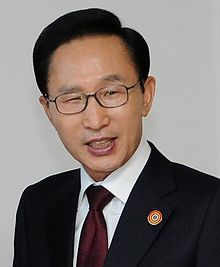
Lee Myung-bak

New English test seems like a big waste of public funds

The Hankyoreh (September 12, 2012)

Since Lee Myung-bak took office in 2008, the government of South Korea has invested close to 30 billion won ($26 million) in The National English Assessment Test (NEAT), an English language test that is expected to replace American tests like the TOEIC or TOEFL in the university entrance system beginning in 2013; however, serious questions have been raised by Rep. Yu Gui-hong of the Democratic United Party from the Ministry of Education and Science as to whether NEAT has been effective and reliable.

Students sit a trial version of the National English Aptitude Test at a school in southern Seoul. (Kim Myung-sub/The Korea Herald)

To read more on this topic, go to:

National English Assessment Test (NEAT)

#KELTChat

Language Magazine

Universities to add Natoinal English Ability Test to admissions

Japan

Hirofumi Hirano

Antibullying Guidelines Released/Designated Special Advisors to Provide Expert Advice on Handling Incidents

Jiji Press, The Daily Yomiuri Online (September 7, 2012)

In an effort to reduce bullying in schools, Japan’s education ministry has set guidelines for directly dealing with the issue. The ministry plans this month to seek aid from special advisors such as lawyers, former police officers and psychiatrists on how to “prevent and handle” bullying in schools. Moreover, the ministry has requested that its budget be increased to permit the allocation of more funds directed towards instituting programs to reduce bullying. They have requested an increase from about 2.7 billion yen from fiscal 2012 to about 7.3 billion yen for the next fiscal year. With the institution of the new budget, the ministry plans to direct the funds towards an increase in social workers and clinical psychologists available to public schools and victims.

Education minister Hirofumi Hirano said at a press conference Wednesday, “After serious cases in which students’ lives were at risk, we will face the issue directly and sincerely.”

To read more on this topic:

At Least 3,500 Bullying Cases Seen in Tokyo Schools

Bullied Student Gets Apology / School Recognizes Problem, but Victim Asked to Leave Over ‘Anxiety’

Suicide in Japanese Schools Must Stop

Vietnam

VND15 trillion approved for national education and training

Nhan Dan Online (September 11, 2012)

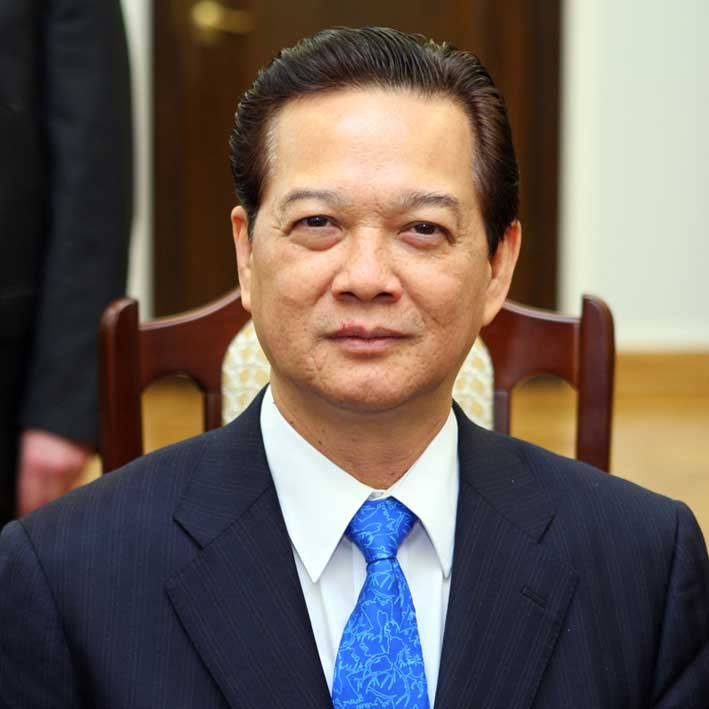
Prime Minister Nguyen Tan Dung

Prime Minister Nguyen Tan Dung has announced that the government will dedicate $730 million to The National Target Program on Education and Training, which will be in effect until 2015. This program aims to standardize universal kindergarten, maintain and improve the standardization of primary and secondary education, and improve literacy rates (currently 90.3% across the population). This program also specifically targets development in disadvantaged regions, rural areas, and communities with ethnic minorities. The construction of a number of facilities, libraries, teacher workrooms, and boarding schools, is expected.

Related resources and background information:

VND 15,200 billion for education and training

PM Calls for More Investment in Education

Schools to Apply New Educational Model

City to Subsidize Education for Poor

Canadian International Development Agency video on “achieving education for all in Vietnam”:

Scan of Education News: September 1st-18th

The month of September has proven to be an eventful one for global news related to educational policy and change.

This back-to-school time of year has seen teacher strikes in places such as ChicagoEnglandAustraliaKenya, and Slovakia. These teachers are commonly concerned about new approaches to teacher evaluations and compensation, slashed education budgets, and working conditions. In contrast to many countries that seem to position educators and politicians on opposing sides, Norway announced that it will propose changes to their teacher evaluation system by working with teachers, and incorporating student input as well.

High school students have been staging their own dramatic protests worldwide as well. In Chile, the students occupied schools and government buildings to protest tax reforms that they said failed to devote adequate resources to education. In China, female students protested university gender quotas that eased entrance requirements for male students and kept women out. A similar issue arose in Iran, as 36 universities banned women from 77 fields of study in a move that prompted the UN to call for an investigation.

Innovation and reform in school curricula have also made the news this month. China will focus on vocational training to meet economic demands; France will introduce ethics and citizenship courses; Estonia’s first-graders will learn computer code; and Bosnia will introduce a plan to unite children of different ethnic backgrounds. Over the summer, Hong Kong introduced a controversial “patriotic” curriculum, but the plan was later quashed due to parent and teacher protests.

Singapore has also announced a major new initiative that will revolutionize measures of school effectiveness in the country. Moving away from a quantified approach to evaluating schools (based on test scores and a ranking system), the country will adopt a “student-centric, values-driven” approach to education in which best practices are developed and shared among educators in a new online system. Schools also hope to build relationships with parents and communities. Singapore’s new direction seems to be in stark contrast to the OECD Report, which created a global stir when released last week, as countries were ranked by everything from student performance to teacher pay.

Norway

Marianne Aasen, photo: Arne Ove Bergo

Opening for student evaluation of teacher effectiveness (original article in Norwegian)

Espen Løkeland-Stai, Dagsagisven (September 15, 2012)

On Wednesday, September 19th, Norwegian Labour Party leader and head of the Education Committee in Parliament, Marianne Aasen, will propose a new teacher evaluation process that is systemic and standardized at the national level. Aasen will propose that evaluations of students decrease, while evaluations of teachers increase. In the end, she hopes the overall number of tests will be cut down.

Aasen believes these evaluations will need to be targeted and necessary, indicating that the current system suffers from varying quality of both the collection of data and the information that is actually used. They will also include student surveys of teacher performance.

Mimi Bjerkestrand photo: Linda Cartridge

Aasen, noting the current conflict at the heart of the teacher strikes in Chicago, does not want to introduce incentives such as teacher pay that is linked to student performance. She believes evaluations must be developed in consultation with teachers. Mimi Bjerkestrand, leader of Utdanningsforbundet (the Teachers Union), agrees. She sees the teaching situation as more complex and complicated than teacher performance, but believes that a thorough review is necessary. Bjerkestrand hopes the emphasis is on new information that will improve institutions, and not the rank and competition between schools.

For more information:

In 2004, Norway introduced the National Quality System (NKVS) for all schools.

Singapore

MOE Removes Secondary School Banding and Revamps School Awards

Ministry of Education Press Release (September 12, 2012)

The Ministry of Education has announced plans to modify its measures of school effectiveness and will shift its emphasis to promote best practices over academic banding (or tracking). Reforms include abolishment of school rankings that are based on academic results, an emphasis on good practices over score-based awards, and building partnerships with parents and the community. The MOE will promote sharing across schools by establishing an online Good School Practices (GSP) repository to encourage the sharing of ideas between schools and teachers.

Additional news reports can be found here:

The Information Daily

Today Online

An infographic from the Singapore Ministry of Education:

“Achieving a Student-Centric, Values-Driven Education”


Egypt

Back to school: Morsi gets black marks from Egypt’s teachers

Randa Ali, Ahram Online (September 10, 2012)

President Morsi

On Sunday, September 9, President Morsi approved a modification to state-employed teacher pay that allows teachers to receive 100 percent of their salary in bi-annual batches to be dispersed on October 2012 and January 2013. For some teachers, this means their salaries will double; however, many teachers believe the compensation remains incommensurate with their levels of experience. Additional demands include permanent positions for long-term temporary employees. There is some likelihood that this demand will be met on Monday, September 17, as temporary public workers are expected to be permanently hired by June 2013.

For more information, see the following links: Egyptians tell Morsi to keep election promises (PressTV)

Three protesters – ‘teachers’ full rights’ (Photo: Randa Ali)

Ireland

The Minister for Education and Skills, Ruairí Quinn T.D.

Minister Quinn gives go ahead for major restructuring of initial teacher education provision

Press Release, Irish Department of Education and Skills (September 5, 2012)

The Minister for Education and Skills, Ruairí Quinn T.D., will go ahead with a sweeping overhaul to teacher education. Following recommendations from a recent Higher Education Authority (HEA) report, only six “centres for teacher education” will provide Initial Teacher Education (ITE) offering primary and post-primary teaching. In the new system, greater emphasis will be placed on literacy, math and pedagogical skills.  Additional curricular reforms have already been outlined by the Minister.

The HEA has been asked to submit a report with more formal proposals and financial implications by the end of the year.

Click here to view full report

Chile

Chilean students announce new protests demanding a better education

Ultima Hora (September 2, 2012)

“Education is sold”

Chilean university students announced today that they will mobilize once more during the second week of September. These student protests demand better quality of education and reject government intervention, such as the proposed tax reform. Students’ pleas for a restructuring of the Chilean education system have not been addressed by the Chilean government.

Chilean Gov Calls for an End to School Occupations

Gwynne Hogan, The Santiago Times (September 6, 2012)

Santiago Mayor Pablo Zalaquett

Santiago Mayor Pablo Zalaquett and Education Minister Harald Beyer have responded to a month of student marches and occupations by calling for students to return to school when in opens, on September 20th: “We are making an appeal to the youth, we encourage them to fight for their right to quality education through peaceful marches and cultural acts, but they must stop missing school because there are not going to be special laws for them,” Zalaquett said. In 2011, 70,000 students were held back when the school system was paralyzed due to similar school occupations.

Australia

PM Pledge for Top Five School Spot

Michelle Grattan, The Age (September 7, 2012)

The Australian Prime Minister, Julia Gillard, announced a new school funding arrangment (dubbed the “Gonksi Plan”), promised to “legislate for a goal of having Australia in the top five schooling systems in the world by 2025.” By then, Gillard said that Australia should be among the top five nations in reading, science, and math, and be noted for the provision of high quality and equity education. Among other things, the Gonski funding plan recommended an extra $5 billion a year overall (in 2009 dollars) for school funding, and variables such as economic disadvantage, disability, school size and the particular needs of indigenous students.

For more information:

“PM Pledge for Top Five School Spot” (video clip)

In a panel discussion, presented by La Trobe University, Ideas and Society Program, May 2012, Carmen Lawrence, Richard Teese, Dennis Altman and (host) Lorraine Ling, discuss the Gonski Report and educational issues present in Australia today.

Experts respond to Gillard’s announcement.