Australia

PM Pledge for Top Five School Spot

Michelle Grattan, The Age (September 7, 2012)

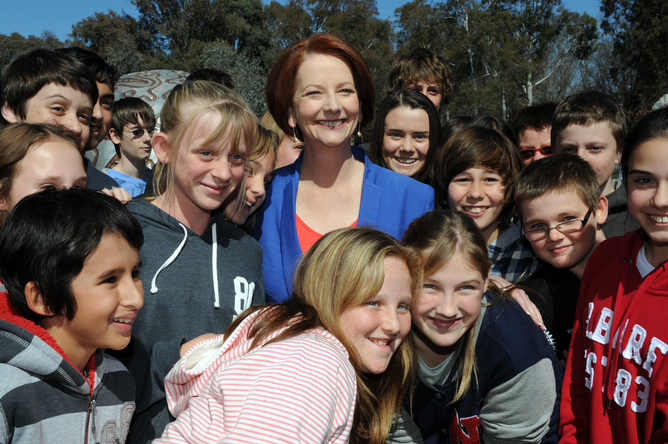
The Australian Prime Minister, Julia Gillard, announced a new school funding arrangment (dubbed the “Gonksi Plan”), promised to “legislate for a goal of having Australia in the top five schooling systems in the world by 2025.” By then, Gillard said that Australia should be among the top five nations in reading, science, and math, and be noted for the provision of high quality and equity education. Among other things, the Gonski funding plan recommended an extra $5 billion a year overall (in 2009 dollars) for school funding, and variables such as economic disadvantage, disability, school size and the particular needs of indigenous students.

For more information:

“PM Pledge for Top Five School Spot” (video clip)

In a panel discussion, presented by La Trobe University, Ideas and Society Program, May 2012, Carmen Lawrence, Richard Teese, Dennis Altman and (host) Lorraine Ling, discuss the Gonski Report and educational issues present in Australia today.

Experts respond to Gillard’s announcement.
Austria

One third of Austrian students face difficulties in reading
N.N., derstandard.at (6 September 2012)

An extended analysis of PISA-data presented by the European Commission reveals that 27.5 percent of Austria’s adolescents face severe difficulties in reading or are dyslexic. The number has increased during the past years from 19.3 percent (2000) to today’s 27.5 percent. Within the European Union (EU), Austria ranks third, right after Bulgaria (41 percent) and Romania (40.4 percent). In Finland, only 8.1 percent of students are categorized as students with insufficient reading skills, according to the PISA data.

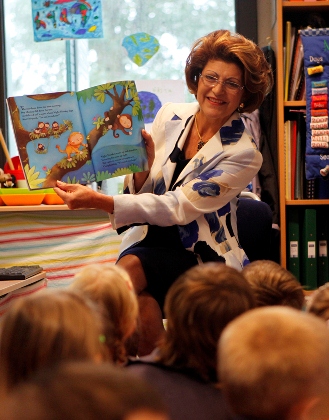
ImageAndroulla Vassiliou, Commissioner of the EU, emphasizes that the ministers of the EU decided to reduce the number of 15-year-old students with poor reading skills from 20 percent to 15 percent by 2020. They advise national states to invest in the education of the students’ reading competences, especially because of its economic benefit.

Click here to read the study in English.

India

Poor PISA score: Govt blames ‘disconnect ‘ with India

Anubhuti  Vishnoi,  Indian Express online (September 3, 2012)

Indian students participated in Program for International Student Assessment (PISA) for the first time in 2009. 16,000 students from 400 schools across the Indian states of Himachal Pradesh and Tamil Nadu took this test. Though Himachal Pradesh and Tamil Nadu are among the best performing states in India, the PISA scores of their students were dismally low, leading to much discussion in India. The Ministry of Human Resource Development (HRD), however, is arguing that these scores are not a reflection of the country’s schooling but of the disconnect between the test questions and India’s socio-cultural specificities, especially that of rural India. The Ministry will write to the Organization for Economic Cooperation Development to address this disconnect.

India

AP for reforms to make RTE effective

The Hindu online (September 2, 2012)

The Right to Education Act (2009) makes education free and compulsory for children between 6 and 14 years. It also mandates government schools to provide free education to all children and that these schools be managed by School Management Committees (SMC). Viewing the disconnect between the local government schools and the people in that community as an impediment to the effective implementation of RTE, the Andra Pradesh School Education Department has recommended a series of reforms. These include making it compulsory for SMC members’ children to attend the concerned school in their locality, having teachers teach in other schools in the area to meet teacher shortage, and providing after-school remedial classes for students.

Summer Break

The International Education News will be taking a short summer break for the month of August.  We will return in early September, 2012, with regular posts about education news from around the world.  In the meantime, please continue to follow us on Twitter.

Germany

German state of Baden-Württemberg axes 11,600 teacher jobs in the next few years (in German)
Spiegel Online (10 July 2012)

The minister of Baden-Württemberg announced an “awakening of education” when he was elected in 2011.  Now, the “awakening” has come:  11,600 teacher jobs will be cut in the next couple years. Although many in the state have doubts about these teacher cuts, the minister and others believe that they’re needed due to budget shortfalls.  Furthermore, the number of pupils in schools has dropped by 15,000 over the last five years in Baden-Württemberg.  Proponents of the teacher firings thus believe that less teachers are needed in general.  Opposing the measure are the teacher unions, who are shocked by the minister’s measure to fire so many teachers.

Chile

Chile’s English Teachers To Be Put To The Test
Agostini, M.  The Santiago Times (11 July 2012)

The Chilean government has revealed a new initiative that aims to improve English education in Chile by testing English teachers’ competency.  The test, designed by Cambridge University, will determine the teachers’ knowledge of the English language. It will be required of roughly half the teaching population (approximately 5,000 teachers) in public schools throughout the country, and, as Education Minister Harald Beyer said, “Those who obtain the highest levels…will be able to become certified with an additional test.”

Australia

Education takes a dramatic new course
Hall, B.  The Age (10 July 2012)

The Australian Curriculum, Assessment and Reporting Authority (ACARA) announced that all schools would be required to enroll in dance, drama, media arts, music and the visual arts until year 10 under a draft new national curriculum released yesterday.  However, schools would have some discretion as to how they teach them.  In conjunction with the announcement, the Education Minister, Peter Garrett, said “making the arts a key part of the new national curriculum would have ‘huge’ positive impacts for students.”  For instance, teaching such subjects inspires creativity, encourages young people to think critically, boosts self-esteem, aids the development of their sense of identity and can provide great benefits for learning in other core areas.

South Korea

Changing evolution theory to creationism in textbooks, that is ridiculous around the world (in Korean)
Chosun Ilbo (6 June 2012)

Controversy has ensued as to whether the biology textbook should change its coverage of evolutionary theory to creationism.  The Unified Association, along with those who refute the biological theory of evolution, urge that creationism be instituted in schools.  Biologists, however, say that if evolutionary theory is replaced in textbooks, it will be a “nonsense” event.  As a result, the biologists are insisting that no change be made in the textbooks, ensuring that creationism is still taught in schools.

The following video highlights the debate over the textbook debate in South Korea:

Austria

Successful school trajectories of immigrant students (in German)
Perchinig, B.  Institute for Research on Qualifications and Training of the Austrian Economy (14 June 2012)

The Institute for Research on Qualifications and Training of the Austrian Economy conducted a study exploring the factors that contribute to successful school trajectories for immigrant students.  9 experts were interviewed and 5 group discussions with 34 immigrant students were conducted.  The experts and students pointed to the fact that the family is the most important resource for school success, although parents often do not know the inner workings of the Austrian school system.  For instance, immigrant families mostly cannot understand that the Austrian education system presupposes the contribution and participation of parents. Furthermore, the interviews and discussions revealed that a liberal educational style is more supportive than an authoritative one and that male students saw high truancy as the first step in dropping out of school.  In general, though, students highly identified themselves with Austria and considered their chances and possibilities in the country as very good. To improve immigrant education, the study’s author recommends to more work with parents, individual coaching with students, measures against school absenteeism, and gender-sensitive pedagogy.