Tag Archives: education

A view from The Citizens Foundation in Pakistan: Neha Raheel on school closures and the pandemic

This week’s post features an e-mail interview with Neha Raheel, (@NehaRaheel), Manager, Learning Experience & Assessment Design, Partnership Schools, at The Citizens Foundation (TCF) in Pakistan. Neha was also recently selected as a WISE Emerging Leader for her work at TCF. As described in an IEN post in 2019, TCF was launched by six friends in Karachi Pakistan who saw education as a key to addressing a wide range of social problems. Since establishing five new schools in 1996, TCF has developed a network of over 1600 schools in Pakistan.

This post is the sixth in a series that includes views from Chile, from Japan, from the Netherlands, from Scotland, and from Liberia. The “A view from…” series editors are IEN’s Thomas Hatch and Karen Edge, Reader/Associate Professor in Educational Leadership at University College London’s Institute of Education.

IEN: What’s happening with you, your family/friends, and co-workers?

Neha Raheel: The lockdown in Sindh (one of Pakistan’s provinces, located in the southeastern part of the country), where I currently live and work, was announced on March 23rd, 2020 (initially for a period of 15 days, which extended till early June). The government began to lift the lockdown gradually in the first week of June, despite the number of cases being on the rise. Currently, education institutions, marriage halls, beauty parlors, cinemas, etc. remain closed while businesses have been allowed to operate between the hours of 06:00 am – 7:00 pm (five days a week) in certain parts of the country. The government also began putting several localities under “smart lockdowns” as the number of cases was surging. However, some of these localities have now started to re-open, and the government has announced that it will be making a decision regarding the re-opening of government schools and educational institutions on July 2nd.
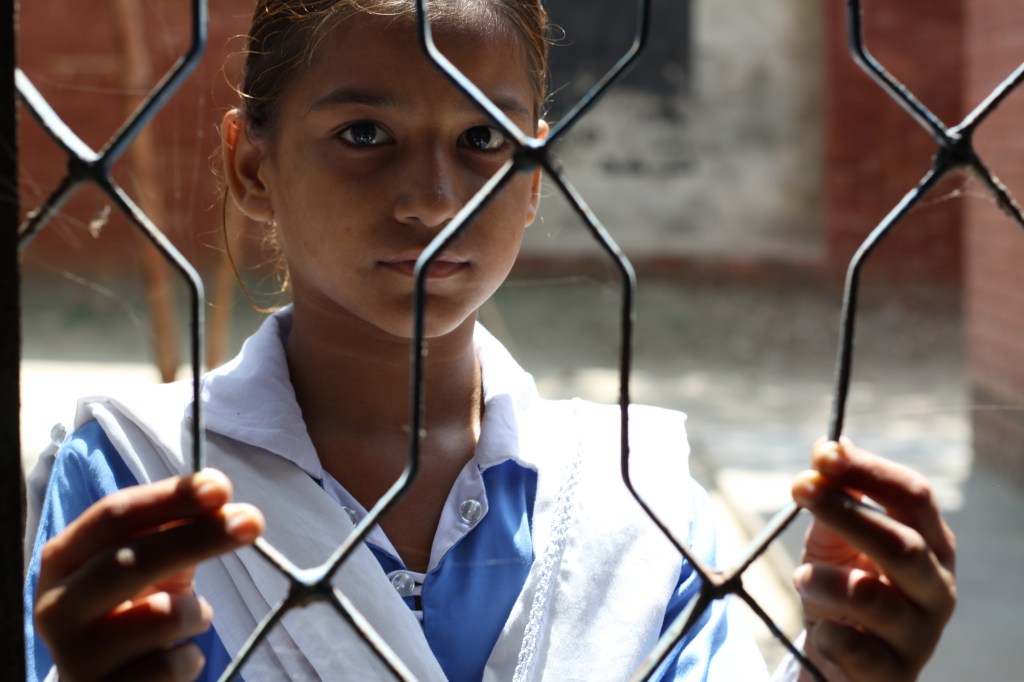
Credit: The Citizens Foundation

TCF, as an organization, had announced that at the discretion of the Heads of individual departments, we were allowed to begin working from home from March 16th onwards, so my colleagues and I have been doing so since then. My team and I work on curriculum and assessment design for TCF’s Public-Private Partnership schools (340+ schools adopted by the organization from the governments of Sindh and Punjab, with a mandate to improve access to, and quality of education).

Work from home has presented a whole host of challenges for us. We started this project by working with a team of content developers: part-time employees whose main task was to help us create lesson plans for the Teacher Guides that we are currently designing for our Partnership schools (a majority of our Partnership contracts mandate us to use the government’s syllabus, instead of the one designed by TCF for its flagship schools). These content developers do not always have access to technology (they create handwritten content for us, which is then typed at the Head Office). The quality of the lesson plans has always been heavily reliant on feedback; which pre-COVID, was given and discussed in weekly in-person meetings. Since these meetings can no longer take place in person due to the lockdown, we have been struggling with shifting the feedback sessions to take place over phone calls (a lot of people who work part-time with us do not have access to a laptop/computer or a stable internet connection at home). We also had a lot of drop-outs from the project because the women that we work with simply could not cope with the demands of managing their caregiver duties with a part-time project. As a result, we had to innovate and come up with an alternate recruitment and onboarding strategy. We are now relying heavily on the grace and magnanimity of a team of volunteers who graciously have agreed to assist us with our work on various projects (1100+ people have applied to volunteer with our department in the past month, alone). We are still grappling with the task of working remotely, not only within the team, but also with our volunteers.

IEN: What’s happening in the communities where you work?

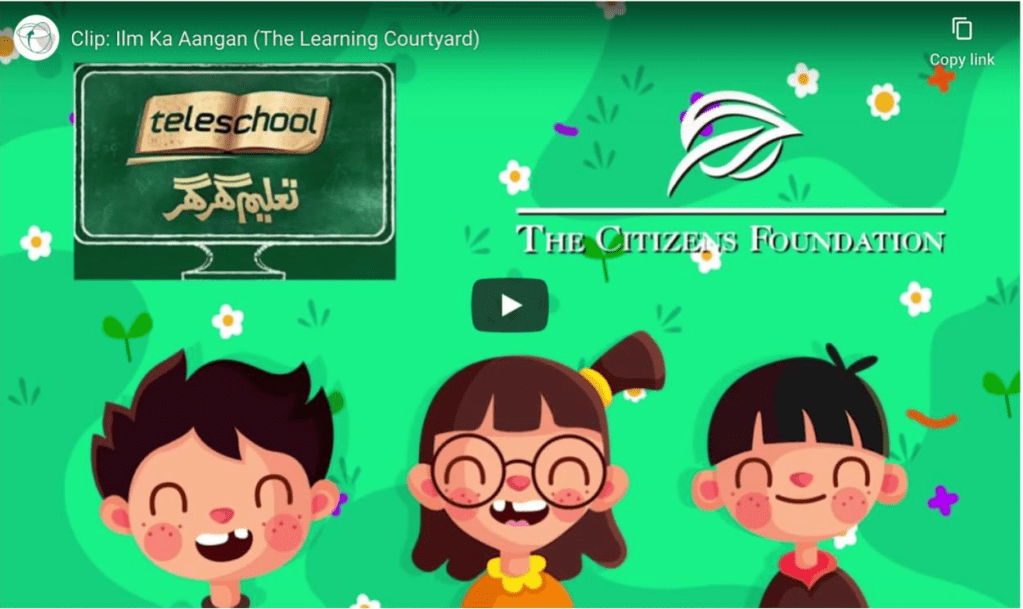
NR: Especially where our Partnership schools are housed, TCF works within communities with some of the lowest average incomes in the country and, as such, the digital divide has prevented us from using traditional education technology-based solutions for distance learning. TCF has, instead, been working on creating multi-grade content for a national TV channel: creating a televised show that focuses on student wellbeing (including physical movement through the yoga/exercise section of the program), joy, and basic literacy and numeracy skills (storytelling section and guided activities/assignments). Students also send in their artwork and assignments to TCF in response to the content broadcast in the program. TCF is also piloting a magazine to assess the effectiveness of paper-based Self Study Materials. The aim is to try to be as inclusive as possible and to try to reach as many students as we possibly can, especially those who are most impacted by the digital divide and learning losses.
At the same time, we are also thinking ahead to what will happen when schools eventually reopen. As such, my team’s biggest project this year is creating Teacher Guides for our Partnership Schools, with the purposes of improving the quality of teaching and learning activities in what are often rote learning based and teacher-centered classrooms; to reduce teacher workload of lesson planning (the majority of our teachers spend the entire day in the classroom, teaching all subjects and, as such, do not find time to research and create learner-centered lesson plans); and to serve as a developmental tool, building teacher capacity. These Teacher Guides are being made for the post-pandemic/post-lockdown world that our teachers and students will return to. The trauma-informed approach to education tells us about the importance of bringing joy, safety, trust, and hope in the lives of learners who have been through a trauma. As our students deal with potential losses of life, learning, and/or livelihood, our focus has primarily been on designing interventions keeping the principles of teacher and student wellbeing at the front and center: we are thinking deeply about how to restore stability, joy, hope, and trust in their lives, while being cognizant of the large learning losses that most of our students will likely face. The curriculum in these Guides, along with the restructuring of the school day, will allow us to include engaging learner centered activities, brain breaks and movement-based activities (to energize students, provide them with processing time, and bring a sense of joy in their lives); opportunities for guided and free play, and meditation and mindfulness activities. We are also mindful of the loss of connection, anxiety, and stresses that students might face in their absence from school (which is more often than not a safe and joyous space for our kids) and we hope that classroom routines such as mindfulness, meditation, yoga, play, storytelling, collaborative pair/group work, gratitude journaling, and understanding, acknowledging, and knowing how to express one’s feelings will restore that sense of connectedness and will bring back joy and hope in the lives of our students when they return to school.

As our students deal with potential losses of life, learning, and/or livelihood, our focus has primarily been on designing interventions keeping the principles of teacher and student wellbeing at the front and center: we are thinking deeply about how to restore stability, joy, hope, and trust in their lives, while being cognizant of the large learning losses that most of our students will likely face.

IEN: What do you/your community need help with?

NR: The digital divide is becoming increasingly tied with learning losses and is likely to result in a widening of the already prevalent achievement gaps in our country. At the policy level, we need to think about ways of lessening the impact of the digital divide on student learning (perhaps beginning with a drive of providing students/communities with access to electricity/basic tech/internet). At the same time, we are drawing our inspiration from several innovative (and low/no cost resource based) initiatives, such as the remote learning work being done by Pratham, India and Teach for Pakistan’s WhatsApp school. TCF is a not-for-profit and, as such, relies heavily on the philanthropic donations of people from across the world. To be able to continue fighting the good fight, we need people to keep donating for the cause, and also (if possible) volunteer their expertise for the various programs that we have. TCF is also actively thinking about the potential increase in drop-out rates once schools open (as evidenced by the drop-outs following the Ebola crisis), especially with relation to the gendered nature of the drop-outs. A question that we are currently thinking deeply about is: How can we re-engage students whose parents might find an extra set of earning hands to be more useful than continuing their education? As we continue working on our television program and pilot our magazine, we would appreciate any and all advice/resources/connections that would help us create, curate, and disseminate content.

IEN: What resources/links/supports have you found most useful?

NR: There are several websites that are providing their content/lesson plans/lesson activities free of charge, including but not limited to the following:

  1. Learning Activities and Play Ideas for Pre-K-II:
    a. Pre-Kinders
    b. Play Ideas
    c. Steamsational
    d. DREME TE (Math activities for early years)
  2. Lesson Plans/Unit Plans (for all grades):
    a. National Geographic Education
    b. Teachnology
    c. PBS Learning Media (also includes videos)
    d. The Teacher’s Corner
    e. Scholastic
    f. Harvard Graduate School of Education’s Virtual School Lesson Plan Database
  3. Stories
    a. Storyweaver
    b. Bookdash
    c. Global Digital Library
  4. Mindfulness/Meditation Exercises
    a. Kids Relaxation
    b. Mindful Teachers
    c. Teach Starter

IEN: What are you reading, watching, listening to that you would recommend to others?

NR: Twitter has been a great source of connecting with educators from across the globe and has allowed me to watch/read/listen to the ways in which educators are responding to the crisis. Some of the accounts that I have found to be most useful include, but are not limited to: Teaching Tolerance, Social Emotional Learning, WISE, Design for Change, Pratham Education Foundation, Rising Academies, Math and Movement, CASEL, Recipes for Wellbeing, Karanga, SELinEdu, and many more. Webinars and conferences, so many of which have become freely available, have also been a great source of information (e.g. WISE Words, the T4 Education Conference, RISE Webinars, Catalyst 2030; Karanga’s Global SEL Conference, Education Disrupted, Education Reimagined, Elevating Education in Emergencies: Securing Uninterrupted Learning for Crisis-affected Children, etc.).
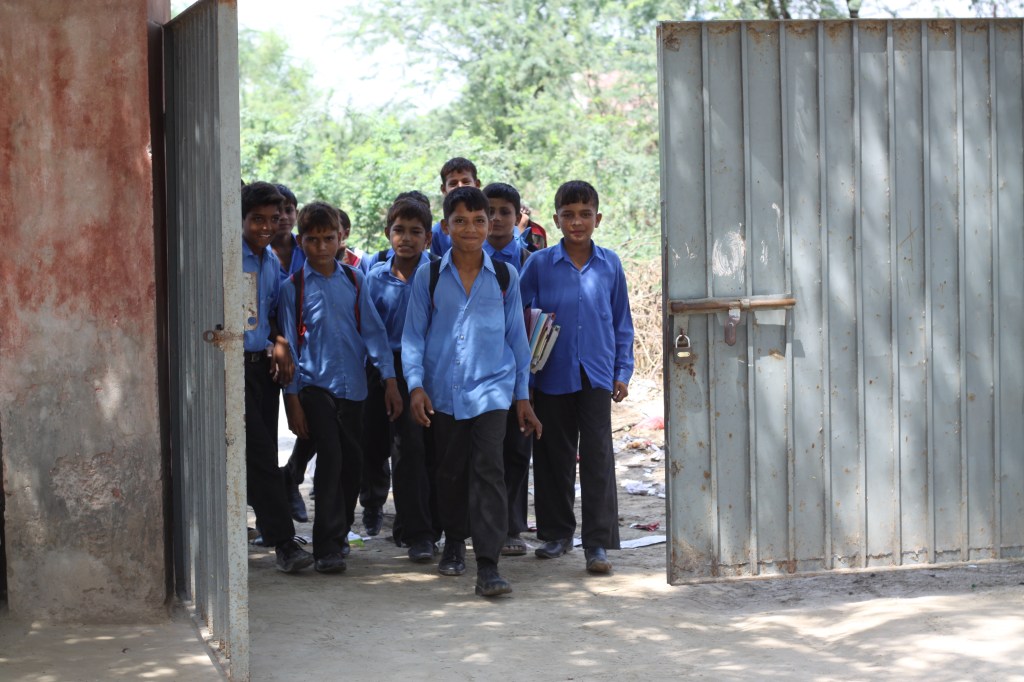
Credit: The Citizens Foundation

IEN: What have you found most inspiring?

NR: Videos/comments/thoughts from TCF school leaders and teachers have allowed me to stay connected with the communities where we work and have also inspired me with their messages of resilience, hope, gratitude, and positivity. Reading about stories of inspiring teachers from different parts of the world has been an additional source of inspiration. Doing a daily virtual gratitude journal with my team members has brought several moments of positivity and gratitude to my life: reading each other’s responses and thoughts about simple and positive moments brings smiles to all of our faces. Playing games (including a Harry Potter themed escape room) and doing mindfulness check-ins with my team as we all navigate work from home and feelings of isolation and anxiety/uncertainty has been both grounding, as well as inspiring, as we all try to collectively navigate the new reality. More so than anything else, my dog (we rescued her a few months prior to the pandemic): the amount of joy and hope that she brings in my life is unparalleled.
A view from Japan: Hirokazu Yokota on school closures and the pandemic

This week’s post features an e-mail interview with Hirokazu Yokota, a government officer at Japan’s Ministry of Education, Culture, Sports, Science and Technology (MEXT). At MEXT, he has tackled such missions as increasing the number of public school teachers, encouraging Community School initiatives, promoting special needs education, and spearheading a ministerial reform. Recently, he published an article on school leadership in Japan in Journal of Educational Administration. The post shares his own views and does not necessarily represent the views of MEXT. This post is the second in a series launched by IEN last week with a post from Chile. The “A view from…” series editors are IEN’s Thomas Hatch and Karen Edge, Reader/Associate Professor in Educational Leadership at University College London’s Institute of Education.

1. What’s happening with you and your family?

Hirokazu Yokota: I was taking a paternity leave from October 1 of 2019 to April 7  in order to take care of my second child (who has just turned one year last week!). As you might know, being a stay-at-home dad is as hard a job as working for the government. Although I enjoyed such things as playing with my son, cooking lunch for my wife and helping my four-year-old daughter with reading and writing letters, I sometimes needed a pastime. That’s why once a week, I was looking forward to having lunch with my old friends – just to chat and do a little catch-up. That has completely changed over the past three months. During weekdays, I refrained from going outside – to avoid getting infected and to make sure that my son and I did not spread it if we had it. What was especially concerning was my son had been sick early in March for nearly two weeks – but his fever did not go as high as the threshold of 37.5 Celsius. Now he is doing fine and has finished the phase-in at a nursery school which started on April 1, but I’m kind of feeling guilty about not being able to continue my paternity leave despite this COVID-19 outbreak.

“What is extremely challenging is that education is the act of human interaction, and now we must stay away from that”

2. What’s happening with education/learning in your community?

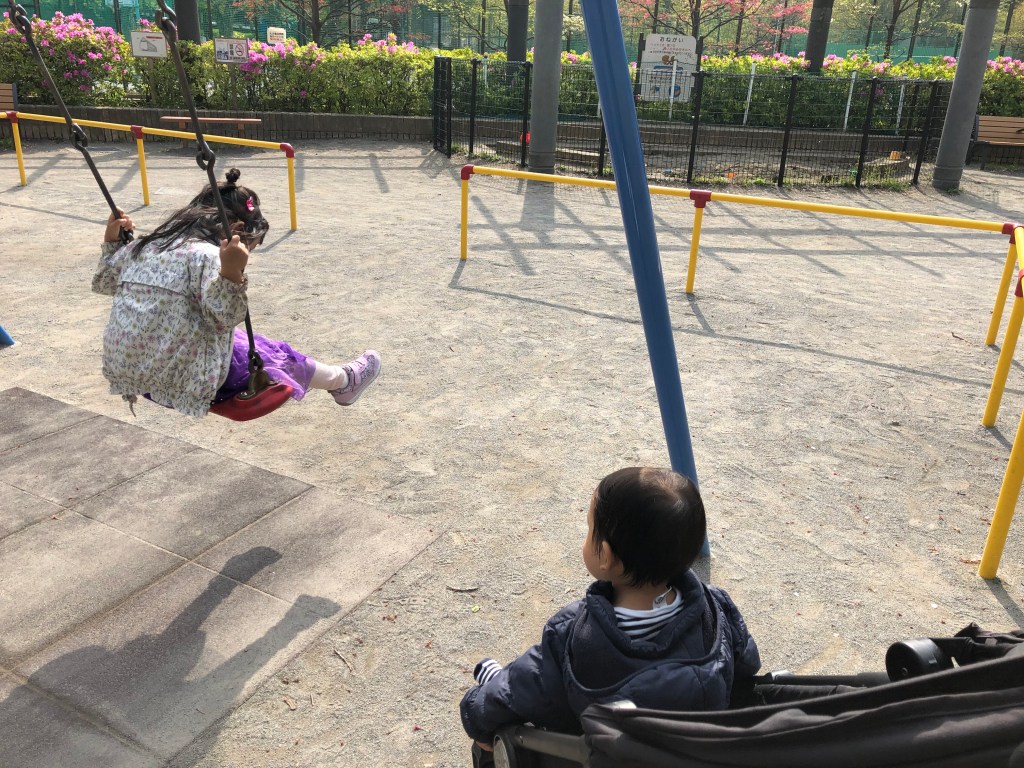
HY: Although almost all of the public elementary, junior high, and high schools in Japan have been closing after March 2, this does not apply to nursery schools. Therefore, my daughter was going to her nursery as usual, although I kept her at home for a week or so at the beginning of March. Because the nursery refrained from taking children outside, my daughter seemed to feel stressed, so I oftentimes could not help going to the playground, while practicing social distancing (which, I admit, is very difficult for kids).

My children at the playground (Photos from Hirokazu Yokota)

HY: Nationally, as of March 24th, MEXT announced new guidelines for the reopening of schools after spring break (e.g. necessary measures for local governments to implement in order to prevent further spread of the COVID-19) and for temporary closures in the new school term (e.g. how to determine whether the school should be closed on a temporary basis, in case of an infection of children, students or teachers. At that time, this policy decision was reasonable given the relatively slow rise of confirmed cases in Japan, although MEXT revised the latter guideline on April 1 to suggest how to determine the temporary closure based on the overall situation in the community, even if there are no infected people in the school. However, due to the recent rapid increase of confirmed cases, the Prime Minister Shinzo Abe declared a state of emergency, which took effect from April 8 to May 7. At first this measure had been targeted at seven prefectures (mostly metropolitan areas), but later was expanded to all the forty-seven prefectures on April 16. Accordingly, on April 10, MEXT issued a notification on the instruction to students who cannot go to schools owing to the temporary closure. In this notice, MEXT asked Boards of Education to ensure that schools couple instruction and assessment by teachers with appropriate learning opportunities at home (based on the instructional plan devised by schools), while taking into account the current status of infection in each area. Additionally, it mentions that after schools open, they should assess learning that occurred at home during the temporary closure and implement measures to supplement the lost learning opportunities. Although schools are supposed to make maximum efforts to ensure learning and to reteach material that should have been learned at home during the closure, schools do not have to cover the same content again if and only if assessments confirm that students fully understand the material (NOTE: this measure is an exception rather than a rule).

3. What do you/your community need help with?

HY: Before the COVID-19 outbreak, our ministry published an ambitious policy package to ensure every student in elementary and junior high schools will have access to an ICT device at school by the Fiscal Year (FY) 2023. The official document in Japanese is here, and English version is here (p23-24) (you might find this article by the Japan Times helpful). Moreover, given the importance of ICT as a tool to ensure student learning during such temporary closure, on April7, the aforementioned policy package was revised so that MEXT can subsidize ICT devices in order for each student to have an access at the end of THIS YEAR (FY2020, not 2023) (p12 here, although it’s in Japanese). Now is the time to fully expand the potential of ICT devices, but when it comes to implementation, there are so many issues to be resolved – from teachers’ capacity to use ICT devices, internet access at home, and from security concerns to measures for tracking student progress. What is extremely challenging is that education is the act of human interaction, and now we must stay away from that. However, at the same time, I’m hopeful that after this pandemic is over, we can find a proper balance between face-to-face teaching and remote learning, and accordingly the desirable roles of teachers/schools in this era.    

In this period of turbulence and uncertainty, we, regardless of our own positions, have to collaborate with each other to protect ourselves, our family, our community, and our society

4. What resources/links/supports have you found most useful?

HY: Thanks to the great efforts of my colleagues, our ministry opened a new web portal (in Japanese), to support children’s learning during this temporary closure – just ONE DAY after we asked schools to temporarily close. This website includes such contents as textbooks of each subject, “how to make masks on your own,” “museums at home,” and “my sports menu.” Of course, private companies are working on providing inspiring contents for children – such as NHK for school and Katariba online.  Personally, as a father, I found textbooks with intriguing pictures and sounds useful as a tool to help my daughter learn Japanese, math and English.

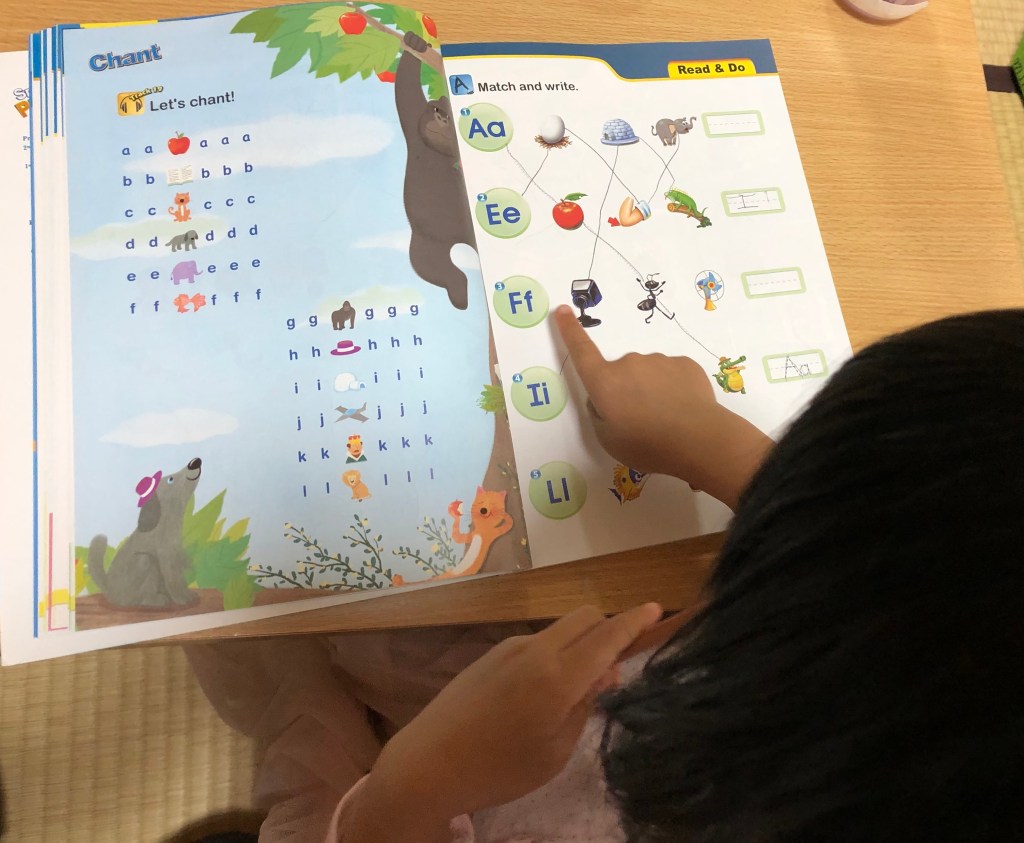
My daughter learning phonics

5. What have you found most inspiring?

HY: In this period of turbulence and uncertainty, we, regardless of our own positions, have to collaborate with each other to protect ourselves, our family, our community, and our society. But I’m deeply encouraged by, and grateful for, the fact that people around the world are combating, to the best of their ability, this unprecedented predicament. It was not until what we take for granted was taken away that it brought home to me that I, and we, are protected by our society. Since I restarted my journey of public service, we as government officers also work from home every two days in order to considerably reduce contacts with other people. Of course, you can easily imagine that while we have far more tasks than usual due to the coronavirus outbreak, we cannot maintain the same productivity as when we stay at the office every day. This reality becomes even harsher when our nursery schools ask parents who work from home to refrain from sending their children – that is exactly the case with me. It’s like going through a long tunnel, just trying to manage two extremely important, but sometimes conflicting, missions – working for the government and being a father of two at the same time. But I know what keeps me going forward in such a difficult time – my sincere desire to dedicate myself to helping those who are affected by COVID-19!

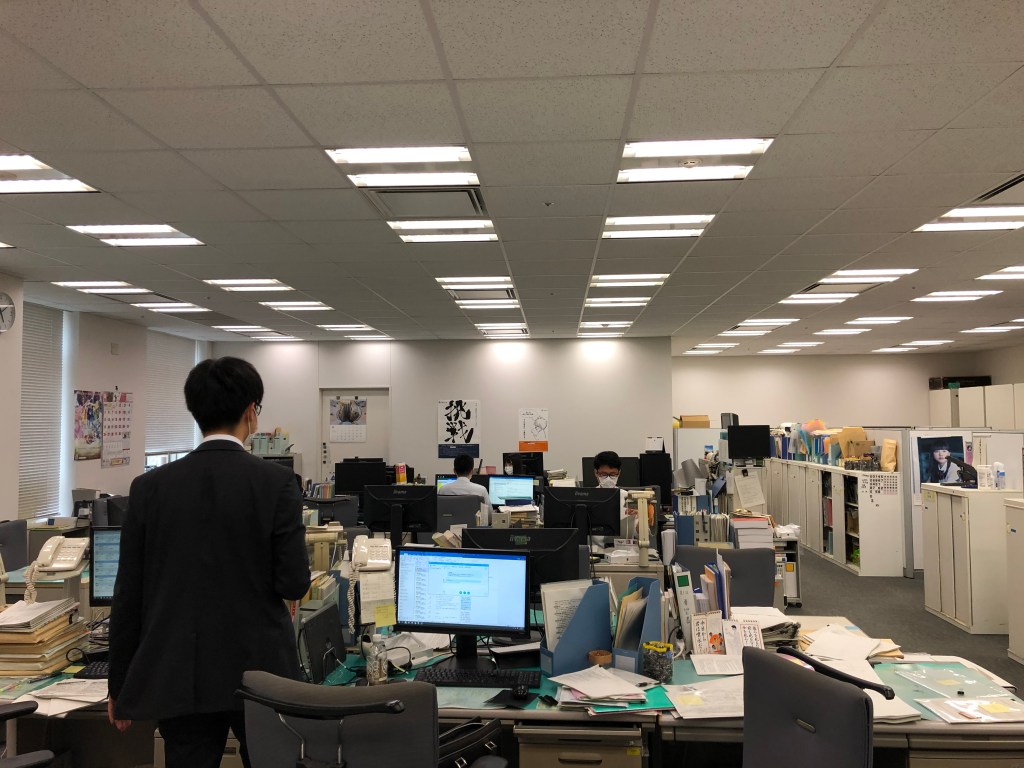
My workplace (only 9 out of 24 people in this room were at the office)

#JourneystoScale: Documenting efforts to scale up education innovations

screen-shot-2016-10-16-at-3-34-26-pmOn October 10th, the Center for Education Innovations (CEI) and UNICEF published Journeys to Scale, a report that documents the innovative efforts of five organizations as they aim to increase their impact. The organizations profiled in the report include Accelerated School Readiness, Can’t Wait to Learn, EduTrac Peru, Lively Minds, and Palavra de Criança. These are organizations that have been identified as having “high disruption potential,” and the report describes the journey each has taken to scale up their programs.

As CEI and UNICEF explain, in May 2014 they began designing and testing strategies to systematically select and support innovative education models. They received over 150 nominations but selected only 5 finalists. The finalists received funding from UNICEF and support from CEI as they tested and strengthened their scale-up models while collecting evidence on effectivenes. The report, Journeys to Scale, describes the challenges and strategies of these innovations from Brazil, Ehtiopia, Ghana, Peru, and Sudan, and lays out clear recommendations for implementers, donors, policymakers and researchers who want to support innovation.
One category of key findings from the report points to the importance of defining what is meant by both “innovation” and “scaling up.”  As the report explains,
The five innovations challenged ideas about what it means to scale an innovation, highlighting the reality that scaling does not happen in a straightforward manner and that progress is often accompanied by setbacks. They revealed that the conventional idea of scaling as simply the process of reaching more beneficiaries does not account for steps like the inclusion of new services to an existing package of interventions, the formation of new alliances with government and donor partners, and team capacity building.
Therefore, the authors find that scaling is about more than simply increasing the numbers of beneficiaries, and innovation is about more than the intervention itself. Innovation is about a broader and deeper spread of new norms and beliefs.
In addition to the publication of this report, CEI and UNICEF hosted a Twitter chat (#JourneystoScale) to keep the conversation going. See below for a Storify recap of the conversation.

//platform.twitter.com/widgets.js

Life after levels: Is the new Year 6 Maths test changing the way teachers teach?

This week we share a blog post written by Melanie Ehren and Nick Wollaston. Originally published on the IOE London Blog, of University College London, this blog is part of a Nuffield foundation funded research project Dr. Ehren coordinates. The research looks at the Key Stage 2 test in mathematics in England and how the test affects teaching of primary mathematics. The test is administered in year 6 (end of Primary school) and is considered to be high stakes as schools performing below the floor standard are monitored by Ofsted (the Inspectorate of Education), face potential forced academization, and test outcomes are used in (teachers’ and head teacher’s) performance management reviews. The test has undergone changes this year to reflect the new national curriculum, and the researchers have asked teachers (after the administration of the new test) how they are changing their teaching in response to the changes in the test. More info on the project (and a broader introduction) is on the website: www.highstakestesting.co.uk

Here we share the blog post in full. To read the post on the IOE London Blog, click here.


Life after levels: is the new Year 6 maths test changing the way teachers teach?

Earlier this month (5 July), the Department for Education published the results of the Key Stage 2 test for 10 and 11-year-olds. The publication was awaited with more anxiety than usual as this year’s test was the first one on the new national curriculum. One of the major changes in the test is the removal of the ‘old’ national curriculum levels 3, 4 and 5, where children were expected to reach at least a level 4. The level 6 paper for the most able children has also gone and results are now reported as ‘scaled scores[1]’. Each pupil now has to achieve at least a score of 100 to reach the expected standard. It seems like a minor change with little impact on how teachers teach mathematics and prepare children for the test, but recent findings from our Nuffield-funded study suggest otherwise.

We interviewed 30 Year 6 teachers in schools performing both below and above the floor standard in Mathematics. Interviews took place prior to the changes in the test in May/June 2015, and again after the changes in the test in May/June 2016. In the interviews in 2015, levels were one of the key topics teachers talked about when we asked them about notable features of the test that would inform their teaching. They explained how each of the two written Maths test papers would start with easy level 3 questions, have level 4 questions in the middle and finish with the difficult level 5 items at the end. This order of questions according to difficulty level would allow the lower attaining children to access the test, according to these teachers, and would build their confidence in answering the questions and their motivation to do well on the test. Teachers tell us in the second round of interviews, how all the questions are now ‘at level 5’ and how some of their lower attaining children stared at them in horror when opening their test booklet, asking them where the easy questions had gone.

Not only does the abolition of levels seem to have an impact on children’s motivation and confidence in test taking, it also appears to have a profound impact on how teachers come to understand and teach mathematics. Prior to the introduction of scaled scores, teachers would talk about gradually building up the level of difficulty when teaching specific mathematical content areas, such as ‘number sense and calculation’, ‘data handling’ or ‘shape and space’. Level 3, 4 and 5 test items on past Key Stage 2 test papers would help them understand the hierarchical nature of mathematics and how to introduce children to, for example, increasingly more difficult calculations (e.g. moving from one step to multistep problems, or from adding and subtracting whole numbers to adding and subtracting decimals). Resources such as Test Base would allow them to access available questions according to content area and difficulty level and they could simply download relevant questions when teaching a specific skill. Now that the levels have been removed, some of the teachers tell us that they just focus on getting all students to perform at level 5 in number and calculation as this is where most of the marks on the test are given and some hardly teach shape and space at all. These teachers also talk about moving towards a more ‘mastery style’ of teaching where they ensure that all students master the basics before they move on to teach more complex skills or other (more complex) content domains, such as algebra or geometry.

It is too early to know how widespread these changes are and the effect they will have on children’s understanding of mathematics. Our study, however, indicates that we need to keep a close eye on the breadth and depth of what our children are learning as some of these changes may be masked by an average single test score.


[1] A pupil’s scaled score is based on their raw score. The raw score is the total number of marks a pupil scores in a test, based on the number of questions they answered correctly. The Standard and Testing Agency develops tests each year to the same specification, but because the questions must be different, the difficulty of tests may vary slightly each year. This means that the raw scores pupils get in the tests need to be converted into a scaled score to be able make accurate comparisons of pupil performance over time. Every scaled score will represent the same level of attainment for a pupil each year, so a pupil who scores 103, for example, in 2016 will have demonstrated the same attainment as a pupil who scores 103 in 2017. A scaled score of 100 will always represent the expected standard on the test. Pupils scoring 100 or more will have met the expected standard on the test. In 2016, panels of teachers set the raw score required to meet the expected standard on each test.

Scan of Ed News: Exploring what the #Brexit vote means for #education in the UK

576d421757868Since the British voted to leave the European Union we have seen a variety of news reports focusing on how the move will affect the British educational system. In this short scan we share some of the conversations we have seen emerge in the past few weeks.

One strand of articles point out what the Brexit vote supposedly reveals about the overall quality of the British education system. According to the Evening Standard, the Chief Executive of Credit Suisse, Tidjane Thiam, said that the level of inequality he witnessed in Britain explained the outcome of the vote. Thiam argued that Britain should raise taxes to counteract the impact of globalization. According to an editorial in the Telegraph, the vote represents “an appetite among young people for a more internationalist approach to education.” As John Walmsley argues, three-quarters of 18-24 year olds voted to remain in the European Union, either out of a desire to live and travel throughout Europe, to help refugees, to effectively battle climate change, or access the European single market. Walmsley writes, “Even in an unstable modern world…young people simply do not have the same concerns with immigration, collaboration and pluralism that older generations have.” According to Peter Horrocks of The Open University, writing for The Times Higher Education (THE), the fact that the outcome of the vote correlated closely with percentage degree attainment shows a pressing need for a more inclusive and diverse higher education sector that offers the flexibility and support that students rightly demand, alongside specific policies to address their particular needs.”

Another strand of articles point to the implications of the Brexit vote. Russell Hobby, General Secretary of the National Association of Head Teachers, argues in Schools Week that the short term impact of the vote will be “distraction and delay,” resulting in the disruption of policies that need the attention and focus of policymakers. Long term, Hobby shares his concern that the vote might serve as impetus for change in both leadership and education policy (for example, will funding for early childhood education remain a priority?). Muhammad Zulfikar Rakhmat, writing for the Huffington Post UK, argues that the most likely immediate implication will be a reduction in the number of EU students studying in the UK, citing the approximately 125,000 EU students studying in UK institutions, and the nearly 3.7 billion pounds and 380,000 jobs they contribute to the economy. These European students might be more likely in the future to choose non-UK universities to study in, such as those in Germany or the Netherlands. Rakhmat speculates that UK universities might end up recruiting more students from developing countries, such as China, India and Indonesia. This shift might influence educational outcomes as well, as many EU students arrive with an advanced educational background. In another article in the Huffington Post UK, Steve Spriggs agrees that British schools might suffer the loss of some 5,000 students from EU countries who currently attend British boarding schools. As he argues, “An exodus of international students would mean a vast net outflow of money from the UK from associated industries: student accommodation, cultural tourist events to name but a few.” However, Spriggs also raises a question about teachers, citing speculation that up to 400,000 teachers might be forced to leave the UK at a time when there is already a shortage of qualified teachers. On July 5th, NHT teachers organized a one-day strike to protest what they see as a crisis point. As Lola Okolosie argues in The Guardian, in addition to the unknown implications of the Brexit vote, teachers are concerned about the loss of jobs, cuts to per pupil spending, and the national commitment to make all schools academies by 2020.

Mark Tucker,  president and Chief Executive Officer of the National Center on Education and the Economy, also provides one take on the implications of Brexit for education and the US election. As he puts it in a recent Washington Post article, “Just as in England, those with the least education are those who have been hurt most by globalization and free trade.  They are most likely, as we see now in the way they are reacting to the candidacies of Donald Trump and Hillary Clinton, to reject not just the leaders of their parties but also the experts they think have ignored them and their interests.”  He concludes, “The Brexit vote is a warning shot across our bow.  Will we hear it?”

-Deirdre Faughey


Exploring the rising stature of Estonia’s education system

This week, we shared an article (via Twitter) from our colleagues at The Hechinger Report about the rising stature of the Estonian education system. We also asked several colleagues from Estonia, including Margus Pedaste, Professor of Educational Technology and Vice Dean of the Faculty of Social Sciences and Education, University of Tartu, to comment on the article.

Estonia has not made big changes in the education system, Dr. Pedaste explained, but it has updated the national curriculum. Further, an increased focus on “general transferable competences (e.g. mathematical competence, digital competence, learning skills, communication competence),” has required some changes in teaching practice “even if this change is not often too big.” He also suggested that e-learning software and hardware are often used in Estonian schools today and may have influenced the results.

In responding to the comment that no one in Estonia “would say the school system is doing fine,” Pedaste concurred. “Yes, that’s what we hear very often in Estonia. We are very outcome-oriented and less process oriented and, even if teachers value student-centered approaches in learning, their lessons are still rather teacher-centered.” He added that Estonian teachers, on the whole are veterans, in fact their level of experience in teaching is among longest within OECD countries, at more than 20 years. As he put it “ This experience allows them to use the extensive practical knowledge they have and this might be one of the main reasons of good academic results.”

Pedaste also pointed out, that, as in Finland, most of Estonian teachers have a Master’s Degree, and “subject teachers” usually have a Master Degree in their subject plus a year of teacher training. He added that during the last 10-15 years new integrated Master Programs in teacher education have been developed and regularly updated based on international research-based and innovative ideas. Pre-service education for teachers is also always at least five years which likely contributes to the academic results. However, Pedaste continued, concerns in Estonia include that very often graduates do not want to become teachers, especially in subject areas like science and mathematics. From his perspective, this means that “something is wrong. And it is probably that not enough attention is given to developing soft skills, on collaboration and supporting each other. Too often Estonians are individualistic and competitive while real success and joy comes from collaborative effort.” While recent strategies have emphasized collaboration among teacher, Pedaste concluded “we still need more time to create a cultural change.”


Edtech startups in Southeast Asia

This week, we share an article by Nadine Freischlad that appeared in techinasia.com.  As the article explains, there are a number of startups in Southeast Asia that provide online education services. These small companies tend to have little funding and as a result they tend to remain frugal and focus on local issues. Freischlad argues that an influx of venture capital will shake up the current landscape, pushing founders to think about scaling up and profitability.

The edtech startups that have captured attention range from Indonesia’s Bulletinboard, a mobile app and online tool for teachers to post homework assignments and reports to the entire community, to Malaysia’s Classruum, an online learning environment that helps school kids learn at home and in study groups.

To learn more about the 29 most interesting edtech startups in Southeast Asia, read the complete article here.

Government funding and refugee migration in Nordic region

syria_children_refugee_camp

Photo: DFID

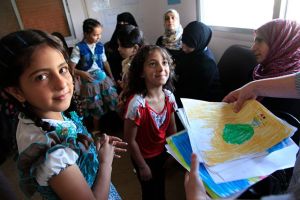
Our review of education news this week focuses on Nordic countries, where issues of government funding and the migration of refugees figure prominently. This brief scan shows that for countries such as Finland, Norway, and Sweden, the influx of refugees has implications for the classroom. For example, Norway is launching an innovation competition to teach Syrian refugee children to read. As The Nordic Page reports:

Norway is fronting an initiative to develop a smartphone application that can help Syrian children to learn how to read, and improve their psychosocial wellbeing. This will take the form of an international innovation competition in cooperation with Norwegian and international partners.

Erna Solberg, Prime Minister of Norway, also recently announced that Norway will double its support for education between 2013 and 2017. In a statement published on MSNBC.com, Solberg stated:

The gap in education funding is vast. Reaching the new goals will require concerted efforts and major investments. National governments must lead the way. Innovative partnerships, including partnerships with the private sector, will play an important part. A crucial outcome of the Oslo summit on education in July was the launch of the International Commission on the Financing of Global Education Opportunities, which was welcomed by the UN Secretary-General. 

Similarly, Sweden has recently announced the addition of $3 billion to its national budget, intended to address education and housing issues, and to restore a welfare system that many feel has been depleted in recent years; however, at the same time the country has seen an unprecedented number of 6,901 people seeking asylum in just one week’s time—3,467 of them from Syria. As Reuters reports,

Local authorities will get more than 1 billion crowns extra for integrating refugees this year, with government also increasing spending to support refugee children in school. Total spending on refugees will rise to 19.4 billion crowns in 2016 out of a total budget of around 920 billion and up from an estimated 17.4 billion this year.

In contrast, Finland is grappling with a strong opposition to the influx in refugees, as well as controversial cuts to the education budget. According to The Helsinki Times, these cuts will have implications across all levels of education, but for primary education it will call particular attention to:

…the appropriations for the reduction of class sizes in primary schools. Terhi Päivärinta, a director at the Association of Finnish Local and Regional Authorities, believes it is consequently possible that class sizes will grow in some municipalities.

In each of these countries, plans for increases or decreases to educational funding were in the works long before this refugee crisis began. As they are now being implemented under somewhat different circumstances, it will be interesting to see how they unfold in the next weeks and months.

Deirdre Faughey

Creative Commons License
This work is licensed under a Creative Commons Attribution-NonCommercial-NoDerivatives 4.0 International License.

Scan of education news: Asia

Photo: Nguyen Thi Hoang Yen

Photo: Nguyen Thi Hoang Yen

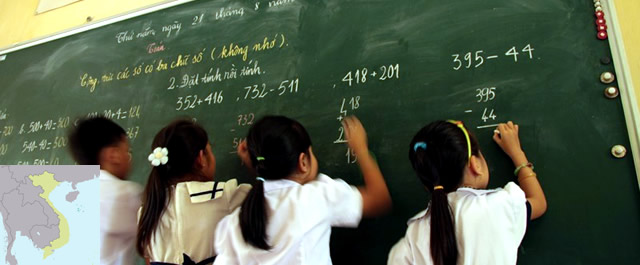
As we return from hiatus and schools in the US open their doors again, our latest scan looks over the recent education news in East Asia. This quick scan reveals a of variety concerns with the extent and quality of education. Reports include those focusing on the long-standing need to ensure that all school-age students are enrolled in and attend schools in Pakistan and the Philippines. Reports also address continuing attacks on girls and girls’ education in Afghanistan. Other reports describe what some have called a “problematic” college admissions process in Vietnam, and, even in South Korea, often touted as a high-performing system, there are concerns about changing populations, particularly in rural villages, and related school closings. Several broad efforts to improve education systems are also in the news, including a “blueprint” in Malaysia focusing on the quality of graduates, a “radical” school reform in Taiwan, a new education programme from the education and training ministry in Vietnam, and a general drive to improve education in Pakistan and prepare students for the knowledge economy.

Why 25 million children are out of school in Pakistan – The Express Tribune http://buff.ly/1LSObpr

#AkoSiDaniel Campaign Aims to Empower Children in the Philippines Through Education The World Post http://buff.ly/1JwTZPx

Girls’ education under attack: Over 100 Afghan schoolgirls poisoned Daily Pakistan http://buff.ly/1Ulu8o1

Vietnam’s education minister takes responsibility for problematic college admission process, Tuoi Tre News  http://buff.ly/1L2P7BW

As South Korean Villages Empty, More Primary Schools Face Closings, New York Times http://buff.ly/1KpZ0iG

Malaysian Education Blueprint focuses on quality of graduates – Minister, Astro Awani http://buff.ly/1O6Ib9O

Education and training ministry unveils new education programme – VietNam News http://buff.ly/1KFGhy6

Pakistan launches drive to improve education system, The Daily Times http://buff.ly/1Ulu47P

Creative demand: Taiwan says radical school reform will set it apart, Christian Science Monitor http://buff.ly/1Kq0sBz

Taiwan: Progressive Education Reform Unrepresented Nations And Peoples Organization, UNPO http://buff.ly/1L2SOrb

Creative Commons License
This work is licensed under a Creative Commons Attribution-NonCommercial-NoDerivatives 4.0 International License.

A Framework to Organise the Enabling Factors for the Spreading of Curricular Innovations in a Centralised-Decentralised Context of Singapore Schools

As part of a symposium focused on educational innovation around the world  at the annual conference of the American Educational Assocation in Chicago this week, we are sharing commentary papers from the participants.  Today’s contribution is from Paul Meng-Huat Chua and David Wei Loong Hung, of the National Institute of Education, Singapore. 

Contextual and Research Background

Building on descriptions of the Singaporean educational context as a blend between centralization and decentralization, this post seeks to provide a framework to account for the way that curricular innovations may spread both inside and across Singapore schools. Individual schools in Singapore are first organized as clusters then into geographical zones. Schools in Singapore are expected to develop curriculum innovations and deepen them into distinctive identities while a set of recently-launched Future Schools are also expected to spread their digital-based curriculum innovations to other schools throughout the country. In short, we argue that the centralization of the system can complement the decentralized schools’ efforts to develop and spread their own curricular innovations.

The research behind this blog post was carried out in two Future Schools in Singapore, as well as on three other Singaporean technology-mediated innovation-occurring schools. From the data collected, three models of curricular innovation diffusion have been identified, which exist along a continuum. These models range from “deep but narrow” diffusion to “non-deep but wide” diffusion, with a variety of models that exhibit neither deep nor wide diffusion in between. Some of these models adopt a school-based approach to innovation spreading while others adopt a cluster-/zone-based approach to innovation diffusion.

In the case of “deep but narrow” diffusion, a six-year inquiry-oriented, mobile technology-based science curriculum innovation for primary three and four students (aged 9–10 years) has been diffused to five other schools within the same zone since 2013. An example of the “non-deep but wide” diffusion relates to the spreading of a digital-based learning trail innovation from one school to over two hundred schools in a space of a few years. Digital-based learning trails harness real-world data found in a physical trail for students to subsequently apply their inquiry skills to actively construct knowledge.

Several factors appear to support the spread of curricular innovations in each instance, including significant numbers of expert-teachers who can mentor novice-teachers; cross-schools’ leadership and champions; augmentation of school resources from the community; capacity of school leaders and teachers; social capital (trust); as well as passion and belief in the innovation.

Framework to Organise the Enabling Factors of Curricular Innovation Spreading

From these enabling factors, a 3-tier framework to account for the spreading of curricular innovations was developed. The 3 tiers comprise:

  1. Micro-supports for spreading innovations
  2. Macro-supports for spreading innovations
  3. Meso-supports for spreading innovations

Micro-Supports for Spreading Innovation

The micro-level for spreading curricular innovation focuses on the practices within the innovation spreading schools that teachers and leaders are engaged in to develop capacity, since capacity building is a key factor in enabling the spread of curricular innovations. From our research, it was found that both the design of the capacity building tasks and the process of the capacity building mattered. On the task design, a feature of effectiveness was when teachers engaged in the co-designing of the innovative curriculum with teacher-experts. In terms of the process of capacity building, when the learning relationship was approached from an apprenticeship perspective of observation and critical inquiry and reflection, the learning relationship was productive as the teacher-novices were able to appropriate the dimensions of innovative pedagogy (e.g. hypotheses formulation and critical and creative thinking) i.e. to develop the capacity needed to enact that innovation.

Macro-Supports for Spreading Innovation

Any education system exists within a larger environment or eco-system of infrastructures, policies and alignments. The macro-supports for spreading curricular include the macro system-at-large socio-technical-economic and policy infrastructures that facilitate and sustain the spreading of innovation. In the Singapore educational context, features of the larger environment that are established by the Ministry of Education include policy signals for curricular innovation; school autonomy policy vis-à-vis the school cluster system; a tight-loose-tight of perspective for curriculum-pedagogy-assessment design; and the augmentation of resources (financial and technological).

Meso-Supports for Spreading Innovation

Where the contribution lies, we suggest, is in conceptualization of a meso-tier of innovation spreading, which allows for the interplay of the macro- and micro-supports for innovation spreading. The meso-tier has be structured into existence at the level of the innovation spreading schools such as a sub-group of cluster schools which decidedly want to spread the curricular innovation. The meso-tier consists of leadership stances, behavioral norms and structural/organizational arrangements that seek to leverage the affordances of the macro infrastructures in order to “distribute” the learned capacity at the micro-level to other schools within the group of innovation-spreading schools.

From our research, instantiations of the meso-tier leadership stances, norms and structural/organizational arrangements include the culture of learning and innovation in schools. As this tier mediates both macro and micro dimensions, success of this mediation is observed when teachers’ passion towards curricular innovations are stirred; teacher champion-leaders serve as “experts” to apprentice other teachers; visits by principals create awareness of the curricular innovations; and resources such as time, financial, technological and capacity are created and harnessed towards the end of innovation spreading. Last but not least, a final piece to the meso-tier framework is the presence of system leaders who initiate, orchestrate and drive the development of leadership stances (e.g. cultivation of teacher leaders); cultivate behavioural norms (e.g. culture of innovation); and put in place structural/organizational arrangements (e.g. principal visitations, harnessing of resources). In the same vein, Yancy Toh and colleagues have theorized the need for ecological leadership which mediates and orchestrates the various tiers.

Conclusion and Next Steps

This framework has been conceptualized using data from the case study research of two Future Schools in Singapore, as well as on three other technology-mediated innovation-occurring schools. A thread running through the framework is that macro infrastructures that are centrally determined in Singapore schools could be leveraged or appropriated to enable and facilitate the spreading of innovations in individual autonomous schools. For instance, system leaders in the research have been known to capitalize on the affordance of school autonomy in the macro environment to initiate and ensure the spreading of innovation (i.e. learned capacity) from his or her school to another group of schools within the cluster.

A possible next step in the trajectory of this research is to test the robustness of this organizing framework of innovation spreading by using it to predict the extent of innovation spreading in other educational scenarios (including for non-technology mediated innovations) in Singapore schools and to ascertain the reliability of the predictions.