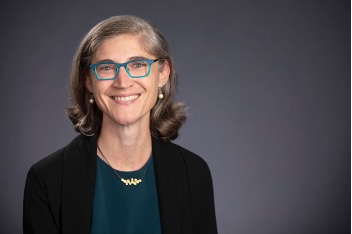
IEN celebrates the life of Lee Shulman, renowned scholar and mentor, who passed away on December 30th, 2024. Shulman was a Professor of Education at Michigan State University and Stanford University, before becoming the 8th President of the Carnegie Foundation for the Advancement of Teaching in 1996. He also served terms as President of the National Academy of Education and the American Education Research Association where he helped establish the division of Teaching and Teacher Education. Shulman received numerous awards over the course of his career, including the American Psychological Association’s E.L. Thorndike Award for Career Achievement in Educational Psychology in 1995 and the Grawemeyer Award in Education in 2006. Thomas Hatch, who worked with Shulman at the Carnegie Foundation, shares some of his reflections.
Lee Shulman was an exuberant friend and scholar. Always positive and supportive, whether in his professional advice or as a host as he and his wife Judy welcomed me, my wife (and his graduate student) Karen Hammerness and our young children into his home. Lee’s work and impact cannot be summed up in any one idea or publication, but Those who understand: Knowledge growth in teaching, his 1986 AERA Presidential Address, made clear that teaching involves substantial knowledge and expertise. In the process, he demonstrated that teaching is not just a difficult job, but a demanding profession, worthy of the same kinds of recognition and reward as any other. That work helped to launch a whole new era of research on teaching. Far more than an academic exercise, that work and Lee’s insights were central to the establishment of the National Board for Professional Teaching Standards, as well as to the advancement of the Scholarship of Teaching and Learning and to the creation of a host of centers and institutions dedicated to studying and improving the quality of teaching in K-12 as well as higher education.
Lee worked out his ideas over time in conversations, at meals as well as in seminars, and his ideas often launched new initiatives and new lines of work. In her remembrance, Jill Perry, Executive Director of the Carnegie Project on the Doctorate – one of several projects spawned while Lee was President of the Carnegie Foundation – explained this as “classic Lee:”
“offering a casually delivered suggestion that was, in reality, a deeply considered and insightful idea. He was known for these moments, where his offhanded guidance would leave young scholars or practitioners inspired yet responsible for sorting out the details on their own.”
I had that experience, sitting in Lee’s office in 1996, in the heart of Silicon Valley with the internet developing all around us. He declared that he wanted to bring the power of the three great resources of the university – the laboratory, the library, and the museum – and put them online to support faculty in K-12 and higher education who were creating the scholarship of teaching and learning. And then he asked me to do it. Inspired, I returned to my office to stare for hours at the cursor blinking on my computer screen. But, eventually, we established the Carnegie Knowledge Media Lab to support the Carnegie Academy of the Scholarship of Teaching and Learning (CASTL K-12 and CASTL Higher Education) and began a long line of work that included two books, Into the Classroom and Going Public with Our Teaching, and the development of a whole series of multimedia websites and images of practice that documented the work of exceptional teachers.
Beyond his ability to tell a story and make a powerful point, Lee’s brilliance was in his humanity. Lee was as likely to draw on his experience working at the counter at his parents’ deli on the south side of Chicago as he was to quote Benjamin Bloom or Joseph Schwab, two of his mentors at the University of Chicago. That deli experience, in particular, was evident in a segment he did for NPR’s This I Believeseries. What did Lee believe in? He believed in pastrami:
“I believe that pastrami is a metaphor for a well-lived life, for a well-designed institution and even for healthy relationships. Pastrami is marbled rather than layered. Its parts, the lean and the fat, are mixed together rather than neatly separated.… Separate layers are much easier to build, to schedule and to design. But I believe that marbling demands that we work with the messy world of people, relationships and obligations in their full, rich complexity. The diet mavens inform us that marbling can be dangerous for our health, but as an educator I’m willing — even obligated — to take the risk. I want to marble habits of mind, habits of practice and habits of the heart with my students — just like pastrami.”
His writings and his talks drew from all his experiences, and, somehow, after a well-known tendency to wait until the last minute, they would burst forth, fully-formed. On one occasion, I remember flying from San Francisco to Washington D.C. for the annual conference of the American Association of Higher Education, where Lee was scheduled to give the keynote address the following day. I happened to be seated in front of him, and as we settled into our seats, I asked him what he would be talking about. He held up a pack of index cards and told me he was going to work on it on the plane. Some six hours later, after the plane pulled into the gate, when we unbuckled our seat belts and stood up, Lee spilled all the cards onto the floor. As I stooped to help him collect his notes, I realized every single card was blank.
The next morning, seemingly without reference to a script or a single card, Lee delivered a talk, Taking Learning Seriously, that ended in a standing ovation. In that talk, Lee addressed the first question “What does it mean to take anything seriously?” by declaring that “when we take something seriously, we often talk about professing it:”
“The deepest, oldest meaning of the word “profess” is to take religious orders in a public and visible way. When one professes faith, it means taking on a set of obligations that will serve as the first principles for controlling one’s life, no questions asked. Professing one’s faith, behaviorally and emotionally, is an impressive example of taking something seriously.
Another sense of the word is that we profess our love–for our spouses and partners, our parents, our children, our dearest friends. We profess a kind of commitment that has within it a willingness to sacrifice on behalf of the other. Also in a public manner, we declare our devotion to another. Here is yet another example of taking something quite seriously.
A more contemporary meaning of the word, a meaning more closely associated with the work of those who read this magazine, is to profess one’s understanding, one’s expertise: to be professional, or to be a “professor.” Members of professions take on the burden of their understanding by making public commitments to serve their fellow beings in a skilled and responsible manner. “Professors” take on a special set of roles and obligations. They profess their understanding in the interests of nurturing the knowledge, understanding, and development of others. They take learning so seriously that they profess it.“
Throughout the talk, and especially in the conclusion, Lee’s remarks deftly weaved together the insights of a scholar of science and a man of faith:
“To be deeply educated, I believe, is to understand both when skepticism and evidence are appropriate, and when faith and suspension of disbelief are appropriate. There are no rules or principles for knowing this distinction. Only through studying the examples in both scientific and humanistic sources -through wrestling with that inherent contradiction between faith and reason–can we and our students come to terms with the essential uncertainties that define our roles as professionals and as human beings.
As professors, we are asked to be rational and empirical, to demand evidence. On the other hand, as teaching professionals, we expect ourselves to believe what much empirical evidence says we shouldn’t: that all our students can learn. We express our faith in our students’ potential and in our ability to teach them. As professors, we do not choose between the skepticism of reason and the hope grounded in faith. Our students demand both. And we must learn, as professional educators, to do both.”
This month’s Lead the Change (LtC) interview features the new leaders of the Educational Change Special Interest Group of the American Educational Research Association, Patricia Virella, Tayeon Kim, Lauren Bailes, and Elizabeth Zumpe. This week IEN shares excerpts from those interviews focusing on the connections between their work and the work of the SIG and the wider field of educational change. The LtC series is produced by Elizabeth Zumpe and sponsored by the Educational Change SIG. A pdf of the full interview will be available on the LtC website.
Lead the Change Interview with Patricia Virella
Lead the Change (LtC): What are some of the ideas that you hope the field of Educational Change can learn from your work to inform practice, policy, and scholarship?
Patricia Virella (PV): Over the past year, I prioritized immersing myself in school environments, spending approximately 30 days actively engaging with students, teachers, and staff. This hands-on experience allowed me to gain profound insights into the unique challenges that students are facing in today’s educational landscape, including mental health issues, ongoing crises, and persistent inequities. Witnessing the resilience and joy demonstrated by students in the face of these challenges was incredibly inspiring. It reinforced the importance of understanding the realities of schooling in the present moment. All of us must pause and truly comprehend the current state of education before forging ahead with our plans and initiatives. This firsthand exposure has deepened my commitment to advocating for comprehensive support systems that address the multifaceted needs of students and educators alike. It has also fueled my passion for promoting holistic approaches to education that prioritize well-being and equity. I am driven to leverage these insights to inform my work and to champion initiatives that empower schools to create environments where every student can thrive.
LtC: What excites you about the field of Educational Change, and how might we further those ideas through the work of the Educational Change SIG?
PV: The idea of change is inherently exhilarating. While change often implies embracing entirely new approaches, I also ponder whether it involves a return to foundational concepts and theories that have yet to manifest their full potential, such as liberation, transformation, and experiential learning. This dual perspective prompts me to consider how we, as a collective of academics, can effectively support change that embodies the spirit of equity. I recognize that achieving equity can sometimes feel elusive, but it does not have to remain this way. My commitment to exploring the multifaceted nature of change and equity has deepened my resolve to advocate for inclusive and transformative practices within academic and institutional settings. By critically examining the intersections of change and equity, I am dedicated to fostering environments where all individuals have equal opportunities to thrive and contribute meaningfully. I am driven to channel these reflections into actionable strategies that promote systemic change and advance the realization of equity within educational and academic spheres.
Dr. Patricia M. Virella is an Assistant Professor in the Department of Educational Leadership at Montclair State University. Dr. Virella’s research focuses on implementing equity-oriented leadership through leader responses, organizational transformation and preparation. Dr. Virella also studies equity-oriented crisis leadership examining how school leaders can respond to crises without further harming marginalized communities.
Lead the Change Interview with Taeyeon Kim
LtC: What are some of the ideas that you hope the field of Educational Change can learn from your work to inform practice, policy, and scholarship?
TK: My research offers several contributions to the field of Educational Change, focusing on three main areas: revisiting policy through the voices of equity leaders, critically examining policies and systems by centering racially and linguistically marginalized communities, and promoting cross-cultural dialogue using transnational and decolonial perspectives. Given that my work was previously featured in the Lead the Change series (See the Lead the ChangeOctober issue of 2023), I would like to highlight some insights from my recent publication on leadership learning.
As a leadership educator, I view learning as a core tenet of leading educational change. My scholarship on educational leadership and policy has led me to explore how to guide meaningful learning for aspiring leaders who pursue equity and social justice. My recent work, published in the Journal of School Leadership (Kim & Wright, 2024), presents a conceptual-pedagogical framework that on guides students through emotional discomfort when learning about inequities and injustice. This research underscores the importance of emotion in learning, which can drive change at both individual and social levels. When negative emotions are not properly addressed and processed, meaningful learning cannot occur, undermining leaders’ efforts to redress inequities, injustice, and harm. However, with appropriate guidance, emotional discomfort can be a valuable source for transformative learning and changes (see Mezirow 1997). Traditional scholarship on educational change often relies on rationalistic approaches; however, my recent study emphasizes the role of emotions and the holistic aspects of learning in effecting change. It also highlights the crucial role of facilitators and educators in developing equity leaders.
Thus, my work reveals that effective leadership learning involves addressing the emotional dimensions of learning about social justice issues. By integrating these emotional and holistic aspects, educational leaders can foster more profound and lasting changes in their practice, policy, and scholarship. This approach can help prepare leaders, better equipping them to navigate and address the complex challenges of inequity and injustice in education.
LtC: What excites you about the field of Educational Change, and how might we further those ideas through the work of the Educational Change SIG?
TK: The field of Educational Change is particularly exciting due to its emphasis on partnerships and interdisciplinary approaches, and its appreciation for international perspectives. As a transnational scholar, I often notice that AERA’s discourse tends to be US-centric and predominantly features scholarly thoughts and contexts published in English. This observation underscores the importance of the Educational Change SIG’s foundations and history, as it can potentially extend the boundaries of our educational scholarship.
To advance the field, I urge educational change scholars to critically engage with issues of geopolitics, coloniality, and global whiteness (e.g., Chen, 2010; Mignolo, 2008; Leonardo, 2002) that influence knowledge creation and dissemination. When we embrace “interdisciplinary” and “international” perspectives, it is crucial to interrogate whose knowledge is being prioritized and how it is being represented.
“To advance the field, I urge educational change scholars to critically engage with issues of geopolitics, coloniality, and global whiteness.”
With our new leadership team, I aim to extend the field of Educational Change through several focuses. First, I urge the field to integrate diverse onto-epistemological understandings. The field can benefit significantly from including non-Western, indigenous, and other marginalized ways of being and thinking. By incorporating these perspectives, we can challenge the dominance of Eurocentric paradigms and enrich our understanding of educational practices and policies. Second, educational change scholars need to consider the power dynamics involved in knowledge production and dissemination. This means questioning who has access to academic platforms, whose voices are amplified, and whose are marginalized. Future activities organized by the Educational Change SIG could better support multilingual scholarship and inclusive platforms that are accessible to scholars from various regions and backgrounds, ensuring that a variety of voices are heard and valued. This will eventually promote cross-cultural and transnational collaborations. Finally, integrating critical theories such as postcolonial theory, critical race theory, and feminist theory can provide valuable lenses through which to examine and address systemic inequities in education. These theories can help scholars and practitioners understand the historical and structural factors that perpetuate educational inequalities and identify pathways to more just and equitable educational systems.
By taking these steps, the Educational Change SIG can play a pivotal role in promoting a more inclusive and globally informed approach to educational change, ensuring that the field continues to evolve and respond to the complex needs of educational communities worldwide.
Taeyeon Kim is an assistant professor in the department of Educational Administration at the University of Nebraska Lincoln. Her scholarship explores intersections of policy and leadership, with a particular focus on how educational leadership can challenge unjust systems and humanize educational practices to empower marginalized students and communities.The Educational Change SIG would like to acknowledge and congratulate Taeyeon Kim as the recipient of the 2024 Educational Change SIG Emerging Scholar Award. Her work was featured in the Lead the Change in October, 2023.
Lead the Change InterviewLauren Bailes
LtC: What are some of the ideas that you hope the field of Educational Change can learn from your work to inform practice, policy, and scholarship?
LB: I aim to share with the field a clear emphasis on systems change for equity, especially in the ways we think about who leaders are. My research focuses on identifying the systems, practices, and mindsets that perpetuate inequities in the careers of educational leaders. Most of my work problematizes the notion of ‘pipelines,’ especially in educational leadership and how career experiences like preparation, promotion, and evaluation are differentially distributed by race and gender (e.g., Bailes & Guthery, 2020; Bailes et al., 2023). When we consider careers to be pipelines, we might wrongly believe those pipelines are neutral, and that everyone has an equal chance of entering or flowing through the pipeline. That is fundamentally untrue: Women and People of Color, as well as people with intersectional identities, experience sorting at every career juncture, even when they are equivalently qualified relative to white or male peers. Further, these career inequities often result in adverse outcomes for faculty and students—especially faculty and students of color.
“Most of my work problematizes the notion of ‘pipelines,’ especially in educational leadership and how career experiences like preparation, promotion, and evaluation are differentially distributed by race and gender.”
A second thing I hope to share is the critical importance of partnering with current practitioners and myriad ways of incorporating their perspectives to deepen, clarify, and implement approaches to and findings of research. The profound systems changes required to shift unjust organizational practices are unlikely to come only from the academy. While research like mine can and does inform practice, I value, seek, and incorporate the perspectives of folks who have experienced injustice in their career trajectories. They are uniquely capable of showing me what I might be missing and how to better capture and learn from what they have experienced or what they know might work to change the system. I also want to be clear that there is much I am still learning from colleagues in this SIG and throughout our field. I’m looking forward to deepening those connections and bringing my own learning to bear on my research and partnership efforts to shift systems in service of equity.
LtC: What excites you about the field of Educational Change, and how might we further those ideas through the work of the Educational Change SIG?
LB: I think there is a broad appetite—among researchers, policymakers, practitioners, and families—for change in education. That appetite often results in misguided and harmful movements toward neoliberalism, isolationism, or the erosion of schooling as a public good, but there may be opportunity for broad and supportive coalitions for some of the interventions, innovations, and structures that do preserve and enhance equitable and accessible education for every student.
Lauren P. Bailes is an associate professor of education leadership in the School of Education at the University of Delaware, where she is the coordinator of UD’s EdD in Educational Leadership. After teaching middle school language arts in New York City, she earned her doctorate at The Ohio State University. Now, she researches school leadership preparation, promotion, and evaluation; school organizational characteristics; and the intersection of school leadership and policy. Lauren’s favorite days are still the ones spent in schools alongside teachers and leaders.
Lead the Change Interview withElizabeth Zumpe
LtC: What are some of the ideas that you hope the field of Educational Change can learn from your work to inform practice, policy, and scholarship?
EZ: Prevailing ideas about Educational Change tend to come from scholars and policymakers who work far from the realities of schools. Too often, these ideas rest upon wildly false assumptions about existing capacities in schools, overlooking how many operate amid chronic adversity. Chronic adversity occurs when schools regularly face inadequate resources to meet their community’s needs, unproductive pressures to improve, and a lack of support for the profession. When designed from afar, educational reforms tend to presume that school challenges stem from educators’ ‘lack’ of motivation or competence and that improvement thus depends upon intensive intervention from the outside.
My research offers a different perspective: school improvement amid adversity as a struggle to develop collective agency (Zumpe, 2024). Agency is an inherent driver of human motivation and of educational improvement. But agency can become constrained when people are regularly subjected to demands for which they do not have adequate resources and experience inevitable failure.
As part of one RPP described above, I collaborated closely with a school facing challenging circumstances (Zumpe, 2024). At the start of our collaboration, we realized that our partnership’s theory of action had not considered this school’s needs and context. Across years of being labeled as ‘failing’ and facing daily struggles to ‘reach’ students and cover classrooms, the school’s leaders had tried various initiatives to improve. However, most of their efforts faltered and sputtered out, leaving conflict and cynicism behind. By their own account, the faculty struggled with the “basics” to get along well enough to launch and sustain improvement.
When the school’s leadership team invited me to help, I tried to capture their efforts to develop a foundational capability to work together to solve problems, which I called collective agency. Through participant observation with several work groups, I traced how their collective agency became enabled and what shut it down. I also launched and studied a new group using action research.
Comparing groups, I found that efforts to develop collective agency collapsed when educators faced overwhelming and complex problems for which they could see no solutions within reach. In these situations, they avoided their problems, pointed fingers at each other, and expressed a sense of helplessness that nothing could be done. On the flip side, efforts to develop collective agency surged when someone charged the group to ‘do something,’ and when this initiative was combined with a simple solution that the group felt they had the capacity to enact. In these situations, members affirmed each other, perceived the group’s potential for success, and pulled together to make progress towards addressing a problem.
These findings suggest a need for policies and reforms aimed at enabling school improvement in the ‘next level of work’ (City et al., 2010). To do this, we need to partner with educators in challenging circumstances to define and frame goals for improvement within reach and incrementally build organizational problem-solving capacity. Policymakers and scholars need to recognize educators as partners in research and development, without whom our educational system cannot remedy or repair.
LtC: What excites you about the field of Educational Change, and how might we further those ideas through the work of the Educational Change SIG?
EZ: I find hope in the growing number of education researchers seeking answers to existential questions about the role of research in education. Many educators and scholars are deeply concerned about the future of our planet and our democratic values. Looking around at the pernicious grip of racism, the fracturing of civic values, and the erosion of our public education system, many scholars are asking, how does our research relate to this? What are we – as scholars– doing about it? Out of our collective angst comes a growing willingness to expand how we think about academic research and to innovate.
I am excited by the growing number of scholars, especially early career scholars, working to build a more humanistic and justice-forward academic culture. Within our Educational Change SIG and scholarly communities working in RPPs and continuous improvement in education, I am inspired by efforts to actively build a culture in which academics care about each other as people, carry our status with humility, open ourselves to be vulnerable as learners, and treat social impact as a core value.
To further those ideas, I think the Educational Change SIG should reimagine how we organize and schedule AERA sessions with the intention involving more PK-12 practitioners. One way the SIG can do this is to develop a conference call and session formats that encourage and elevate practitioners’ voices and expertise. The SIG might consider offering sponsored conference registration awards for presenting practitioners. The SIG executive committee can also advocate with AERA to schedule specially designated conference sessions for practitioners that are held during after work hours.
I think the Educational Change SIG should support the diversification of our membership and international learning as a facilitator of cross-national and trans-global exchange. One way to do this is by furthering our existing partnerships with the International Congress for School Effectiveness and Improvement (https://www.icsei.net/about-icsei/) and journals that explicitly seek scholarship with an international perspective, including the Journal for Educational Change. I would also like to see our SIG do more to promote and support international participation in AERA and other remote events for scholarly exchange throughout the year.
Elizabeth Zumpe is an assistant professor in the Department of Educational Leadership and Policy Studies at the University of Oklahoma. A former K-12 public school teacher for over a decade with National Board Certification, Elizabeth holds a Ph.D. in Education from the University of California, Berkeley.
References
Freire, P. (1970). Pedagogy of the oppressed. Herder and Herder.
Virella, P., & Liera, R. (2024). Nice for what? The contradictions and tensions of an urban district’s racial equity transformation. Education Sciences, 14(4), 420.
Chen, K. H. (2010). Asia as method: Toward deimperialization. Duke University Press.
del Carmen Salazar, M. (2013). A humanizing pedagogy: Reinventing the principles and practice of education as a journey toward liberation. Review of Research in Education, 37(1), 121-148.
Kim, T., & Mauldin, C. (2022). Troubling unintended harm of heroic discourses in social justice leadership. Frontiers in Education, https://doi:10.3389/feduc.2022.796200
Kim, T., & Wright, J. (2024). Navigating emotional discomfort in developing equity-driven school leaders: A conceptual-pedagogical framework. Journal of School Leadership, 10526846241254050.
Leonardo, Z. (2002). The souls of white folk: Critical pedagogy, whiteness studies, and globalization discourse. Race Ethnicity and Education, 5(1), 29–50. doi:10.1080/13613320120117180
Mezirow J. (1997). Transformative learning: Theory to practice. New Directions for Adult and Continuing Education, 1997(74), 5–12.
Mignolo, W. D. (2008). The geopolitics of knowledge and the colonial difference. In M. Moraña, E. Dussel & C. Jáuregui (Ed.), Coloniality at large: Latin America and the postcolonial debate
Bailes, L. P., Ahmad, S., Saylor, M., & Vitale, M. N. (2023). Quality or control: High-needs principals’ perceptions of a PSEL-based evaluation system. Journal of Research on Leadership Education, 18(4), 622-648.
Bailes, L. P., & Guthery, S. (2020). Held down and held back: Systematically delayed principal promotions by race and gender. Aera Open, 6(2), 2332858420929298.
City, E. A., Elmore, R. F., Fiarman, S. E., & Teitel, L. (2009). Instructional rounds in education (Vol. 30). Cambridge, MA: Harvard Education Press.
J., & Steup, L. (2021). Research-practice partnerships in education: The state of the field. William T. Grant Foundation.
Mintrop, R., & Zumpe, E. (2019). Solving real life problems of practice and education leaders’ school improvement mind-set. American Journal of Education, 125(3), 295-344.
Mintrop, R., Zumpe, E., Jackson, K., Nucci, D.,& Norman, J. (2022). Designing for deeper learning: Challenges in schools and school districts serving
This week, IEN explores what instructional coaching with teachers look like from “micro-“ and “macro-perspectives.” This post is the first in a series featuring excerpts of interviews with presenters participating in the Educational Change Special Interest Group sessions at the upcoming Annual Conference of the American Educational Research Association in Philadelphia in April. This post includes presenters from the session titled: “A Roundtable Discussion to Examine a Synthesis of Micro- to Macro-level Coaching Research.” These interviews are part of the Lead the Change series produced by AERA’s Educational Change Special Interest Group. The full interviews can be found on the LtC website. The LtC series is produced by Alex Lamb.
The Micro-level Work of Coaching: Examining the Content and Purpose of Coach-Teacher Interactions — Lynsey Gibbons, University of Delaware, Abby Reisman, University of Pennsylvania
LtC: The 2024 AERA theme is Dismantling Racial Injustice and Constructing Educational Possibilities: A Call to Action. How does your research respond to this call?
Lyndsey Gibbons & Abby Reisman (LG & AR): Instructional coaching has been widely utilized as a strategy both for school reform and improving learning opportunities for students by providing teachers with ongoing, job-embedded professional learning (Darling-Hammond et al., 2017). Instructional coaches are uniquely positioned to assist teachers to develop justice-oriented teaching that works toward transforming personal and power relationships in classrooms, as well as support them to interrogate the larger policies and practices of schooling (Duncan-Andrade & Morrell, 2008). One way coaches do this is through supporting teachers to understand and respond to the roles of language, identity, culture, and power in learning (Baldinger, 2017; Marshall & Buenrostro, 2021). Coaches can also support teachers to interrogate policies and practices and make changes when they produce inequities or cause harm.
Lyndsey Gibbons (left) & Abby Reisman (right)
The larger theory of action of instructional coaching rests on resources that are made available to teachers through social interactions with coaches (Coburn & Russell, 2008). Coaching is job-embedded in nature, and coaches can take an active role in the work of teaching. As such, coaches can orchestrate professional interactions that make visible the complex reasoning work in justice-oriented teaching (Saclarides & Munson, 2021), such as considering when to ask a student to revoice another student’s contribution and the implications of such a choice. Professional discourse is central to how teachers learn and shapes what they have an opportunity to learn (Lefstein et al., 2020). Professional discourse is essential for productive discussions about justice-oriented teaching and learning because it allows teachers and coaches to name critical aspects of instructional practice and student learning. Coaches can help establish professional discourse to name aspects of teaching and help make it visible to teachers.
Professional discourse is essential for productive discussions about justice-oriented teaching and learning.
Particular features of social interactions can be more or less conducive to accessing appropriate resources and creating a normative environment that supports and enables change in teachers’ instructional practices. In our session, we will explore the features of coach-teacher interactions that provide productive learning opportunities to teachers. For example, we found that history teachers whose coaches focused on posing open-ended questions and anticipating students’ responses grew more in their discussion facilitation than teachers whose coaches focused on historical thinking skills. Identifying features of coach-teacher interactions is critical to supporting the professional learning of coaches, as well as researching the effectiveness of coaching. Guiding questions for our roundtable discussion include: How can coach-teacher interactions be shaped to consider how to dismantle racial injustice in the classroom and beyond? How do coaches’ orientations toward teacher learning and toward justice influence their interactions with teachers? We then will consider how we might craft a research agenda moving forward that attends to examining coaching interactions that support teacher learning.
LtC:What are some of the ideas you hope the field of Educational Change and the audience at AERA can learn from your work related to practice, policy, and scholarship?
In this session, we are intentionally bringing together scholars who study teacher learning, instructional coaching practice, and policies that impact coaching. By design, we will be examining practice and policies around coaching, as well as consider future directions for scholarship. The workgroup will break into three smaller groups to grapple with the logics, conceptualizations, and visions that shape their work researching coaching. The smaller groups will identify research gaps and consider new approaches. For example, a gap that might be identified is how coaches can help teachers attend to students’ identities and strengths as they plan for and enact instruction, as well as how coaches can help teachers learn to navigate the social and political dimensions of teaching (Marshall & Buenrostro, 2021). We then will come back together as a whole workgroup to synthesize discussions across domains to consider future, potentially collaborative, research agendas. We hope this session will be the genesis of long-term conversations organizing scholars who study coaching. Stemming from these initial conversations could be considerations for a special issue in a journal or creating a practitioner-facing document informing policies around coaching.
Widening Our Lens to Consider Coaching Models and Programs: The Benefits and Challenges of Programmatic Thinking — Jacy Ippolito, Salem State University, Rita M. Bean, University of Pittsburgh
Lead the Change (LtC):The 2024 AERA theme is Dismantling Racial Injustice and Constructing Educational Possibilities: A Call to Action. How does your research respond to this call?
Jacy Ippolito & Rita M. Bean (JI & RMB): Our joint work has traditionally focused on the roles, responsibilities, and impact of instructional coaches (and literacy coaches specifically) across grade levels and school settings. In our latest book (Ippolito & Bean, 2024), we propose a new framework for understanding and synthesizing coaching research findings. The framework is an initial response to the Kraft et al. (2018) meta-analysis call to identify effective elements of coaching programs with simultaneous attention paid to both specific instructional practices and larger school and district contexts. Towards this end, our Content and Context Framework (CCF) for coaching reframes the notion of effective coaching. Instead of thinking of coaching success as solely the product of individual coaches’ work, we instead detail the ways in which coaching efficacy may be more accurately described as the alignment of instructional content with coaching programs and processes, all within a supportive school and district context.
Jacy Ippolito (left) & Rita M. Bean (right)
This more content- and context-dependent way of thinking about coaching success paves the way for coaches, teachers, and leaders to identify more clearly the ways in which issues of equity, diversity, and racial justice are influenced by coaching in schools. If coaching work is unable to influence the instructional core by creating more equitable opportunities and outcomes for all students, then we might be hard-pressed to say that the coaching program is successful. Likewise, if school and district contexts (i.e., leadership structures, coaching policies, systematic evaluations of coaching) are unable to fully support a coaching program that has diversity and equity as a core mission, again we might be unable to call a coaching program entirely successful.
If coaching work is unable to influence the instructional core by creating more equitable opportunities and outcomes for all students, then we might be hard-pressed to say that the coaching program is successful.
As we have begun to look across the past ten years of coaching research (Bean & Ippolito, 2023)—literacy coaching specifically, as well as research on instructional coaching more broadly—we found very few studies to date address content, coaching, and context simultaneously (e.g., Galey-Horn, 2020; Zoch, 2015). If alignment of these three domains is what we hypothesize may provide the best opportunities to address issues of equity and to dismantle racial injustice in classrooms, then we must incentivize future coaching researchers to attend carefully to content, coaching, and context together in larger-scale studies. Implications of this work are far-ranging, from influencing future research to shifting the ways that coaching programs are constructed, refined, and evaluated over time.
LtC: What are some of the ideas you hope the field of Educational Change and the audience at AERA can learn from your work related to practice, policy, and scholarship?
JI & RMB: Instructional coaching has long been heralded as a gold standard for job-embedded professional learning for educators (Kraft et al., 2018). At its best, coaching is: personalized; responsive to teachers’ needs; attentive to school and district needs; sensitive to students’ unique learning successes and challenges; and implemented over long periods of time to help teachers shift instructional practices in meaningful ways. However, coaching research suggests that many coaching programs do not quite live up to their promise of supporting broad and deep changes in teaching and learning.
Our Content and Context Framework (CCF) for coaching suggests that part of the reason that many coaching programs do not fully succeed is due to a misalignment or inattention to content, coaching, and context simultaneously. For example, when all three elements are aligned, coaches can provide content-specific guidance to teachers that furthers schools’ and districts’ goals while simultaneously supporting teachers’ own identified needs. In cases where content, coaching, and context are misaligned, coaches and teachers’ work may run counter to school and district goals, and/or school or district needs (e.g., for coaches to step in as classroom substitutes) may subvert coaching work completely. A number of implications arise from our framework’s suggestion that coaching success results from the alignment of purpose and practices across content, coaching, and context.
For researchers, the implications of this framework include conducting studies that focus equally on classroom-level teaching and learning, coaching practices, and school/district contextual factors. Smaller-scale studies of individual coaches and/or coaching programs can be mined for guidance on the direction and questions of larger-scale longitudinal studies and meta-analyses. Future coaching research, regardless of scale, may best serve the field by always including: (a) data collected from and about teachers’ and students’ work in classrooms; (b) coaching practices and collaborations with both teachers and leaders; and (c) information collected from/about school and district leaders, school/district policies, and related coaching and professional learning initiatives. Such comprehensive research on coaching work—attending equally to content, coaching, and context—is what the field most needs to support future policy and practice.
For U.S. policymakers, implications include providing better guidance to schools, districts, and states about the interdependence of content, coaching, and context. Coaching guidance can no longer be provided as if content- and context-factors were neutral or irrelevant. Based on emerging content- and context-specific coaching research (e.g., Hannan & Russell, 2020), policymakers may be better equipped to provide funding and guidance to support the success of coaching practices best suited to different disciplinary initiatives (e.g., coaching practices within literacy vs. math initiatives) and different contexts (e.g. within large urban school districts vs. smaller rural districts). Ultimately, we must move away from one-size-fits-all policies for coaching, and instead move towards more nuanced content- and context-dependent guidance.
Finally, for practicing coaches and leaders, our framework suggests that the development, refinement, and evaluation of coaching programs must consider the alignment (or misalignment) of content, coaching, and context. This suggests that teachers, coaches, and leaders must partner even more closely to define coaching roles, responsibilities, and routines. School and district leaders must work with coaches to develop role descriptions, coaching schedules, and menus of service that are content- and context-specific. Finally, coaches and teachers must develop common communication and collaboration practices that are content- and context-specific, to meet teachers’ and students’ needs most effectively.
The 30,000 Foot View: Mapping the Institutional Landscape of Coaching — Sarah L. Woulfin, University of Texas at Austin
Lead the Change (LtC): The 2024 AERA theme is Dismantling Racial Injustice and Constructing Educational Possibilities: A Call to Action. How does your research respond to this call?
Sarah L. Woulfin (SLW): My research responds to this year’s AERA theme by paying close attention to how infrastructure and leadership shape instructional reform efforts in ways that exacerbate—or disrupt—inequities in educational organizations. For instance, my research on the policies and practices of coaching has explored how district and school leaders structure and conceptualize coaching as a tool for reaching equity-oriented objectives. I’m currently co-facilitating professional development sessions for principals and coaches on equity-oriented coaching. And my research on the implementation of turnaround reform considers how school leaders promote curriculum use to improve outcomes for Black and Brown students.
Dr. Sarah L. Woulfin
The daily practices of leaders and teachers can ‘add up’ to make significant changes.
LtC: What are some of the ideas you hope the field of Educational Change and the audience at AERA can learn from your work related to practice, policy, and scholarship?
SLW: One major branch of my work addresses the role of people in the implementation of education policy. In particular, the daily practices of leaders and teachers can “add up” to make significant changes. I hope the AERA and Educational Change audiences devote more attention to the power of and possibilities for individuals to catalyze crucial change to improve schools and communities. Additionally, the field should consider how to support the policy knowledge development of educators ranging from district leaders and principals to coaches and teachers. That is, how do we ensure that all educators hold the capacity to analyze and ask needed questions about reforms they are experiencing.
LtC: What excites you about the direction of the field of Educational Change, and how might we share and develop those ideas at AERA 2024?
SLW: I am excited about the ways the Educational Change field is examining a wide array of policies and programs, including discipline, attendance, school counseling, and EdTech in addition to accountability-oriented and instructional reforms. I believe this points to the utility of an Educational Change perspective for analyzing numerous aspects of districts and schools. And I encourage featuring scholarship that expands our understanding of educational change while looking at diverse reform efforts.
References (Gibbons & Reisman):
Baldinger, E. M. (2017). Maybe it’s a status problem”: Development of mathematics teacher noticing for equity. In E. O. Schack, J. Wilhelm, & M. H. Fisher (Eds.), Teachernoticing: Bridging andbroadeningperspectives, contexts, andframeworks (pp. 231–250). Springer.
Biancarosa, G., Bryk, A. S., & Dexter, E. R. (2010). Assessing the value-added effects of literacy collaborative professional development on student learning. TheElementary School Journal, 111(1), 7-34.
Coburn, C. E., & Russell, J. L. (2008). District policy and teachers’ social networks. Educational Evaluation and PolicyAnalysis, 30(3), 203-235.
Darling-Hammond, L., Hyler, M. E., & Gardner, M. (2017). Effective teacherprofessional development. Learning Policy Institute.
Duncan-Andrade, J. M. R., & Morrell, E. (2008). The art of critical pedagogy:Possibilities for moving from theory topractice in urban schools (Vol. 285). Peter Lang.
Ippolito, J. & Bean, R. (2024). The Power of Instructional Coaching in Context: A Systems View forAligning Content and Coaching. The Guilford Press.
Kazemi, E., Granger, J. C., Lind, T., Lewis, R., Resnick, A. F., Gibbons, L. K. (in preparation). Children Thrive WhenTeachers Thrive. Harvard Education Press.
Kraft, M. A., Blazar, D., & Hogan, D. (2018). The effect of teacher coaching on instruction and achievement: A meta analysis of the causal evidence. Review ofEducational Research, 88(4), 547-588.
Lefstein, A., Louie, N., Segal, A., & Becher, A. (2020). Taking stock of research on teacher collaborative discourse: Theory and method in a nascent field. TeachingandTeacherEducation, 88, 102954.
Marshall, S. A., & Buenrostro, P. M. (2021). What makes mathematics teacher coaching effective? A call for a justice-oriented perspective. Journal of TeacherEducation, 72(5), 594-606.
Robertson, D. A., Padesky, L. B., Ford Connors, E., & Paratore, J. R. (2020). What does it mean to say coaching is relational?. Journal of Literacy Research, 52(1), 55 – 78.
Saclarides, E. S., & Munson, J. (2021). Exploring the foci and depth of coach teacher interactions during modeled lessons. Teaching and TeacherEducation, 105, 103418.
References (Ippolito & Bean):
Bean, R. M., & Ippolito, J. (2023, December). Interactions of content, coaching, and context in recent literacy coaching research. Presented at the Annual Meeting of the Literacy Research Association (LRA), Atlanta, GA.
City, E. A., Elmore, R. F., Fiarman, S. E., & Teitel, L. (2009). Instructional rounds ineducation. Harvard Education Press.
Galey-Horn, S. (2020). Capacity-building for district reform: The role of instructional coach teams. Teachers College Record, 122(10), 1-40.
Hannan, M. Q., & Russell, J. L. (2020). Coaching in context: Exploring conditions that shape instructional coaching practice. TeachersCollege Record, 122(10), 1–40. Ippolito, J., & Bean, R. M. (2024). The power of instructional coaching in context: A systems view
This week IEN shares an interview with Jordan Corson that focuses on his work on learning with transnational youth inside and outside schools. Corson is an Assistant Professor of Education and an affiliated faculty member of immigration studies at Stockton University. He is a co-author with Thomas Hatch and Sarah Gerth van den Berg of The Education We Need for a Future We Can’t Predict (Corwin, 2021). This post is the first in an occasional series that features the work of early career scholars. The series grows out of a collaboration (#EdIntColl) between IEN, ARC (Atlantic Rim Collaboratory), ICSEI (International Congress For School Effectiveness And Improvement), and the Educational Change SIG (Special Interest Group) of AERA (American Educational Research Association).
IEN: What’s the key problem or issue that you’ve been working on?
Jordan Corson: In this early part of my career, I’ve really been focused on critically engaging questions of who and what counts in education. Interrogating problems of marginalization, my work aims to challenge dominant understandings of inclusion, reform, and of education itself. Exploring these issues has taken on a number of forms, but has so far largely focused on two research projects. First, I studied with people living and working in a neighborhood and marketplace in Mexico City called Tepito. When I was first living in Mexico, I heard a lot about this neighborhood that “didn’t have education yet.” People in Tepito may have varying levels of schooling, but they’re constantly engaged in complex educational practices in their everyday lives. Spending a lot of time in Tepito ultimately led to an ethnographic and historical project about educational life in the neighborhood.
An image of Tepito
In a similar vein, my dissertation project looked at the everyday lives of immigrant youth in a newcomer school in New York City. Even in the culturally and linguistically affirmative space of their school, one designed specifically to support immigrant students, the youth with whom I worked had become labeled “at-risk” of dropping out.
In these projects, I aimed to challenge the deficit narratives around educatedness and labels like being “at-risk.” Working ethnographically, I looked at rigorous intellectual work taking place in everyday life, be it practices of translaguaging, navigating the city, taking on family and professional responsibilities, or just hanging out and sharing ideas with each other. But, showing educational life as something already present was just a starting point. Although scholars like Shirley Brice Heath and Kris Gutierrez have been working to challenge schooling’s monopoly on education, the problem here is that, at the risk of creating an overgeneralization, these kinds of “non-formal” educational practices are still not taken seriously. Something like afterschool clubs or extracurriculars might be seen as important (though supplementary) education, but that still misses so much in everyday life. One example I always love to share is the albur, a kind of wordplay or double entendre that people practice in playful conversation in Tepito. There’s no school or program, no training to learn how to do this, but it takes serious intellect and creativity to engage in the back and forth of albureando. In educational research, that’s just not seen as serious knowledge or a necessary skill. Similarly the youth with whom I worked in New York City were only seen as educated when they succeeded in formal educational processes. I never wanted to attack public schools that are already under constant attack, but this returns to my initial question of engaging educators and policymakers on issues of who and what counts in education.
A sign hanging in the newcomer school
IEN: What did you learn about it?
JC: Beyond any other lesson, what I’ve really learned is that as researchers, we’re so often limiting our scope and our work. Questions of educational change are largely just looking to keep “tinkering toward utopia” as if the ultimate goal is to achieve Horace Mann’s dream of universal schooling. Youth labeled “at-risk” in schools may want education reform or policy change, but they’re certainly not sitting around waiting for policymakers or anyone else. They are pushing for changes on the ground, through things like demands for immigrant rights. Moreover, they’re also doing their own thing. They’re engaging in educational work that is useful to their everyday lives. They’re taking up rigorous ideas and feeling successful in doing so. And, they’re collectively participating in education (both formal and non-formal) that they find joyful and pleasurable. What that says to me is that we need more educational research that goes beyond figuring out ways to better school kids. Educational research and educational discourses in general are dominated by these twin concerns for inclusion in schools and academic success. I don’t want to abandon those aims or suggest schools should accept the marginalization that many students face, but there are many more educational questions out there. It’s about listening to what is already happening and respecting kids’ collective autonomy. My job as a researcher and educator who wants to change education is not to figure out how to improve inclusion mechanisms. It’s not a matter of reform. Instead, it’s about exploring how kids who are already equal, and who verify that equality through everyday intellectual work, have been marked as “at-risk” or “failing,” even in inclusive and affirmative educational environments. From there, it’s about thinking about inventive, playful ways for researchers to work on undoing all the unequal conditions we’ve made.
It’s about exploring how kids who are already equal, and who verify that equality through everyday intellectual work, have been marked as “at-risk” or “failing,” even in inclusive and affirmative educational environments
IEN: What are the implications for policy/practice?
JC: I think the biggest implication here is that policy, practice, and even schooling itself need to be restricted. The kids with whom I worked already had jobs, family responsibilities, and all kinds of commitments. As kids struggled, teachers rightly wanted to help. But, that so often meant adding in tutoring, afterschool, and other supports on top of everything else. Simultaneously, educational life outside of the school is getting smaller and smaller. At one point during fieldwork for my dissertation, some of the participants and I were at a museum. A docent was guiding us around, offering really cool details and information about the works we encountered. At one point, she asked us to all sit around a painting and started asking people to raise their hands and share ideas. It suddenly hit me, we were just back in school. The logics and expectations governing school have spread out so far, they’re encroaching on all parts of life. Simultaneously, though, there are obviously standardizing and normative forces encroaching on schools. I want to be careful here and reiterate that I think school is a wonderful place and schools should absolutely be searching out ways to welcome students and help them succeed. But, school is just one educational site among many. And, it’s a place where so much happens beyond academic success. Most of my fieldwork took place outside of schools, but some of the best stuff I observed in classrooms were teachers conspiring with students to subvert and navigate things like state tests. There were also some really beautiful moments when teachers stepped back and let the wild joyfulness of education take over. Beyond any kind of culturally responsive teaching, teachers here let a borderless curriculum rooted in students’ lived realities take over. It wasn’t drawing on interests and identities to help them read but just letting students explore and enact their own educational pursuits. Sometimes, that might be seen as academically useful from a schooling perspective. Two of the participants in the project loved performing translanguaged raps in front of their class. There were also some fantastic collective actions like the kids starting a gender and sexuality alliance. But, it also involved students sitting back, texting, and messing around on their phones. I don’t want to idealize it (there were a few pretty chaotic moments) or ignore ongoing oppressions and exclusions that these kids face, but these moments opened up some amazing possibilities for collective planning and routes that work against policy and practice that sought to govern their lives.
Educational life outside of the school is getting smaller and smaller… The logics and expectations governing school have spread out so far, they’re encroaching on all parts of life
IEN: What resources, tools, readings, helped you carry out your work?
JC: I don’t want to refer to research participants as resources, but the work was only possible thanks to their ideas, activities, and hospitality. It’s been hard to keep in touch since the project concluded, particularly during COVID, but their intellectual generosity is truly what made this work. One of the greatest resources for the participants and I was always New York City. The subway, parks, wandering the streets in the middle of summer. The place just oozes with educational potential. At the same time, beyond any IRB protocol, I always wanted to center mutual care and safety. Resources around things like know your rights were really helpful.
In terms of readings, I keep a number of books with me throughout writing. Leigh Patel’s Youth Held at the Border uses youth narratives to challenge the labels used to confine and exclude immigrant youth. The book balances intimate storytelling with a thorough critique of structural issues surrounding immigration in the United States. Whenever I feel a sense of futility creeping in, I turn to Saidiya Hartman’s work as well as Fred Moten and Stefano Harney’s The Undercommons. This kind of writing shows the creative and productive possibilities of rigorous academic work. It offers both the dominating ways that people are governed and controlled and the many strategies people take up to resist that kind of governance. Moten and Harney also show how intellectual labor comes from all over, be it be chatting on the front porch or on the factory floor at work. Furthermore, they really flip the script and show how educational institutions like universities so often act to regulate thought and codify knowledge. Finally, Rancière’s Ignorant Schoolmasterillustrated how equality is not simply some future possibility towards which we work but a starting point.
Of course, as lonely as writing can be, colleagues and mentors have always been great resources for bouncing ideas off of, sharing readings, or reining me in. I guess when it comes down to it, I’ve been a very small part of these research projects.
IEN: What’s next for your work? What problems and issues are you/will you be working on? What are your hopes for that work – what do you envision for the future?
JC: I’m just starting out as a professor, so what’s next for my work is a lot of learning how to live within and balance the varying demands of academic life. That certainly means supporting a lot of first gen folks as they become teachers. Trying to stay true to my research focus, I’ve tried to balance supporting the development of their craft with some critical questions regarding the privatized, credentialing nature of things like the edTPA.
From these research projects, I’ve been preparing manuscripts for journals and beginning the process of converting my dissertation into a book. I hope and know both the work in Tepito and the dissertation project will be with me for some time, so it’s a bit difficult to think of what’s next beyond trying to share that work. I do know the demands of academia have so far suggested I be the sole author of something like a dissertation. Going forward, I want to seek out more collaborative research that builds on collective knowledge.
Which is a more radical view of the future of schools? Is it a world with AI everywhere and floating desks? Or, is it a world in which equality is a fundamental principle applied to everyone that enters the school?
Looking ahead, one project about which I’m increasingly interested is the role of the future in education. When I started teaching last year, I inherited a class called Schools of the Future. In building the syllabus, I found a lot of institutional projections and probabilities of what schools would be like in the future, including lots of images of limitless technology. On the first day of class, I asked everyone to find or create a media image of what schools might look like in 25 years. I asked everyone to really push at the boundaries of possibility, thinking about the wildest images of schools of the future. The most common vision we came up with seemed to be like an episode of the Jetsons. In order to consider the future, we’ve also been looking at a lot of images of the past. How have schools been constructed (and why) and how have they changed over time and place? One example we looked at was some of the education work of the Black Panther Party. As we looked at the actual curriculum and explored some of the pedagogy, there wasn’t anything all that futuristic about it. In some ways, it involves some recitation and rote learning. But, that leads to a question of which is a more radical view of the future of schools? Is it a world with AI everywhere and floating desks? Or, is it a world in which equality is a fundamental principle applied to everyone that enters the school? These questions, once more, return to this fundamental issue of who and what counts in education. But, any kind of new project is somewhat down the line. For now, I’m just really happy to continue writing and working with some awesome students who I still haven’t met face to face.
This week’s post comes from Jenee Henry Wood who leads learning at Transcend. The post was published originally as part of their “Roads to Reinventing” blog series focusing on the central question “What now feels possible for education that didn’t before this massive disruption?”
Mary Bowman describes her homeland with grace: “We, the Lakota, live in Ȟe Sápa, The Black Hills. This is an ancient and very spiritual place for us….beautiful pine trees, rugged mountains, and prairie land. We hold very important ceremonies on this land.” She goes on to describe the beauty of the Badlands and the indignity of Mt. Rushmore, “that abomination” that sits at the spiritual home of her people.
There are about 100K remaining Lakota in the United States. COVID has hit Indigenous communities with ferocity. Indigenous families understandably worried that their children wouldn’t be safe returning to school in the fall. So they did something we associate with the most privileged communities – they started a learning pod.
The Lakota Oyate Homeschool Co-op
After posting a message on Facebook, Mary – a Lakota teacher – and a small group of parents, grandparents, and teachers received 140 messages from Indigenous families wishing to unenroll from their public district and re-enroll in the district on the neighboring reservation. During spring remote learning, high numbers of district students were disengaged – they just weren’t logging on. The district had no plans to reimagine the model for the fall. But the Oglala district would allow for pod-based remote learning embedded in the Lakota language and cultural curriculum.
It strikes me that these Lakota families were motivated by two realities: first, the lack of deliberate national or state action to make schools safe; and second, the importance of cultural – not just physical – safety for Lakota youth as a prerequisite for learning. Marie High Bear, now a pod teacher and mother to a young son, recalls, “My son didn’t feel as though he belonged [in his district school]…he was teased by the other kids for his long hair. I’ve had to explain to him that his baby hair is sacred to us.” For these reasons, Mary, Marie, and others in the community got together to design a learning model that would keep children physically safe and rectify centuries of inequity. “I’ve been an educator for 16 years working with indigenous kids in the public school,” Mary reflects. “I’d always say, ‘Work hard and you can change your life.’ I never got the buy-in, they just didn’t believe it. Plus, they would walk with their hands behind their backs all day, single-file. That’s just not how we treat our children.” Mary knew that this homeschooling pod could signal a longer-range shift for Native families by serving as a template for a more permanent Indigenous alternative education.
this homeschooling pod could signal a longer-range shift for Native families by serving as a template for a more permanent Indigenous alternative education.
The Lakota Oyate Homeschool Co-op is grounded in the cultural knowledge and ways of being of the Lakota people. This shows up in everything from systems and procedures to core academics. The school day begins by smudging the school house, a ritual of burning sage and cedar, a practice that aims to “cleanse our minds, and make positive thoughts so that we can walk in a good way for our people, each other, and the Creator.” The pod has six children, ranging from 2nd-5th grades. They are taught together in this multi-aged group, which is supported by a whole community of family members. Marie serves as the “proctor” and Lakota Language and Culture teacher, working one-on-one when needed and leading the group during non-virtual learning portions of the day, such as nature exploration and hosting elders. Core academics like math and science are pursued in hands-on, practice-based ways. Students also spend time in nature during science learning, and math is grounded in culturally-relevant practical examples – a future lesson will be on how to erect tipis for maximum occupancy and egress. After the morning sage and cedar burning, the group then moves to a talking circle where the child with the feather or rock holds the floor. This is designed to be a reflective space for setting intentions grounded in Lakota values of respect, generosity, bravery, and courage. The children might reflect on the question, “What is a way that I can be generous today and share with others?”
As Marie describes the pod’s typical day, she keeps referring to the ways in which their learning community centers Lakota knowledge instead of relegating it to the boundaries of the day, as it had been in the traditional system. In March 2018, after decades of Native pressure, South Dakota adopted the Oceti Sakowin, a set of essential understandings and standards aimed at addressing cultural diversity and raising consciousness to empower Native American students. Marie shares that the implementation of these standards was relegated to “specials,” once a week language classes, guest speakers, or other random experiences. This knowledge wasn’t embedded within the core DNA of school (e.g. daily rituals, curriculum) in ways that were relevant to Native and non-Native learners alike. This learning pod presents the opportunity to do what decades of advocacy couldn’t – center traditional knowledge on Lakota terms. As Mary Bowman says of the assimilative nature of American education so far, “The boarding schools tried to make us forget, but we aim to remember.”
This learning pod presents the opportunity to do what decades of advocacy couldn’t – center traditional knowledge on Lakota terms.
I was also delighted by the presence of nature – dwelling in and learning from it – within this pod. Young people spend time outside studying plants and flora. They learn about the healing powers of natural remedies and the fundamental balance of all living things. They learn about geology and Lakota Star Knowledge, an ancestral tradition used for sacred events such as solstices and to observe the seasons in their sacred order. They eat lunch in a circle outdoors. They tell stories about the buffalo during story time, as Marie encourages them to illustrate what they hear. There is a wholeness to this learning environment that engages young people cognitively, sensorily, spiritually, and physically. In the age of COVID, with millions of children staring at screens, this is a rarity. For the Lakota, this vital aspect of their cultural and spiritual lives is left at the door in mainstream schooling.
I was introduced to The Lakota Oyate Homeschool Co-op because they are recent recipients of an Enduring Ideas Award, a fund of Teach for America’s Reinvention Lab that I Co-Chair with Sunanna Chand. This co-op is such an intriguing example of reinventing because it adds a much-needed dimension to our discussion on learning pods, equity, and the path for public education in a post-COVID world. While it is too early to render a verdict on pods, the most popular narrative frames them as tools of privilege – yet another way for more affluent (and mostly White) families to hoard resources and opportunities for their kids. In some cases, that narrative is fair and true; in others, it’s incomplete. In this instance, the learning pod is almost an historical corrective.
In this Lakota community, the road to “reinventing” is about reconnecting to knowledge and ways of being that have been long marginalized and undervalued by the traditional system. Mary Bowman, who is also a fellow with NACA Inspired Schools Network, which works to build Indigenous community schools, believes this pod is the way of the future. While her dream of establishing a Lakota community school predates COVID, she sees this as an unprecedented opportunity to prove what is possible in creating equitable, culturally affirming learning environments. I see this community making tremendous leaps towards Affirmation of Self & Others, Connection & Community, Relevance, and Whole-Child Focus through their deep commitment to culturally-responsive pedagogy. These leaps – while important in their own right – also enable better academic learning. Both Marie and Mary describe how a learning environment that fosters deep connection, sense of self, and pride creates the conditions for better academic progress and far fewer behavioral challenges. For Co-op students, a deep sense of belonging is the foundation for academic engagement and true learning. This community’s learnings could very well influence the public school district and create the demand for more Lakota-run community schools, grounded in Indigenous knowledge and facilitated by Indigenous teachers.
When I stepped away from our conversation, the school day that Marie High Bear described somehow felt familiar to me, even though I’d never been to this classroom-in-the-living-room. I realize that many of the innovations communities are seeking – particularly the “whole child ones” – try to capture the sense of wholeness, mindfulness, and respect for other ways of knowing and being that are at the center of Lakota life. As we move forward in reinventing learning, we must continue to ask ourselves: what counts as valid evidence and knowledge, and from whom does it count?
WHAT THE LAKOTA OYATE HOMESCHOOL CO-OP IS TEACHING US ABOUT ROADS TO REINVENTING:
The science of learning and development confirms that having a sense of belonging and eliminating identity threats is a prerequisite for learning; the Co-op brings this lesson to life by creating a safe environment, grounded in Lakota language, and culture where learners can thrive.
Innovation isn’t always about inventing something new: this powerful example of applying Indigenous knowledge in new contexts suggests a road grounded in reconnection and remembering.
Learning pods can support the traditional model of school and districts to evolve.
Many “modern” school design innovations highlight practices that have long been part of Indigenous cultures; we must be mindful of which kinds and sources of evidence and knowledge are deemed valid.