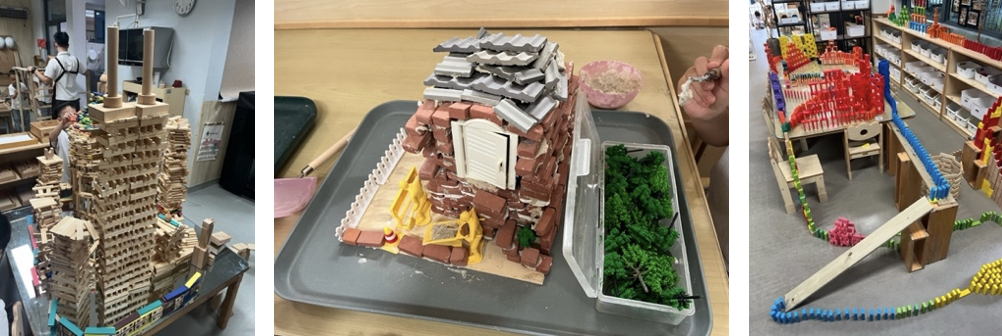
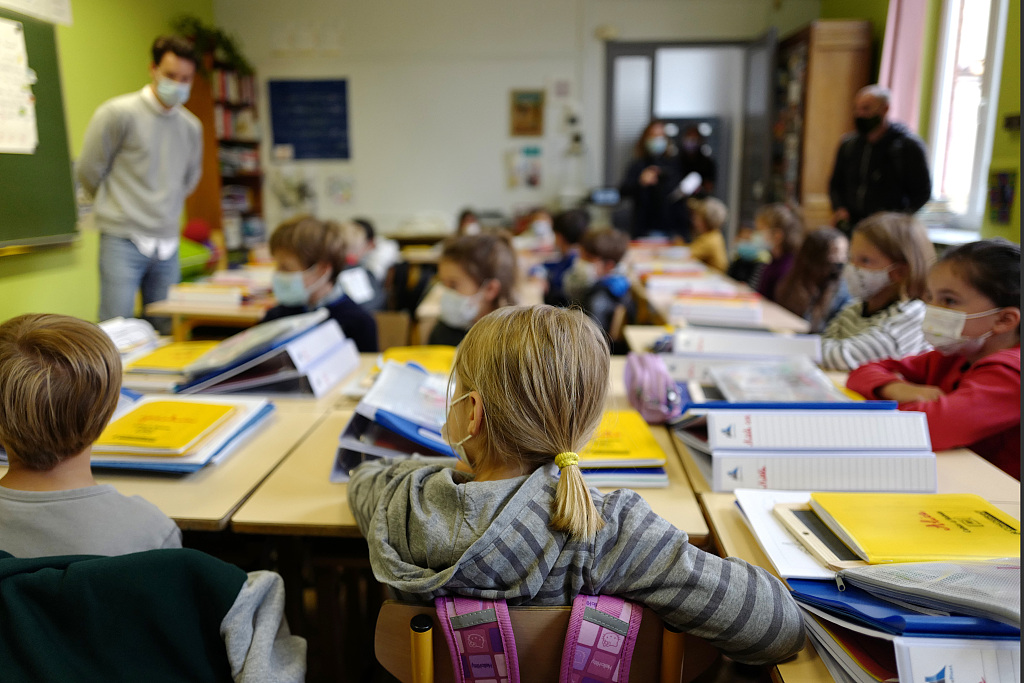
This week, Thomas Hatch shares pictures and reflections from a recent visit to the Shenzen Education Kindergarten, a public early childhood center in China. This post is the fourth in a series on early childhood education that includes an article describing what Hatch learned about the Sunshine Kindergartens in rural China as well as articles describing approaches to early childhood education in Norway and India.
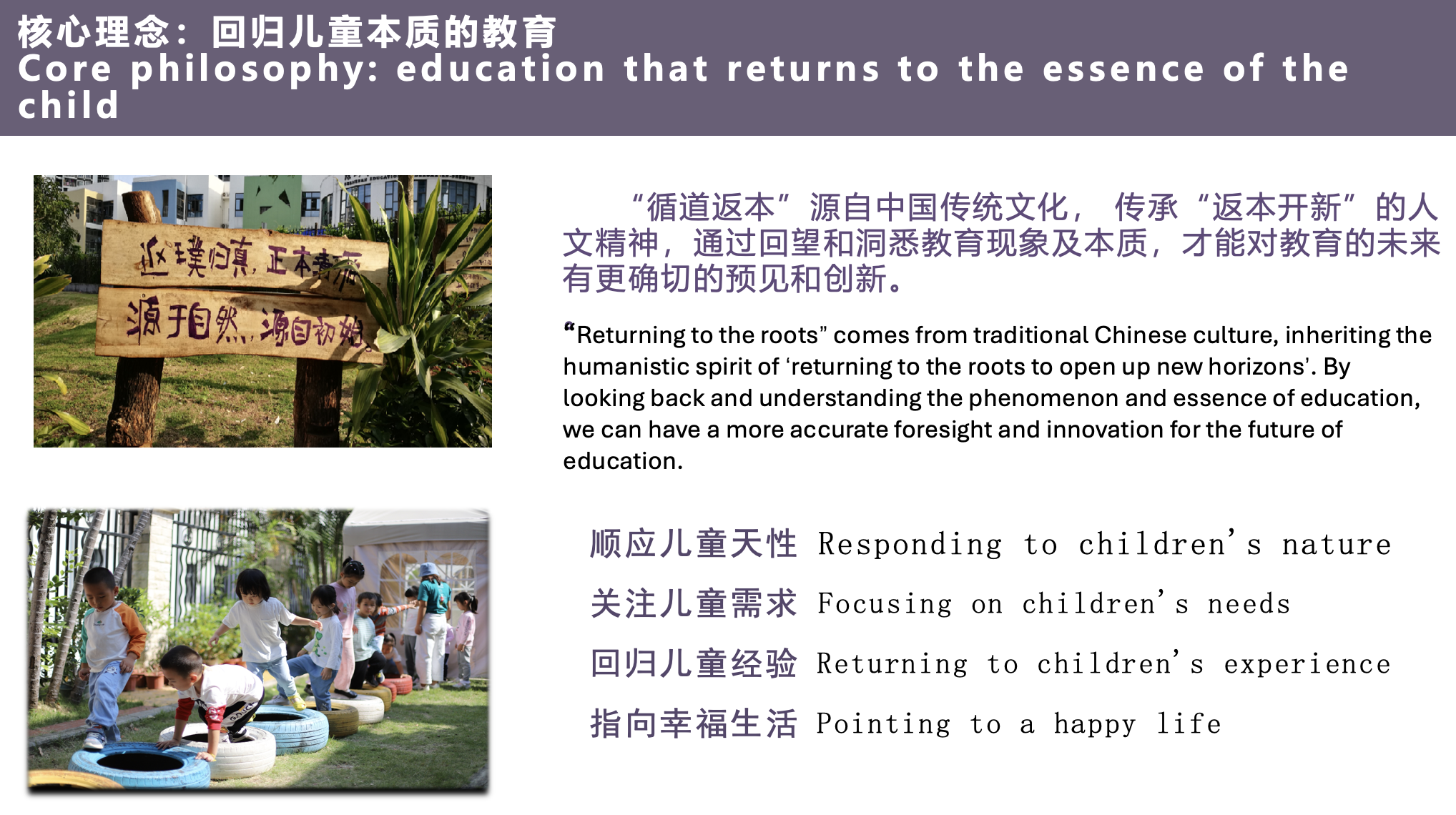
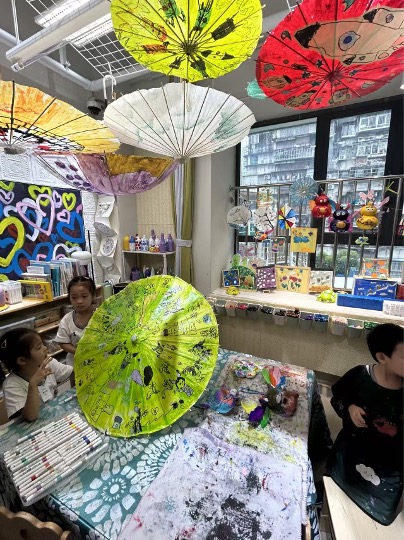
Last month, in a public kindergarten in Shenzen China, I saw what learning looks like when 300 4-, 5-, and 6-year-olds work on their own and together in over 100 different activities in 20 indoor and outdoor play spaces spread over 3 floors in two buildings.
When I walked into the first classroom, a six foot tall tower of blocks greeted me at the door. Spread out beyond that tower, I could see a series of different construction centers the children could work in, each one equipped with metal, wood, Legos, cardboard, bricks, tiles, or another kind of building material.
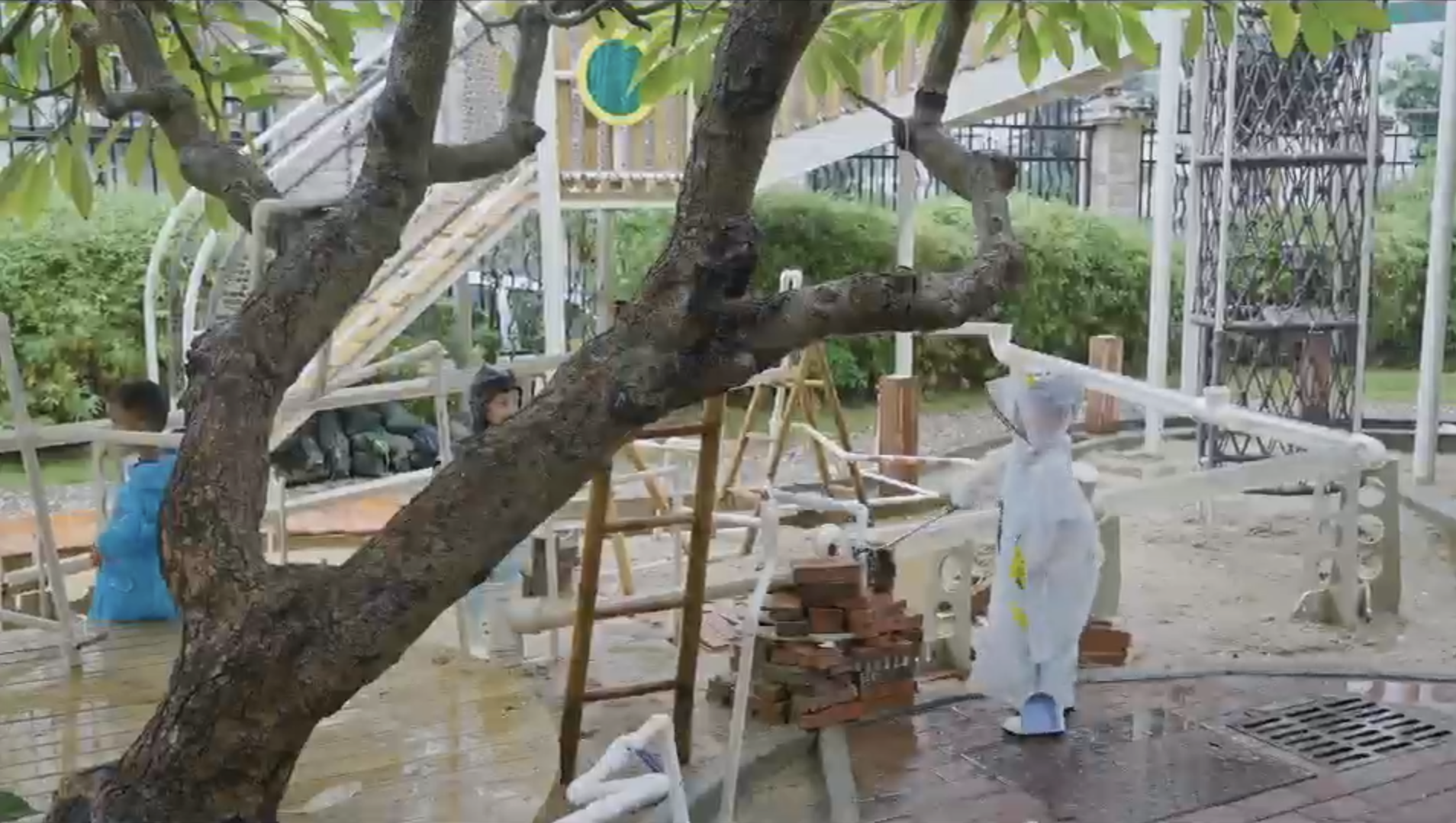
The construction areas continued past an open wall where children in clear plastic slickers pumped water through a series of pipes in the rain.
That one vast room could have housed three or four of the kindergarten classrooms where I used to work, thirty years ago, in Somerville, Massachusetts. At the time, I was studying how the strengths and interests of four 6-year olds evolved over six months during free play. With Howard Gardner and my colleagues at Project Zero, we sought to equip classrooms with a number of different activities that would enable young children to develop a much wider range of abilities than they normally encountered in school.
But I never imagined anything like this.
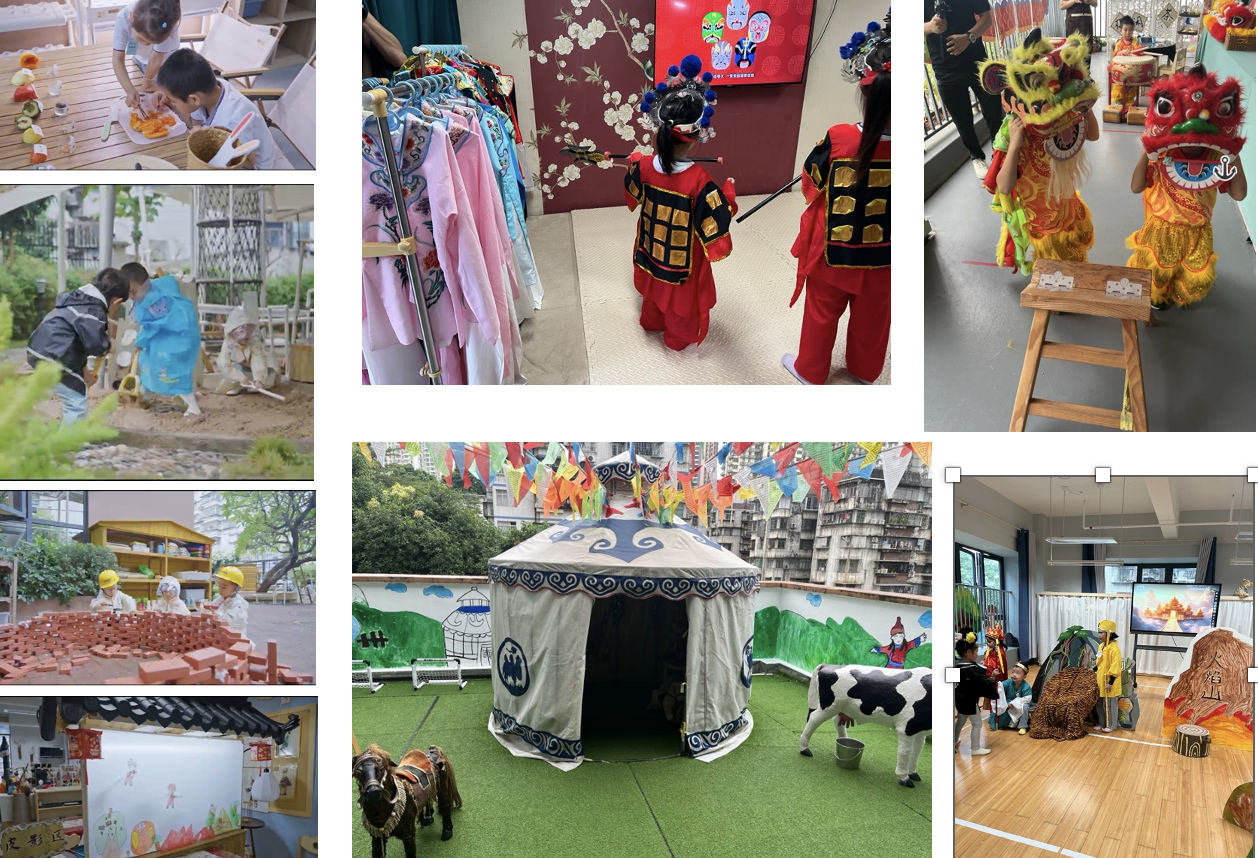
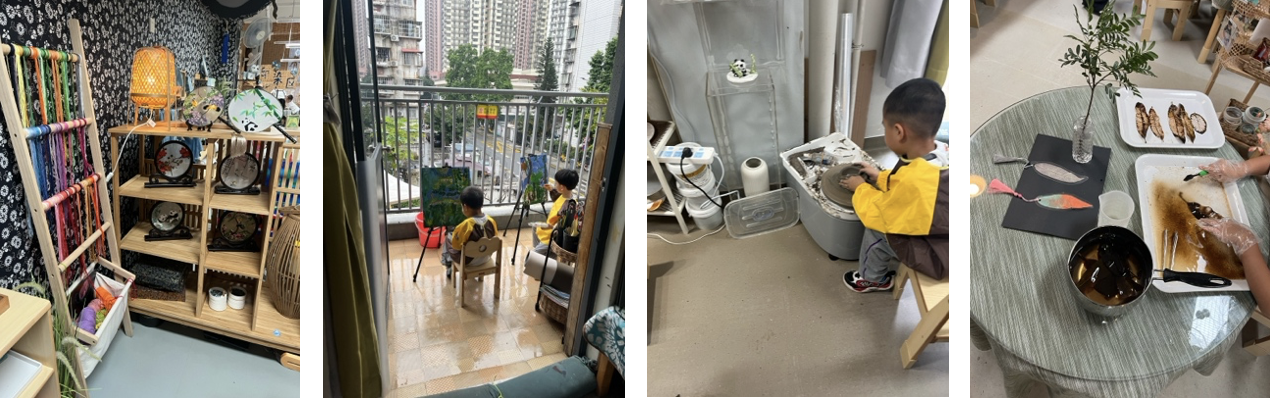
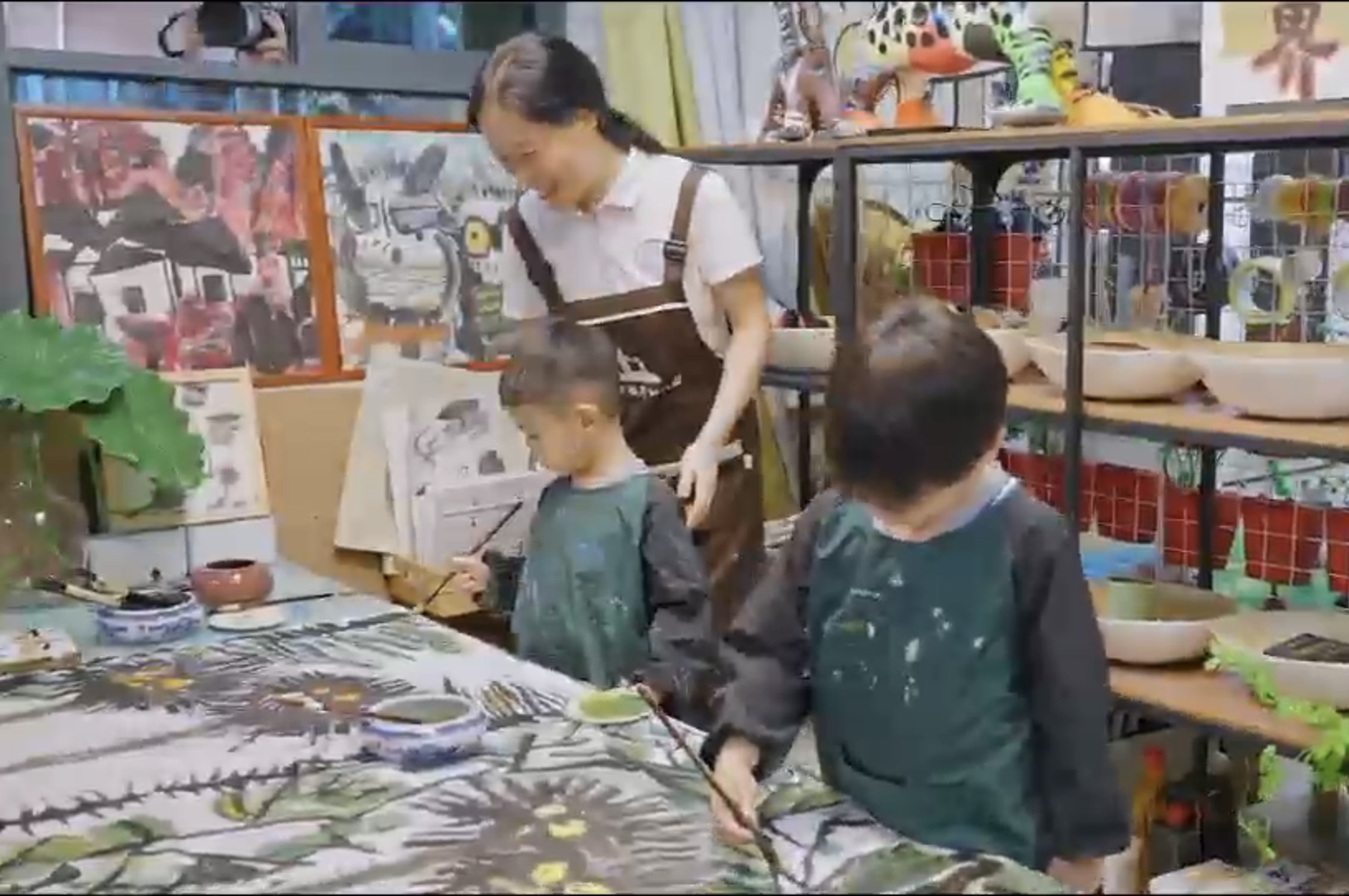
Each room of the Shenzen Early Education Center was dedicated to a different pursuit: creativity, music, language, logic, nature, society, drama, and visual arts among others. Walking through each door revealed another treasure trove of paints, yarn, clay, pens, instruments, costumes, games, books, and all manner of materials, tools and resources.
Even the spaces between rooms and buildings overflowed with plants, seeds, microscopes, construction helmets, slides, pulleys, pendulums, giant TV screens, and anything else that might support the students’ explorations.
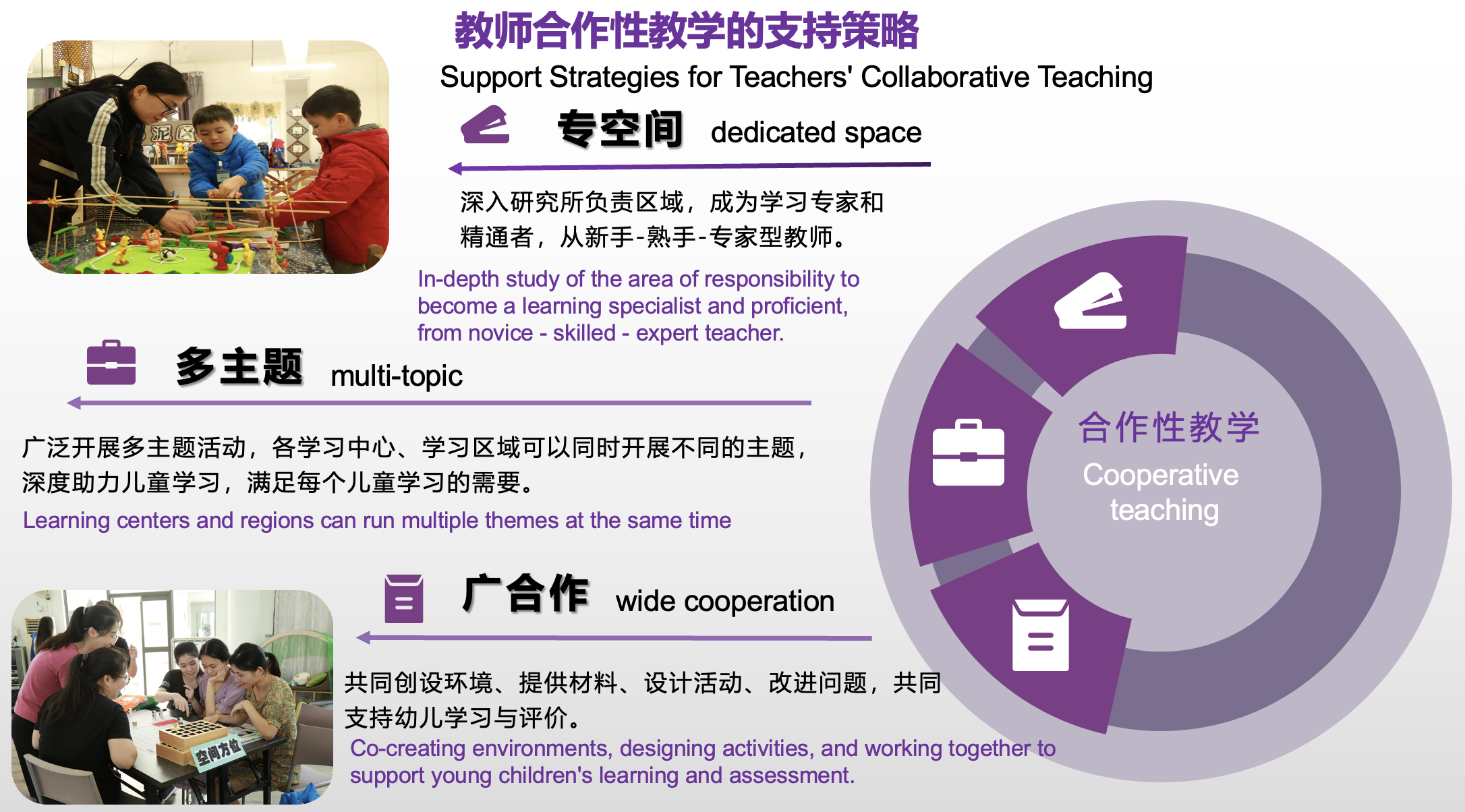
Clearly, it took significant investments to bring this vision to life. But what I saw relied primarily on two things – materials that are all around us and the time and care to think about how to use them to support young children’s development. Beyond the awe-inspiring facilities and resources, the educational infrastructure that underlay every room and learning center stood out. Although I could not be sure of everything that was said in a quick 2-hour visit, an interpreter and my Chinese friends and colleagues explained that after breakfast, children are given the choice of where to play, and after lunch and outdoor play, the children gather again to discuss and reflect on how they spend the day. I heard about the curriculum that guided the design that of every room and learning center, how it connected to the Chinese national early childhood curriculum, and what kind of scaffolding and support teachers could provide.
As Wang Xiang, head of the education center, explained to me in a letter following the visit:
“In order to let children give full play to their autonomy, imagination and creativity, before the activities, teachers will organize children to have group discussions, introduce the areas and appreciate the works in the areas, share children’s life experiences, and let children discuss and determine the content they want to do and make work plans. Let children collect relevant materials, including books, pictures or video materials. We will also get families involved. Reading, consulting and on-site visits will be carried out at home. The daily conversation activities will help children sort out their activity ideas, encourage them to boldly realize their creative ideas, making each work full of challenges and creativity. Work is a process of continuous in-depth processing. Children’s works always exceed our imagination, bring us a lot of surprises and also make them gain a sense of satisfaction and achievement.“
I heard that many teachers had studied the material, skills and concepts of the centers for which they took responsibility. I was told about the teacher education that all the teachers went through as well as the system of documentation the teachers used to record where the children played, how the children’s skills were developing, and where the children might want to spend more time.
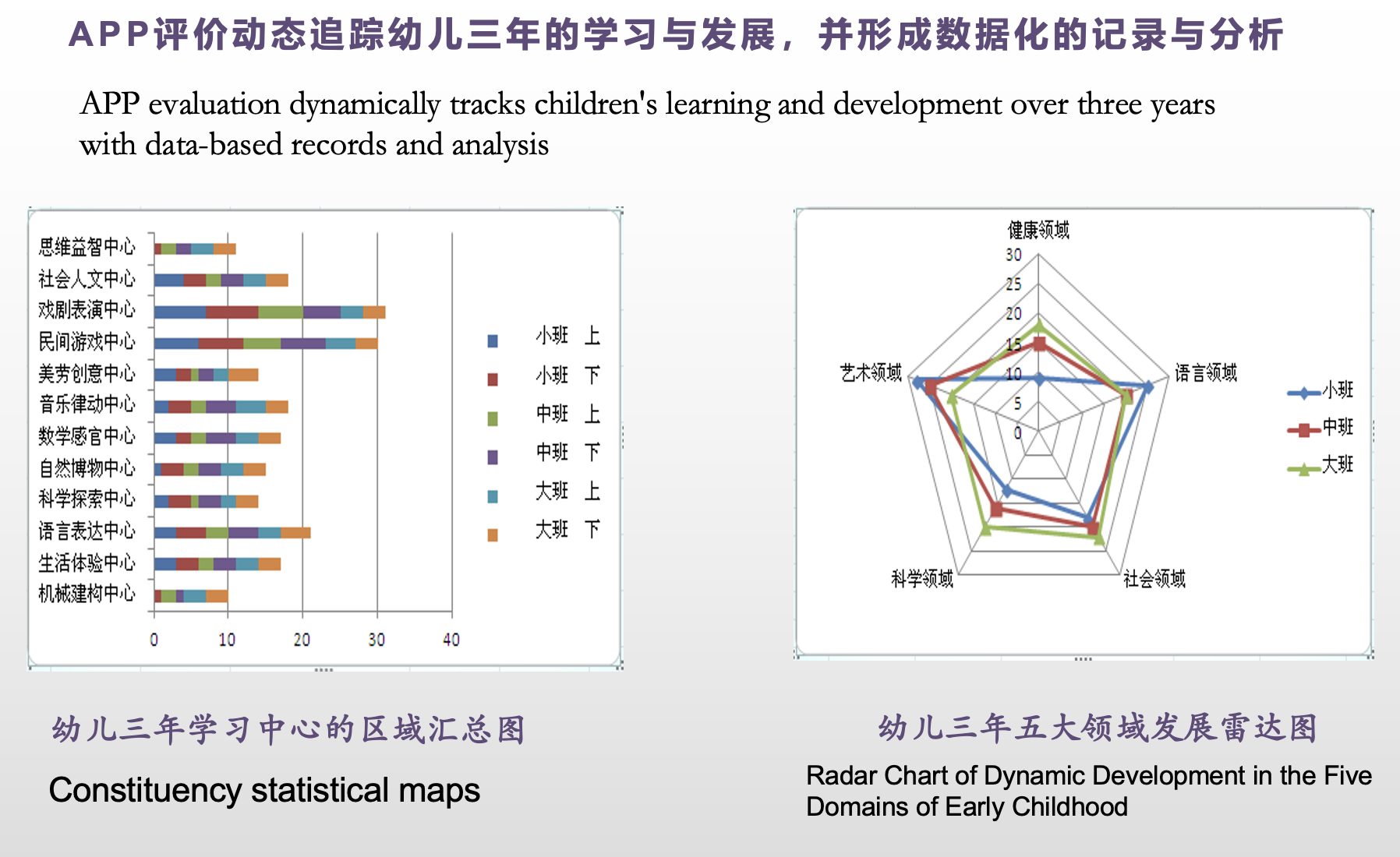
And I heard about the app the school created with a technology firm that enabled the teachers to keep track of what the students were doing, document their development in different areas, and share it all with the parents.
I do not know, exactly how much independence the children have or how much the choices and beautiful products they made were guided by their teachers. I do not know what happens — or how parents respond — if the children are not spending time learning to read or count and are not developing in ways consistent with the traditional Chinese curriculum many of these children will encounter in first grade.
But the experience enabled me to imagine what could be going on anywhere, anytime, if the world once again becomes the place where students of all ages learn when education is no longer confined to school.
“the experience enabled me to imagine what could be going on anywhere, anytime, if the world once again becomes the place where students of all ages learn when education is no longer confined to school.“
It enabled me to see what learning looks like when children have access to so many of the materials and resources that are so often are left outside their classrooms.
What if education was like that for all? What if students have the opportunity, over the years, to gradually, safely, explore more and more of the world around them until school itself is no longer contained in a classroom in a building? Learning can spill out, with support and care, across the landscape, unconstrained.
In this month’s Lead the Change (LtC) interview, David Osworth draws from his experiences in a research practice partnership and his work with improvement science as he discusses how to support leaders and center equity and justicein research and practice. Osworth is an assistant professor in the department of Educational Leadership and Cultural Foundations at the University of North Carolina at Greensboro. His research focuses on race, class, and equity in educational leadership and policy. The LtC series is produced by Elizabeth Zumpe and colleagues from the Educational Change Special Interest Group of the American Educational Research Association. A pdf of the fully formatted interview is available on the LtC website.
Lead the Change (LtC): The 2025 AERA theme is “Research, Remedy, and Repair: Toward Just Education Renewal.” This theme urges scholars to consider the role that research can play in remedying educational inequality, repairing harm to communities and institutions, and contributing to a more just future in education. What steps are you taking, or do you plan to take, to heed this call?
Source: UNC Greensboro Website
Dave Osworth (DO): I appreciate this year’s AERA theme. I think a common pitfall for the academy is to focus exclusively on the creation of new knowledge without thinking about how this knowledge is relevant to the everyday work of educators or can help to make schooling a more equitable space. I have at times been guilty of staying exclusively in the theoretical without thinking about the transition to the practical. AERA’s theme calls upon us to think about the ways in which our research can lead to action.
One way that I am trying to respond to this call is by examining the ways in which research practice partnerships (RPP) may help to drive leadership capacity within a school district. For example, I have been part of an RPP between an R1 university and a large school district focused on fostering leadership capacity. RPPs are intended to be long term collaborations between researchers and practitioners involving boundary spanning through high levels of communication and the development of strong trust. With this RPP, like others, the research process is entwined with practice. Additionally, we have made sure that this partnership is very responsive to the needs of the district. As such we have found that at times it is important to be flexible and willing to explore how we might help address the additional needs of the district beyond the initial problem of practice. This flexibility has helped to support the longevity of the partnership and has resulted in new areas of work that supports the needs of the district while providing ample opportunity for university faculty to engage in scholarship.
AERA’s theme also calls upon us to think about the historical contexts of education. It is easy to fall into a pattern of focusing on the present problem of practice without situating it historically. As a scholar, I identify with post-critical approaches (see Anders & Noblit, 2024). This means that, as I apply my scholarship to educational leadership and policy, I try to think about the specific context that has shaped a current problem of practice. In practice, this can involve infusing historiographic works into my literature reviews, using the history of education to inform the context of my current scholarship. For example, in one of my current studies, I am examining the discursive practices of state policy actors as they debate anti-LGBTQ policy in North Carolina. My co-author and I situate this within an historical framing to understand how these attacks against LGBTQ individuals aren’t necessarily “new” or “unprecedented” but are a form of retrenchment. Retrenchment refers to a process through which, after progress has been made with regards to “rights,” a countermovement brings in more oppressive policies that move that progress back (see Crenshaw, 1988). We argue that by situating work historically, we can identify patterns in which communities resisted these oppressive policies (Osworth & Edlin, in progress).
“Attacks against LGBTQ individuals aren’t necessarily ‘new’ or ‘unprecedented’ but are a form of retrenchment.”
LtC: Your work has explored the policy implications of methods of continuous improvement, such as improvement science, that have been spreading in recent years. What are some of the major lessons that practitioners and scholars of Educational Change can learn from your work?
DO: Policymakers often think about improvement in terms of identifying what works in general, based upon randomized control trials (RCT), often seen as a gold standard in certain fields. This prototypical approach to research, however, may not always be possible and/or ethical in educational settings. Improvement science offers a different approach as a type of continuous improvement that aims to systematically solve complex problems of practice. The promise of improvement science lay in how it involves looking at the context of problems of practice and utilizing iterative approaches to address problems involving a feedback loop that allows interventions to be tested and adjusted (Bryk et al., 2015; Hinnant-Crawford, 2020). While traditional thoughts about improvement may assume that a “proven” intervention will be applied and if improvement does not occur it is because the intervention wasn’t done with fidelity. By contrast, improvement science recognizes the particularities of a problem within that specific context that must be considered to know how to solve it.
I have studied improvement science primarily in relation to its connection with the federal policy, the Every Student Succeeds Act (ESSA). ESSA, passed during the second Obama administration to replace No Child Left Behind, provides guidance to state education agencies about criteria are required to be included in their state accountability policies to be eligible for certain federal funding packages. In Cunningham and Osworth (2023), we classified 52 state accountability plans—this includes 50 states, Washington D.C. and Puerto Rico— based on their presence of improvement science language. We found that many state ESSA plans included language about “continuous improvement,” but this appeared more like a buzzword. Only a few highlighted specific improvement science approaches (e.g., Hawaii or Washington), and hence the true commitment to improvement science approaches within state education agencies was unclear (Cunningham & Osworth, 2023, 2024a).
We argue that district leaders can leverage improvement science while aligning with many states’ expectations of continuous improvement. Improvement science recognizes the need for a context-specific approach to improvement (Cunningham & Osworth, 2024b). Because not all districts within a state are the same, district leaders can use improvement science to identify and address context-specific problems while meeting the requirements of state-level ESSA plans (Cunningham & Osworth, 2024a).
LtC: Your research has examined leadership preparation in the context of research-practice partnerships. What might practitioners and scholars take from thiswork to foster better school systems for all students?
DO: Future school leaders need strong foundational preparation to develop confidence to be change agents to make schooling better for all children. In the RPP mentioned above, researchers at an R1 university collaborated with a large school district to intentionally design a leadership preparation program for a district-specific M.Ed. cohort at the university. As part of that RPP, in Osworth et al. (2023), I studied this leadership preparation effort using a powerful learning experiences (PLE) framework (see Cunningham et al., 2019; VanGronigen et al., 2019; Young et al., 2021). The PLE framework provides 10 characteristics that help to drive adult learning in leadership preparation programs. In this interview-based study, we found that the partnership specifically brought to the forefront certain PLEs—including providing authentic learning, building confidence, engaging in critical reflection, and sense making (Osworth et al., 2023). These results suggest that long-term and trusting partnerships like this may provide intentional access to practical experiences and supportive spaces that help to develop strong aspiring leaders.
“Future school leaders need strong foundational preparation to make schooling better for all children.”
I think that one of the most salient takeaways is that a collaborative partnership like this can strengthen graduate programs’ relevance and fit to the specific needs of districts. Through our partnership, the M.Ed. program underwent a redesign in response to district feedback, involving revamped coursework that included changes to required readings and key assessments (Osworth et al., under review). While leadership curriculum stayed relevant to national standards, the cohort could make real-time connections to their district context collectively, drawing on similar frames of reference and allowing for greater confidence in how the course content related to the practice of school leadership. Furthermore, because the partnership is characterized by a high level of communication, faculty could incorporate district-specific examples using district data (Osworth et al., under review).
Leadership matters in the context of student success and wellbeing (Grissom et al., 2021), and such partnerships provide opportunities for leaders to be prepared in a way that meets the needs of students. However, it is important to note that, to be effective, partnerships like this are time-intensive and require resources to be committed by both partnered organizations. For instance, attention to the needs of both organizations requires attention to multiple voices, which often involves a high level of planning and a time commitment by liaisons from both organizations (Osworth et al., under review).
LtC: Educational Change expects those engaged in and with schools, schooling, and school systems to spearhead deep and often difficult transformation. How might those in the field of Educational Change best support these individuals and groups through these processes?
DO: The current policy landscape is quite hostile towards educators engaging in meaningful change, especially regarding work surrounding diversity, equity, and inclusion (DEI). In the current times, many educators are understandably worried about anti-DEI policies and their repercussions. These policies are often under the guise of attacking the teaching of critical race theory, that ultimately make it difficult to engage in DEI work. The law school at the University of California, Los Angeles has a center that is tracking these current policies (CRT Forward, 2025). While many of these policies are challenging for states to enforce, they often include threats to funding as recourse (Martínez et al., 2023). Whether real or imagined, such policies create a sense of surveillance, which can control individuals’ behavior and becomes coercive in nature (Foucault, 1995).
To support educators committed to educational change, I think that scholars in the field of Educational Change need to be strategic in how we engage in work that centers equity. We need to continue to leverage tools from “controversial” theories (e.g., critical race theory, culturally responsive pedagogy, historical materialism, or humanizing pedagogies), but rethink about how we package them. We can help educators continue to center equity and justice without using the buzzwords so that they can navigate the current political landscape which has attacked allegedly controversial topics in school (CRT Forward, 2025).
By avoiding triggering buzz words, however, the goal is not to give into, but guard against, the chilling effect that can come from such policies. There are individuals who would like to opt out of the work of meaningful educational change, who will find it easy to cite these policies as the reason to do so. We should ensure that educators continue to engage with data that shows the persistence of racial disparity in our public schools to be at the crux of the change that is needed in education.
LtC: Where do you perceive the field of Educational Change is going? What excites you about Educational Change now and in the future?
DO: I think the field of Educational Change, now more than ever, needs to double down on efforts to center equity at the heart of our work. Equity poses what social scientists have called “wicked problems,” describing societal problems that tend to be both complex and heavily contested (Rittel & Webber, 1973). Rittel and Webber (1973) argue that traditional science tends to be insufficient to figure out how to solve wicked problems. Such problems, rather, require a commitment from the field to engage with and shape the debates around them.
I am excited about the potential for collaborative and community-engaged work to tackle “wicked” problems in education. The backlash against DEI has become a key wicked problem that requires sustained engagement. The backlash targets all non-dominant identity groups; this includes ability, class, gender, language, race, and sexuality (to name a few). This period of retrenchment, as described above, can make it challenging to support all students in creating a more socially just schooling environment. I see a major purpose of my work, and the work of the field, to be to serve as resistance this retrenchment and continue to advance a justice-oriented agenda that serves our children and fulfills the democratic promise of our schools.
I’m also excited for the opportunities in Educational Change to engage in theoretically rich work that is also relevant to practice. An often-expressed concern is that theory and practice don’t align or that theory-heavy research cannot be applied practically. In contrast, I think many critical theories offer valuable analytic insights for navigating the current moment. Indeed, educational change is entering an exciting moment to engage in praxis— to reflect upon action to connect theory to practice. What excites me most is the opportunity to engage in praxis through conducting research that is theoretically deep and involves critical reflection on how we engage in action related to that theory.
References
Anders, A. D. & Noblit, G.W. (2024). Postcritical ethnography. In A.D. Anders & G.W. Noblit (Eds.) Evolutions in critical and postcritical ethnography: Crafting approaches (pp. 1-20). Springer.
Bryk, A.S. (2020). Improvement in action: Advancing quality in America’s schools. Harvard Education Press.
Bryk, A.S., Gomez, L., Grunow, A., & LeMahieu, P.G. (2015). Learning to improve: How America’s schools get better at getting better. Harvard Education Press.
Crenshaw, K. (1988). Race, reform, and retrenchment: Transformation and legitimation in antidiscrimination law. Harvard Law Review, 101(7), 1331-1387.
Cunningham, K.M.W., VanGonigen, B.A., Tucker, P.D. & Young, M.D. (2019). Using powerful learning experiences to prepared school leaders. Journal of Research on Leadership Education, 14(1), 74-97. https://doi.org/10.1177/1942775118819672
Cunningham, K.M.W. & Osworth, D. (2023). A proposed typology of states’ improvement science focus in their state ESSA plans. Educational Policy Analysis Archives, 31(37), 1-21. https://doi.org/10.14507/epaa.31.7262
Cunningham, K.M.W. & Osworth, D. (2024a). Improvement science and the Every Student Succeeds Act: An analysis of the consolidated state plans. Leadership and Policy in Schools, 23(4), 955-972. https://doi.org/10.1080/15700763.2023.2264924
Cunningham, K.M.W. & Osworth, D. (2024b). Policy considerations for continuous improvement. In Anderson, E., Cunningham, K. M. W. & Eddy-Spicer, D. H. Leading continuous improvement in schools: Enacting leadership standards to advance educational quality and equity. https://doi.org/10.4324/9781003389279-13
Foucault, M. (1995). Discipline and Punish: The birth of the prison. Vintage Books.
Grissom, J.A., Egalite, A.J. & Lindsay, C.A. (2021). How principals affect students and schools: A systematic synthesis of two decades of research. [White Paper] The Wallace Foundation, New York.
Hinnant-Crawford, B. (2020). Improvement science in education: A Primer. Myers Education Press.
Martínez, D.G., Osworth, D., Knight, D. & Vasquez Heilig, J. (2023). Southern hospitality: Democracy and school finance policy praxis in racist America. Peabody Journal of Education, 98(5), 482-499.
Osworth, D. & Cunningham, K.M.W. (2022). Improvement science and the Every Student Succeeds Act: An analysis of state guidance documents. Planning and Changing, 51(1/2), 3-19.
Osworth, D., Cunningham, K.M.W, Hardie, S., Moyi, P., Osborne Smith, N. & Gaskins, M. (2023). Leadership preparation in progress: Evidence from a district-university partnership. Journal of Educational Administration, 61(6), 682-697. https://doi.org/10.1108/JEA-01-2023-0009
Osworth, D., Cunningham, K.M.W., Hardie, S., Moyi, P., Osborne Smith, N. & Gaskins, M. (Under Review). Boundary spanning, partnerships, and educational leadership: How a district-university partnership fostered organizational learning.
Osworth, D.& Edlin, M. (In Progress). The political construction of “don’t say gay”: A critical discourse analysis of North Carolina state legislators.
Rittel, H.W.J. & Webber, M.M. (1973). Dilemmas in a general theory of planning. Policy Sciences, 4(2), 155-169.
VanGronigen, B.A., Cunningham, K.M.W., & Young, M.D. (2019). How exemplary educational leadership preparation programs hone the interpersonal-intrapersonal (i2) skills of future leaders. Journal of Transformative Leadership and Policy Studies, 7(2), 1-11. https://doi.org/10.36851/jtlps.v7i2.503
Young, M.D., Cunningham, K.M.W., VanGronigen, B.A., & O’Doherty, A. (2021). Transformational leadership preparation in a post-COVID world: U.S. perspectives. eJournal of Educational Policy, 21(1), 1-15.
IEN celebrates the life of Lee Shulman, renowned scholar and mentor, who passed away on December 30th, 2024. Shulman was a Professor of Education at Michigan State University and Stanford University, before becoming the 8th President of the Carnegie Foundation for the Advancement of Teaching in 1996. He also served terms as President of the National Academy of Education and the American Education Research Association where he helped establish the division of Teaching and Teacher Education. Shulman received numerous awards over the course of his career, including the American Psychological Association’s E.L. Thorndike Award for Career Achievement in Educational Psychology in 1995 and the Grawemeyer Award in Education in 2006. Thomas Hatch, who worked with Shulman at the Carnegie Foundation, shares some of his reflections.
Lee Shulman was an exuberant friend and scholar. Always positive and supportive, whether in his professional advice or as a host as he and his wife Judy welcomed me, my wife (and his graduate student) Karen Hammerness and our young children into his home. Lee’s work and impact cannot be summed up in any one idea or publication, but Those who understand: Knowledge growth in teaching, his 1986 AERA Presidential Address, made clear that teaching involves substantial knowledge and expertise. In the process, he demonstrated that teaching is not just a difficult job, but a demanding profession, worthy of the same kinds of recognition and reward as any other. That work helped to launch a whole new era of research on teaching. Far more than an academic exercise, that work and Lee’s insights were central to the establishment of the National Board for Professional Teaching Standards, as well as to the advancement of the Scholarship of Teaching and Learning and to the creation of a host of centers and institutions dedicated to studying and improving the quality of teaching in K-12 as well as higher education.
Lee worked out his ideas over time in conversations, at meals as well as in seminars, and his ideas often launched new initiatives and new lines of work. In her remembrance, Jill Perry, Executive Director of the Carnegie Project on the Doctorate – one of several projects spawned while Lee was President of the Carnegie Foundation – explained this as “classic Lee:”
“offering a casually delivered suggestion that was, in reality, a deeply considered and insightful idea. He was known for these moments, where his offhanded guidance would leave young scholars or practitioners inspired yet responsible for sorting out the details on their own.”
I had that experience, sitting in Lee’s office in 1996, in the heart of Silicon Valley with the internet developing all around us. He declared that he wanted to bring the power of the three great resources of the university – the laboratory, the library, and the museum – and put them online to support faculty in K-12 and higher education who were creating the scholarship of teaching and learning. And then he asked me to do it. Inspired, I returned to my office to stare for hours at the cursor blinking on my computer screen. But, eventually, we established the Carnegie Knowledge Media Lab to support the Carnegie Academy of the Scholarship of Teaching and Learning (CASTL K-12 and CASTL Higher Education) and began a long line of work that included two books, Into the Classroom and Going Public with Our Teaching, and the development of a whole series of multimedia websites and images of practice that documented the work of exceptional teachers.
Beyond his ability to tell a story and make a powerful point, Lee’s brilliance was in his humanity. Lee was as likely to draw on his experience working at the counter at his parents’ deli on the south side of Chicago as he was to quote Benjamin Bloom or Joseph Schwab, two of his mentors at the University of Chicago. That deli experience, in particular, was evident in a segment he did for NPR’s This I Believeseries. What did Lee believe in? He believed in pastrami:
“I believe that pastrami is a metaphor for a well-lived life, for a well-designed institution and even for healthy relationships. Pastrami is marbled rather than layered. Its parts, the lean and the fat, are mixed together rather than neatly separated.… Separate layers are much easier to build, to schedule and to design. But I believe that marbling demands that we work with the messy world of people, relationships and obligations in their full, rich complexity. The diet mavens inform us that marbling can be dangerous for our health, but as an educator I’m willing — even obligated — to take the risk. I want to marble habits of mind, habits of practice and habits of the heart with my students — just like pastrami.”
His writings and his talks drew from all his experiences, and, somehow, after a well-known tendency to wait until the last minute, they would burst forth, fully-formed. On one occasion, I remember flying from San Francisco to Washington D.C. for the annual conference of the American Association of Higher Education, where Lee was scheduled to give the keynote address the following day. I happened to be seated in front of him, and as we settled into our seats, I asked him what he would be talking about. He held up a pack of index cards and told me he was going to work on it on the plane. Some six hours later, after the plane pulled into the gate, when we unbuckled our seat belts and stood up, Lee spilled all the cards onto the floor. As I stooped to help him collect his notes, I realized every single card was blank.
The next morning, seemingly without reference to a script or a single card, Lee delivered a talk, Taking Learning Seriously, that ended in a standing ovation. In that talk, Lee addressed the first question “What does it mean to take anything seriously?” by declaring that “when we take something seriously, we often talk about professing it:”
“The deepest, oldest meaning of the word “profess” is to take religious orders in a public and visible way. When one professes faith, it means taking on a set of obligations that will serve as the first principles for controlling one’s life, no questions asked. Professing one’s faith, behaviorally and emotionally, is an impressive example of taking something seriously.
Another sense of the word is that we profess our love–for our spouses and partners, our parents, our children, our dearest friends. We profess a kind of commitment that has within it a willingness to sacrifice on behalf of the other. Also in a public manner, we declare our devotion to another. Here is yet another example of taking something quite seriously.
A more contemporary meaning of the word, a meaning more closely associated with the work of those who read this magazine, is to profess one’s understanding, one’s expertise: to be professional, or to be a “professor.” Members of professions take on the burden of their understanding by making public commitments to serve their fellow beings in a skilled and responsible manner. “Professors” take on a special set of roles and obligations. They profess their understanding in the interests of nurturing the knowledge, understanding, and development of others. They take learning so seriously that they profess it.“
Throughout the talk, and especially in the conclusion, Lee’s remarks deftly weaved together the insights of a scholar of science and a man of faith:
“To be deeply educated, I believe, is to understand both when skepticism and evidence are appropriate, and when faith and suspension of disbelief are appropriate. There are no rules or principles for knowing this distinction. Only through studying the examples in both scientific and humanistic sources -through wrestling with that inherent contradiction between faith and reason–can we and our students come to terms with the essential uncertainties that define our roles as professionals and as human beings.
As professors, we are asked to be rational and empirical, to demand evidence. On the other hand, as teaching professionals, we expect ourselves to believe what much empirical evidence says we shouldn’t: that all our students can learn. We express our faith in our students’ potential and in our ability to teach them. As professors, we do not choose between the skepticism of reason and the hope grounded in faith. Our students demand both. And we must learn, as professional educators, to do both.”
This month’s Lead the Change (LtC) interview features the new leaders of the Educational Change Special Interest Group of the American Educational Research Association, Patricia Virella, Tayeon Kim, Lauren Bailes, and Elizabeth Zumpe. This week IEN shares excerpts from those interviews focusing on the connections between their work and the work of the SIG and the wider field of educational change. The LtC series is produced by Elizabeth Zumpe and sponsored by the Educational Change SIG. A pdf of the full interview will be available on the LtC website.
Lead the Change Interview with Patricia Virella
Lead the Change (LtC): What are some of the ideas that you hope the field of Educational Change can learn from your work to inform practice, policy, and scholarship?
Patricia Virella (PV): Over the past year, I prioritized immersing myself in school environments, spending approximately 30 days actively engaging with students, teachers, and staff. This hands-on experience allowed me to gain profound insights into the unique challenges that students are facing in today’s educational landscape, including mental health issues, ongoing crises, and persistent inequities. Witnessing the resilience and joy demonstrated by students in the face of these challenges was incredibly inspiring. It reinforced the importance of understanding the realities of schooling in the present moment. All of us must pause and truly comprehend the current state of education before forging ahead with our plans and initiatives. This firsthand exposure has deepened my commitment to advocating for comprehensive support systems that address the multifaceted needs of students and educators alike. It has also fueled my passion for promoting holistic approaches to education that prioritize well-being and equity. I am driven to leverage these insights to inform my work and to champion initiatives that empower schools to create environments where every student can thrive.
LtC: What excites you about the field of Educational Change, and how might we further those ideas through the work of the Educational Change SIG?
PV: The idea of change is inherently exhilarating. While change often implies embracing entirely new approaches, I also ponder whether it involves a return to foundational concepts and theories that have yet to manifest their full potential, such as liberation, transformation, and experiential learning. This dual perspective prompts me to consider how we, as a collective of academics, can effectively support change that embodies the spirit of equity. I recognize that achieving equity can sometimes feel elusive, but it does not have to remain this way. My commitment to exploring the multifaceted nature of change and equity has deepened my resolve to advocate for inclusive and transformative practices within academic and institutional settings. By critically examining the intersections of change and equity, I am dedicated to fostering environments where all individuals have equal opportunities to thrive and contribute meaningfully. I am driven to channel these reflections into actionable strategies that promote systemic change and advance the realization of equity within educational and academic spheres.
Dr. Patricia M. Virella is an Assistant Professor in the Department of Educational Leadership at Montclair State University. Dr. Virella’s research focuses on implementing equity-oriented leadership through leader responses, organizational transformation and preparation. Dr. Virella also studies equity-oriented crisis leadership examining how school leaders can respond to crises without further harming marginalized communities.
Lead the Change Interview with Taeyeon Kim
LtC: What are some of the ideas that you hope the field of Educational Change can learn from your work to inform practice, policy, and scholarship?
TK: My research offers several contributions to the field of Educational Change, focusing on three main areas: revisiting policy through the voices of equity leaders, critically examining policies and systems by centering racially and linguistically marginalized communities, and promoting cross-cultural dialogue using transnational and decolonial perspectives. Given that my work was previously featured in the Lead the Change series (See the Lead the ChangeOctober issue of 2023), I would like to highlight some insights from my recent publication on leadership learning.
As a leadership educator, I view learning as a core tenet of leading educational change. My scholarship on educational leadership and policy has led me to explore how to guide meaningful learning for aspiring leaders who pursue equity and social justice. My recent work, published in the Journal of School Leadership (Kim & Wright, 2024), presents a conceptual-pedagogical framework that on guides students through emotional discomfort when learning about inequities and injustice. This research underscores the importance of emotion in learning, which can drive change at both individual and social levels. When negative emotions are not properly addressed and processed, meaningful learning cannot occur, undermining leaders’ efforts to redress inequities, injustice, and harm. However, with appropriate guidance, emotional discomfort can be a valuable source for transformative learning and changes (see Mezirow 1997). Traditional scholarship on educational change often relies on rationalistic approaches; however, my recent study emphasizes the role of emotions and the holistic aspects of learning in effecting change. It also highlights the crucial role of facilitators and educators in developing equity leaders.
Thus, my work reveals that effective leadership learning involves addressing the emotional dimensions of learning about social justice issues. By integrating these emotional and holistic aspects, educational leaders can foster more profound and lasting changes in their practice, policy, and scholarship. This approach can help prepare leaders, better equipping them to navigate and address the complex challenges of inequity and injustice in education.
LtC: What excites you about the field of Educational Change, and how might we further those ideas through the work of the Educational Change SIG?
TK: The field of Educational Change is particularly exciting due to its emphasis on partnerships and interdisciplinary approaches, and its appreciation for international perspectives. As a transnational scholar, I often notice that AERA’s discourse tends to be US-centric and predominantly features scholarly thoughts and contexts published in English. This observation underscores the importance of the Educational Change SIG’s foundations and history, as it can potentially extend the boundaries of our educational scholarship.
To advance the field, I urge educational change scholars to critically engage with issues of geopolitics, coloniality, and global whiteness (e.g., Chen, 2010; Mignolo, 2008; Leonardo, 2002) that influence knowledge creation and dissemination. When we embrace “interdisciplinary” and “international” perspectives, it is crucial to interrogate whose knowledge is being prioritized and how it is being represented.
“To advance the field, I urge educational change scholars to critically engage with issues of geopolitics, coloniality, and global whiteness.”
With our new leadership team, I aim to extend the field of Educational Change through several focuses. First, I urge the field to integrate diverse onto-epistemological understandings. The field can benefit significantly from including non-Western, indigenous, and other marginalized ways of being and thinking. By incorporating these perspectives, we can challenge the dominance of Eurocentric paradigms and enrich our understanding of educational practices and policies. Second, educational change scholars need to consider the power dynamics involved in knowledge production and dissemination. This means questioning who has access to academic platforms, whose voices are amplified, and whose are marginalized. Future activities organized by the Educational Change SIG could better support multilingual scholarship and inclusive platforms that are accessible to scholars from various regions and backgrounds, ensuring that a variety of voices are heard and valued. This will eventually promote cross-cultural and transnational collaborations. Finally, integrating critical theories such as postcolonial theory, critical race theory, and feminist theory can provide valuable lenses through which to examine and address systemic inequities in education. These theories can help scholars and practitioners understand the historical and structural factors that perpetuate educational inequalities and identify pathways to more just and equitable educational systems.
By taking these steps, the Educational Change SIG can play a pivotal role in promoting a more inclusive and globally informed approach to educational change, ensuring that the field continues to evolve and respond to the complex needs of educational communities worldwide.
Taeyeon Kim is an assistant professor in the department of Educational Administration at the University of Nebraska Lincoln. Her scholarship explores intersections of policy and leadership, with a particular focus on how educational leadership can challenge unjust systems and humanize educational practices to empower marginalized students and communities.The Educational Change SIG would like to acknowledge and congratulate Taeyeon Kim as the recipient of the 2024 Educational Change SIG Emerging Scholar Award. Her work was featured in the Lead the Change in October, 2023.
Lead the Change InterviewLauren Bailes
LtC: What are some of the ideas that you hope the field of Educational Change can learn from your work to inform practice, policy, and scholarship?
LB: I aim to share with the field a clear emphasis on systems change for equity, especially in the ways we think about who leaders are. My research focuses on identifying the systems, practices, and mindsets that perpetuate inequities in the careers of educational leaders. Most of my work problematizes the notion of ‘pipelines,’ especially in educational leadership and how career experiences like preparation, promotion, and evaluation are differentially distributed by race and gender (e.g., Bailes & Guthery, 2020; Bailes et al., 2023). When we consider careers to be pipelines, we might wrongly believe those pipelines are neutral, and that everyone has an equal chance of entering or flowing through the pipeline. That is fundamentally untrue: Women and People of Color, as well as people with intersectional identities, experience sorting at every career juncture, even when they are equivalently qualified relative to white or male peers. Further, these career inequities often result in adverse outcomes for faculty and students—especially faculty and students of color.
“Most of my work problematizes the notion of ‘pipelines,’ especially in educational leadership and how career experiences like preparation, promotion, and evaluation are differentially distributed by race and gender.”
A second thing I hope to share is the critical importance of partnering with current practitioners and myriad ways of incorporating their perspectives to deepen, clarify, and implement approaches to and findings of research. The profound systems changes required to shift unjust organizational practices are unlikely to come only from the academy. While research like mine can and does inform practice, I value, seek, and incorporate the perspectives of folks who have experienced injustice in their career trajectories. They are uniquely capable of showing me what I might be missing and how to better capture and learn from what they have experienced or what they know might work to change the system. I also want to be clear that there is much I am still learning from colleagues in this SIG and throughout our field. I’m looking forward to deepening those connections and bringing my own learning to bear on my research and partnership efforts to shift systems in service of equity.
LtC: What excites you about the field of Educational Change, and how might we further those ideas through the work of the Educational Change SIG?
LB: I think there is a broad appetite—among researchers, policymakers, practitioners, and families—for change in education. That appetite often results in misguided and harmful movements toward neoliberalism, isolationism, or the erosion of schooling as a public good, but there may be opportunity for broad and supportive coalitions for some of the interventions, innovations, and structures that do preserve and enhance equitable and accessible education for every student.
Lauren P. Bailes is an associate professor of education leadership in the School of Education at the University of Delaware, where she is the coordinator of UD’s EdD in Educational Leadership. After teaching middle school language arts in New York City, she earned her doctorate at The Ohio State University. Now, she researches school leadership preparation, promotion, and evaluation; school organizational characteristics; and the intersection of school leadership and policy. Lauren’s favorite days are still the ones spent in schools alongside teachers and leaders.
Lead the Change Interview withElizabeth Zumpe
LtC: What are some of the ideas that you hope the field of Educational Change can learn from your work to inform practice, policy, and scholarship?
EZ: Prevailing ideas about Educational Change tend to come from scholars and policymakers who work far from the realities of schools. Too often, these ideas rest upon wildly false assumptions about existing capacities in schools, overlooking how many operate amid chronic adversity. Chronic adversity occurs when schools regularly face inadequate resources to meet their community’s needs, unproductive pressures to improve, and a lack of support for the profession. When designed from afar, educational reforms tend to presume that school challenges stem from educators’ ‘lack’ of motivation or competence and that improvement thus depends upon intensive intervention from the outside.
My research offers a different perspective: school improvement amid adversity as a struggle to develop collective agency (Zumpe, 2024). Agency is an inherent driver of human motivation and of educational improvement. But agency can become constrained when people are regularly subjected to demands for which they do not have adequate resources and experience inevitable failure.
As part of one RPP described above, I collaborated closely with a school facing challenging circumstances (Zumpe, 2024). At the start of our collaboration, we realized that our partnership’s theory of action had not considered this school’s needs and context. Across years of being labeled as ‘failing’ and facing daily struggles to ‘reach’ students and cover classrooms, the school’s leaders had tried various initiatives to improve. However, most of their efforts faltered and sputtered out, leaving conflict and cynicism behind. By their own account, the faculty struggled with the “basics” to get along well enough to launch and sustain improvement.
When the school’s leadership team invited me to help, I tried to capture their efforts to develop a foundational capability to work together to solve problems, which I called collective agency. Through participant observation with several work groups, I traced how their collective agency became enabled and what shut it down. I also launched and studied a new group using action research.
Comparing groups, I found that efforts to develop collective agency collapsed when educators faced overwhelming and complex problems for which they could see no solutions within reach. In these situations, they avoided their problems, pointed fingers at each other, and expressed a sense of helplessness that nothing could be done. On the flip side, efforts to develop collective agency surged when someone charged the group to ‘do something,’ and when this initiative was combined with a simple solution that the group felt they had the capacity to enact. In these situations, members affirmed each other, perceived the group’s potential for success, and pulled together to make progress towards addressing a problem.
These findings suggest a need for policies and reforms aimed at enabling school improvement in the ‘next level of work’ (City et al., 2010). To do this, we need to partner with educators in challenging circumstances to define and frame goals for improvement within reach and incrementally build organizational problem-solving capacity. Policymakers and scholars need to recognize educators as partners in research and development, without whom our educational system cannot remedy or repair.
LtC: What excites you about the field of Educational Change, and how might we further those ideas through the work of the Educational Change SIG?
EZ: I find hope in the growing number of education researchers seeking answers to existential questions about the role of research in education. Many educators and scholars are deeply concerned about the future of our planet and our democratic values. Looking around at the pernicious grip of racism, the fracturing of civic values, and the erosion of our public education system, many scholars are asking, how does our research relate to this? What are we – as scholars– doing about it? Out of our collective angst comes a growing willingness to expand how we think about academic research and to innovate.
I am excited by the growing number of scholars, especially early career scholars, working to build a more humanistic and justice-forward academic culture. Within our Educational Change SIG and scholarly communities working in RPPs and continuous improvement in education, I am inspired by efforts to actively build a culture in which academics care about each other as people, carry our status with humility, open ourselves to be vulnerable as learners, and treat social impact as a core value.
To further those ideas, I think the Educational Change SIG should reimagine how we organize and schedule AERA sessions with the intention involving more PK-12 practitioners. One way the SIG can do this is to develop a conference call and session formats that encourage and elevate practitioners’ voices and expertise. The SIG might consider offering sponsored conference registration awards for presenting practitioners. The SIG executive committee can also advocate with AERA to schedule specially designated conference sessions for practitioners that are held during after work hours.
I think the Educational Change SIG should support the diversification of our membership and international learning as a facilitator of cross-national and trans-global exchange. One way to do this is by furthering our existing partnerships with the International Congress for School Effectiveness and Improvement (https://www.icsei.net/about-icsei/) and journals that explicitly seek scholarship with an international perspective, including the Journal for Educational Change. I would also like to see our SIG do more to promote and support international participation in AERA and other remote events for scholarly exchange throughout the year.
Elizabeth Zumpe is an assistant professor in the Department of Educational Leadership and Policy Studies at the University of Oklahoma. A former K-12 public school teacher for over a decade with National Board Certification, Elizabeth holds a Ph.D. in Education from the University of California, Berkeley.
References
Freire, P. (1970). Pedagogy of the oppressed. Herder and Herder.
Virella, P., & Liera, R. (2024). Nice for what? The contradictions and tensions of an urban district’s racial equity transformation. Education Sciences, 14(4), 420.
Chen, K. H. (2010). Asia as method: Toward deimperialization. Duke University Press.
del Carmen Salazar, M. (2013). A humanizing pedagogy: Reinventing the principles and practice of education as a journey toward liberation. Review of Research in Education, 37(1), 121-148.
Kim, T., & Mauldin, C. (2022). Troubling unintended harm of heroic discourses in social justice leadership. Frontiers in Education, https://doi:10.3389/feduc.2022.796200
Kim, T., & Wright, J. (2024). Navigating emotional discomfort in developing equity-driven school leaders: A conceptual-pedagogical framework. Journal of School Leadership, 10526846241254050.
Leonardo, Z. (2002). The souls of white folk: Critical pedagogy, whiteness studies, and globalization discourse. Race Ethnicity and Education, 5(1), 29–50. doi:10.1080/13613320120117180
Mezirow J. (1997). Transformative learning: Theory to practice. New Directions for Adult and Continuing Education, 1997(74), 5–12.
Mignolo, W. D. (2008). The geopolitics of knowledge and the colonial difference. In M. Moraña, E. Dussel & C. Jáuregui (Ed.), Coloniality at large: Latin America and the postcolonial debate
Bailes, L. P., Ahmad, S., Saylor, M., & Vitale, M. N. (2023). Quality or control: High-needs principals’ perceptions of a PSEL-based evaluation system. Journal of Research on Leadership Education, 18(4), 622-648.
Bailes, L. P., & Guthery, S. (2020). Held down and held back: Systematically delayed principal promotions by race and gender. Aera Open, 6(2), 2332858420929298.
City, E. A., Elmore, R. F., Fiarman, S. E., & Teitel, L. (2009). Instructional rounds in education (Vol. 30). Cambridge, MA: Harvard Education Press.
J., & Steup, L. (2021). Research-practice partnerships in education: The state of the field. William T. Grant Foundation.
Mintrop, R., & Zumpe, E. (2019). Solving real life problems of practice and education leaders’ school improvement mind-set. American Journal of Education, 125(3), 295-344.
Mintrop, R., Zumpe, E., Jackson, K., Nucci, D.,& Norman, J. (2022). Designing for deeper learning: Challenges in schools and school districts serving
This week, IEN reposts part 2 of a series of blog posts in which Larry Cuban reflects on the endurance of “two dominant patterns of organizing schools and teaching lessons” in the US: the age-graded school and “teacher-centered instruction.”In part 2, Cuban begins exploring whether the patterns he has seen in the US appear in other countries, in this case France.The original post appeared on Larry Cuban’s Blog on May 7th.
In Part 1, I asked the question whether or not the ways that U.S. schools have organized (i.e., the age-graded school) and the dominant ways that teachers teach in American classrooms (i.e., teacher-centered instruction) are unique to the U.S. So in a series of posts over the next few weeks, I will sample how different nations organize their systems of schooling and offer photos of classrooms and descriptions of lessons to see how actual students and teachers appear.
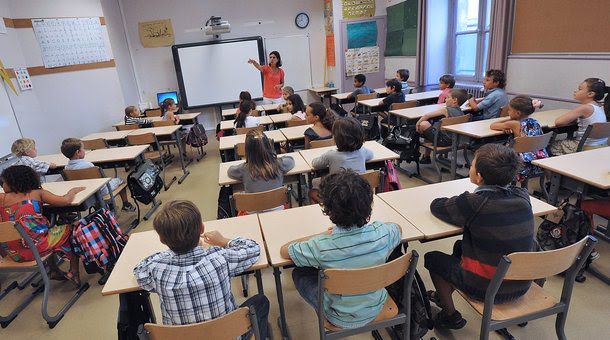
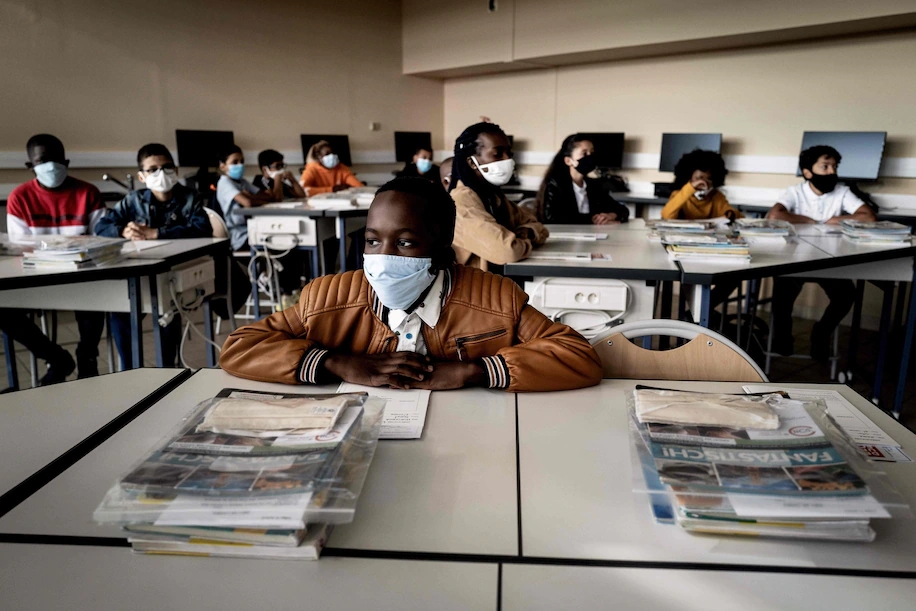
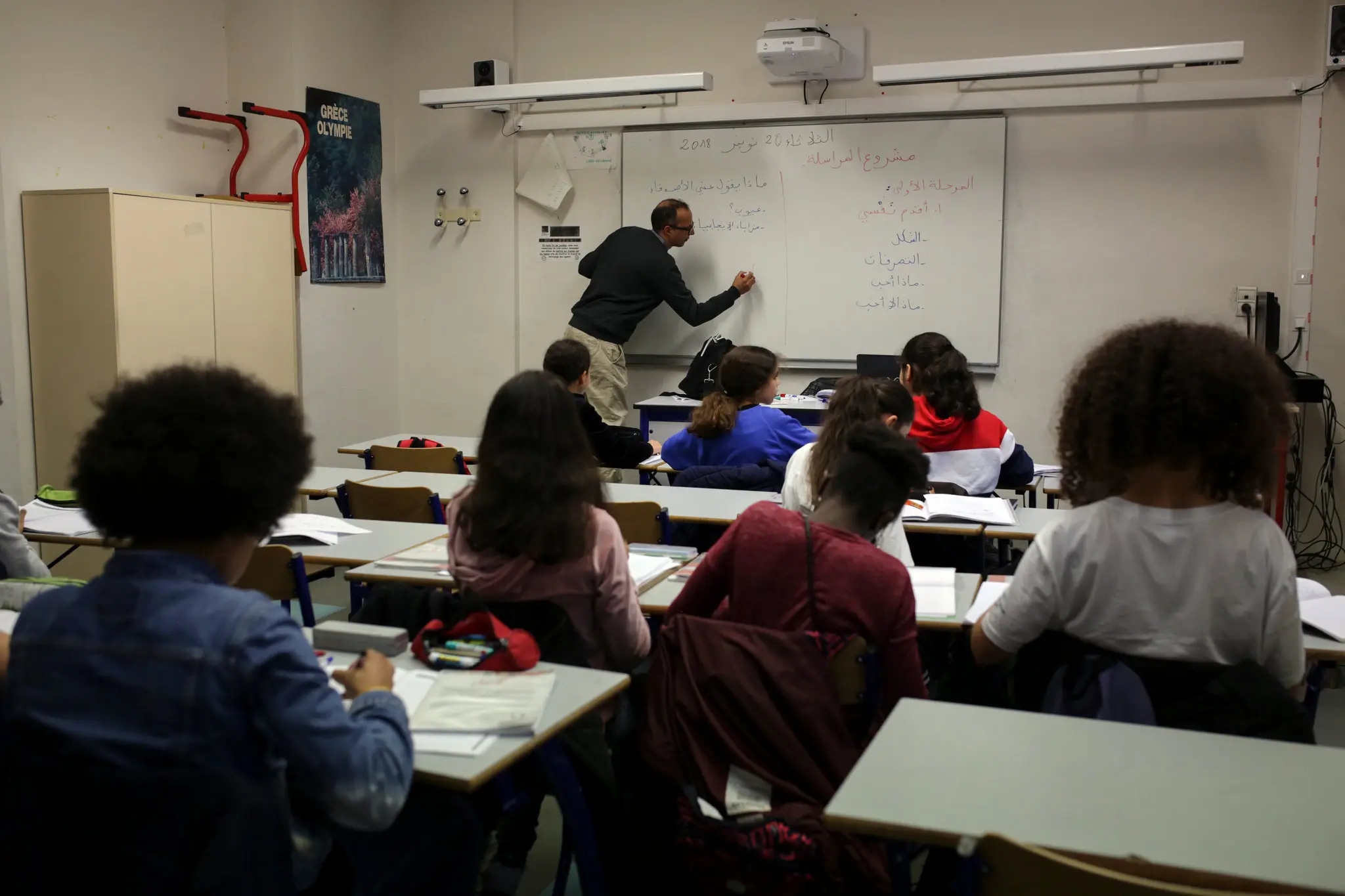
The organization of schools in other countries and photos of lessons suggest a strong similarity to the U.S.’s age-graded structures and classroom organization. While diagrams of a nation’s schools are helpful to readers in getting a sense of how each country organizes their public schools and while snapshots do convey how classroom furniture is arrayed, the importance of wall clocks, and national flags, neither charts nor photos tell viewers the ways these teachers teach multiple lessons thereby revealing patterns in teaching. Finally, snapshots fail to show student learning since they capture a mere instant of what a class is doing. So charts and photos can inform but they have definite limits.
Another shortcoming to relying upon photos is that I may have used non-representative samples of a nation’s classrooms, given that I pulled photos from the Internet. But those photos are all I have at the moment. I do invite readers to offer other photos and text that challenge the generalizations I make about school structures, given the limited evidence I offer.
In this post, I will focus on one country–France–and offer photos of “typical” public school classrooms over the past few years including the aftermath of the Covid-19 pandemic.
France has a centralized system of schooling for its 13 million students. A Ministry of Education establishes the curriculum for all levels of schooling and allocates both staff and funds to the 31 regions or academies headed by a rectuerresponsible to the national Ministry of Education.
The historically high degree of uniformity in curriculum and instruction has lessened in recent years as the Ministry of Education has delegated to local regions, curricular discretion. Moreover, local variation in schooling and classroom lessons–Brittany in the northeast of France and Marseilles on the Mediterranean Sea–Inescapably exists.
In France, education is compulsory for children between the ages of three and 16 and consists of four levels:
Students are required to attend school from age six to sixteen. All schooling between kindergarten and university is free except for private schools where parents pay fees. Seventeen percent of French children attend private schools.
Schools open in September and end in June with two weeks of vacation every few months. Also, most French schools are open Monday, Tuesday, Thursday, and Friday. Wednesdays are often a half-day. The school day usually runs from eight AM to four PM. French students usually have over an hour for lunch and many go home to eat.
Class sizes in public schools vary. For instance, in primary grades, one teacher and a teaching assistant typically will be in charge of 25 children; in secondary school, teachers commonly have 30 or more students.
Even with these similar features, there are differences in schooling across France (e.g., urban/rural, small/large schools, heavily immigrant/mostly middle and upper middle class, public/private). Thus, what some authorities call a “typical” lesson may simply be what they believe (or want to believe) is a common instance of classroom teaching. Readers should keep that in mind.
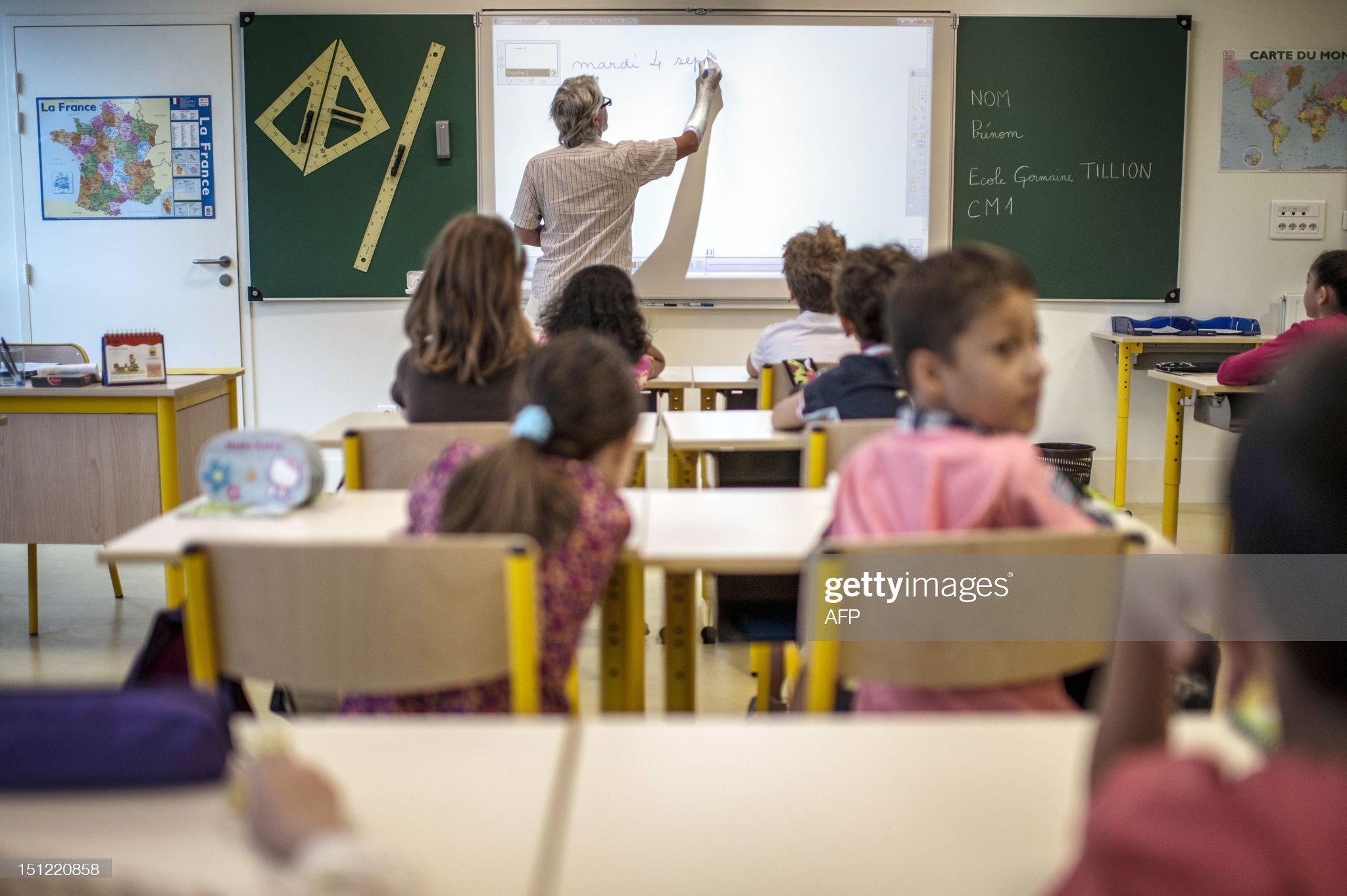
Here are a few photos of “typical” elementary and secondary classrooms in France.
Last week, IEN rounded up headlines from articles trying to make sense of what happened in education in 2020. This week, we had planned to look ahead at predictions for what might happen in education in 2021. Instead, we found numerous articles discussing how educators have been and could be talking with their students about the insurrection at the US Capitol incited by Donald Trump. A few of these articles also explicitly discuss the racism made visible both by the insurrection and the responses to it, and we encountered several other articles that talked more broadly about the teaching of controversial topics in the wake of the insurrection.
This week’s post features an e-mail interview that Aidi Bian conducted for IEN with Emma Hua. Hua and Bian are teachers at the HD school, a school with campuses in Shanghai, Ningbo, Beijing and Qingdao. These four schools have close to 3000 enrolled students in total. A fifth campus, in Nanjing, will open in 2021. The school describes itself as a “private experimental school” and each homeroom has one “national teacher” and one “international teacher.” HD school is one of a growing number of bilingual schools in China that have been gaining popularity. Bilingual and international schools in China have been particularly hard hit by the virus because of visa restrictions that have made it hard to find teachers from outside China.
Across China, schools were closed for some time, but most cities reopened schools in April, with schools in heavily affected areas like Beijing and Wuhan opening later. After a small outbreak in Beijing in late June, Beijing’s schools were closed throughout the spring semester. Nationwide, the annual “Gaokao” exam was postponed until July 7, one month later than a normal year. Current regulations in Shanghai require every school to track the temperatures and health status of their students every day and report to the district government.
IEN: What’s happening with you and your family/friends?
Emma Hua: I was originally from Wuhan, Hubei, where Covid19 firstly broke out. I went back to Wuhan for Spring Festival during the winter break and stayed at home since Wuhan was locked down in late January. Things were not too bad after we got used to the situation. Our community in general was in good order: volunteers helped with information collection, people ordered food and things online and got delivery in time. I worked at home from early February to middle April, and then successfully returned back to Shanghai, after I was tested negative for the coronavirus in Wuhan.
IEN: What’s happening with education/learning in your community?
EH: Our school started remote classes since February. For primary school, most of the courses were recorded as 10 or 15-minute videos and uploaded to an online platform where students can download and watch every day at their convenience. This is a deliberate design since it would be hard for young kids to stay focused for a long time in an online live class, and many parents have concerns with their children in front of screens for too long. All the materials and resources were uploaded online, and students took picture of their homework and sent them to teachers. We suggested a timetable for the students, which they could adjust, and many students gradually developed a more regular and feasible timetable for themselves with the help from parents. At the end of each day around 4 or 5 pm, each class would have a Q&A live session where teachers talked about common mistakes in the homework and got updates from students.
We suggested a timetable for the students, which they could adjust, and many students gradually developed a more regular and feasible timetable for themselves with the help from parents.
The online class lasted until April when the situation in Shanghai was basically in control. An interesting discovery was that after students got back to school, some students made better progress than expected as they studied more online at home than at school. We hypothesized this happened because some of them could better individualize the pace of their learning as they watched the videos at home.
IEN: What do you/your community need help with?
EH: At first, many teachers were not familiar with teaching online or making slides and videos, so the school organized some trainings to help teachers with making powerpoints and video editing. Courses and materials were prepared within a grade, where every teacher was responsible for several sessions of the whole week, to separate the tasks among the grade group. Some traditional teachers especially needed help with technology support from younger teachers. There were also struggles and pains when the internet of some teachers or students was not stable. In particular, when kids were young, they did not know how to deal with the technical problems. Teachers were tired, too, because the working time could be extended when communication with parents wasn’t smooth.


Courses and materials were prepared within a grade, where every teacher was responsible for several sessions of the whole week, to separate the tasks among the grade group.
IEN: What resources/links/supports have you found most useful?
EH: We used DingTalk as the main online platform for our second grade. After students selected their school and class, they could do a lot of things such as check in, download lessons and materials, submit homework, get feedback from teachers, etc. A good thing about this platform is that it did evolve and developed many good features that fit educational uses. For example, at first, students could see one another’s homework without any restriction, which could lead to copying. Later the new version changed the rule so that only students who had submitted their homework could access others’ work. Also, the platform allowed teachers to rate and exhibite the best work to the whole class.
IEN: What have you found most inspiring?
EH: I am appreciative that our school principals were very helpful and supportive to teachers. We have both foreign and Chinese principals, and they were responsible for the international teacher and Chinese teacher team respectively. I belong to the Chinese team, and the principal would participate in curriculum design and preparation and gave us support and suggestions. The school also has small gifts for teachers on national holidays. Another inspiration in the latter stage of remote learning was that we were trying to add more elements and activities to the online routine, such as weekly guided reading, which gave students a more diverse and similar-to-school experience even when studying online.
This week IEN provides a glimpse of how a few media outlets around the world have characterized the results from the OECD’s recent release of Volume II of the TALIS 2018 results, Teachers and School Leaders as Valued Professionals. This volume summarizes the results of a survey of teachers and school leaders from 48 countries, with a focus on questions related to 1) how society and teachers view the teaching profession, 2) employment contracts and salaries, 3) how teachers work together and 4) how much control teachers and leaders have over their work. This week’s online search for “TALIS 2018 volume II OECD” turned up very few stories in English. However, there were a number of headlines in smaller outlets and other languages, some of which were (google) translated below. More English headlines appeared in a scan of the TALIS headlines last June following the release of Volume I.
9 out of 10 teachers from all OECD countries and economies are satisfied with their job, but only 26% think the work they do is valued by society; 14% believe that policy makers in their country or region value their view, and only 24% believe that they can influence education policy.
“About 98% of Croatian teachers believe that they have control over the choice of teaching methods and student evaluation, 93% of them have control over the discipline of students (92% in secondary school), 94% of them have control over the choice of homework.” But only 9% of teachers agree that the teaching profession is valued in society.
43% of Danish teachers are considering another job, and 31% of “feel that their job has a negative impact on their mental health to some extent. In comparison, only 24 per cent of Swedish teachers, 23 per cent of Icelandic, 13 per cent of Finnish and 10 per cent of Norwegian teachers.”
“70% of lower secondary teachers report being stressed either ‘a lot’ or ‘quite a bit’… 77% of teachers are ‘all in all’ satisfied with their job, however, this is the lowest rate in the OECD, with all the other countries having rates of above 80%.”
“85% of French teachers feel satisfied with their work, but Talis demonstrates that French teachers are not only isolated and underpaid but also despised by their institution.”
“Only 12.1% of teachers in upper secondary schools feel valued, without particular differences by geographic areas and by order of school. The data also shows that 7% of the entire teaching staff think they are listened to by the country’s political leadership class.”
“The percentage of Japanese elementary and junior high school teachers who have a lot of administrative work and stress on dealing with parents exceeded the average in participating countries. Principals at elementary and junior high schools were also stressed about their responsibility for their students’ abilities and dealing with parents.”
“Nevertheless, the proportion of teachers who agree that the teaching profession is valued is 67%, much higher than the OECD average of 26%.” However, only 54% OF teachers and 62% of principals said they were satisfied with their working conditions, slightly lower than the OECD average (66%).
“23% of teachers surveyed agree or totally agree with the statement that their profession is valued in the community, while 91% of Latvian teachers indicate that they are generally satisfied with their work”
95% of teachers say that there is a good culture for supporting each other and working together at the school…Teachers also feel that they have good control over their own teaching.”
The majority of “Slovenian teachers and principals were satisfied with their profession and workplace, and slightly less satisfied with their salary… but only 3% of teachers say policy makers value their views and opinions.”
The most recent issue of Review of Education: An International Journal of Major Studies in Education, includes a study that explores how Singapore has been able to achieve a relatively high level of school success in recent years. In “Assessment and the logic of instructional practice in Secondary 3 English and mathematics classrooms in Singapore,” authors David Hogan, Melvin Chan, Ridzuan Rahim, Dennis Kwek, Khin Maung Aye, Siok Chen Loo, Yee Zher Sheng, and Wenshu Luo, draw on data collected in 2010 to analyze methods of instruction in secondary math and English classrooms that range from the more traditional models, which focus on memorization and tight control over student behavior, to the more student-centered models, which focus on comprehension and collaboration. The authors argue that teachers in Singapore draw from a variety of instructional practices, and that national high stakes testing has both shaped and constrained what teachers can do in the classroom.