What does it take to create a safe and welcoming environment for all learners? Fríða Bjarney Jónsdóttir discusses Iceland’s efforts to create a more inclusive and systemic approach to supporting immigrants and multilingual learners in the first part of this interview with Thomas Hatch. Part two of the interview will discuss some of the key challenges these initiatives have to address in order to be successful. Jónsdóttir works as a specialist at the Ministry of Education and Children coordinating the MEMM project — an abbreviation for education, welcoming and culture. The project is being developed in close collaboration with the Centre for Language and Literacy in Reykjavík and the newly established national Directorate of Education and School Services. Previously Jónsdóttir was the head of the Center for Innovation at Reykjavík’s Department of Education and Youth and before that served as a coordinator for multicultural education in preschools.
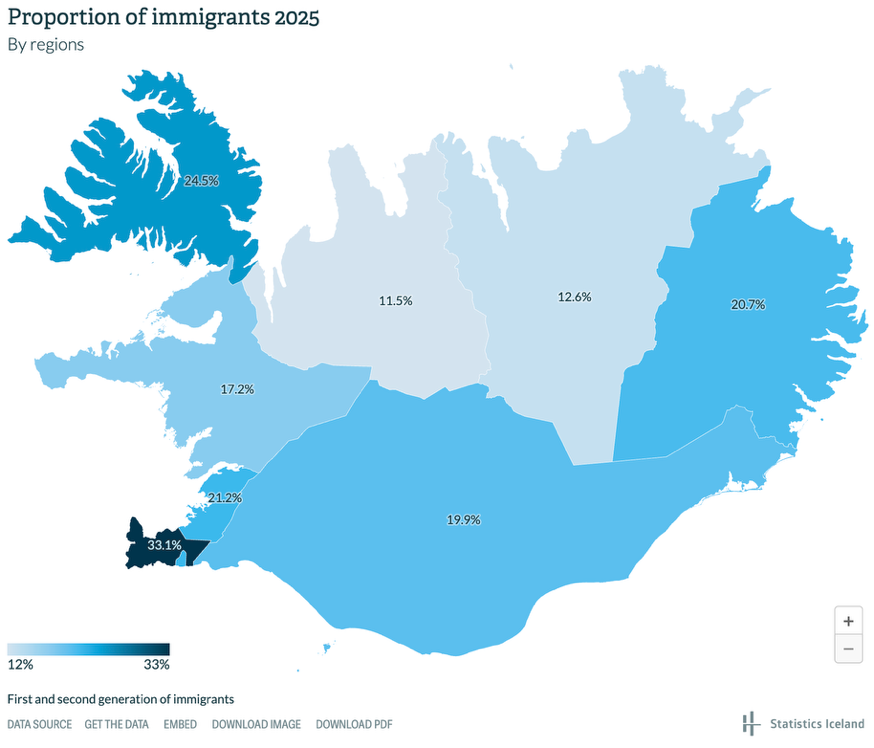
The MEMM project was created to support inclusive education and the education of multilingual learners, a need that has been growing with substantial increases in immigration since about 2014. Among other things, immigration to Iceland has been driven by economic opportunities, particularly in the tourist industry. With a total population of less than 400,000 and almost 2.3 million visitors in 2024, immigrants fill about 40% of the jobs in the tourist industry, with many of those immigrants coming from Poland, Ukraine, and the Philippines. For earlier coverage of developments in Iceland’s education system see part 1 and part 2 of a conversation with Jón Torfi Jónasson “On the inertia of education systems and hope for the future” and “Relish the freedom you have and find the balance.”
+++++++++++++++++
Thomas Hatch: Can you tell me about some of the problems that led to the development of the Directorate of Education and School services and to your efforts to build national support services for inclusive education and multilingual learners?
Fríða Bjarney Jónsdóttir: In Iceland, we face the problem that we have very, very tiny municipalities that have very minor support services for their schools, and there is no national support system for children with diverse linguistic and cultural backgrounds. Although Reykjavik and some larger cities have developed these support services, the smaller municipalities don’t have this capacity. As a result, the government has changed the law and expanded the responsibilities of the Directorate of Education and School Services. The MEMM project is part of this expansion and aims to respond to this challenge by learning from municipalities that have developed their school services and building the infrastructure of materials, tools, and services needed to support the education of multilingual and immigrant children across the country.
I’m here at the Ministry of Education and Children now for two years to coordinate this project. Before this I had participated in developing a team for the Centre for Language and Literacy in the city of Reykjavik that had a similar goal. One of the first things that we did through the MEMM project was to move that team from Reykjavik to this new national Directorate for Education and School Services. That way, the new people we are hiring can build on that earlier work.
The Directorate of Education and School Services is also developing a new database that will provide schools with a completely new system for tracking children’s progress along with a toolbox for supporting teachers’ development. But it’s important to note that providing these kinds of services for schools is a total shift in the way that the Directorate works. Before this, the Directorate was primarily responsible for standardized testing and for publishing learning material for primary and middle school (for compulsory or “basic” education). Now, the Directorate has been tasked with creating the first database that provides real time information about which children are in each school. The teacher can see it; the headmaster can see it; the municipality can see it. We are collaborating with the team that is designing the database to make sure it includes information about children’s linguistic background. With the new database, we will be able to see, for example, how many children with each kind of linguistic background are in a particular school and how they are progressing. We can use that information to think about how we can improve our services to each school, and so that they can improve their support for each child, particularly if the child is not progressing. That effort is a part of making sure that children with linguistic and cultural background have a place in all the education initiatives that are being planned. We are also developing curriculum materials for teaching Icelandic as a second language. Up to now, it has been the responsibility of the teacher who teaches Icelandic as a second language to find their own materials.
We’re also working on issues like how do you welcome refugee children, refugee parents, refugee families that don’t understand the Icelandic school system? And what kinds of early interventions, inclusive approaches, and culturally sensitive approaches are needed when working with immigrant children and families? As part of our project, we are developing a framework and collecting good examples of welcoming plans from Reykjavik and municipalities that have been working on these issues for some time. Additionally, we will have videos for parents about the Icelandic preschool and compulsory school system, and we have “cultural mediators” that can invite parents for discussions about what’s the difference between, say, the Polish school system and the Icelandic school system.
“How do you welcome refugee children, refugee parents, refugee families that don’t understand the Icelandic school system? And what kinds of early interventions, inclusive approaches, and culturally sensitive approaches are needed when working with immigrant children and families?”
TH: Could you say a little bit more about the cultural mediators?
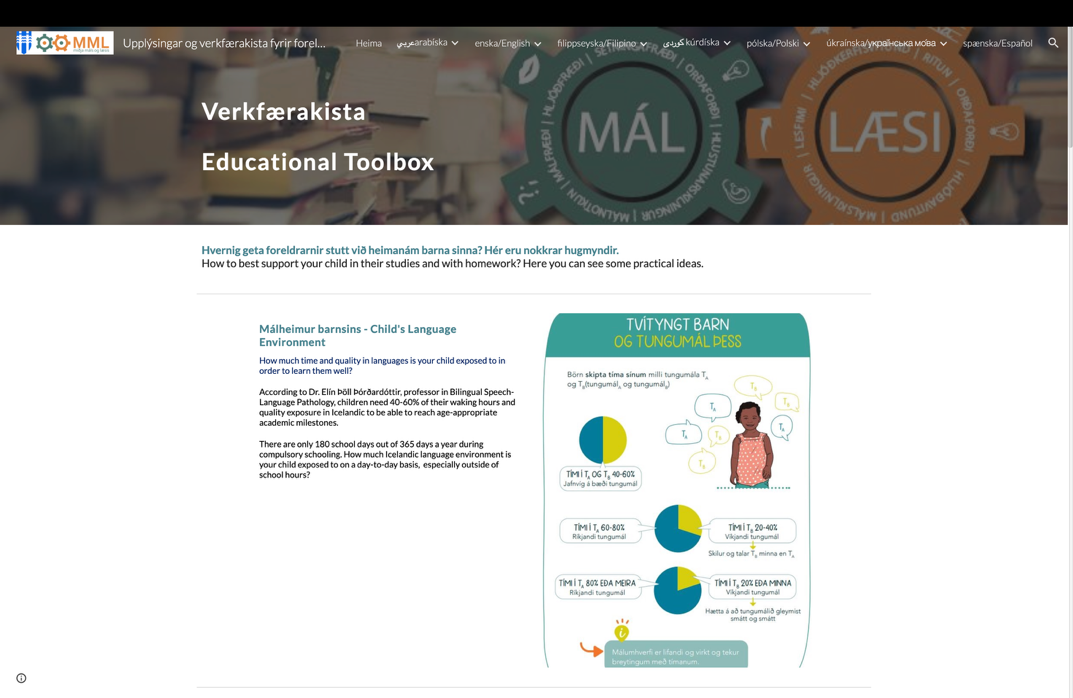
FBJ: That’s one of the innovative projects we started in Reykjavik thirteen years ago. I had a grant to develop this one position with a Polish speaking mediator for preschools, and now Reykjavik has four of those positions for immigrants who speak Polish, Filipino, Arabic, Spanish, English and Ukrainian. We call these cultural mediators Brúarsmiðir, which means bridge builders, because we’re building bridges from one culture to the other. In our current project, we have hired four more people to serve as cultural mediators, and they are collaborating with the team from Reykjavik. There’s a slightly different role with those working in Reykjavik and those we hired to work in the Directorate, because by law, the municipality has different responsibilities for their schools and families than the state. In the municipalities, you can work with individual families, but when you are coming from the Directorate, you hardly work with individual families. Instead, you help the school and the teachers to become more culturally sensitive.
TH: And do you have an example or a story of a successful mediator?
FBJ: There are many stories! For example, it’s a very common misunderstanding that if a child speaks another language at home and the child is not making progress in Icelandic, the teacher assumes that the child is very good in their mother tongue, so the Icelandic doesn’t matter as much. But when you have the cultural mediator sitting down with the teacher and the parent, the cultural mediator realizes that the parent thinks that the child is perfect in Icelandic but is not very good in their home language. The cultural mediator can help the school and the parents to work together developing a shared understanding of the child’s strengths and the possibilities for improvement
When the Ukranian war broke out and also when we had a large group of refugees coming from Palestine, Reykjavík created what we’re calling family and school-based centers that can provide a “soft welcoming” into the system. The cultural mediators can work there and talk to the parents and help clear up any misunderstandings. It’s not like we can take prejudices away, but when you have someone who can understand both sides, it’s easier to build cultural sensitivity into the system.
“It’s not like we can take prejudices away, but when you have someone who can understand both sides, it’s easier to build cultural sensitivity into the system.”
TH: I’ve talked to people in Poland who’ve taken a similar approach to welcome Ukrainian refugees into their system (see Jacek Pyżalski on the Refugee Crisis and the Polish Education System’s Response to the War on Ukraine). Obviously, you can’t cover every language or every background, so how do you handle that? What happens if there’s no cultural mediator that fits your background or your language?
FBJ: We can’t cover all of them, but we try to collect information about as many school systems as possible. The cultural mediators also host webinars and courses for Icelandic teachers to learn about the school system in Poland, the school system in Ukraine, and other places. This can help teachers to understand what to do if there is a parent who is not willing to put their child in afterschool activities for example. Informal education is very, very highly regarded in Iceland, and it’s an important part of the whole system. But some immigrant parents may think afterschool activities are a waste of time because the child is “not learning.” The cultural mediators can sit down and help the teacher explain why it’s important for the students, how it can support their social development, and how it can help build trust among a group of children. I cannot emphasize enough the importance of having the mediators in our system, but we cannot put the sole responsibility on their shoulders. We need cultural sensitivity and inclusive thinking from all our teachers, head teachers, headmasters. We cannot take that responsibility away from the school just because we have a mediator.
“I cannot emphasize enough the importance of having the mediators in our system, but we cannot put the sole responsibility on their shoulders. We need cultural sensitivity and inclusive thinking from all our teachers, head teachers, headmasters.”
Next week: Fostering collective responsibility for inclusive education: Developing national support for immigrants and multilingual learners in Iceland (Part 2)


Pingback: Highs in the East, Lows in the West, and Concerns All Around: Scanning the Education Headlines for the 2025 PISA results | International Education News