Author Archives: internationalednews

The marketization of teacher education in England

Geoff Whitty

Geoff Whitty

Geoff Whitty, Professor of Public Sector Policy and Management at the University of Bath, and former Director of the Institute of Education, University of London, spoke recently at Teachers College about the marketization of teacher education in England, and in the U.S.  As he explained, the deregulation and “branding” of professionalism will have serious consequences for the future of university-based teacher education. In the following interview with Deirdre Faughey, Whitty describes the current status of teacher education in England, the debates surrounding deregulation, and how the situation in England compares with other countries.

Could you describe the current debates over the deregulation of teacher education in England?

What appears to be happening is two things. One is some teachers will no longer have to be certified through conventional training routes because our academy schools, known as charter schools in the U.S., are exempted from the requirement to employ what we call qualified, what you call certified, teachers. 63% of all secondary schools, and a growing number of primary schools, are becoming academies or charters. “Free schools” is another term we use for some of them. So, potentially there’s a situation where there’s no requirement for the teacher to get qualified. At the moment most of these schools employ qualified teachers but they won’t have to in the future. The second thing is there’s a growth in alternative routes into certification and qualification. The traditional route of university-led courses involves a university setting up a course, getting approval from national government, and working in partnership with schools to train teachers usually in a one-year post-graduate training course. Since the mid-1990s, there has been a growth in alternative routes. In the mid-90s it was about 2% of teachers trained that way, by 2010 it was about 20%. Some of these routes are school-based postgraduate qualifications, so the school designs the course and then gains certification from a university. Some of them are things like our equivalent of Teach for America, which we call Teach First, and some of them are employment-based routes, where people train while they are working in a vacant position in a school and while they are working they gain qualified teacher status, but not necessarily a university qualification.

Now, what the government has done recently is to combine the school-led route and the employment-based route, into something called School Direct, which they want to grow to 50% of all teachers by 2015, and they want to make sure that schools are in the lead and that it’s up to schools to decide whether they involve universities in the training they offer and/or offering a university qualification as well as qualified teacher status.

So, to sum that up you’ve got two things. One is deregulation of entry into the teacher workforce, the other is more competition or marketization of training routes. Now, the debate is really about whether the long-term plan on the part of government is to exclude universities effectively either from any involvement or simply to put them into a subsidiary position where they are serving the schools.

The other thing that’s happening is that academy chains, the equivalent to charter Central Management Organizations (CMOs), are setting up their own teacher training programs either with university certification or not. And that means a sort of privatization. It’s possible that companies like Pearson will enter the field on a for-profit basis.

The other part of the debate is that universities say that this is a “dumbing-down” of training, it will be absolutely focused to the specific needs of specific schools, or specific groups of schools, making it what I’ve called “branded” professionalism.  And they will not give trainee teachers the broader professional literacy – understanding the system, understanding how schooling interacts with social circumstances, that has traditionally been part of university provision, alongside practical training in the schools. So, it’s not entirely the case that in universities people are being taught chunks of theory and then got into schools and found no connection, which is how Conservative government ministers like to present it. It’s more that work in the schools is contextualized in a broader understanding of education policy and practice.

Is part of the debate the question of whether or not teachers need to know any of that broader context?

Indeed, and there are some neo-liberal politicians who say that teacher training actually makes teachers worse, partly by filling their heads with all sorts of irrelevant theory, and partly by teaching them that children from poor families can’t do well using poverty as an excuse. What university people would say is that poverty can’t be used as an excuse, but it is a reason why it’s sometimes more challenging to teach a child coming from a certain background compared with another, and if you don’t understand that context and you try and just employ formulaic approaches that are not sensitive to individual needs and social needs then you are unlikely to be successful. You are also unlikely to be able to move from one school to another, from one context to another, because what works in one situation may not work in another. If you haven’t got a more conceptual understanding – not just of what works, but of why it works and why it works in some circumstances and not others – then you have a restricted professionality rather than the wider professional literacy that university courses have traditionally provided.

And is part of the concern how you determine what works, and how you know if something is working?

There are different approaches to that. Some of the critics of teacher training will say that you pick it up, you learn it on the job, it’s intuitive. Some will say you can get formulae, you can learn what works and things like the What Works Clearinghouse here, or the Educational Endowment Foundation in the UK, provide toolkits for teachers. University people tend to say neither of those things is unhelpful in itself, but unless you understand and can reflect on why this toolkit worked for you, rather than another, then you’re not a professional in the broader sense of being able to go into a situation, sum it up, draw on all your resources – academic, experiential, and so on – to make a decision. Without that teaching is a craft and not a profession. Our senior government minister for education is very clear it is a craft, so they wouldn’t necessarily see that as a criticism. But to those who want to see education as a profession, and regard it as a profession, it is as very much about individuals able to make judgments on the basis of a combination of broader academic understandings and experience.

How does what is happening in England now compare to what is happening in other parts of the world?

Nearly all countries in the world are pushing – as are OECDMcKinsey and so on – raising teacher quality. The difference is both in how you define teacher quality, and the best way of achieving it. There are very few countries that are going in the direction of wholesale deregulation, the teaching-as-a–craft approach, but there are many countries, including the US, where the idea of clinical practice is being developed, involving more school-based practice than they have had in traditional university courses. In some countries that is the equivalent of school-based teacher training in England, in others it is more based on the clinical medical education model where it is research-based clinical practice.

The other parallel, with the US particularly, is that there is a degree of deregulation, in that charter schools in some states, like English academies and free schools, don’t have to employ qualified teachers, in that alternative routes have more restricted requirements in some states than in others, and in the casual way in which  the concept of “highly qualified” teacher in NCLB is sometimes interpreted.

The third parallel is that some charters, and charter CMOs, seem to be setting up alternative routes to certification. The big controversial provider at the moment is the Relay Graduate School of Education, which you have here in New York and is now spreading to other parts of the US.

So, there are parallels, but I think nowhere is going as far as England – not even other parts of the UK. I don’t think many places would say teaching is a craft rather than a profession, they just say there are different definitions of professionality and different ways of achieving it.

For more information about a current inquiry into the role of research in teacher education please visit the British Educational Research Association website or email g.whitty@ioe.ac.uk

Redesign of IEN

Those familiar with IEN know that we periodically adjust our site and our content as our ideas and goals evolve.  Most recently, we redesigned the site in order to make it easier to see and scan our posts on the main page and to provide more direct links to other sites with related content and resources.  Essentially, you’ll find our latest posts in the center, related links on the left, and our twitter feed and search tools on the right.  While our focus will remain on sharing links to news and research, over the next few months, Deirdre Faughey and I expect to experiment with more posts of our own, noting and reflecting on the news and research we are finding as we scan social media around the world for work related to educational policy and educational change.  When possible, we will also be linking to comments and commentaries from our colleagues from other countries.

These developments reflect our continuing effort to promote constructive discussions about what’s new, what’s good, and what’s effective in education in different contexts.  That goal and this project grew out of a year I spent in Norway with my family experiencing and studying the Norwegian educational system.  While there, I found numerous opportunities to learn about key issues and concerns about education and educational improvement in Scandinavia as well as in other parts of Europe.  But when I returned to the United States I quickly found myself immersed again in the continuing and often polarizing debates in the US and felt cut off from the many different kinds of educational discussions and the different perspectives I encountered the previous year.  In response, I created IEN with the express purpose of providing access to some of the news, research, and diverse perspectives on educational policy and educational change outside the US.  Ideally, sharing some of what’s happening in educational policy around the world – and, I hope, raising questions about what “counts” as new, good, and effective – can encourage discussions that go beyond the educational constraints of current educational systems and the often limited debates about how to improve them.

While I initially thought that there would be a wealth of conversations and examinations of education that we could tap into, engaging in this project over the past year or so has highlighted both the possibilities and challenges for using social media to learn from what’s going on in other parts of the world.  In terms of benefits and possibilities, using social media provides:

  • Access to many different kinds of sources and to diverse perspectives, ideas, and information that are often hard to come by in more traditional, national media
  • Opportunities to engage with people with whom we might never come into contact in our own locales and professional spheres
  • Speed for sharing information and links immediately, without having to wait to go through a conventional publishing process

However, these same characteristics also create problems for any effort to promote constructive and grounded exchanges of views and ideas:

  • Access is not automatic.  Although information of all kinds is available, it takes considerable work to find news and research related to educational policy in many different contexts.  The quality and veracity of the information varies; some contexts may have few if any sources for developing reports and research; and even when sources are available information and ideas may be inaccessible without local knowledge or knowledge of local languages
  • Opportunity to learn does not guarantee understanding. Examining information and ideas from different contexts does not in and of itself make it easier to understand diverse perspective and different points of view.  It’s difficult to recognize the possible contributions of diverse perspectives, particularly when they are far beyond the mainstream.  Translations, framing and contextualizing may be needed in order to make information and accessible to wide audiences across countries and cultures. But those same efforts can reduce and remove the local variations that are central to the kinds of learning this work seeks to promote.
  • Speed can lead to the spread of false information and premature conclusions.  The demand for currency, immediacy and relevance leaves little time for deep investigation, checking of sources, or discovery of alternate points of view.

Our hope is that by taking advantage of the possibilities of social media while remaining conscious of the problems, we can contribute to the development and recognition of new vehicles and forums for sharing ideas and for learning from one another about educational policy and educational improvement.  Ultimately, some new mix or yet unimagined forms of journalism and scholarship may be required.  To that end, we invite you to share with us resources and sources for information and links to educational news and research that we have not yet come across and point us as well to places and people whose work we can share.  (or with whom we should connect?).  While traditional outlets can continue to yield important and useful information about education, we also need opportunities to see beyond our own borders and into the many different local settings where educational policy and practice meet.

Education reforms in Spain, Mexico, and China

Philippe Lopez | AFP | Getty Images

Philippe Lopez | AFP | Getty Images

Over the past month, reports have touched on large scale reforms and resolutions. Spain’s recent reform effort includes a revised national syllabus and a proposed shift in the language of instruction, and has been met with protests, mainly over the cuts to funding, wages, and working conditions. Mexico’s Senate passed a controversial education reform bill that will institute standardized testing for teachers, and a new teacher evaluation system – measures that have led to massive protests as well. Meanwhile, China’s Ministry of Education plans to reduce homework, mandatory exams, and the “100 point” assessment system. Teachers will be expected to use confidence-building comments, such as “excellent,” “good,” “qualified” and “will-be qualified.”

Denmark

Denmark’s latest education reforms require that both teachers and students spend more time in school, but what is the plan for how that time will be spent? A recent news report describes that it is the conservative Danish People Party’s view that in order to address a disparity between the number of students studying at the general upper secondary schools and the needs of the Danish job market, the government should limit the enrollment to upper secondary schools and increase the number of students studying at vocational and commercial schools. The ruling government, for it’s part, has developed a plan that focuses on ” improved academic standards, increased professional standards of teachers, principals and other pedagogical staff and clear objectives and increased local independence for the development of the public school.”

This follows reforms proposed in Norway earlier this year, which sought to review the practicality of the curriculum and explore how vocational education could better meet the needs of that country’s job market.

Teacher evaluation at the heart of protests over Mexico education reforms

Omar Torres/Agence France-Presse — Getty Images

Omar Torres/Agence France-Presse — Getty Images

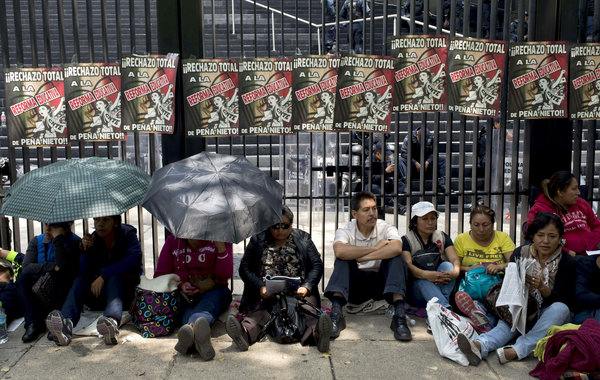
As reported in The New York Times yesterday, teachers took to the streets of Mexico City to protest the country’s education overhaul program.   The teachers occupied public spaces, blocked access to hotels and the airport, and warned of greater mobilization in coming days. They are protesting the fact that the coming education reforms promise to weed out underperforming teachers, raise hiring standards, and weaken the union. Prior demonstrations have already succeeded in pushing lawmakers to forego an evaluation requirement aimed at halting the practice of buying and selling teaching jobs. According to the article, “Teachers buy, sell or inherit positions as though they were family heirlooms. Removing poorly performing teachers is virtually impossible, even over allegations of sexual or substance abuse.”  The new law would make teacher evaluations obligatory every four years.

see prior IEN reports:

Mexico Approves Massive Education Reform

Reforms in India and Mexico in the Journal of Educational Change

Scan of Ed News: Protests, Unions, and Educational Funding

Addressing teacher quality in Australia and India

Reports over the past month show that Australia and India are countries are implementing new policies to address teacher quality, albeit with two distinctly different approaches.

In Australia, principals will be given the power to address teacher behavior as part of an $150 million reform effort to improve the quality of teaching. Education Minister Adrian Piccoli described it to the AAP as “more like a private sector approach to performance management….It’s going to be a fair process but a tougher process than what exists already.” Teachers who fail to meet the new standards of conduct could be released, demoted, fined or cautioned. Additional reforms include salaries based on meeting standards rather than employment length.

In India, the government has adopted a three-pronged strategy to improve teacher quality, which includes (i) the strengthening of Teacher Education Institutions, (ii) the revision of curriculum for teacher education in accordance with the National Curriculum Framework for Teacher Education 2009 and (iii) the laying down of minimum qualifications for Teacher Educators and their continuous professional development.

In Thiruvananthapuram, the capital of the Indian state of Kerala, the District Institute of Education and Training (DIET) will embark on a three-month study to analyze how classroom practices correspond to the prescribed curriculum of the district’s primary schools.  As Mohammed Kabir, a DIET official, explained to The Hindu, “There is an increasing need to analyze the problems faced by practicing teachers to get a complete picture. Sometimes, teachers follow textbook-based teaching while the curriculum mandates on activity-based learning. This might be out of habit or due to lack of understanding about the methodology. Here, teachers can open up on the problems they face in adapting to the methods”, said Mohammed Kabir, a DIET official.

Interview with Vicky Colbert

VIcky Colbert

VIcky Colbert

Vicky Colbert is the co-founder of Escuela Nueva in Colombia, a school with a pedagogical model known worldwide for its effectiveness in improving the quality and relevance of basic education. In this featured interview, originally published in the AERA Educational Change Special Interest Group newsletter, Colbert describes the origins, widespread adoption, and recent developments of the model.

To read the full interview, click here: Lead the Change Issue 29 Colbert

Lockout and reform: A turbulent year for schools in Denmark

Jakob Wandall

Jakob Wandall

As the school year begins again in Denmark, we asked education researcher and consultant Jakob Wandall to take a look back at the lockout that closed the schools last March, review the key disagreements that led to the standoff, and consider the implications for the upcoming school year and beyond.

In Denmark, the month of March is usually the most intense period of time in the school year as teachers and students prepare for final examinations; however, this past year was an exception as schools were closed. The Municipalities Association (KL), backed by the center-left government, closed the schools in an effort to dismantle long-standing teacher privileges that the teachers’ union refused to concede in negotiations. The 99 municipalities in Denmark are responsible for running the public schools.

In the first days of April, the four-week “lockout” of teachers came to an end, but as a result, schools are now valued even more highly by the more than 600,000 pupils and about 60,000 teachers who were affected.

The standoff between the Municipalities Association (KL) and the Danish Teachers’ Union (DLF) raised questions about the viability of the so-called “Danish model” on the public sector labor market, which is largely governed by collective agreements between employers and trade unions, relative equals in negotiations. These two parties are accustomed to reaching agreements without the need for the national government to step in through legislation.

Danish teachers protest during teacher lockout.

Danish teachers protest during teacher lockout.

This dispute arose because the main teachers’ union did not want to give up the principles upon which working hours were regulated. A full-time teacher taught approximately 25 class periods per week (45 minutes per lesson), unless it was decided that the teacher should perform other tasks (e.g. administrative work, guidance of pupils, further education). This equals approximately 19 teaching hours, and a total of 41 working hours per workweek. This pre-lockout arrangement resulted in schedules that consisted of less than 40% of working hours spent teaching, and no obligation for teachers to be present at school during the remaining working hours. Historically, this schedule represented the belief that teachers had a right to work independently on planning and organization.

According to the Danish model if the parties cannot come to an agreement and further negotiations seems useless, there are four possibilities: the prior agreement could be prolonged, the union could strike, the employers could institute a lockout, or the government/parliament could intervene through legislation as a last resort. The idea behind the strike/lockout is that this should hurt both sides: employers lose production and the workers lose wages. In the public sector, where there is loss of production, there is a greater risk for local politicians as the population could turn against them. In this case, there were several unsuccessful attempts by KL to dismantle the existing working time agreement with the teachers prior to the ultimate lockout of March of 2013.

While Danish students usually go to school from about 8 AM to 1 PM and often attend a publicly financed after-school club, the government and a large part of the opposition to the existing agreement wanted to extend the school day.  The additional time would be devoted to academic work and give less time for “free” play, which is something the Danes have always prioritized. Generally, the teachers were against this approach as well as the proposed changes to their workweek, which was viewed as a preliminary step to making the school day longer in the future. They wanted to solidify their right to a specific length of preparation time in a national agreement rather than leave it to local heads of school who may be pressured by budget considerations.

In the media, the government’s reform was presented as very popular; the general school debate over the last decade has been strongly influenced by mediocre PISA results. KL pointed to teachers’ working hours as the main cause of the PISA scores.

The teachers' union DLF, led by Anders Bondo Christensen (left), in grueling negotiations with Michael Ziegler (right) and KL (Photo: Scanpix)

The teachers’ union DLF, led by Anders Bondo Christensen (left), negotiated with Michael Ziegler (right) and KL (Photo: Scanpix)

At the start of the lockout, parents were faced with the prospect of no school and not knowing when it would start again. It was particularly awkward and difficult for the children. But the parents recruited grandparents, took vacation early or brought the kids along to their workplace as many companies established educational facilities or made space available for the kids. The vast majority in the population felt that this was a legitimate fight between municipalities and the teachers union, and that it should be fought without intervention.

On April 2nd, The Danish parliament passed a law that decided the terms and conditions of Danish teachers without consulting them. The DFL argued that the lockout was premature, heavy-handed, and unfairly one-sided in favor of the local authorities. The teachers union had lost the battle.

But what about the teachers? Many of them spent a month trying to mobilize support led by their trade union and used Facebook and email to show the Danes that they were against the action taken by KL. Most appeared to be delighted to get back to work, despite the general opposition to the agreement forced through by the government. After the conflict everyone worked together and the majority felt that there were no negative effects on cooperation inside the school. Many local governments and school leaders silently disapproved of the lockout. Despite the loss of one month, the mandatory tests and examinations were carried out according to plan. Whether the students have learned less will probably never be explored.

On June 8th 2013, the government and a majority of the opposition in the parliament agreed upon the details for a new plan for school reform. Beginning in August of 2014, the students in Denmark will be spending more time in school. At the same time the applications to teacher training colleges in Denmark has dropped dramatically and 1 out of 2 teachers in Denmark is considering leaving the profession.

The debate over whether this additional teaching time will lead to a better school and more proficient students is ongoing. Meanwhile, at this year’s annual Soroe Meeting (a traditional meeting that brings together those most familiar with pressing educational concerns, including members of parliament, educational journalists, civil servants, researchers, and others) invitees met to discuss leadership and preparation for change. This annual meeting has a strong impact on Danish educational policy, which makes this year’s theme (“Klar til fremtidens skole,” meaning  “Ready for the School of the Future”) of great interest to those concerned about what will happen with Denmark’s schools in the near future. While reporters in attendance do not write about what is discussed at this informal meeting, many attendees shared their experiences on Twitter.

For more information:

Singapore

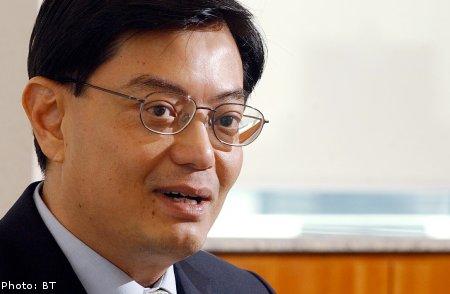
Educators need to make primary school engaging for students: Heng Swee Keat

Channel News Asia (July 10, 2013)

Minister Heng Swee Keat

Minister Heng Swee Keat

In the continuation of efforts to deliver an engaging education to the young so as to fulfill the vision of a Student-Centric, Values-Driven Education, the Ministry of Education organsied the inaugural Primary School Education Seminar and Exhibition. About 2200 teachers attended the seminar during which the Minister of Education outlined the principles of primary school education – “to build strong fundamentals, to provide active, visible and interactive learning, to give feedback to support learning and to affirm the children’s efforts” – so as to lay a good foundation for life long learning for the young charges. The exhibition focused on the demonstration of teaching approaches that promote engaged learning and the holistic development of children.

For more information:

Minister’s speech

A view from Australia

Dr. Leila Morsy Eckert

Dr. Leila Morsy Eckert

Recent reports from Australia question how the changes outlined in the Gonski school funding reform would be impacted by the outcome of the nation’s recent election, in which Prime Minister Julia Gillard was replaced by her opponent, Kevin Rudd. We asked Dr. Leila Morsy Eckert, a Lecturer in the School of Education at the University of New South Wales, to provide us with some background information on the reform effort, different perspectives on the issue, and the implications of this reform for education in Australia.

What does this reform mean for education in Australia? How will it change?

The Better Schools: A National Plan for School Improvement, colloquially known as the Gonski reforms, are in principal meant to account for the real cost of educating a child. Funding is allocated to schools on the basis of the average cost of a student’s education. A base amount of funding will be allocated per child. Additional funding, or “loadings,” will be given to schools based on whether the children who attend that school are, on average, disadvantaged. Disadvantage will be measured on the basis of socio-economic status, language background other than English, indigeneity, rural or small schools, and disability. Funding is sector-blind, meaning that the Catholic Schools Sector and the Independent (Private) Schools Sector will also receive money. 

What are some of the different perspectives on the issues? 

Overall, there is consensus that the current funding system is unclear and unequal (much funding is duplicated, and it is difficult to trace where funding is coming from and where it is going to). However, Catholic School and Independent School representatives have been concerned that they will lose money under the new policy. Others still believe that the premise of the new funding mechanism itself is flawed. Indeed, the Federal Government in Australia funds non-government schools. Many education researchers believe that this has resulted in a system where any family that can afford to send their child to a private or Catholic school does so. One consequence is that public schools have become a place of last resort for all those who cannot afford a private education. The Gonski reforms continue this trend of federal funding of non-government schools. 

What do you expect will be happening in the near future? 

While the reforms have passed in the Senate, it is unclear what will happen next. Politically, there has been a change of leadership—Julia Gillard, the driving force behind the reforms, was replaced as Prime Minister last week by Kevin Rudd, who supports the reforms but to a less fervent degree than Gillard. Also, not all Australian states and territories have signed up to the federal reforms. So, it may be a slow start for any actual change to roll out across the country. 

For more information:

Independent schools sign up to Better Schools plan in $1bn deal

Giles digs in on Better Schools funding scheme

Gonski reforms in ‘chaos’: Pyne