Category Archives: About K-12 International Education News

TIMSS and PIRLS

International-Travel-Agency-262545-262545-1soOn December 11, 2012, the TIMSS and PIRLS International Study Center released the results of the Trends in International Mathematics and Science Study (TIMSS) and the Progress in International Reading Literacy Study (PIRLS), and news reports from around the world are already trying to interpret the results.

Reports in Norway note that students are performing better in reading, mathematics and science, and that (particularly in 4th grade math scores) they are catching up with Finland. Drastic improvements made the news in Russia and Israel, although in Israel a dramatic gap between Hebrew-speaking and Arabic-speaking students was also recognized.

In Australia, the results were considered a disappointment, especially in consideration of the Prime Minister’s ambitious education goals and plans for additional school funding. In response to the unexpectedly low scores, Geoff Masters (Chief Executive of the Australian Council for Educational Research) explained on Australia’s AM radio program, “We know from international research and experience ourselves that what really makes a difference is the quality of the teaching that’s occurring in classrooms, the quality of the leadership of schools.”

Northern Ireland emerged as Europe’s top performing education system for primary maths. Students in the Republic of Ireland performed nicely as well, ranking 10th in reading out of 45 countries, 17th in maths out of 50 countries, and 22nd in science out of 50 countries; however, Ireland is not ranked among the top performing countries in any of the three tests. As a result, Minister for Education Ruairí Quinn has said that he would like to see more time devoted to science and maths in Irish schools, rather than Irish and religion. “That’s why we’ve asked for the divestment by the Catholic church of many of the primary schools that they currently have.”

Singapore students enjoyed high scores, as they have in previous years, but government officials expressed concern about the students lack of confidence – an issue they hope to address with their new student-centric, values-driven educational model.

While South Africa (along with Honduras and Botswana) reported the lowest scores in math and science, South Africa reported a significant improvement amongst the “most disadvantaged” students – a fact that “coincides with learners and schools receiving the highest number of interventions aimed at improving the quality of education, from both public and private sector providers.”

In the U.S., The Hechinger Report explains that while there have been some gains, U.S. students continue to lag behind their Asian peers.
For more information:

WELCOME TO THE TIMSS AND PIRLS 2011 DATA RELEASE

Austria

All-day-school: Government is still discussing the details

N.N., www.wienerzeitung.at (November 27, 2012)

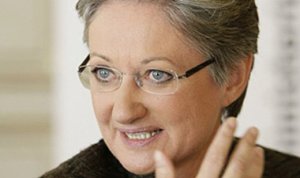
Claudia Schmied Photo: Reuters

Claudia Schmied Photo: Reuters

The extension of the all-day-school reform in Austria is still subject of discussion among the governing political parties SPÖ (Social Democratic Party of Austria) and ÖVP (Austrian People’s Party). The reform should have already passed the Council of Ministers, but the SPÖ refused to agree with the ÖVP’s draft law of the reform. Claudia Schmied, Minister of Education (SPÖ) criticizes that the ÖVP makes demands in return like ethics classes or a second compulsory kindergarten year for those who are in need. Furthermore, they demand that parents, teachers, principals, and students should be allowed to decide whether they want to implement an all-day-school-reform at their school. However, the SPÖ wants to stick with the rule that as soon as 15 students state the need for care in the afternoons, the school has to change into an all-day-school-model. Schmied is convinced that the decision nevertheless will be made this year. “There is no way around the all-day-school,” she says and points out that she will continue the negotiations with the ÖVP.

For more information:

All day school plans take shape


On the school reform debate in Austria over the past year: School Reform: Austria Petitions for Change

On teacher education in Austria: International experience as part of teacher education

Spain

Education reform puts Spain, Catalonia on collision course

The Hurriyet Daily News (December 7, 2012)

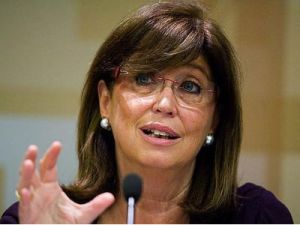
Irene Rigau EFE

Irene Rigau EFE

Education reforms and austerity measures in Spain have caused tension and separatist sentiments in the Catalonian region. At issue is the issue of teaching the Catalan language in schools. Jose Ignacio Wert (Spain’s National Education Minister) proposed that all schools focus on teaching the Spanish language in all regions, effectively removing the requirement that students in Catalonia speak Catalan in university. He also proposed that the region should fund Spanish-language private schooling for families that demanded it. Defenders of the current system, such as Irene Rigau (Catalonia regional education counselor) view the plan as an assault on cultural identity, while Wert insisted “there is no part of the reform that undervalues the importance of Catalan.”

For more information:

La Generalitat cree que las palabras de Wert responden a una “visión preconstitucional de España”

Catalans protest ‘return to Franco’ as schools are told to teach more Spanish

Barcelona soccer club defends use, teaching of Catalan language at politically sensitive time

Malaysia

Falling Behind in Sciences

Yong Yen Nie, The Straits Times (November 28, 2012)

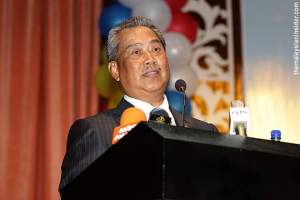
Deputy Prime Minister and Education Minister Tan Sri Muhyiddin Yassin

Deputy Prime Minister and Education Minister Tan Sri Muhyiddin Yassin

The Malaysian government has identified the field of science as a source for potential economic development. Therefore, the fact that fewer than one in five graduates are qualified in science is disconcerting. To rectify the situation, the Government plans to increase the number of students studying science through the provision of tax breaks for the parents of children who study science, and distribution of financial aid and grants to students. Education Minister Muhyiddin Yassin (also Deputy Prime Minister) wants to see the number of science students increase by 10 per cent by 2014.

For more information:

Education Ministry forms committee to boost science student numbers

DPM launches network to connect Malaysian scientists worldwide

Chile

OECD suggests stricter accreditation for Chilean universities

Emily Green, Santiago Times (November 29, 2012)

Education Minister Harald Beyer. Photo by Gwynne Hogan/The Santiago Times.

Education Minister Harald Beyer. Photo by Gwynne Hogan/The Santiago Times.

In order to improve its system of higher education, The OECD recommends that Chile implement more rigorous licensing requirements for universities, continuous monitoring of university standards and restructured leadership. The OECD suggests accreditation become mandatory for all programs, as part of an “institutional review,” which would incorporate periodic reviews rather than function as a one-time qualification. Universities that do not meet the standard would be placed under review. Juan José Ugarte, head of the Education Ministry’s higher education division, explained that certification “puts the focus back on the students, giving them what they were promised when they enrolled.”

For more information:

Chilean National Accreditation Commission Accused of Corruption

Japan

Osaka’s mayor, inspired by Thatcher, requires children to attend Saturday classes

Ida Torres, The Japan Daily Press (November 12, 2012)


Mayor Toru Hashimoto

Mayor Toru Hashimoto

Mayor Toru Hashimoto responded to a recent assault, attempted robbery, and several other violent acts allegedly committed by six youths, with a reinstatement of a mandatory educational guideline that was abolished over ten year ago. Students are to attend Saturday classes in addition to their Monday through Friday schedule. Five elementary schools have already reinstated the Mayor’s guideline and the remainder will have the guideline take force in April 2013. Hashimoto hopes that with the additional school day will not only benefit student academic achievement, but also prevent juvenile delinquency.

For more information:

Japan’s Osaka to restart Saturday classes for schools

China

Ministry of Education sets up new department

Cheng Yingqi and Luo Wangshu, ChinaDaily.com.cn, (November 16, 2012)

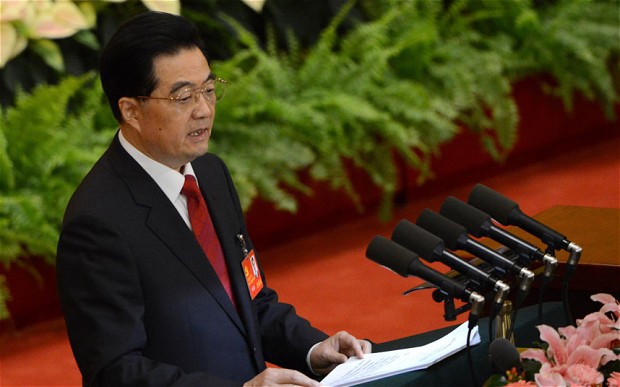
President Hu Jintao speaking at the 18th National Congress of the Communist Party of China

The Ministry of Education has set up a department of education reform, including offices of early-childhood education, special education and continuing education. Major reform measures will be introduced, including policy, research, and publicity of reforms. President Hu Jintao said that authorities will focus on promoting early-childhood education and investing in vocational and technical education.

For more information:

How to Stop Reactionaries From Derailing Reform in China

100 minutes of lip service: Outgoing China president lambasts the corruption he presided over

China, India GDPs to exceed entire OECD by 2060

Brazil

ENEM Exam Highlights Education in Brazil

Ben Tavener, The Rio Times (November 6, 2012)

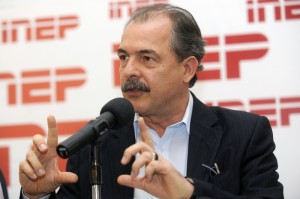
Education Minister Aloizio Mercadante

The Exame Nacional do Ensino Médio (National High School Exam), better known as the ENEM, is a non-compulsory end-of-high school exam that has come under fire due to attendance levels, disruptions and leaked questions. While 5.8 million people registered for the exam, 28 percent failed to attend nationally (25 percent in Rio). Since 2009, the MOE proposed all universities should use the exam as a standard entrance qualification test. Therefore, ENEM exam results are essential to student’s success within a university system that has limited spaces available. Education Minister Aliozio Mercadante noted that space is further limited for many white middle-class students after a fifty-percent quota was introduced to increase the number of university students from diverse socioeconomic backgrounds.

For more information:

Brazil’s University Affirmative Action Law

India

CBSE course committees to have student nominees

Press Trust of India, The Hindu (October 26, 2012)

The Indian Central Board of Secondary Education (CBSE) has declared its plan to include students in its course committees as well as in the process of framing the syllabus. These students will be nominated by the schools and will be selected on the basis of their performance in the 12th grade examinations. The course committees comprise of professors from universities, NCERT experts, teachers and subject experts, private and public schools and working teachers. According to CBSE Chairman Vineet Joshi, this commitment to student voice is motivated by a desire to make the courses and syllabus more inclusive and application-based. Mr. Joshi hopes that student involvement will improve the continuous and comprehensive evaluation-based educational system initiated by CBSE.

For more information:

CBSE students get voice in deciding what to study

Malaysia

Education innovation: Well-Rounded – End Result is a More Marketable Graduate

The New Straits Times (October 27, 2012)

Coming in the wakes of the launch of the Malaysian Education Blueprint, the Malaysian Higher Education Ministry will work with the Education Ministry to tweak the school education system, including the curricula, so that students would become more creative and innovative. The purpose is to increase the human capital value and marketability of the various graduates of the education system. The plan calls for a seamless education in creativity and innovation, with outcomes ranging from creativity for Pre-Schoolers and Primary students and creativity, innovation, collaborative and entrepreneurial skills for tertiary students.

For more information:

Malaysia draws up education blueprint: Effective or not?

‘Let students speak up’