Category Archives: Global Reports/Studies

High satisfaction, high demands, and changing demographics: Scanning the headlines on the results of the TALIS 2024 (Part 2)

Teachers’ workloads, AI use, and the status of the teaching profession overall are among the key issues highlighted by the media sources that covered the recent release of OECD’s Teaching and Learning International Survey (TALIS) 2024. In this second part of a two-part post, IEN rounds up some of the headlines that discuss the results for different countries. Part 1 provided a summary of OECD’s results, and Part 2 will For comparison, see previous coverage of the release of the results of TALIS 20218 (Volume 1; Volume 2).

Headlines around the world

Albania

Albania among top OECD countries in international teachers’ survey results, Albanian Telegraphic Agency

“…98% of Albanian teachers are satisfied with their profession, while only 3% experience high levels of stress—the lowest rate compared to the OECD average of 19%.”

Australia

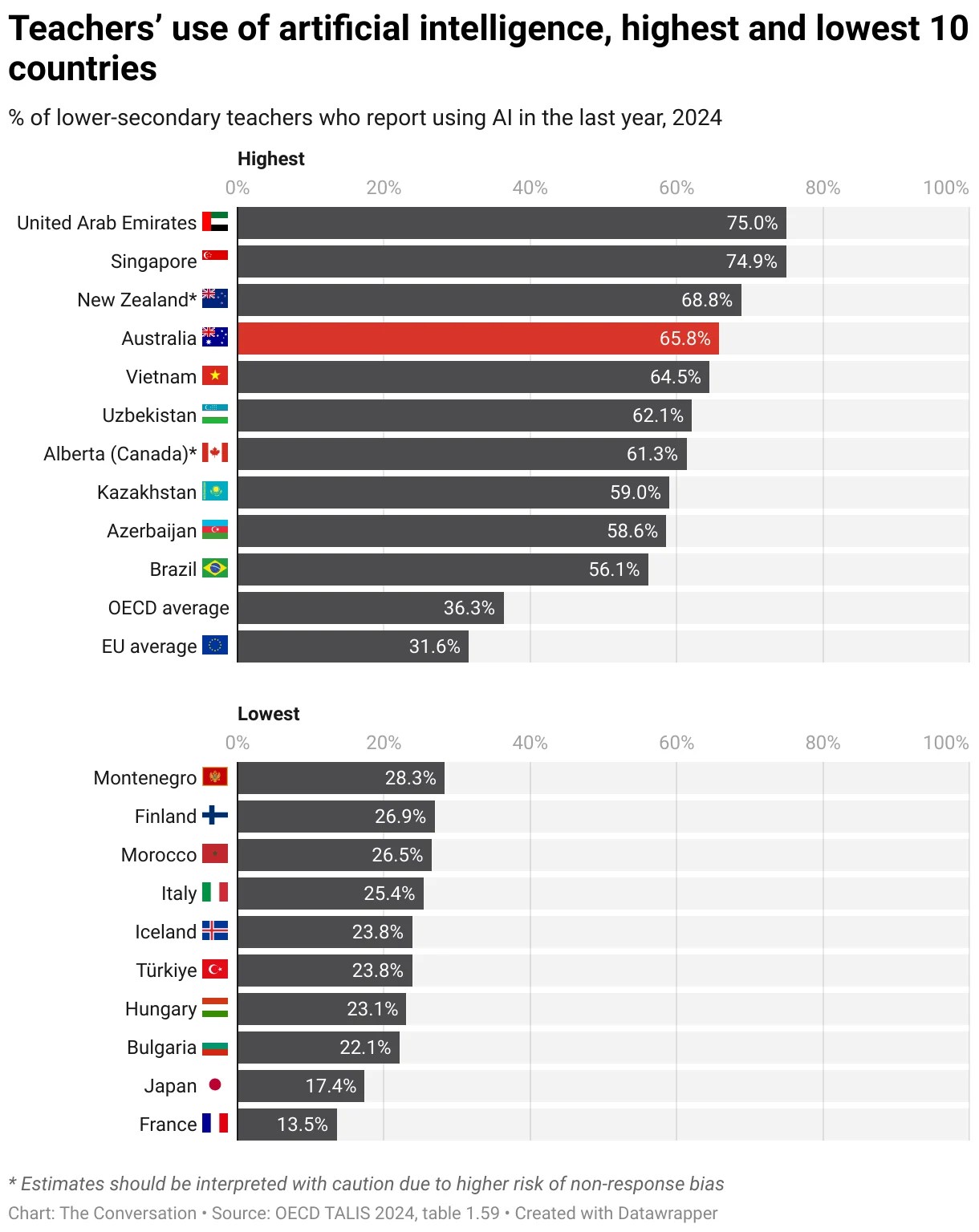
Australian teachers are some of the highest users of AI in classrooms around the world, Yahoo News Australia

Australian teachers are among the world’s most stressed – despite low class time, The Advertiser

Australian teacher shortage among worst in the OECED, SchoolNews.com

“Australia is now among the top three OECD countries for teacher shortages in public schools. That is unacceptable for a wealthy, developed nation.”

Austria

New teachers hardly feel prepared for everyday school, Vol.at

Belgium

Teachers report high stress due to administrative burden, Belganewsagency.eu

“A striking 70 percent of lower secondary school teachers in Belgium report stress from too much administrative work, far above the OECD average.”

Canada – Alberta

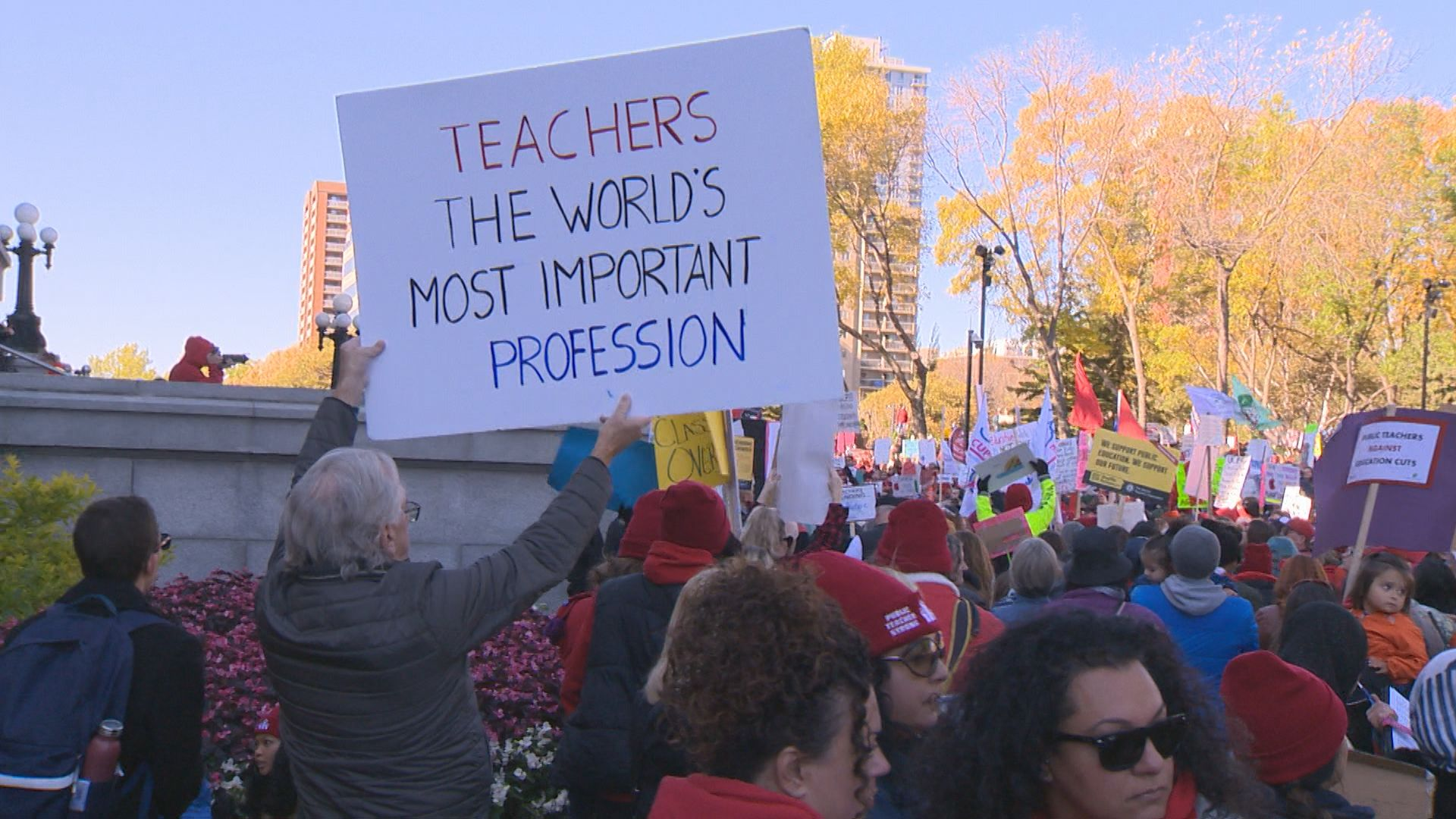
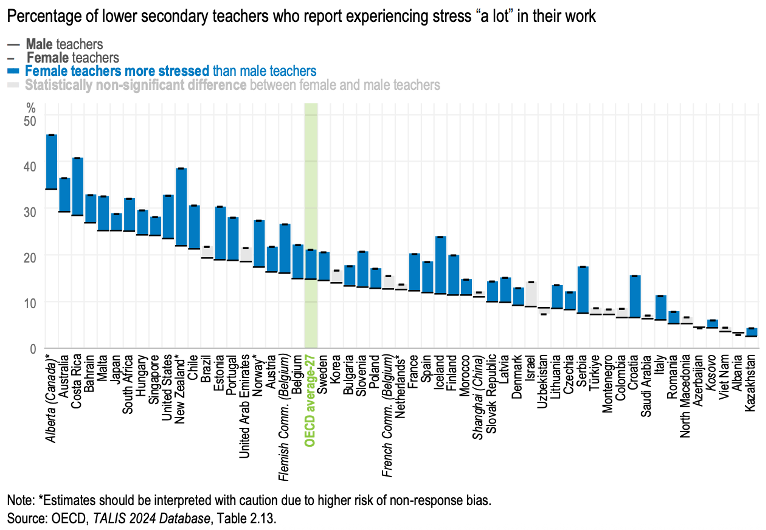
Alberta teachers report highest stress levels globally, CityNews Calgary

Source: Zach Dafoe, CityNews

Costa Rica

AI surges in Costa Rican schools ahead of official policy, TicosLand

Artificial intelligence, in this particular case, can likely contribute significantly to reducing the teacher’s workload. Because if it is used appropriately and efficiently, it can streamline many processes such as receiving information, reviewing in-class assignments, grading exams, and organizing activities.”

Croatia

Croatian teachers among the most education, however, the workload is constantly increasing, PortalHr

Czechia

Young teachers are disappearing: Why is the profession uninteresting even though salaries are improving, Iustecko.cz

“Despite higher satisfaction with salaries, the profession suffers from low social recognition. Only 22% of teachers feel that society values ​​their work, and only 15% of educators perceive recognition from political representation.”

Estonia

Study: Nearly half of teachers plan to change jobs in the coming years, ERR

Finland

TALIS 2024: Lower secondary teachers are satisfied with their work — Increasing diversity in schools challenges teachers to learn new skills, Valtioneuvosto

“The growing diversity in schools and the increasing need for student support are reflected in teachers’ professional learning needs. Areas for development included using artificial intelligence, teaching students with special education needs, supporting students’ social and emotional development, and teaching in multicultural or multilingual settings.”

France

Teaching in France: a despised and increasingly difficult profession on TALIS 2024 Survey, cafepedagogique.net

Hungary

Hungarian teachers report rising satisfaction and greater autonomy, OCED TALIS survey shows, The Hungarian Conservative

Source: Hungarian Conservative

Iceland

Almost all teachers satisfied with jobs — but pay worries persist, RUV.is

“Icelandic teachers are among the most dissatisfied with their pay: only 19% are content with their salaries, compared with an average of one third across the OECD.”

Israel

Israeli teachers satisfied but face staffing crisis, The Jerusalem Post

Japan

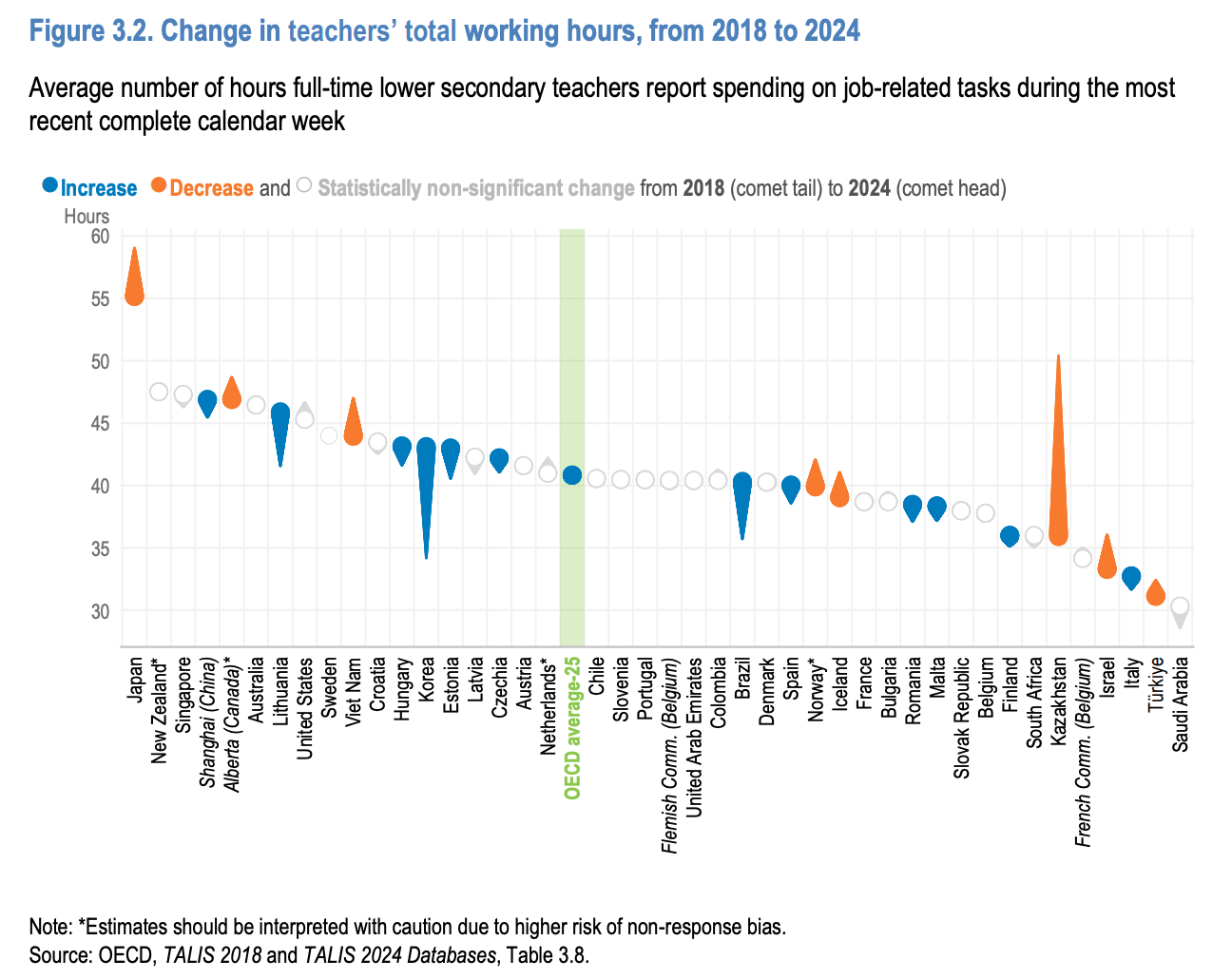
Japan’s teachers work longest hours among OECED peers, Nikkei Asia

Latvia

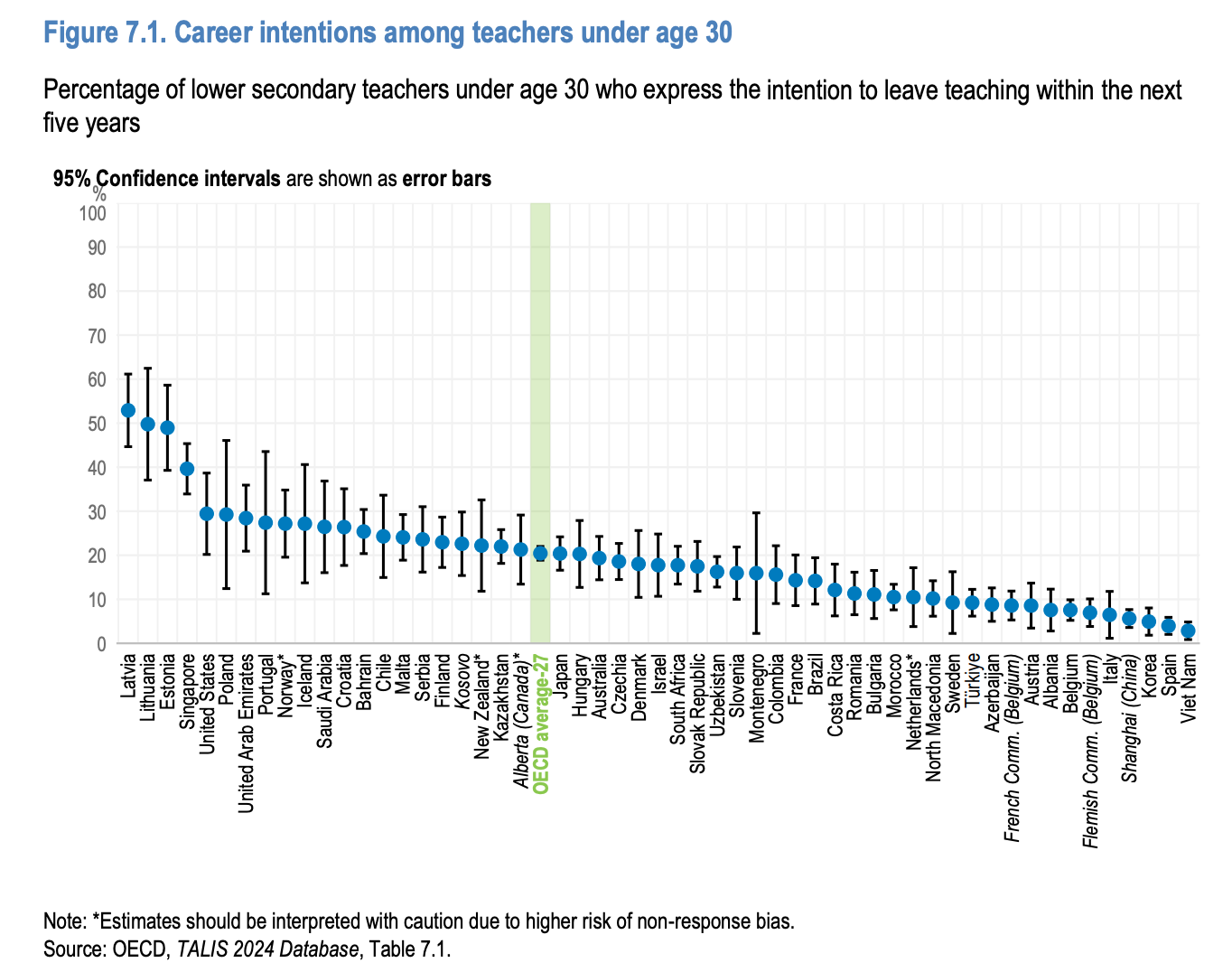
Half of new teachers in Latvia could leave the profession within five years, Baltic News Network

“Half — or 53% — of new teachers in Latvia may leave the profession within the next five years, according to the initial results of the OECD Teaching and Learning International Survey.”

Lithuania

Most Lithuanian teachers higher confident, happy with their working conditions, The Baltic Times

New Zealand

Initial teaching training needs strengthening, The National Tribune

OCED TALIS 2024: NZ teachers lack confidence in core teaching skills, gov’t acts, Devdiscourse

“Education Minister Erica Stanford acknowledged the findings, noting that 62% of graduate teachers lack confidence in teaching the content of all the subjects they handle, and 54% are unsure of how to teach these subjects effectively using proper pedagogical approaches.”

Portugal

Portugal faces an urgent need for 38,000 new teachers by 2034, Cnedu.pt

Portuguese teachers among the most satisfied in the OECED, Portugal Pulse

Singapore

Global survey finds Singapore teachers spend less time teaching and marking, but work longer hours, The Straights Times

Source: MDDI

3 in 4 Singapore teachers use AI, more than double overseas peers: OCED Survey, The Straights Times

South Korea

Over half Korean teachers identify parental complaints as major source of stress, Korea JoongAng Daily

South Korean teachers top OECD in career regret due to stress, The Chosun Daily

“It has been found that the stress South Korean teachers experience due to parental complaints and students’ verbal violence is among the highest globally.”

Spain

Almost half of the secondary school teachers in the State believe that initial training is not adequate, Diari ARA

Spain is one of the countries where the fewest teachers consider leaving the profession, Sur in English

Source: Sur in English via Álex Sánchez

Sweden

Swedish Teachers Report Job Satisfaction Despite Stress and Challenges, Sweden Herald

“Nine out of ten upper secondary school teachers like their job, and the proportion who expect to stay in the profession has increased. But Swedish teachers also testify to stress and chaos.”

United States

For teachers, work-life boundaries are harder to keep than ever, Education Week

“[N]early 30% of U.S. teachers report frequent on-the-job stress, compared to less than 20% for OECD countries on average. U.S. teachers were also more likely to report that teaching had taken a toll on their mental and physical health. U.S. lower secondary teachers worked on average more than 45 hours a week in 2024, nearly five hours more than the OECD average.”

High satisfaction, high demands, and changing demographics: Scanning the headlines on the results of the TALIS 2024 (Part 1)

90% of teachers around the world say they are satisfied with their jobs, but many also face an increased workload that challenges their work life balance. In this two part post, IEN explores these and other findings from OECD’s Teaching and Learning International Survey (TALIS) 2024. Part 1 provides a summary of OECD’s results, and Part 2 will round up some of the headlines that highlight the results from different countries. For comparison, see previous coverage of the release of the results of TALIS 20218 (Volume 1; Volume 2).

Most teachers are happy in their jobs,” declared the OECD, but demographic and technological changes contribute to increasing demands on teachers around the world.  Those are two of the take-aways from the report on the results of the 2024 TALIS survey. Launched first in 2008 with a survey of 23 countries, OECD has also carried out the survey of teachers and school leaders in 2013 and 2018 to compare educator’s perceptions, working conditions, and learning environments. In 2024, around 280,000 educators from 55 education systems participated in the survey. Among the other key findings in 2024:

Job satisfaction

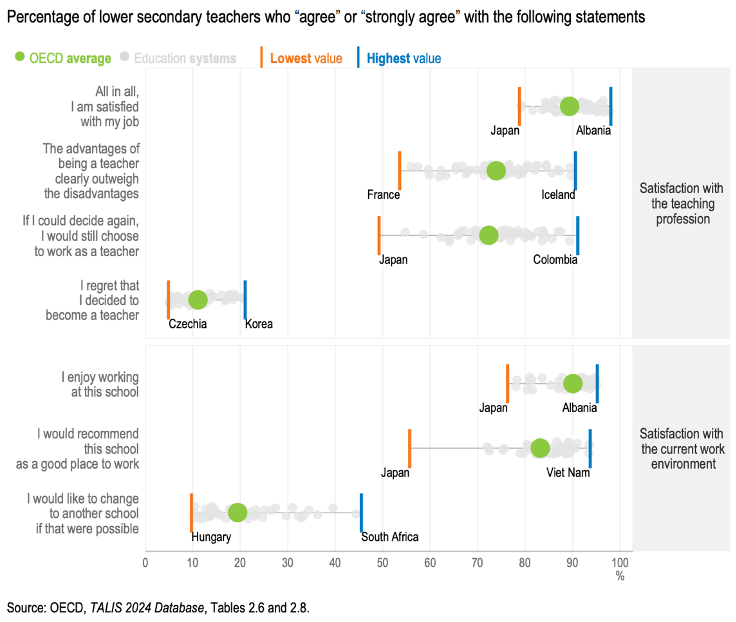
On average, almost 9 out of 10 teachers report that they are satisfied with their jobs.

  • In South Africa, teacher satisfaction has risen by 8% since 2018
  • In Colombia, 90% of teachers say they would become a teacher again.

Value of the teaching profession

Around 2 out of 3 teachers say they are valued by parents and guardians, but with significant variations:

  • Over 90% of teachers feel valued in Vietnam Saudi Arabia, United Arab Emirates, Uzbekistan
  • Less than 50% of teachers feel valued in French-speaking Belgium, Croatia, France, and Japan
  • Saudi Arabia, Bulgaria and Denmark have increased the share of teachers who feel valued by almost 20%

Age

The average age of teachers across the OECD is 45 years-old, but:

  • More than half of teachers are 50 or older in Estonia, Hungary, Latvia, Lithuania
  • The average age of teachers is 38 or 39 in Türkiye, Morocco, the United Arab Emirates and Uzbekistan

Workload and stress

Roughly half of teachers report excessive administrative work as a source of work-related stress

  • The share of female teachers reporting stress “a lot” in their work is 21% compared to 15% for male teachers.
  • Japanese teachers work almost 55 hours a week (down from 60 hours a week in 2018, the highest in the world).
  • Teachers’ sources of stress are more closely linked to constant, unsupported change than to resource shortages

The amount of time spent maintaining discipline has increased in almost all education systems since 2018

  • About 1 in 5 five teachers, on average, report significant disruptive noise and disorder in their classrooms.
  • More than half of teachers in Brazil report such disruptions, compared to about a third of teachers in Chile, Finland, Portugal and South Africa
  • Less than 5% of teachers in in Albania, Japan and Shanghai (China) report facing such disruptions

Preparation

Almost 4 out of 5 teachers participated in regular teacher preparation programs to obtain their initial qualification, but:

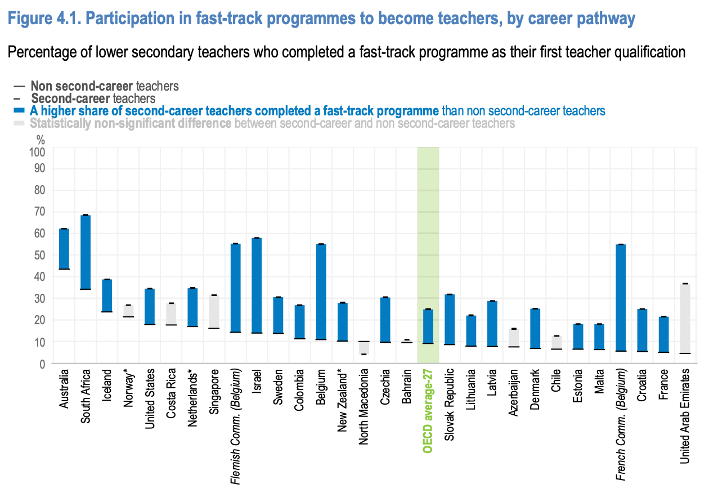
  • More than half of teachers in Australia, Costa Rica, Kazakhstan, Romania, Saudi Arabia and South Africa, do not follow the regular path through teacher education
  • Almost half of teachers in Australia and almost a third of teachers in Iceland completed “fast-track” or specialized teacher education program
Source: OECD, TALIS 2024

Teacher evaluation and support

Almost 90% of teachers work in schools where they are formally evaluated at least once a year by school leaders, and:

  • 65% of teachers are engaged in post-evaluations discussions about how to improve their teaching.
  • Slightly less than half of teachers are offered “development or training” plans, ranging from over 90% of teachers in Bahrain and Kazakhstan to under 15% in Iceland.
  • A little over 10% of teachers participate in programs where they are offered financial incentives and less than 5% participate in programs that include potential sanctions.

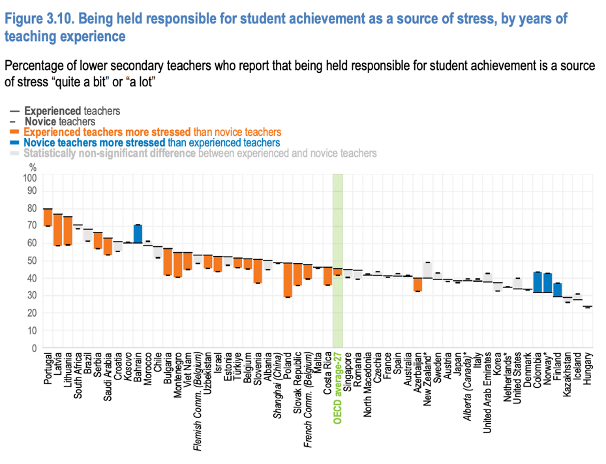
Almost half of teachers’ report that being held responsible for students’ achievement is a source of significant stress:

  • Over 70% of teachers in Latvia, Lithuania, Portugal and South Africa report such stress
  •  Less than a third of teachers in Finland, Hungary, Iceland and Kazakhstan report this stress
Source: OECD, TALIS 2024

Roughly 20% of teachers, on average, participate in mentorship programs: 

  • Almost 80% of teachers in Shanghai (China) report having an assigned mentor and over 60% of teachers with high self-efficacy report exchanging materials with peers, more than double the percentage of teachers with low
  • In systems like Uzbekistan over two-thirds of teachers with high self-efficacy report observing other teachers’ classes and providing feedback

AI and online learning

1 in 3 teachers, on average, report using AI in their work:

  • Roughly three-quarters of teachers in Singapore and the United Arab Emirates (UAE) use AI
  • Fewer than 20% of teachers in France and Japan use AI

Over 15% of teachers, on average, work in schools where at least one class was taught hybrid, but:

  • Over 80% of teachers in Singapore, and over 45% of teachers in Israel and the UAE report working schools where at least one class was taught hybrid or online

Next week: High satisfaction, high demands, and changing demographics: Scanning the headlines on the results of the TALIS 2024 (Part 2)

Responding to Local Conditions: The Evolution of Fundación Escuela Nueva’s Approach to Teaching & Learning in Rural Colombia and Beyond

What does it take to support effective teaching and learning in rural Colombia? That was the question that the founders of Fundación Escuela Nueva (FEN) set out to address in the 1970’s. Since that time, FEN´s flagship program, Escuela Nueva, has encompassed an innovative approach to learning that has expanded in Colombia as well as other parts of the world, including Vietnam, Zambia, and El Salvador. To get a better understanding of Escuela Nueva’s evolution and the lessons learned along the way, Jonathan Beltrán Alvarado spoke with Laura Vega, Ed.D., Head of Community Connections and Training at Fundación Escuela Nueva (FEN). 

This post summarizes that conversation and draws on slides from a presentation Dr. Vega made at Teachers College, Columbia University, in November 2024.  Fundación Escuela Nueva Volvamos a la Gente (FEN) is a non-profit organization created to develop, strengthen, and expand the implementation of the Escuela Nueva model. Last November, Fundación Escuela Nueva was one of three organizations to receive a 2024 Best Practice Prize from the Jacobs Foundation for “their effective application of scientific evidence, use of a clear results framework, and potential for scaling and implementation around the world.”

Vicky Colbert and colleagues designed the Escuela Nueva model in 1976 as a specific response to the difficult conditions for education in rural Colombia. At that time, schools struggled with high dropout rates and low academic achievement, reinforcing negative perceptions of the capabilities of the students, teachers, and their communities. Amid the country’s ongoing internal conflicts, many students experienced trauma and low self-esteem along with their troubles in schools. In a pre-internet world, teachers and principals in these communities worked in isolation, with few resources, little support, and weak school-community relationships. 

Compounding the isolation, many teachers had limited pre-service training and were not prepared for handling multi-grade classrooms, an everyday necessity in small schools located in the sparsely populated countryside. As Dr. Laura Vega explained, “It is pretty isolating when you are a rural teacher. In many, many areas, you are on your own. That is hard, and it was even harder fifty years ago.”  Beyond the isolation, Vega described a number of other challenges for rural education at that time: “insufficient time for effective learning, rigid calendars, rigid evaluation, a very rigid system of promotion. Of course, not enough materials for children, but those materials and the pedagogy weren’t appropriate either. There was an emphasis on memorization, not on comprehension, and the curriculum didn’t make any sense for the students and for the teachers….”

At the time, rural education in many countries of Latin America, including Colombia, was shaped by the Escuela Unitaria (Unitary School) model promoted worldwide by UNESCO in the 60s to provide education in rural areas. The Unitary School offered primary education in schools where a single teacher worked with all grades through the use of self-instructional materials and individualized learning cards. Colombia was one of the countries where this approach was tested, alongside other experiences that used a variety of methodologies to pursue a similar aim. The approach, however, came in the form of whole-class instruction. As Vega put it, that meant “teachers were responsible for adapting generic materials, and while they could use any books or resources available, this wasn’t effective.” 

A book cover with a map

Description automatically generated

This challenge motivated Escuela Nueva founder Vicky Colbert and her colleagues to try to use the limited resources to transform the Escuela Unitaria model into an approach more responsive to the context’s conditions, addressing key technical limitations of its design. Alongside many pedagogic innovations in the learning experience, both for children and teachers, the new approach included a structured and comprehensive curriculum that fulfilled government education guidelines and provided learning materials to facilitate teachers’ and students’ work. As Vega explained, Escuela Nueva’s innovation emerged in a local context of meaning and experience with tested practices. “It’s not something that no one ever thought of before,” Vega said, “it’s re-organizing things that already exist and using them in a new way.” 

A close-up of a chart

AI-generated content may be incorrect.

The Escuela Nueva model

This approach to learning involves a shift from traditional whole-class instruction to child-centered, active learning where students work in small groups. To achieve this, FEN developed a series of learning guides that ease rural teachers’ access to high-quality learning materials and allow them to work effectively with multiple grade levels and students to learn at their own pace. As Colbert described it in Scaling Innovation: The Escuela Nueva Story:  “A learning guide is like a hybrid between a textbook, a workbook and the guide of the teacher, all in one, but directed to the student, not to the teacher. Here, what we wanted to do was empower the students. We designed the materials very, very concrete, simple, pragmatic learning materials for children very focused on questioning — higher level thinking skills. We gave a structure to their learning process. The children started working individually, in pairs and in groups, dialoguing among themselves, constructing knowledge together.”

Democratic participation is built into daily school life in the Escuela Nueva approach through a student government that allows children to serve in concrete roles and offers real agency in shaping their learning environment. The model also positions teachers as facilitators, not lecturers, and supports them in making that transition by providing specialized training, ongoing support in the process, and professional development opportunities. Escuela Nueva also deliberately draws on the communities’ funds of knowledge, making families active participants in their children’s education rather than passive observers of a curriculum created with urban schools in mind. 

These elements are drawn together as part of what Escuela Nueva describes as four interconnected components: curricular, teacher training, school-community, and administrative. 

  • Curricular: focusing on developing effective learning environments and relevant content and processes through an active and participatory methodology. It promotes student-centered learning, the development of basic competencies (cognitive and socio-emotional), cooperative and personalized learning, continuous and qualitative assessment, and flexible promotion. Learning guides, rather than traditional textbooks, form the core classroom resource, designed as self-directed, reusable materials that guide students through structured thinking.
  • Teacher training: focusing on the professional development of teachers to improve their pedagogical practices and their role as facilitators of learning. Teachers receive comprehensive training through in-situ, intensive, and experiential workshops. Additionally, they participate in micro-centers (teacher learning circles) to build communities of practice that foster exchange and collaboration. 
  • School & Community: aiming to strengthen the relationship between the school and the community, promoting the active participation of parents and other local stakeholders in the educational process. The model positions students and families as knowledge creators, employing diverse pedagogical strategies to reinforce cultural identity and strengthen community connections. It encourages an open-school model where the community is actively involved in learning and contributes to students’ social and cultural development.
  • Administrative: seeking to ensure leadership and administrative support to enable adequate learning environments and ensure the long-term sustainability of the model. It builds trust and ownership among the school community and facilitates the connections between classroom learning and local community life.
A diagram of a curriculum system

AI-generated content may be incorrect.

A number of studies have examined the impact of Escuela Nueva’s approach, with some showing improvements in language and math skills and others showing benefits for students in the development of democratic valuesprosocial behavior, and self-awareness. The model has also demonstrated its ability to transform teaching practices in rural settings and emergency situations where traditional approaches have struggled. The micro-centros and leaders’ networks have also helped to break the isolation that often characterizes rural education and have contributed to the development of more positive attitudes among teachers. Beyond the classroom walls, Escuela Nueva has engaged families and community members in the educational process, encouraging them to take an active part in student learning, contributing their knowledge and experiences in the classroom, not just in attending meetings. 

Escuela Nueva’s adaptations and expansions

As part of its mission and commitment to innovation and evidence-based practices, Fundación Escuela Nueva (FEN) has adapted elements and strategies of the Escuela Nueva model to cater to the needs of diverse contexts and populations, resulting in new programs and initiatives. For example:

  • Escuela Activa Urbana (Urban Active School): adapts EN strategies to urban contexts with one teacher per grade.
  • Círculos de Aprendizaje (Learning Circles): focuses on out-of-school and highly vulnerable children and youth (e.g., displaced & migrant children); this program supports students’ transition to the mainstream educational system.
  • Online campus: provides teachers’ professional development and support.
  • SAI (Ancestral Indigenous Knowledge): aims to strengthen the intercultural approach and integration of ancestral indigenous knowledge into everyday practices. 

In addition to these adaptations to the Escuela Nueva model, the organization has worked in scaling and expanding the approach in culturally different countries such as Mexico and Vietnam. In general, for FEN, scaling to a new context involves several key steps, including: 

  1. Building awareness through country research and finding appropriate local partners. As part of that process, beyond reading about the model, partners are expected to visit and experience Escuela Nueva in action. 
  2. Conducting a pilot project.
  3. Engaging in an adaptation or “contextualization” phase where FEN works with local partners and teachers to tailor and contextualize the learning guides and other strategies.
  4. Gradually expanding the model – starting with one school, then two, then three, while providing continuous support. This support is primarily directed at local partners rather than individual teachers.

While recognizing the importance of context, Vega stressed that taking a systemic approach is a key lesson from FEN’s efforts to scale the model. As she explained, “When implementing the model in different countries like Vietnam or Mexico, it’s imperative to maintain this systemic process. You cannot implement isolated pieces – a bit of training here, learning guides there, or just thinking about student tools. The process must be comprehensive; otherwise, you won’t achieve anything resembling the Escuela Nueva model.”

Vega also emphasized that the successful expansion of Escuela Nueva hinges on finding the right local partner. To that end, FEN has worked with various types of partners, from ministries of education to NGOs and international organizations, each bringing different knowledge, strengths, and challenges. Government partnerships offer ample reach but can be vulnerable to administrative changes and low sustainability, while NGOs may provide dedicated focus but face resource constraints. But whoever the local partner is, as Vega stated, “The local partner essentially becomes your extension in that country.” 

FEN´s next steps

Most recently, FEN has focused on deepening its impact rather than expanding further. This strategic choice reflects the belief that educational transformation is not a short-term project but a long-term commitment that requires sustained attention to quality and network building. All of which can take three to five years or more to show substantial results. That work includes strengthening assessment practices, enhancing teacher training, expanding support systems, and building internal capacity. The organization is also exploring new ways in which its programs, strategies, and model can more intentionally support gender equity, intercultural education, project-based learning, and the development of a growth mindset among students.

As it works to deepen its impact, FEN continues to focus on reorganizing existing educational elements into a coherent system rooted in a local context rather than reinventing education from scratch. In the process, the model demonstrates that educational transformation doesn’t always require massive investment or revolutionary new ideas but takes careful attention to how the different components of the educational process can work together systemically to create networks of people who understand and value what they are doing.  

The Desire for Innovation is Always There: A Conversation with Yong Zhao on the Evolution of the Chinese Education System

What’s changing in China’s education system? What might change in the future? Those are some of the questions that led Thomas Hatch to spend almost a month in China this spring. In preparation for that visit, he talked with Yong Zhao to get his perspective on what’s been happening in education in China in the past few years. Zhao was born in China and now works all over the world, including in China, exploring the implications of globalization and technology on education. In the first part of this two-part post, Zhao shares his observations about some of the educational innovations he’s seen in China and about some of the work he’s been involved in there. In part two, Zhao offers his impressions of recent changes in addressing students’ mental health and discusses the broader context of the Chinese education system and some of the challenges and opportunities for changes in the future. 

Thomas Hatch (TH): You’ve written extensively about China in the past, but I’m particularly interested in what’s happening in the Chinese education system over the last few years. Are you seeing some innovations or changes in classrooms and schools in China since the COVID-19 pandemic and the school closures? 

Yong Zhao (YZ): I think there’s a huge hunger for innovation in China. Let me give you an example. I was just talking to a group of school principals and heads of the Education Commission in the Chaoyang District in Beijing. It’s the largest district in Beijing, and it’s where most of the embassies and many foreign companies are located. We were planning to do a summer camp for students from different countries based on my education philosophy, which is very much child-centered, focused on uniqueness, personalization, project-driven instruction, and problem-solving. We wanted to make the camp very big, involving kids from different countries, and they were open to the idea. Alongside the camp, we planned to organize learning festivals to discuss topics like artificial intelligence and what I call “Re-globalization.”

We started this conversation in January, and the issue is that very few schools outside China are willing to send their students and teachers here at the moment, so we’re planning to do it next year. But this kind of summer camp is something I began working on before COVID, in May 2018 in Chongqing. Every year since, we’ve been running similar innovative programs in the summer. Even during COVID, we tried it out. The first year in Chongqing, we had students from US schools, Australian and British schools, with hundreds of students and teachers staying in the same dorms, interacting. 

In addition, in the public schools in Chongqing, we have students enrolled in a special course I helped design called ICEE, which stands for innovation, creativity, and entrepreneurship education. It’s expanding in the public schools even though students have to pay extra to participate, which shows that parents and schools are interested in it. Beijing Academy is another school that is particularly innovative. I was partially responsible for co-designing that school. We formed a global advisory group, including people like Richard Elmore and Kurt Fischer and Ron Beghetto. It was an international collaboration. They built a brand-new school based on our advice. It just celebrated its 10th anniversary in Beijing. Now they have over 9 or 10 campuses. 

I think this shows that many parents and students and teachers actually want change. You cannot make massive changes like, for example, saying, let’s forget about the major policies like the double reduction policy, but many people are still trying to find ways to change. It also shows that working in the Chinese education system might be one of the most difficult things in the world. On the one hand, you have to do this. On the other hand, you have to do that. But ultimately, your school’s reputation matters, and innovation as a school leader in China is crucial. 

TH: So, on the one hand, you can’t do anything, but on the other hand, you have to do something…

YH: Yes, exactly. It’s fascinating. I’m puzzled by this system, you know? Right now, I’m getting older. When I was younger, I didn’t really think a lot about it, but I cannot think of how human societies can be organized like that. You cannot do anything, but you have to do something. It’s a fascinating way to think about it, isn’t it?

 TH: It is! But if we step back for a second and try to characterize what’s happening with educational innovation overall right now, my understanding is that the education ecosystem in China has contracted. There were more innovative schools and smaller schools starting, more tutoring programs, more after-school programs. But now, following the school closures and the double reduction policy, in a sense, this seems to be period of consolidation. People I’ve talked to say it’s not a prime time for innovation. Is that the way you see it? (For more on the double reduction policy see “Surprise, Controversy, and the “Double Reduction Policy” in China” and “China reiterates implementation of ‘double reduction’ policy”)

YZ: Yes, your description is right from a general, outside perspective. You can see the contractions. Even the Gaokao has become more nationalized. It was decentralized, with some differences across regions, but it’s gotten more centralized. Now they’re all saying they are using the national tests and very few provinces use their own. The curriculum has become more centralized too with more centrally required courses and teaching materials. But honestly, I think the beauty of the Chinese ecosystem is that, at the same time, children are children, and parents understand that their children, growing up, need innovative education.

They do see the power of artificial intelligence, and AI is becoming more prevalent. They also see new geopolitical conflicts, or what I call “re-globalization.” China always has this happening, and what’s underground is different. Yes, some international schools have closed, and private schools are becoming public. But at the same time, public schools have to become more innovative. The desire for innovation is always there. It’s bubbling up everywhere, but it’s happening. Many local schools have to think about innovation, and even the government, if you look at the most recent speech by the Minister of Education, talks a lot about AI. They are thinking about it in every part of teaching and teacher training. I don’t know how well it’s been implemented, because it’s still very new, but the same is true in the US. China also issued a call last year for schools that were willing to be part of experiments with AI in education. The central government awarded several hundred of these grants to create pilot sites and to spread the message to other places. So, it’s a lot more complex in China than what many people think. The whole system is evolving.

TH: Despite that, have you seen some schools or initiatives or afterschool programs or other things that you think are particularly interesting or innovative in the Chinese context?

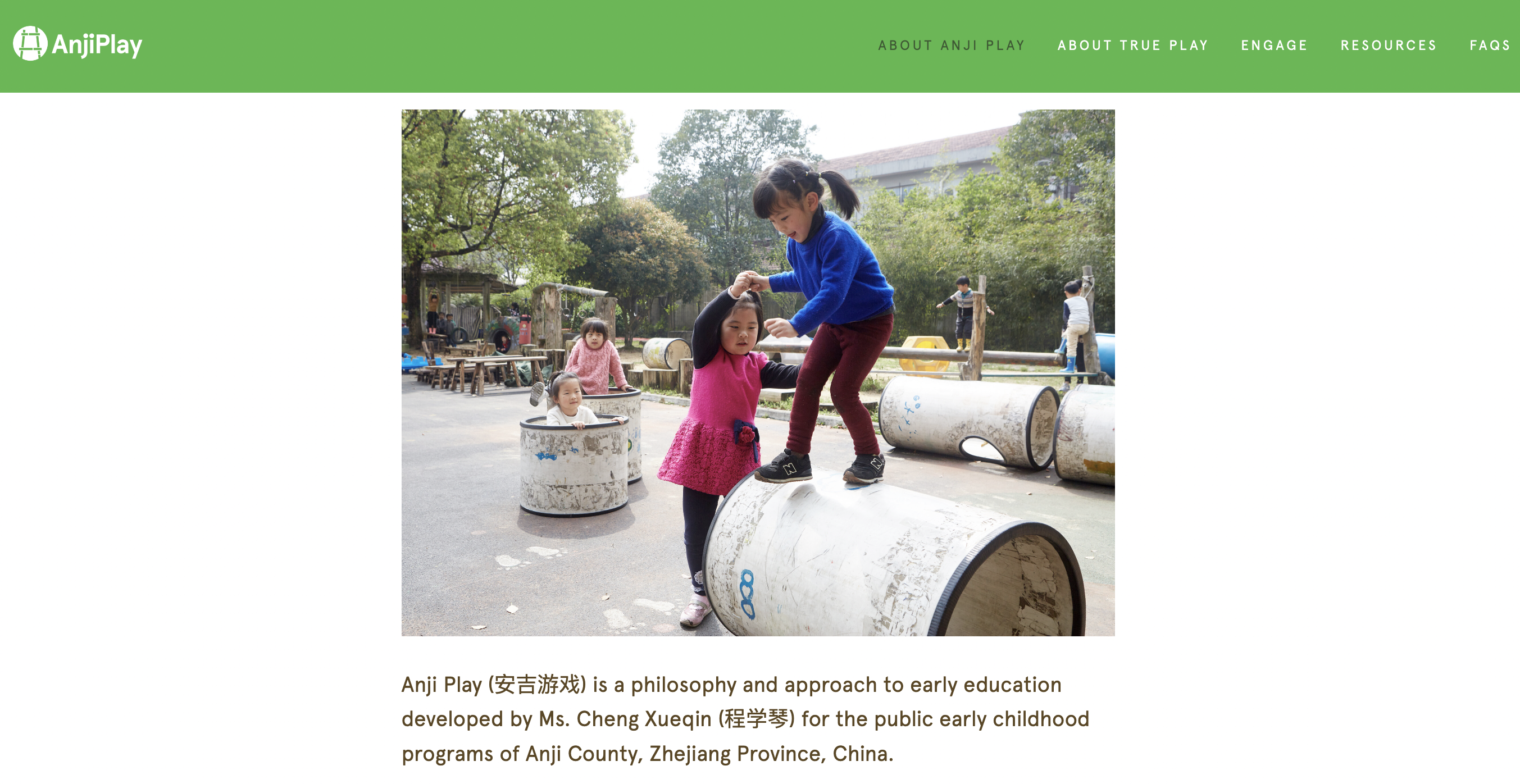
YZ: In the book Let the Children Play, Pasi Sahlberg and William Doyle described an approach in the Zhejiang Province near Shanghai that developed genuine playhouses for preschool and kindergarten (Anji Play). It was really play-driven, play-based, and it started in one kindergarten and then it spread around the whole province. It wasn’t country-wide, but it was a model recognized by the Chinese Ministry of Education, and they began to promote it across the country. I don’t know how it’s going now, but that is something that I think it’s definitely worth looking at.

There are also a number of schools that are trying to do something different. The Beijing City International School just had me visit for three days. Their student population is over 90% Chinese students, and they are struggling with the fact that parents have invested significant amounts of money, expecting their children to attend prestigious universities like Harvard and Columbia.  But they also want to change, so they had me over to discuss transitioning to personalized education. Whenever someone has me presenting, they are willing to be challenged.

The Beijing National Day School and a couple of other public schools are also known for being innovative. Another interesting school is the one called #80 Secondary School in Beijing. I was just there, and I was impressed. If you are a good student in some areas, then you don’t have to take certain courses. They would allow you to explore on your own, which shocked me. It’s a Chinese government high school, and it’s quite powerful. 

Thomas Hatch: Coming from Teachers College, where there’s a history of connection with China through John Dewey’s visits, I’m fascinated to see that there has been a long-term interest in China in progressive education. As I began to get ready for my trip, I’ve realized there are a number of educators in China over the years, who have become very well known for being innovative and supporting innovative education. Can you talk about any of those enduring traditions related to alternative education?

Yong Zhao: It’s a very interesting question. But first of all, let’s not underestimate the power of the Gaokao – the college entrance examination. Similar pressure is widespread, happening not only in China but also in Japan, South Korea, Vietnam, Hong Kong, Macau, and Taiwan. Let’s not forget that the Gaokao and the imperial exam tradition, dominates and controls parents’, students’, and teachers’ minds. But continuously, there has been talk about change in China, and I’ve found that the conversation about needing a different kind of student from the “Gaokao type” has never stopped. It’s always been there. 

Even in the 1950s, Mao was very against the Gaokao exam. Regardless of who he was or what he is – I’m not debating that – he was actually very innovative in education. Ideologically, he never really wanted exams. During the Cultural Revolution, people think he destroyed the Chinese education system. But on the other hand, he was basically saying education does not need to be so pedantic, does not need to be traditional and academic in an ivory tower. He started education in my village. That’s how I went to school.  He said education needs to be shorter. It only has to be 10 years and it can happen in rural villages or in factories. If you think about that, that’s very much the progressive tradition. But the long tradition of using exams to select government officials has also always stayed in the Communist education philosophy, and the tradition of using exams to select and reward people is a long-standing cultural problem.

Next Week: Schools do not Change, But They’re Always Changing: A Conversation with Yong Zhao on the Evolution of the Chinese Education System (Part 2)

Dr. Yong Zhao is a Foundation Distinguished Professor in the School of Education at the University of Kansas and a professor in Educational Leadership at the Faculty of Education, University of Melbourne in Australia. He previously served as the Presidential Chair, Associate Dean, and Director of the Institute for Global and Online Education in the College of Education, University of Oregon, where he was also a Professor in the Department of Educational Measurement, Policy, and Leadership. Prior to Oregon, Yong Zhao was University Distinguished Professor at the College of Education, Michigan State University, where he also served as the founding director of the Center for Teaching and Technology, executive director of the Confucius Institute, as well as the US-China Center for Research on Educational Excellence. He is an elected member of the National Academy of Education and a fellow of the International Academy of Education

SCANNING THE HEADLINES FOR RESULTS FROM TALIS 2018: TEACHING, LEARNING, AND LEADERSHIP

This week IEN provides a glimpse of how a few media outlets around the world have characterized the results from the OECD’s recent release of Volume II of the TALIS 2018 results, Teachers and School Leaders as Valued Professionals. This volume summarizes the results of a survey of teachers and school leaders from 48 countries, with a focus on questions related to 1) how society and teachers view the teaching profession, 2) employment contracts and salaries, 3) how teachers work together and 4) how much control teachers and leaders have over their work. This week’s online search for “TALIS 2018 volume II OECD” turned up very few stories in English. However, there were a number of headlines in smaller outlets and other languages, some of which were (google) translated below. More English headlines appeared in a scan of the TALIS headlines last June following the release of Volume I.

Australia

TALIS 2018: Valuing teachers and school leaders as professionals, Teacher Magazine (Australia)

9 out of 10 teachers from all OECD countries and economies are satisfied with their job, but only 26% think the work they do is valued by society; 14% believe that policy makers in their country or region value their view, and only 24% believe that they can influence education policy.

Croatia

Teachers overwhelmingly feel they have control over things (translated), srednja.hr

“About 98% of Croatian teachers believe that they have control over the choice of teaching methods and student evaluation, 93% of them have control over the discipline of students (92% in secondary school), 94% of them have control over the choice of homework.”  But only 9% of teachers agree that the teaching profession is valued in society.

Denmark

Danish teachers are more stressed than their Nordic colleagues (translated), folkeskolen.dk

43% of Danish teachers are considering another job, and 31% of “feel that their job has a negative impact on their mental health to some extent. In comparison, only 24 per cent of Swedish teachers, 23 per cent of Icelandic, 13 per cent of Finnish and 10 per cent of Norwegian teachers.”

England

England’s teachers ‘most stressed’ in developed world, Times Education Supplement

“70% of lower secondary teachers report being stressed either ‘a lot’ or ‘quite a bit’… 77% of teachers are ‘all in all’ satisfied with their job, however, this is the lowest rate in the OECD, with all the other countries having rates of above 80%.”

France

Talis: The French teachers, the most despised in the world? (translated), Café Pedagogique

“85% of French teachers feel satisfied with their work, but Talis demonstrates that French teachers are not only isolated and underpaid but also despised by their institution.”

Italy

80% Italian teachers perceive various degrees of stress, low salary always a reason for dissatisfaction (translated), Orizzontescuola.it

“Only 12.1% of teachers in upper secondary schools feel valued, without particular differences by geographic areas and by order of school. The data also shows that 7% of the entire teaching staff think they are listened to by the country’s political leadership class.”

Japan

TALIS — Teachers’ stress factors: “Amount of work” “Parents” (translated), Kyoiku Shimbun

“The percentage of Japanese elementary and junior high school teachers who have a lot of administrative work and stress on dealing with parents exceeded the average in participating countries. Principals at elementary and junior high schools were also stressed about their responsibility for their students’ abilities and dealing with parents.”

Korea

1 out of 4 middle school teachers “will quit teaching in the next 5 years” (translated), Chosun Edu

“Nevertheless, the proportion of teachers who agree that the teaching profession is valued is 67%, much higher than the OECD average of 26%.” However, only 54% OF teachers and 62% of principals said they were satisfied with their working conditions, slightly lower than the OECD average (66%).

Latvia

Almost all Latvian teachers are satisfied with their work, the survey shows (translated), nra.lv

“23% of teachers surveyed agree or totally agree with the statement that their profession is valued in the community, while 91% of Latvian teachers indicate that they are generally satisfied with their work”

Norway

Norwegian teachers work well together (translated), NEA Radio

95% of teachers say that there is a good culture for supporting each other and working together at the school…Teachers also feel that they have good control over their own teaching.”

Slovakia

Survey: Our educators receive little respect (translated), Felvideck.ma,

“Only 4.5% of teachers in Slovakia feel that teachers’ work has a high degree of social appreciation, while only 2.1% of school principals believe it”

Slovenia

They are not appreciated by the public or by policy makers (translated), Večer

The majority of “Slovenian teachers and principals were satisfied with their profession and workplace, and slightly less satisfied with their salary… but only 3% of teachers say policy makers value their views and opinions.”

  • Thomas Hatch

Teacher and teaching quality in the world’s top-performing education systems

The National Center on Education and the Economy’s (NCEE) Center on International Education Benchmarking (CIEB) has recently published Empowered Educators: How High-Performing Systems Shape Teaching Quality Around the World—an international comparative study of teacher and teaching quality in the world’s top-performing education systems. To explore and share the findings of this research, the NCEE held a conference featuring presentations and panel conversations with several of the authors of the study, including Linda Darling-Hammond, A. Lin Goodwin, Karen Hammerness, Misty Sato, Dion Burns, and Ann McIntyre.

Marc Tucker, president and CEO of NCEE moderated the event, and Andreas Schleicher from OECD and policymakers and educators from the US also provided their perspective. The conference was also streamed live and can be viewed online.

Linda Darling-Hammond launched this three-year study from the Stanford Center for Opportunity Policy in Education (SCOPE) at Stanford University with a team of education researchers from several different parts of the world. The study focused on the policies related to teachers and teaching quality in seven jurisdictions across four continents including Shanghai, Finland, Singapore, and Australia.  According to the study, these seven jurisdictions that have demonstrated higher achievement and greater equity than the U.S. have focused on building effective systems, rather than on narrow solutions and have made a commitment to professionalizing teaching as an occupation.

During the conference, researchers expanded on how these countries have achieved their success.  While each jurisdiction takes a somewhat different approach, the conversation highlighted that:

  • Recruitment and selection processes help to identify teacher candidates who are both talented academically and have a passion for teaching
  • Teacher education takes place in research universities, combining rigorous coursework and substantial practical experience in schools
  • Standards support professional development and career ladders create new options for expert teachers

Notably, in most of these countries teacher education is free and new teachers start their jobs with no burden of student loans.

When asked about the potential of and challenges for the U.S., Andreas Schleicher remarked that the U.S. has invested heavily in education, but that teacher pay, professional development and career structures have not received as much financial support as other issues like class size. Schleicher also argued that in higher performing countries it’s not just about giving teachers a higher salary; it’s about making teaching an intellectual profession, accompanied by a sense of agency and autonomy, that offers opportunities for learning and growth over time.

In subsequent conversations, questions were raised about the ability of states to take the same systemic approach and make the same significant investment that these jurisdictions have made in teacher education and teaching.  In response, panelists pointed to examples of states like Connecticut and Massachusetts that have invested heavily in teacher preparation and professional development and have high levels of student achievement.  Ryan Wise, Director of the Iowa Department of Education, also described how Iowa has already set aside 50 million a year for planning grants for schools and districts to develop teacher learning and leadership opportunities.

Beyond the event itself, discussions took place on Twitter (#empowerededucators) and Checker Finn, President Emeritus of the Thomas B. Fordham Foundation, has already published a critique of the study, with Marc Tucker posting a response on his EdWeek blog.

New OECD report leads to questions about educational innovation

While the OECD has released a number of reports this year, their most recent report addresses the measurement of educational innovation at the classroom and school levels. In this report, the OECD looked at “innovations” in education improvement strategy and ranked 19 countries accordingly. The report acknowledges that while the private sector has established innovation indicators derived from research and development (R&D) statistics and innovation surveys, the measurement of innovation and its effectiveness in the public sector is still in its infancy. Creating such measurements might be more difficult, as the report states that “cultural values, social policies and political goals can lead to differing prioritization of these different objectives across countries.” Innovation indicators will need to be linked to specific objectives, such as learning outcomes, if they are to be better understood.

Denmark came in first place, followed by Indonesia, Korea and the Netherlands. While I could not easily find news reports that focused on the high ranking of Korea, and the sole report I found on the Netherlands referred to parental concerns over a lack of educational innovation, multiple sources published reports that pointed to the near-bottom ranking of the US. Yet, even with the report citing a ‘dearth’ of innovation in the US, EdWeek has a feature article on the ways in which school principals in the US are increasingly acting like entrepreneurs and innovators in business.

Interestingly, as Pasi Sahlberg pointed out in his recent article in The Washington Post, Singapore, Hong Kong, South Korea, and Finland—all high performing countries—have sought out innovative ideas for education from the United States, where many such ideas are largely ignored by the country’s education reformers. So, not only is educational innovation difficult to measure for the ways in which the concept of innovation might be country-specific, as the OECD explained, it might also prove difficult to measure due to the ways in which innovative ideas can travel, as countries share and borrow ideas from one another. In his brief response to Sahlberg’s article, Howard Gardner pointed out that innovative ideas have a history of being co-opted, borrowed, and misunderstood. Further, he notes that it is a mistake to attribute these ideas to sole individuals, such as himself–for he was inspired by other scholars, and all scholars are influenced by the freedom or constrictions of the conditions in which they work. To that point, a recent study of Norwegian teachers, which aimed to study those conditions in which “newness is created,” showed that innovative work is brought into being when “pluralities of perspectives” are taken into account.

In The Washington Post, Valerie Strauss also questioned the meaning innovation by looking at the language used in the report. She notes that Hong Kong’s main innovation was “more peer evaluation of teachers in primary and secondary education”; Korea’s main innovation was “more peer evaluation of teachers in secondary education”; and Singapore’s main innovation was “more use of incentives for secondary teachers.” But is innovation a matter of degree? Reports such as this one raise questions about how we can measure concepts without a shared understanding of what those concepts mean. As the news report from Indonesia points out, even Indonesian education experts were surprised to see the country at the top of the list, especially when it has been ranked among the lowest performing countries in math and science on the 2013 OECD Pisa exam.

Deirdre Faughey

Creative Commons License
This work is licensed under a Creative Commons Attribution-NonCommercial-NoDerivatives 4.0 International License.

Scanning the Globe: Access, Protests, and PISA 2012

A quick review of the headlines on education and educational policy we’ve seen from around the world over the last few weeks reveals continuing concerns about issues of access and financing in both developed and developing countries.  Australian Teacher Magazine reported on concerns about the extent to which the current Australian government will support the previously approved “Gonski” reforms, and Education International raised questions about a bill that will introduce an income cap to Japan’s tuition-free program for public high schools. An article in The Hindu described how school cancellations caused by excessive holidays and weather can interfere with the requirements for increased instructional time in India’s Right to Education Act. Euronews reported on the difficulties that students in countries like Uganda, Kenya, and Mexico face just getting to school.

Protests over the past few weeks included those over conditions for education and support for educators in the Ukraine that took place as part of the demonstrations against the government’s efforts to delay an association agreement with Europe; rallies against education cuts in Spain; and protests by students at the University of Copenhagen in response to a working paper from the University administration describing proposals designed to get students to complete their courses on time.

But the big news, at least for a moment, was OECD’s release of the 2012 PISA results including overviews, country-specific notes, full reports and data.  We pulled together headlines from around the world, many of which labeled the results “bad news,” except in countries like Lichtenstein, Poland, Estonia and the usual high-performing Asian countries and portions of countries (like Shanghai).  Alexander Russo rounded-up the responses in the United States and The Times Education Supplement put together their own list of news and opinion.

Concerns about the orchestration of the announcement and the media blitz surrounding it were raised on both sides of the Atlantic, by Paul Morris on the Institute of London Blog as well as Richard Rothstein and Martin Carnoy from the Economic Policy Institute in the US. While Marc Tucker and Tom Friedman agreed on some of the multiple factors that might contribute to Shanghai’s success, Adam MinterJunheng Li, and Diane Ravitch pointed to some of the problems and concerns about the Chinese education system expressed both inside and outside China (as well with some of the concerns about vast numbers of students in Shanghai who are unrepresented in the PISA tests).

Although slipping a bit in math, Finland – along with several other European high-performers like Estonia (discussed by Pasi Sahlberg), Poland (discussed by Amanda Ripley), and Liechtenstein – still serves as a focus for some examinations of the ingredients of a successful education system. Given the domination of the rankings by the Asian high-performers however, some of the main story lines for the next few years seem to be set. On the one hand, stories about success on PISA will highlight how hard students’ work and the amount of time students spend on schoolwork while mentioning concerns about the amount of pressure on students and the need to support the development of higher-order skills. (See for example, reports from the BBC about South Korea and a report in the Japan News that credits Japan’s strong performance on PISA 2012 in part to a decision by the Japanese Ministry to back-off a commitment to “pressure-free” education and an increase in the volume of study content and the number of class hours). On the other hand, others will continue to point to the many issues of inequality and the social and economic factors that play into these results and other comparisons (see for example stories from France, and the US; while it does not focus on PISA, a recent article from the Asia Pacific Journal of Education explores the inequitable distribution resources across schools in South Korea).

Denmark

Denmark’s latest education reforms require that both teachers and students spend more time in school, but what is the plan for how that time will be spent? A recent news report describes that it is the conservative Danish People Party’s view that in order to address a disparity between the number of students studying at the general upper secondary schools and the needs of the Danish job market, the government should limit the enrollment to upper secondary schools and increase the number of students studying at vocational and commercial schools. The ruling government, for it’s part, has developed a plan that focuses on ” improved academic standards, increased professional standards of teachers, principals and other pedagogical staff and clear objectives and increased local independence for the development of the public school.”

This follows reforms proposed in Norway earlier this year, which sought to review the practicality of the curriculum and explore how vocational education could better meet the needs of that country’s job market.

Equality of access in math and science in Finland, Sweden, and the United State

In a recent paper presented at the American Educational Research Association, “Moving on up? A framework for evaluating equality of access in education, with illustrations from Finland, Sweden and the United States,” Jennifer von Reis Saari shared the results of a study of the ways in which schools in Finland, Sweden, and the United States, track students in math and science. In this post, von Reis Saari briefly describes some of the current concerns about inequality in Sweden and Finland, as well as some of the differences she has documented in the way these countries, and the US, approach tracking.

Jennifer von Reis Saari

Jennifer von Reis Saari

The recent riots in Sweden are drawing attention to how the assumption that Nordic countries, as well as their school systems, are equitable is oversimplified. Finland, for example, is often considered untracked.  However, visitors to Finland are sometimes surprised that the country has a system of competitive school choice at the upper-secondary level, after age 16.   In fact, despite the Finnish Minister of Education, Krista Kiuru’s resistance to the publishing of league tables of individual school performance, savvy students and parents are well aware of school rankings, and lists of upper-secondary school averages on national exams are published at the end of May each year. In addition, there is an increasing appetite for more differentiation and choice.  In neighboring Sweden, comparatively liberal school choice policies and the allowance of for-profit, publicly funded schools, have coincided with increasing social disparities in educational outcomes.  In a study of student persistence in mathematics and science, I found that students I surveyed and interviewed in both countries experienced ability grouping and tracking in mathematics and science during both compulsory school, and upper-secondary school. To characterize Finnish or Swedish school systems as equal, or un-stratified, obscures the ways these systems react to, and create, inequalities.

A closer look at the experiences of students I interviewed in Finland, Sweden, and the United States, however, highlights how critical aspects of these choice and tracking systems, such as the mechanism for allocation (the how, why, and when students choose, or are selected into, particular schools or tracks), the transparency of the system (how clear the different educational choices and their consequences are), and the permeability (the degree of mobility allowed between tracks and schools), can either promote or obstruct the pathways of students who aspire to careers in mathematics and science related fields. In particular, the Finnish education system can be described as more permeable than either Sweden or the United States; the Finnish secondary school students I studied could more freely choose advanced mathematics and science courses and tracks in contrast to their counterparts in Sweden or the United States.  They could make these choices even if they were not in advanced mathematics tracks before they reached the secondary level.   This seemed to result in a greater retention of passionate, interested students, particularly young men who may have struggled earlier in their school careers.

Focusing on permeability is important not only from a standpoint of equity, but also in terms of efficiency, for retaining and fostering skilled talent in STEM fields.   The lack of permeability of math and science tracks may be a particular concern in the United States, where the high cost of post-secondary education and widening disparities between universities and community colleges, which once served to increase opportunities for mobility, compounds lost opportunities during primary and secondary school. Fostering passion for mathematics and science among students may require structures that respond to increasing commitment and performance by providing clear, built-in pathways for upward mobility.

For more information:

“Equity trends in the Swedish school system: A quantitative analysis of variation in student performance and equity from a time perspective”

“School choice and its effects in Sweden”

“Middle class children’s choices to avoid local schools”

“Tracking Effects Depend on Tracking Type: An International Comparison of Students’ Mathematics Self-Concept”