Educators and education programs around the world are both developing new ways to make schooling more sustainable and creating new educational opportunities for students to learn about the world around them. To help take stock of these developments, in the first part of this 3-part series, Carter Hyde and Hannah Nguyen review some of the latest news and research that discusses how climate change affects student learning. Future posts will outline some of the new developments – or “micro-innovations” – in transportation and facilities that educators around the world are pursuing to support a more sustainable planet, cut costs and foster student learning and wellbeing.
These posts are part of IEN’s ongoing coverage of what is and is not changing in schools and education following the pandemic school closures. For more on the series, see “What can change in schools after the pandemic?” For examples of micro-innovations in other areas, see Access to food and school meals in the US and around the world; Innovations in providing children with food and nutrition; Building Student Relationships Post-Pandemic in School and Beyond; Scanning the Post-COVID Challenges and Possibilities for Access to Colleges and Careers in the US ; New Pathways into Higher Education and the Working World? (Part 2); Tutoring takes off and Predictable challenges and possibilities for effective tutoring at scale.
+++++++++++++
How climate change can undermine student’s health and learning
Each year, schools face a host of climate-related risks that can have a wide range of effects on the health and learning of students. As the authors of a UNICEF report put it, many “schools and education systems are ill-equipped to protect students from the impacts of climate change, particularly in fragile contexts, and climate finance investments in education remain strikingly low.” Just as one example, worsening pollution levels can impact respiratory and cardiovascular conditions, affecting children’s overall health and contributing to absences from school. Illustrating the significant impact that reducing could have on children’s health, in the US, estimates suggest that replacing old buses through a federal rebate program increased attendance between 2012-2017 by 350,000 days and that replacing all buses produced before 2000 would add another 1.3 million school days.
“Schools and education systems are ill-equipped to protect students from the impacts of climate change, particularly in fragile contexts, and climate finance investments in education remain strikingly low.”
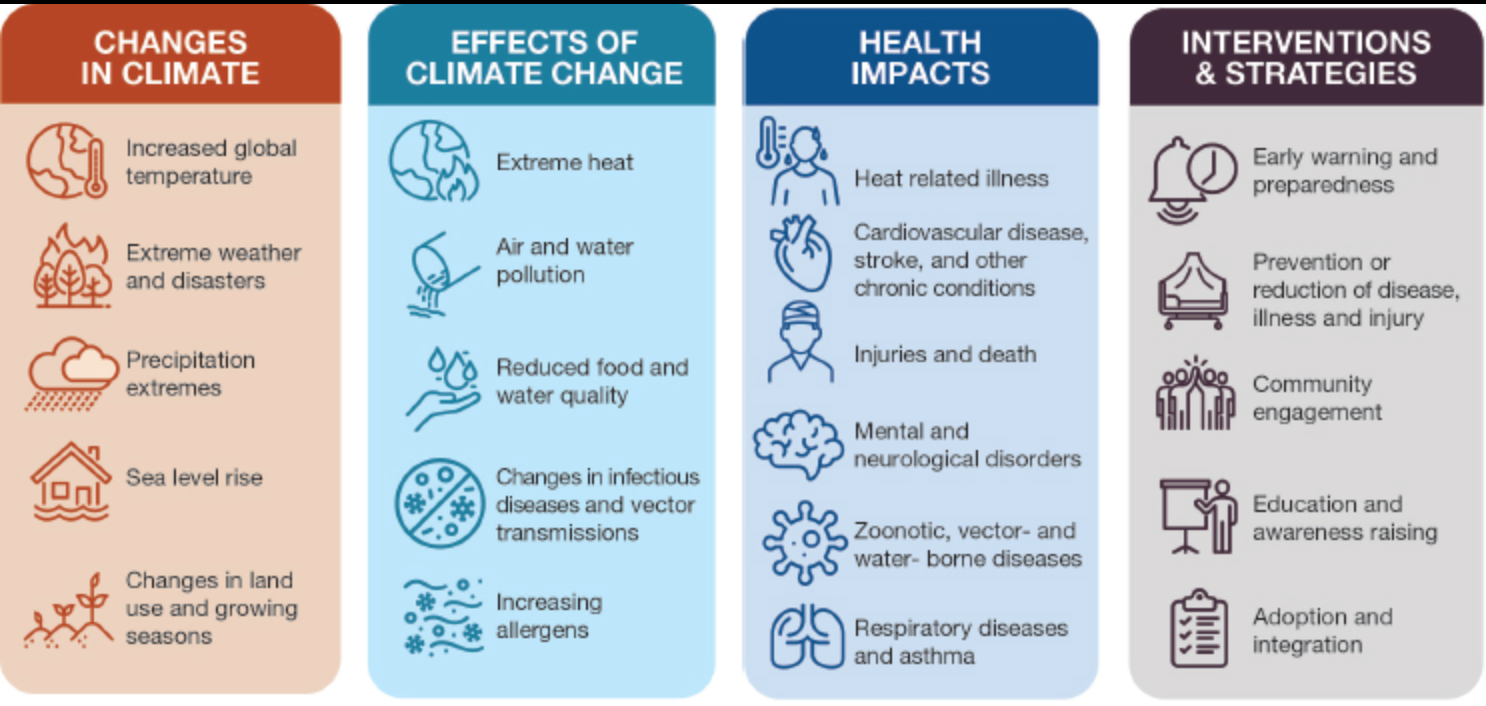
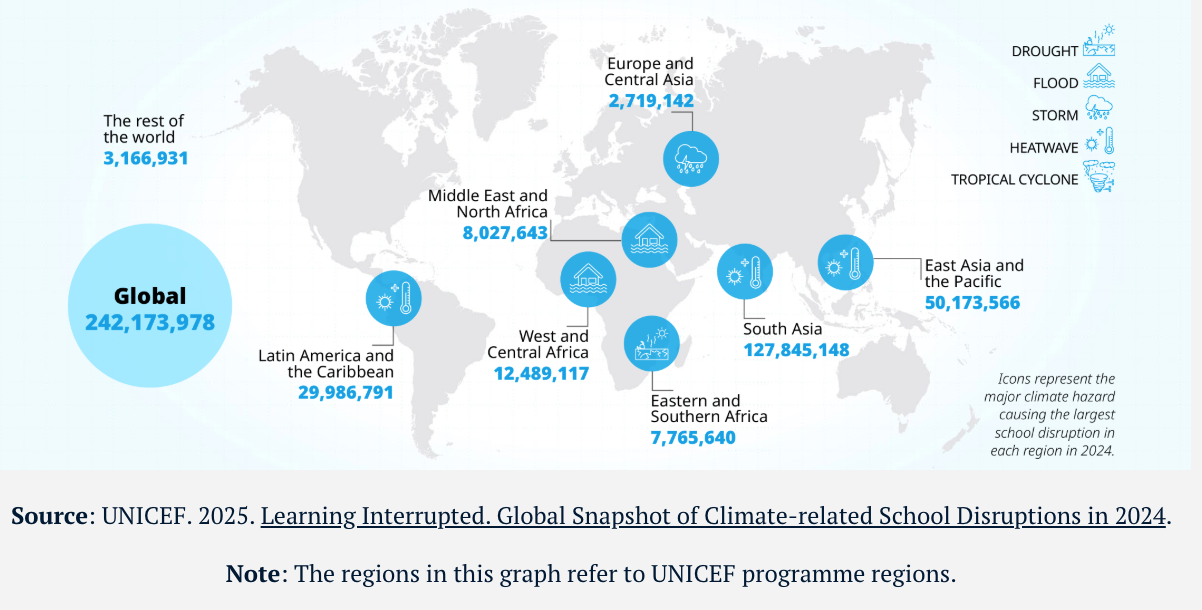
Of course, natural disasters can have devastating and direct effects, causing injury, illness, or death, and the impact of severe weather alone has a drastic effect on school operations, leading to eroding school finances and disrupted learning. In just one year, in 2024, nearly 10% of the school year was lost to climate related disruptions in low income countries, and extreme heat affected nearly 1 in 3 children. Exposure to heat waves has also been linked to a loss of almost 1.5 years of schooling for some children. In the US, rising temperatures are associated with declines in student math performance, especially for students in high-poverty schools. And it’s only getting worse. The World Meteorological Organization confirmed that 2024 was the warmest year to date, and a record-breaking one-third of the global population experienced a heatwave. “By 2050, nearly every child will face more frequent heatwaves – threatening their health, disrupting their education ,and putting their future at risk.” Given these challenges, it’s not surprising that concerns about climate change are also having a negative effect on the mental health of children, adolescents, and young adults. As a 2021 survey reported, 59% of 16- to 25- year-olds were very or extremely worried about climate change.
Can schools become more climate resilient?
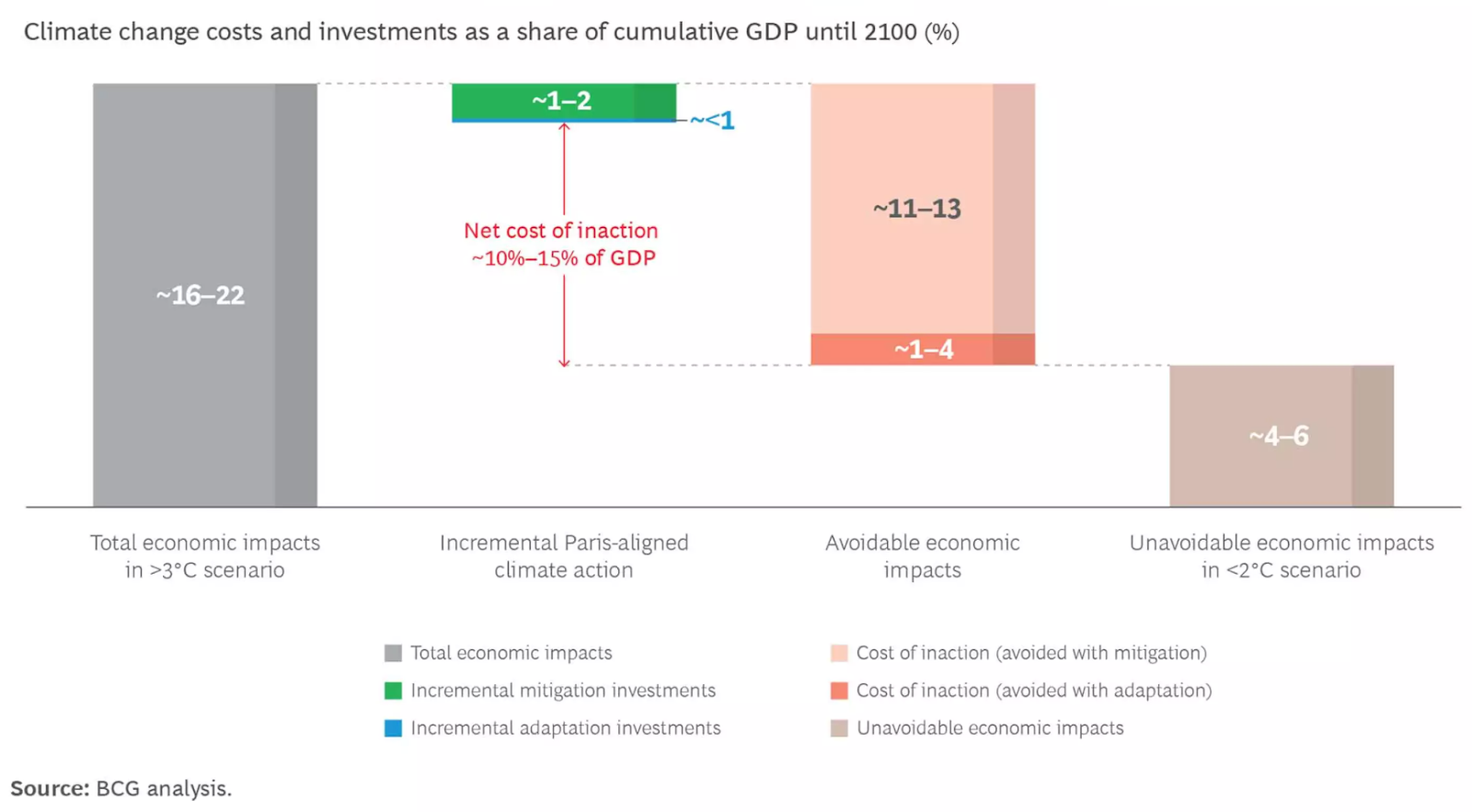
The costs of school disruptions have sparked a movement toward making schools climate resilient, particularly by improving transportation and infrastructure. More sustainable approaches to schooling can benefit not only students’ health but also help reduce costs that free up funds for other educational purposes. An analysis from the Boston Consulting Group illustrated how government actions on climate can save considerable money over time. As the report put it, “By investing a relatively small portion of GDP—less than 1%—into climate adaptation measures, it is possible to avoid much larger economic losses of up to 4% of GDP. Then, the remaining economic impact in a less-than-2°C scenario ranges from 4% to 6% of GDP.” Economically, even modest investments in climate adaptation can prevent much larger long-term losses.
Despite the available evidence, a focus on sustainability remains controversial in some countries. Countries, like Iran, Libya, and Yemen have also refused to sign onto global accords—such as the Paris Agreement or United Nations Framework Convention on Climate Change—designed to support sustainability expressing concerns about sustainable practices negatively affecting their economies. In the US, in particular, the current administration has explicitly worked to remove policies and limit initiatives that aim to combat climate change or support more sustainable practices. The U.S. Department of Education’s recent decision to terminate the Green Ribbon Schools program is a prime example of the reduced funding. The 15-year-old program honored schools across the country for their implementation of environmental practices. The program’s termination came soon after the DOE concluded the National Blue Ribbon Schools Program, in which schools were honored for academic excellence.
Nontheless, concerns about addressing the climate emergency have continued to grow, with increasing numbers of individuals and organizations joining a broad social movement to create a more sustainable planet. Many teachers and youth have been engaged in this movement for years, as demonstrated by the efforts of Greta Thunberg and others who helped lead the Global Climate Strike in 2019. Since that time, a number of efforts focus specifically on addressing an “understanding gap” as nearly half of teens cannot identify the causes of climate change. As the efforts to address that gap proceed, the impact could be substantial. Research even suggests that if 16% of high school students in high- and middle-income countries received climate change education, carbon dioxide could be reduced by almost19 gigtatons by 2050. To support climate change education, more and more resources are becoming available, including documents like “Climate Literacy: Essential Principles for Understanding and Addressing Climate Change” and collections of Climate Change Resources. These efforts may benefit as well from plans by the OECD to include a measure of climate literacy as part of the PISA assessments in 2029.
Next week – How schools are making busing and transportation more sustainable: Sustainability, students and schooling (Part 2)