Tag Archives: Covid-19

A view from Japan (part 2): Hiro Yokota on parenting, education and the new Digital Agency in Japan

This week’s post features a follow-up interview with Hirokazu Yokota, discussing his experiences during the COVID-19 pandemic in Japan, as a parent, education policymaker and now government officer at Japan’s newly established Digital Agency. Yokota was a principal architect of two recent policies: the Basic Act on the Formation of a Digital Society, which set basic principles to transform Japan by cross-ministerial policy making and passed the Japanese Diet on May 2021; and the Priority Policy Program for Realizing Digital Society, which include policy measures for the government to implement and got cabinet approval in December 2021. Recently, he published an article on school leadership in Japan in the International Journal of Leadership in Education. The post shares his own views and does not necessarily represent official views of DA and the Japanese government.

IEN: What has been happening with you and your family this year? How does this compare to what you told us in your previous post at the beginning of the pandemic (A view from Japan: Hirokazu Yokota on school closures and the pandemic)?

Hirokazu Yokota: Too many changes to remember, I would say… the positive thing is that I and my family are still doing well and safe, which is the most important. My working style has changed a lot. I still work from home two to three days a week, which means I have more time to spare with my kids. Almost every meeting, including the ones with the Minister, happens online, which was almost inconceivable pre-pandemic to me. The society now has more tolerance for that flexible style, as it found paper-based and face-to-face working style infeasible in the presence of this lasting pandemic.

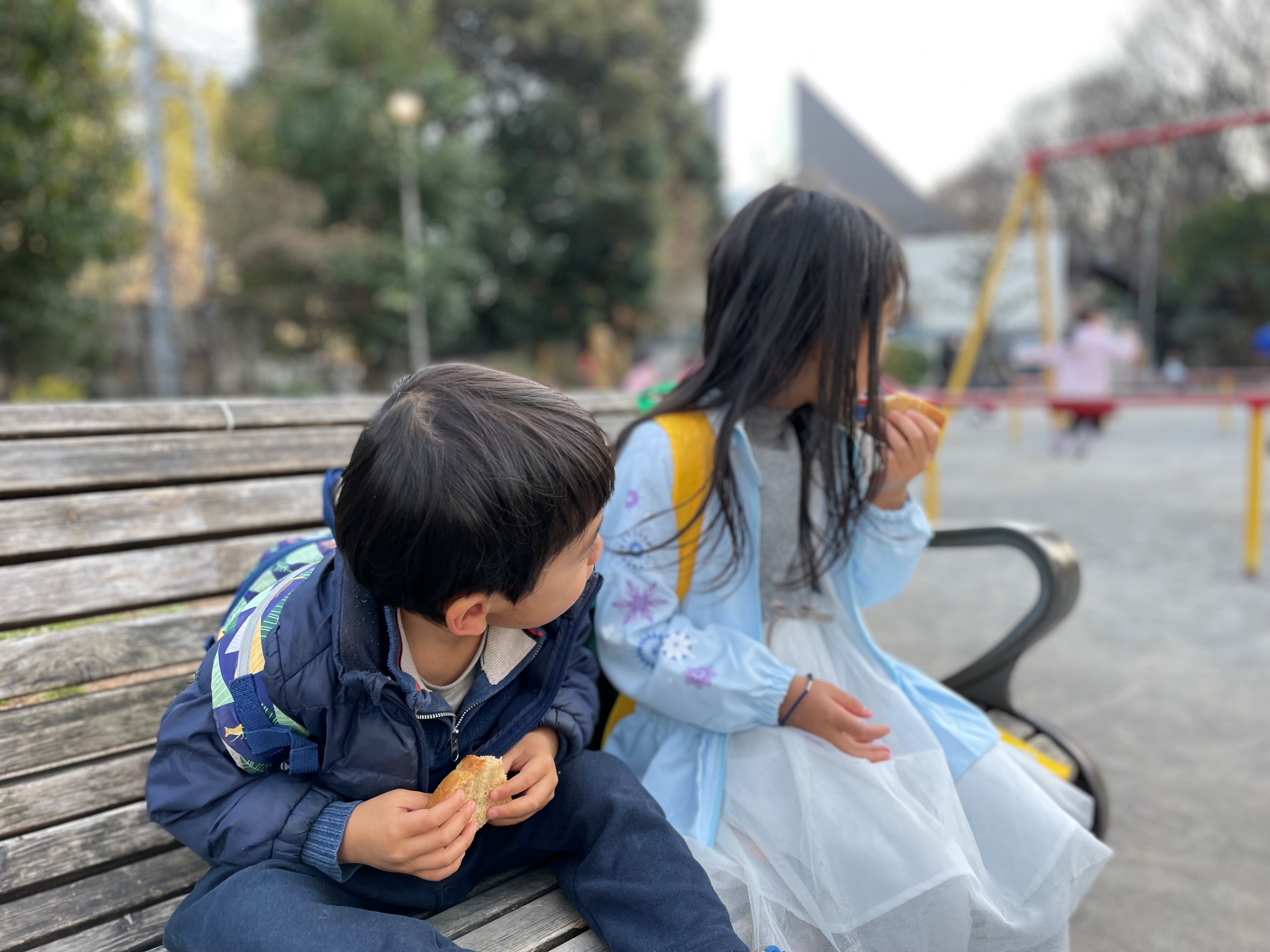
The other side? My six-year-old daughter suddenly said she wanted to wear a mask on top of another and cried (she always wears one when going outside). She, by watching TV news etc., was kind of afraid of getting Omicron. I couldn’t just say getting it isn’t a big deal. Kids absorb and think much more from what they see in the world than we imagine. As a parent, I have to balance two seemingly-conflicting demands – providing my kids with real-life, authentic opportunities to interact with a variety of people, and preventing the infection of Covid-19 at the same time. This is a very challenging act of parenting, and to be honest, I have not found any solid answer here.

“As a parent, I have to balance two seemingly-conflicting demands – providing my kids with real-life, authentic opportunities to interact with a variety of people, and preventing the infection of Covid-19 at the same time. This is a very challenging act of parenting”
IEN: It’s interesting to see that you’re now working at a new governmental agency. What is the Digital Agency and what does it have to do with this pandemic?

HY: The Covid-19 pandemic was a wake-up call for Japan’s digital transformation. Management of the health crises was hampered by outdated and cumbersome administrative systems. Additionally, in the past, each ministry, agency, and local government has been promoting digitalization separately, which resulted in 1,700 local governments with 1,700 systems: procured and managed separately with dispersed responsibility. The COVID-19 pandemic highlighted the ineffectiveness of this practice.

As a response, in September 2020, then Prime Minister SUGA Yoshihide made the digitalization of Japan one of his top priorities. Accordingly, the Digital Agency (DA) was established at an incredible speed and launched in September 2021. DA has strong powers of comprehensive coordination, such as the power to make recommendations to other ministries and agencies.
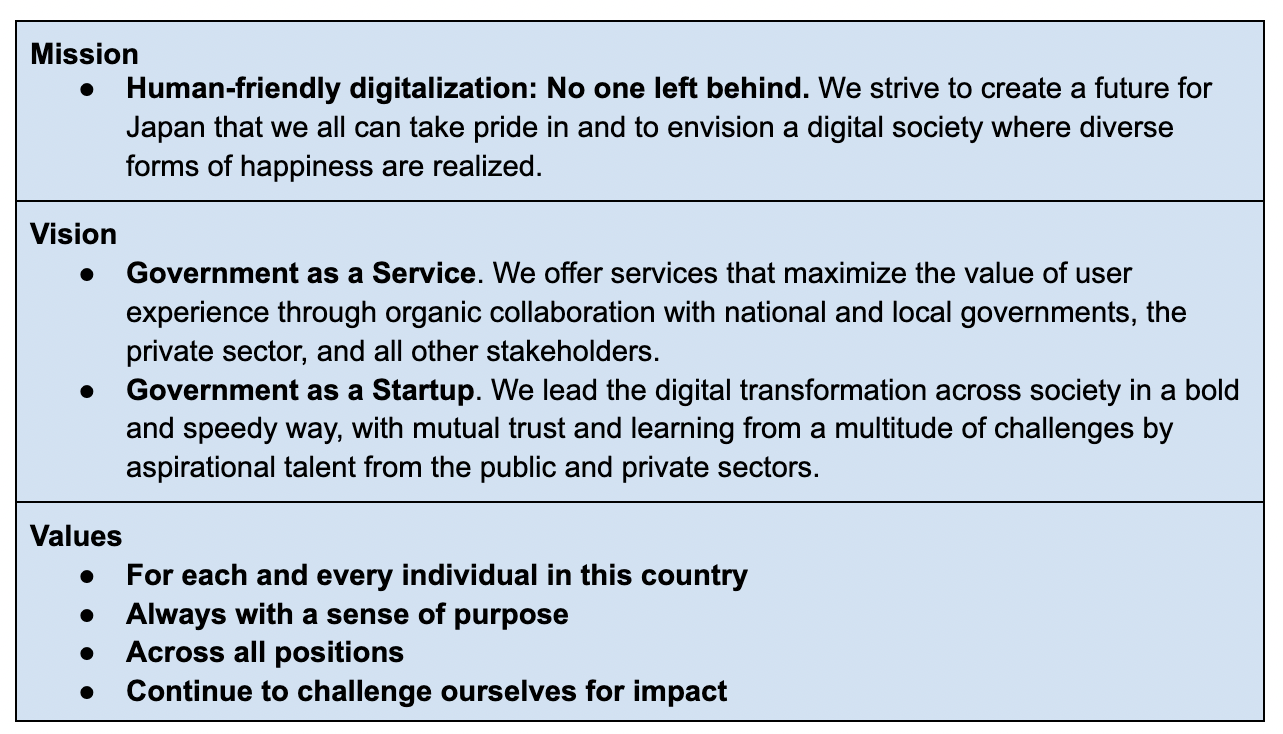
What is particularly interesting is that of the about 600 DA officers, a third (some 200) are coming from the private sector, which creates a mixed organizational culture of thorough coordination of stakeholder interests in the public sector and agile/flexible decision making in the private sector. New challenges every day, but a very inspiring working environment. Given that I’ve mainly worked within the education sector it really helps to broaden my perspective.

IEN: In the field of education specifically, you previously mentioned that the Japanese government planned to implement “one device per student” initiative. What has worked, and what has been problematic?

HY: The Ministry of Education, Culture, Sports, Science and Technology (MEXT) has started the GIGA (Global and Innovative Gateway for All) School Program to make certain equitable and individually optimized learning by providing one computer per student and high-speed Internet for schools, which originally aimed at one device per student by the end of FY 2023. In the face of the COVID-19 crisis, it was accelerated and strengthened, with the distribution of one device per student almost completed by July 2021. About 461 billion yen (some 4 billion US dollars) in total was allocated for that purpose, which obviously was a huge investment.

However, when I collected voices from 217,000 students and 42,000 educators through an online questionnaire on this GIGA School Initiative in July 2021, it turned out that there were many problematic issues on the ground – including slow networks, slow digitalization of school affairs, school staff that never got devices, equipment that was too old or insufficient for use inside and outside of the classroom as well as insufficient support by experts. In terms of policy implementation, just distributing a subsidy does not necessarily guarantee that ICT devices are actually used, and there are many steps to be taken before these are put into daily use like pencils and notebooks.

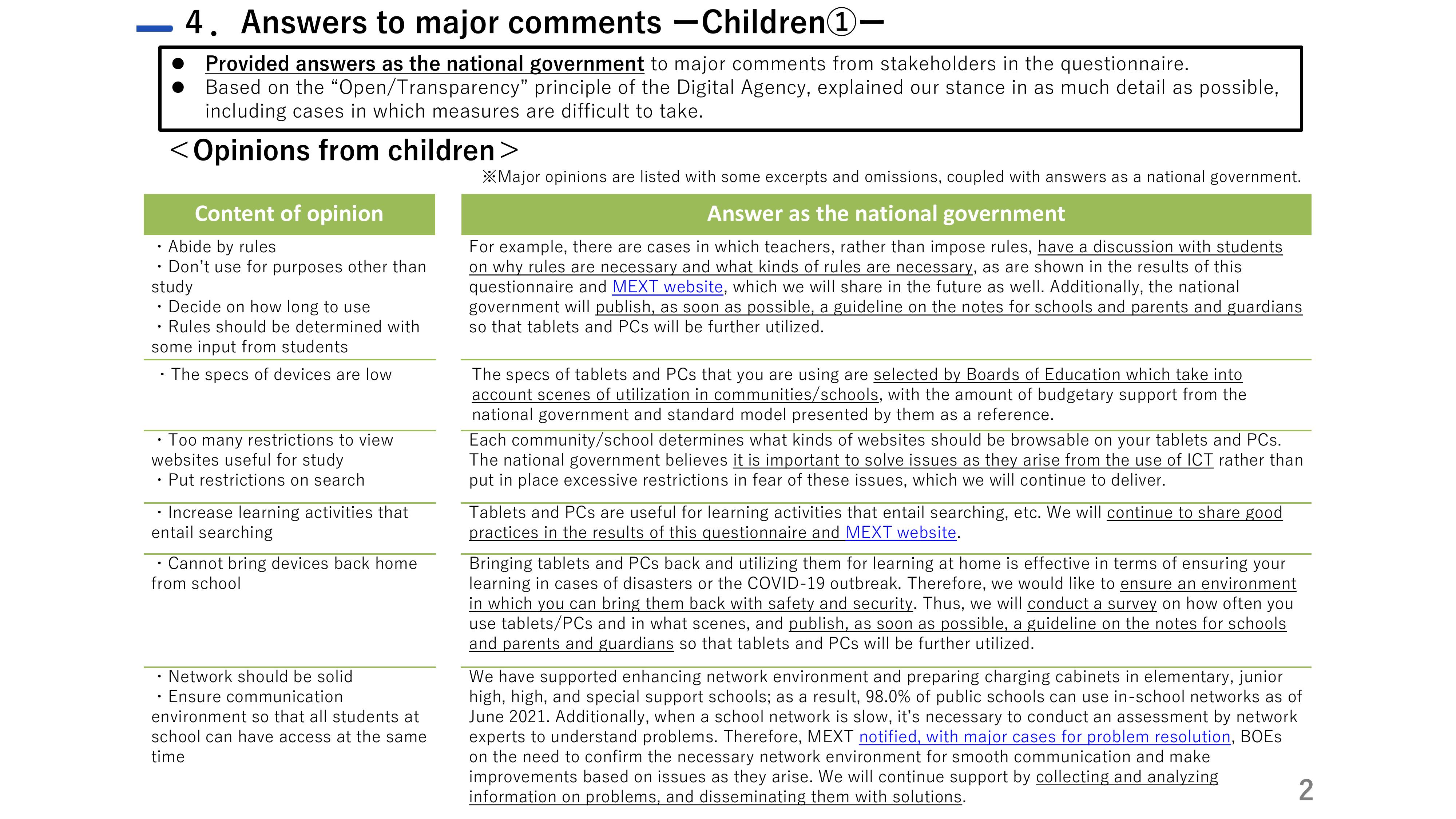
In order to fill in this gap between policy and practice, the Digital Agency, with the ministries concerned, released a joint message to students and educators, and presented their responses in the form of future directions of relevant policies. Some of them actually led to subsequent supplementary budget items approved in December 2021.
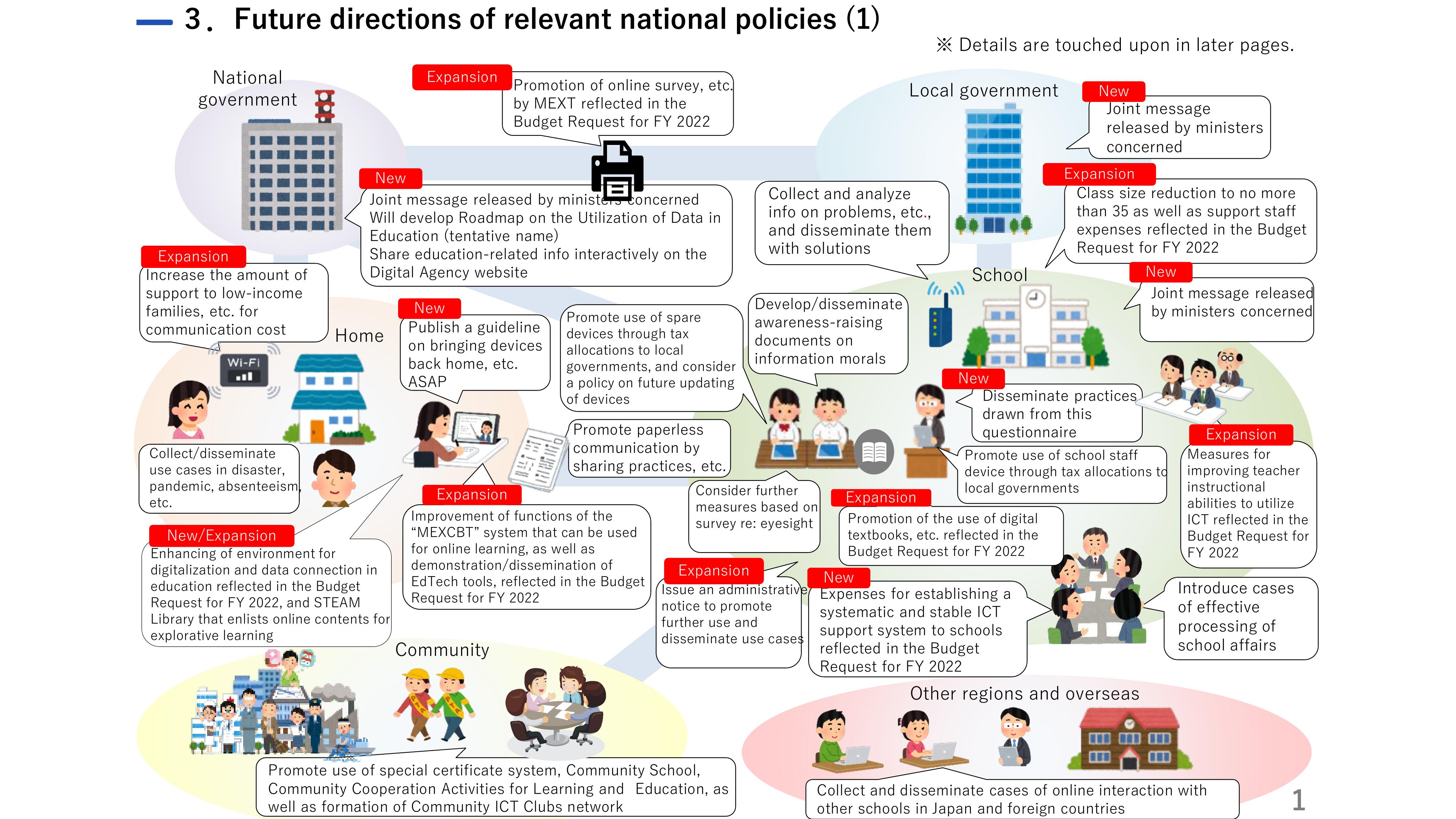
Additionally, we took the comments from students and educators very seriously, and based on the “Open/Transparency” principle of DA, we explained our stance in as much detail as possible, including cases in which measures are difficult to take. This, I believe, is very meaningful as a new trial of policy refinement based on voices from the ground, where digital plays a significant role in reaching out to people/users.
IEN: This initiative is still in progress, but what’s next?

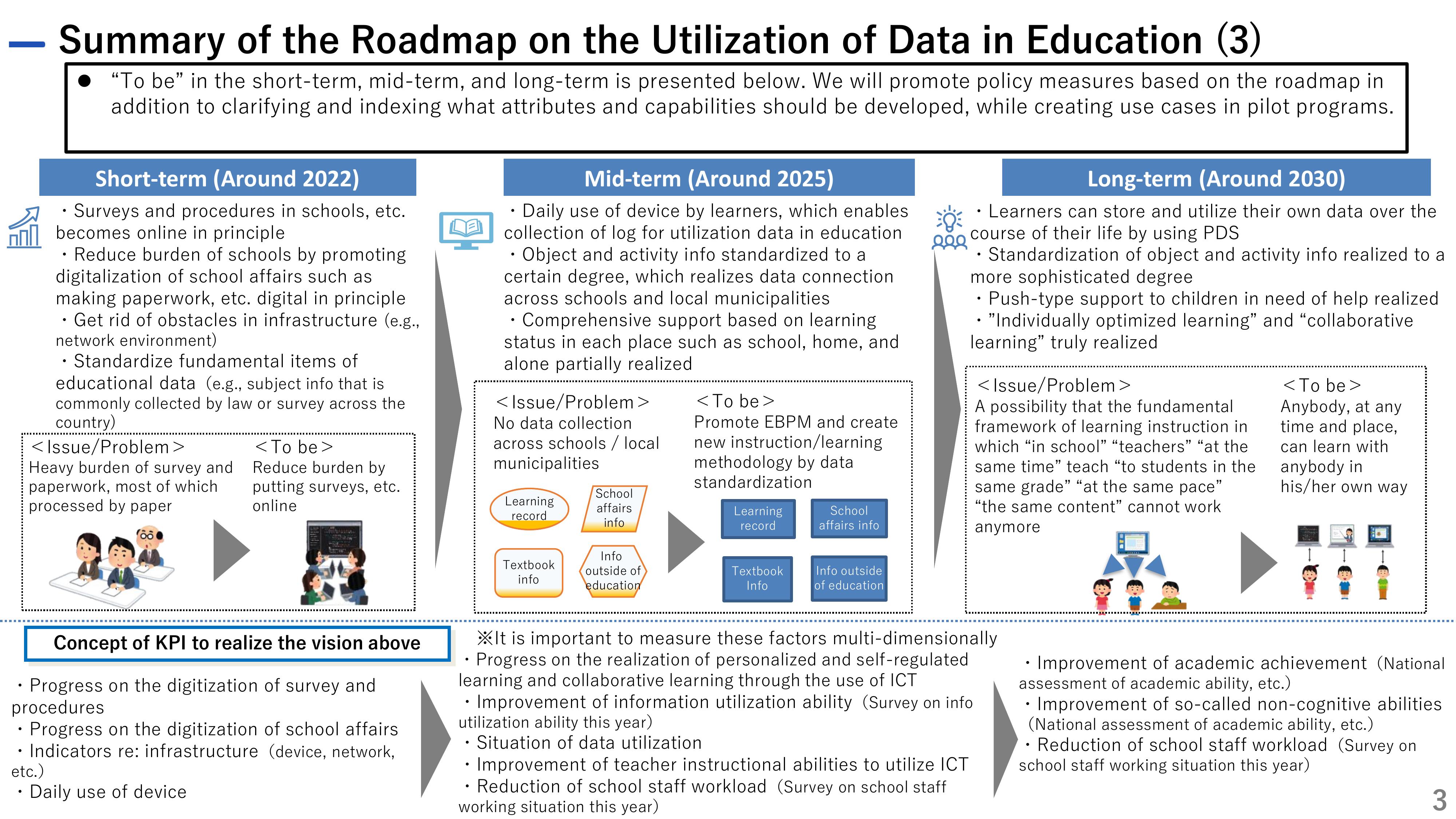
HY: Yes, when we think of three phases of digital transformation – (1) digitization, (2) digitalization, and (3) digital transformation, the current movement is mostly in phase (1) (digitization). However, the potential of digital technology goes far beyond taking paper and face-to-face processes and putting them online; it also lies in promoting student-centered learning as well as providing wraparound and push-type services to children by connecting a variety of data. Therefore, recently (in January 2022), DA and the ministries concerned published “Roadmap on the Utilization of Data in Education.” First, we set the mission of digitalization in education as “a society where anybody, at any time and place, can learn with anybody in his/her own way,” and established “three core goals” – enriching the (1) scope, (2) quality, and (3) combination of data – for realizing that mission. Issues and necessary measures, such as standardizing data in education, the way the creation of the platform in the field of education ought to be, determining rules/policies for the utilization of data in education, are clarified with a timeline.
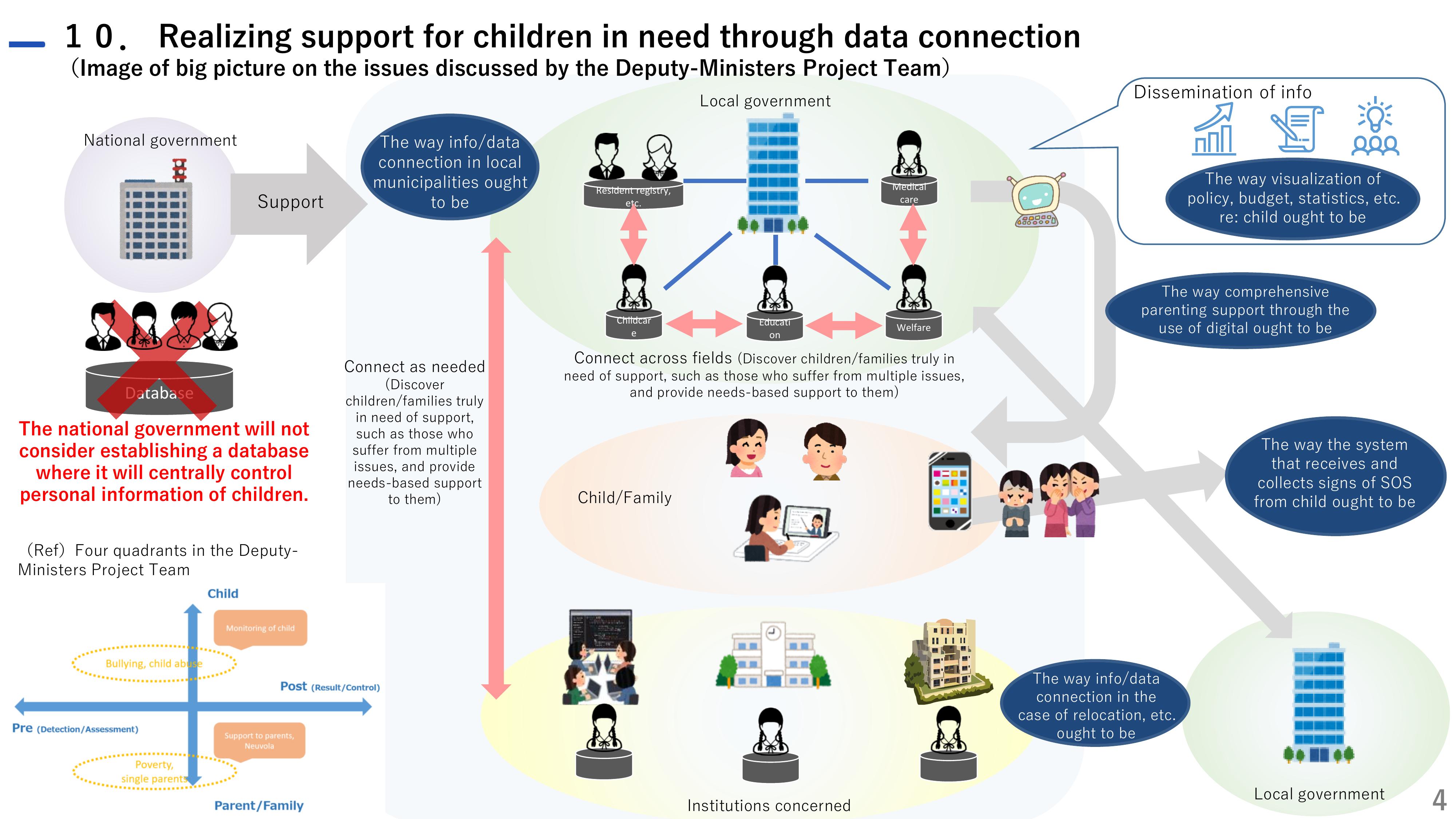
Although most of the policy measures are supposed to be taken by MEXT, DA recently started a pilot project for realizing support for children in need (e.g. poverty, child abuse) through data connection across departments and organizations. As for now, when it comes to data in such fields as education, childcare, child welfare, medical care, etc., they are handled at different departments within the local government. Additionally, there are a variety of institutions concerned such as child consultation centers and schools, each of which, based on their respective role, engage in support for children by utilizing the information that they have. Unfortunately, this sometimes results in each organization/department working in silos without having a clear understanding of which children/families need priority support. For example, the “Child Development Monitoring System” in Minoh City, Osaka Prefecture, classifies children through (1) economic situation, (2) child rearing ability, (3) academic achievement, and (4) non-cognitive abilities, etc.; they then utilize the results for support and monitoring through case meetings, etc.. Building on such practices, we will support local governments by establishing a system for connecting data in education, child welfare, health etc. as needed, utilizing that data to discover children truly in need (e.g. poverty, child abuse) and providing push-type support to them.
IEN: Knowing that fundamentally changing education is such hard work – just like “Tinkering Toward Utopia” – what do you imagine for education in the future?

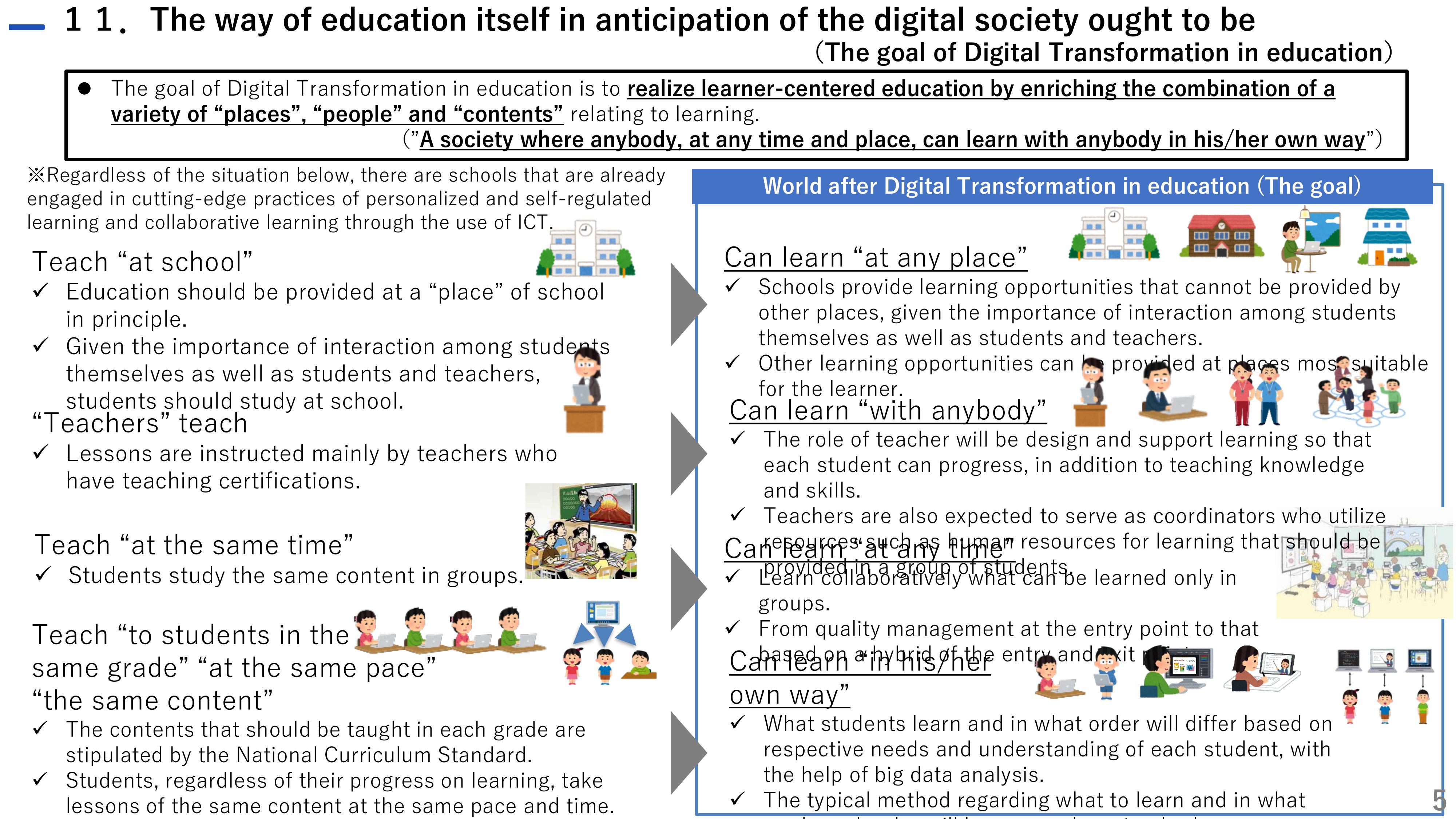
HY: We have to admit the possibility that the fundamental framework of learning instruction in which “in school” “teachers” “at the same time” teach “to students in the same grade” “at the same pace” “the same content” cannot work anymore. This is not because teachers are incapable of doing their jobs. This is because there are so many different needs that children have – from absenteeism, special needs, Japanese-language learners, poverty, to so-called gifted.

With that in mind, we set the goal of digital transformation in education as realizing learner-centered education by enriching the combination of a variety of “places”, “people” and “contents” relating to learning (”A society where anybody, at any time and place, can learn with anybody in his/her own way”). For example, teachers are also expected to serve as coordinators who utilize resources such as human resources for learning that should be provided to a group of students (“Can learn ‘with anybody’”). Additionally, assessment will move from measurement of student learning at the entry point (how much students learn) to that based on a hybrid of the entry and exit points (what attributes and abilities they acquire) (“Can learn “at any time””). Furthermore, what students learn and in what order will differ based on respective needs and understanding of each student, which can be helped with big data analysis (“Can learn “in his/her own way””). This is easier said than done, but MEXT recently set up a new special council composed of stakeholders to discuss concrete policy measures to realize this vision. I’m hopeful that Japanese education will be able to shift from an equality-oriented, lecture-style system to the one that embraces diversity (individually optimized learning and collaborative learning) without undermining our focus on equity.
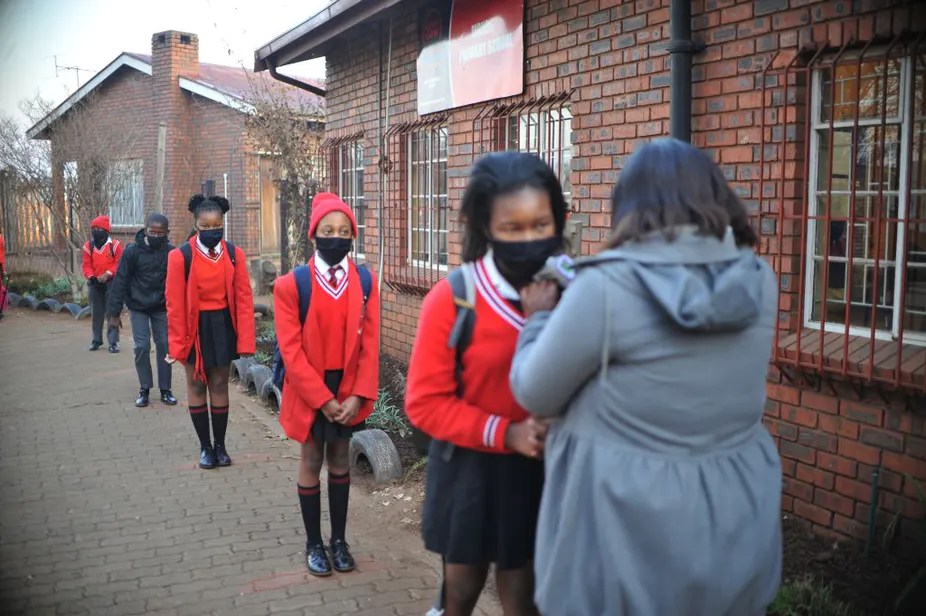
What’s Changing Post-COVID in Finland, New Zealand, and South Africa?

This week, IEN’s Correne Reyes takes a look at how education policies and initiatives have evolved post-COVID in two relatively “high-performing” education systems — Finland and New Zealand — and in a developing education system — South Africa.

Around the world, COVID school closures led to enrollment drops and concerns about health and safety that education systems like South Africa continue to confront. Meanwhile, systems like Finland and New Zealand appear to have dealt with those initial issues and are now tackling challenges like the emotional toll resulting from the pandemic.

According to The Conversation, in South Africa “Although improving, the achievement outcomes are still low, fragile and susceptible to shocks. The COVID-19 pandemic has dealt the education system a major blow, especially for poor and vulnerable learners.” As one example, South Africa reported a 30,000 student enrollment deficit in Grades R and Grade 1 due to the lockdown. With extended school shutdowns in July 2020 and January 2021, 9 million students faced hunger and malnutrition since they rely on school meals for their daily nutrition. Furthermore, only 22% of households have a computer and 10% have an internet connection, limiting remote options. Inequitable internet access means that is primarily students from wealthier communities with better resourced schools who have been able to continue their learning during the school closures. Despite these challenges, the South African government announced a plan to reduce the education budget over the next three years with a cut of over 4% for this financial year, which is likely to lead to further inequity.

“Although improving, the achievement outcomes are still low, fragile and susceptible to shocks. The COVID-19 pandemic has dealth the education system a major blow, especially for poor and vulnerable learners.”

Although Finland and New Zealand continued to experience some school closures, they have been able to turn their focus in policymaking to the health and wellbeing of their students and to rebuilding their foreign student numbers.

In terms of health and emotional support, New Zealand announced an investment of $75.8 million in their newest education wellbeing package to tackle the mental health that have arisen due to COVID-19. For the first time, primary and secondary schools will have “greater access to guidance counselors and counseling support services.” Additionally, Finland’s recent government proposal requested that “both comprehensive and upper secondary schools must have at least one social worker per 670 pupils / students and one school psychologist per 780 pupils / students.” This ratio would ensure more equal access and quality of health services in different parts of Finland. Finland suggests this would “promote the extension of compulsory education, improve opportunities to tackle bullying and also help to fill learning and well-being gaps caused by the corona.”

“New Zealand announced an investment of $75.8 million in their newest education wellbeing package to tackle the mental health and wellbeing issues that have arisen due to COVID-19.”

In both New Zealand and Finland, pandemic-related concerns have also shifted to address the loss of international students. Before the pandemic, international education in New Zealand was the fifth largest export industry, amounting to about $5 billion dollars a year. However, with the pandemic, and a 62% drop in related income from the decline in international students, experts predict it may take 10 years for the industry to recover. Education New Zealand chair, Steve Maharey, recognized that New Zealand was too dependent on China and India for students and the industry needed to diversify. To address the same issue, the Finnish Ministry for Foreign Affairs has prepared the D visa, a bill that would allow third-country researchers, students and their family members the possibility to obtain a Finnish long-term visa, in hopes to promote education and work based migration.

Leading new, deeper forms of collaborative cultures: Commentary from Cecilia Azorín and Michael Fullan

“How can schools be transformed into collaborative learning cultures? What are the first steps to be taken to initiate the shift towards collaboration? How can collaboration within and across schools be developed and extended?” Those are some of the questions that Cecilia Azorín and Michael Fullan ask in the fourth commentary in a series launched by Corrie Stone-Johnson and the Journal of Educational Change. In a 2021 editorial, Stone-Johnson introduced the series called Back to School in which she invited authors to “explore how and in what ways Covid-19 has shaped—and is shaping—schools and schooling around the world. This week’s post provides an excerpt from the commentary that brings together the ideas and insights of Azorín and Fullan from their work on collaboration and networking. Previous commentaries in this series include: Yong Zhao and Jim Watterston’s “The changes we need post-Covid,” “What can change in schools after the pandemic?”from Thomas Hatch; and “Owning educational change in Korean schools” by  Taeyeon KimMinseok Yang, and Sunbin Lim.

As Azorín and Fullan summarize their argument: 

“From its origin as teaching as a lonely profession (‘behind the classroom door’), collaboration since the 1960s has made halting progress. Some strong collaborative school cultures were established over the decades, but they were limited in three ways: they were in the minority; were mostly intra-school with a smattering of school districts; and they did not become an established part of a new culture. Over the past decade we have begun to see examples of networks of schools, but these too did not represent system change. Recently (mostly in the past two or three years) there is a new and powerful surge in collaboration arising from the combination two forces: first, the growing evidence that traditional school systems have been seen as ineffective for the majority of students having lost their sense of purpose (see Fullan, 2021), and second, that the pandemic has exposed the weakness of the school system, and serendipitously increased the interest in innovation and system reform as we enter thepost-pandemic period (Fullan & Edwards, 2022).

Prior to COVID-19, there was consensus on the need to prepare future generations in environments of collaboration (Azorín, 2022), but it did not materialize in practice. The pandemic has accelerated networking in education as a powerful tool for innovation. Collaboration is needed and the pandemic made this need greater. “Teaching today is a collaborative and social profession” which implies “moving ideas, knowledge, and teaching practices around in professional communities and networks of shared professional learning” (Hargreaves, 2021, p. 142). We see these developments emerging (and, indeed are part of networks ourselves working on this very agenda). We predict that this recent trend will take off in the coming years.”

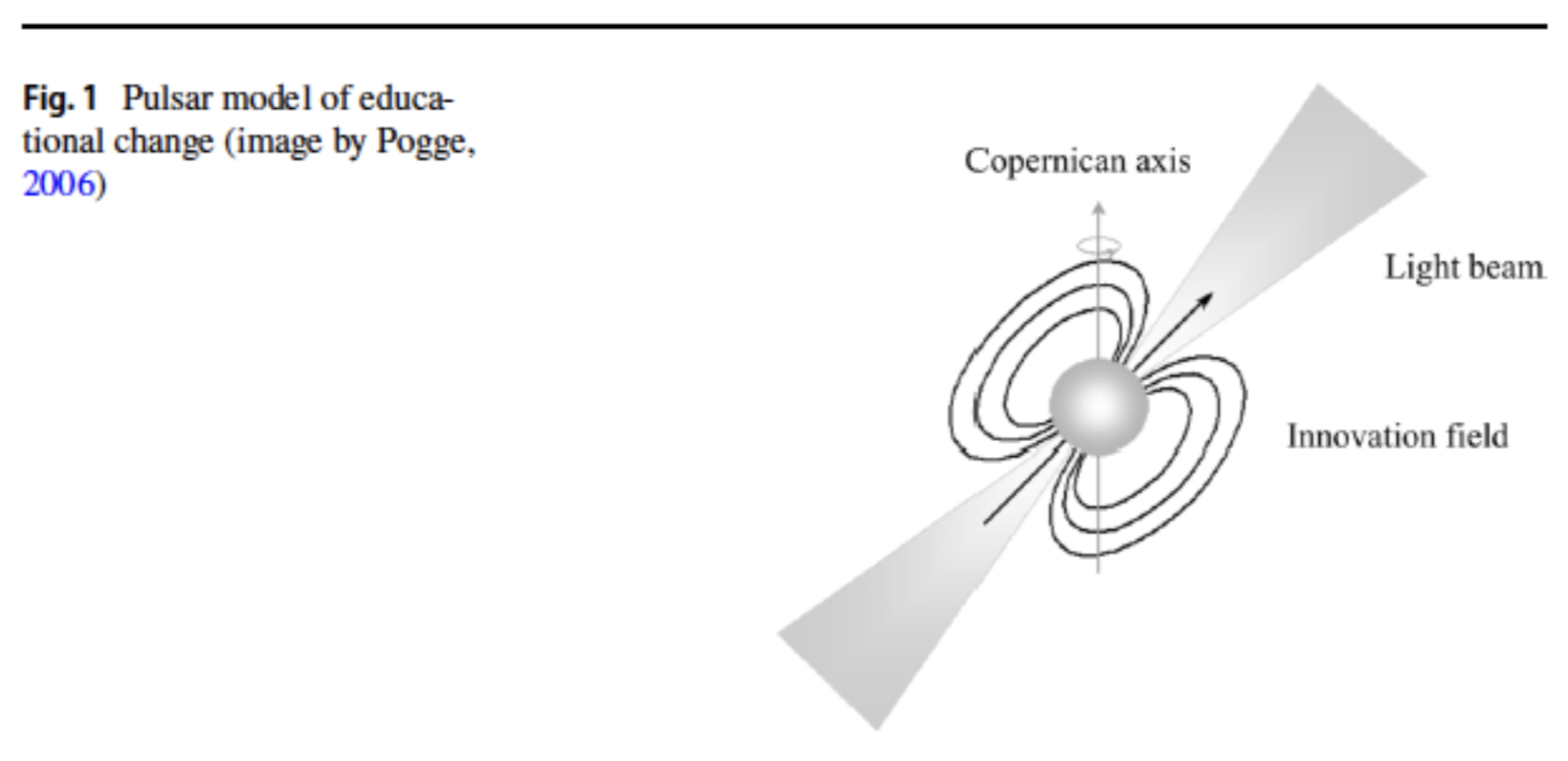
In response, they describe what they call the “pulsar model of educational change:” 

Azorín (2020a) used the term ‘supernova’ to describe the impact that COVID-19 has had on education and argued that “like the lifecycle of a star, the educational journey of the previous decades has come to an end” (p. 381)

The ‘supernova effect’  has brought with it the potential for an unprecedented pedagogical  renewal and  change that could give rise to the real-time rapid development of new approaches to education.

The initial supernova drive has given way to what we call the pulsar model, where the change forces connect and interact thereby fostering processes of experimentation and innovation in education. Figure 1 shows the Pulsar Model of Educational Change, represented by a lighthouse (light beam) that illuminates the new educational pathways. In short, the Copernican axis represent the centrality of students; the light beam places collaboration at the center of action, and the innovation field concerns the pedagogical and collaborative developments essential for success.”

To learn more, the full commentary, “Leading new, deeper forms of collaborative cultures: Questions and pathways” can be found in the February 2022 issue of the Journal of Educational Change.

Children 5-11 can now get a COVID-19 Vaccine: Headlines from across the US

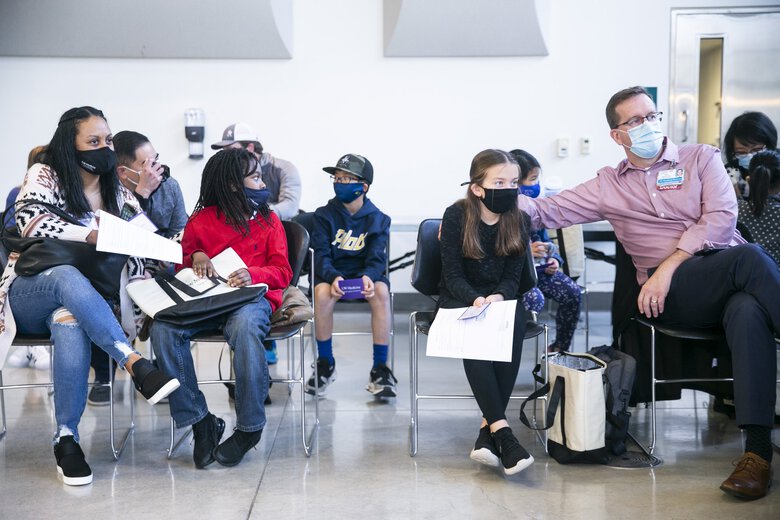
Last week, the FDA authorized the emergency use of the Pfizer vaccine among children ages 5-11. Additionally, the CDC also voiced its support. Consequently, around 28 million children in the US can now obtain the COVID-19 vaccine.

Although many parents and educators have embraced the news, others remain concerned. According to The74’s summary of the October KFF COVID-19 Vaccine Monitor report

  • Nearly 3 in 10 parents of 5-11 year-olds (27%) are eager to get a vaccine for their younger child while a third say they will wait to see how the vaccine is working. 
  • 3 in 10 parents say they will definitely not get the vaccine for their 5-11 year-old (30%). 
  • Parents are now 5-11 percentage points more likely to say they will “definitely not” get their children vaccinated.
  • 53% of parents are worried their child may be required to get vaccinated for COVID-19 even if they don’t want them to.

To respond to the concerns, many states, counties and school districts have begun incentivizing parents to vaccinate their children, utilizing many approaches. Here’s a quick scan headlines that give a sense of the resources and responses to the vaccine rollout across the US:

Covid Vaccine for Kids Ages 5 to 11: Top Questions Answered, WebMD.

What pediatricians want parents to know about the Covid vaccine for kids, NBC news.

Some parents want to wait to vaccinate their kids. Here’s why doctors say do it now, NPR.

Answering kids’ (and parents’) questions about the Covid-19 vaccine for ages 5 to 11, CCN Health.

Arizona

School officials in Phoenix are giving $100 gift cards to vaccinated students, Time.

California

Los Angeles, Sacramento, San Diego and Oakland school districts mandate vaccination against Covid-19 for their students or opt for remote learning, Politico

“Nearly 350,000 California students face an imminent choice: Get vaccinated for Covid-19 or stay home.”

Florida

Tallahassee-Leon county is hosting a family fun day that offers free breakfast, lunch and Covid-19 booster shots, Tallahassee Democrat

Illinois

Chicago will suspend school for a day on Nov. 12 to host “Vaccination Awareness Day”, Chalkbeat, Chicago

Minnesota

Minnesota is encouraging students to obtain the vaccine but has refrained from an official mandate, StarTribune.

New York

New York City is encouraging children to receive the vaccine by offering $100 incentives, NBC

“Children who get their shots at schools or at other city clinics across the five boroughs will be eligible for the $100 incentive that the city has offered since late-July to new vaccine recipients getting their shots at city-run sites.”

NYC schools start vaccinating 5- to 11-year-olds to cheers, relief, and some frustration, Chalkbeat.

COVID-19 Vaccines Roll Out for Young Children in NYC, Early-Bird Families All Smiles, The 74.

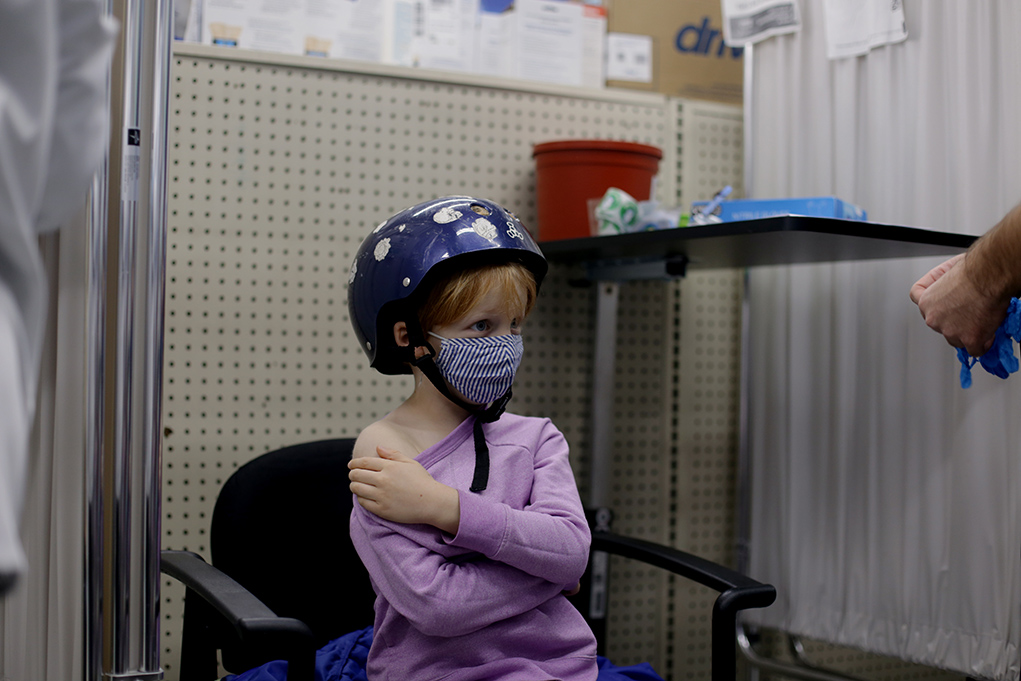
Photo Essay – Inside a Vaccine Site for Kids: A Brooklyn Pharmacy Becomes A Comforting Spot for COVID Shots, The 74.

https://www.the74million.org/article/photo-story-inside-a-vaccine-site-for-kids-a-brooklyn-pharmacy-becomes-a-comforting-spot-for-covid-shots/

Oregon

Hundreds of kids-size vaccine doses administered at Oaks Amusement Park, KGW8.

South Carolina

In Anderson, high school students can obtain $100 for getting the Covid-19 vaccine, Time

Texas

Travis County will use a school based approach to roll out vaccines for children., Kxan

Dallas will maintain mask mandates despite vaccines being available for young children now, Dallas News

Washington

Given the increased demand for vaccines, Washington state urged parents to be patient, Seattle Times


School districts increase their efforts to vaccinate their students by utilizing their buildings during school hours, evenings and weekends, Seattle Times.

https://www.seattletimes.com/education-lab/washington-state-school-districts-ramp-up-efforts-for-covid-vaccine-clinics-testing-programs/

— Dulce Rivera Osorio

Owning educational change in Korean schools: Three driving forces behind sustainable change (Excerpt)

“Can the innovative educational changes imposed by the pandemic be sustained for the long-term?” That’s the question that Taeyeon Kim, Minseok Yang, and Sunbin Lim ask in the third commentary in a series launched by Corrie Stone-Johnson and the Journal of Educational Change. This question builds on the first commentary in that series by Yong Zhao and Jim Watterston – “The changes we need post-Covid” and the second “What can change in schools after the pandemic?” by Thomas Hatch. This week’s post provides an excerpt from the third commentary, highlighting they key lessons and implications from the pandemic experiences of educators in the Korean context. The full commentary can be found in the November issue of the Journal of Educational Change.

The COVID-19 pandemic has altered multiple aspects of everyday life, especially those requiring personal interactions and daily routines. As a result, the core practices of things like schooling and student learning have had to be fundamentally revised. Schools across the world have thus adopted policies and practices to facilitate virtual learning, which have forced educators to quickly learn how to design and enact online lessons with limited resources (United Nations, 2020). Schools have invented and established these routines as the “new normal,” all while navigating a persistent level of uncertainty. Although COVID-19 has highlighted and exacerbated the digital divide as well as social inequalities like economic and racial injustice (United Nations, 2020), scholars and educators have argued that this disruption also presents an opportunity for the equitable redesign of school systems (Zhao, 2020).
With massive vaccination efforts, schools are now preparing to go back to “normalcy” for post-COVID-19 education (see Durston et al., 2021; Meckler & George,2021). In reflecting on the many innovations schools have made during COVID-19 (e.g., online and blended learning, individualized support), it is important to consider Zhao and Watterston’s (2021) argument that the educational changes imposed by the pandemic may be unsustainable for the long-term.

While superficial changes in schooling made during the pandemic may not be sustainable, this essay offers a counter-narrative from the Korean context, in which educators re-constructed policies and teaching practices to fill the educational vacuum caused by COVID-19. The lessons we address here build on 23 Zoom interviews (including 17 individual interviews and six focus groups) conducted throughout the 2020 school year with Korean teachers, school and district leaders, and parents across the country. As education researchers residing in the US during the pandemic who previously worked as Korean school teachers, we wanted to present stories of how Korean schools implemented online and hybrid classes without largescale school closures and how educators made meaning of the changes forced by COVID-19.

“While superficial changes in schooling made during the pandemic may not be sustainable, this essay offers a counter-narrative from the Korean context, in which educators re-constructed policies and teaching practices to fill the educational vacuum caused by COVID-19”

What was most striking to us was the ownership of educational change reflected in the educators’ narratives. This sense of ownership can be understood as a “mental or psychological state of feeling owner of an innovation” that enables educators to understand how changes are applied and their specific roles in initiating these changes (Ketelaar et al., 2012, p. 5). In navigating and reflecting on the pandemic’s unexpected challenges, they placed themselves at the center of efforts to realize “future education.” Teachers and leaders thereby perceived educational innovations as both a short-term reaction to the pandemic and as sustainable transformations to lead in the long run. This sentiment was apparent in their responses to the sudden onset of COVID-19, as well as in their approach to schooling a year into the pandemic. For the Korean educators we interviewed, “back to school” does not mean back to pre-pandemic schooling of the past. Although we do not generalize their responses as “the Korean case,” our surveys of news articles, books, and online teacher communities in Korea indicate strong aspiration for changes stemming from critiques of pre-pandemic education.

Behind the ownership of sustainable changes: Three driving forces

Throughout the research process, we consistently asked what led the Korean educator participants to take ownership of school changes. As an irresistible force (Stone- Johnson, 2021), COVID-19 has imbued education communities with a sense of urgency and purpose to collectively revise school systems…Echoing the argument that COVID-19 catalyzed the realization of school reforms (Kim et al., in press), we identified three macro-level driving forces in participants’ stories that enabled transformations in Korean schools:

  • Policy discourse about “future education”
  • Professional teaching cultures
  • Using bureaucratic administration creatively

Lessons learned: Suggestions for back to school with COVID‑19

  • Offer a shared space for diverse policy actors
  • Adopt hybrid governance to coordinate resources
  • Balance commitments to others and self‑care

The COVID-19 pandemic has shaken the structure and practices of education systems around the world. It forced schools to change their core activities from the bottom up and create new ideas and systems to support student learning. Schooling during the pandemic has thus necessarily revealed challenges that must be addressed (e.g., widening achievement gaps), but it also surfaced opportunities for challenging the “old grammar of schooling” in how Korean educators took ownership of educational changes to collectively envision better ways of schooling during and after COVID-19.

“Schooling during the pandemic has thus necessarily revealed challenges that must be addressed (e.g., widening achievement gaps), but it also surfaced opportunities for challenging the “old grammar of schooling” in how Korean educators took ownership of educational changes to collectively envision better ways of schooling during and after COVID-19.”


Going Back to School Has Never Been Quite Like This (Part 4): Scanning the headlines from around the world

In the final part of this “Back to School” series, Thomas Hatch scans some of the headlines that describe critical issues in the new school year in many parts of the world.  Part 1 links to articles with some lessons from last year and guidance for reopening schools this year.  Part
draws together headlines that focus on the many challenges causing problems for schools in the US this year. Part 3 highlights headlines from states and cities in the US. Take a look at IEN’s “Back to School” headlines from 2020, from 2019, and from 2018 to see how this year compares.

First day of school ‘indefinitely postponed’ for 140 million first-time students around the world, Unicef

‘Lost generation’: education in quarter of countries at risk of collapse, study warns, The Guardian

Repeated school closures due to COVID-19 leading to learning loss and widening inequities in South Asia, UNICEF research shows, Unicef

For Many Kids, Going Back to School Is BYOC (Bring Your Own Chair), Unicef USA

Asia

Screengrab/Facebook/scmp

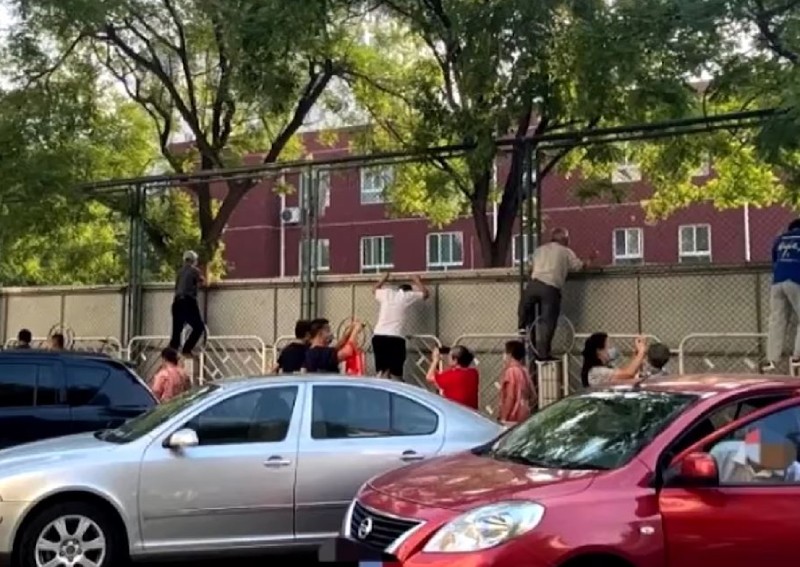
Parents in Beijing climb pillars and fences to catch a glimpse of their kids on the first day of school, Asia One

From vaccine mandates to a chatting ban: how schools in the Asia Pacific are managing Delta, The Guardian

Australia

Sydney schools to reopen a week earlier, classes to start October 18, The Sydney Morning Herald

England

Back to school Covid rules explained – testing, masks and what happens if virus surges, Mirror

Europe

Excitement meets worry as European kids head back to school, AP

Netherlands

Officials watch coronavirus developments closely as schools go back, Dutch News

India

Education Minister Reviews Status of Reopening of Schools Across Country, News 18

Schools in Tamil Nadu’s Coimbatore have set up vaccination camps on campus to ensure teachers and parents of students are vaccinated before schools reopen for classes 9-12, The Times of India

In Andhra Pradesh, primary schools reopen and students to get ‘Vidya Kanuka’ kits with three pairs of uniforms, an Oxford English to Telugu dictionary, one pair of shoes, two pairs of socks, bilingual textbooks, notebooks, a belt, and a school bag, India Today

The Tamil Nadu State Council for Education Research and Training (SCERT) has prepared a curriculum for refresher classes for students of classes 2 to 12 as schools reopen from September 1, The Times of India

In Kerala, a ‘happiness’ curriculum will be drafted to ease students into the learning environment once schools reopen on November 1, The Hindu

Mexico

The influx of students in schools grows, after the COVID risk level was reduced to yellow, El Sol de San Luis

Peru

Peru, among the last countries in the world with no deadline for the return of schoolchildren to the classroom, Today in 24

Philippines

Crisis in Philippines as millions of children face second year of remote schooling, The Guardian

UK

Back to school: How are pupils being kept Covid-safe?, BBC

When do UK schools go back? How schools in Scotland, England, Wales and NI are reopening after summer holidays, iNews

Wales

Millions of pupils return to school amid Covid spike concern, BBC

Going Back to School Has Never Been Quite Like This (Part 3): Scanning State & Local Headlines

In the third part of this “Back to School” series Thomas Hatch scans some of the headlines from states and cities around the US, most of which focus on concerns about COVID cases or related stories about vaccines, masks, and protests about them. Part 1 links to articles with some lessons from last year
and guidance for reopening schools this year. Part 2 draws together headlines that focus on the many challenges causing problems for schools this year. Later posts will include school reopening headlines from other parts of the world as well. Take a look at IEN’s “Back to School” headlines from 2020, from 2019, and from 2018 to see how this year compares.

State & Local Back-to-School Stories 

California

Absenteeism surging since schools reopened, EdSurge

1,893 L.A. students, staff tested positive for coronavirus during the first week of school, Los Angeles Times

Los Angeles Is Now The Largest School District To Require Vaccines For Students, NPR

San Francisco Schools Have Had No COVID-19 Outbreaks Since Classes Began Last Month, NPR

College student life is back with many COVID restrictions, Los Angeles Times

Dallas

Dallas looking for 12,000 students who didn’t show up to school, The Dallas Morning News

Des Moines

Des Moines schools headquarters reopen, Polk County warns about bullying over masks and other back-to-school news, Des Moines Register

Florida

‘I’m happy that we’re back.’ Miami students return to school, fully masked and no complaints, Miami Herald

Florida’s On-Again, Off-Again Ban On School Mask Mandates Is Back In Force, NPR

Illinois

‘All of us are learning to do school again’: Chicago students return to campus during COVID surge, Chalkbeat

Masks, nerves and trying to social distance: How the 1st day went in Chicago Public Schools, Chicago Tribune

Nearly 3,000 CPS students exposed to COVID-19 in 8 days, Chicago Sun Times

Kids In Illinois Will Soon Be Able To Take 5 Mental Health Days From School, NPR

Massachusetts

With Classrooms Reopening, Baker Wants More In-School Vaccinations, GBH

Worcester Students Return To Classrooms For New School Year With Pandemic Precautions, WBUR

Attleboro sees little push-back on mask mandate during first day of school, The Sun Chronicle

A more normal year? Precautions in place as schools welcome back students, Daily Hampshire Gazette

New York City

NYC’s new school year begins with hope. fear, and uncertainty, New York Daily News

NYC expands vaccine mandate to students in high-risk extracurriculars, Chalkbeat

Municipal unions sue NYC over vaccine mandateNew York Daily News

COVID cases have already closed hundreds of NYC charter school classrooms, Chalkbeat

Some NYC parents plan to boycott first day of school, Chalkbeat

From shutdown to reopening: Here’s a look at N.Y.C. schools’ trek through the pandemic, The New York Times

North Carolina

Most NC students will start new year outside of school, Citizen Times

Seattle

Seattle-area schools enter a new era of pandemic education as students return to in-person learning, The Seattle Times

Going Back to School Has Never Been Quite Like This (Part 2): Quarantines, Shortages, Wildfires & Hurricanes

In the second part of this “Back to School” series, Thomas Hatch scans some of the headlines that highlight the many challenges that are contributing to problems at the start of the school year in the US. Part 1 links to articles with some lessons from last year and guidance for reopening schools this year. Later posts will include school reopening headlines from other parts of the world as well. Take a look at IEN’s “Back to School” headlines from 2020, from 2019, and from 2018 to see how this year compares.

Glimpses of How Pandemic America Went Back to School, New York Times

Returns to school, return to quarantine

At least 90,000 students have had to quarantine because of COVID-19 so far this school year, The Hill

Schools grapple with thousands in isolation or quarantine as delta variant rages, NBC News

Tens Of Thousands Of School Children Already In Covid Quarantine—20,000 In Mississippi Alone, Forbes

Over 10,000 students in Florida school district isolated or quarantined a week into school year, ABC News

Thousands of Students, Teachers Quarantined as School Year Starts — Many in States With Low Vaccination Rates, Anti-Mask Rules, The 74

Shortages of Teachers

Between COVID-19 and layoffs, schools may not have enough teachers to get through the year, USA Today

Not enough subs: California schools face severe teacher shortage, Cal Matters

Shortages of Nurses

Despite extra funding, Denver schools don’t have enough nurses, Chalkbeat

Shortages of Bus Drivers & Transportation Problems

Transportation problems complicate another start of the school year for Seattle Public Schools, The Seattle Times

Bus problems return as Worcester public students start new school year, Spectrum News 1

Boston city councilors, union members fuming over school bus ‘fiasco’ as first day of school arrives, Boston Herald

National Survey Finds Severe And Desperate School Bus Driver Shortage, NPR

Chicago School Bus Drivers Have Quit In Droves Over COVID Vaccine Mandate, NPR

Bus Driver Shortage Leaves Some Florida Students Waiting for Hours, Orlando Sentinel

Wildfires & Hurricanes

Wildfires delay beginning of school year for some rural California schools, some for the second year, EdSource

Quarter of a Million Students Face New Hurdles in Wake of Hurricane Ida, Education Week

Ida deals new blow to Louisiana schools struggling to reopen, Miami Herald

Internet for all (Part 2): What can be done now?

This article is one a series of articles by Thomas Hatch looking at what can and should change in education post-pandemic.

At the same time that we try to figure out how to reimagine post-pandemic schooling in the future, there are clear, concrete steps that can be taken right now to make educational opportunities more equitable. In particular, strategies are already available that can provide internet access for many students who remain disconnected. These strategies will not work everywhere yet, but, as the World Bank reports, in combination with strategies to reach students through television, radio, WhatsApp and other means, many more students can have access to online and remote educational opportunities than have had them ever before. But how long will it take? Will the energy and funding dry up before universal access is established?

Part 1 of this 2-part post shared articles that show that providing internet access to all is an enduring problem despite the evidence that many disconnected students and families could be connected using available approaches. Part 2 brings together here a few of the many articles that highlight some of the strategies that are already available to increase internet access in the US as well a few articles from India that illustrate what is possible in other parts of the world.

In the US

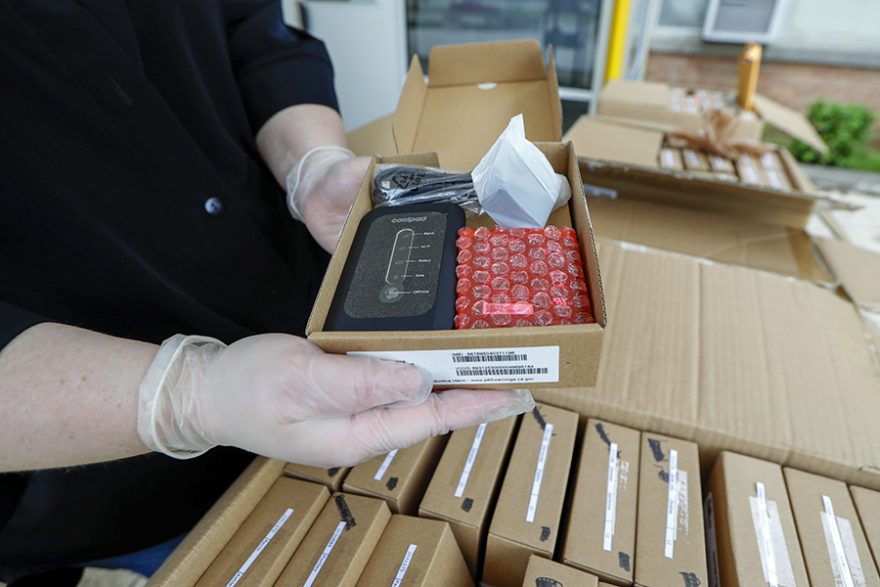
Several articles in the US this summer focus on the establishment of the Emergency Connectivity Fund – designed to reimburse schools and libraries for equipment and costs incurred to enable students, staff, and patrons who lack internet access to engage in remote learning.

“internet access has shifted from an amenity to a necessity. Nothing has illustrated that shift more clearly than the pandemic… But for the millions of students and families without internet access at home, adapting to the virtual classroom became extremely challenging, if not impossible.”

For Families Who Lack Reliable Internet Access, Help Is on the Way — $7B of It,
EdSurge

Acting FCC Chair Rosenworcel Unveils Proposed Rules for Emergency Connectivity Fund, FCC

What You Need to Know About the Emergency Connectivity Fund, THE Journal

The FCC’s $7 Billion Fund to Address the ‘Homework Gap’: 6 Key Issues to Watch, EdWeek Market Brief

Beyond funding, a number of articles over the past year have highlighted both overall strategies for increasing internet access and specific initiatives designed to connect students in urban as well as rural areas.

How to Expand Home Internet Connectivity for K-12 Students Over the Long Haul, Education Week

If you build it, they will learn: Why some schools are investing in cell towers, NBC News

Philadelphia widens free internet eligibility for families with children in school, Chalkbeat

Philadelphia expanding ‘PHLConnectED’ free student internet program, KYW Newsradio

Philadelphia School District Repairing Thousands Of Chromebooks For Free As Students Return To Classrooms Next Week, 3CBS

Connecticut Gives Every Student a Computer and Home Internet to Close the Digital Divide, EdSurge

Citing remote learning needs, Cuomo calls for $15-a-month internet cap for low-income NY families, Chalkbeat

Chicago helped 55,000 students get free internet. Much work remains, Chalkbeat

In Rural ‘Dead Zones’, School Comes on a Flash Drive, The New York Times

These Buses Bring School to Students, The New York Times

Sitting on the Roof at Night for Internet: Pandemic Learning in the Navajo Nation, EducationWeek

Lessons In Leadership: How a superintendent tapped SpaceX to help close homework gap, K-12 Dive

In India

Articles over the past year in India, highlight strategies that work to connect students to remote learning through the internet, television, radio, and other means.

“Remote learning during the pandemic has been painful, even for children with the best computers and broadband. Imagine trying to do it all on a cheap cellphone with a 2G connection”

Think Remote Learning Is Hard? Try Using a Phone in an Indian Village, Wall
Street Journal

Jharkhand to set up gadget bank to facilitate online classes for underprivileged kids, The New Indian Express

Learning Through Radio And Television In The Time Of COVID-19, India Education Diary

Karnataka to bridge online school learning gaps by installing TV sets at 5,766 gram panchayat libraries, The Indian Express

Now Odisha turns to radio for classes, The Hindu

Community radio-based blended learning model: A promising learning model in remote area during pandemic era, ScienceDirect

Telangana schools to have chatbot to assess students work, Times Now News

Bright spots in remote learning: lessons from India and Sierra Leone, Education Development Trust

Navigating Education in 2021: From Remote Learning to Blended Learning, Central Square Foundation

Internet for all – Why not now?

How can we expect to effectively reimagine education post-covid if we do not have the capacity or the will to solve problems that, for the most part, we know how to solve? In Part 1 of this post, Thomas Hatch brings together a few of the many articles that show that providing internet access to all is an enduring problem despite the evidence that many disconnected students and families could be connected using available approaches. Part 2 will provide links to some of the approaches that are being pursued to work on the problem. This article is one in a series of articles looking at what can and should change in education post-pandemic.

What can change in schools post-pandemic? We can provide internet connections and access to devices. But do we have the capacity and the will?

Like other basic utilities, internet connections and access to devices could provide a foundation for more equitable access too educational opportunities around the world. It is no panacea, of course, as adding more connected devices does not necessarily mean that students will learn more. Further, for some time in, particularly in some parts of the developing world, radio and television – rather than internet connections – are likely to continue to provide educational access as they did during the pandemic’s school closures.  yet even in the US, the pandemic exposed that many students who could be connected are not connected, and a recent report from New America shows that many more are underconnected, with insufficient and unreliable access to the internet and to internet-connected devices. In fact, 65% of US families surveyed said their children couldn’t fully participate in remote learning because they lacked access to a computer or internet. The families most likely to lack sufficient internet bandwidth and devices? Black and Hispanic families and families living below the federal poverty line: n

  • Among families who have broadband home internet service:
    • 56 percent say their service is too slow.
    • 18 percent say their service has been cut off at least once in the past 12 months due to trouble paying for it.
  • Among those who only have internet access via a smartphone or tablet (mobile-only access):
    • 34 percent say they hit the data limits in their plan at least once in the past year, preventing them from being consistently connected to the internet.
    • 28 percent say they have a hard time getting as much time on devices as they need, because too many people are sharing them.
    • 16 percent say their mobile phone service has been cut off at least once during the past year because they could not pay for it.
  • Among those with a computer at home:
    • 59 percent say it does not work properly or runs too slowly.
    • 22 percent say it is hard to get time on it because there are too many people sharing it.
  • The proportion of lower-income families who are under-connected hardly changed at all between 2015 and 2021—despite large increases in rates of home broadband and computer access.
  • Learning at Home While Under-connected: Lower-Income Families During the COVID-19 Pandemic, New America

This brief scan of articles published this year exposes the depth of problems as well as some of the solutions that are already being pursued. But the critical questions remains: if we can’t or won’t adequately pursue problems of inequitable access and outcomes when we have viable strategies to use, when should we expect to address the problems that we do not yet know how to solve?

if we can’t or won’t pursue the problems of inequitable access and outcomes when we have viable strategies to use, when should we expect to address the problems that we do not yet know how to solve?

Documenting the challenges:

An Education System, Divided: How Internet Inequity Persisted Through 4 Presidents and Left Schools Unprepared for the Pandemic, the 74

The Digital Divide Has Narrowed, But 12 Million Students Are Still Disconnected, EdSurge

“In a patchwork approach born of desperation, they scrounged wireless hot spots, struck deals with cable companies and even created networks of their own. With federal relief money and assistance from state governments and philanthropists, they have helped millions of students get online for distance learning”

‘Big Burden’ for Schools Trying to Give Kids Internet Access, Education Week

Nearly a Year Into Remote Learning ‘Digital Divide’ Persists as Key Educational Threat, as Census Data Show 1 in 3 Households Still Struggling With Limited Tech Access, The 74

Millions of Students Are Still Without WiFi and Tech—Why Haven’t Policymakers Stepped Up?, EdSurge

“’We have a fiduciary responsibility to our shareholders,’ said Comcast spokesman Charlie Douglas, who noted that his company is currently part of hundreds of K-12 agreements. ‘No single company can fix this with a flip of the switch.’ …As a result, districts are scrambling to figure out what happens next.”

Millions of Students Got Free Home Internet for Remote Learning. How Long Will It Last?, Education Week

S.C. Department of Education to shut down hotspots over the summer, WRDW

Broadband Mapping Across the US: Local, State, And Federal Methods & Contradictions, Next Century Cities

Student Home Connectivity Study, CoSN

Broadband Data and Mapping: Background and Issues for the 117 th Congress, Congressional Research Service

The wires may be there, but the dollars aren’t: Analysis shows why millions of California students lack broadband, CalMatters