In October’s Lead the Change (LtC) interview Bernardo Feliciano’s discusses his work through the AITeach Co-design Lab at UMass Lowell; this work brings educators, researchers, and technologists together to co-create strategies and tools for teaching in this age of AI. The LtC series is produced by Elizabeth Zumpe and colleagues from the Educational Change Special Interest Group of the American Educational Research Association. A PDF of the fully formatted interview will be available on the LtC website.
Lead the Change (LtC): The 2026 AERA Annual Meeting theme is “Unforgetting Histories and Imagining Futures: Constructing a New Vision for Educational Research.” This theme calls us to consider how to leverage our diverse knowledge and experiences to engage in futuring for education and education research, involving looking back to remember our histories so that we can look forward to imagine better futures. What steps are you taking, or do you plan to take, to heed this call?
Bernardo Feliciano (BF): Currently I am working with colleagues to build a co-design lab that brings together educators from very different contexts to develop approaches to teaching and learning in a world where generative AI is a reality. The lab is called the AITeach Co-design Lab @ UMass Lowell. (The hyperlink goes to one of many one-pagers we have been developing for partners representing different disciplines and sectors).
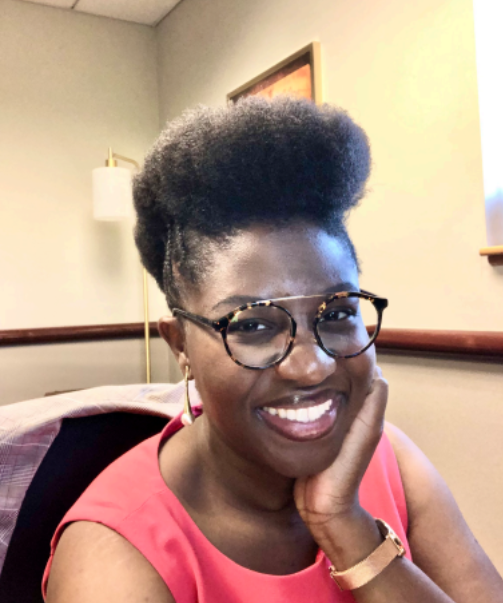
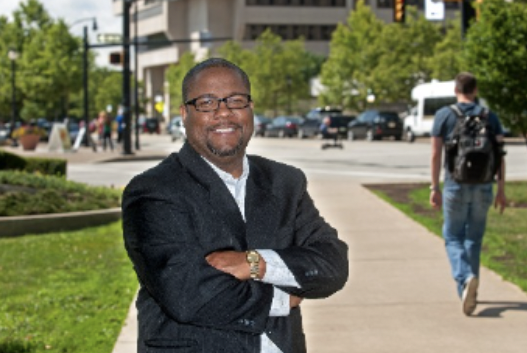
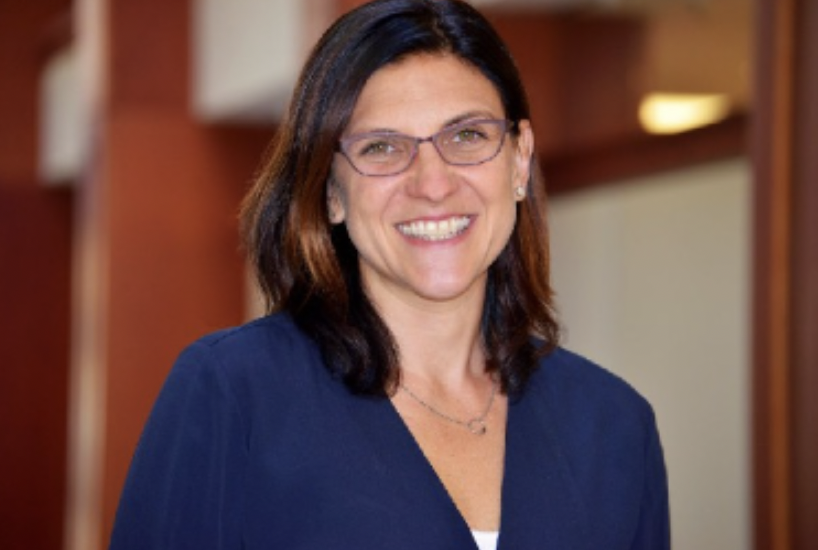
Bernardo A. Feliciano, Ph.D.
In the AITeach Co-design Lab, as collaborators we aim to create a structured space where we as a diverse group of educators, researchers, and technologists co-develop practical tools, strategies, and prototypes that respond to the reality of generative AI in education. The intention is not only to design usable products but also to study how to structure co-design itself to help schools navigate AI’s challenges and opportunities. In our co-design sessions, educators, researchers, and technology build spaces where we can address challenges in education and AI that are too complex for any one actor to solve (Snowden & Boone, 2007; Senge, 1990). The Lab functions as a structured environment where we can bring our problems of practice, iterate on small pilots, and use those cycles to build local capacity rather than waiting for top-down policy.
As an adjunct professor, I am also teaching a class on family and community engagement with schools. These roles constantly remind me that people bring distinct personal, professional, and institutional histories into every space. For me, futuring is less about projecting a single vision of “Education with a capital E” and more about the relational, actor-to-actor work of helping people shape their futures from the personal, professional, and institutional histories they inherit. That’s the direction my work is taking me.
The way I approach this is by convening diverse groups around developing tangible projects. The process matters as much as the specific product, whether it’s a research article, curriculum binder, a chatbot teaching/learning companion prototype, or a strategy for helping parents connect to schools. What is essential is how people can communicate their histories, connecting, adapting, negotiating, and reworking them to address problems in the present into a viable future. The varied personal and institutional histories participants bring are neither external resources to be tapped nor barriers to be overcome, but active materials in our negotiation of effective, situated teaching and learning. Innovation emerges as members work through these histories, adapting them in relation to one another to meet particular needs. I may not care whether my own work is labeled research, practice, or a mix of both, but as co-designers we must respect each other’s perspectives, even as those perspectives shift through negotiation. AI brings this into focus. At its core, AI is an immense bank or reservoir of the past, trained on and providing access to what is already known or has already been done. The future is not contained in the AI itself—nor can it be left to AI to imagine for us. The future comes from how we draw on that past to build something meaningful with and for the people in front of us. We explore generative AI as both a design partner and an object of study. Co-designers prototype tools like tutoring agents or parent communication bots, while also interrogating what it means to teach with, against, or around AI in everyday classrooms.
Of course, I have to use my own history, experience, and learning as a researcher, teacher, administrator, entrepreneur, and non-profit professional to leverage the network of histories that generative AI offers. But more than before, I can inform, contextualize, and connect the convening and teaching I do now with the work of so many more people and peoples (to some extent) who came before.
LtC: What are some key lessons that practitioners and scholars might take from your work to foster better educational systems for all students?
BF: One lesson is that teachers cannot be treated as passive implementers of someone else’s design. Too often, educational change is imagined as developing a curriculum or program in one place and distributing it everywhere. That assumes context does not matter and is peripheral rather than integral to learning and teaching. Our relationship to knowledge is always relational and always contextual.
Education has always lived in the complex space where cause and effect are only clear in hindsight (Snowden & Boone, 2007). Simon (1973) describes these as ill-structured domains existing in a state of dynamic heterogeneity in which diverse elements and relationships continually shift, preventing stable equilibrium and requiring ongoing adaptation (Pickett et al., 2017). Ill-structured problems cannot be solved by importing outside solutions but only by negotiation among those struggling with them. I do not believe that educational change—or improvement—comes from a fixed product or process delivered with fidelity. It is an ongoing process of learning through which people shape what they inherit—choosing what to keep, what to adapt, what to reject, and what to forget. It is a process I have found universally involves dynamics of local alliances, conflicts, and negotiations. The lesson I take from this is that if you want to improve schooling, you have to engage with the people who are doing the teaching and learning.
“We explore generative AI as both a design partner and an object of study . . . If you want to improve schooling, you have to engage with the people who are doing the teaching and learning.”
Working on my dissertation underscored this point. I wrote about using one-on-one meetings in a researcher-practitioner partnership to organize co-designing a computer science (CS) curriculum for middle schools. My experience brought home to me that there is no such thing as “shared understanding.” What emerges is never a single, final agreement but alignment good enough to act together, sustained through negotiation as perspectives shift. For example, teachers and researchers sometimes differed on how much detail a lesson plan should contain. Some wanted highly specified steps, others only broad outlines. Rather than force uniformity, we kept both versions and moved forward. That flexibility allowed the work to continue without pretending the difference had been resolved.
My work with different kinds of organizations has shown me how funding and infrastructure shape what is possible. This point is kind of obvious but still seems to bear repeating. Creativity and goodwill are not enough without sustainable and intentional support. For example, in the CS Pathways partnership, we shifted from MIT App Inventor to Code.org’s App Lab during remote learning. That solved one problem but created new ones around district procurement and accounts, showing how infrastructure shapes outcomes. In our recent Lab kickoff meeting, one participant noted that even when AI-enabled data tools existed, district procurement rules blocked their use — showing how funding and infrastructure filter what is possible.
At the same time, I saw that students’ and teachers’ own histories can be powerful resources for change, if we work out how to support them as they need to be supported. In one part of the CS Pathways project, students framed their app design around civic issues in their community, such as neighborhood safety and access to resources. Their lived experiences pushed the curriculum beyond abstract coding skills into work that mattered locally. This reframed computer science as a civic as well as a technical practice and shaped how we sequenced and supported instruction in those classes.
LtC: What do you see the field of Educational Change heading, and where do you find hope for this field for the future?
BF: In my experience, the field often moves toward building monoliths: “the system,” “the conceptual framework,” “the workforce,” “education technology.” Instead of these monoliths, we need to work with lesson plans and pacing decisions that make up “the system,” the overlapping frameworks that guide practice rather than a single “conceptual framework,” the varied teacher and student histories that constitute “the workforce,” and the specific tools and artifacts, from binders to chatbots, that become “education technology.” Monoliths can make things easier to talk about but also risk obscuring the negotiations and translations that are inseparable from those very systems. These relational dynamics are not add-ons. They are the system itself, as much as the actors are (Latour, 2005). As in the earlier example of teachers’ differing preferences for lesson plan detail, the system took shape through the negotiation itself, not through a fixed agreement imposed from outside.
“Relational dynamics are not add-ons. They are the system itself.”
I would like to see the field shift toward paying closer attention to the actor-to-actor interactions and dimensions. That is where change takes shape: when people with different histories and contexts negotiate how to carry those histories forward. I see promising work moving in this direction: Playlab.ai’s participatory approach to AI tool-building, Victor Lee’s co-design of AI curricula with teachers, Penuel and Gallagher’s (2017) and Coburn et al.’s (2021) and others’ emphasis on research–practice partnerships , and Bryk et al.’s (2015) improvement science cycles. The Cynefin co-design principles we are enacting in AITeach — probe, sense, respond — are themselves evidence of a field moving toward valuing negotiation and adaptation over fixed models (Snowden & Boone, 2007).
This is also where I find hope. In my dissertation research, I have seen how a small change in the structure of a meeting can reshape how colleagues relate to one another. Having a teacher go first in one-on-one meetings shifted the dynamic, allowing their concerns to set also frame a negotiation rather being a response to requirements. I have seen middle school students reframe ideas in ways that exceeded what I could have planned, such as attempting to build an app to help students and teachers share resources more effectively in school. Students translated apps they were familiar with into tools for their own purposes, which required reimagining instruction around their designs rather than trying to make pre-existing apps seem interesting. This approach may cause an instructional headache but least it provided an authentic motivation for learning an aspect of coding.
Some might call this the interest or work “micro-level,” but I avoid that term because it suggests hierarchies and fixed layers. I prefer to describe it as the translational dimension: the ongoing work of shaping futures from inherited histories by deciding what to keep, what to adapt, and what to let go.
What’s changing in the China’s education system? What might change in the future? Those are some of the questions that Thomas Hatch asked Yong Zhao about in preparation for a visit to China last month. Zhao was born in China and now works all over the world, including in China, exploring the implications of globalization and technology on education. In part two of this interview, Zhao offers his impressions of recent changes in addressing students’ mental health and discusses the broader context of the Chinese education system and some of the challenges and opportunities for changes in the future. In the first part of the interview, Zhao shared his observations about some of the educational innovations he’s seen, and he’s been involved in China.
Thomas Hatch (TH): In the first part of our conversation, you shared a number of examples some new schools and educational developments in China. In other places like Finland, the US, and even in places like Vietnam and Singapore, I’ve also seen more attention to students’ mental health. Have you seen any initiatives related to supporting students’ healthy development or mental health and well-being in China?
Yong Zhao (YZ): I think that is happening because they’re adding more psychiatrists, more psychologists or “psychological teachers” to schools. Those never existed in China until recent years. So that’s a beginning. But also, traditionally, teachers of Chinese have had a responsibility for psychological support, though they may not have specific training for it. But the approach in Chinese culture is also different from the western way of constructing psychological and mental well-being. In the West, I think we sometimes misunderstand psychological issues because we just describe them, we measure them, we test them. And we have a handbook that defines what’s considered mental health. I’m quite worried about this. Is this a good thing to do?
It’s similar with what’s considered special education in China. Asian countries definitely have a very different definition. There the term applies primarily to those who have a major disability. But now the Western movement of attending to ADHD and learning differences is slowly spreading, though they are not being addressed in schools.
TH: When you say you think that the approach to psychological well-being and health is different in China, how would you describe it?
YZ: First, I’m not a researcher in that area, so I cannot describe it, but I’m very worried about the Western definition going into China and getting applied in that cultural context. I’ve always worried about what is China and what is the Western way of doing things? I’m struggling with this.
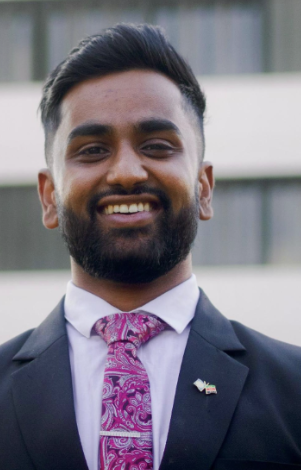
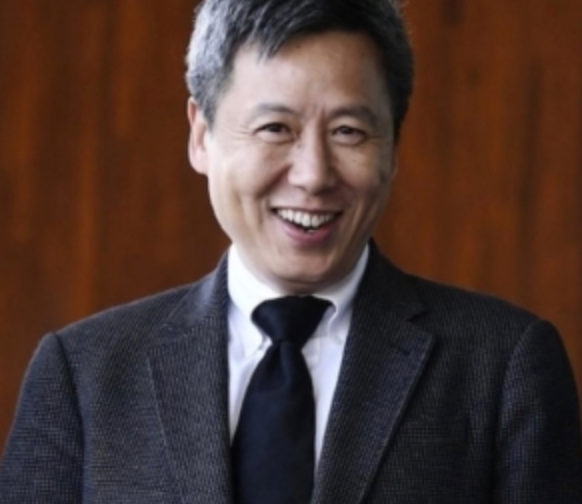
Yong Zhao
But one thing I want to emphasize is people always think I’m critical of China, but I’ve said, “I’m critical of everybody.” This is very important. I don’t think anyone has got it right. If someone had it right, we could retire. And some people say, “you’re pro- America.” And the truth is, I’m more critical of American education than other places. I think there is an interesting question about whether the Western way is the right way of doing this. when you think about well-being, I’m not sure because when you look you can see there is widespread misuse of special education, misuse of mental health issues, and I think there are a lot of problems that arise with psychiatrists and psychoanalysts. Many things are happening
“I’m critical of everybody. This is very important. I don’t think anyone has got it right. If someone had it right, we could retire.“
TH: One of my goals is to understand what’s changing within a Chinese context and to think about the cultural, economic, and geographical conditions or “affordances” and what they can tell us about the possibilities of educational change. Can you give us your sense of the Chinese conception of development overall and the purposes and aims that underlie Chinese education?
YZ: Right now, I think China is quite misunderstood. People are easily influenced by media stories. You and I started this conversation talking about how schools don’t change, but like Larry Cuban has said, changes are like a breath on the window in the wintertime. You breathe on the window, and something happens, but then you’re gone, and it’s gone. We need to keep that in mind. Schools do not change, but they’re always changing. This is what I love about it. It’s happening all the time. Every week, for example, I receive emails from someone who is discussing innovation somewhere. Innovation is still there. But how come most schools don’t change? But schools actually do change because they do little things. When you refer back to the grammar of schooling, the grammar in schools hasn’t changed in a long time. But at the same time, there are activities that are changing. So, we need to consider how big a change is a change. That’s another thing to think about.
“Schools don’t change, but they’re always changing. This is what I love about it. It’s happening all the time. Every week, for example, I receive emails from someone who is discussing innovation somewhere. Innovation is still there. But how come massive schools don’t change?“
We also have to think about the diversity of the student population and who is benefiting from doing what. That’s another thing we normally don’t talk about. We talk about education innovation for all students, but not necessarily everybody benefits from the same allocation of time. I’ve not written this yet, but I’m working on this now. Another reason education doesn’t change is that whenever you change a school, you change the entire school, but the needs of the local community are always diverse. Whatever you change it into becomes a monopoly, so you never meet everyone’s needs. What I’m trying to do is to say schools should build many schools within a school, so you actually have diversity, allowing certain schools to grow within your school to meet the needs of the community. That’s my recent theory; trying to go in that direction.
TH: Your comments about change and the grammar of schooling are fascinating because the “grammar” hasn’t changed, but only if you look back within the modern, industrial era. Because if you think back beyond 100 or 120 years — if you go back far enough – some key aspects of schooling have definitely changed. So, it’s a question of perspective. If today, instead of trying to produce changes that we’re going to see tomorrow, we’re actually looking ahead to 40 or 50 years, we might be much more successful if we can be strategic in terms of enabling schools to shift over the long-term. As you look ahead and think about what could or what might happen in terms of Chinese education, do you see ways that it is changing or that it could change in the future?
YZ: What is going to happen in China? First of all, in any foreseeable future, China will not drop the Gaokao, the national exam to select students for university. The Chinese people value college credentials very much. I used to joke about how much Chinese love credentials. Even if they don’t know how to drive, they want to buy a driver’s license, they just want that damn thing. So that will not change. But the Chinese government has been trying very hard to adjust the numbers of students going to high schools and universities and to vocational high schools. Now, at the end of 9th grade, the students are divided into two groups by the Gaokao. It’s like the German system used to be. The highest scorers on the test go to the general high school and then they go to college. Another group goes to the vocational, technical high school, and then you go to the workforce. There’s a lot of problems with that, and right now they’ve changed the quotas so that more students are supposed to be sent to vocational schools. So, they’re trying to adjust that.
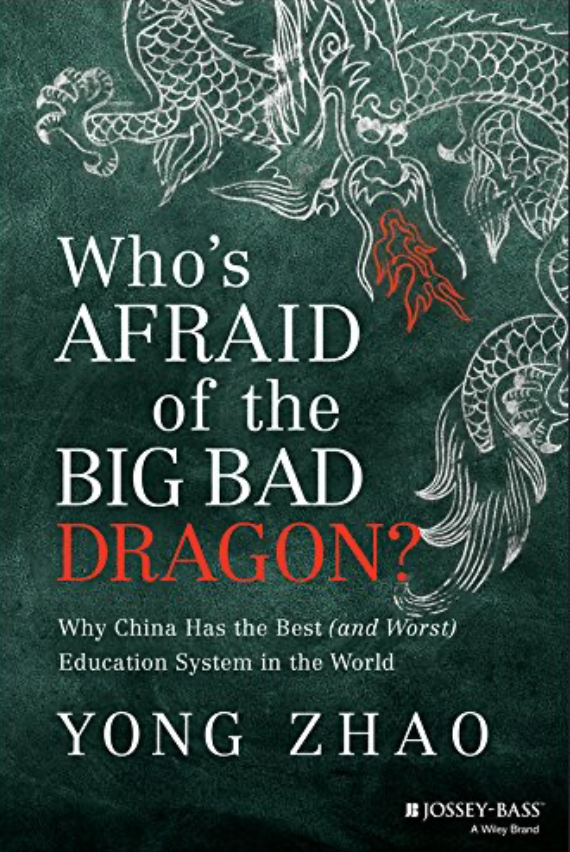
But my view is this. I think I wrote in my book “Who’s Afraid of the Big Bad Dragon” that in China, the big problem is that no matter what you do, people will think there is always one best college – for example, Tsinghua or Peking University – and you can only take in so many kids no matter what you do. So, no matter how you change the exam, there are only so many kids who can go in. That is a huge problem. So, the Gaokao will dominate for a long time, and you will have a lot of kids dropping out of the education system before 9th grade if they’re not getting on the path to the best universities. It’s just that, basically, there’s no point to stay in the system. So, that’s not going to change.
What is going to change? Is after school, weekends. I also think that because of the access to technology and the quick spread of AI, you will have a group of students who, in a sense, are already pre-selected to get into general high schools and to prepare for the colleges. But you will also have a lot of students who have decided “I’m not going to college. I can’t go to college.” Those places with those students might see some changes, and those schools that have those students are not visited and are not understood by people. You know, if you go to a county level, they have high schools, and those high schools don’t have the best students because the best students have been sent to the provincial capital. I don’t think people understand the experiences of those kids who aren’t going to college, what their life is, and you might see some significant changes in those places.
“If you go to a county level, they have high schools, and those high schools don’t have the best students because the best students have been sent to the provincial capital. I don’t think people understand the experiences of those kids who aren’t going to college, what their life is, and you might see some significant changes in those places.”
TH: That’s fascinating, and it connects with Clayton Christensen’s notion that disruptive innovation emerges when there are people who are unserved, and I think you’re identifying in China that there are students who in a sense are not served by their schools or colleges. It could be fascinating to see what might develop there, particularly given the development of technologies and the spread of internet and AI.
YZ: There’s another thing that will affect China a lot, and that’s the drop-in birth rate. Right now, China is graduating over 11,000,000 college students, but the birth rate last year in China was closer to 9 million. As a result, a lot of elementary schools and kindergartens are closing because they don’t have enough students. But now there are groups of private colleges, smaller colleges, and they’re actually trying very hard to get kids in because that’s how they make money. Imagine what would happen if you opened all those places and take in every kid into college?
Dr. Yong Zhao is a Foundation Distinguished Professor in the School of Education at the University of Kansas and a professor in Educational Leadership at the Faculty of Education, University of Melbourne in Australia. He previously served as the Presidential Chair, Associate Dean, and Director of the Institute for Global and Online Education in the College of Education, University of Oregon, where he was also a Professor in the Department of Educational Measurement, Policy, and Leadership. Prior to Oregon, Yong Zhao was University Distinguished Professor at the College of Education, Michigan State University, where he also served as the founding director of the Center for Teaching and Technology, executive director of the Confucius Institute, as well as the US-China Center for Research on Educational Excellence. He is an elected member of the National Academy of Education and a fellow of the International Academy of Education.
What’s changing in China’s education system? What might change in the future? Those are some of the questions that led Thomas Hatch to spend almost a month in China this spring. In preparation for that visit, he talked with Yong Zhao to get his perspective on what’s been happening in education in China in the past few years. Zhao was born in China and now works all over the world, including in China, exploring the implications of globalization and technology on education. In the first part of this two-part post, Zhao shares his observations about some of the educational innovations he’s seen in China and about some of the work he’s been involved in there. In part two, Zhao offers his impressions of recent changes in addressing students’ mental health and discusses the broader context of the Chinese education system and some of the challenges and opportunities for changes in the future.
Thomas Hatch (TH): You’ve written extensively about China in the past, but I’m particularly interested in what’s happening in the Chinese education system over the last few years. Are you seeing some innovations or changes in classrooms and schools in China since the COVID-19 pandemic and the school closures?
Yong Zhao (YZ): I think there’s a huge hunger for innovation in China. Let me give you an example. I was just talking to a group of school principals and heads of the Education Commission in the Chaoyang District in Beijing. It’s the largest district in Beijing, and it’s where most of the embassies and many foreign companies are located. We were planning to do a summer camp for students from different countries based on my education philosophy, which is very much child-centered, focused on uniqueness, personalization, project-driven instruction, and problem-solving. We wanted to make the camp very big, involving kids from different countries, and they were open to the idea. Alongside the camp, we planned to organize learning festivals to discuss topics like artificial intelligence and what I call “Re-globalization.”
We started this conversation in January, and the issue is that very few schools outside China are willing to send their students and teachers here at the moment, so we’re planning to do it next year. But this kind of summer camp is something I began working on before COVID, in May 2018 in Chongqing. Every year since, we’ve been running similar innovative programs in the summer. Even during COVID, we tried it out. The first year in Chongqing, we had students from US schools, Australian and British schools, with hundreds of students and teachers staying in the same dorms, interacting.
In addition, in the public schools in Chongqing, we have students enrolled in a special course I helped design called ICEE, which stands for innovation, creativity, and entrepreneurship education. It’s expanding in the public schools even though students have to pay extra to participate, which shows that parents and schools are interested in it. Beijing Academy is another school that is particularly innovative. I was partially responsible for co-designing that school. We formed a global advisory group, including people like Richard Elmore and Kurt Fischer and Ron Beghetto. It was an international collaboration. They built a brand-new school based on our advice. It just celebrated its 10th anniversary in Beijing. Now they have over 9 or 10 campuses.
I think this shows that many parents and students and teachers actually want change. You cannot make massive changes like, for example, saying, let’s forget about the major policies like the double reduction policy, but many people are still trying to find ways to change. It also shows that working in the Chinese education system might be one of the most difficult things in the world. On the one hand, you have to do this. On the other hand, you have to do that. But ultimately, your school’s reputation matters, and innovation as a school leader in China is crucial.
“I think working in the Chinese education system might be one of the most difficult things in the world. On the one hand, you have to do this. On the other hand, you have to do that. But ultimately, your school’s reputation matters, and innovation as a school leader in China is crucial”
TH: So, on the one hand, you can’t do anything, but on the other hand, you have to do something…
YH: Yes, exactly. It’s fascinating. I’m puzzled by this system, you know? Right now, I’m getting older. When I was younger, I didn’t really think a lot about it, but I cannot think of how human societies can be organized like that. You cannot do anything, but you have to do something. It’s a fascinating way to think about it, isn’t it?
TH: It is! But if we step back for a second and try to characterize what’s happening with educational innovation overall right now, my understanding is that the education ecosystem in China has contracted. There were more innovative schools and smaller schools starting, more tutoring programs, more after-school programs. But now, following the school closures and the double reduction policy, in a sense, this seems to be period of consolidation. People I’ve talked to say it’s not a prime time for innovation. Is that the way you see it? (For more on the double reduction policy see “Surprise, Controversy, and the “Double Reduction Policy” in China” and “China reiterates implementation of ‘double reduction’ policy”)
YZ: Yes, your description is right from a general, outside perspective. You can see the contractions. Even the Gaokao has become more nationalized. It was decentralized, with some differences across regions, but it’s gotten more centralized. Now they’re all saying they are using the national tests and very few provinces use their own. The curriculum has become more centralized too with more centrally required courses and teaching materials. But honestly, I think the beauty of the Chinese ecosystem is that, at the same time, children are children, and parents understand that their children, growing up, need innovative education.
They do see the power of artificial intelligence, and AI is becoming more prevalent. They also see new geopolitical conflicts, or what I call “re-globalization.” China always has this happening, and what’s underground is different. Yes, some international schools have closed, and private schools are becoming public. But at the same time, public schools have to become more innovative. The desire for innovation is always there. It’s bubbling up everywhere, but it’s happening. Many local schools have to think about innovation, and even the government, if you look at the most recent speech by the Minister of Education, talks a lot about AI. They are thinking about it in every part of teaching and teacher training. I don’t know how well it’s been implemented, because it’s still very new, but the same is true in the US. China also issued a call last year for schools that were willing to be part of experiments with AI in education. The central government awarded several hundred of these grants to create pilot sites and to spread the message to other places. So, it’s a lot more complex in China than what many people think. The whole system is evolving.
“Yes, some international schools have closed, and private schools are becoming more public. But at the same time, public schools have to become more innovative. The desire for innovation is always there…it’s a lot more complex in China than what many people think. The whole system is evolving.”
TH: Despite that, have you seen some schools or initiatives or afterschool programs or other things that you think are particularly interesting or innovative in the Chinese context?
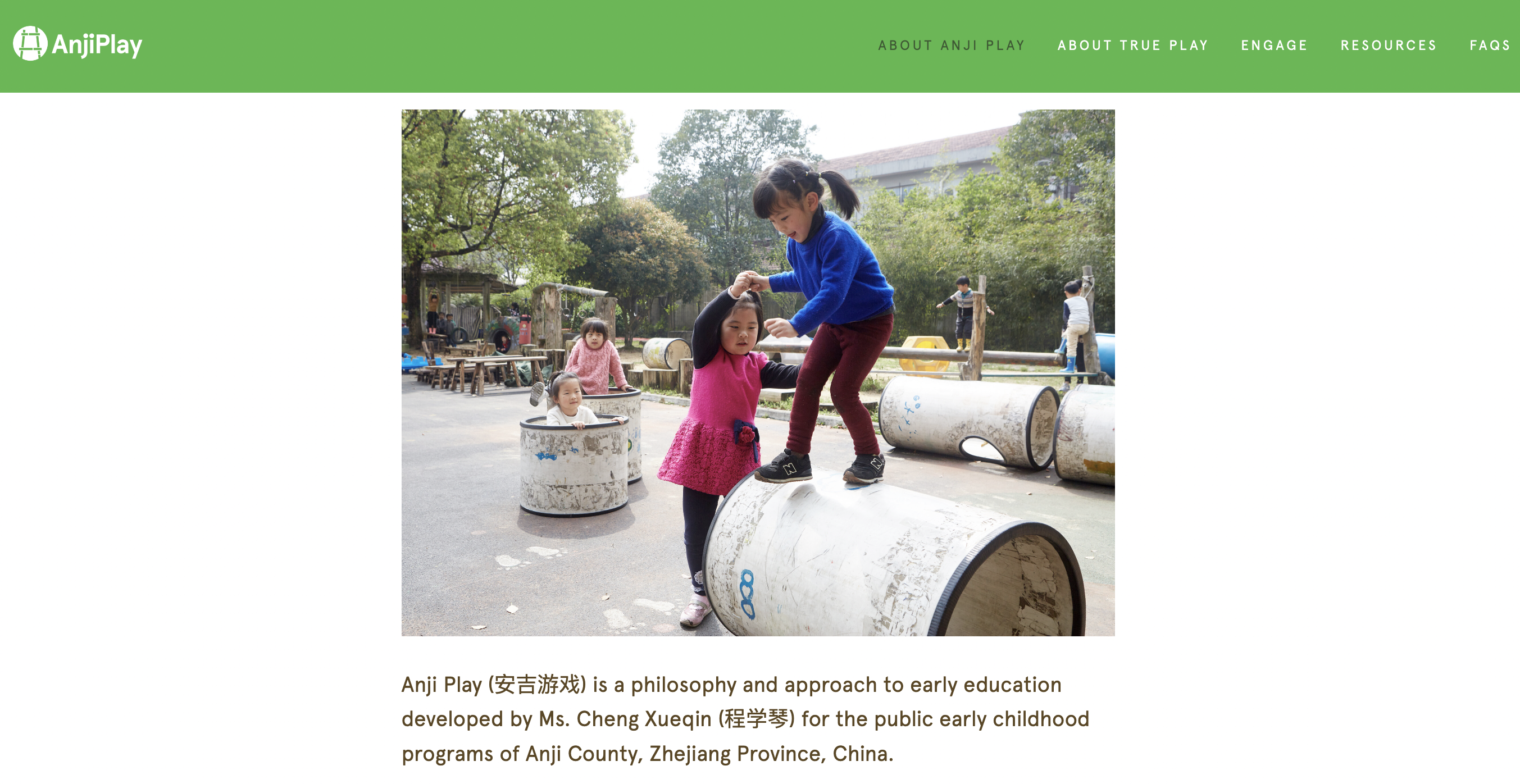
YZ: In the book Let the Children Play, Pasi Sahlberg and William Doyle described an approach in the Zhejiang Province near Shanghai that developed genuine playhouses for preschool and kindergarten (Anji Play). It was really play-driven, play-based, and it started in one kindergarten and then it spread around the whole province. It wasn’t country-wide, but it was a model recognized by the Chinese Ministry of Education, and they began to promote it across the country. I don’t know how it’s going now, but that is something that I think it’s definitely worth looking at.
There are also a number of schools that are trying to do something different. The Beijing City International School just had me visit for three days. Their student population is over 90% Chinese students, and they are struggling with the fact that parents have invested significant amounts of money, expecting their children to attend prestigious universities like Harvard and Columbia. But they also want to change, so they had me over to discuss transitioning to personalized education. Whenever someone has me presenting, they are willing to be challenged.
The Beijing National Day School and a couple of other public schools are also known for being innovative. Another interesting school is the one called #80 Secondary School in Beijing. I was just there, and I was impressed. If you are a good student in some areas, then you don’t have to take certain courses. They would allow you to explore on your own, which shocked me. It’s a Chinese government high school, and it’s quite powerful.
Thomas Hatch: Coming from Teachers College, where there’s a history of connection with China through John Dewey’s visits, I’m fascinated to see that there has been a long-term interest in China in progressive education. As I began to get ready for my trip, I’ve realized there are a number of educators in China over the years, who have become very well known for being innovative and supporting innovative education. Can you talk about any of those enduring traditions related to alternative education?
Yong Zhao: It’s a very interesting question. But first of all, let’s not underestimate the power of the Gaokao – the college entrance examination. Similar pressure is widespread, happening not only in China but also in Japan, South Korea, Vietnam, Hong Kong, Macau, and Taiwan. Let’s not forget that the Gaokao and the imperial exam tradition, dominates and controls parents’, students’, and teachers’ minds. But continuously, there has been talk about change in China, and I’ve found that the conversation about needing a different kind of student from the “Gaokao type” has never stopped. It’s always been there.
Even in the 1950s, Mao was very against the Gaokao exam. Regardless of who he was or what he is – I’m not debating that – he was actually very innovative in education. Ideologically, he never really wanted exams. During the Cultural Revolution, people think he destroyed the Chinese education system. But on the other hand, he was basically saying education does not need to be so pedantic, does not need to be traditional and academic in an ivory tower. He started education in my village. That’s how I went to school. He said education needs to be shorter. It only has to be 10 years and it can happen in rural villages or in factories. If you think about that, that’s very much the progressive tradition. But the long tradition of using exams to select government officials has also always stayed in the Communist education philosophy, and the tradition of using exams to select and reward people is a long-standing cultural problem.
Next Week: Schools do not Change, But They’re Always Changing: A Conversation with Yong Zhao on the Evolution of the Chinese Education System (Part 2)
Dr. Yong Zhao is a Foundation Distinguished Professor in the School of Education at the University of Kansas and a professor in Educational Leadership at the Faculty of Education, University of Melbourne in Australia. He previously served as the Presidential Chair, Associate Dean, and Director of the Institute for Global and Online Education in the College of Education, University of Oregon, where he was also a Professor in the Department of Educational Measurement, Policy, and Leadership. Prior to Oregon, Yong Zhao was University Distinguished Professor at the College of Education, Michigan State University, where he also served as the founding director of the Center for Teaching and Technology, executive director of the Confucius Institute, as well as the US-China Center for Research on Educational Excellence. He is an elected member of the National Academy of Education and a fellow of the International Academy of Education.
Lead the Change (LtC): The 2024 AERA theme is “Dismantling Racial Injustice and Constructing Educational Possibilities: A Call to Action.” This theme charges researchers and practitioners with confronting racial injustice directly while imagining new possibilities for liberation. The call urges scholars to look critically at our global past and look with hope and radicalism towards the future of education. What specific responsibility do educational change scholars have in this space? What steps are you taking to heed this call?
Justin Reich: I’ve had the great privilege of doing a little bit of work with AERA Past President Rich Milner. In a webinar in 2021, Rich explained that twenty years ago he felt isolated and off the beaten path in his work on advancing racial equity in schools. Then, he expressed his excitement at the current surge of interest in these crucial issues. The field caught up to where Rich had been for many years. His welcoming frame reminds me that some work in educational change and improvement hasn’t always centered these issues, and there are other scholars who have been building in this domain for many years. So, as any of us take up this “call to action” to dismantle injustice and construct possibility, we’d do very well to look back on prior bodies of research to discover what we can learn from folks who have been doing the work for some time.
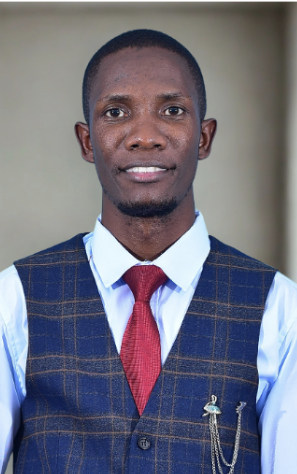
Justin Reich
When you ask about “steps,” it reminds me of some of the research that I did for Iterate. Over the last decade, human-centered design has developed and become more prevalent, as has the field of “Design Justice,” the name of a book by my colleague Sasha Costanza-Chock. And, of course, human centered design has encountered the same turn to anti-racism/ anti-oppression that education reform and many other humanistic endeavors have in recent years. My question was this: In design models that take design justice seriously, does this entail new “steps” in design processes, or new attitudes, frames, and moves within existing steps? In Plan-Do-Study-Act or Design Based Implementation Research or ideo/d.school style Design Thinking, does design justice show up as a new “step” or as modifications to existing phases? My investigation revealed the near universal consensus is that there isn’t a “justice” step. It’s a set of values, mindsets, and actions that affect all the parts of our work.
All that’s to say, in improvement cycles, there probably isn’t a “justice step” or an “anti-racist step” but rather a commitment to those principles throughout our work.
LtC: In much of your work, you offer strategies for teachers and their organizations to approach educational change in manageable and thoughtful steps that leverage strengths. Across this work, what are some of the major lessons practitioners and scholars of Educational Change can learn from your work and experience?
JR: A distinctive feature about improvement work in schools is that the changes that matter most happen in what Richard Elmore called the instructional core, the place where teachers, students, and the resources for learning connect. Schools have lots of other parts–HVAC systems, busses, cafeterias, parking lots, standardized tests, intercoms, and on and on–but if you are interested in improving learning, the action is in the instructional core.
Schools have lots of other parts–HVAC systems, busses, cafeterias, parking lots, standardized tests, intercoms, and on and on– but if you are interested in improving learning, the action is in the instructional core.
The work that teachers do in this instructional core is astonishingly varied and fine grained. On any given school day, we teach kids to sound out diphthongs, tie their shoes, stand in line, factor polynomials, convert carbohydrates to ATP in the Krebs Cycle, conjugate Spanish verbs, hit a shuttlecock with a badminton racket, how to have sex safely, why they should not have sex until marriage, to obey their government, to challenge their government, and on and on and on. So if you are a superintendent with an idea like, “let’s use formative assessment more frequently to guide our instruction,” and you want the school system to use those assessments weekly, then, functionally, you’ve just placed an order for 45 weeks of assessment multiplied by 13 grades multiplied by the number of subjects that you teach in your district. These are not interchangeable assessments: if someone makes a great formative assessment about factoring polynomials it probably won’t help you in evaluating students sounding out diphthongs. In fact, a formative assessment in your earth science unit on meteorology may not help you much in the next unit on plate tectonics.
The only people in the system numerous enough to generate the variety of specific, contextual innovations needed to implement a straightforward change like “add more formative assessment” are teachers. There are simply not enough coaches, TOSAs, APs, principals, central office people, etc. to do that work. So, this is my first point: teacher leadership is absolutely essential to innovation. The only people who can make the fine-grained modifications to each local classroom context are teachers.
So how do teachers choose to adopt new practice? How do they pick up new innovation? If you ask them, as John Diamond did in his article “Where the Rubber Meets the Road” they will tell you their main source of inspiration is “other teachers.” So, every change leadership or innovation problem is actually a peer learning problem.
When you put these two stylized facts together—that teacher leadership is essential to generating innovation and teacher peer learning is essential to scaling innovation, in my mind, you have the basic model for the conditions of innovation. Want new things? Teachers will have to build and adapt them. Want new things to spread and scale? There need to be time and space for teacher to teacher peer learning. Even when you see things that look top down, like some of the science of reading initiatives going on, look under the hood and you’ll see this same basic process. A small cohort of enthusiastic teachers chooses to adopt a new practice, while the bulk are patient pragmatists–participating in limited compliance until they see results and learn from their peers.
In Iterate, I call this the Cycle of Experiment and Peer Learning, and it’s the core model that I use to explain how schools change, and how we can think about supporting that change.
LtC: In your new book, Iterate, you offer different models for envisioning and enacting change. How do you think about balancing the need for immediate change to more equitably serve students and the iterative processes that quality work requires?
If there were known, immediate, dependable, effective steps to improve educational environments or to make them more equitable, we would do them! Even things that work well in one place, do not easily translate to new spaces. They need to be broken apart, reassembled, and grafted into their new environment.
So, to me, “immediate change to more equitably serve students” is not a realistic option. There is only the slow, steady, shoulder-to-the-wheel work of tinkering and incremental improvement. I happen to think iterative cycles of experiment, testing, feedback, and sharing are great ways of doing this shoulder to the wheel work, but there are other more linear models as well.
Change takes time! Start today!
LtC: Educational Change expects those engaged in and with schools, schooling, and school systems to spearhead deep and often difficult transformation. How might those in the field of Educational Change best support these individuals and groups through these processes?
JR: I have a few thoughts in Iterate about this. One is to take joy seriously, and to cultivate environments where faculty sincerely enjoy working with each other, because it’s fun. With the incentives and career ladders that we have in schools, and with the demands we have on teachers contracted time, work on systems improvement essentially takes place during teacher discretionary time. Maybe they’ll make schools better. Or maybe they’ll grade or go home and play with their kids. In my experience, the schools where faculty effectively collaborate with each other are places where the teachers really enjoy their time working together to make schools better. So, joy, enjoyment, satisfaction matter.
On the flipside, we need to acknowledge that all change involves loss. Doing new things involves saying good-bye to old things. Launching new ideas requires leaving old practice behind. That means experienced teachers needing to grieve as they say goodbye to old practices. Even when there is a certain joy in picking up something new, there needs to be time to mourn what we leave behind. Robert Evans The Human Side of Change has good ideas on this.
Take joy seriously and cultivate environments where faculty sincerely enjoy working with each other because it’s fun...the schools where faculty effectively collaborate with each other are places where the teachers really enjoy their time working together to make schools better. So, joy, enjoyment, satisfaction matter.
I also share some research in Iterate that my colleague Peter Senge did with folks at the MIT Sloan School of Management and others. I like to tell the story this way. Peter and colleagues are trying to figure out how to make firms better. Where does work get done in firms? In teams. What do teams do? Well, fundamentally, they communicate and collaborate. What are some of the best predictors of effective communication? One turns out to be “the quality of listening.” Typically, we listen to hear moments in a conversation where we can break in with our ideas, or we listen to see if people agree or disagree with us. But we can also choose to listen to sincerely understand the perspective of others– not to wait to say our next piece, but to really hear another person out. I love this story because these nerdy MIT guys look at firms and economic success and they identify “the quality of listening” as an essential element of success. But of course, the other thing to do is to pay teachers more, which is probably the best way to show and offer support.
LtC: Where do you perceive the field of Educational Change is going? What excites you about Educational Change now and in the future?
JR: There are many folks who know a lot more about the field than I do; in some respects, I approach it much more like a practitioner than a researcher. As an observer of the field, I’m excited about growing interest in issues of racial injustice. I’m also heartened by a general consensus across multiple models–design based implementation research, networked improvement communities, some of Peter Senge’s work on Learning Organizations, and others– about how schools get better. I don’t think Iterate pushes a whole lot of new ground forward in terms of theory or principles, it’s really about getting these ideas to educators in an accessible format. Put another way, we know a lot about the broad contours of how effective school improvement can work: the core challenges are how to implement these sound ideas in the infinite variety of contexts and specifics. Even if we don’t have a map for every context, we have a pretty good compass.
[W] e know a lot about the broad contours of how effective school improvement can work: the core challenges are how to implement these sound ideas in the infinite variety of contexts and specifics. Even if we don’t have a map for every context, we have a pretty good compass.
To me the most exciting thing about this particular moment for working in school change is this: while the pandemic was devastating in many respects for schools, teachers, and students, it also showed how incredibly malleable schools are. Everything we thought was fixed turned out to be contingent–schedules, buildings, routines, busses, grades. As a teacher in Madison, Wisconsin told me, “We know how to change. We’ve been changing every three weeks for the past 18 months.” Teachers are tired and beaten down, but I think this newfound sense of possibility remains a latent seed that we can cultivate and help grow.
In this month’s Lead the Change (LtC) interview Max Yurkofsky shares his experience as an educational change scholar working to dismantle racial injustice and foster collaborative and equitable approaches to spreading educational change. Yurkofsky is an Assistant Professor at Ranford University in the Doctor of Education program. His research centers on how school systems can organize for continuous improvement toward more ambitious and equitable visions of learning. The LtC series is produced by Alex Lamb and colleagues from the Educational Change Special Interest Group of the American Educational Research Association. A pdf of the fully formatted interview is available on the LtC website.
Lead the Change (LtC): The 2024 AERA theme is “Dismantling Racial Injustice and Constructing Educational Possibilities: A Call to Action.” This theme charges researchers and practitioners with confronting racial injustice directly while imagining new possibilities for liberation. The call urges scholars to look critically at our global past and look with hope and radicalism towards the future of education. What specific responsibility do educational change scholars have in this space? What steps are you taking to heed this call?
Max Yurkofsky (MY): Two responsibilities stand out to me. The first is to involve those whom we are trying to serve (and/or whose behavior or beliefs we want to influence) in all aspects of the research and change processes. I am particularly inspired by the work of Brandi Hinnant-Crawford (2020) who pushes leaders to continuously ask “Who is involved? Who is impacted?” when leading improvement, as well as the work of Sasha Costanza-Chock (2020) who articulated the principle that we must “center the voices of those who are directly impacted by the outcomes” of any design or change process.
I’ve tried to align my research and teaching to this principle in a few ways. As I teach in Radford University’s EdD program, which has students inquire into and address a complex problem of practice in their setting as a central component of their dissertation, I’ve tried to develop much more explicit guidelines, resources, and expectations for how my EdD students will involve those impacted by the problems they are trying to address in the research and change process.
I have also tried to center the perspectives of those I am trying to serve in my research. For me, this involves engaging in research on how students and alumni are experiencing our program—what they do, and do not, end up using in practice and why, and what their perspectives on the strengths and limitations of our program are—with the aim of quickly incorporating what we learn into our teaching.
I also am working to collaborate more with educators in the region to see if there are shared problems we might work to address together. This is complex and messy work that I am finding requires a whole different set of skills than what we are trained for in doctoral programs. For example, how to listen for and draw out the problems that are most energizing to educators, how to convene spaces that are engaging enough to regularly draw in full-time practitioners, and how to balance a respect for educators’ busy lives with a friendly push to keep momentum going on shared projects.
The second responsibility of researchers is to interrogate the theoretical perspectives and theories of change we typically rely on: To what extent do these theories account for structural racism? Who developed these theories, and what roles did these theories play in the maintenance of our current system of schooling? What might it look like to infuse these theories with more critical perspectives that grapple with structural racism and other fundamental critiques of our school system?
“Interrogate the theoretical perspectives and theories of change we typically rely on: To what extent do these theories account for structural racism?”
I’ve been particularly excited by how this work is playing out in the field of organizational theory. Most prominently, Victor Ray (2018) has advanced a theory of racialized organizations, which explores the role organizations play in maintaining or disrupting racism in society and calls out the troubling ways in which organizational theory has been color evasive over its history. Inspired by this work, I’m examining some of my favorite theories and considering how they might be made more relevant by centering issues of race and equity. For example, I’m working with Sarah Woulfin on a project related to how institutional logics perspective can better account for structural racism. And, as part of my teaching in the EdD program—which uses improvement science as a signature methodology—I have also worked with my team (Edwin Bonney and Sarah Capello) to identify places where continuous improvement methods can benefit from taking a more critical approach that centers racial justice.
LtC: In your work, you examine continuous improvement as a mechanism for more equitable teaching, learning, and leading. What are some of the major lessons the field of Educational Change can learn from your work and experience?
MY: One central question I wrestle with in my research and teaching is whether the best approach to leading change depends on the kinds of changes we are trying to achieve. For example, are we trying to increase scores on state assessments or are we seeking something more transformational—like dismantling racial inequities or re-imagining the means and ends of schooling?
A dominant perspective in organizational theory, often referred to as contingency theory, proposes that leading improvement in more complex and uncertain domains (e.g., trying to dismantle racial inequities or reimagine schools) requires fundamentally different approaches than trying to support more incremental improvement. More certain and stable problems are often seen as benefiting from quantitative, systematic, and variation-reducing approaches to change (or “ordered” approaches). Meanwhile, complex and uncertain challenges are often seen as requiring more “emergent” (maree brown, 2017) approaches that emphasize exploration, qualitative inquiry, and social learning. The continuous improvement and design methods I study (e.g., improvement science, design-based implementation research, design thinking, and the Data Wise Improvement Process) are interesting and exciting to me in part because they contain a mix of these ordered and emergent approaches.
In a couple of different studies, my colleagues and I have explored whether educators take different approaches to engaging with continuous improvement and design methods depending on the complexity and uncertainty of the problems they are trying to address. One was a 4-year comparative case study of districts using improvement science, design-based implementation research, design thinking, and the Data Wise Improvement Process (with Jal Mehta, Amelia Peterson, Kim Frumin, Rebecca Horwitz, and James Jack). The other was a smaller study with Candice Bocala of two different schools that were using Data Wise to address a problem related to equity.
In both cases, we found that educators did initially experience more success when enacting these methods in more ordered ways to address known problems and more emergent ways to address more complex or uncertain problems. However, we also noticed an important nuance. Educators often ran into problems when leaning too heavily into an ordered or emergent approach to improvement. Instead, the most successful educators learned to rebalance their use of ordered and emergent approaches over time, as they organized for learning on a larger scale and navigated issues of racial inequity. For example, one team focused for many years on developing a valid and reliable practical measure of whether students’ experienced equitable learning environments in the classroom. The team described how they wished they had devoted more attention to supporting educators in interpreting this often-sensitive data to improve their teaching and hoped to accomplish this over the next year of their work.
My hunch is that all educational change efforts consist of different degrees of ordered and emergent approaches. Contingency theory offers a helpful starting point in leading change: it may be useful to begin by taking a more emergent approach to change when addressing complex and uncertain problems (e.g., dismantling longstanding racial inequities, moving towards a more learner-centered vision of instruction), and a more ordered approach when tackling well-known and measurable problems (e.g., improving reading instruction in early elementary school). However, it is essential that leaders recognize that any equilibrium they achieve will be fleeting—that they will need to continuously rebalance over time, especially as they seek to spread change on a larger scale and as they navigate issues of inequity.
LtC: In some of your recent work, you investigate the pressures schools face both to foster equity and increase accountability all within the context of uncertainty. How might these discussions help scholars and practitioners better support schools in making change?
MY: It turns out that what I was learning about the interdependence of ordered and emergent approaches to improvement was a specific example of a broader trend in organizational theory and management research over the past fifteen years. Scholars in these fields are increasingly arguing that, due to the growing complexity, turbulence, and interdependence of today’s world, leaders must navigate intensive and conflicting expectations that can never be fully resolved; they can only be managed. As a result, leaders cannot get away with asking either/or questions (e.g., should I take an emergent approach to change or an ordered approach to change?). Instead, they must ask both/and questions (e.g., how can I effectively balance ordered and emergent approaches to change over time?). This view is typically called the “paradox” perspective.
“The most successful educators learned to rebalance their use of ordered and emergent approaches over time.”
I was drawn to this perspective both because of the studies described earlier, but also because of my work with leaders in Southwest Virginia in the wake of the COVID-19 pandemic and a wave of state and local elections that brought into power candidates who ran against mask mandates and addressing racial inequities in schools. Navigating paradox seemed like an apt way of describing the work of my doctoral students who were seeking to lead equity-focused change in this politicized and racialized context.
In a recent paper with Don Peurach (2023), I sought to use a paradox perspective to make sense of the challenges educational leaders today were facing. As you mention, we conceptualized the paradox facing educational leaders today as resulting from a collision between:
A rationalizing press to use technically sophisticated processes to improve measurable outcomes.
A democratic press to involve historically marginalized communities in defining these outcomes and how they might be achieved.
A more reactionary manifestation of this democratic press, which involves protecting the power of more privileged groups in educational decision-making.
“Our task is to support leaders in striking an appropriate balance of these two approaches in a context that favors one over the other.”
We argue further that this collision is exacerbating entrenched uncertainties that pervade schools related the aims of education and how these aims might be achieved or measured.
How might leaders navigate this complexity? We elaborate two dominant perspectives that are rarely in conversation with one another. One focuses on mitigating uncertainty by building systems, establishing routines, improving measurement systems, and more broadly developing an in-depth and coherent infrastructure around a shared vision. The other focuses on leveraging this uncertainty as an opportunity to question taken-for-granted aims, practices, and measures or to amplify the voices of those who have historically been left out.
Both approaches have a logic and an allure, but also significant drawbacks. We show how reframing these two perspectives as a paradox provides leaders with a framework for navigating these limitations. Specifically, a paradox perspective offers different metaphors and strategies for balancing these seemingly conflicting imperatives over time. It also makes visible a deeper challenge—that in most societies and systems, uncertainty mitigation is seen as the more legitimate approach to leadership. Our task then is to support leaders in striking an appropriate balance of these two approaches in a context that favors one over the other.
To briefly illustrate, lets connect this to the prior discussion of ordered and emergent approaches to change. A common trap that can occur is that, drawing on dominant perspectives on educational change and available sources of data, leaders will not view their problem as deeply complex or uncertain, and will reflexively apply more ordered approaches to addressing the problem. A paradox perspective might help intervene in this dynamic in two ways. First, it may prompt leaders to question why they are gravitating towards seeing the problem as certain (versus uncertain) and using ordered (versus more emergent) approaches to addressing that problem. Second, it reminds leaders of the incompleteness of any approach they take, and thus can help alert leaders to evidence that they are not digging deeply enough into the problem to grasp its full complexity.
LtC: Educational Change expects those engaged in and with schools, schooling, and school systems to spearhead deep and often difficult transformation. How might those in the field of Educational Change best support these individuals and groups through these processes?
MY: Supporting leaders in spearheading deep and difficult transformation requires attention to two seemingly contradictory approaches to change.
One approach is more ordered, systematic, quantitative, and focused on reducing and mitigating uncertainty for all stakeholders. We might say it focuses on the technical side of the change process. The other approach is more emergent, social, exploratory, and attentive to ways of leveraging uncertainty to reach deeper insights. This approach focuses on the relational side of the change process.
Both these approaches are essential to leading transformative change. Leaders need the ability to craft a shared vision across multiple different perspectives and then help educators see the connection between this vision and their own values and aspirations. They need to support educators and community members with the sensitive and high-risk work of critically examining how their own beliefs and practices might be contributing to undesirable and inequitable outcomes. At the same time, leaders also need to provide some stability and order for educators who must navigate enough uncertainty as part of their daily work. They need to find ways of effectively coordinating the work of improvement across different organizational contexts and providing some expectations around where this work is headed. As a field committed to deep and transformative change, I fear that we will leave educators astray if we a) focus too much on either one of these approaches at the expense of the other, or b) allow the work in these two camps to remain siloed from one another.
“As a field committed to deep and transformative change, I fear that we will leave educators astray if we focus too much on either one of these approaches at the expense of the other.”
I encourage scholars and leaders to consider how they might bridge these two approaches in their own work. Those who focus on the technical aspects of the change process might explore further the relational work that must take place for these processes to be carried out effectively. Those who focus on the relational side of change might consider where processes or tools that can scaffold this work for leaders or opportunities to build routines and systems that help capture and store the knowledge that arises out of this relational work.
To further complicate matters, I don’t believe these two approaches are on an even playing field. Not only are technical, ordered, and uncertainty-mitigating approaches to change more legitimated by school systems and society but—almost by definition—these approaches are often easier to operationalize in practice. It is much easier to offer leaders routines, change processes, and measurement tools, and much more challenging to provide guidance on the relational work of carrying out change as part of one’s daily work. Considering this, it might be helpful as a field to look inwardly and continuously assess how well we are balancing technical and relational approaches to change. We might also think about further theorizing and investigating the work of balancing relational and technical approaches in a system that tends to privilege the latter.
LtC: Where do you perceive the field of Educational Change is going? What excites you about Educational Change now and in the future?
MY: What excites me about educational change is just how many scholars and leaders in the field I can turn to for inspiration on some of the things I’ve discussed here, like incorporating ideas about structural racism into the theoretical perspectives that guide our work and involving those who we aim to serve through our research.
For example, as a discipline, organizational theory has historically engaged very little with questions of race, equity, and justice. However, over the past few years there has been a tremendous surge of empirical and theoretical work (from prominent scholars, early career scholars, and doctoral students) applying and extending organizational theory to account for, interrogate, and explain racial injustice. Here, I am thinking of the work of Jeannette Colyvas, John Diamond, Joann Golann, Decoteau Irby, Ann Ishimaru, Maya Kaul, Amanda Lewis, Heather McCambly, Jacqueline Pedota, Sola Takahashi, to name just a few (of many) scholars engaged in this work (see references for examples of these scholars’ work).
I see a similar momentum regarding theories of educational change. As an illustrative example from my own experience, around 2018 I began reviewing the research on continuous improvement and design methods in education for the project I described earlier. At the time, racial equity and justice were typically not central to how scholars conceptualized and studied these methods. As I’ve gone back to the literature over the past couple years, I’ve been amazed by how much things have changed. There is now a wealth of guidance about how to engage in these methods that focuses squarely on how to use these methods to advance racial equity and justice (e.g., Biag, 2019; Bocala & Boudett, 2022; Cohen-Vogel et al., 2022; Datnow & Park, 2018; Farrell et al., 2021; Hinnant-Crawford et al., 2023; Peurach et al., 2022; Peterson & Carlile, 2021) as well as empirical scholarship that interrogates these methods from a critical lens that centers racial equity and justice (e.g., Bush-Mecenas, 2022; Farrell et al., 2023; Sandoval, 2023; Valdez et al., 2020). Virtually of this theoretical and empirical work has been carried out in the context of collaborative research, where scholars are working alongside practitioners to understand and address the problems that are most essential to them.
Each reference I cited is teaching the field something unique about how to enact transformative change. This could result in a dazzling but fleeting fireworks display of a thousand insights branching off into their own corner of the sky. My hope is that, instead, scholars participating in this exciting and important work will engage and connect with one another—even if they are using different methods, in different contexts, or using different theoretical frameworks—so that we can build on what we are learning from this diverse (and ever-growing) field, and, I hope, converge upon new and better theories for how to lead transformative and racially just change in this current moment.
References:
Biag, M. (201). “Navigating the improvement journey with an equity compass.” In R. Crow, B. N. Hinnant-Crawford, & D. T. Spaulding (Eds.). The educational leader’s guide to improvement science: Data, design and cases for reflection. Myers Education Press.
Bocala C. & Boudett., K. P. (2022). Looking at data through an equity lens. Educational Leadership, 79(4).
Bush-Mecenas, S. (2022). “The business of teaching and learning”: Institutionalizing equity in educational organizations through continuous improvement. American Educational Research Journal, 59(3), 461-499.
Cohen-Vogel, L., Century, J., & Sherer, D. (2022). A framework for scaling for equity. Carnegie Foundation for the Advancement of Teaching.
Costanza-Chock, S. (2020). Design justice: Community-led practices to build the worlds we need. The MIT Press.
Datnow, A., & Park, V. (2018). Opening or closing doors for students? Equity and data use in schools. Journal of Educational Change, 19, 131-152.
Hinnant-Crawford, B. N. (2020). Improvement science in education: A primer. Myers Education Press.
Hinnant-Crawford, B., Lytle Lett, E., & Cromartie, S. (In Press). ImproveCrit: Using Critical Race Theory to guide continuous improvement. In E. Anderson & S. D. Hayes (Eds.), Continuous improvement: A leadership process for school improvement
Farrell, C. C., Singleton, C., Stamatis, K., Riedy, R., Arce-Trigatti, P., & Penuel, W. R. (2022). Conceptions and practices of equity in research-practice partnerships. Educational Policy, 37(1), 200-224. https://doi.org/10.1177/08959048221131566
Golann, J. W., & Jones, A. (2021). How principals balance control and care in urban school discipline. Urban Education, 00420859211046824.
Irby, D. J. (2018). Mo’data, mo’problems: Making sense of racial discipline disparities in a large diversifying suburban high school. Educational Administration Quarterly, 54(5), 693-722.
Ishimaru, A. M., & Takahashi, S. (2017). Disrupting racialized institutional scripts: Toward parent–teacher transformative agency for educational justice. Peabody Journal of Education, 92(3), 343-362.
Ishimaru, A. M., & Galloway, M. K. (2021). Hearts and minds first: Institutional logics in pursuit of educational equity. Educational Administration Quarterly, 57(3), 470-502.
Kaul, M. (2023) Mapping the institutional terrain of teacher education: How institutional logics shape teacher education program design. A Paper presented at the American Educational Research Association.
Lewis, A. E., & Diamond, J. B. (2015). Despite the best intentions: How racial inequality thrives in good schools. Oxford University Press.
McCambly, H., & Colyvas, J. A. (2023). Dismantling or disguising racialization?: Defining racialized change work in the context of postsecondary grantmaking. Journal of Public Administration Research and Theory, 33(2), 203-216.
maree brown, a. (2017). Emergent strategy: Shaping change, changing worlds. AK Press
Pedota, J. (2023). Institutionalization of a campus culture center: Exploring racialized administrative burdens faced by students and staff. A paper presented at the American Educational Research Association.
Peurach, D. J., Russell, J. L., Cohen-Vogel, L., & Penuel, W. R. (2022). The foundational handbook on improvement research in education. Routledge.
Peterson, D. S., & Carlile, S. P. (Eds.). (2021). Improvement science: Promoting equity in schools. Myers Education Press.
Ray, V. (2019). A theory of racialized organizations. American Sociological Review, 84(1), 26-53.
Sandoval Jr, C. (2023). Synthesizing as a power-laden facilitation practice in a networked improvement community. Journal of Professional Capital and Community, 8(1), 47-61.
Valdez, A., Takahashi, S., Krausen, K., Bowman, A., & Gurrola, E. (2020). Getting better at getting more equitable: Opportunities and barriers for using continuous improvement to advance educational equity. WestEd.
Yurkofsky, M. M., & Peurach, D. J. (2023). The paradox of leading amidst uncertainty: maintaining balance on an unstable beam. Journal of Educational Administration, 61(3), 185-204.
In this month’s Lead the Change Interview, Elizabeth Leisy Stosich talks about her work focusing on understanding how district, school, and teacher leaders can work together to strengthen the quality and equity of students’ learning opportunities and outcomes. Stosich is Assistant Professor and Associate Chair of the Division of Educational Leadership, Administration, and Policy at Fordham University. The LtC series is produced by Alex Lamb and colleagues from the Educational Change Special Interest Group of the American Educational Research Association. A pdf of the fully formatted interview is available on the LtC website
Lead the change (Ltc): The 2023 AERA theme is InterrogatingConsequential Education Research in Pursuit of Truth and charges researchers and practitioners with creating and using education research to disrupt institutionalized forms of discrimination. The call urges scholars to challenge traditional methods of inquiry in order to create increasingly useful, responsive, and equity-oriented research that can be used by schools to develop informed policies and practices to better support students. What specific responsibility do educational change scholars have in this space? What steps are you taking to heed this call?
Elizabeth Leisy Stosich (ELS): I appreciate how AERA’s theme this year urges us as scholars to take responsibility for critically considering not simply what we research but how we approach our research and the consequences of these decisions. As educational scholars, we are (hopefully) deeply invested in understanding and supporting meaningful improvements in schools and systems. Yet, as educators and scholars, one challenge we face is that we each bring our own biases to understanding problems in education and, correspondingly, the change that is needed. These biases can lead us to define problems and identify solutions in particular ways, ways that may not reflect the actual problem as experienced by those closest it. For example, as a scholar focused primarily on instructional improvement, I can be quick to identify problems as student learning challenges that require new professional learning for teachers and school leaders. When you’re a hammer, every problem requires a nail. For me and many of the educational leaders I work with, we can be quick to see each problem as simply requiring new or different teacher PD. We can also be slow to give up on ideas that we’ve deeply invested in even when they either are a poor fit for the problem or we see little evidence of authentic improvement.
As educational change scholars, I think a central aspect of centering equity and pursuing truth is to engage as partners with the stakeholders closest to the “change.” In improvement science this is often described as being “user” centered. When we partner with practitioners, we need to take time to carefully understand and define the problems we seek to address with our change efforts. These initial decisions have important implications for the change work we take up. I think we are much more likely to be successful in supporting meaningful change when we engage in shared problem diagnosis and solution identification as partners with educators and the students and communities they serve. Through this collaborative process, we can bring more diverse perspectives to defining the problems we center in our change efforts.
Ltc: In your work, you examine relationships between school leaders on decision-making teams and during policy implementation. What are some of the major lessons the field of Educational Change can learn from your work and experience?
ELS: In my own research (Stosich, 2020, 2021) as well as a number of large survey studies one thing stands out: principals think they are involving teachers in decision-making and teachers do not agree. Looking closely at decision-making in instructional leadership teams (ILTs), I found one explanation for this gap; principals typically involve teachers in decision-making only superficially. For example, principals may ask teachers to decide whether or not to move forward with a proposed initiative (e.g., Should we do lesson study?) rather than engaging them more fully as partners in problem diagnosis and solution identification (e.g., How could we work together to strengthen our instruction?).
This is a big problem for two reasons. First, truly engaging teachers as partners in decision-making is a powerful leadership practice because it allows for teachers to draw on their instructional expertise and knowledge of students and colleagues to inform the decision. Second, when principals and teachers make decisions together, principals gain teachers’ commitment for implementation as part of the decision-making process. When principals only engage teachers superficially in decision-making, they don’t benefit from teachers’ knowledge in shaping the decision and are unlikely to gain their commitment for implementing the proposed solution.
“Through this collaborative process, we can bring more diverse perspectives to defining the problems we center in our change efforts.”
Ltc: In your recent work investigating how educators experience policy shifts in high-accountability contexts, you find that policy alignment, thoughtful sequencing, slower pace, and extensive support can be helpful in creating successful change. How might your findings help scholars and practitioners imagine and implement policy changes more effectively?
ELS: I think we would benefit from paying greater attention to the larger environmental conditions we are creating for policy change. What are the conditions we are creating and what do they feel like for the educators responsible for policy implementation?
In a strategy activity in my book with Michelle Forman and Candice Bocala, The Internal Coherence Framework: Creating the Conditions for Continuous Improvement for Schools, we ask educators to reflect on the question: What does it feel like to be a teacher in this school? I think this question is essential in policy change. Do teachers feel like they are focused and engaged in sustained learning in an effort to implement a change that will result in meaningful benefits for students? Or are they overwhelmed by multiple initiatives with little time to really understand and apply new learning about these ideas in their classroom? We typically pair ambitious policy goals with pretty limited support for learning what changes are necessary to meet these goals. Changing practice is difficult and time-consuming work!
My research looking specifically at principals suggests that when principals acknowledge the challenge presented by new instructional policies and frame this challenge as one that requires learning to work with students and content in new ways, they are more likely to close the gap between current practice and policy goals than when they frame the challenge as one of simply executing new approaches (Stosich, 2017). As research from Amy Edmondson and others suggests, when we frame policy change as a “learning” rather than an “execution” challenge, we acknowledge that we don’t know everything we need to know to meet our goals for policy change and, thus, open ourselves to new learning and change. An execution challenge is more appropriate for routine changes, which are rarely the focus of policy change.
In my research with Emily Hodge on the Common Core (Hodge & Stosich, 2022), we found that when policies are introduced in rapid succession even those that are connected and reinforcing can be experienced by teachers and leaders as overwhelming and incoherent. This is particularly true when you introduce high-stakes accountability. We need a supportive environment for learning and change during policy implementation, one that provides the time and support necessary for learning and change before introducing accountability. This should include sustained, job-embedded opportunities for professional learning about the policy change and systems that reinforce and support this learning, such as aligned curriculum and assessment materials and ongoing, developmental feedback for teachers and school leaders.
“Learning is challenging but also rewarding—something we need to acknowledge and celebrate.”
Ltc: Educational Change expects those engaged in and with schools, schooling, and school systems to spearhead deep and often difficult transformation. How might those in the field of Educational Change best support these individuals and groups through these processes?
ELS: Be part of the change yourself! As scholars, we learn and change our thinking all the time (hopefully!) based on new understanding we gain from those with whom we study and work.
We need to share openly with our partners about how we are shifting our beliefs and practice and why. I think this modeling is important for reinforcing the idea that learning and change is an opportunity for growth and not simply an admission of weakness. Just this past fall I really shifted how I think about how people connect and develop relationships through improvement work after a comment from a member of our doctoral program led me to question some of my assumptions. I always assumed that we build the relationships that support our collaborative learning and improvement through working together towards shared goals. A student remarked with some surprise that we seemed to just “get right down to business” working on identifying and addressing problems of practice before really getting to know each other on a more personal level. This comment really struck a chord with me and led me to think more deeply about the very personal nature of change and what relationships could best support our collective change efforts. I tried to reflect openly about this change and how her thinking had changed my own during the course in hopes that this would encourage others to be open to change. I also thanked her—learning is challenging but also rewarding—something we need to acknowledge and celebrate.
Still, change can be personally challenging. Something I read in James Spillane’s (2004) book about standards implementation has stuck with me for a long time: when we ask people to learn new ways of doing familiar things, we risk damaging their self-concept. Essentially, when we ask people to change what they are already doing, we ask them to admit that what they have been doing wasn’t good enough and needs to change. This can feel a lot like telling me that I’m not good enough. I think the change process becomes less daunting when we share openly and model how we are changing our own beliefs and practices. This is important for people in all roles but particularly for leaders—are you asking others to be open to change without being open to change yourself? This creates an inhospitable environment for authentic learning and change, which requires acknowledging the limitations of our current knowledge and being open to new ideas and approaches.
Ltc: Where do you perceive the field of Educational Change is going? What excites you about Educational Change now and in the future?
ELS: I am excited about the more critical lenses educational leaders and scholars are bringing to their work in educational change. In doing so, there has been greater attention to not only issues of achievement and access but also issues of identity and power as part the focus of change. For instance, I’ve had the opportunity to learn from some very exciting work happening in a Bronx Community School District that involves networks of principals working together to address three equity-focused issues: reducing racial disproportionality in chronic absenteeism, strengthening culturally responsive-sustaining education (CRSE), and creating more affirming and inclusive school environments. In my view, chronic absenteeism is an access issue, while the district’s work on strengthening CRSE addresses issues of identity—including ensuring students’ identity is reflected in the curriculum—and power, as they teach students to understand and address systems of oppression. I am energized by the focus on more holistic, student-centered, and culturally responsive discussions of learning and change taking place in so many districts and schools.
My favorite recent book is Decoteau Irby’s Stuck improving: Racial equity and school leadership. One important lesson I took from his research on racial equity improvement is that centering Black and Brown people’s perspectives, what he describes as “Black and Brown people’s influential presence,” is essential for understanding problems and monitoring progress (and setbacks) with attention to the influence of race and racism. This involves much more than simply seeking out the perspectives of Black and Brown youth, educators, and community members on the change work at one point in time. Instead, it involves building the organization—the school or district—in ways that will ensure Black and Brown people are not only present but actively influencing our change work at every step—including the problems we identify, the decisions we make about how to work on them, and all our learning along the way.
References
Forman, M. L., Stosich, E. L., & Bocala, C. (2017). The internal coherence framework: Creating the conditions for continuous improvement in schools. Harvard Education Press.
Hodge, E. & Stosich, E. L. (2022). Accountability, alignment, and coherence: How educators made sense of complex policy environments in the Common Core era. Educational Evaluation and Policy Analysis. https://doi.org/10.3102/01623737221079650
Irby, D. J. (2021). Stuck improving: Racial equity and school leadership. Harvard Education Press.
Spillane, J. P. (2004). Standards deviation: How schools misunderstand educational policy. Harvard University Press.
Stosich, E. L. (2017). Leading in a time of ambitious reform: Principals in high-poverty urban elementary schools frame the challenge of the Common Core State Standards. Elementary School Journal, 117(4), 539-565. https://doi.org/10.1086/691585
Stosich, E. L. (2020). Central office leadership for instructional improvement: Developing collaborative leadership among principals and instructional leadership team members. Teachers College Record, 122(9). https://www.tcrecord.org/Content.asp?ContentId=23383 Stosich, E. L. (2021). “Are we an advisory board or a decision making entity?”: Teachers’ involvement in decision making in instructional leadership teams. Leadership and Policy in Schools, 1-19. https://doi.org/10.1080/15700763.2021.1995879
In place of this month’s Lead the Change (LtC) Interview, Alex Lamb, LtC Editor posed this key question to leaders of several professional organizations in education. Below, we share Lamb’s introduction, her question, and the responses she received. Lamb is a postdoctoral researcher in the Learning, Leadership, and Education Policy program at the Neag School at the University of Connecticut.
Note from Alex Lamb, LtC Editor: This month, we decided to pause our regular format to better respond to the wave of recent Supreme Court rulings deeply impacting the daily lives of millions of educators and school children specifically. These rulings have shaken many of those in our community and ushered in sweeping changes to the systems we rely on for care and learning.
As I read the news, I felt scared, rageful, demoralized, and dehumanized. I thought about how we might use this platform and this community to build coalitions that move us to a better future. In these desperate times, how can we lean on our communities to find solace and energy for the path ahead?
In this issue, we hear from the leaders of professional organizations, AERA (American Educational Research Association), AEFP (Association for Education Finance and Policy), UCEA (University Council for Educational Administration), and our Educational Change SIG chair. In hearing from these leaders, we hope to provide guidance, solidarity, hope, and community. I asked them to respond to the following question:
Recently, there have been a rash of Supreme Court decisions that have fundamentally reshaped American society and schools including women’s rights to bodily autonomy, the use of public funds for religious schooling, and shifting rules regarding prayer in schools. What role do you see professional organizations of education scholarship playing in helping scholars and practitioners navigate these tumultuous and dangerous times?
These leaders all generously offered ideas about how to best move forward in these trying times. I hope you find something in this issue to support and sustain you. These responses helped me to feel less alone, and I hope they can do the same for you. Take care of yourselves.
-Alex
The Work of Consequential Education Research in Pursuit of Truth
H. Richard Milner IV, President, AERA,
Felice J. Levine, Executive Director, AERA
The questions posed to us by the editor of the Lead to Change Series are very timely and complex. There is no single function or role that defines what we do. The American Research Association (AERA) as a scientific member association has multiple tools and approaches at our command consonant with our mission.
On matters of public policy and position taking, AERA has been enabled by a statement on Position Taking and Policy Processes Guidelines adopted by AERA Council in January 2005.1 That document overviews the range of ways that AERA as a professional research association can address significant social policy issues through research. The value of featured symposia, teach-ins, and professional workshops at the AERA Annual Meeting; research briefings to governmental agencies and holding public fora that bring together researchers, policy makers, and practitioners; special issues of journals elevating research and research directions; and professional development workshops to build capacity in the research community are just some of those ways.
When the issues are societally significant and the research is compelling, AERA with Council’s approval has prepared and led research amicus briefs or joined sign-on letters to communicate the scientific studies and scholarly bodies of work that need to be considered by courts or policy bodies. AERA has done so over two decades in a series of “affirmative action” education cases before the Supreme Court. The decision to do so is consonant with AERA’s mission to serve the public good and make accessible research when the education research is compelling, when the issues are of high social significance, and when distortion of research for advocacy ends may also be evident.2
As we at AERA see it, professional research organizations have an essential role in supporting and facilitating the advancement of knowledge, in building the capacity to do so and in fostering wide awareness of that knowledge to peoples around the globe. Especially in these deeply polarizing and political moments in the United States, our attention to salient issues of public significance needs to be more rather than less elevated, and we need to press for evidence-based decisions. Where there is germane education research, we also have an organizational responsibility to be sure that work is visible and accessible in policy and practice settings and that researchers in our field are encouraged to do so.
“Education research must be designed intentionally to bring to light when policy or practice formulations harm certain groups or the collective good.”
The work of professional organizations in response to Supreme Court decisions such as Dobbs v. Jackson Women’s Health Organization and the decisions on religion and schooling bring to the fore all these issues. To be sure, members of AERA embody an enormous range of diversities and have various belief systems. Members also reflect a spectrum of political views ranging from ultra-liberal to highly conservative. They also approach their research and the problem spaces they probe from different epistemological orientations. They draw from divergent conceptual and theoretical tools. They construct different conjectures and support or are active in different forms of advocacy or mission organizations that reflect those interests and views. What binds us together, however, is our members’ commitment to our research mission—to advance knowledge in ways that embrace discussion and debate, that allow for and consider divergent questions and issues, and that arrive at research implications or applications based on the best of our knowledge at any point in time.
“The lives of many women will never be the same under this ruling, and our organizations must be responsive to these shifting times.”
In our view, this means that AERA must be steadfast in our emphasis on research—in naming, speaking out against, and building systems to dismantle injustice and inequity based on robust and sustained study.3 To be consequential – it should lead to evidence about education in relation to the potential deleterious effects of rulings and policies that have a real bearing on physical, psychological, and emotional health and wellbeing of our members as well as the communities in which we study. In this way, education research must be designed intentionally to bring to light when policy or practice formulations harm certain groups or the collective good. Moreover, education research must be consequential in making recommendations based on science— for what these moments of societal shifts might mean for the lives that education helps to shape.
As an organization, we hope we will as a community work to do the following:
Listen to, be sensitive and empathetic toward, and work in collaboration with the people most influenced by oppressive policy and practice shifts. This means that expectations for research, knowledge production, teaching, and service in institutions such as higher education, think tanks, and other organizations must shift expectations based on needs of women.4
Learn about and make recommendations on ways to co-construct communities of health and wellness and not operate from a business-as-usual framework. The lives of many women will never be the same under this ruling, and our organizations must be responsive to these shifting times.
Focus our research, teaching, and service on matters that address intersections of the Supreme Court rulings and education. In short, educational organizations have a responsibility to work with communities to design research agendas of education consequences in theory, practice, praxis, and policy.
Share what we know widely and often. What we learn and come to know from education research must be shared as widely as possible with communities inside and outside of the academy. As politicians make decisions about education, they should be able to rely on the world’s largest education research association to find answers to problems. Because those outside of our communities may not read traditional outlets with education research such as full-length books or journal articles, our work can be informative and shared through blog posts, poetry, data-rich opinion essays, social media commentaries, music, short films, YouTube clips, and newspaper articles.
Consonant with steps 1-4 above, AERA’s 2005 guidelines also provide for AERA’s speaking out in opposition to or in support of public policies that centrally affect our field (see 2005 guidelines on “mission-oriented policy and position taking”), including related to the education research workforce. The Dobbs decision is likely to have an adverse impact on women graduate students and professionals in education research. The implications of this situation for further actions by AERA, including with other scientific associations, is under active consideration.
AERA has not heretofore been silent in unparalleled times. But we reaffirm that our responses must be guided by the best of what we know from sound empirical research in pursuit of truth and the Association’s commitment to diversity and equity for all.
Jason A. Grissom, President, AEFP
The Association for Education Finance and Policy (AEFP) is a professional organization for researchers, policymakers, and practitioners tackling the most important education finance and policy issues of the day across the spectrum from early childhood to postsecondary education. Our primary goal, stated in the AEFP mission statement, is to promote research and connections between researchers and policymakers/practitioners that can inform education policy and finance and, ultimately, improve educational outcomes.
The question of how professional organizations like ours can help scholars and practitioners navigate the current environment is one for which we have very incomplete answers right now. That’s why I start with our mission: when organizations face new questions, mission statements can provide direction. And ours highlights that two ideas sit at the center of AEFP’s work: research and connections. So, in thinking about how AEFP can help our members respond to the current moment, I start with those ideas.
Let’s start with research. An important way we can meet the current moment is by creating space and visibility for timely, high-quality research to inform the policies and practices that must respond to these big changes in our social environment, especially as they intersect with education. Our members care deeply about current issues and no doubt will be generating new evidence about these shifts and their impacts on students and educators. We can promote that evidence and help push it into public debate.
To this end, the last annual conference featured a special track for research on racial and other forms of educational equity and another for research on COVID-19. We organized “policy talks” (featuring researchers and practitioners in public conversation) that directly addressed these topics. We invited a keynote who spoke to the connection between research and advocacy around this “dual pandemic.” We plan for our next conference to similarly highlight research, policy, and practice around social and educational issues exemplified in Texas, given that Fort Worth is slated to host the event. This means directing attention toward research at the intersection between education and, for example, reproductive care or LGBTQI+ rights that are so salient in Texas and beyond.
The point is that AEFP members often shape their research in response to issues of the day, and we want the conference and our other events to be ready vehicles for sharing, discussing, and spreading that research. Professional organizations like ours are uniquely positioned to play this kind of elevating role.
“A more inclusive community is going to supply better answers to more complex problems of policy and practice.”
Finding new ways to build connections are just as important. A defining characteristic of AEFP has always been the sense of community among its members, and community feels more valuable now than ever. One of our major initiatives of the last year has been the creation of new “community groups” organized around different aspects of identity (e.g., scholars of color, LGBTQI+ members) to promote networking, reflection, and professional learning opportunities. In tumultuous times, a role of professional organizations is to build this kind of connective tissue, and indeed this year we are doubling down, investing new resources and starting new groups. Tighter connections to fellow travelers can be key sources of support and reinforcement.
They can also present new opportunities for collaboration around the research the field needs to address the challenges a rapidly shifting policy environment poses. That’s why it’s so important now that we strengthen connections not just among the kinds of researchers and policymakers who traditionally have made up AEFP’s membership but among a more diverse set of voices. A more inclusive community is going to supply better answers to more complex problems of policy and practice. The current moment should be (and in our case, at least, is) intensifying efforts of professional associations to become more welcoming and deliberately inclusive of a diverse membership.
David DeMatthews, President, UCEA
Education research societies, such as the American Educational Research Association (AERA) and the University Council for Educational Administration (UCEA), play a critical role in encouraging and supporting education research and preparing the next generation of researchers and practitioners. Education research societies provide important opportunities for training future researchers and practitioners, disseminating research findings, and incubating and testing innovations and new ideas. Over the past few years, the importance of these research societies has become even more critical.
“Over the past few years, the importance of these research societies has become even more critical.”
Perhaps more than ever before, education researchers and practitioners are working in a highly politically-divisive environment. Climate change continues to disrupt life on our planet and the work of education systems while many elected officials deny its existence. The COVID-19 pandemic has significantly impacted communities, families, students, and educators. The murder of George Floyd and ongoing calls for racial and social justice led many state legislatures to make it illegal to teach about racism or a true accounting of U.S. history. The Trump administration’s separation of children from families at the U.S.-Mexico border, the January 6 th attack on the U.S. Capitol, and a wave of recent Supreme Court decisions undermine American values, civil rights victories, and the separation of church and state (e.g. Dobbs v. Jackson Women’s Health Organization; Carson v. Makin).
The current divisive political context is a serious challenge for education research societies and its members, but also serves as an important opportunity to reflect, build and strengthen relationships, and further advance knowledge for the public good. At this moment, education research societies are extremely important because they serve as powerful, formalized social networks able to speak to broad social challenges and offer the public evidence-based insights into complex issues. However, education research societies must be even more intentional about how they mentor aspiring and current researchers and practitioners, how they sponsor and disseminate research, and their approaches and opportunities for incubating new ideas.
Moving forward, education research societies can be more responsive and further their missions by:
Investing in preparation pipelines that attract more diverse researchers and practitioners capable of drawing from different disciplines and experiences;
Partnering and participating within other research societies and practitioner organizations to champion research, practitioner knowledge, and justice;
Safeguarding academic freedom so researchers and practitioners can raise questions and new ideas without fear of retribution;
Strategically investing into areas of research that can serve the public good and address pressing problems of practice;
Mentoring researchers and practitioners to be more effective at communicating research findings and relevant information in nation, state, and local policy arenas.
These actions are not comprehensive but can bolster the impact of education research societies and their members as they seek to advance the public good. Many education research societies are already engaged in these efforts, so it is also important that researcher and practitioner members remain engaged, volunteer, participate in governance and oversight activities, and offer ongoing support within their respective societies.
Jennie Weiner, Chair, Educational Change SIG
As someone who considers herself an intersectional feminist and spends quite a bit of my professional life thinking about how to make educational systems more equitable and better places for adults and students to grow and learn, it is perhaps not a surprise I have recently been in conversation with a number of people, including some of my students, colleagues, friends, and family members trying to make sense of these court decisions and seeking advice of how to respond. Never have I felt so unable to provide comfort or really answers of any kind to myself or others. I feel gutted, I am despairing, and honestly, I don’t know what to do.
My paralysis is not due to a lack of affiliation or a failure of those in positions of power or leadership in our field to try to give comfort or purpose to our work. Rather, I am at a point where I think, just as our foremothers argued, that using the very systems that enabled these things to happen will not work to change them. I don’t think these are problems that can be solved with better research or doing more of the work we have always done (or even some of what we haven’t). The tools that I have as an educational researcher are insufficient to make the laws of this country treat me and other women, girls, and any other pregnant person as human beings with bodily autonomy and the right to live. No matter how good I am making my work accessible via social media or through op-eds, I do not believe I can make those in power reinstitute the separation of church and state or to stop the use of public funds for religious education and prayer in school.
So what to do? Well, I might suggest that there are lots of people who have been fighting for our rights and the rights of educators, communities, and children without it being officially sanctioned by those in power and that we should be looking to them and not to the academy for answers. I note here that some of these are folks are in our SIG and AERA more broadly and have worked hard to tell us that we would never get real transformation through the existing system. There are also community organizers, educators, parents, young people, and lots of others who have long been doing this work and know what to do and how to do it. We should ask them what to do and listen when they tell us. I’m trying to follow this advice and do all I can to listen deeply to them, learn from them, use my resources to uplift, bankroll, and promote their work.
“There are community organizers, educators, parents, young people, and lots of others who have long been doing this work and know what to do and how to do it. We should ask them what to do and listen when they tell us.”
This does not mean I am giving up on my work or educational research more broadly and what I believe it can do – move people to ask different and hopefully more thoughtful questions about change and school systems and equity. In this best cases, such efforts will then lead to new and better solutions. As such, I still plan to engage in my research, serve the larger education community, and teach and learn from my students. In my professional life, I will continue to make a stink that can push the academy, the professional organizations with which I affiliate, and my institution to be fairer and more humane.
As the Educational Change SIG, I would suggest too that we can do the same in our organization and respective institutions. We can push for policies and structures that challenge the status quo and evoke research ideas and methods that promote equity and justice. But I am also going to be honest with myself that while this work is important, it is not, in and of itself, my solution to how to navigate these times, nor do I expect it to be – and that makes me feel just a little bit better.
See, e.g., Levine, F. J., & Ancheta, A. N. (2013). The AERA et al. amicus brief in Fisher v. University of Texas at Austin: Scientific organizations serving society. Educational Researcher, 42(3), 166–171. https://doi.org/10.3102/0013189X13486765
Note that AERA adopted a social justice mission statement in 2004 reaffirmed in 2006. See American Educational Research Association. (2007, January/February). AERA social justice mission statement. Educational Researcher, 36(1), 49. https://journals.sagepub.com/doi/pdf/10.3102/0013189X06299093
The adverse impact of COVID-19 for graduate student and early career women and women of color was pointed out in Levine, F. J., Nasir, N. S., Rios- Aguilar, C., Gildersleeve, R. E., Rosich, K. J., Bang, M., Bell, N. E., & Holsapple, M. A. (2021). Voices from the field: The impact of COVID-19 on early career scholars and doctoral students [Focus group study report]. American Educational Research Association; Spencer Foundation. https://doi.org/10.3102/aera20211v
What does it take to support the development of a diverse group of education leaders? Lauren Bailes discusses this and other key issues of educational change in In this month’s Lead the Change (LtC) interview. Bailes is an assistant professor in the School of Education at the University of Delaware who explores how organizational, social-cognitive, and leadership theory unite to promote the success of school leaders and K-12 students.The LtC series is produced by Alex Lamb and colleagues from the Educational Change Special Interest Group of the American Educational Research Association. A pdf of the fully formatted interview is available on the LtC website
Lead the Change: The 2022 AERA theme is Cultivating Equitable Education Systems for the 21st Century and charges researchers and practitioners with dismantling oppressive education systems and replacing them with anti-racist, equity, and justice-oriented systems. To achieve these goals, researchers must engage in new methodologies, cross-disciplinary thinking, global perspectives, and community partnerships to respond to the challenges of the 21st century including the COVID-19 Pandemic and systemic racism among other persistent inequities. Given the dire need for all of us to do more to dismantle oppressive systems and reimagine new ways of thinking and doing in our own institutions and education more broadly, what specific responsibility do educational change scholars have in this space? What steps are you taking to heed this call?
Lauren Bailes: Two things come to mind for me in response to this call. First, I’m trying to stay connected to practitioners and stakeholders in my local contexts as much as possible in order to listen and learn about their needs in the midst of a rapidly shifting set of systems. I recently had a conversation with a state education leader in Delaware and he asked me, “Do you ever worry that you’ll do research for forty years and you will have become irrelevant?” I told him that I think about that most days. I think, right now, my responsibility—and the way to preclude that irrelevance—is to tailor my work to the espoused needs of education leaders and practitioners around me. I try to conceive of my research agenda as a way to be of service; that necessarily entails collaboration, flexibility, and pivots—all of which definitely keep things current and engaging.
For me, this has certainly meant attending to meaningful research questions using high-quality methodological approaches and publishing in respected outlets, but I don’t want to stop there. One of my favorite moments of my career thus far was when one of my EdD students (a Black woman who was at that time an assistant principal) saw the assistant principal findings from my and a colleague’s AERA Open piece (Bailes & Guthery, 2020) in EdWeek and reached out to me to say, “Hey! This is you, right? This is everything I’ve been trying to say in my district!” This encapsulated so much for me: research has to be multilingual and speak the languages of our research colleagues and our practitioner colleagues. For Sarah and me, this has meant writing shorter summaries of our research in plain language with clear action steps which follow the peer-reviewed research articles. This is not new information, but I take this responsibility very seriously. I’ve also tried to take on some responsibility for leader preparation in my state—both through our EdD program and through other initiatives like the Governor’s Institute for School Leadership (GISL), which is a year-long executive style professional learning experience for third-year Assistant Principals who seek promotion in the school system. My colleague Bryan VanGronigen and I co-wrote the curriculum for the year, and I also teach in the program. The woman who contacted me about the EdWeek writeup graduated from our EdD program then spent a year with GISL and is now a district leader. For her and others like her—in our preparation programs and in our statewide leader supports—the job of translating research clearly in diverse outlets, is incredibly important, as is the practical enactment of what I find and espouse in research.
LtC: Your recent work examines the impact of “disappearing diversity” on the hiring of teachers of color. You have also examined the path to the principalship for assistant principals of color. What are some of the major lessons the field of Educational Change can learn from your work and experience examining the growing equity issues of school staffing?
LB: School staffing is the chief concern I hear among my practitioner colleagues. Whether it’s hiring a highly qualified teacher, finding someone to cover a special education classroom, identifying an instructional coach for the school’s one STEM teacher, or retaining a principal, staffing is at the forefront for many school leaders.
Staffing shortages are certainly not new to schools and the acuity of that challenge varies by context; in Delaware, for example, 41% of principals are eligible for retirement in the next five years. Throughout the educator pipeline, there is a profound need to get positions filled. But even in the midst of a staffing crisis, just filling positions is insufficient. We have to maintain focus on equitable and just practices associated with recruiting, hiring, developing, retaining, and promoting education professionals (Bailes & Guthery, 2021).
Having a racially diverse pool of educators is good for all students and not just students of color, even though we also know that students of color experience particular benefits when they are taught and led by people who look like them (e.g., Simon et al., 2015).
One thing that became clear to me as Dr. Sarah Guthery and I wrote about teacher hiring was that we lose so many teachers of color in their teacher preparation programs. Whether that’s due to the cost of those programs, biased systems of licensure and certification, or lack of support among predominantly white systems of preparation, we have to make teacher preparation not just attractive but feasible for people of color. These might include more incentives for early career teachers of color as well as induction supports.
“We have to maintain focus on equitable and just practices associated with recruiting, hiring, developing, retaining, and promoting education professionals.”
We know from literature, and from the experiences of our practitioner colleagues, that the challenges inherent to education careers are multiplied when those educators are the only or one of very few people of color in their organizations. So, networks and ‘taps’ matter a lot. It’s critically important that, as women and people of color indicate interest in school leadership, they are able to identify systems of support and mentorship to get them into those positions, to scaffold their skills as they move into leadership, and then take seriously their development in those positions in order to retain them.
Ltc: In your study of principal promotion in Texas, you find that Black assistant principals and women high school assistant principals have harder paths to the principalship than their White and male counterparts. What policies and practices can school systems put in place to ensure equitable promotion?
LB: There are a lot of things districts can do and they fall roughly into issues of perception and issues of preparation. It’s also important to note that our study has been replicated a couple of times and the exact promotion patterns vary in different contexts, so I strongly recommend getting familiar with those patterns in your context. However, some of the perceptions regarding the leadership of women and people of color persist across systems. One of the most interesting things that I learned in the process of writing that paper with Dr. Guthery was that, even though we did not find a difference in likelihood of promotion to the principalship for women, we found that women were far more likely to be promoted to principalships in elementary and middle schools than in high schools. Given that superintendents and other district-level leaders are often hired out of high schools, this renders a lot of women invisible for those promotions (and has lasting consequences for pay equity). Principals of lower schools may be perceived as less ‘tough’ or as having to contend with fewer complex organizational management issues and that’s just not true (see for example: Joy, 1998). This is a perception problem and one we can and should counter very directly.
“Efforts toward equitable principal promotion have to be paired with other issues of persistent segregation as well.”
Similarly, principal licensure exams function as a sorting mechanism for many principal candidates of color. Despite similar qualifications to their white peers, aspiring leaders of color may be removed from candidacy because of licensure exams. This is also an opportunity to use the Professional Standards for Educational Leaders (PSEL) in lieu of biased exams to enhance justice and equity within principal hiring and promotion practices. No standards are perfect, and they require careful training to be used well, but assessing principal candidates through the lens of standards rather than licensure exams may be one way to create more equitable access to school leadership for women and people of color.
Superintendents are best positioned to enact some of these reforms. They can call for audits, examine hiring records (including applicant pools that are often inaccessible to researchers), change job postings and hiring structures, and deploy resources for support and mentoring opportunities for people who are underrepresented in school leadership.
Finally, it’s important to recall that issues of segregation among education professionals do not occur in a vacuum—they’re influenced by racism, sexism, misogyny, and oppression throughout our systems of housing, medical care, higher education, and the list goes on. Efforts toward equitable principal promotion have to be paired with and are more likely to be successful as we concurrently attend to other issues of persistent segregation as well.
LtC: Educational Change expects those engaged in and with schools, schooling, and school systems to spearhead deep and often difficult transformation. How might those in the field of Educational Change best support these individuals and groups through these processes?
LB: I see a tremendous amount of curiosity and willingness to experiment among many of my collaborators—both researchers and practitioners. My conversations with local education leaders suggest that the inequities and challenges associated with schooling in the last two years are not new—they weren’t created by the pandemic—but they were instead thrown into stark relief by the pandemic. Researchers have one set of language and tools to name those challenges, and I’m consistently impressed when I see researchers expand their language, outlets, and tools to be more inclusive of practitioners.
Similarly, I’ve seen practitioners take on some really brave and creative work regarding equity, school discipline, community engagement, instruction, and cycles of school improvement and they’re looking for research partners to support that work. Our practitioner colleagues spent two years creating systems to do schooling with unthinkable constraints on staffing, resources, and technology, so they’re empowered to innovate in ways that previously seemed outside the ‘grammar’ of schooling.
“Get close to a school and support the shared work of the teachers, families, leaders, and students there.”
We’ve seen systems that are breaking new ground in leadership preparation, team teaching arrangements, and school-wide equity training. So if you’re looking for partnership opportunities, get close to a school and support the shared work of the teachers, families, leaders, and students there. Their work is accelerating, rather than slowing, towards justice and equity—often in spite of profound barriers associated with resources and policymaking.
LtC: Where do you perceive the field of Educational Change is going? What excites you about Educational Change now and in the future?
LB: I’m learning a lot from thought leaders in the conversation about CritQuant (critical approaches to quantitative methods). I employ a lot of administrative data and I’m keenly aware of their limitations and the ways in which the assumptions embedded in those data perpetuate oppressions along dimensions of race, class, and gender. Categories—like those that currently characterize quantitative data— are necessarily limiting and so I’m trying to think about ways to acknowledge meaningful differences in how individuals are treated by education systems (for example, people of color are less likely to be promoted from assistant principalships to principalships than are their white counterparts) while also exploring ways to think beyond the limitations of the categories in those data. I’m excited about the conversations in this space and the ways in which we have more opportunities for collaboration across theoretical and methodological boundaries.
I’m also really excited about the recent emphasis on PSEL Standard 3, which addresses equity. As I mentioned above, I think there’s a real appetite among schools for concrete and creative steps to increase equity in their schools at every level. Standard 3— which includes skills like cultural responsiveness, an emphasis on each child, and inclusive decision-making—is really brought to life in the other nine standards. For example, what does it look like to carry out inclusive decision-making with instructional faculty or with families? How do leaders enact cultural responsiveness in their communications with families? How do school discipline policies attend to the needs of each child? As I’ve worked with school leaders, the overwhelming refrain is something like, “I’m committed to equity—I just don’t quite know how to do it.” It seems like some clear direction on how to bring Standard 3 to life will offer them some purchase as they engage equity work in their own contexts. I’m so excited to be connected to more of that work, and I’m really optimistic that such clarity will contribute to overall school improvement.
Overall, I feel very lucky to be surrounded by talented, committed colleagues at University of Delaware and nationally as well as in our surrounding communities and schools. I’m consistently encouraged by their technical expertise, courage, and optimism, and I’m confident that educational change is possible as we learn from each other and continue to prioritize students.
Bailes, L. P., & Guthery, S. (2020). Held Down and Held Back: Systematically Delayed Principal Promotions by Race and Gender. AERA Open. https://doi.org/10.1177/2332858420929298
Bailes, L. P., & Guthery, S. (2021). Disappearing diversity and the probability of hiring a nonwhite teacher: Evidence from Texas. (EdWorkingPaper: 21-447). Annenberg Institute at Brown University. https://doi.org/10.26300/qvmz-gs17
Joy, L. (1998). Why are women underrepresented in public school administration? An empirical test of promotion discrimination. Economics of Education Review, 17(2), 193-204.
Simon, N. S., Johnson, S. M., & Reinhorn, S. K. (2015). The challenge of recruiting and hiring teachers of color: Lessons from six high-performing, high-poverty, urban schools. The Project on the Next Generation of Teachers. https://projectngt.gse.harvard.edu/publications/challenge-recruiting-and-hiring- teachers-color-lessons-six-high
The latest ThoughtMeet (TM) from the Atlantic Rim Collaboratory (ARC) featured conversations with Steve Munby and ARC delegates exploring “imperfect leadership.” Munby facilitates ARC events and is a member of the ARC Secretariat, and Visiting Professor at University College London Centre for Educational Leadership. Munby’s talk drew from his recently published book with co-author Marie-Claire Bretherton, Imperfect Leadership in Action: A practical book for school leaders who know they don’t know it all. This post highlights the key ideas and issues that were discussed in the meeting by representatives from the seven ARC member systems and its global partners. A summary, videos, and other resources from the March 25th ThoughtMeet: A Focus on Leadership. Summaries and materials from previous ThoughtMeets are available on the ARC Education Project website. This post was written by Mariana Domínguez González, and Daphne Varghese, ARC Research Assistants and Trista Hollweck, ARC Project Director.
“Nobody is ready for leadership. It is always a big step up. Imperfect leadership is neither a set of competencies to be mastered nor a body of knowledge to be memorized. It is a mindset to be embraced.”
Steve Munby
What is imperfect leadership? According to Steve Munby, imperfect leadership goes beyond how effectively a leader responds to ever-changing and dynamic work conditions to encompass who the leader is as a person– their personality, expertise, how they motivate others, respond to stress, etc. Leaders are not finished products; rather, they should strive to be endless learners which he describes as grown up & restless (as illustrated in the quadrants below). Munby reminded ARC delegates that “walking into a leadership role is a new playground for everyone. There is no such thing as perfect leadership when we step into a leadership role.” Thus, strong self-awareness is crucial for imperfect leadership.
Source: Quadrant taken from Steve Munby’s presentation: March 25th TM
In order for leaders to stay restless, Munby stressed the importance of developing and leading an open-to-learning culture. Leaders should review and reflect on events or situations that haven’t gone well, practice self-compassion, and use feedback processes (such as 360 degree feedback) in a focused and time-specific way to improve their leadership practices.
How can we help educators to improve and to develop as leaders? Munby stressed that all members in a team have the potential to be leaders. The key is to provide them with the confidence to step up and take a leadership role. Creating an imperfect leadership culture requires an investment in others, especially early career leaders. As the more experienced leaders, he explained “it is our responsibility to support the leadership development of others. We must support future leaders and provide them with opportunities to take on challenging tasks and feel supported to take risks. We also must be conscious to not reinforce one simple stereotypical view of leadership, but encourage potential leaders from diverse backgrounds and perspectives to lead.” Munby added that an imperfect leadership culture provides opportunities for experienced leaders to take on new and challenging roles in an effort to renew and re-energize them.
A Q&A panel discussion followed the ARC talk and delegates asked Munby about the role of diversity in leadership, the importance of co-leadership and distributed leadership models, how to deal with negative organizational cultures, as well as how to balance risk-taking and learning from one’s failures against stakeholder expectations:
What role do you think diversity plays in leadership? Munby noted that organizations need to go beyond the notion that diversity is solely about fairness. Rather, diversity creates better teams characterized by numerous perspectives and expertise. Organizations also need to steer away from a singular approach to leadership, as it can encourage specific group members to be leaders and deter others from stepping into a leadership role. Munby emphasized that conceptualizations of talent are narrow and fixed, and we need to find ways to challenge them.
How do we “row together” to create an expectation of sharing power and decision-making? Munby described how stakeholder engagement is an essential collaborative strategy for systems to develop imperfect leadership and promote progressive policy leadership.
How do leaders cope with negative organizational cultures? According to Munby, it is always important to try to find a way to internally influence the work culture. However, in some cases, if the negative culture becomes too fixed and unlikely to change, it may be best for the leader to switch to another workplace.
Follow-up reflection questions for system leaders:
What does imperfect leadership mean in a virtual post-Covid-19 context?
What is the difference between leadership and management?
How do we further develop adaptive leadership in our systems so that leaders are not only aware of their individual strengths and default styles but equally aware of how to respond when a situation needs a different approach?
How do leaders balance the system/political aspect as well as the personal side of leadership?
How do leaders manage the very real external pressures and expectations and also provide conditions for aspiring leaders to grow and make mistakes?
How do we prevent or avoid burnout in leaders at all levels? What kind of support is most needed?
About the Atlantic Rim Collaboratory:
The (ARC) is an international policy learning network that was established in 2016 to advance educational change based on eight guiding principles: equity, excellence, inclusion, wellbeing, democracy, sustainability, human rights, and professionally run systems.Headquartered at the University of Ottawa (Ontario, Canada) since 2019, ARC brings together senior public officials (i.e ministers and deputy ministers of education), professional association leaders (i.e. unions and inspectorates) and other key stakeholders from its seven education member systems (Iceland, Ireland, Nova Scotia, Saskatchewan, Scotland, Uruguay and Wales), global partners (International Confederation of Principals) and international experts and scholars to discuss, debate and exchange knowledge about educational policy issues and to formulate responses suited to their contexts. One of the founding ideas behind ARC is to tear down the walls between countries and regions, as well as between educational researchers and politicians, in order to pursue the most fundamental ideas of what it means to be educated in today’s world for the mutual benefit of all ARC-systems and future generations of students worldwide. Every year, ARC members meet at the annual Summit hosted by one of the member systems. However, since 2020, in addition to a virtual summit, ARC has also hosted bi-monthly virtual ARC ThoughtMeets (TMs) for its members. The TM outreach series was designed to stimulate and support a global educational movement for equitable, inclusive and sustainable educational solutions to COVID-19.
This month’s Lead the Change (LtC) interview features a conversation with Rebecca Lowenhaupt, an Associate Professor of Educational Leadership at Boston College. Her research investigates educational policy and school leadership in the context of immigration.
Lead the Change: The 2022 AERA theme is Cultivating Equitable Education Systems for the 21st Century and charges researchers and practitioners with dismantling oppressive education systems and replacing them with anti-racist, equity, and justice-oriented systems.To achieve these goals, researchers must engage in new methodologies, cross-disciplinary thinking, global perspectives, and community partnerships to respond to the challenges of the 21st century including the COVID-19 Pandemic and systemic racism among other persistent inequities.Given the dire need for all of us to do more to dismantle oppressive systems and reimagine new ways ofthinking and doing in our own institutions and education more broadly, what specific responsibility do educational change scholars have in this space? What steps are you taking to heed this call?
Rebecca Lowenhaupt: As educational change scholars, we have long understood the complexity of shifting entrenched practices within organizations. We are well-aware of the many barriers to change that can keep reforms from succeeding, and we have had some success developing models and frameworks to support adaptable, learning organizations. The current call to focus these efforts on dismantling oppression and designing new, justice-oriented systems provides a clear purpose and direction for us in our scholarship and partnership work.
I am hopeful that we are well-situated to address these issues. While the pandemic has been devastating for educational institutions in so many ways, we have seen how, when faced with crisis, many of our public schools were able to respond nimbly, work in partnership with public health and government, and serve as hubs of support for many communities. We continue to grapple with substantial challenges in education from youth mental health to staffing shortages and the ongoing politicization of curriculum. At the same time, new forms of leadership and collaboration have emerged along with an understanding that the complex problems we are facing as a society require interdisciplinary, innovative solutions. For example, many schools implemented pandemic response teams comprised of educational leaders, local government and public health officials, and in some cases, concerned parents. These teams helped sift through changing state guidelines, emerging research, and risk management, to support educational leaders’ decision making. In some districts, schools partnered with community organizations in new ways to address food insecurity and technology needs among families (Lowenhaupt et al., 2020). And across states, state leaders partnered with one another and researchers to share guidance and tools for their respective districts, such as the work conducted by the English Learner Working Group led by the Council of Chief State School Officers (CCSSO) in partnership with nearly 20 state EL directors (Hopkins & Weddle, 2021).
During this generative, if difficult, time, our role as researchers has shifted. In many cases, we have been brought in to help our partners in the field make sense of the changing landscape. Our research-practice partnerships have become more important than ever and require us as researchers to engage alongside practitioners with our boots on the ground, not as outsiders simply documenting what we see. As we encourage our partners to try things out, it is our responsibility to help them evaluate and understand the impact of their initiatives. Because the pace of change accelerated so rapidly as organizations tried to respond to the pandemic, we were called on to speed up our processes as scholars to support our partners.
“Addressing injustice requires coordination across institutions.”
Several researchers rose to the challenge by finding ways to support partners as well as providing timely, relevant policy guidance to support educational leaders in the field. For example, the Annenberg Institute produced a series of policy briefs that brought existing research to bear on the current crisis through the EdResearch for Recovery Initiative. In one brief, Kraft and Falken (2021) offered a summary of research and recommendations for implementing high dosage tutoring at scale in response to school closures and disruption. Similarly, the Journal of Professional Capital and Community provided an opportunity for rapid response and engagement. A colleague and I contributed a piece on school leadership for immigrant communities during the pandemic, highlighting the role leaders play ensuring access for students and families and providing opportunities for collaboration among educators and across immigrant- serving organizations (Lowenhaupt & Hopkins, 2020). And capturing student perspectives, Reich and Mehta (2021) shared their insights about what post-pandemic schooling might, and should, look like in real time. These are just a few examples of the many ways our scholarly community sought ways to quickly and meaningfully respond.
Now, as we are gradually emerging from the crisis, it is important to keep in mind that unexpected (and expected) changes will continue to challenge us to keep pace with an evolving field. We also have much to learn about bridging fields to address such complex problems—a challenge one school faces is likely also a concern for mental health providers and impacted by community resources and local government agencies. Addressing injustice requires coordination across institutions. As researchers, we can help uncover barriers and map the intersecting systems that shape educational experiences. We can also engage with our partners in developing solutions and learning about how those solutions shape practice as intended.
LtC:Given some of your work examining how social-justice oriented leaders holistically support immigrant students in challenging contexts (such as under accountability pressure and during the ongoing COVID-19 pandemic), what are some of the major lessons the field of Educational Change can learn from your work and experience?
RL: Throughout my career, I have always studied change as an inherent, defining feature of schooling. Whether studying new immigrant destinations or the implementation of new curricula, I have found that educational change is the norm despite the multiple ways the organization of schooling is entrenched. If we acknowledge that things are always changing despite an understandable longing for stability, we will need to build educational organizations that are responsive and adaptive to change. Over time, the pressures facing schools continue to increase, particularly in the last few years as the ripple effects of the pandemic, alongside an increasing number of climate related disasters such as fire and hurricanes, demographic changes caused by global migration, and ongoing political unrest continue to challenge educational organizations. Tied to this broader context, internal pressures of schooling such as severe staffing shortages and contested curricula require organizations and their leaders to be nimble and responsive to a range of challenges.
Take, for example, a national study my colleagues and I are in the midst of conducting on school district practices to support immigrant-origin students. We launched our study in 2018 during a time of crisis for immigrant communities that not only impacted students and families, but also impacted the work of educators seeking to support their students (Yammine & Lowenhaupt, 2021; Lowenhaupt, Mangual Figueroa, & Dabach, 2021). At the time, both the education and research community were alarmed at the deleterious effects of policy changes at the federal level such as the travel ban on Muslim- majority countries and challenges to the Deferred Action for Childhood Arrivals (DACA) Program. Increased immigrant enforcement, the separation of children at the border, and other anti-immigration policies were found to impact students from immigrant families attending our nation’s public schools (Costello, 2016; Ee & Gándara, 2020; Rodriguez et al., 2022).
While our study’s inception came in response to one crisis, we quickly found ourselves in partnership with district leaders in the midst of another crisis caused by the pandemic. As we navigated our ongoing research through various disruptions that included school closures and then reopening, online instruction shifting to hybrid and back to in-person, and a halt to immigration that was then followed by a flood of recent arrivals, it struck us how change really was the only constant for our district partners. At the same time, we were impressed by the ways in which our partners were able to rely on existing routines and establish new ones that allowed for reflection, communication, and connection.
Our study found educational leaders with routines and structures in place that created a bridge between them and their communities prior to the pandemic were better able to respond in real time to changing needs and circumstances (Lowenhaupt et al., 2021). Relatedly, my research has clarified for me the importance of context even as it changes. Leaders who knew the contours of their community, its assets and needs, were better able to leverage and innovate in the midst of crisis. They had routines in place to listen to and understand the unique histories and experiences of their community, and this allowed them to continue learning as the community context changed (Lowenhaupt et al., 2020).
“Leaders who knew the contours of their community, its assets and needs, were better able to leverage and innovate in the midst of crisis.”
In our work, we have seen that relationships and trust really matter during crisis, not just among educators, students and families, but also between researchers and practitioners. I know that many of us have known this for a long time, thanks to Bryk and Schneider (2002), among others. But I think the pandemic really highlighted this and amplified the need to create and maintain relationships in purposeful, organizational ways. For example, the pivot to providing basic resources to families in need was easier in districts where educators had pre-existing relationships, not only with families but also with community organizations, food banks, and other service providers who could help establish new strategies for supporting community members. These relationships proved invaluable in navigating barriers and responding to emergent needs during crisis.
LtC: In some of your recent work, you use a large- scale survey across multiple states to examine educators’ beliefs and understandings about immigrant students. In the current political climate, how might we support educators in having justice-oriented and liberatory beliefs and practices?
RL: Often, there is a sense from general educators and even some school leaders that they are not responsible for addressing issues related to immigration, particularly issues that may arise outside of school such as those involving immigration enforcement or the need for various social services. This form of boundary management is incredibly understandable, given the number of demands and responsibilities on educators’ plates, especially in the midst of the pandemic. It also makes sense in terms of how educators may feel about bounding their work based on their expertise in education, not immigration policy or law, with some educators with awareness of their own limitations trying to tune out external distractions and focus on academics (Queenan et al., 2022). Those with a more holistic view of their roles may still see their work as bounded by the school walls, taking up issues of safety and belonging within school without considering, or lacking the confidence, knowledge, or skills to address the many ways external threats outside of school may impact their students (Lowenhaupt et al., 2021).
In our research, we have also seen a few instances of educators who support anti- immigrant policies or identify politically with those promoting these policies maintaining a boundary in their work. They do so as a way to manage the tension between honoring their professional commitment to care for all students with their support for policies that threaten those same students’ sense of safety and belonging. These educators avoid using the terms, “immigrant” or “immigration” when referring to their students, instead selecting other terms such as “Hispanic” or “English Learner”, perhaps as a way to avoid tangling with the broader politics and maintain a focus on educational categories and designations relevant to their work (Yammine & Lowenhaupt, forthcoming).
Our research team is currently working on a paper about the ways educators do (and don’t) view immigration issues as part of their roles in their work with immigrant-origin students (Queenan et al., 2022). Perhaps not surprisingly, we find that designated instructors of multilingual learners (MLs) are often the ones to feel that addressing issues is part of their job, as opposed to an added responsibility. We attribute this belief, at least in part, to the training and understanding these educators typically have about the communities they serve. We also have seen the many ways these educators identify personally with these issues, many of whom have themselves experienced immigration in their own or their families’ lives (Queenan et al., 2022).
“School and district leaders play an important role in establishing a sense of shared responsibility among all educators.”
We also found that school and district leaders play an important role in establishing a sense of shared responsibility among all educators, not just those focused on supporting MLs. The extent to which leaders speak openly about these issues, signal support to their community and staff, and ensure that educators have access to information and training shapes the ways educators view their roles and responsibilities when it comes to engaging with students, families, and even the broader community about the particular challenges facing immigrant communities as they evolve.
LtC: Educational Change expects those engaged in and with schools, schooling, and school systems to spearhead deep and often difficult transformation. How might those in the field of Educational Change best support these individuals and groups through these processes?
RL: In the midst of the pandemic, I have given a lot of thought to my role as a researcher and scholar during such a time of disruption. What can we do? I have come to realize that there are a few things we can do that are absolutely necessary in our current circumstances: first, we can facilitate meaningful reflection, helping make and hold space open for our partners to make sense of their efforts, consider the resources and barriers that may help them achieve their goals, and interrogate their own assumptions and habits that may get in the way of transformative practice. For example, when initial school closures took place in the spring of 2020, our research team pivoted to facilitate online conversations with our district partners as opposed to the design work we initially planned. Instead, we offered time for job-alike pairs from districts around the country to commiserate and share strategies with one another. We also invited individuals to share a practice that they were proud of and work across districts to brainstorm how to deepen or expand that practice. Leveraging our skills as facilitators, several colleagues and I have developed other opportunities for practitioners to gather, pause, and reflect in the midst of a busy time. I think we need to do the same for ourselves, finding ways to build our own practice of reflection and recalibration in the midst of change.
Second, I see an important role for evidence in the midst of educational change. What kinds of data will we help our partners attend to? How can we contribute our research skills to help gather and interpret evidence about change as it is enacted? Decision-making is hard enough during times of upheaval, and one role we can play is to help our partners bring evidence to that process. Sometimes, that is as simple as taking notes in a meeting, pulling out themes, and reflecting those back to leaders as they plan for next steps. Other times, it is a matter of gathering and interpreting practical measures as we did in our district-university partnership focused on expanding family engagement practices where we documented participation rates in Parent-Teacher Conferences (Lowenhaupt & Montgomery, 2018).
“What kinds of data will we help our partners attend to?… We have the tools, skills, and time to expand what counts as evidence.”
As research partners, we have the tools, skills, and time to expand what counts as evidence, and I encourage us to continue innovating in this regard. Sometimes, our partners have particular habits or biases when it comes to evidence. In public schools, for example, we are accustomed to looking at accountability measures, graduation rates, and other formalized and generally quantitative metrics that while useful, can be dehumanizing and don’t attend to the individual perspectives and experiences of those who matter most. We can help round out the array of evidence that matters for educational change decisions, sometimes providing the elbow grease to gather additional information, qualitative data, or help design new forms of data that are more directly linked to the decisions at hand. For example, while it is students who are most impacted by the majority of decisions, schools often lack the mechanisms to gather their perspectives on particular, emergent issues. We can help our partners by developing questionnaires or engaging in interviews with students in response to current dilemmas. We can also help identify relevant practical measures, drawing on the tools of improvement science to identify and generate quick, accessible forms of evidence that can help ascertain the impact of changes (Bryk et al., 2013). Of course, this isn’t easy especially in the midst of various disruptions that can demand educational leaders’ full attention. In the context of crisis, we cannot always design the most rigorous study or gather as much evidence as we may want. However, we can still step in and gather information to help our partners use some form of evidence to develop strategies and innovations.
Third and relatedly, we can help document and learn from the process of our partnership. Working alongside practitioners, we can support the process while also taking notes, writing up next steps and identifying barriers and mechanisms to contribute not only to change efforts in one particular context, but also help extend our learning to other contexts as well. Essentially, we can study educational change at the same time that we find ways to support the change process as research partners.
LtC: Where do you perceive the field of Educational Change is going? What excites you about Educational Change now and in the future?
RL: I think this field is incredibly relevant, now more than ever, given the major disruptions we have experienced and can anticipate in the years ahead. Given the many tools we have now to study organizations as organic, evolving entities, I think we have much to contribute to an evolving field. As educators and researchers, we are also learners, and I hope that we are well-positioned to learn from what is happening now and apply those lessons to what comes next.
Thinking about my own trajectory, I’m excited to continue exploring how to involve communities in more meaningful ways in the change process. This is happening in some contexts organically via engagement and protest, as families on different sides of the political spectrum have made their voices heard about topics ranging from temporary and permanent school closure, masking, safety, policing, and racism in schools. While I certainly agree with some movements more than others, there is no doubt that communities are actively engaging in educational change.
In this politically divisive context, I have thought a lot about how to partner more purposefully in ways that lead to coordinated, collaborative change. In the current moment of pandemic recovery and racial reckoning, I have seen among some of my partners a willingness to seek the input and wisdom of youth and families. In particular, I’m excited to think about strategies to bring more youth voices to the table as we recreate a vision of schooling that is more holistic and expansive building on the traditions of Youth Participatory Action Research (e.g. Camarotta & Fine, 2008) to think creatively about supporting youth leadership for change. I am also excited to pursue new partnerships beyond schools and think collectively within communities across organizations, local government, and families about addressing complex social problems together. These are new areas of research for me, and I think increasingly relevant given the various crises we are facing. Education alone cannot solve the problem.
The challenges are daunting, but I hope we can leverage some of the strategies I talked about above to support our practitioner partners as we work to envision and enact real change. As we navigate the uncertainty of a future that will likely continue to challenge our commitments and capabilities to address longstanding and growing inequalities, rise of global migration, and climate change, we will need to continue to innovate across sectors and continue to adapt. As Bryk et al. (2015) put it, we need to continue learning to improve. I do believe that as a community of scholars, those of us working on Educational Change are up for the task!
Bryk, A., & Schneider, B. (2002). Trust in schools: A core resource for improvement. Russell Sage Foundation.
Bryk, A. S., Gomez, L. M., Grunow, A., & LeMahieu, P. G. (2015). Learning to improve: How America’s schools can get better at getting better. Harvard Education Press.
Costello, M. B. (2016). The Trump effect: The impact of the 2016 presidential election on our nation’s schools. Alabama Appleseed Center for Law and Justice.
Ee, J., & Gándara, P. (2020). The impact of immigration enforcement on the nation’s schools. American Educational Research Journal, 57(2), 840-871.
Kraft, M., Schueler, B., Loeb, S., Robinson, C. (2021). Accelerating Student Learning with High-Dosage Tutoring. Retrieved from Annenberg Institute at Brown University: https://annenberg.brown.edu/recovery/edresearch1
Lowenhaupt, R. and Hopkins, M. (2020). Considerations for school leaders serving US immigrant communities in the global pandemic. Journal of Professional Capital and Community. 5(3/4), 375-380. https://doi.org/10.1108/JPCC-05-2020-0023
Lowenhaupt, R., D.B. Dabach, Mangual Figueroa, A. (Online, 2021). Safety and belonging in immigrant-serving districts: Domains of educator practice in a charged political landscape. AERA Open. https://doi.org/10.1177/23328584211040084
Lowenhaupt, R., Mangual Figueroa, A., Dabach, D.B, Gonzales, R.G., Yammine, J., Morales, M., Tesfa, E., Andrade, P. and Queenan, J. (2020). Connectivity and creativity in the time of COVID19: Immigrant serving districts respond to the pandemic. Immigration Initiative at Harvard Issue Brief Series no. 4, Cambridge MA: Harvard University.
Lowenhaupt, R., Mangual Figueroa, A., Dabach, D.B, Tesfa, E., Andrade, P. and Queenan, J. (2021, November). “We’re already doing it”: Expanding leadership practices in support of immigrant communities in times of crisis. Paper presented at the University Council for Educational Administration Annual Convention. Online.
Lowenhaupt, R. & Montgomery, N.* (2018). Family engagement practices as sites of possibility: Supporting immigrant families through a district-university partnership. Theory into Practice, 57 (2), 99-108. DOI: 10.1080/00405841.2018.1425814
Queenan, J., Andrade, P., Lowenhaupt, R., Mangual Figueroa, A. (2022, April). Supporting Immigrants in School: Educators’ Personal and Professional Identities in Context. Paper presented at the annual conference of the American Educational Research Association. Toronto, Canada.
Reich, J., & Mehta, J. (2021, July 21). Healing, Community, and Humanity: How Students and Teachers Want to Reinvent Schools Post-COVID. https://doi.org/10.35542/osf.io/nd52b
Rodriguez, S., Roth, B. J., & Villarreal Sosa, L. (2022). “Immigration enforcement is a daily part of our students’ lives”: School social workers’ perceptions of racialized nested contexts of reception for immigrant students. AERA Open, 8, 23328584211073170.
Yammine, J. & Lowenhaupt, R. (Online, 2021). Educators’ perceptions of immigration policy implications on their schools: A mixed-methods exploration. Teachers College Record.
Yammine, J. & Lowenhaupt, R. (Forthcoming). Leveraging existing educator expertise: Serving Latinx students in the rural Southeast. In E. Hamann, S. Wortham, & E. Murillo (Eds.), Re-engineering Education in the New Latinx Diaspora. New York, NY: Teachers College Press.