Tag Archives: Educational Policy

“The public school as neutral common ground is over”: Sam Abrams on the Supreme Court’s support for public funding of religious schools in the US

This week, Sam Abrams lays out some of the key implications of recent Supreme Court decisions related to education, highlighting that by failing to acknowledge related foreign precedents, the US Supreme Court has made clear that religious schools can get public funds without adhering to the same standards and regulations as public schools. Abrams is an Adjunct Assistant Professor of Education at Teachers College Columbia University; Director, National Center for the Study of Privatization in Education; and a Fulbright Visiting Professor, University of Turku, Finland, 2022-23. He is also the author of Education and the Commercial Mindset (Harvard University Press, 2016). This post was published originally as The Telling Gap in Carson v. Makin by the National Center for the Study of Privatization in Education. 

In tandem with its reversal of Roe v. Wade, the Supreme Court stands to substantially alter everyday life in America with its recent decisions of ­Carson v. Makin, amplifying its support for public funding of religious schools, and Kennedy v. Bremerton School District, allowing prayer in public schools. The significance of Kennedy is blunt. With the Court ruling 6-3 along party lines that the dismissal of a football coach at a public high school in the state of Washington for holding post-game prayer meetings violated his First Amendment right to free exercise of religion, we can expect similar meetings as well as Bible study sessions, nativity pageants, and the like in public schools across the country. Such events will surely lead some students to feel coerced into participating for fear of disappointing peers and authority figures. In her dissent, Justice Sonia Sotomayor indeed noted that a lower court had determined that some players said they joined the coach’s prayer meetings “because they felt social pressure to follow their coach and teammates.”

The significance of Carson is more subtle but equally profound. In Carson, the same justices ruled 6-3—as forecasted on this site following oral arguments in December—that Maine’s exclusion of religious schools from partaking in its Town Tuitioning Program likewise violated the right to free exercise of religion. This program covers all or part of the cost for students in rural districts without high schools to attend either public or nonsectarian private high schools in nearby districts or beyond (if the school is public, the total cost is covered; if it is private, coverage is pegged to per-pupil statewide average spending). With this decision, we can expect religious groups in considerably rural states across the country to lobby legislators to create programs similar to Maine’s.  

But there’s another dimension to Carson, which derives as much from what it did not say as from what it did. To grasp the wider implications of Carson requires understanding what is missing from the decision. While many countries—such as BelgiumFrance, and the Netherlands—have for many years allowed a considerable portion of their students to attend religious schools with public funding, the Court did not cite such foreign practice. In the Netherlands, in fact, 55 percent of students attend religious schools with public funding. Why then didn’t the Court cite foreign practice? This indifference to foreign practice holds, as well, for the majority opinions in Zelman v. Simmons-Harris in 2002, validating the provision of government-funded vouchers to cover tuition at religious schools in Cleveland, and Espinoza et al. v. Montana Department of Revenue in 2020, mandating that if a state permits students to attend private schools with scholarships funded by a tuition tax-credit program, it cannot bar religious schools from participation.

American jurisprudence does tend to stick to domestic precedent, but that custom cannot explain this disregard for education policy abroad.

American jurisprudence does tend to stick to domestic precedent, but that custom cannot explain this disregard for education policy abroad. After all, former Justice Anthony Kennedy, who voted with the majority in Zelman, was a prominent champion of deference to foreign practice and inspired others to follow in his path. In authoring the majority opinion in Lawrence v. Texas in 2003, Kennedy famously drew on British legislation and the European Convention on Human Rights to overturn state laws criminalizing homosexual relations. Two years later, Kennedy made use of the United Nations’ Convention on the Rights of the Child in writing the majority opinion in Roper v. Simmons to nullify the constitutionality of the death penalty for juvenile offenders.

The answer to this question is crucial. To have invoked foreign practice would have been to invite trouble. Publicly funded religious schools in such countries as Belgium, France, and the Netherlands are regulated to a degree that American proponents of religious schools would find unacceptable. In Carson, Chief Justice John Roberts conceded in this light that while Maine public schools must adhere to specific standards for instruction in a range of subjects, that is not so for nonsectarian and religious private schools. Though accredited by the New England Association of Schools and Colleges (NEASC), such schools, wrote Chief Justice Roberts, “are exempt from these requirements, and instead subject only to general ‘standards and indicators’ governing the implementation of their own chosen curriculum.”

In Carson, Chief Justice John Roberts conceded in this light that while Maine public schools must adhere to specific standards for instruction in a range of subjects, that is not so for nonsectarian and religious private schools.

As Justice Stephen Breyer pointed out in his dissent, one of the two schools at the heart of Carson, both of which are accredited by NEASC, considers academic and religious education “completely intertwined,” so much so that “in science class, students learn that atmospheric layers ‘are evidence of God’s good design.’ ”At religious as well as nonsectarian private schools funded with public money in such countries as BelgiumFrance, and the Netherlands, curricula must comport with national standards (meaning, for example, no attribution to divine design for atmospheric composition). In addition, teachers must be certified and guaranteed access to union membership while members of the LGBTQ community cannot be barred from either enrollment or employment.

The parameters of NEASC and other independent school organizations across the United States do not come close to such expectations, as Justice Breyer’s point about science education indicates. Indeed, many religious schools, such as the two defining Carsonrefuse to hire gay or lesbian teachers. While Maine passed an amendment to its human rights act to bar schools from receiving public money if they discriminate based on sexual orientation or gender identity, that does not mean other states motivated by Carson to create similar programs will enact such protections; nor does it mean that Maine’s amendment will go unchallenged on the grounds that it interferes with an institution’s right to free exercise of religion.

In a guest essay in The New York Times, Aaron Tang, a professor of law at the University of California, Davis, cited this amendment as a model for deflecting the impact of decisions like Carson, but he neither acknowledged that other states implementing town tuitioning programs might not take such action nor recognized that Maine’s amendment might not last. Setting aside whether public funding of any form of religious schooling poses a threat to democratic values by fostering societal division and conflict, as Justice Breyer claimed in his dissent, there can be no doubt that public funding of lightly regulated religious schooling poses precisely such a threat.

Setting aside whether public funding of any form of religious schooling poses a threat to democratic values by fostering societal division and conflict, as Justice Breyer claimed in his dissent, there can be no doubt that public funding of lightly regulated religious schooling poses precisely such a threat.

Policymakers abroad have understood this. And it is basic to our own tradition. The Supreme Court made this clear in 1925 in Pierce v. Society of Sisters, ruling unanimously that Oregon could not, as decided by a statewide referendum in 1922, bar private schools from operating but that it was empowered to carefully regulate them. “No question is raised concerning the power of the State reasonably to regulate all schools,” the Court declared in Pierce, “to inspect, supervise and examine them, their teachers and pupils; to require that all children of proper age attend some school, that teachers shall be of good moral character and patriotic disposition, that certain studies plainly essential to good citizenship must be taught, and that nothing be taught which is manifestly inimical to the public welfare.”

With Carson building on Zelman and Espinoza, public funding of religious schooling appears irreversible. But that does not mean the message of Pierce and the lessons from abroad cannot be heeded. With Kennedy, the public school as neutral common ground is over.” With Carson building on Zelman and Espinoza, public funding of religious schooling appears irreversible. But that does not mean the message of Pierce and the lessons from abroad cannot be heeded. With Kennedy, the public school as neutral common ground is over.
Building equal learning opportunities for differently-abled children in Malawi: An interview with Patience Mkandawire on the evolution of Fount for Nations (Part 2)

In part 2 of this interview, Patience Mkandawire talks with Thomas Hatch about Fount for Nations recent evolution, work during the COVID school closures, and next steps. Part 1 of the interview focused on the origins and initial challenges in developing an organization that has developed school, hospital, and community programs to support the education and development of differently-abled children in Malawi. In addition to being one of the founders of Fount for Nations, Mkandawire was selected as an Obama Scholar at Columbia University during the 2021-22 year.

Gaining control of the program and focusing on schools
Thomas Hatch: You’ve told us about the origins of Fount of Nations in the activity center you established at a hospital; about the first two years after you established Fount of Nations with work in activity centers in several hospitals and in resource centers in schools. What was the next step? What was the next big transition point?

Patience Mkandawire:  At that point, we expanded to include more attention to community engagement, which also has its own set of challenges, but we also closed the hospital program. We narrowed our focus to working with schools and community engagement. At the same time, we realized that because we didn’t have our own space we operated basically on the whim of the schools and the teachers; we had no control over our programming. We started thinking that to really control our own program and maintain fidelity of our programs, we needed our own center, like our model school. We started planning for that and that opened in 2020, which was bad timing, of course, because that’s when the pandemic hit.

But when we started doing more work in the community, we realized the economic barriers that many of our parents faced, which was not something we had focused on. We started doing home visits and found that a lot of our parents had come from a village, left their land, and come into the city and were living in areas with very poor economic conditions. That started us thinking that we should develop an economic empowerment program. Initially, I was not too keen on this, but my field team insisted that we really had to do it because the parents weren’t listening to us. There was a time that one of the counselors went out for a group counseling session and when she came back her face was gloomy. “What happened?” I asked her, “Was the turnout not good?” And she said “This is by far the best turnout. I had close to 40 parents come to the session, but all of them are on my neck saying things like ‘words can’t help us because all you do is talk to us. We want money, we want a livelihood.’”

“This is by far the best turnout. I had close to 40 parents come to the session, but all of them are on my neck saying things like ‘words can’t help us because all you do is talk to us. We want money, we want a livelihood.’”

I was opposed to that because it’s not an area we knew anything about. Nobody on our team was an expert on it. But we began to do some research on micro-finance, and we tried a partnership with another organization that was already doing business and economic empowerment for mothers.That partnership however didn’t last long enough to yield results. We were stuck on logistics of how to train parents that often had to take care of their kids full-time. I am not sure what it really was but most organizations we tried to work with weren’t really willing to make adjustments to take into account the unique needs of children with disabilities or their families.  But we soon learned about Opportunity International. They had been training farmers and other populations in financial literacy, and we were able to get them to do financial literacy training for us. Then, once the parents were trained, we realized we needed to give them access to money…so we reached out to some of our funder friends, the Segal Family Foundation who connected us with a funder that was willing to give direct social cash transfers to some of our parents. We linked the cash transfers to the child’s education. In that way, we created incentives for increasing children’s attendance at school, and it turned out great.

TH: You said the economic impact program was successful, but what was your measurement of success? 

PM: We measured academic indicators such as attendance, progression and parent involvement in learning. We also measured social indicators like how many meals do the children eat a day. For example, before the program (and during the pandemic), 76% of the parents said their child ate once or twice a day because they just didn’t have any money. After the financial literacy training, the numbers flipped. Over 80% were able to eat three times a day. In addition, close to 70% of the businesses they started with the initial social cash transfers are still running.

The Pandemic & Beyond

TH: Can you talk a little bit about how the pandemic affected the development of your program. What did you learn and how has that influenced how you think about developing and sustaining the program in the future?

PM: The pandemic is why I am here in the US, as part of the Obama Scholars program. When the pandemic hit, schools closed. And that was the first time we had ever imagined that anything would happen to our schools, I just can’t describe the feeling… All our programming happened in schools; our teacher training happened in schools; our parent convening happened in schools; many of our community convenings happened in schools. Schools are central in almost every village so they were very easy access points for us to meet people and to convene people, and suddenly, schools were all closed. And our teaching was all paper and pen. We had started doing some digital data collection, but our teachers across the country still taught on the blackboard 

I remember one of the first things I did was give a break to the entire team. We just decided “Okay we’re all going to go home, and we’re going to take a two week break to think about what we’re going to do. Can we survive without schools? Like what sort of work can we do? How can we support our participants? Our community members? Our champions? Our advocates?” 

“Can we survive without schools? Like what sort of work can we do? How can we support our participants? Our community members? Our champions? Our advocates?”

Over that break, the Government started to respond. They said “We’re going to have remote learning programs and we’re going to have TV and radio programs.” But I was thinking, “How is this going to reach a child who learns differently? Who cannot process? Who cannot hear?” Fount for Nations needed to respond too, but at that point, our team was also at risk and there was a lot of fear that we might die. But the team realized “if we are this scared, imagine what our parents are going through?”

It was really a team effort, and my husband and I would check in with individual team members and ask, “How are you doing? What are you going through?” But one by one, they said things like “We need to come back to work.” First, we said “We’re going to support the government in doing remote learning, and our parents are going to be teachers.”  That was a gamble, but we brought back our volunteers and decided they would provide the support because teachers could not go in the homes. We had the volunteers meet with the teachers and learn about the typical lesson plans for the week and then the volunteers would call the parents, and the parents taught the children. Fount for Nations led a coalition of 4 education partners of the Segal Family Foundation to deliver remote learning to 3000 primary school learners across the country. One of our other long-time-partners, Rays of Hope ministries, released a handbook for teachers to support the school radio programs, and we used that to train our volunteers. Then we just started deploying SMS texts and phone calls, and that’s how the kids learned during that period. All this is happening on the phone. It was a surprise in some ways how well parents responded. Our volunteers would set appointments with the parents, and if our volunteers were late, we’d receive a phone call, “I just wanted to check with you because I’m looking at the time, and she hasn’t called yet. Is everything okay?” 

The second thing was the counseling sessions. We also did that on the phone. Our counselors set up a protocol for mental health screening, and we started calling all our parents.  They’d get a call – “How are you doing?” – to check in.  If the parents’ needed extra support, the counselors would refer them or consult with them. We were also taking a gamble because this was the first time we’d ever called the parents for counseling sessions. Our counseling sessions had been in person. If the parents needed to cry, the counselor was there to just feel that with them. Now the sessions were not only over the phone, some of them were with a person the parents had never met because we had to increase the number of volunteers to make all the calls. It was a much higher volume. 

It was crazy, and I was just upset at how in 2020, we still didn’t have any digital options for kids with special needs to learn in Malawi. In 2020, we didn’t have any psycho-social or mental health support for parents. In 2020, we didn’t have any therapists that could offer mobile services or online services. In 2020, Fount for Nations was one of three, maybe four organizations in the country that focused on education for kids with special needs. I just felt “I can’t do this,” because clearly people were not convinced that our work was as important as we think it is. That’s when the opportunity to come to Columbia came up. Joseph, my husband, said “Go. You need inspiration. You’re stuck. I think you need to go and meet awesome people. Meet experts. Get inspired. Come with ideas and then we’ll continue.” So I did, and I’ve been studying things like comparative policy studies at Teachers College, non-profit policy and advocacy, learning how international education policy is formulated. So now I’m thinking Fount for Nations is much more than a direct service provider. I’m thinking of Fount for Nations as a critical player in the ecosystem for inclusive education: as bringing all these stakeholders together to define and sustain the ecosystem and to inspire more actors to care about this issue.

in 2020, we still didn’t have any digital options for kids with special needs to learn in Malawi. In 2020, we didn’t have any psycho-social or mental health support for parents. In 2020, we didn’t have any therapists that could offer mobile services or online services

That’s been a big shift in terms of our plans and in our overall strategy. For example, in our training, we’re thinking of using a “train the trainer” model and focusing on being really, really good at that. We could offer that training to a wider range of organizations that can support learning and development for teachers and for children, particularly those who have learning difficulties. I’m also thinking about how to get back to the health care system because there’s still a role that they play, especially in assessment and diagnosis.  I’m also thinking more about research now. How do we collect action-oriented data? How do we apply evidence-based research and implementation? Now merging those three things – advocacy, training and research – is becoming the core of our future plans. We are now working towards Fount for Nations becoming the Center of Excellence for Inclusive Education in the country and bringing together all these elements to really reduce the inequalities that exist in access to quality education for these children. I want to acknowledge that from our journey we’ve learned that the child’s education has not really been what the child is taught, but who else is around them that supports their learning. If the teachers’ perceptions are wrong; if parents’ perceptions are wrong; if community perceptions are wrong; if healthcare is not supported; if research is not adequate; if the government does not fund social services, then, no matter how creative our approach is – which was our initial idea – kids still won’t be learning. They still won’t be succeeding.

“We’ve learned that the child’s education has not really been what the child is taught, but who else is around them that supports their learning.

TH: You really tied up that story beautifully and transitioned into where you’re heading. One thing you didn’t mention, though, that kind of brings you back to your initial experience with your brother, is your interest in growth monitoring because you’ve identified early screening and assessment as critical factors moving forward. Can you just say a word about your strategy with that? 

PM: Yes, it was like a light bulb moment when I realized we could build on that. Like I said before, children in Malawi go to see a community health care worker for the first five years of their lives. From birth up to five, every single month, they have to go for growth monitoring. They are just going to get their weight checked; they’re going to get their height checked. And it’s mostly for nutrition screening, deworming, vaccinations, but they never get screened for developmental delays or learning difficulties. But I realized it’s a great opportunity because we could intervene early. The project I’m working on right now is, first of all, to adapt the assessment tools that are recommended so they are simple to screen for developmental delays and learning difficulties. And then we’ll train the healthcare workers to administer those assessments at the regular checkups that the kids come to anyway. That way we’ll get to see how many kids are at risk of developmental delays or at risk of learning difficulties. Then we can design workshops for the parents, because, with the pandemic, we’ve found that they can teach and help support their kids. For example, now that we know a child is struggling to sit up, how can we support the kid early on? And how can we intervene early? For most of these issues, parents would not know or understand that their child has something like epilepsy or even cerebral palsy until they were in primary school or even later. For example, I remember Elisa, whom I met when she was 17, and she had to drop out because she was just too big to be in primary school, and no one knew she had epilepsy until she repeated the same class 4-5 times!  I wonder if we had met Elisa when she was six months or a year old? What difference might that have made? Could she have coped with her condition and been more successful?  We want to make sure that these kids have a strong start by giving parents the information about what conditions their children have and the information that they need to help cope. Hopefully this generation of children will have a much better start.

Building equal learning opportunities for differently-abled children in Malawi: An interview with Patience Mkandawire on the evolution of Fount for Nations (Part 1)

In part 1 of this interview, Patience Mkandawire talks with Thomas Hatch about the origins and initial challenges in developing Fount for Nations, an organization that has developed school, hospital, and community programs to support the education and development of differently-abled children in Malawi. Next week, part 2 of the interview will focus on Fount for Nations more recent evolution, work during the COVID school closures, and next steps. In addition to being one of the founders of Fount for Nations, Mkandawire was selected as an Obama Scholar at Columbia University during the 2021-22 year.

The Origins of Fount for Nations
Thomas Hatch: Could you start by telling us a little bit about how Fount for Nations got started. What got you interested in these issues?

Patience Mkandawire: It was basically my mom who pushed me. She loved helping people and there was a time I was taking my baby brother for growth monitoring — in Malawi, growth monitoring happens every single month for children from birth to five years. When I was 14 or 15, being the eldest, I took my brother into the clinic and we were stuck in a line from 7 am to 3 pm and all he needed to do was get his weight checked! I went back home, and I said, “Mom, that was such a waste of my time.” She just told me, “You’re not the only one who wasted your time, so maybe you should go and help out.”  And so I did. I went back to the clinic, and I asked a Dr. “Why do we have such long lines? How can I help?” “We don’t have a lot of people who do triage,” the Dr. told me. “If you wouldn’t mind just weighing babies that will drive the traffic a lot faster.”  That’s how I started.

I said, “Mom, that was such a waste of my time.” She just told me, “You’re not the only one who wasted your time, so maybe you should go and help out.”

After that, I started volunteering at a local hospital [one of only two hospitals in the country that offered chemotherapy] and I had a lot of time to understand why the kids were in the hospital, and I was very curious about their learning. At one point, I met a boy who had lymphoma and he told me that he was in grade four, but I found out he could not write his name — he wrote his name backwards and confused the B’s and the D’s. For me, that was so fascinating because I never really struggled in school, and here was this boy who was supposed to be moving into upper primary school, how could he not know how to spell his name?  I talked to an American pediatrician there who sort of took me under her wing. She showed me things around the children’s ward. She introduced me to special needs, and she told me he might have what we call dyslexia. At that point I set up an activity center for children at the hospital. I worked with a team of UN volunteers, and we did a little bit of fundraising for it. We did a toy drive and then a book drive, and I spent a lot of time with the kids, tutoring them and giving them opportunities for play and coloring and drawing and things like that.

That was really the first step. Then I went to college and studied nutrition and food science. The hospital was in the same city where I studied, so it was easy for me to just go there to check on things because I was not doing this alone, I was doing this with the team of professionals. After college, I didn’t have a job right away, and I volunteered at my mom’s school because my mom was a teacher at a private school. There I met another boy. This time it was looking like he had autism and his teachers were automatically failing him. But I got to spend time with him, and I discovered how he learned and found he loved storytelling and drawing. I experimented by telling him stories for whatever lesson he was supposed to be learning and asked him to draw. For example for his history class or his geography class, I’d tell stories about the Amazon and the insects there and the other species, and then he would draw. He did so well, and l thought “What an interesting way to learn.” But then I thought, “If this is what it looks like in a private school, I wonder what it would be like in a public school?” I visited a public school, and I found a lot of the same drama and problems there and that really started everything. It was a combination of experiences. I volunteered in different spaces then finally, I was like, no, something needs to be done and that’s when I set up Fount for Nations, with the support of my mom and my, then, very close friend who’s now my husband. We registered the organization and wanted to focus on children’s learning and children learning differently and to use creative arts as a way to teach literacy and numeracy. After I registered the organization, I went back to the activity center at the hospital, and it became one of the places that we worked. We re-opened the center with trained volunteers and trained healthcare workers. We professionalized it because I was now more aware and more organized.

TH: After establishing Fount for Nations you worked in healthcare settings and in schools, but did you have a focus at that time on working with children with developmental or learning differences? 


PM: That hasn’t really changed. I wanted to see that children who learn differently or are differently-abled can progress in school, but our scope was larger. We did programming in hospitals and programming in schools and programming in communities. And our goal was wherever a child is, they should be able to continue learning and succeed in their learning. So that was basically it…we wanted to see these kids do better in school and progress through school. We’ve been trying to achieve that ever since.

“that was basically it…we wanted to see these kids do better in school and progress through school. We’ve been trying to achieve that ever since.”

But the hospital programs, initially, were a little bit different. Even though it all started with a child who had cancer and a learning difficulty, not all of the children in the hospital were like that. For the hospital program we had to open it up. Our criteria were that the children had to be in primary school, six years to twelve years old, and the other criteria was they had to be in the hospital receiving treatment that would keep them out of school for a period of three months or more. According to the school schedule, if a child misses three months or more then they repeat the whole year, and we wanted to avoid the repetition. If they were going to be in a hospital for more than three months receiving treatment, then they qualified for our program. Kids with malaria, for example, did not qualify, because those are short treatments, but if they had tuberculosis, if they had cancer, or if they had HIV – that was also a very big deal at that time – then they could be enrolled in our program because they would be absent from so many classes. We later reduced this requirement to a month or more of hospitalization or if they were on treatments that required multiple hospitalizations.

The school program, on the other hand, has always been 100% children with learning differences because we work in school resource centers. These are special centers within the school where all the kids with different conditions come in and that’s where they get their support. In the resource centers, it doesn’t matter the child’s age or their ability, they are all put in one room with one teacher. That’s why it was such a challenge because even two kids with autism or two with cerebral palsy had very different needs. Children with cerebral palsy may have some mobility or no mobility. Some kids with autism were highly functional, but others weren’t. As a consequence, with the resource centers at the time, some of it was just the amount of work that the teachers had to put in to offer individualized learning. That’s where we came in: to provide the volunteers to reduce the student-teacher ratio. When we started, that ratio was around 45 or 50 to one teacher. We placed up to three volunteers per school reducing it to about 5 to 10 kids per teacher or teaching assistant. That’s how it was structured in the beginning, for the first two to three years of our work, focusing on strengthening the health care system and strengthening the school system to be able to support the children.

Initial Challenges

TH: What are some of the first challenges you faced as you tried to work in these different areas?
PM: The first challenge was at the hospital where I started the first activity center and in understanding the place of education in health care. There was a new leader at the hospital. He was not a pediatrician. He did not think that there was value in addressing the social-emotional aspects of patient care. He felt that we just needed to focus on physiology so we were in conflict.  As one of only two hospitals in the country that offered chemotherapy, kids and their families often had to travel 400 kilometers from their homes to receive treatment. This was not easy on the families, so the hospital would admit the children for the duration of their treatment. That meant six months in the hospital, nine months in a hospital, a year in the hospital. And this is time away from school, away from socialization, away from friends, away from play, away from everything that is familiar to a child. My argument was that this affects their recovery; it affects how they respond to the medication; and, of course, it affects their parents, many of whom don’t believe their kids can get better.  So, we offered emotional health care for the parents and also for the child focused on play. And we used play to explain the different conditions and to explain the process of chemo to them. We used to play to help them just unwind and not be afraid of all the needles and being in the hospital. Also, we used play for learning and for providing continuity so that when they went back into school they are not lost and they have not regressed.

Everything came to an end when we were planning a fundraising event to renovate an old building into a new activity center for the hospital because we were starting to run out of space. There was a building that they used as a construction warehouse that was empty, and we wanted to renovate it. Everything was all set, but the day before the event, there was a misunderstanding with the hospital director and he literally kicked us out of the hospital. Just like that the program ended, and Fount for Nations left the hospital. I was so disappointed, but the beautiful thing about it is we had trained volunteers and healthcare practitioners, nurses and community health workers to provide play therapy and support the children socio-emotionally. I think the program stopped for about six months, but then it picked up again and now it’s being run independently.

The other challenge we had was with schools. We worked in resource centers for children with learning differences in government primary schools and those schools had their own unique challenges like low teacher salaries, lack of training for teachers, and teachers being overburdened. Initially, we sat down with the teachers and we said, “What do you need to help you succeed? To help these kids succeed?” And they said “we need extra help; we need teaching assistants, we need materials, we need help with parents.”  So, we focused on all those things.  

We also asked the parents, “Is this helping?” And what the parents said was, “This is great, but there is a lot of stigma and discrimination in the communities, and we get really discouraged and really disheartened.” We had been doing a lot of information sessions with parents to help them understand the different conditions that the children had, and we wanted to help them with coping strategies. But they told us, “The problem is bigger than us.”  Building on that, I wanted to help combat myths like these kids are bewitched and should be locked away which comes from the community, so we started doing a lot more community engagement and started working with chiefs and local leaders to start raising awareness around the abilities of children with developmental and learning differences.

We had an advantage for this work because in schools we started what we called “showcases.” At these showcases, kids from the resource centers would demonstrate what they had been learning. Because we used creative arts, it was very tangible, with displays of bangles, mats and color paintings among other creative projects. People were super excited. They’re like “oh these kids can actually do things!” Around the third year, we started an annual auction. We took what the kids produced at the hospital and the schools and worked with an artist to frame them, and then we auctioned them off. Part of it was fundraising but the most important part was raising awareness about what these kids can do about what they are learning. It was an educational family fun day as well as a fundraiser. 

But after a year of doing everything that the teachers and the parents wanted, we realized we couldn’t financially sustain it, so we sat with the teachers again and asked them, “What works? What doesn’t work? What has worked for you, this year, and what hasn’t worked? And what are your priorities?” They told us, “We would like you to focus on teacher training and parent support.” So, we dropped the material support. We dropped the volunteer program. We dropped the showcases. Instead, in addition to providing trainings for teachers, we started advocating in communities directly as opposed to having the school as our base. That later on served us in the pandemic because we had other avenues to deliver our programming, as opposed to just being stuck in a school. 

…We started advocating in communities directly as opposed to having the school as our base. That later on served us in the pandemic because we had other avenues to deliver our programming, as opposed to just being stuck in a school.

A call to action in the Netherlands: Addressing rising inequality in a decentralized system

This blog by Melanie Ehren and Martijn Meetern was originally published by LEARN!. Ehren is a Professor in Educational Governance and Director of Research Intsitute LEARN!, Vrije Universiteit Amsterdam and Meeter is Full Professor, Faculty of Behavioural and Movement Sciences, Educational and Family Studies, LEARN!

Increasing inequality

In many countries, COVID-related school closures affected already disadvantaged students most in their opportunities to learn and progress. In the Netherlands, the Inspectorate of Education raised the alarm over how the pandemic is leading to further inequality, with alarming numbers of students leaving primary education without the basic skills in arithmetic, reading and writing. As in many countries across the world, the Dutch government is developing new policies to address learning loss from COVID and ‘build back a better system’. These policies include funding for schools to organize targeted support for students in need (e.g. tutoring, remedial teaching) with further investments for schools serving a disadvantaged population. In addition, a government-wide investigation is now underway to better understand the root causes of educational inequality and how to make the education systems more responsive to policies addressing those root causes.

A decentralized system and a coordinated approach

Improving education from the top is not an easy task, given the highly decentralized nature of the education system in the Netherlands and the value placed on school autonomy. The OECD describes Dutch schools as having the highest autonomy internationally. Freedom of education has been the backbone of Dutch education for decades, and is a core value for many policymakers and practitioners working in education.

A more centralized and coordinated approach is, however, crucial to reduce inequality, given that differences in learning opportunities and outcomes often lie outside a school’s span of control. Examples are of parents’ free school choice, which leads to highly homogenous schools with a concentration of social, behavioural and learning problems in some schools, or the early tracking in secondary education which tends to disadvantage children from poorly educated and/or migrant backgrounds. Various studies have mapped out the causes and consequences of the high inequality in the Dutch system with one clear message: this is a complex problem because of its multidisciplinary nature (spatial, social, economic inequalities interact and reinforce each other) where any type of measure to improve education will have multiple outcomes, a high level of interconnectedness, and non-linear outcomes. The high complexity requires a coordinated approach that goes beyond individual interventions or programmes, but where the goal is to change how the whole education system operates to reduce inequality.

Where should we start when trying to address high inequality?

Ideally we want a set of interventions that have a multiplier effect where their collective impact on reducing inequality is greater than the sum of single activities. As  good teachers and high quality teaching are the backbone of any education system, this is where we should start: We need to ensure that all school have sufficient high-quality teachers.

“The OECD TALIS report also indicates a sharp decline in the status of the teaching profession in the Netherlands… By reducing entry requirements, we unintentionally lower quality standards as well as the status of the profession.”

However, the Netherlands faces a large teacher shortage that will only become bigger in the future. Predictions are that secondary schools in 2023 will have a shortage of more than 1000 teachers with a further estimation of a shortage of 2600 fte in 2026, due to retirement. Certain subjects (Dutch, German, French, ICT, Mathematics, Science etc) will be particularly affected in the future, while schools in some urban areas in the country are already in constant crisis management to fill vacancies. Approximately 12% of primary schools in the large cities (e.g. Amsterdam) have permanent vacancies as teachers are moving to more affordable places to live and work. Even when a sufficient number of teachers enters the profession (which is unlikely given current student numbers on teacher education programmes), many of them leave due to high workload and stress, a lack of support and too much responsibility when starting to teach, an unsupportive school environment with too few opportunities for career progression and lack of communication with colleagues and school leadership. An average of 31% of beginning teachers in secondary education tend to leave teaching within five years of graduation.

Contradictory measures

The Ministry of Education has tried to increase the number of teachers by allowing schools to hire unqualified teachers while they train to be teachers on the job, but these teachers seem to be particularly prone to exit the profession. It’s also worth questioning this strategy for the message it sends to the profession at large: how should we understand the nature and status of teaching when we allow anyone with a degree in Higher Education to be a teacher? The Inspectorate of Education reports that an average of 7% of primary schools have unqualified teaching staff and this has detrimental consequences for the instructional quality and children’s learning outcomes. The OECD TALIS report also indicates a sharp decline in the status of the teaching profession in the Netherlands. This may well be an important factor in shortages, as low status affects the potential to recruit sufficient high quality teachers. By reducing entry requirements, we unintentionally lower quality standards as well as the status of the profession. Unfortunately, past policies have seen more of such inconsistencies, such as the introduction of a professional register which provides entry barriers but also increases the administrative workload of teachers without necessarily improving the overall quality of their work.

What can we do to increase the number of high quality and qualified teachers?

Various studies look at the types of interventions that can help build a strong and sufficiently large body of teachers. Here is a summary of the top 6:

  1. Ensure high-quality school leaders. School leaders play a critical role in determining whether teachers are satisfied at work and remain at their school (Kraft et al, 2016), while their instructional leadership can improve the teaching in their school.
  2. Ensure a good working environment for teachers. Sims (2021) review of empirical literature stretching back 20 years suggests that the quality of the working environment in a teacher’s school is an important determinant of retention. A good working environment includes limited administrative workload and marking, collaboration with colleagues and having a manageable classroom of students in terms of their behaviour and teacher-student ratios. The school leader will have an important role in shaping these conditions of work, but external stakeholders (e.g. Inspectorates of Education) will also have a role to play.
  3. Ensure that new teachers are supported when starting teaching and receive feedback and coaching from experienced teachers in the school. 
  4. Ensure teachers are paid more in the most difficult schools, in the most unaffordable areas to live in, and to teach the subjects that are least popular. Sims and Benhenda (2022) find that eligible teachers are 23% less likely to leave teaching in state funded schools in years they were eligible for payments with similar results reported in the US.
  5. Ensure that teachers have career prospects within the teaching profession, so that they don’t have to find these elsewhere. Singapore’s model is exemplary in this regard, while other countries (e.g. England) are also increasing the opportunities for a career in teaching (including formalizing professional development for the various stages).
  6. Ensure that teaching is valued as a profession and has high status in society (e.g. such as when entry requirements are high and the job is paid well).

And one final take-away message: policies and measures need to be coherent and well-aligned in both aiming to increase quality and quantity; compromising on either will not reduce inequality in the long term.

Is anything changing in schools post-pandemic? Scanning the news from around the world

What will change in schools and education post-pandemic?” Correne Reyes takes up this question in the 2nd part of a two-part post scanning news reports describing the proposals for “reimagining” education and chronicling what’s actually changing in a variety of countries. Part 1, “Is anything changing in US schools post-pandemic? Possibilities for rethinking time, place and supports for well-being,” focused on some of the key trends in policy and practice in the US. Reyes also highlighted some of the changes in education policy and practice in an earlier post: What’s Changing Post-COVID in Finland, New Zealand, and South Africa?

Hope remains that, despite the tragic losses and disruptions of the pandemic there may be an opportunity to reimagine critical aspects of schooling. Correspondingly, over the past year, a variety of news and research outlets have shared a wide variety of hopes and proposals for change. At the same time, some long-time observers, like Larry Cuban, argue that the proposals and visions for change may not find their way into practice. As he put it, “I don’t see COVID producing a lot of reforms. If anything, it produces this huge public and professional need to resume schooling as it was. I think basically schooling has much more stability than change in it. And that’s the historian’s point of view.” Cuban continues, “I think COVID has reminded us that all parents want is a return to face-to-face teaching and to let the teachers teach the lessons that they had before school closures. Let them do what they do best.”  To continue the exploration of the proposals and possibilities for changing schools post-pandemic, we highlight some of the related news stories we’ve come across from around the world, many of which echo trends in the US, including concerns about enrollment, “learning loss,” and well-being among students and teachers, and possibilities for digital/remote learning.

“I don’t see COVID producing a lot of reforms. If anything, it produces this huge public and professional need to resume schooling as it was.”

Larry Cuban, How Will COVID-19 Impact School Reform Movements?

Argentina

Educational catastrophe: the pandemic generated a critical dropout rate in Argentina, La Nacion

Australia

GoKid partners to address school transportation crisis, Benzinga

SA schools drop non-essential activities as teachers face ‘exhaustion’ through COVID shortages, ABC News

Bangladesh 

Combatting the impact of COVID-19 school closures in Bangladesh, World Bank Blogs 

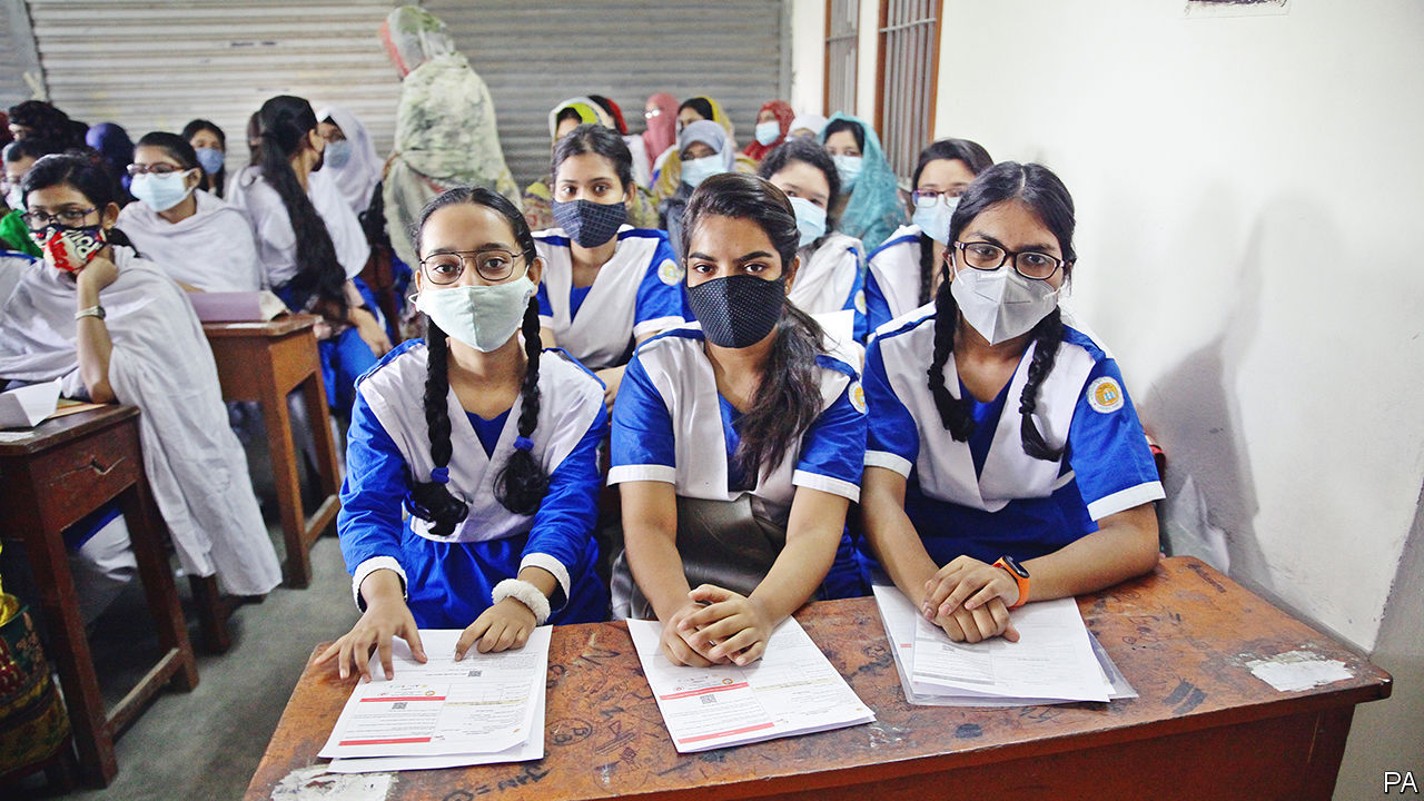
Bangladesh is making a serious attempt to improve its schools, The Economist

Brazil

Brazil: 40.8% of children are illiterate, according to research, The Rio Times

China

China Aims to Upgrade the Country’s Overall Digital Competitiveness via Education, OpenGov

China’s education reform is resulting in overworked teachers, SupChina

Colombia

Young Latin Americans see career dreams crushed in COVID’s wake, Reuters

Ecuador

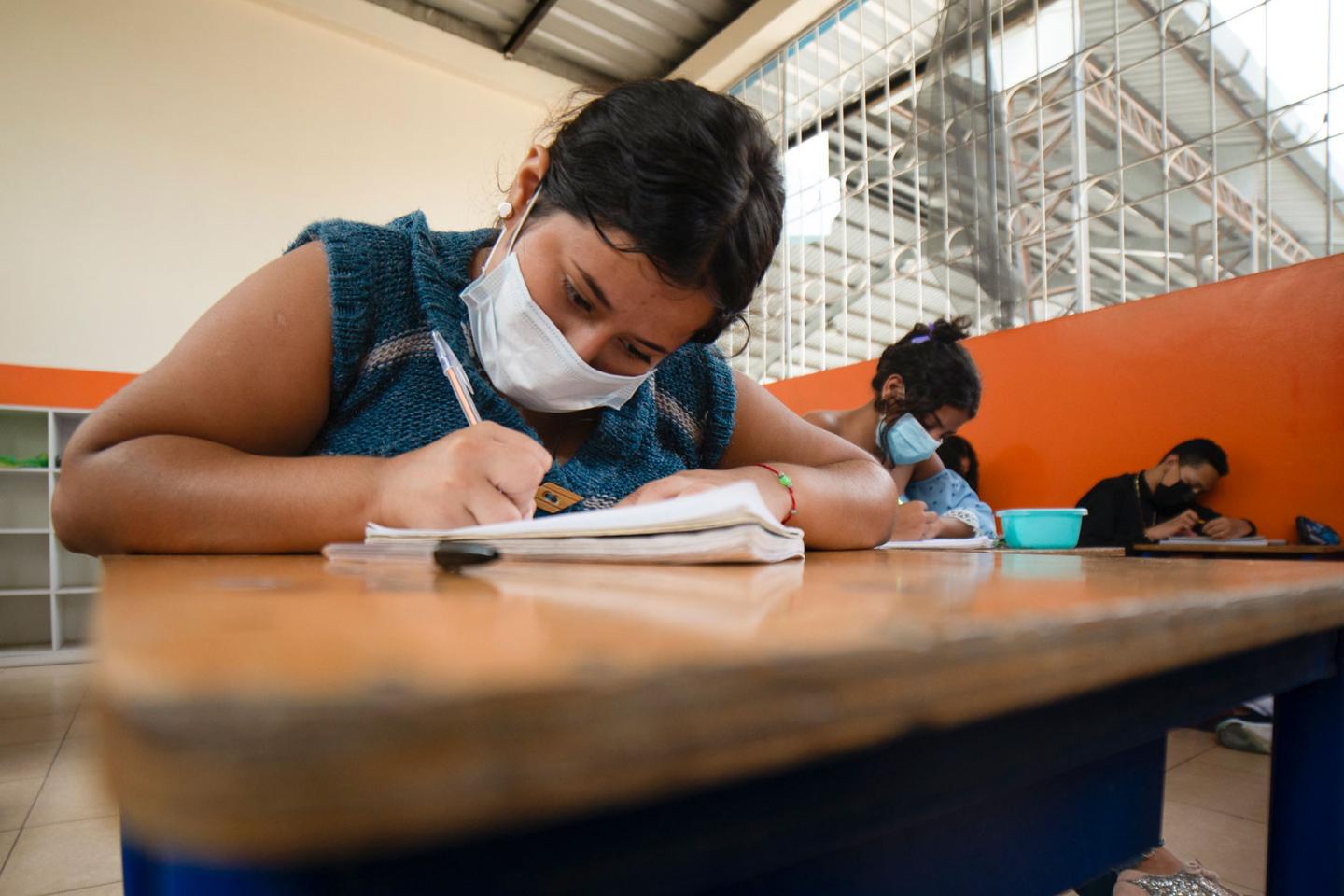
Recovering lost learning in Ecuador after two years of the pandemic, UNICEF

A safe return to in-person classes in rural Ecuador, United Nations Sustainable Development Group

France

Strike in National Education: “We carry the school at arm’s length and the arms will let go”, Libération

Hong Kong

Lessons in caution at reopening of Hong Kong’s schools, South China Morning Post

India 

Changes in education system after Covid-19 pandemic, The Times of India 

How The Pandemic Changed The Face Of Education In India, Babaji Vidhyashram

Netherlands

The Dutch are still happy but slightly less so, and young adults are hardest hit, DutchNews

New Zealand

What’s in the new New Zealand history curriculum, The Spin Off

Lack of ‘basic’ skills in new entrants concerns teachers, stuff

Paris

Parental Burnout Is Real — And Taking Leave Is Not An Option, Worldcrunch

Peru

Covid-19: Peruvian students have a hard time returning to school after two-year hiatus, Le Monde

Philippines

5 ways the Philippines can prepare its schools for health crises in 2022, Rappler

Spain

Teachers before the return to school: doubts about the new protocol and fear of an avalanche of casualties, El País

South Africa

Schools show shortfalls amid Covid-19 pandemic, Mail & Guardian

A teacher retirement wave is about to hit SA: what it means for class size, Sunday Times

3 big changes coming to schools in South Africa, BusinessTech

Uganda

Schools reopen in Uganda after nearly-two-year COVID closure, Aljazeera

Is anything changing in US schools post-pandemic? Possibilities for rethinking time, place and supports for well-being

Since the COVID-19 pandemic began, numerous proposals to “reimagine education” have been made.  At IEN, we have been tracking both the news about those proposals for changing education and the discussions of what has (and has not) been changing in schools post-pandemic (see for example “What can change in schools after the pandemic?”). This week, Correne Reyes shares our latest scan of that news in the US and finds some media reports highlighting flexibility around “seat time;” increased attention to teacher wellbeing, and discussions of the ways online learning may serve as a substitute for classroom-based learning. A second scan will focus on educational changes reported in other parts of the world.

Rethinking Time in Schools?

The switch to remote learning in so many schools and districts prompted numerous proposals to rethink “seat time” – the conventional requirements for awarding credit based on the number of hours and days spent in classrooms. As Jonathan Alfuth put it , “While we agree that states must return to policies that ensure districts maximize the amount of time students spend on high-quality learning experiences, we also believe states must seize this unique moment to rethink the way in which they define instruction and credential learning.” These proposals argue for broadening definitions of what counts as “hours” of instruction, where instruction can take place, and how it can be measure (e.g. “How states are rethinking instructional time and attendance policies in the covid-19 era”; “Unlocking innovation in schools: Policies that create space for schools to better support their students”). Some states have begun reshaping their policies to adjust the barriers of seat time. For example, Minnesota proposed legislation that emphasizes personalized, competency-based education, which focuses on “outcomes—mapping to the pace of students’ mastery of knowledge and skills—instead of moving lockstep through time-based lessons and grades.” Arizona established an Instructional Time Model allowing school districts to adopt their own instructional hour requirements for attendance. Meanwhile, Washington created the mastery-based (or competency-based) credit as an option for high school students to earn credit for demonstration of learning on assessments that are tied to state learning standards.

Along those same lines, discussions of how time is used and organized have led some schools to add minutes and days to the school year but often without more substantial rethinking of the school calendar itself (see “Why schools see extra time as the solution to making up for lost instruction” and “Longer school days and years remain rare as schools fight learning loss with optional time” “Schools that switched to a four-day week saw learning reductions. what does that mean for the pandemic’s lost instructional time?”).

Going Beyond Classroom-based Learning?

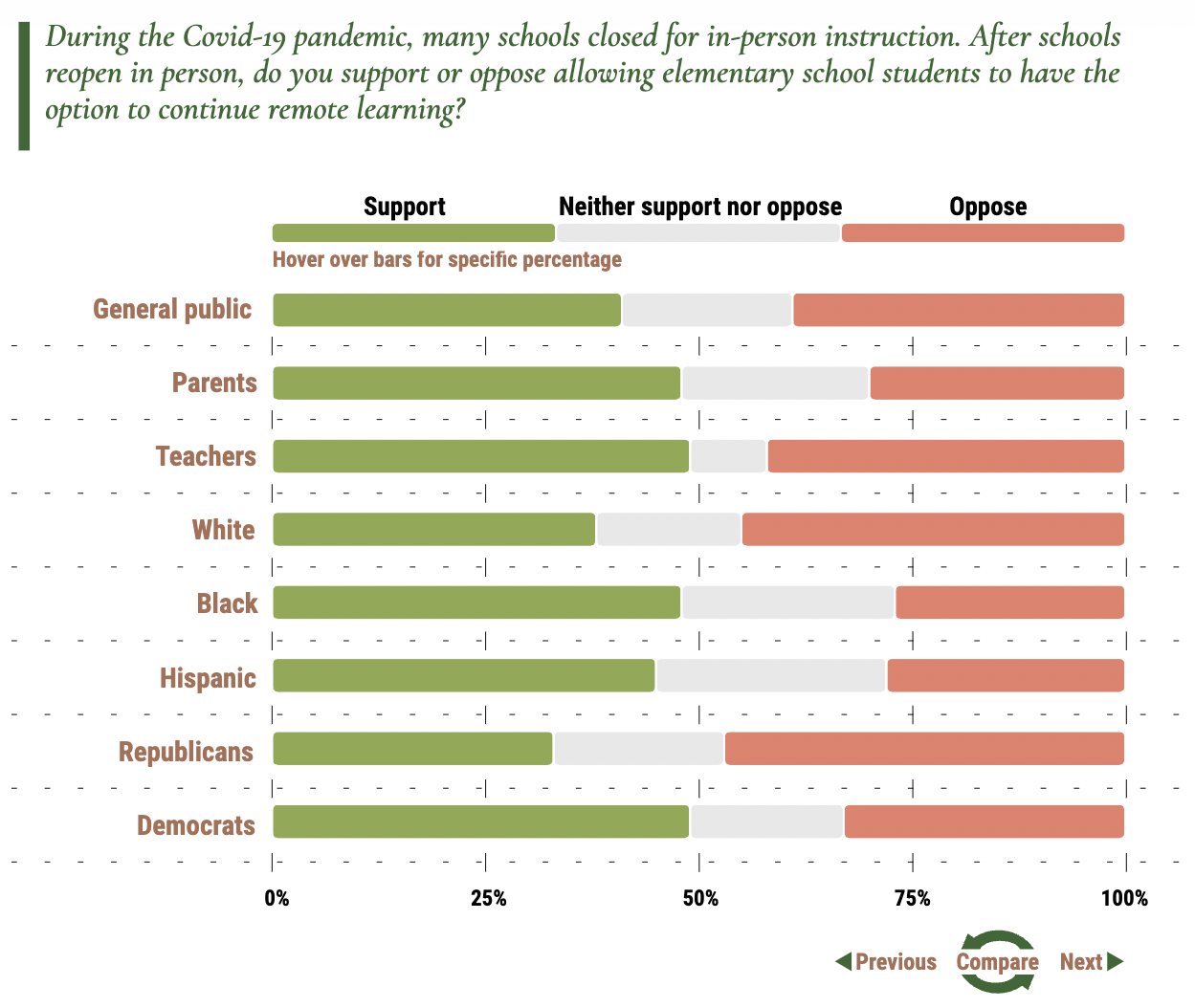
Although the move to remote learning caused considerable distress for many students and families, it simultaneously allowed them to experience a variety of options for both digital schooling and other schooling arrangements such as pods and homeschooling. Moving forward, there are some signs that there may be a new desire to expand or at least preserve these options and arrangements moving forward. A 2021 Education Next poll, for example, reported that 48% of parents said elementary students should have remote learning options; 64% said the same for high school students. In addition, According to the Aurora Institute, nearly 3 in 5 families and 3 in 4 instructors preferred their “pod” over their child’s pre-pandemic schools (e.g. “Is there a future in the “learning pod” education model?”;Crisis Breeds Innovation: Pandemic Pods and the Future of Education”; “For Learning Pod Teachers, a Pandemic Paradigm Shift: Why So Many Now Say They Don’t Want to Return to Traditional Classrooms”).

At the same time, despite the calls to maintain some remote learning options, a report from the Center on Reinventing Public Education (Virtual Learning, Now and Beyond) concludes that recent research on the relationship between learning mode and student achievement during COVID indicates that the shift to online education had negative effects on learning outcomes.  That report argues that “we have failed to build intentional on-ramps to virtual education” and “we remain unprepared to implement online learning when the need arises.” Another CRPE report (Crisis Breeds Innovation: Pandemic Pods and the Future of Education) noted that learning pods changed how some families viewed their children’s education, but points out most families sent their children back to their prior schools as a result of the costs of podding and the challenges of operating off-grid.

Building support for Teacher & Student Well-Being?

Teachers have always served a pivotal role in responding to students’ wellbeing, but the pandemic is contributing to low morale and high burnout, and, as one study described it, “a critical need to allocate more attention and resources to support teacher psychological health by strengthening emotional support, autonomy, and teaching efficacy” “Elementary School Teacher Well-Being and Supportive Measures Amid COVID-19: An Exploratory Study”).

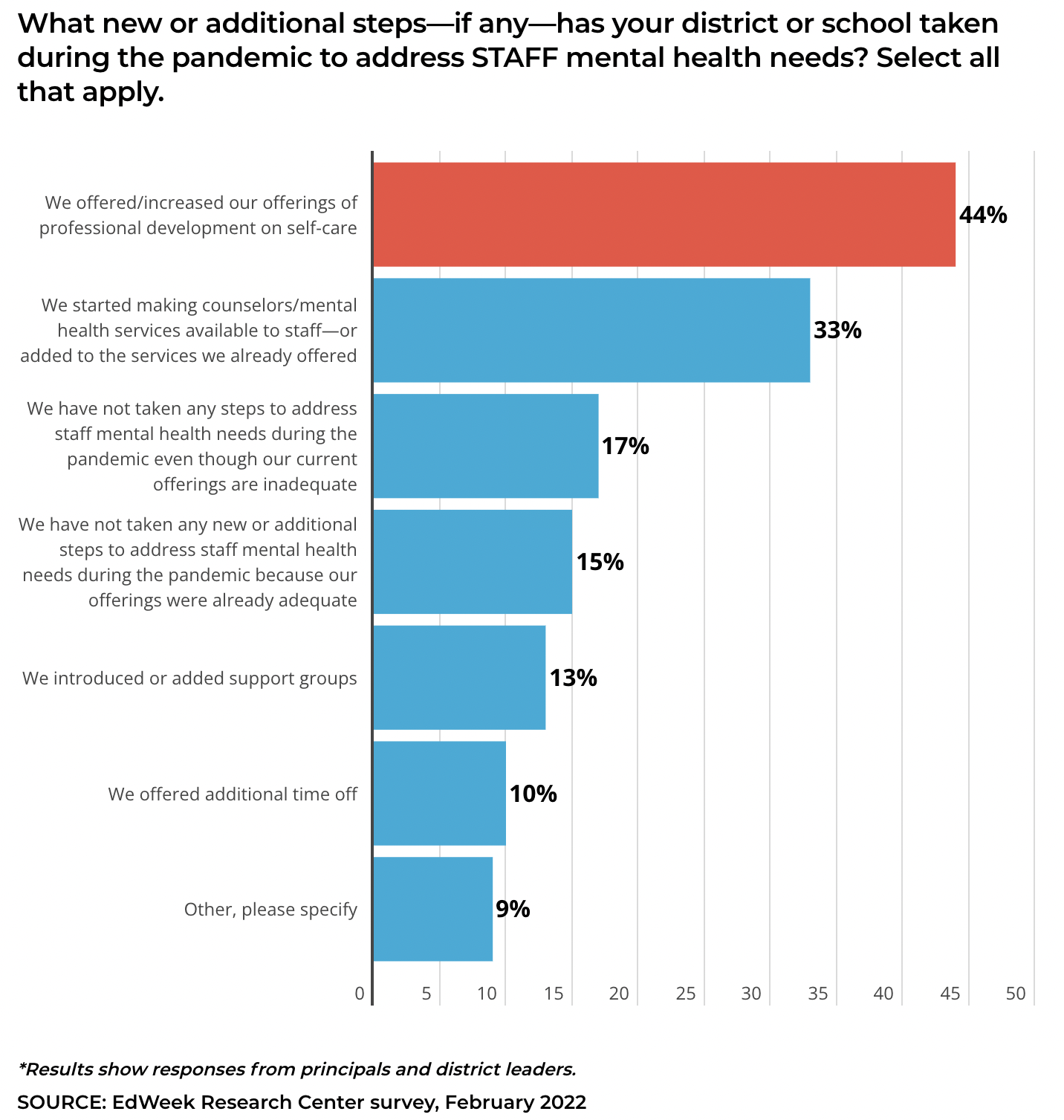
Don’t Forget the Adults: How Schools and Districts Can Support Educator Mental Health, EducationWeek

As a consequence, educators are requesting more training and resources to support their own as well as their students’ mental health.  These concerns have fueled a variety of proposals for prioritizing well-being in schools moving forward (“The Mental Health Crisis Causing Teachers to Quit”; “How Schools Can Build a Culture of Support for Educator Mental Health“; With Teacher Morale in the Tank, What’s the Right Formula to Turn It Around?). Ronn Nozoe, the chief executive officer of the National Association of Secondary School Principals, has also advocated for districts and schools to use some of their federal COVID-19 relief funds to set up targeted support programs for school leaders’ mental health. However, the huge demand for mental health care professionals nationally has created a challenge for school districts. “It’s not for lack of want, it’s not for lack of ideas,” Nozoe continues. “It’s really a lack of available professionals who are willing and qualified to provide these kinds of services to help kids and families and ultimately educators.”

“It’s not for lack of want, it’s not for lack of ideas…It’s really a lack of available professionals who are willing and qualified to provide these kinds of services to help kids and families and ultimately educators.” Ronn Nozoe

A Focus on (Imperfect) Leadership: Snapshots from the 9th ARC Education ThoughtMeet

The latest ThoughtMeet (TM) from the Atlantic Rim Collaboratory (ARC) featured conversations with Steve Munby and ARC delegates exploring “imperfect leadership.” Munby facilitates ARC events and is a member of the ARC Secretariat, and Visiting Professor at University College London Centre for Educational Leadership. Munby’s talk drew from his recently published book with co-author Marie-Claire Bretherton, Imperfect Leadership in Action: A practical book for school leaders who know they don’t know it all. This post highlights the key ideas and issues that were discussed in the meeting by representatives from the seven ARC member systems and its global partners. A summary, videos, and other resources from the March 25th ThoughtMeet: A Focus on Leadership. Summaries and materials from previous ThoughtMeets are available on the ARC Education Project website. This post was written by Mariana Domínguez González, and Daphne Varghese, ARC Research Assistants and Trista Hollweck, ARC Project Director.

“Nobody is ready for leadership. It is always a big step up. Imperfect leadership is neither a set of competencies to be mastered nor a body of knowledge to be memorized. It is a mindset to be embraced.”

Steve Munby

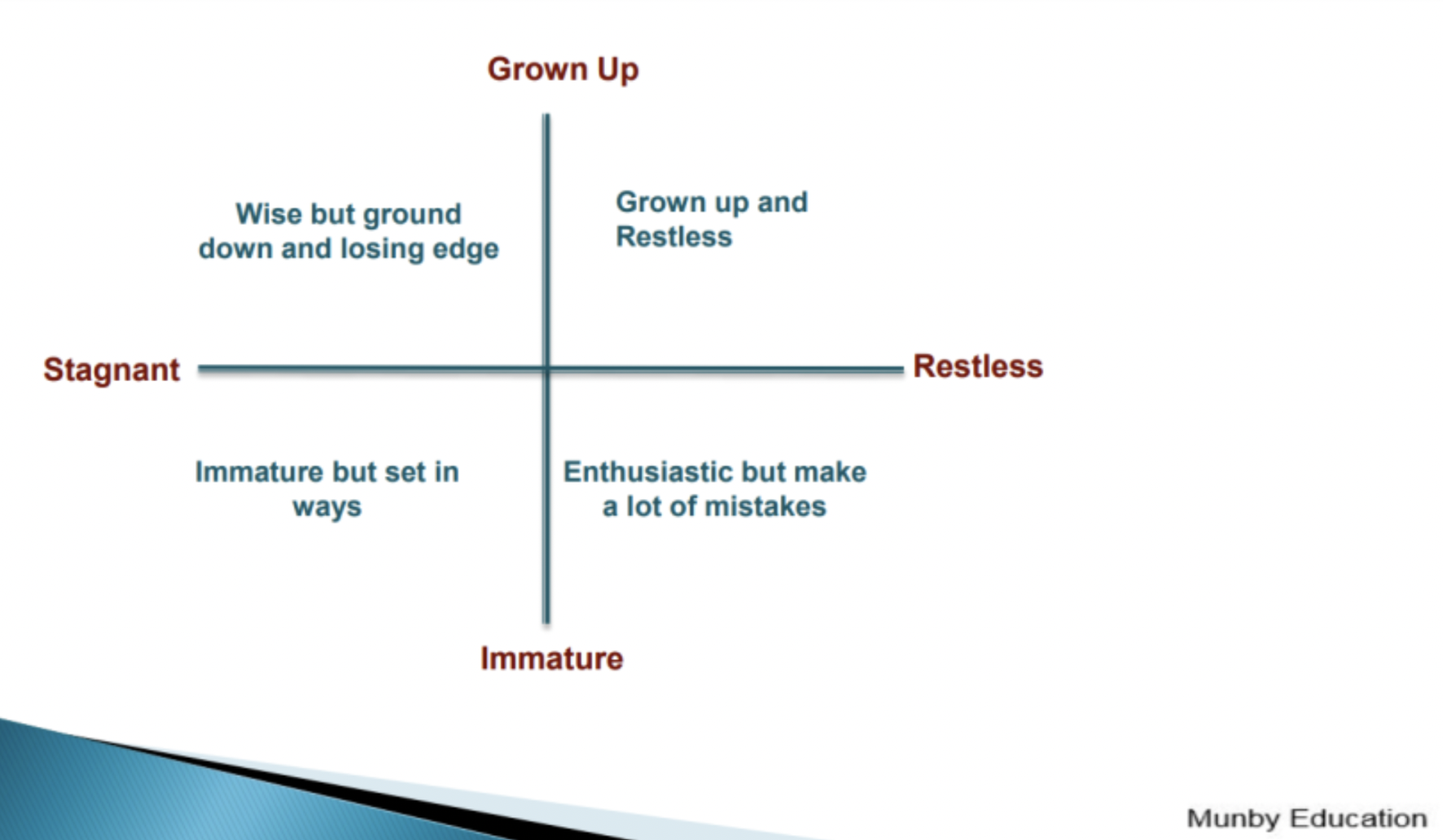
What is imperfect leadership? According to Steve Munby, imperfect leadership goes beyond how effectively a leader responds to ever-changing and dynamic work conditions to encompass who the leader is as a person– their personality, expertise, how they motivate others, respond to stress, etc. Leaders are not finished products; rather, they should strive to be endless learners which he describes as grown up & restless (as illustrated in the quadrants below). Munby reminded ARC delegates that “walking into a leadership role is a new playground for everyone. There is no such thing as perfect leadership when we step into a leadership role.” Thus, strong self-awareness is crucial for imperfect leadership.

Source: Quadrant taken from Steve Munby’s presentation: March 25th TM

In order for leaders to stay restless, Munby stressed the importance of developing and leading an open-to-learning culture. Leaders should review and reflect on events or situations that haven’t gone well, practice self-compassion, and use feedback processes (such as 360 degree feedback) in a focused and time-specific way to improve their leadership practices. 

How can we help educators to improve and to develop as leaders? Munby stressed that all members in a team have the potential to be leaders. The key is to provide them with the confidence to step up and take a leadership role. Creating an imperfect leadership culture requires an investment in others, especially early career leaders. As the more experienced leaders, he explained “it is our responsibility to support the leadership development of others. We must support future leaders and provide them with opportunities to take on challenging tasks and feel supported to take risks. We also must be conscious to not reinforce one simple stereotypical view of leadership, but encourage potential leaders from diverse backgrounds and perspectives to lead.” Munby added that an imperfect leadership culture provides opportunities for experienced leaders to take on new and challenging roles in an effort to renew and re-energize them.

A Q&A panel discussion followed the ARC talk and delegates asked Munby about the role of diversity in leadership, the importance of co-leadership and distributed leadership models, how to deal with negative organizational cultures, as well as how to balance risk-taking and learning from one’s failures against stakeholder expectations:

What role do you think diversity plays in leadership? Munby noted that organizations need to go beyond the notion that diversity is solely about fairness. Rather, diversity creates better teams characterized by numerous perspectives and expertise. Organizations also need to steer away from a singular approach to leadership, as it can encourage specific group members to be leaders and deter others from stepping into a leadership role. Munby emphasized that conceptualizations of talent are narrow and fixed, and we need to find ways to challenge them.

How do we “row together” to create an expectation of sharing power and decision-making?  Munby described how stakeholder engagement is an essential collaborative strategy for systems to develop imperfect leadership and promote progressive policy leadership. 

How do leaders cope with negative organizational cultures? According to Munby, it is always important to try to find a way to internally influence the work culture. However, in some cases, if the negative culture becomes too fixed and unlikely to change, it may be best for the leader to switch to another workplace. 

Follow-up reflection questions for system leaders: 

  • What does imperfect leadership mean in a virtual post-Covid-19 context? 
  • What is the difference between leadership and management? 
  • How do we further develop adaptive leadership in our systems so that leaders are not only aware of their individual strengths and default styles but equally aware of how to respond when a situation needs a different approach? 
  • How do leaders balance the system/political aspect as well as the personal side of leadership? 
  • How do leaders manage the very real external pressures and expectations and also provide conditions for aspiring leaders to grow and make mistakes? 
  • How do we prevent or avoid burnout in leaders at all levels? What kind of support is most needed? 

About the Atlantic Rim Collaboratory: 

The (ARC) is an international policy learning network that was established in 2016 to advance educational change based on eight guiding principles: equity, excellence, inclusion, wellbeing, democracy, sustainability, human rights, and professionally run systems. Headquartered at the University of Ottawa (Ontario, Canada) since 2019, ARC brings together senior public officials (i.e ministers and deputy ministers of education), professional association leaders (i.e. unions and inspectorates) and other key stakeholders from its seven education member systems (Iceland, Ireland, Nova Scotia, Saskatchewan, Scotland, Uruguay and Wales), global partners (International Confederation of Principals) and international experts and scholars to discuss, debate and exchange knowledge about educational policy issues and to formulate responses suited to their contexts. One of the founding ideas behind ARC is to tear down the walls between countries and regions, as well as between educational researchers and politicians, in order to pursue the most fundamental ideas of what it means to be educated in today’s world for the mutual benefit of all ARC-systems and future generations of students worldwide. Every year, ARC members meet at the annual Summit hosted by one of the member systems. However, since 2020, in addition to a virtual summit, ARC has also hosted bi-monthly virtual ARC ThoughtMeets (TMs) for its members. The TM outreach series was designed to stimulate and support a global educational movement for equitable, inclusive and sustainable educational solutions to COVID-19.

From a “wide portfolio” to systemic support for foundational learning: The evolution of the Central Square Foundation’s work on education in India (Part 2)

This week, IEN continues to look at the developing work of the Central Square Foundation (CSF) and its efforts to build the capacity for improving learning outcomes in India. The post draws from an interview with CSF’s Co-Managing Director Shaveta Sharma-Kukreja. Last week, part one explored the first five years of the Foundation’s initiatives (2012-2017) and how they developed their current strategy focusing on foundational learning, educational technology, and affordable private schools. This week, part two concentrates on the “four pillars” of their approach to foundational learning and the lessons they have learned in trying to improve learning at scale in India.

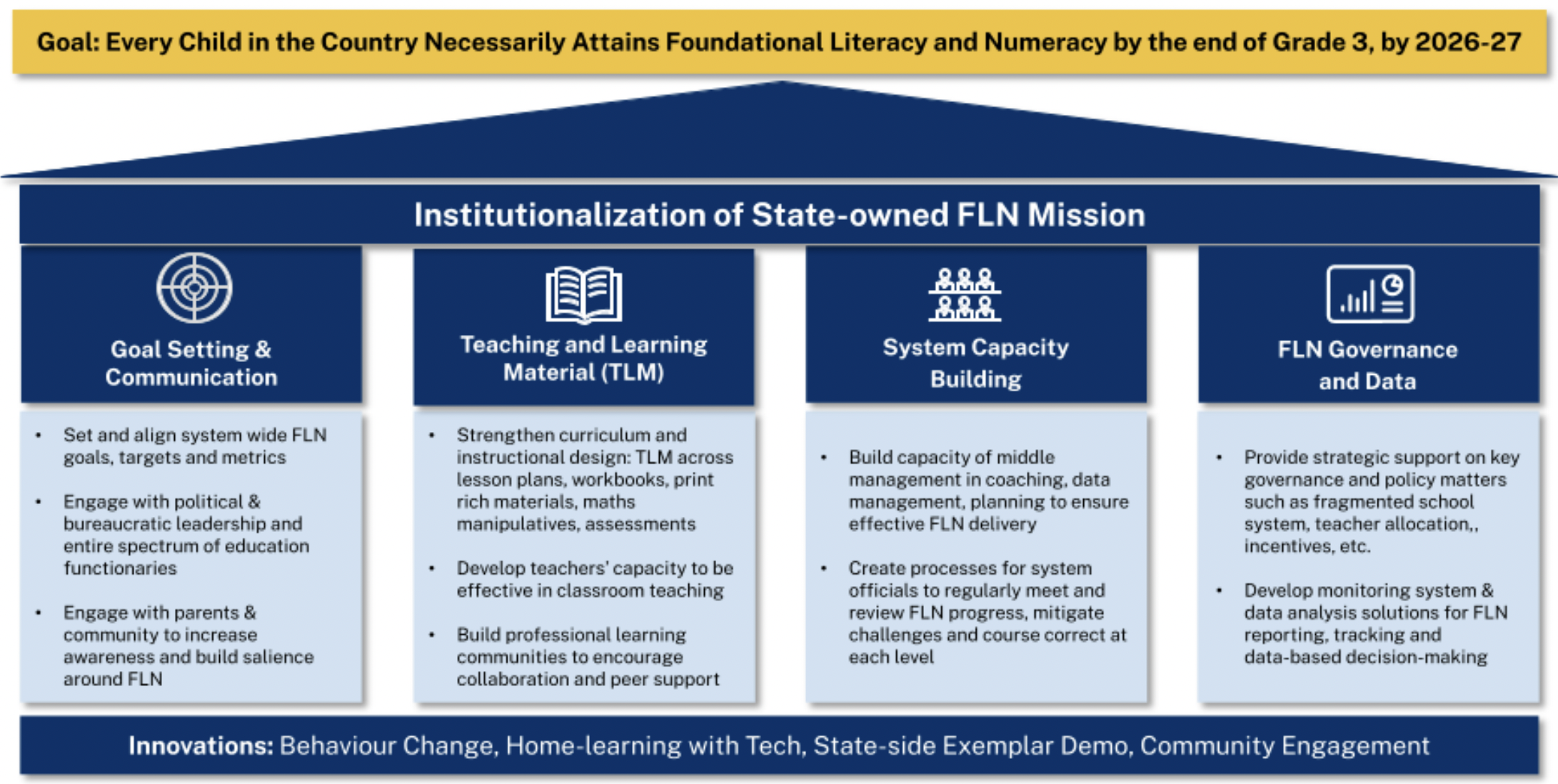
“Four pillars” of work on foundational literacy: Partnerships, aligned instruction, professional development and assessment

Thomas Hatch: Tell me a bit about your work on Foundational Literacy now.

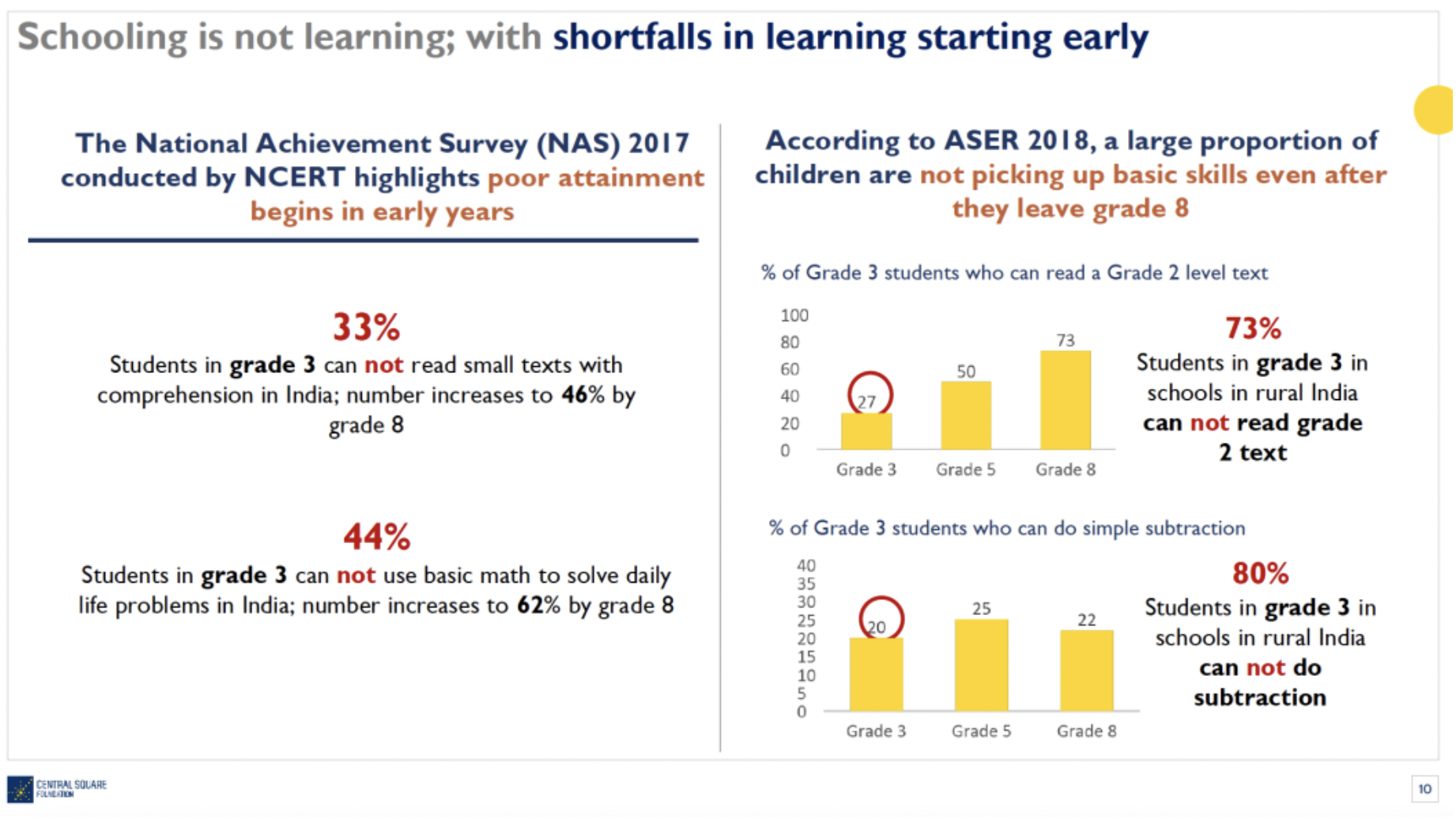
Shaveta Sharma-Kukreja: After almost four decades, India came up with a new education policy that highlights that unless we solve for early learning, any other reform, whether we do it in higher education or in secondary schools, will become irrelevant. Just last summer, the national government launched the policy with the introduction of the National Initiative for Proficiency in Reading with Understanding and Numeracy (NIPUN) The initiative aims to ensure that, by 2026-27, every child in India attains foundational literacy and numeracy by the end of Grade 3. CSF has had a small but a catalytic role in the development of the policy, and this initiative is now phase three of our mission.

It’s important to know that India doesn’t have a formal early childhood education system. Our Right to Education Act starts at age six and grade 1. Prior to that, you can go to the Anganwadi Centers, which are under a different Ministry, the Ministry of Women and Child Development (MWCD). Those Centers, by the way, have done an incredible job when it comes to vaccination, nutrition, and health, but, unfortunately, the system is overloaded, and they also now have to take care of education. The new education policy talks about the need to address this problem in the three-to-eight-year age group and to have a strong pre-primary section, but it’s not yet institutionalized in the education system. 

TH: So this is a new focus area – it still follows your same general approach – but it’s not a totally distinct endeavor? 

SS: Exactly. It’s what we call radical prioritization of early learning. The idea is how do we equip the existing education system to raise the floor of their approach to early learning so that it translates into learning outcomes?  And it’s particularly crucial right now because, with COVID, enrollment in India is back to being a problem, especially with some socio-economic groups. For example, a girl who walked into grade three now would never have gone to grade 1 or grade 2, and India doesn’t have a pre-primary school system. The girl is probably eight or nine years old and is expected to start working at the third-grade level. That’s why the early learning focus is so important from a COVID learning loss perspective as well. 

Now a girl would walk into grade three never having gone to grade 1 or grade 2, and India doesn’t have a pre-primary school system. The girl is probably eight or nine years old and is expected to start working at the third-grade level. That’s why the early learning focus is so important from COVID learning loss perspective as well.

Building a lot on RTI’s approach in Kenya, we are pursuing what we call a four-pillar approach. The first step is to do a system diagnostic – “What are the critical enablers we need?”. One of the challenges in India is that learning gains are very intangible in the early stages of education. In India, the first high stakes assessment happens in grade 10, which is a board exam. That’s very critical and private schools will advertise how well they do, but it’s very late in the cycle of education and there’s no ownership or accountability for earlier stages of education. Actually, the system allows a child to pass out of primary and upper primary school without really having learned. That’s why the first step is How do we get alignment on goal setting and communication?” From the Chief Minister of a state to a parent or an illiterate parent who’s sending a first-generation learner to school, do we all understand what we mean by the mission of education and what we are hoping to achieve? What does learning to read with meaning mean? What does it mean to be able to do basic arithmetic? That becomes the first pillar. 

From the Chief Minister of a state to a parent or an illiterate parent who’s sending a first-generation learner to the school, do we all understand what we mean by the mission of education and what we are hoping to achieve? What does learning to read with meaning mean? What does it mean to be able to do basic arithmetic? That becomes the first pillar.

Teacher professional development and teaching and learning materials – the second and third pillars – are related.  With our literacy and numeracy partners, we are working on a structured pedagogy approach to ensure that there is a common learning outcomes framework reflected in lesson plans, workbooks, and learning activities for children in the classroom as well as deeply aligned teacher professional development. One of the learnings of all teacher training initiatives in India has been that teacher training by itself – which isn’t aligned to our curriculum or pedagogical approach – might inspire teachers, but doesn’t always translate to benefits in the classroom. So it’s designed to be a very integrated approach. In other words, it’s capacity building for the entire value chain, including teacher education and including all the materials and layers of academic support which are supposed to be helping teachers in the classroom. 

The fourth pillar is assessment and developing a monitoring framework. What will the assessment and monitoring dashboard look like at the district level, at the state level and then at the national level? Unfortunately, in India right now assessment is equal to testing and testing means we are judging children, whereas the intent has to be to assess so that we can support children wherever learning gaps are coming up.

Then, in order to support adoption and behavior change around these four pillars, we have to take into account things like, in India, teachers don’t retire. As economists say, there’s a “stock” but not a “flow;” there’s not an active “churn.” “I’ve been a teacher for two decades. What’s in it for me to truly change how I teach children language or another subject?”  That’s why we’ve specifically called out behavior change along with things like home learning and community engagement. How can we augment the teaching time that children are getting in school with the time they’re getting at home? But I want to stress that the idea is not to shift the responsibility of education to the parent, but can they play an enabling or facilitating role? 

These four pillars capture the work we are doing in our key states (Haryana, Gujarat, Uttar Pradesh, Madhya Pradesh) with a focus on learning. Overall, our role is to leverage other NGO’s in the eco-system. The coalition that works with the state government in each case includes the Central Square Foundation, and we typically play a project management role and help to leverage other NGO’s in the eco-system, including a literacy expert and a numeracy expert. This approach reflects the principle that to solve this complex need, we need different organizations to bring their expertise and co-create a solution with the state. And it’s not proprietary. We want Gujarat to run it as Gujarat’s Foundational Literacy and Numeracy program. For it to actually scale and sustain, the budget, the branding, the operational costs has to come from the State itself. 

Reflections on the challenges and opportunities of supporting learning at scale 

TH: What kind of pushback have you gotten as this work has evolved? Are there particular areas where the government has resisted or you’ve had to change in order to move the partnership forward? 

SS: It took us a while to land on this four-pillar approach, but it’s what we have done strategically and theoretically. Actually bringing it to the ground with other partner organizations, as you can imagine, is easier said than done. There was a learning curve that we ourselves needed to go through. 

It’s easy for me to say that we are bringing together a project management partner, a literacy expert, and a numeracy expert. But historically in India, NGOs haven’t collaborated well. I think we NGO’s and civil society organizations tend to be in love with our own IP [intellectual property]. We think we’re the only ones who can do it, and it has to be done “our way.” But if I’m a teacher in a government school, and I’ve been teaching a certain subject for two decades, I’ve seen many programs and many missions and many NGOs come and go, but I’m still here. You can’t expect me to learn a different way of teaching language and a different way for numeracy and then do assessment. It all has to come together in an integrated manner. 

If I’m a teacher in a government school and I’ve been teaching a certain subject for two decades, I’ve seen many programs and many missions and many NGOs come and go, but I’m still here. You can’t expect me to learn a different way of teaching language and a different way for numeracy and then assessment. It all has to come together in an integrated manner.

The devil in the details is how will all the partners work together? How will we establish accountability? That’s been a learning experience. Because organizations are also people, understanding the chemistry of different partners – first at a coalition level, and then with the government stakeholders – has also been an interesting journey. 

From a government perspective, everyone understands why early learning is important so they latch on to the need for early learning, but I think the biggest challenge has been assessment and putting a strong monitoring system in place. Again, this comes from a legacy of assessment being equated with tests and exams that are used for selection. But it’s been much harder to make the transition to using assessment to inform instruction and to make course corrections so that everyone is that grade level and year-end remediation is not required. 

The other classic challenge is how prescriptive should a structured pedagogy approach be? Is teaching a science or is teaching an art? With our approach with the instructional materials and guidebooks for the teachers, we are trying to solve for the part that is science. And if you are a teacher who gets the art part right, your classroom will be more engaging, your students will be more engaged, and it will show up in their work. Whereas, if I’m an average teacher with average motivation, and I just want to get my work done, if you can provide me with a scientific solution that is prescriptive to a certain extent, at least it will ensure that my children get to grade level.

So, all in all, I would say our own learning has been around four challenges. First, what does it take to build a coalition for the four-pillar approach: What will our role be, how do we establish accountability? Second, how do we land that approach with a government so they see we are not coming with our own NGO program, that we want to help strengthen their early learning program? Third, how do we solve the assessment problem, so that assessment is both a check for understanding in the classroom and a way of monitoring so we know the health of the system overall? Fourth, what does having a scientifically defined learning framework with micro competencies and related lesson plans, do to the autonomy of a teacher?  Those have been the biggest challenges and areas of learnings for us.

What does having a scientifically defined learning framework, with micro competencies and related lesson plans, do to the autonomy of a teacher?”  

TH: What have you learned and what have you had to change in order to shift, particularly that NGO mindset of “I have the solution?” 

SS: The first thing we’ve learned is we don’t have to start with a solution that we are proposing. First, we have to do a diagnostic and understand – and help the government understand – what their current approach is. How do they do early learning? What have their gaps been? What’s happening in the classroom and what are teachers experiencing? Then one of the things we’ve had to change is to get the conversation started on learning goals, teaching and learning materials, and on an assessment framework with the government as an equal partner. We’re not presenting the framework to them. We’re actually discovering it together. We’re peeling the onion to see what ‘s amiss, what can we contribute?  How can you support that or this is sacrosanct and you can’t touch it?  For example, in India, you can’t touch textbooks.  Textbooks come from NCERT/SCERT (State Education Department) and they just get followed. However, if you want to reorder or the sequence or if you want to skip two chapters and augment them with some supplementary material, we can have that conversation. It has been crucial to understand the constraints and the appetite for change.  It has taken us a while to realize that we’re not helping states start the early learning program we are helping them augment their early learning programs so that kids learn on grade level.  

It has been crucial to understand the constraints and the appetite for change.  It has taken us a while to realize that we’re not helping states start the early learning program we are helping them augment their early learning programs so that kids learn on grade level.”

From a “wide portfolio” to systemic support for foundational learning: The evolution of the Central Square Foundation’s work on education in India (Part 1)

Over the next two weeks IEN looks at the first 10 years of the evolution of the Central Square Foundation (CSF) and its efforts to build the capacity for improving learning outcomes in India. The posts draw from an interview with CSF’s Co-Managing Director Shaveta Sharma-Kukreja. Part one explores the first five years of the Foundation’s initiatives (2012-2017) and how they developed their strategy for the next five years focusing on foundational learning, educational technology, and affordable private schools. Part two concentrates on the “four pillars” of their approach to foundational learning and the lessons they have learned in trying to improve learning at scale in India. For more on the 10th Anniversary of CSF’s founding see #10YearsOfCSF: Leaders at CSF on Their Vision for the Next Decade.

Central Square Foundation’s first five years: Developing a “wide-portfolio”

Thomas Hatch: Can you tell me about the background and evolution of the Central Square Foundation (CSF)?

Shaveta Sharma-Kukreja: We started in February 2012. The founder of CSF, Ashish Dhawan, has one of the largest private equity funds in India. He always had a deep desire to move to the development sector, and he started by serving on boards of other NGOs to try to gain an understanding of education. I joined CSF in July 2012, and for the first five years, we were only funded by our founder which allowed us to be very entrepreneurial in how we looked at education. The only “guardrails” he put up were that we would be a non-profit; we will look only at school education (K-12); and we would support young social entrepreneurs. As a result, venture philanthropy shaped a lot of the work that we did in the first phase of our journey.

Without external funders, we had the flexibility to look at a diverse set of issues from education technology to early childhood education to data and assessments. During this time, grant making was one big part of our work. Second, we supported research, particularly research from the perspective of how it can inform policy. Since we are neither a university, or an evaluation agency, our research was always oriented more for policymakers and for other education leaders and on how our research can help the ecosystem develop a collective voice. Third, we focused on government engagement. Even while we were doing grant making and looking for innovative solutions, we knew that for any solution to scale and be sustainable it needed government adoption. Early on, we weren’t even sure what government engagement meant, but we began by trying to come up with innovative solutions, having smart researchers lend their voice to it, and then handing it over to the government to run with it. But, as in much of the developing South, government demands typically include asking you to work in partnership with them, so we ended up setting up a number of project management units both at the central and the state level.

TH: What’s the advantage of an organization like yours taking some of that work on in a partnership with the government?

SS: The reality is that most people in the government understand the issues and challenges that the system is facing; they’re not blind to it. but the education production function is so complex that it’s difficult to pick out one part of the problem and solve it. The government is in the business of setting up the policy, and they are doing the regulation, and they are also the service provider of education. Working with an external partner enables them to hire people with a different profile – with different backgrounds and more specific expertise about a particular issue. The external partner becomes an extension of the government but they’re also able to bring a different profile of talent and to be razor sharp on the issue that they’re working on.

Working with an external partner enables [the government] to hire people with a different profile – with different backgrounds and more specific expertise about a particular issue. The external partner becomes an extension of the government, but they’re also able to bring a different profile of talent and to be razor sharp on the issue that they’re working on.

For example, working on a partnership focused on school leadership was my first project at CSF. At that time, school leadership as a term was not even being used in India. But, in 2012- 13, we were able to bring a group of people together, including myself, from the US and India, with expertise in organizational leadership to create the India School Leadership Institute (ISLI) which worked with principals of “low-fee” private schools. (For an overview of the evolution of ISLI see IEN’s conversation with ISLI Founding Director, Sameer Sampat.) But then the government was able to set up a National Center for School Leadership that built on a lot of our learnings in ISLI even though “low-fee” schools aren’t even part of the government sector.

The development of India’s national online platform for teachers provides another good example. As you know, the growth of technology in India has always had the advantage of better device penetration, cheaper internet, cheaper hardware but the software solutions have been the problem. In this case, states started building their own portals for teacher education but their first version was basically just a PDF of their teacher manual that they put on their websites. So there was a huge opportunity for a platform to be built, not just a portal, but a platform on a national level that states could connect to. 

The national teacher platform called DIKSHA relied on core technology that came from the EkStep Foundation. Their own legacy is from AADHAR which is a platform enabling the Government of India to directly reach residents of the country in delivery of various subsidies, benefits, and services by using the resident’s unique 12-digit Aadhaar number only. They already had sophisticated technology at a level that no state government would have been able to develop itself. CSF then took on the project management responsibilities to integrate and adapt the technology for the state governments so that it aligned with their needs and had the look and feel of their website portals. It was a logical opportunity for CSF to start working with the government, but it was dependent on identifying a strong need where the government wanted support and where CSF had the ability to provide that support.  It’s one of my favorite examples of a government partnership, because it involved a foundation like EkStep that brought in the technical capability; we brought in the project management capability, and we also had a much deeper understanding of teacher education, having worked on that for about four years. To the best of our knowledge, this is one of the most successful examples of a public good being created in partnership with CSO’s and NGO’s and different parts of the government. By 2020, the Prime Minister described DIKSHA As “one nation one platform” for the entire spectrum of education, now serving students and families as well as educators.

Shifting to phase 2: Focusing on “impact”

TH: The examples you talked about illustrate how you were operating during those first five years? 

SS: Yes, and this was the time at the end of what we call the first phase of our work that our Board put the question in front of us of “What will CSF’s work look like?” During that phase, we were an operating organization which doesn’t actually work on the ground with students and teachers and school leaders. We incubated ISLI.  

We helped to bring the leader in from the US (Sameer Sampat who went on to co-found, with Azad Oommen the first Executive Director of CSF, Global School Leaders on the ISLI model), but I was the donor on the team. I wasn’t running the organization. We were also working with states who had different interest areas. In Delhi at one point, we were working on the school-to-work transition and department restructuring. Two very distinct areas of work that are not directly related to student learning outcomes. It’s a long value chain for department restructuring: it depends on department re-structuring leading to better pedagogy and better curriculum that reach classrooms in schools and teacher education programs that then leaders to better teaching and learning.  Our board left it up to us to decide: would it be better for CSF to continue with the “wide portfolio” approach and continue to engage with state and central government, when an opportunity and interest appeared? Or should we take stock and pick a part of learning outcomes where we could have a more direct impact? And we felt that the breadth of our work allowed us a space where we could narrow down our focus and make a more meaningful impact. We essentially said:  Let’s pick out an area. Let’s be more outcome and measurement and evaluation driven in our work overall and also in how we work with our partner.” We always say for education reform to stick we need to zoom in to a district and go deep. Similarly, we decided to pick an issue within education and go deep. 

Would it be better for CSF to continue with the “wide portfolio” approach and continue to engage with state and central government, when an opportunity and interest appeared? Or should we take stock and pick a part of learning outcomes where we could have a more direct impact?

This was around 2017 and about the time that the Gates Foundation began looking at doing work in education in India.  Our first validation came when they chose CSF as an “in-country” partner. We were still a relative rookie in the education space when they saw potential in us. 

As we moved into this second part of the CSF journey, we shifted from the portfolio approach to three focus areas: 

  • Foundational learning
  • Technology in education
  • Private school sector

Landing on the need for foundation learning was very evident for us. There is a rural household survey called ASER which has been going on in India for 20 years, and it shows that the problems with basic skills are quite deep.

The second area, building on some of our earlier work, was education technology. The widespread availability and use of mobile devices and data put India in a unique position relative to many other countries. There was also a lot of for-profit entrepreneurial activity happening in India, so we saw an opportunity for solutions to be created and designed locally. We also had a unique advantage because CSF had already been playing an evangelizing role for how tech can be leveraged for education within the government system. 

The third issue area is private schooling.  We are very unique as a country where over 40% of children do not take advantage of the free education provided by the public education system. Education in India, like it is worldwide, is aspirational. The moment a family can afford to pull their child out of the free government school, they would rather send their child to a private school with fees beginning at roughly $10 a month. For the most part, the government has looked at the private school system mostly from the perspective of regulation, and there hasn’t been a strong focus on quality. But in the first phase of our work, because a lot of us, including our founder Ashish, came from the management and the corporate side of the world, many people assumed “Oh you guys must be pro-private schools,” and it took us a while to clarify that whether it’s a government school or low fee private school the school is accountable to deliver quality education. 

Our approach to these three areas has been similar to what I described for our first phase: 

  • Working with the government and creating a reform agenda with a collective voice of other education leaders
  • Evidence building and supply shaping comes from the work we do with our partners, with other NGOs in the ecosystem with a sharp focus on the public good – making sure that whatever we are creating is available to others in the education ecosystem – and an emphasis on research
  • Deepening our government engagement efforts by shifting from working across multiple issues in multiple geographies to focusing our work in certain states on the issue of foundational literacy and numeracy

Getting to scalable and sustainable solutions in these areas became an extension of our approach in phase two. Across focus areas like education technology, we are trying to be more sharply focused on early learning, including at home, and in our work in private schools, we are trying to raise the bar for quality at the primary level. From a measurement perspective, we are targeting the learning poverty index the World Bank has highlighted (measuring the percentage of children who can read and understand a simple text by age 10), asking “how can we contribute to bringing down learning poverty in India?” with an ambitious target of bringing it down from 55% to 15% over the next five or six years. We’ve found this is both a directional goal– requiring us to articulate how our work contributes to it – and an aspirational and inspiring goal that connects our work with others. 

TH: Given how hard it is to achieve these goals, have you also established some benchmarks to see if you’re headed in the right direction?

SS: Unfortunately, because of COVID, the plan to get a baseline is still on paper. The whole principle of system reform is that you’re doing it – not just with the approval of the government – but in partnership with the government. However, with the situation worldwide with COVID, that’s been impossible. We actually adapted a tool that USAID uses, the Early Grades Reading Assessment and the Early Grades Math Assessment. We’ve partnered with an assessment agency, and we’ve piloted it in English and in Gujarati so the tool is ready, but quite honestly haven’t even asked the government for permission yet because it’s just unfair. We’re also acutely conscious that whenever we get an opportunity to do the baseline, it will actually be lower than it would have been before COVID first hit. But, in a way, it will also capture a more picture from ground right now. 

Time for an inclusive turn: Mel Ainscow on Inclusion as a guiding principle for educational reform in Portugal

This week Mel Ainscow shares his reflections on the implications of Portugal’s efforts to make inclusion a centerpiece of educational policymaking. Ainscow is Emeritus Professor of Education at the University of Manchester, Professor of Education at the University of Glasgow, and Adjunct Professor at Queensland University of Technology. His works include ‘Struggles for equity in education: The selected works of Mel Ainscow’, and previous posts for IEN include ‘Finding pathways to equity’: A Conversation with Mel Ainscow and Christopher Chapman. An earlier version of this article, written for a UK audience, was published by the Fabian Education policy Group.

March 2022 saw the publication by the OECD of a review of national education policy in Portugal. The report, which was produced as part of OECD’s ‘Strength through Diversity’ project, has important implications for future reforms in many countries.

Legislation

The most striking thing that emerges from the OECD review is the way that, over the last twenty years or so, Portuguese policy makers have used inclusion as a guiding principle for educational reform. Crucially, this is not seen as a discrete policy – a task to be allocated to certain individuals or groups. Rather, inclusion is regarded as a principle that must inform all educational policies, not least those concerned with the curriculum, accountability, funding and teacher education. In this sense, it is seen as being everybody’s responsibility.

“Inclusion is regarded as a principle that must inform all educational policies, not least those concerned with the curriculum, accountability, funding and teacher education. In this sense, it is seen as being everybody’s responsibility.

Since 2008, Portugal has had in place laws envisioning the provision of education for all students, without exception, in their local mainstream school. This legislation led to special schools being transformed into resource centres for inclusion, tasked with supporting their former students, who are now placed in mainstream schools.

Further legislation in 2018 provided a framework that sees inclusive education as a process under which the education system must be reformed so that it can adapt to the needs of all students. With this agenda as the focus, the Government has given priority to the development of policies that guarantee equal access to public education in ways that are intended to promote educational success and equal opportunities.

Abolishing labels

Importantly, the Portuguese legislation has moved away from a view that it is necessary to categorise students in order to intervene. Rather, it supports the idea that all children and young people can achieve a profile of competencies and skills at the end of their compulsory education career, even if they follow different learning paths. It therefore emphasises flexible curricular models, systematic monitoring of the effectiveness of interventions, and an ongoing dialogue between teachers and parents/caregivers.

“All children and young people can achieve a profile of competencies and skills at the end of their compulsory education career, even if they follow different learning paths.

This approach is in stark contrast to that taken in many countries, including my own, where recent years have led to an expansion of labels that situate problems of educational progress within the child. In England, this emphasis on labelling has led to a massive expansion in the number of learners placed in separate provision of various forms.  At the same time, there has been a worrying increase in those who are out of school altogether.

Collaboration

A key feature of the Portuguese education system is the emphasis placed on collaboration. This is facilitated by a well-established pattern of schools working in local clusters – a particular strength in relation to the promotion of inclusive practices and forms of organization that support the introduction of these ways of working. Indeed, many other countries are seeking to establish similar arrangements, building on research suggesting that collaboration between schools has an enormous potential for fostering their capacity to respond to student diversity.

A further area of strength in Portugal is the active involvement of community representatives in policy formulation within the school clusters. This includes the appointment of school directors, who are elected for four years. These arrangements provide a sound basis for engaging community partners to support the promotion of inclusion and equity within a local cluster.

Impacts

I was privileged to be a member of the team that carried out the review in Portugal. A striking feature of our discussions with stakeholders in different parts of the country was the widespread awareness and acceptance of the principles upon which the national education policies are based.

Particularly impressive was the way that children and young people talked about their pride at being students in a school that is inclusive. Many also talked of the value they gained from being involved with such a diverse range of classmates.

“Children and young people talked about their pride at being students in a school that is inclusive. Many also talked of the value they gained from being involved with such a diverse range of classmates.

At the same time, there is a high level of awareness at all levels of the education system of the dangers associated with using labels in referring to potentially vulnerable groups of students. Frequent mention was also made of the political history of the country that has influenced the concern to see education as a basis for fostering democracy.

Implications

As the Portuguese education system moved forward in relation to inclusion over the last two decades, the country has also seen impressive developments in terms of equity. Indeed, it is one of the few countries with a positive trajectory of improvement in all of the subjects assessed by OECD’s Programme for International Student Assessment (PISA). In addition, the rate of early leavers from education has reduced significantly, although there are significant variations between regions.

Portugal is one of the few countries with a positive trajectory of improvement in all of the subjects assessed by OECD’s Programme for International Student Assessment (PISA).

It seems, then, that seeing inclusion as a principle for educational reform can provide a pathway to excellence. This points to the urgent need for a new direction in education policies across the world. These should be guided by UNESCO’s ‘Education 2030 Framework for Action’, which emphasizes inclusion and equity as laying the foundations for quality education.

So, as countries formulate policies for education reform, I suggest that it is now time to take an inclusive turn. Moving in this radically new direction will, of course, take time, as is evident in the story of Portugal, where there are, of course, still more challenges to be addressed. It will also require that the resources and expertise that exist within alternative provision should be redirected towards the development of schools where children and young people learn how to learn together and live together.