(links are embedded as hyperlinks)
Beyond the issues of protests, unions, and funding, which were highlighted in the first part of this monthly scan, part II brings together links to a number of recent articles and reports that touch on the kinds of issues raised by the latest Academic Reputation Survey.
Academic Reputation Survey
Each year, Times Higher Education and Thomson Reuters sends an email to thousands of academics worldwide inviting them to participate in the annual Academic Reputation Survey, which aims to gain insight on the reputations of academic institutions within the academic community. While this method of ranking has been controversial, education news reports show that many countries take these rankings very seriously, making improvements to their education systems that they hope will elevate their national reputation on a global scale.
In their effort to produce the most college-ready students in the world, many countries are focused inward on issues such as language and curriculum, teacher training and evaluation, and school accountability, while also paying close attention to competitive outward measures.
Language Requirements in Higher Education
Of the top 20 schools, the only one from a non-English-speaking country is Japan’s University of Tokyo; all other schools are located in the US, the UK, Australia or Canada. Since 2006, Prime Minister Abe’s has focused on fostering “global talent to reverse the nation’s declining competitiveness on the world stage,” an effort that has led him to target English-language studies as an area of improvement. His plan would mandate that people reach certain scores on the Test of English as a Foreign Language (TOEFL) to gain college admission, graduation, and to qualify for government jobs.

Seen in Beijing, a T-shirt mocking poorly spoken English. Photo: AFP
Meanwhile, in China, a 2010 survey showed 80% of people polled agreed that there is a language crisis. “Because students devote more effort into passing English tests, they spend less time studying for courses for their major, dealing a ‘heavy blow’ to overall education,” said Zhang Shuhua, head of the Intelligence Research Academy. In March, some of China’s top universities dropped the requirement of an English test as part of their recruitment exams, yet over 40,000 Chinese students poured into Hong Kong to take the SAT exam, and the best are opting to study at foreign universities. This “brain drain” is a trend the leadership is seeking to reverse.
Similarly, Russia will begin testing foreign migrants in the Russian language and establish a “universal history textbook,” a fact that has many concerned. Education Minister Livanov said, “A history manual must not interpret events, but list a sequence of historical facts,” and indicated that it will be the teacher’s job to assess the facts and the logic behind them.
Teacher Training and Evaluation
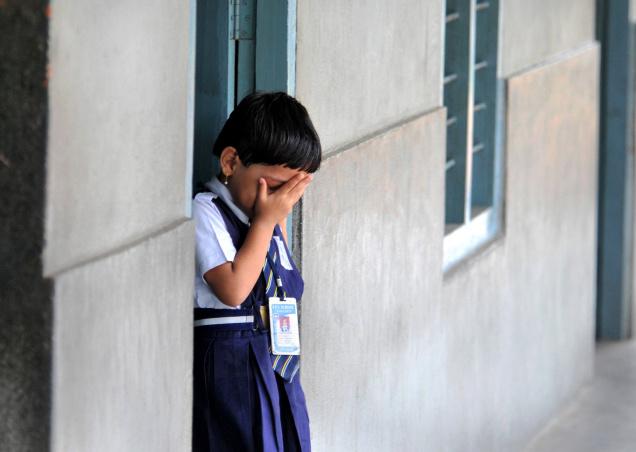
REPORT CARD: While most schools have adequate numbers of classrooms, separate toilet facilities for girls and boys, the availability of playground, school ramp, kitchen shed and boundary wall remains a major challenge in many States. Photo: K.R. Deepak
In India, low test scores on basic math and literacy assessments have led to calls for a higher standard for teacher training. Yet, private schools, which many feel provide a superior education, do not offer their teachers the same level of training. According to child rights activist Vasudev Sharma, the disparity in teacher training “is one of the major differences between private and government schools,” yet parents continue to rely on the reputation of private schools.
In a similar move to raise the bar for teachers, Australia will require all future teachers to score in the top 30% of a literacy and numeracy test, and Scotland will require that teachers become content area specialists as well as pedagogues. Yet, as we have seen in Guatemala, efforts to enforce higher standards for teachers leads to concerns about exclusion. Ireland is pushing back against this notion. According to Education Minister Quinn, “a diverse society needs a diversity of teachers, not a ‘one size fits all’ approach which ‘streamlines a particular cohort into teaching’.” At the International Summit on the Teaching Profession, John Bangs went a step further, stating that “a national teacher appraisal scheme is not essential to an education system’s success…. For appraisal to work, therefore, it must be valued by teachers and be seen as a welcome addition to their professional lives.” We have seen further examples of this notion in recent research conducted in Korea, Mexico, and India.
Data Manipulation
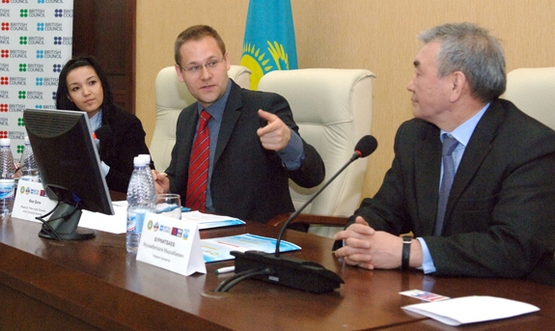
Phil Baty, Times Higher Education
While teachers might struggle to see evaluations as essential to an educational system’s success, universities seem to have accepted the importance of the international ranking systems – so much so that they will go to extreme lengths. In response to the University of Cork’s recent attempt to manipulate the data, Phil Baty, editor of the international rankings of Times Higher Education, explained, “Global university rankings have become phenomenally influential in recent years – not only helping students to decide where to invest many thousands of dollars in tuition fees, but also in helping university leaders shape strategies and in helping governments to make multimillion-dollar funding decisions in some parts of the world.” Additionally, as seen in another recent example of educators manipulating data in the US, intense pressure to be successful within systems that value strict measures of evaluation can also lead to unintended outcomes.





 International Education News