Tag Archives: Teaching

Collaboration, Professional Networks & Grassroots Change: The Lead the Change Interview with Kemi Oyewole

In the second part of this month’s Lead the Change (LtC) interview, Kemi A. Oyewole discusses her experiences researching institutional and organizational conditions that shape K-12 education policy. Oyewole is a Provost’s Postdoctoral Fellow at the University of Pennsylvania Graduate School of Education. Her research focuses on collaborative methods and civic education that can promote social justice. The LtC series is produced by Elizabeth Zumpe and colleagues from the Educational Change Special Interest Group (SIG) of the American Educational Research Association. This year, the Ed Change SIG recognized Oyewole’s work with their Graduate Student Award. A PDF of the fully formatted interview will be available on the LtC website.

Lead the Change (LtC): The 2026 AERA Annual Meeting theme is “Unforgetting Histories and Imagining Futures: Constructing a New Vision for Educational Research.” This theme calls us to consider how to leverage our diverse knowledge and experiences to engage in futuring for education and education research, involving looking back to remember our histories so that we can look forward to imagine better futures. What steps are you taking, or do you plan to take, to heed this call?

Kemi Oyewole: The current moment of political, anti-intellectual aggression towards the public sector has led many of us to see bleak immediate futures for education. Further, a flurry of executive orders from the Trump administration has been so overwhelming that it has distracted many of its opponents to the point of inaction. In the first 100 days of his second term (January 20, 2025 to April 29, 2025), the president issued directives that sought to limit educational, health, and sports opportunities for trans youth (EO 14168, 14187, 14201); prohibit policies that address racial disparities in school discipline (EO 14280); halt K-12 and higher education institutions’ diversity initiatives (EO 14173, 14190); and close the Department of Education (EO 14242). In the words of Toni Morrison (1975), “It’s important, therefore, to know who the real enemy is, and to know the function, the very serious function of racism is distraction. It keeps you from doing your work.” Beyond racism, other systems of oppression similarly seek to disrupt the advancement of marginalized people. However, powerful histories of resistance remind us that there are viable ways to move forward in the face of authoritarian pressure. 

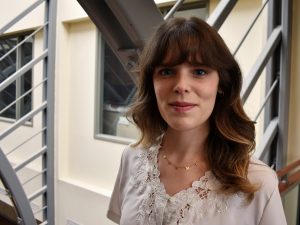
Source: University of Pennsylvania Website

There are many examples of resistance across the globe, especially in the Global South where people have contended with colonialism and its vestiges. I draw upon my identity as a Black American to highlight ways the resistance of enslaved Black people speaks to their futuring. While disproportionate attention is paid to violent revolts, enslaved people resisted by many means. These include marronage (i.e., escape from slavery to form independent communities), emancipation certified by legal documents, military service, work refusal, and sabotage (Helg, 2019). Despite the brutality they experienced, these enslaved people dreamed of freedom and used many means to pursue it. Their many strategies suggest that there is immense room for futuring—there are innumerable paths to a more just educational system. We are called to dream expansively and make space for others to do so as well.

While there is value in pausing to make time for futuring (i.e., imagining or dreaming; Kelley, 2002; Oyewole et al., 2023), we must not stop there. A commitment to educational change suggests we must do the hard, often frustrating, work of bringing emancipatory futures to pass. Within my research, my futuring benefits from engaging educators. For example, teaching students through the COVID-19 pandemic offered teachers a different sense of the futures enabled by educational technology (and its limitations). Thus, I seek to incorporate practitioner insights through collaborative, participatory research methods (The Collaborative Education Research Collective, 2023). However, engaging in-service educators in research requires flexible research agendas, timelines, and design. These collaborative methods require a departure from the status quo, a worthwhile shift because valuing educators as co-inquirers allows my futuring to be informed by current educational conditions. Ideally, these methods also offer participants a humanizing, reflective, professional development experience.

ebonyjanice (2023) argues that Black women’s contribution to movement work includes dreaming, resting, playing, seeking bliss, and pursuing wholeness. She celebrates the hard-fought dreaming of enslaved Black people while offering a new vision:

“‘Dreaming’ is a form of radical resistance because it calls us to a conscious stillness, which manifests itself as ease in the body. Ease, in a Black body, is revolutionary because Black people have not, historically, as a result of chattel slavery, had access to ease in our bodies. Dreaming, however, subverts a global anti-Black unease that actively works to commodify Black bodies. Plainly, dreaming is radical resistance because the fantastic hegemonic imagination (Townes, 2006) cannot function with Black bodies at rest.” (p. 8)

I embody her sentiment by allowing my futuring for education to come from a place of rest rather than frenzy. And to imagine educational systems that create conditions of peace and healing for Black girls—trusting that their wellness will benefit all learners (Guinier & Torres, 2002).

My vision of educational research is informed by the multifaceted resistance of enslaved Black Americans, my current practice of collaborative research, and Black women’s relentless pursuit of rest.

LtC: What are some key lessons that practitioners and scholars might take from your work to foster better educational systems for all students?

KO: My research emphasizes the value of collective action for stimulating educational change. Despite its promise, collaborative efforts can falter when there is a lack of consensus around their scope and goals. Further, attention is needed to ensure the routines embedded in collaborative endeavors do not perpetuate educational injustice (Diamond & Gomez, 2023; Hinnant-Crawford et al., 2023). My recent research examines these dynamics in professional learning networks (PLNs).

My dissertation project centered on a school district PLN of school-based instructional coaches. The network of 45 coaches met once a month in person (though meetings shifted online during the Covid-19 pandemic shift to distance learning). My social network analysis showed that coaches share advice on instructional strategies, data use practices, or workplace challenges with about five colleagues in the network. My interview and survey data suggests that coaches valued the space because it gave them an opportunity to connect with role-alike peers. These relationships were especially meaningful to participants because these coaches were normally the only person at their school in the liminal space of not being a classroom teacher, but also not being an administrator. These findings stress the value of routines that facilitate educators connecting with each other beyond their local communities of practice. A cross-school PLN can build participants’ pedagogical knowledge, strengthen their professional identity, and expand their professional network (Oddone et al., 2019). These benefits suggest that beyond-school collaboration is both a tool for developing educator skills and affirming their professional status. The warmth and enthusiasm I felt when observing this PLN made me appreciate the need to invest in rejuvenating spaces for educators.

Though PLNs have immense potential, much of their value stems from purposeful participation and strategic facilitation. It is powerful to create professional spaces that adaptably meet educator needs. However, PLNs have to find a balance between organic interpersonal engagement and directed professional exchange. For example, my longitudinal social network analysis found that coaches shared advice with peers who worked at similar schools, had similar self-efficacy appraisals, or joined the network at similar times. While these relationships provided coaches information that was applicable to their local context, it could come at the expense of being exposed to ideas from different environments. I also found that experienced coaches were less likely to share advice with others in the PLN.

Observation and interview data suggest that it is because after many years, these coaches were not getting as much value from the network. Their experiences point to the need for differentiation in coach professional development. Each finding highlights the challenges and opportunities of intentionally curating PLNs.

My emphasis on collaboration presents many promising research directions. First, I am excited about the ways that studying collaboration and PLNs avails itself to social network analysis (Rodway, 2018). Not only can this network analysis be done for research purposes, it can also be an active process that promotes educators reflecting on their own relationships and environments (Kothari et al., 2014). Second, there are opportunities to better identify the routines that support the resource sharing aims of in-person, or otherwise synchronous (e.g., a Zoom meeting), PLNs. Focusing research on these settings acknowledges that these meetings have different demands and opportunities than social media PLNs. Third, I highlight the need for more research on instructional coaching. While instructional coaching has exploded in prominence, it is heterogeneously enacted (Coburn & Woulfin, 2012; Kane & Rosenquist, 2019). Better understanding coach practices offers us a valuable perspective on educational change.

LtC: What do you see the field of Educational Change heading, and where do you find hope for this field for the future?

KO: As the United States government decreases the resources it devotes to public education, educational change will rely on more local actions. In the face of authoritarian surveillance and punishment, I expect that changes to promote just educational systems will become more covert. Though the loose coupling between dictated educational policy and enacted educational practice can prove challenging for progressive top-down reforms (Anderson & Colyvas, 2021), it can be an advantage when regressive policies are imposed. So, I expect that just educational change will not be codified, but spread in ways akin to grassroots activist and labor movements.

Another factor that will influence educational change is the United States’ projected 8% decline in K-12 enrollment from 2019 to 2030 (Irwin et al., 2024). These structural changes in the student population and fewer federal dollars devoted to education suggest that educational change efforts may have to be more focused in their scope and demands. Of course, there is also a need to strike a balance between what one feels is cynical, optimistic, or realistic. I am personally working to strike that balance—dreaming while being practical enough not to be dismayed whenever I see the news.

My hope is that researchers of educational change will support burgeoning grassroots efforts by conducting their scholarship in concert with students, teachers, families, community organizations, and others close to educational practice. Such research involves more participatory approaches, including design research that supports partners creating solutions to problems of practice while considering contemporary constraints. Collaborative approaches require research designs that are adaptable to rapidly changing conditions. Such flexibility is a departure from traditional research methods, but suggests implications beyond those that can be drawn from tightly controlled conditions.

I am incredibly grateful to be in community with researchers and practitioners passionate about educational change, even in a climate that is so hostile to improving schools for all children. While I can get discouraged that my locus of control is small, “small is good, small is all” (brown, 2017, p. 37).

References

Anderson, E. R., & Colyvas, J. A. (2021). What sticks and why? A MoRe institutional framework for education research. Teachers College Record: The Voice of Scholarship in Education, 123(7), 1–34. https://doi.org/10.1177/016146812112300705

brown,  adrienne maree. (2017). Emergent strategy: Shaping change, changing worlds. AK Press.

Coburn, C. E., & Woulfin, S. L. (2012). Reading coaches and the relationship between policy and practice. Reading Research Quarterly, 47(1), 5–30. https://doi.org/10.1002/RRQ.008

Diamond, J. B., & Gomez, L. M. (2023). Disrupting white supremacy and anti-Black racism in educational organizations. Educational Researcher, 0013189X2311610. https://doi.org/10.3102/0013189X231161054

ebonyjanice. (2023). All the Black girls are activists: A fourth wave womanist pursuit of dreams as radical resistance. Row House.

Guinier, L., & Torres, G. (2002). The miner’s canary: Enlisting race, resisting power, transforming democracy. Harvard University Press.

Helg, A. (2019). Slave no more: Self-liberation before abolitionism in the AMericas. University of North Carolina Press.

Hinnant-Crawford, B., Lett, E. L., & Cromartie, S. (2023). IMPROVECRIT: Using critical race theory to guide continuous improvement. In E. R. Anderson & S. D. Hayes (Eds.), Continuous improvement: A leadership process for school improvement (pp. 105–124). Information Age Publishing.

Irwin, V., Bailey, T. M., Panditharatna, R., & Sadeghi, A. (2024). Projections of education statistics to 2030 (NCES 2024-034). National Center for Education Statistics. https://nces.ed.gov/pubsearch/pubsinfo.asp?pubid=2024034

Kane, B. D., & Rosenquist, B. (2019). Relationships between instructional coaches’ time use and district- and school-level policies and expectations. American Educational Research Journal, 56(5), 1718–1768. https://doi.org/10.3102/0002831219826580

Kelley, R. D. G. (2002). Freedom dreams: The black radical imagination. Beacon Press.

Kothari, A., Hamel, N., MacDonald, J.-A., Meyer, M., Cohen, B., & Bonnenfant, D. (2014). Exploring community collaborations: Social network analysis as a reflective tool for public health. Systemic Practice and Action Research, 27(2), 123–137. https://doi.org/10.1007/s11213-012-9271-7

Morrison, T. (1975, May 30). Black Studies Center public dialogue. https://soundcloud.com/portland-state-library/portland-state-black-studies-1

Oddone, K., Hughes, H., & Lupton, M. (2019). Teachers as connected professionals. The International Review of Research in Open and Distributed Learning, 20(3). https://doi.org/10.19173/irrodl.v20i4.4082

Oyewole, K. A., Karn, S. K., Classen, J., & Yurkofsky, M. M. (2023). Equitable research-practice partnerships: A multilevel reimagining. The Assembly: A Journal for Public Scholarship on Education, 5(1), 40–59.

Rodway, J. (2018). Getting beneath the surface: Examining the social side of professional learning networks. In C. Brown & C. L. Poortman (Eds.), Networks for learning: Effective collaboration for teacher, school and system improvement (pp. 171–193). Routledge.

The Collaborative Education Research Collective. (2023). Towards a field for collaborative education research: Developing a framework for the complexity of necessary learning. The William and Flora Hewlett Foundation.

Townes, E. M. (2006). Womanist ethics and the cultural production of evil. Palgrave Macmillan.

Racialized Expertise as Change Capital: The Lead the Change Interview with Román Liera

In this month’s Lead the Change (LtC) interview, Román Liera designs his research program to study racial equity and organizational change in higher education. Liera is an Assistant Professor of Higher Education in the Department of Educational Leadership at Montclair State University. His current research projects focus on understanding how racism operates in doctoral student socialization, the academic job market, faculty hiring, reappointment, tenure and promotion, presidential hiring, and racial equity professional development. The LtC series is produced by Elizabeth Zumpe and colleagues from the Educational Change Special Interest Group of the American Educational Research Association. This year, the Ed Change SIG recognized Liera’s work with one of two Emerging Scholar Awards. A PDF of the fully formatted interview will be available on the LtC website.

Lead the Change (LtC): The 2026 AERA Annual Meeting theme is “Unforgetting Histories and Imagining Futures: Constructing a New Vision for Educational Research.” This theme calls us to consider how to leverage our diverse knowledge and experiences to engage in futuring for education and education research, involving looking back to remember our histories so that we can look forward to imagine better futures. What steps are you taking, or do you plan to take, to heed this call?

Source: Montclair State University

Román Liera: I appreciate the theme and the question because the current anti-DEI attacks are not new and have provided an opportunity to reflect on what has been done in the past and a gut check that what is being done has not been enough to advance racial equity and justice. In studying racial equity and organizational change, I have had several opportunities to collaborate and partner with administrators, faculty, and staff taking action to create more equitable hiring practices. I have also been collaborating with other scholars who have been creative and innovative in theorizing racial equity and organizational change.

In working with leaders and practitioners who are taking actions towards change, I have learned from and with change agents who are nearing retirement or beginning their higher education careers. Listening to those who have been in higher education for decades and referring to similar instances regarding attacks on DEI in the past (e.g., the Civil Rights era) has helped me affirm that my work not only matters but also makes a difference in the face of attacks on race-focused change efforts. At the same time, working with those newer to the field has helped me slow down to acknowledge that what we have been doing has not been enough to create equitable and inclusive educational organizations.

In addition to collaborating with change agents from diverse identities and career trajectories, I am theorizing and studying how we can continue to disrupt deeply rooted forms of racism in educational organizations. An area that I have been investigating is the racial inequities in the professoriate (e.g., underrepresentation of faculty of color), particularly in recruiting, hiring, and tenure and promotion practices. For example, along with Drs. Heather McCambly and Aireale Rodgers, we designed a study on faculty cluster hiring at six research one universities. A goal was to understand how administrators, faculty, and staff leaders framed and implemented cluster hiring initiatives to disrupt how whiteness informed faculty recruitment and hiring routines, practices, decisions, and evaluations. We recently published a manuscript in the Journal of Higher Education titled “Analyzing the Purposes and Mechanisms of Faculty Cluster Hiring Initiatives to Promote Racial Equity.” In the paper, which is funded by the Alfred P. Sloan Foundation, we highlight how senior leaders, administrators, faculty, and staff leverage racialized expertise—expertise focused on addressing racial inequities and injustices—as hiring capital.

Our participants emphasized that faculty cluster hiring initiatives aimed to broaden the expertise of faculty across departments and the university, enabling them to address critical societal issues related to equity and justice. In doing so, they were also being intentional not to trigger racist stereotypes among administrators and faculty that the cluster hiring was code for hiring underqualified faculty of color. On the contrary, the faculty cluster hiring initiatives raised the criteria because the evaluation criteria included what departments typically sought and what the cluster was focused on. Moreover, these change agents also leveraged cluster hiring lines to challenge practices that perpetuate racial inequities, such as requiring academic departments to assess their retention practices to access a cluster faculty line. Our participants reflected AERA’s theme because they relied on the past of their organizations to make decisions about creating more equitable and inclusive campuses for People of Color.

LtC: What are some key lessons that practitioners and scholars might take from your work to foster better educational systems for all students?

RL: As we learned through the faculty cluster hiring study mentioned above, initiatives to promote racial equity must go beyond reallocating resources. That is, having systemic and deep-level change requires more than monetary support and changes to hiring criteria. Although we found that change agents were strategic and responsive to the racialized history of their campuses, they used their political capital to situate faculty cluster hiring as an initiative that promoted the status of their university’s intellectual enterprise. For example, to legitimize the cluster initiatives, they aligned them with university-level missions to address and, in many instances, lead the advancement of equity and justice. However, in many cases, they left intact how whiteness operated in departments that did not have the infrastructure and people to promote racial equity. That is, faculty with expertise in racial equity and justice, who often were faculty of color, were brought into departments that expected them to take on the load of racial equity issues in their departments, which went beyond their scholarly contributions to the field. I echo what we recommend in the paper: I sympathize with the precarity (e.g., having to work in organizations that hamper agency, especially agency to address racial equity issues) higher education faces, but also remind leaders that race-focused initiatives like faculty cluster hiring hold promise for promoting racial equity, and it is legally defensible because it is about transforming structures and cultures and not about hiring based on racial identities. As extensive research has convincingly found (Gonzales et al., 2025; Liera & Hernandez, 2021; White-Lewis, 2020), racial biases and ideologies are deeply embedded in recruitment, hiring, promotion, and tenure practices that, when left undisrupted, whiteness will continue to be the baseline for what and who we deem valuable in the academy. More so than ever, today is not the time to be neutral if we genuinely care about creating more equitable and just futures.

LtC: What do you see the field of Educational Change heading, and where do you find hope for this field for the future?

RL: I will draw on the AERA 2026 theme and AERA President Winn’s comments to describe the program theme. One of the questions she asked educators was to “take a long path approach by thinking and feeling beyond our individual life spans… to the impact we will have on future generations of students, educators, and education researchers” (Wallach, 2022, p. 10 as cited by Winn, 2025 paragraph 3). Admittedly, when I initially sat with this question, I had a hard time imagining the future outside my lifespan. However, I made sense of it by taking a step back and reflecting on my research approach, as well as my relationships with educational practitioners, leaders, and researchers, which helped me frame my response to the question. 

Educational change requires us to be comfortable with imagining the future beyond our lifespans. For example, in 2022, Dr. Steve Desir and I theorized about the equity-minded organization. Not long after we published our paper (Liera & Desir, 2023), Dr. Kevin McClure interviewed us about our collective work on organizational change and racial equity, as well as the equity-minded organization, for his now-published book, “The Caring University: Reimagining the Higher Education Workforce after the Great Resignation.” He asked us if there was a university or college that we would consider to be an equity-minded organization. We said no, but we have several examples of educational organizations that reflect aspects of an equity-minded organization, and we wanted to provide a framework for the possibilities of a more just and equitable future. As Dr. McClure did, based on extensive literature, original data collection, and expert interviews, Steve and I were able to theorize about a future possibility by leaning into our experiential, theoretical, and methodological differences to imagine what we want future generations to experience. 

In short, I am hopeful for the future of educational change because educators are leaning into community to imagine more equitable and just organizations for future generations (see Dr. Patricia Virella’s book Crisis as Catalyst as an example of hope and equity for the future).

References

Gonzales, L. D., Bhangal, N., Stokes, C., & Rosales, J. (2025). Faculty hiring: Exercising professional jurisdiction over epistemic matters. Journal of Higher Education, 96(1), 28–53. https://doi.org/10.1080/00221546.2024.2301915.

Liera, R., & Desir, S. (2023). Taking equity-mindedness to the next level: The equity-minded organization. Frontiers in Education, 8. https://doi.org/10.3389/feduc.2023.1199174. 

Liera, R., & Hernandez, T. E. (2021). Color-evasive racism in the final stage of faculty searches: Examining search committee hiring practices that jeopardize racial equity policy. The Review of Higher Education, 45(2), 181–209. https://doi.org/10.1353/rhe.2021.0020.

McCambly, H. N., Liera, R., Rodgers, A. J., & Park, B. M. (2025). Analyzing the purposes and mechanisms of faculty cluster hiring initiatives to promote racial equity. The Journal of Higher Education. https://doi.org/10.1080/00221546.2025.2546765.

McClure, K. R. (2025). The caring university: Reimagining the higher education workplace after the great resignation. John Hopkins Press. 

Virella, P. M. (2025). Crisis as catalyst: Equity-oriented school leadership during difficult times. Harvard Ed Press. White-Lewis, D. (2020). The facade of fit in faculty search processes. Journal of Higher Education, 91(6), 833–857. https://doi.org/10.1080/00221546.2020.1775058.

Unforgetting History, Change, and Equity: The Lead the Change Interview with Stephen MacGregor

In this month’s Lead the Change (LtC) interview, Stephen MacGregor draws from his experience researching knowledge mobilization as a mechanism for educational change, with an emphasis
on leadership practices within increasingly complex education systems. MacGregor is an Assistant Professor and Director of Experiential Learning at the University of Calgary’s Werklund School of Education. His research focuses on three interrelated strands of inquiry: (1) mapping relational networks between universities and K–12 schools, (2) exploring positive leadership in nurturing professional capital and community, and (3) co-producing knowledge to bridge education theory and practice. The LtC series is produced by Elizabeth Zumpe and colleagues from the Educational Change Special Interest Group of the American Educational Research Association. This year, the Ed Change SIG recognized MacGregor’s work with one of two Emerging Scholar Awards.
A PDF of the fully formatted interview will be available on the LtC website.

Lead the Change (LtC): The 2026 AERA Annual Meeting theme is “Unforgetting Histories and Imagining Futures: Constructing a New Vision for Educational Research.” This theme calls us to consider how to leverage our diverse knowledge and experiences to engage in futuring for education and education research, involving looking back to remember our histories so that we can look forward to imagine better futures. What steps are you taking, or do you plan to take, to heed this call?

Source: University of Calgary Website

Stephen MacGregor: I see the call to “unforget” as an imperative to intentionally surface the institutional, policy, and community narratives that have shaped current possibilities for teaching, learning, and leadership. Much of my research and leadership has been motivated by this orientation, particularly in projects that examine how educational systems respond to and often resist new ideas, and how practitioners navigate the attendant dynamics.

One step I am taking is to more deliberately position historical analysis alongside contemporary policy and practice studies in my research (e.g., MacGregor & Friesen, 2025; MacGregor et al., 2022, 2024). In my recent and ongoing research into multi-tiered systems of support (MTSS) and social-emotional learning implementation in Alberta schools, for example, my colleagues and I examine the present-day enactment of new initiatives as well as trace how prior reform cycles, funding shifts, and governance structures have left their imprint on current efforts. The historical grounding deepens our understanding of why certain approaches gain traction, why others fade, and what legacies of inequity persist beneath what can often be surface-level change.

Equally, my scholarship on knowledge mobilization in educational leadership has highlighted how selective memory (i.e., what is remembered, forgotten, or deemed irrelevant) shapes the evidence that informs decision-making. Through collaborative work with system leaders to design processes that make research use more transparent and inclusive, I aim to counteract tendencies to erase dissenting voices or inconvenient histories (e.g., experiences with failure and what can be learned from them). This has included creating tools and frameworks that explicitly prompt leaders to consider historical precedents and the perspectives of communities that have long envisioned and pursued their own futures for education, often outside formal institutional channels.

In my role as Director of Experiential Learning at the Werklund School of Education (University of Calgary), I am working to integrate a longer-term, historically grounded perspective into the design of learning experiences for undergraduate and graduate students. This means helping future and current practitioners see educational challenges as part of longer trajectories shaped by policy and shifting social priorities. To that end, I am building local and international partnerships that connect our students with varied educational histories and contexts (e.g., multiple international teaching placements through the Teaching Across Borders program). This work also involves embedding reflective and archival practices into experiential learning. I ask participants in our initiatives to document their experiences in ways that attend to historical influences (e.g., speaking with practitioners about prior reform efforts, exploring changes in governance or community engagement over time). My aim is for these experiences to leave participants better prepared to design and lead educational opportunities that are responsive to both the past they inherit and the future they help shape.

Looking ahead, I plan to expand my research on how system leaders and policymakers draw on history, explicitly or implicitly, when justifying decisions and setting priorities. I am especially interested in how prevailing narratives within leadership discourse and policy texts shape which forms of evidence are privileged and which innovations are recognized. Moreover, I aim to support leadership practices and research use that are historically informed and attentive to marginalized perspectives.

LtC: What are some key lessons that practitioners and scholars might take from your work to foster better educational systems for all students?

SM: A consistent lesson from my research is that fostering better school systems for all students requires a shift from viewing change as a series of isolated initiatives to understanding it as an
iterative, relational process. Educational change is seldom straightforward; it unfolds amid fluctuating policy landscapes, evolving priorities, and the complexities of daily practice. When leaders and practitioners treat each initiative as if it exists in a vacuum and without regard for prior efforts, contextual constraints, or the cumulative impact on educators and learners, they risk repeating past missteps and missing opportunities to build on existing strengths.

From my MTSS research, another lesson is that systems must attend to implementation drivers (Fixsen et al., 2015) as the key organizational and human supports that make new practices possible in schools and thus that enable change efforts to take root and grow. These include competency drivers such as targeted professional learning and coaching; organization drivers such as supportive policies, data systems, and resource alignment; and leadership drivers that guide decision making in response to challenges. Where these drivers are deliberately cultivated in concert, educators are better positioned to adapt initiatives for their own contexts and ensure they serve the needs of their students.

Another lesson relates to the role of failure in system improvement. Too often, unsuccessful reforms are quietly set aside without deliberate reflection, resulting in the same pitfalls being encountered repeatedly. My research points to the value of structured learning from failure, which means creating processes that allow for analysis of what went wrong or failed to produce the intended outcomes, identifying underlying mechanisms, and generating insights for future action (MacGregor & Friesen, 2025). This reframing of failure as a legitimate and even necessary part of improvement strengthens adaptive capacity. It also shifts organizational culture toward openness, candour, and a willingness to iterate rather than abandon promising work prematurely.

Finally, across my work in schools, international partnerships, and higher education settings, I have seen that strong, trust-based relationships are essential for the two previous lessons to function at their best. Competency, organization, and leadership drivers all depend on the mutual respect and shared ownership that develop when schools and broader systems engage as genuine partners. Moreover, relationships provide the foundation for honest conversations that allow people to name challenges directly and work together on responses that matter.

For practitioners, these lessons might spark reflection on ways to anchor new initiatives in an understanding of local context and history, strengthen the drivers that support implementation, build habits of learning from setbacks, and invest in relationships as a foundation for change. For scholars, they might prompt thinking about how to design research that examines the drivers of educational change in action and supports their development, which could offer knowledge that is attentive to the realities and contexts where change is being pursued.

LtC: What do you see the field of Educational Change heading, and where do you find hope for this field for the future?

SM: I see the field of educational change continuing to wrestle with complexity while becoming more deliberate in how it integrates various forms of knowledge and expertise. There is a growing recognition that meaningful change depends on aligning policy, practice, and community engagement in ways that are contextually grounded and historically informed. I am hopeful for continued attention to strengthening the foundational conditions (e.g., coherent governance structures, stable funding streams, and collaborative professional learning) that allow promising approaches to take root and adapt over time.

I also anticipate deeper commitments to equity-informed leadership, with systems increasingly
recognizing that meaningful change cannot happen without addressing the structural inequities that shape educational experiences. Among many approaches, this could involve more substantive power sharing with communities, particularly those whose knowledge has historically been overlooked or marginalized. It could also involve embedding processes for shared decision-making and transparency into the everyday work of schools and systems.

What gives me hope is the growing body of scholarship and practice that treats relationships as the core infrastructure of educational change. I see this in system leaders who intentionally create spaces for dialogue that can bridge ideological divides, in educators who invite students and families into co-design processes, in cross-sector partnerships that build locally relevant solutions, and in research-practice networks that enable long-term collaboration across institutions and jurisdictions (e.g., Hubers, 2020; Rechsteiner et al., 2024; van den Boom Muilenburg et al., 2022). I am also encouraged by how scholars and practitioners are integrating multiple ways of knowing and thus valuing both rigorous research and the lived experience of educators, students, and communities. I am hopeful that we are moving beyond asking “what works?” by appending that question with “for whom, under what conditions, and with what consequences?”(Boaz et al., 2019).

References

Boaz, A., Davies, H., Fraser, A., & Nutley, S. (Eds.). (2019). What works now? Evidence-in- formed policy and practice. Policy Press.

Fixsen, D., Blase, K., Naoom, S., & Duda, M. (2015). Implementation drivers: Assessing best practices. National Implementation Science Network.

Hubers, M. D. (2020). Paving the way for sustainable educational change: Reconceptualizing what it means to make educational changes that last. Teaching and Teacher Education, 93.
https://doi.org/10.1016/j.tate.2020.103083.

Rechsteiner, B., Kyndt, E., Compagnoni, M., Wullschleger, A., & Maag Merki, K. (2024). Bridging gaps: A systematic literature review of brokerage in educational change. Journal of Educational Change, 25(2), 305–339. https://doi.org/10.1007/s10833-023-09493-7.

van den Boom-Muilenburg, S. N., Poortman, C. L., Daly, A. J., Schildkamp, K., de Vries, S., Rodway, J., & van Veen, K. (2022). Key actors leading knowledge brokerage for sustainable school improvement with PLCs: Who brokers what? Teaching and Teacher Education, 110.
https://doi.org/10.1016/j.tate.2021.103577.

MacGregor, S., & Friesen, S. (2025). Reframing failure: Lessons from educational leaders
facilitating multi-tiered systems of support. Journal of Professional Capital and Community. Advance online publication. https://doi.org/10.1108/JPCC-09-2024-0168.

MacGregor, S., Friesen, S., Turner, J., Domene, J. F., McMorris, C., Allan, S., Mesner, B., &
Sumara, D. (2024). The side effects of universal school-based mental health supports: An integrative review. Review of Research in Education, 48, 28–57.

Supplies, Cellphones, and Fear: Scanning the Local Back-To-School Headlines in the US for 25-26 (Part 3)

The third part of IEN’s annual scan of the back-to-school headlines highlights some of the issues that states and cities in the US are facing as students have returned to school. The first part of the scan shared stories from outside the US, and the second part gathered stories about some of the many policy changes, demands, and cuts that schools in the US are having to respond to this year.

For back-to school headlines from Fall 24: Politics, Policies, and Polarization: Scanning the 2024-25 Back-To-School Headlines in the US (Part 1); Supplies, Shortages, and Other Disruptions? Scanning the Back-to-School Headlines for 2024-25 (Part 2); Banning Cell Phones Around the World? Scanning the Back-to-School Headlines for 2024-25 (Part 3); Fall 23: Crises and Concerns: Scanning the Back-to-School Headlines (Part 1), (Part 2), (Part 3). Fall 22: Hope and trepidation: Scanning the back-to-school headlines in 2022 (Part 1)(Part 2) (Part 3); Fall 21: Going back to school has never been quite like this (Part 1)(Part 2)(Part 3); Fall 20: What does it look like to go back to school? It’s different all around the world…; Fall 19: Headlines around the world: Back to school 2019 edition.

          The many funding cuts, executive orders, and other demands from Washington dominated the local school headlines in the US this year, including fears that students might be deported and ICE agents may target schools. But a few of the usual concerns were covered as well, including concerns about the economy, the costs of supplies, and growing concerns about cellphones, AI, and other technologies.


Fears & Deportations

Immigrant Families Fear Trump’s Deportations as Children Return to School, ABC News

For Mixed Status Families, Deportation Fears Cast Shadow Over New Academic YearNPR

An 8-year-old second grade student, born in the U.S. to an undocumented family, stands holding a sign in her graduation cap and gown after her school ceremony outside the Federal Building, source NPR

‘So Many Threats to Kids’: ICE Fear Grips Los Angeles at Start of New School Year, The74

What Mass. Schools are Saying About Immigration Enforcement as Students Return, NBC Boston 

Federal Surge has Taken a Toll on Children of Immigrants in Washington, PBS


Costs & Supplies

Survey: Inflation Less Impactful this Year; Still, Nearly 1 in 3 Back-to-School Shoppers are Making Changes to Save, Bankrate

Back-to-School Prices are a Mixed Bag this Year, NBC News

Parents Say Back-to-School Feels Pricier than Ever, with Many Spending $500+ on Supplies and Activities, Yahoo News

Teachers are Spending More and More on School Supplies. Here’s Why, Indiana Capitol Chronicle

3,000 Teachers Beg for Donations for Basic Classroom Supplies — Despite NYC’s Record-Breaking per-Pupil Spending, New York Post

“There’s no other profession where you’re expected to provide literally the basics that you need to do your job on your own” Source: New York Post

School Lunches Are Costing Families More Than Ever: Here’s Why, Daily Voice


Cellphones, AI & EdTech

Most Students Now Face Cellphone Limits at School. What Happens Next? Education Week

More Students Head Back to Class Without One Crucial Thing: Their Phones, NPR

Students Turn Back to Books as More School Districts Implement Phone Bans, Newsweek

6 Ways Administrators are Handling Cellphone Bans in the New School Year, K-12 Dive

From ‘Bring It On’ to ‘This Policy Is Crazy,’ NYC Parents React to Cellphone Ban, The74

‘The New Encyclopedia’: How Some Kids Will Use AI at School this Year, CNN

ChatGPT Usage Skyrockets as Kids Return to School, Newsweek

Back to School: AI in the Classroom, the Negative Side, WNEP

Major Partnerships are Expanding K-12 AI Literacy, EdTech

Back-to-School Season Brings Spike in Cyberattacks, EdTech

Driver Shortage: Dozens of School Bus Route Cancellations Hit Mat-Su Students, KTUU

Source: KTUU

Arkansas

Arkansas School District Responses to Ten Commandments Law Mixed, Arkansas Advocate

California

California Schools Brace for Fallout from U.S. Supreme Court Decision on Religious Rights, EdSource

California Bill Requires Schools to Alert Families of Immigration Agents on Campuses, The Guardian

Colorado

Denver Schools Chief: Trump Administration is Weaponizing Title IX and Pushing ‘Anti-Trans Agenda’, Chalkbeat

Illinois

Chicago Public Schools Prepare for National Guard Threat, Chicago Tribune

About 200 Students with Disabilities Still Need a Classroom in Chicago, Chalk Beat

Florida

In the Name of Parental Rights, New Law Requires Sign-Off for Corporal Punishment in Florida Schools, Florida Phoenix

Florida Schools Will Test Armed Drones this Fall to Thwart Shooters , K-12 Dive

Massachusetts

What Massachusetts Parents Should Know this Back-to-School Season, Boston Globe

Boston Mayor Wu Expects Deportation Fears to Affect Boston School Attendance, WBUR

Michigan

Michigan Schools will have New Requirements for Teaching English Learners this School Year, Chalk Beat

Minnesota

 Minnesota Schools Adjust Breakfast Menus to Abide by New Federal Sugar Restrictions, Minnesota Star Tribune

Nebraska

Nebraska Students Adapt to Cellphone Ban in Schools, KETV

New Jersey

Newark Students Head Back to School. What’s New this School Year? Chalk Beat

New York

Adirondack Educators Contend with Dwindling Resources as Enrollment Dips, Times Union

New Year, New Rules in New York City: First Day of School Starts with Joy, Jitters, and a Cellphone Ban

Thousands of New Teachers to Start as NYC Pushes Historically Large Hiring Spree to Shrink Classes, Chalk Beat

What to Know About Vaccines in NY as Students go Back to SchoolGothamist

New N.Y.C. Food Standards Could Spell Doom for Chicken Nuggets, New York Times

Free Haircuts for NYC Kids Ahead of First Day of SchoolPIX11

Ohio

Ohio Students Face New Cellphone Ban as School Year Begins, WBNS

Oregon

Families, Staff Return to School Across Oregon, Some Under Fear of ICE Arrests, OPB

“Woodburn School Board urging board members to pass the original ‘Safe and Welcoming Schools’ resolution. The resolution reaffirms protections for students, regardless of immigration status.” Source: OPB

What to Know About Cellphones and Artificial Intelligence as Oregon Students Return to School, OPB

Pennsylvania

As Classes Begin, Pennsylvania School Districts Feel Pinch of Budget Impasse, York Dispatch

Two Susquehanna Township (PA) Schools Cancel Classes Due to Lack of Bus Drivers, WGAL

South Carolina

‘Why Don’t I See my Friends Anymore?’ Parents Fear Deportations are Coming to SC Schools, The Post and Courier

Tennessee

Gun safety classes required, starting in kindergarten, in Tennessee this year, Washington Post

Texas

‘A No-Win Situation’: How Houston School Districts are Responding to the Ten Commandments Classroom Law, Houston Chronicle

Trump’s Immigration Crackdown Upends Life at Austin Elementary School, Austin American-Statesman

Washington D.C.

‘Leave Our Kids Alone’: DC School Year Starts Amid Armed National Guard Patrols, NBC 4 Washington

Parents Mobilize to Protect School Commutes Amid Trump Deployment in DC, Bloomberg

“Members of the National Guard patrol near the Washington Monument on the National Mall in Washington, DC” Source: Bloomberg

Schools Reopen in D.C. With Parents on Edge Over Trump’s Armed Patrols, Education Week

Washington

Washington State District Finally Opens School After Support Staff Strike, The 74

Wisconsin

As Costs Rise, Wisconsin Teachers and Families Pay the Price on Back-to-School Supplies, The Wisconsin Independent

Economics, AI, Cellphones and More: Scanning the International Back-To-School Headlines for 25-26 (Part 1)

AI concerns, cellphone policies, economic worries, and questions about new schedules, new curricula and other changes fill up the back-to-school headlines this year. IEN’s annual scan of the sources of education news and research around the world begins with a look at the Northern Hemisphere headlines from outside the US. Next week, we’ll review the national and local headlines in the US along with some of the biggest changes in federal policy and funding that schools are dealing with this year. 

For back-to school headlines from Fall 23; Crises and Concerns: Scanning the Back-to-School Headlines (Part 1), (Part 2), (Part 3). Fall 22: Hope and trepidation: Scanning the back-to-school headlines in 2022 (Part 1), (Part 2) , (Part 3); Fall 21: Going back to school has never been quite like this (Part 1), (Part 2), (Part 3); Fall 20: What does it look like to go back to school? It’s different all around the world…; Fall 19: Headlines around the world: Back to school 2019 edition.

Africa


Asia & the Pacific

As the new semester approaches, study supplies are experiencing strong sales. Photo: VCG

Europe

Teacher collects pupils’ mobile phones at a school in Espoo. Photo: Vesa Moilanen / Lehtikuva

Middle East


The Americas

Abri, 9, Ecuador, by Chris DeBode for The Guardian

Mel Ainscow on reforming education systems for inclusion and equity

This week, Mel Ainscow discusses some of the key insights from his new book Reforming Education Systems for Inclusion and Equity. Ainscow is Emeritus Professor, University of Manchester, Professor of Education, University of Glasgow, and Adjunct Professor at Queensland University of Technology.

What’s the greatest challenge facing education systems around the world? Finding ways of including and ensuring the progress of all children in schools. In economically poorer countries this is mainly about the millions of children who are not able to attend formal education. Meanwhile, in wealthier countries many young people leave school with no worthwhile qualifications, whilst others are placed in special provision away from mainstream education and some choose to drop out since the lessons seem irrelevant. Faced with these challenges, there is evidence of an increased interest internationally in the idea of making education more inclusive and equitable. However, the field remains confused as to the actions needed in order to move policy and practice forward. 

Reforming Education Systems for Inclusion and Equity book cover

Reforming education systems

Over the last thirty years or so I have had the privilege of working on projects aimed at the promotion of inclusion and equity within education systems, in my own country and internationally. This leads me to propose a radical way of addressing this important policy challenge. This thinking calls for coordinated and sustained efforts within schools and across education systems, recognising that improving outcomes for vulnerable learners is unlikely to be achieved unless there are changes in the attitudes, beliefs and actions of adults. All of this echoes the views of Michael Fullan, an internationally recognised expert on educational change, who argues: “If you want system change you have to change the system!”

In Reforming Education Systems for Inclusion and Equity, I suggest six key ideas that can be used to guide reform efforts:

  1. Inclusion and equity should be seen as principles that inform educational policies. These principles should influence all educational policies, particularly those that are concerned with the curriculum, assessment processes, teacher education, accountability and funding.
  2. Barriers to the presence, participation and achievement of learners should be identified and addressed. Progress in relation to inclusion and equity requires a move away from explanations of educational failure that focus on the characteristics of individual children and their families, towards an analysis of contextual barriers to participation and learning experienced by learners within schools. In this way, those students who do not respond to existing arrangements come to be regarded as ‘hidden voices’ who can encourage the improvement of schools. 
  3. Schools should become learning communities where the development of all members is encouraged and supported. Reforming education systems in relation to inclusion and equity requires coordinated and sustained efforts within schools. Therefore, the starting point must be with practitioners: enlarging their capacity to imagine what might be achieved and increasing their sense of accountability for bringing this about. The role of school leaders is to create the organisational conditions where all of this can happen.
  4. Partnerships between schools should be developed in order to provide mutual challenge and support. School-to-school collaboration can strengthen improvement processes by adding to the range of expertise made available. In particular, partnerships between schools have an enormous potential for fostering the capacity of education systems to respond to learner diversity. More specifically, they can help to reduce the polarisation of schools, to the particular benefit of those students who are marginalised at the edges of the system, and whose progress and attitudes are a cause for concern. 
  5. Families and other community partners should be encouraged to support the work of schools. The development of education systems that are effective for all children will only happen when what happens outside as well as inside a school changes. Area-based partnerships are a means of facilitating these forms of cooperation. School leaders have a crucial role in coordinating such arrangements, although other agencies can have important leadership roles. 
  6. Locally coordinated support and challenge should be provided based on the principles of inclusion and equity. The presence of experienced advisers who can support and challenge school-led improvement is crucial. There is an important role for governments in creating the conditions for making such locally led improvements happen and providing the political mandate for ensuring their implementation. This also means that those who administer local education systems have to adjust their priorities and ways of working in response to improvement efforts that are led from within schools.
Mel Ainscow, Source: Alchetron

Using evidence

Evidence is the life-blood of inclusive educational development. Therefore, deciding what kinds of evidence to collect and how to use it requires considerable care, since, within education systems, what gets measured gets done. This trend is widely recognised as a double-edged sword precisely because it is such a potent lever for change. On the one hand, data are required in order to monitor the progress of children, evaluate the impact of interventions, review the effectiveness of policies, plan new initiatives, and so on. On the other hand, if effectiveness is evaluated on the basis of narrow, even inappropriate, performance indicators, then the impact can be deeply damaging. 

The challenge, therefore, is to harness the potential of evidence as a lever for change, whilst avoiding these potential problems. This means that the starting point for making decisions about the evidence to collect should be with agreed definitions of inclusion and equity. In other words, we must measure what we value, rather than valuing what can more easily be measured. Therefore, evidence collected within the education system needs to relate to the presence, participation and achievement of all students.

Implications

These ideas are guided by a belief that inclusion and equity should not be seen as a separate policy. Rather, they should be viewed as principles that inform all national policies, particularly those that deal with the curriculum, assessment, school evaluation, teacher education and budgets. They must also inform all stages of education, from early years through to higher education. In this way inclusion and equity must not be seen as somebody’s job. Rather, it is reform agenda that must be the responsibility of everyone involved in providing education.

Next steps and critical challenges in the development of the Vietnamese education system: Can Vietnam transform the conventional model of schooling (Part 4)? 

What might it take to develop a competency-based education system? The final post in this 4-part series from Thomas Hatch describes some of the key issues that will have to be addressed to sustain and deepen Vietnam’s efforts to transform the Vietnamese education system. For other posts in this series on Vietnam see Part 1: Can Vietnam transform the conventional model of schooling? Educational improvement at scale, Part 2: Building the capacity for high quality education at scale: Can Vietnam transform the conventional model of schooling, and Part 3: Challenges and opportunities for learning and development in Vietnam: Can Vietnam transform the conventional model of schooling. Earlier posts related to Vietnam include: Achieving Education for All for 100 Million People: A Conversation about the Evolution of the Vietnamese School System with Phương Minh Lương and Lân Đỗ Đức (Part 1); Looking toward the future and the implementation of a new competency-based curriculum in Vietnam: A Conversation about the Evolution of the Vietnamese School System with Phương Lương Minh and Lân Đỗ Đức (Part 2); The Evolution of an Alternative Educational Approach in Vietnam: The Olympia School Story Part 1 and Part 2; and Engagement, Wellbeing, and Innovation in the Wake of the School Closures in Vietnam:  A Conversation with Chi Hieu Nguyen (Part 1 and Part 2).

Viewed retrospectively, Vietnam’s recent effort to shift the aims of education and the process of teaching and learning can be seen as part of a long-term, multi-decade, “renovation” effort rather than a recent initiative to transform education in one fell swoop. From this perspective, Vietnam has made substantial improvements in educational access and quality over a period of 30 years while taking incremental steps towards more flexible, student-centered approaches to teaching and learning. 

Although Finland and Singapore began the journey to systemic educational improvement earlier, they followed a similar trajectory, creating comprehensive education systems with centrally developed curricula or curriculum frameworks, focused on national education goals, aligned with those on international tests like PISA. Singapore continues to top the international educational rankings, but it is also trying to contend with wide-spread concerns about the effects that the competitive, high-pressure, academically focused system has on students’ development, mental health, and wellbeing. Finland, on the other hand, has slipped somewhat in rankings like PISA (though it continues to score at relatively high levels) raising concerns that the autonomy of teachers widely cited as a key ingredient in Finland’s educational success, may also be contributing to growing inequity and an inability to move the whole system to support interdisciplinary learning. 

Reflecting on what I’ve learned about the development of all three of these systems leaves me with a number of questions: 

  • Will Vietnam follow the trajectories of Singapore and Finland or will it chart its own course? 
  • What are the chances that Vietnam will be able to expand enrollment to secondary schools, to continue to increase quality overall, and to continue to expand and deepen the use of more powerful pedagogies?
  • Will Vietnam’s education system develop in ways that are equitable, benefiting ethnic minorities as well as elites, while reducing the pressures on students and continuing to move in more student-centered directions?  

Answering these questions depends in turn on how Vietnam deals with some critical challenges: 

Can Vietnam maintain the commitment and support for K-12 education and expand support for other aspects of the education system?  

The Vietnamese government has already launched major initiatives to support the development of early childhood education. These initiatives aim particularly at creating more equitable access for early childhood education in remote, rural areas for ethnic minority groups. In February of 2025, the government also began gathering feedback on a National Assembly proposal focuses on “modernising the preschool curriculum using a competency-based approach, fostering holistic child development in physical health, emotional well-being, intelligence, language skills and aesthetics. It also aims to lay a solid foundation for personality development, ensuring children are well-prepared for first grade while instilling core Vietnamese values.” 

At the same time, Vietnam’s higher education system remains under-developed, with the enrollment rate under 30%, one of the lowest among East Asian countries. Increasing expenditures on both early childhood education and higher education could result in a shift in the attention and funding that has been so crucial to the development of K-12 education over the past 30 years. 

Can Vietnam continue to develop the education system despite long-standing constraints? 

Although there have been efforts to improve teacher education and the quality of the teaching in Vietnam, there are continuing concerns about shortages of teachers and further declines in the quality of the education force. Ironically, the development of other sectors of the economy means that teachers can now find higher paying jobs in other occupations. At the same time, as one of my colleagues described it, many of those who do become teachers have to work multiple jobs often having to hustle side jobs at nights and on weekends just to cover basic expenses for their families. The increasing urbanization and movement of more and more people from rural areas to cities like Hanoi and Ho Chi Minh City to find jobs also mean that many urban schools will continue to be overcrowded, with large class sizes. In turn, that urban overcrowding will continue to make it difficult for teachers to adopt many student-centered pedagogies; that urbanization can also make it harder and harder to find educators to staff rural schools. 

Can Vietnam promote increased autonomy and flexibility and maintain a focus on equity at the same time?

Over time, Vietnam has tried to increase autonomy and provide more flexibility for schools and education leaders as part of their improvement efforts. In particular, initiatives to increase school-level decision-making include providing some schools with the flexibility to charge higher fees to make up for reductions in public funding. For example, about 20 of the schools in major cities like Hanoi and Ho Chi Minh City have been developing investment models in which parents can pay for their child’s full tuition for all 12 grades when they start school in first grade. In return, the school makes the commitment to pay the parents back when their child graduates. In this arrangement, students can get a free public-school education (though they lose their investment if the child leaves the school), and the school gets funds it can use to make improvements in facilities and the quality of education which can help the school to raise more revenue. 

The hope seems to be that the increased autonomy will drive improvements and might encourage schools to innovate and offer more student-centered instruction. At the same time, these developments also create issues of equity as top-performing schools may be able to charge more and may be able to pay higher salaries to attract effective teachers. In addition, the increased competition for placement in top schools can also intensify the pressure on students and teachers to focus on performing well on conventional tests and exams. That pressure can already be seen in early childhood education, where, as one of my colleagues told me, there is considerable competition to get into some of the top preschools and primary schools. In order to help their children prepare for the application and admission process, which often includes tests, some parents are sending their children to both preschool and “transition programs” that cover the content and skills needed to meet the entrance requirements. 

A map of the country

AI-generated content may be incorrect.

Can Vietnam continue to develop the education system in the face of resistance to changes in conventional instruction?  

Even with the efforts to encourage a shift to competencies, the pressures to maintain the conventional instruction remain. Many teachers, students, and parents are reluctant to embrace the changes. That resistance is already showing up as parents and teachers respond to the new textbook policy. Some parents, for example, have complained that having too many textbook options is both too costly for them and too confusing for students. As one of my colleagues explained, textbooks have long been passed down among siblings but that cost-effective practice will have to stop if teachers are choosing different textbooks. That flexibility may also erode the shared experiences and shared understanding of the instructional process that families gain from a common text. 

Allowing teachers to choose their textbooks was also supposed to be part of the move to provide them with greater flexibility in how best to help students achieve the new competencies. However, choosing the textbook and designing activities is a significant amount of work, and many schools and teachers may prefer to use more conventional textbooks and even those that use new textbooks may continue to move through them in a rigid, lock-step way. Complicating matters further, the textbook industry – and the corruption in it – has to be a part of this change as well. 

Schools in Vietnam have changed and improved, but can schooling be transformed?

Political commitment and funding, shared values, hard work by students, educators and parents, with textbook-based teaching that has provided alignment between what’s taught and what’s measured are all critical contributors to the development of the Vietnamese education system. These factors work in concert with the efforts to make an improved education system a key part of the effort create and sustain a strong nation, with a modern economy, that can defend itself in the face of threats from outsiders. Now the question is whether the textbook-based teaching and shared belief in conventional education will serve as a foundation for — or a barrier to — the development of more student-centered pedagogies and a competency-based system.

A building with trees in front of it

AI-generated content may be incorrect.


On my visit, I talked with educators and visited schools, including private schools, like the Olympia School, that have found ways to prepare Vietnamese students for the Vietnamese national exams and still make room for more student-centered, interdisciplinary learning activities. Of course, the presence of some innovative practices in some places may not have a substantial impact on the rest of the system. But if some steps toward competency-based instruction continue to be taken, and the number of policymakers, educators, parents, and students who have positive experiences with new forms of teaching and learning continues to grow, the forces of generational change may begin to put pressure on the status quo.

Challenges and opportunities for learning and development in Vietnam: Can Vietnam transform the conventional model of schooling (Part 3)?

How can education in Vietnam continue to improve despite questions about the quality of teaching, concerns about the coherence of the education system, and other issues? The third post in this 4-part series from Thomas Hatch explores some of the challenges as well as the opportunities that educators in Vietnam face as they try to shift the whole system to focus on competencies. For the other posts in this series on Vietnam, see part 1 on educational improvement at scale beyond PISA and part 2 on some of the key elements that have contributed to those improvements. Earlier posts related to Vietnam include Achieving Education for All for 100 Million People: A Conversation about the Evolution of the Vietnamese School System with Phương Minh Lương and Lân Đỗ Đức (Part 1); Looking toward the future and the implementation of a new competency-based curriculum in Vietnam: A Conversation about the Evolution of the Vietnamese School System with Phương Lương Minh and Lân Đỗ Đức (Part 2); The Evolution of an Alternative Educational Approach in Vietnam: The Olympia School Story (Part 1 and Part 2); and Engagement, Wellbeing, and Innovation in the Wake of the School Closures in Vietnam:  A Conversation with Chi Hieu Nguyen (Part 1 and Part 2).

Illustrating the complexity and contextual nature of educational change, some of the factors identified as critical in the evolution of other “higher performing” education systems do not apply in Vietnam. Somehow, the Vietnamese education system has improved substantially even though improving the qualifications of teachers and the quality and consistency of teacher preparation have been concerns for some time. At the same time, even as the PISA tests in 2012 were showing the world how much the Vietnamese education system had improved, the government was already developing initiatives to embrace new competency-based goals and student-centered instruction. To that end, among other changes, new competency-based textbooks began to roll-out in Vietnam during the pandemic, even as many other high-performing education systems struggle to make that major systemic shift. Given developments in the Vietnamese education system over the past 30 years, what are the challenges and possibilities for creating a competency-based education system moving forward? 

A group of books with cartoon characters

AI-generated content may be incorrect.
Covers of some grade 4 textbooks of Vietnam Education Publishing House (Photo: Vietnam Education Publishing House)

Improvement despite concerns about the teaching force, coherence, and corruption

The improvements in the Vietnamese education system in the 1990’s and 2000’s were made despite a series of persistent concerns about the quality of the teaching force that remain today. These issues include a low cut-off for entrance into teacher education and failure to attract good students into teaching along with substantial numbers of underqualified teachers. Furthermore, despite feeling valued, teachers in Vietnam are not well paid, with wages that are not competitive with those in other sectors. In fact, at the same time that the “Growing Smarter” report from the World Bank highlighted the importance of a highly qualified, well-paid teaching force, it also acknowledged that teachers are paid substantially less in Vietnam than they are in other “high-performing” education systems like Singapore.  Teachers are also paid less in Vietnam than they are in other Asian countries like Thailand, which perform much worse on international tests. 

Explanations of high education system performance also often highlight the importance of coherence and alignment among goals, strategies, and incentives across all aspects of the education system. In the case of Vietnam, the historical traditions and top-down structure of the bureaucracy fosters a culture of compliance that, for better and worse, can maintain a rigid focus on textbook-based learning and exam performance. At the same time, Vietnam has decentralized control over financing of education in particular, leading one analyst to suggest that Vietnam’s 63 provinces are almost like 63 different education systems, with weak links between financing, information-processing, and accountability. Lê Anh Vinh, Director of the Vietnam National Institute of Educational Sciences, and colleagues also named the fragmentation and poor connections among key aspects of Vietnam’s education system as a critical enduring problem. 

Corruption across sectors in Vietnam also remains a concern. Although measures of corruption show some improvements over the past ten years, Transparency International reports that as of 2023, Vietnam ranks 83rd out of 180 countries in corruption, slightly below the average, and 64% of those surveyed in Vietnam think corruption is a big problem. Transparency International also reported that in Vietnam there has also been “an explosion of competition for admission to ‘desired schools.’…As a result, corruption in enrollment for desired schools – particularly primary and junior secondary schools – has become rampant in Vietnam, threatening the affordability and accessibility of public education.” The textbook industry, central to the efforts to shift to the new focus on competence, has also been embroiled in a major scandal. 

Building blocks for a shift to competency-based learning? 

In a system long dominated by rote learning and teacher-directed instruction,  the implementation of a new curriculum and textbooks in Vietnam that began during the pandemic is not nearly as abrupt as many might expect. There has been a history of interest in and encouragement for the application of knowledge – not just the acquisition of knowledge – and to more active, student-centered pedagogies as far back as the 1980’s. As part of the Do Moi renovation efforts, Vietnam introduced a new set of textbooks and related policies that sought to support “a more practical and learner-centered education which was seen at the time as necessary for post-war social and economic recovery. Those initiatives recognized knowledge acquisition as important, but also advocated for the engagement of students in real-world activities, application of knowledge, and the holistic development of students.  

Shortly after the turn of the 21st Century, another reform plan put in place a different set of state-sanctioned textbooks that were to be based on newly developed curriculum frameworks (which Vietnam had never had before). This effort sought to balance knowledge acquisition and application by establishing educational aims in knowledge, skills and attitudes. Skills included those identified as relevant for students’ present and future lives such as conducting experiments, raising questions, and seeking information. In turn, teachers were encouraged to adapt their teaching to students’ needs and to use more active learning methods. 

By 2010, some policymakers from the Ministry of Education had also taken an interest in adopting the Escuela Nueva model of education, which had been developed and scaled up in Colombia. That model sought to promote students’ development through active engagement in learning using materials like self-paced learning guides and formative assessments. Piloting began in a few selected school districts, but, by 2016 tens of thousands of teachers and millions of students in Vietnam were using the model. Those experiences exposed the teachers and students involved to some of the key pedagogical ideas and practices reflected in the most recent curricular materials.

At the same time that the Escuela Nueva initiative was underway, the Vietnamese government was also developing the comprehensive plans to shift the whole system to a focus on competencies. Critical aims of these reforms included altering “the outdated teaching and learning methods – which were formerly structured around the transmission of knowledge and memorization of facts – with technology-based education to equip students with hands on skills necessary for the twenty-first century.” Along with the adoption of the competency-based curriculum in 2018 (with implementation begun in first grade in 2020), the government implemented a “one curriculum – multiple textbooks” policy freeing schools from the requirement to use the single set of state-sanctioned textbooks. This new policy was designed to give schools greater choice in selecting materials relevant for their students and their local context and more flexibility in determining the content to be taught by reducing compulsory subjects and adding optional and integrated subject and theme activities.

A group of people sitting at a table with books

AI-generated content may be incorrect.
Teachers in Vietnam studying new learning materials (Photo: Vietnam Education Publishing House)

In the most recent reforms, the Vietnamese government also made substantial changes in assessment and testing in order to take the focus off academic performance in conventional subjects and reduce the pressure on students. In primary classrooms, along with eliminating homework, the reforms replaced the grade-based evaluation system with oral and written feedback. At the high school level, the reforms created a single standardized exam to replace a long-criticized sequence of a six-subject exit exam followed about a month later by an SAT-like placement exam for college. 

Summing up the shift to expand the focus of the system beyond academics, at the end of 2024, the Minister of Education and Training, Nguyen Kim Son, stated that the goals of the systemic education reform efforts include developing “well-rounded individuals who know how to live happily and create happiness for themselves and others.” He went on to say: “When students engage in self-directed exploration, problem-solving, and discovery, they develop enthusiasm and are motivated to delve deeper. This progression – from knowing to understanding, from analyzing to applying and synthesizing – enhances their excitement and happiness as they master each level.”

Signs of a shift in (some) instruction? 

As has been the case almost everywhere, the large-scale efforts to transform conventional instruction in Vietnam have encountered considerable resistance and numerous challenges. A review of Escuela Nueva’s expansion to Vietnam by the World Bank, (one of the funders of the project) concluded that the program had a “positive” impact on children’s cognitive and non-cognitive achievement. However, other evaluations suggest that the effects were modest at best. For example, a more recent evaluation acknowledged some short-term positive outcomes, particularly for ethnic minority students, but, over the long-term, those effects appear to have faded away. Furthermore, observers reported that some teachers and students ended up mechanically following the steps in the learning guides – much as they had rigidly followed the textbooks the guides were supposed to replace. In addition, skeptical teachers continued to use traditional methods alongside the new approach, and some parents, concerned that their children were not learning, complained their children came home with “empty minds.” Critics and the press picked up on issues like these, leading to an explosion of negative coverage in the local and national press, with many schools stopping the project as a result. 

At the same time, even in the early piloting phase of the implementation of the Escuela Nueva model, there were some provinces where there were reports of “transformative impact.” An evaluation of from the Department of Education in a northern province with a large ethnic minority population was particularly enthusiastic: 

“Students who were dependent on teachers are now more independent, bold, confident, and excited to learn, and their learning results are better. Thanks to slower-paced learning, teachers have more time to pay attention to weak students, helping to reduce the percentage of weak students. For ethnic minority students, [the program] offered chances to participate in many activities and communicate (listen and speak) with friends in Vietnamese, and their Vietnamese learning results are more advanced. In particular, the new School Model has fundamentally changed the pedagogical activities of the school in the direction of self-discipline, self-management, democratization, and formation of necessary competencies and qualities of Vietnamese citizens.”

Another review of the comprehensive reforms noted similar challenges but also evidence of progress, stating: “When launched in 2014, the process has been challenged due to concerns about the feasibility by public opinion, schools, and teachers. However, after two years of implementation, there have been obvious changes in primary education. The guiding principles of learning and teaching at primary schools now are what the students learned and what they could do, rather than their grades.”  

Most recently, researchers have been analyzing videos of classroom practice in a small set of high schools across 10 provinces. Their preliminary analysis uncovered numerous instances in which teachers were using strategies like questioning, feedback and modeling to support students’ learning of skills like creative thinking and problem solving. They also found that teachers in high-performing classrooms provided more opportunities to discover new concepts and connect them to prior knowledge and experiences. They conclude that conventional instruction continues to dominate but add: “there may be more competency-focused learning than is often reported in research on Vietnamese education, and perhaps more than many policymakers know, given their ardent critiques of the education system that, they think, is tailored to memorization and testing.” 

Next Week: Next steps and critical challenges in the development of the Vietnamese education system: Can Vietnam transform the conventional model of schooling (Part 4)?

Something’s Happening Here: Gregg Behr on the Evolution and Expansion of Remake Learning and Remake Learning Days (Part 1)

What does it look like when an entire community supports children’s learning and development? In this 2-part interview, Gregg Behr talks about the origins of Remake Learning and how the expansion of Remake Learning Days has helped to catalyze similar community-wide efforts in several other cities and regions around the world. In 2007, Behr, the executive director of The Grable Foundation, founded Remake Learning as a network of educators, scientists, artists, and makers supporting future-driven learning opportunities for children and youth in Pittsburgh, Pennsylvania. Remake Learning Days began in 2016 as a local learning festival with hands-on learning events for children of all ages at libraries, schools, parks, museums, and other community spaces. Celebrating its 10th edition this month, Remake Learning Days have now expanded to 15 different regions in four countries. Behr is also the author with Ryan Rydzewski of When You Wonder, You’re Learning, sharing the science behind the  work and words of Fred Rogers and Mister Rogers Neighborhood, a well-known television show that ran for over thirty years.  This interview has been edited for length and clarity.  

Thomas Hatch (TH): What were some of the key developments and “Aha” moments in your early work at the Grable Foundation and with Remake Learning? 

Gregg Behr (GB): I joined the Grable Foundation as Executive Director 19 years ago in 2006. I followed on the heels of an exceptional executive director, Susan Brownlee, who had led this organization extraordinarily well. By all accounts, the trustees were incredibly pleased with where the foundation was and where it was going. That meant I came into a position as a leader saying, “How do you build on excellence?” To try to answer that question, I spent time out in the community just connecting with people with whom the Foundation had been working. Meeting with teachers, meeting with librarians, and meeting with others involved in the out-of-school space. I asked them, “What could we do that would be helpful to you?” I heard things like “I’m just not connecting with kids the way that I used to.” This was fall of 2006 and at the time I was 32 years old, and at first, I just thought, “Oh, this is just experienced people saying something like ‘the kids these days…”.  But then I began to notice who was saying these things, and I realized I was hearing this from people in different age groups. Some had just started their work, others were 30 years into their careers, and they were all literally saying that kids are different this year than they were last year. I thought that was strange. It was if something was happening seismically in kids’ lives. Sitting here in 2024 it feels naive to say these things, but looking back, in 2006, there were massive changes underway in kids’ lives. They were consuming information differently, producing information differently, seeking affirmation differently, developing identities differently. There was, in fact, something different happening in their lives.

That recognition sparked something and got me asking questions like, if it’s true that something different is happening, how do we support schools and other sites of learning in different ways?  Then, I had a meeting with a colleague at the Entertainment Technology Center at Carnegie Mellon University, and I began to realize that there were a whole lot of other people asking questions about kids and learning but that weren’t traditional educators. They were designers, artists; they were gamers and what we now call “makers.” I started meeting with those folks and began to wonder what would happen if you brought these people together? So I organized a meeting at a breakfast place called Pamela’s. It was just a dozen people, and I was very purposeful inviting 12 individuals from 12 very different fields, including – as examples – a teacher, a gamer, and someone in museum exhibit design. 

It was one of those things where I scheduled it for an hour for, and it ended up going on for 2 or 2 and a half hours. At the end, everyone said, “Oh, my gosh! I can think of 2 or 3 colleagues that ought to be part of this conversation about education locally.” Then I just started convening more of these meetings. I used an email subject line that said “Kids + Creativity,” just giving it a name. Then people started saying “Oh, that’s the Kids and Creativity meeting!” That continued for a couple of years, and it just kept growing and growing. It went from pancakes to bagels, and then we did a “Gong Show” like event in the basement of the Children’s Museum. After that, people at an organization called the Sprout Fund got involved. They were a community foundation-like organization that served as a “think-and-do” tank in our region. They had a 5 C’s model (Convene and Catalyze; Communicate; Coordinate;  Champion) that we still use today that they used to organize these meetings and give some coherence to this growing network of people and organizations.  They said “It will take the grant maker (me!) out of the center to see if there’s a “there there.”

A person on stage with a large screen

AI-generated content may be incorrect.
Gregg Behr presenting about Remake Learning (photo: Howard Lipan)

This story speaks to a number of aha’s. It was an aha recognizing that something different was happening in kid’s lives — that the learning sciences and evidence from neural mapping now tell us was true. It was an aha and realization that we needed to think differently about who ought to be part of the conversation. There was an aha that this 5 C’s model that was originally used to attract and retain talent could be applied to help us build this network of folks involved in education generally and learning innovation in particular. The other aha was the power in shifting from talking about education to talking about learning; a simple thing in some ways, but at the time, it was profound because education conveyed schooling, whereas learning had this much bigger open sense that kids are learning in lots of places. That speaks to the power of words as well. I didn’t come up with the phrase “Remake Learning,” someone at the Sprout Fund came up with it, but, in retrospect, I think the reason that the name Remake Learning has stuck all these years is that using “remake” suggested that we don’t have to transform everything. We don’t have to blow everything up. You don’t have to get rid of everything that you’ve done for your entire professional life or what you studied. There may be some things that are timeless and classic, but we need to remake it for who today’s kids are. That name also wasn’t wedded to any particular thing like STEM or STEAM or maker education or digital learning. It captured all of those things, and it turned out to be a good umbrella for different approaches, different pedagogies, different frameworks, different words that people were using as they thought about innovation and learning in and out of school. That was another important aha. 

A close-up of a black and white website

AI-generated content may be incorrect.

TH: What were some of the challenges you encountered and some of the changes you made as things developed from there? 

GB: Early on, it was important for this new intermediary – Remake Learning – to build trust and demonstrate this isn’t a zero-sum game. It’s not as if the Grable Foundation or other funders are going to now start funding this to the exclusion of other things. Then the folks at the Sprout Fund, in particular, really learned how to work well with other intermediaries in the early childhood space, the mentoring space, and the out of school time space, to see and recognize the work already going on and build on it. For example, they built on things like the Allegheny Partners for Out of School Time. It meant figuring out how something like Remake Learning builds on that work and doesn’t compete with it or replace it. We use words like “partnership” and “collaboration” pretty freely, but it’s really hard work to build trust among people and organizations. 

TH: Yes, it’s really hard work!  Do you have any examples, from the work with your partners, that helps to show what worked for you in building partnerships? 

GB: I suppose it’s not rocket science, but for one thing, we were really deliberate and very intentional about communications. We took advantage of our position in philanthropy and convened leaders of the key organizations at least quarterly so that there was transparency in our communications. We would always meet with food and other things to build relationships and get to know each other a little better, and we tried to engage in genuine conversations to say, “Here’s what we’re doing” and “How do we really help each other?” Just being really deliberate and reaching out to the Allegheny Partners and others to say “Hey, we’re thinking about an event on September 23rd.” Lots and lots of little ordinary things that would engender trust. Then people feel like, “Oh, I’m being heard.” Being deliberate about inviting leaders of organizations to be part of review committees, to create real, community-based participatory review committees for grant making. All of those simple, ordinary things repeated and done in a rhythm helped the Remake Learning team avoid some key problems. It’s a very human, relational enterprise to build out a network. 

TH: I think time and rhythm are really important. How do you plan for that? Did you have in your mind that this is going to take five years or ten years? 

GB: It’s interesting that you ask this question because I think rhythm is often overlooked. If Doncaster, England calls us or Fremont, California, calls, I always talk about the rhythm. I think the rhythm sets expectation. Like every spring we’re going to host Remake Learning Days. Every fall, there’s a Remake Learning assembly, which is kind of like our “State of the Union.” There are four meet ups every month. You can expect communications to come out every Friday. It’s not haphazard — all of the little things create expectations and make it easier for people to connect. thing. Kids need rhythm in their schools. but it’s also important for organizations, for cities, for regions to have a rhythm. Like this is our birthday. This is when we’re going back to school. For the network, creating a rhythm and being deliberate and intentional about it builds a culture; it builds tradition; it builds relationships. It builds all of those things. 

There are a couple other things that I think kept Remake Learning grounded. One of them is that many times over the course of nearly 20 years, Remake Learning has hired consultants well trained in human centered design. They’ve convened members of the Remake Learning network for half-day or daylong retreats or other gatherings so that Remake Learning can ask “how are we doing? “How might we do things better?”  It’s ongoing strategic management with a real sense of human-centered design in it, regularly checking-in with the broader community. 

TH: So often funders and others are focused on the short-term – on generating outcomes in two or three years, but part of what I’m taking away from what you’re saying is that you weren’t focused on a specific time frame; you were focused on creating a set of activities and events that could be sustained to support activity over time, into the future. 

GB: Yes, and I would add that the focus was more about a mindset, an idea. It was about a movement to think about learning across a landscape that supports young people’s passions and interests. The events, the activities, the grants, the communications are all in support of changing mindsets about learning.

TH: But that also entails a foundation, an organization, and people that are willing to say, “We’ll support these activities into the foreseeable future” rather than to say, “We’ll give you a three-year grant.”

GB: Yes, that is true. Remake Learning’s been lucky, and my work at the Grable Foundation plays a significant role in this, but beyond the Grable Foundation, we’ve had support from lots of other funders. Along the way, there have also been many one year and three year grants and other kinds of support for Remake Learning. But because of the steadiness of the support, Remake. Learning has always been able to budget years ahead. That’s very powerful; it’s never had to budget year to year.  

A collage of kids in lab coats

AI-generated content may be incorrect.
A collage of kids playing with toys

AI-generated content may be incorrect.

Kids in Remake Learning activities (photos: Ben Filio)

TH: What kind of advice do you give other people about how to establish that kind of support? Especially in a context where funders may be more inclined to give a grant for a three-year project than to provide core backbone funding for as long as it’s required. 

GB: I might win a Nobel Prize for philanthropy if I could answer that question! I use the phrase “make yourself lucky” occasionally, but there’s no doubt that you need some funder or, ideally, funders – whether they are individuals, corporations, philanthropies, or municipalities – to recognize that a network or an intermediary organization needs multi-year, discretionary, unrestricted support. Period. That’s the bottom line. If a funder doesn’t get that, you’re in trouble. 

TH: Are there things you’ve done – generating evidence of impact or sharing information – that have helped convince funders to provide that kind of support? 

GB: We use a lot of analogous and proxy examples. When we thought about Remake Learning initially, and its focus on relevant, engaging, equitable learning across our community, the easiest argument to make was to say, “look at what we’ve done collectively in philanthropy in the early childhood space over the past 20 years: we’ve built an intermediary that, in turn, supports hundreds of early learning centers. Look at what we’ve done in the out-of-school time space. Look what we’ve done in arts education space.” We really used those other examples – like the Campaign for Grade Level Reading – to say “these are the types of results we should anticipate when we create a network of schools, museums, libraries, other sites of learning committed to future facing, future driven learning.”

TH: You’ve been doing this work on Remake Learning for twenty-plus years now, but, early on, were there any developments or things you looked at that told you were headed in the right direction or that helped you convince other people to get on board? 

GB: Yes, and I wish we had more, but for one thing, we looked at data from individual organizations. I’ll give you two examples. The Elizabeth Forward School District was deeply involved in Remake Learning early on. They began rethinking how they approach professional development and learning. They sent their administrative teams to go see what was happening at some innovative places here in Pittsburgh at Carnegie Mellon; they went to visit the Quest School in New York City, and to see a media space in Chicago. Then they started reimagining how to use their own spaces. They built a classroom that mimicked the Entertainment Technology Center (ETC) and they were at the forefront of reimagining what school libraries could look like. In pretty short order they started to see some improvements in traditional measures, including math scores and reading scores. Their dropouts went from about 28 or 29 kids a year to 0 or 1. They saw the number of families choosing charter school drop by two thirds. They also suddenly found there was a new energy; there was an agency. People wanted to be in the school, and students were performing at higher levels. At the same time, the Carnegie Libraries of Pittsburgh, like the public libraries in Chicago were at the forefront of imagining what teen spaces might look like. They brought in filmmakers and hip-hop artists alongside librarians, and they filled the shelves not only with books, but also with games and hardware and software. In pretty short order, they saw a two-fold increase of teens coming to the library. There was a massive increase of kids coming back to the library because, in that Mimi Ito way, they wanted to hang out and they wanted to mess around. Then, lo and behold, in the short term, there was something like an 18% increase in book circulation among those kids. Again, traditional measures. So clearly, things were happening, and we could point to those two and lots of other examples. 

Next week: How do you Build a Learning Ecosystem? Gregg Behr on the evolution and expansion of Remake Learning and Remake Learning Days (Part 2)

Teachers, Teaching and Educational Change in Brazil, Côte d’Ivoire, Ghana, Israel, Malaysia, Scotland, South Korea, Switzerland, and the US: Lead the Change Interviews (Part 7)

Teacher led learning circles, teacher collaboration, and tacit and unspoken logics of educational change take center stage in the last post with excerpts of Lead the Change interviews with presenters from the Annual Conference of the American Educational Research Association this week. These excerpts are from three symposia sponsored by the Educational Special Interest Group. For previous posts featuring presentations at this year’s AERA conference see Part 1 “Leveraging Partnerships, Networks and Teacher Collaboration for Educational Change,” Part 2 “Leaders, Leadership Practices, and Educational Change in the US, Korea, and Hong Kong: Lead the Change Interviews (Part 2),” Part 3 “Educational Transformation in Schools and Colleges in the US and South Africa: Lead the Change Interviews (Part 3),” Part 4 Teacher Education, Teacher Certification, and Teacher Meetings in Israel, Korea, Switzerland and the US: Lead the Change Interviews (Part 4), Part 5 “Anti-discrimination policies in Massachusetts and socioeconomic education reform in Türkiye,” and Part 6 “Critical Consciousness, Digital Equity, and Critical Unschooling in the United States: Lead the Change Interviews.” The Lead the Change interviews are  produced by Elizabeth Zumpe and colleagues from AERA’s Educational Change Special Interest Group. The full interviews can be found on the LtC website


Sustaining Productive Teacher Collaborations: Infrastructures Across  International Contexts – Bryant Jensen (BJ), Brigham Young University, Amanda Datnow (AD), University of California, San Diego, Sarah Woulfin (SW), University of Texas at Austin 

Lead the Change (LtC): What are some of the ideas you hope the field of Educational Change and the audience at American Education Research Association (AERA) can learn from your work related to practice, policy, and scholarship?

BJ, AD, & SW: We hope the session audience will take at least three ideas from our session. First, that instructional infrastructures matter a great deal in realizing and sustaining productive collaborations among teachers. They include, for example:

● A regular time and place for small teams of teachers to plan and study their practice (Borko, 2004; Gallimore et al., 2009);

● Common pacing and instructional aims (Garet et al., 2001; Supovitz, 2002);

● Peer facilitation of team meetings (Andrews-Larson et al., 2017); and

● Protocols to guide teacher inquiry (Little and Curry, 2009; Segal, 2018).

Chapman et al. show how conditions across Dundee schools shaped the collective agency of teachers and school leaders alike. They provided opportunities for building trust among collaborating teachers and shared beliefs in themselves and in their schools which can influence the sustainability of equitable practice. Drawing on Sarason’s (1972) idea of “settings,” Jensen et al. illustrate the nested nature of instructional infrastructure to sustain improvement. In their ten-year case study, teacher teams in a middle school were led by peer teacher leaders; teacher leaders met monthly to debrief, plan, and prepare their team meetings; and settings for teacher leaders were organized by school administrators who also maintained a monthly setting. This system of settings sustained instructional change from the bottom up and top down; student academic performance gains on state tests over a ten-year period demonstrate sustainability.

Second, sustaining and scaling productive collaborations for equity in teaching and learning are related but distinct. In previous research, Tappel et al. (2022) showed how sustainability concerns the continuity, integration, and adaptability of change, whereas scale is about expansion and replication of change–to reach more teachers and students. In our session, Lefstein’s paper—an account of expanding a teacher collaboration program in Israel from 11 teams in 4 schools in the first year to 458 teams in 158 schools in the fifth year—illustrates tensions between sustainability and scale. He shows how smaller-scale change in Israel was more feasible because external resources enabled the infrastructure teachers needed whereas large-scale change was much less effective at sustaining change because existing infrastructures were poorly equipped to support the collaborative learning processes that researchers and designers sought to cultivate.

Third, sustainability should consider the perspectives and experiences of teachers. In their paper, Datnow and colleagues show that teachers change their routine ways of interacting and talking together as they change in the ways they think—about students, about teaching, and about collaborating. Infrastructures to sustain productive collaboration, they argue, should acknowledge how teachers’ thinking and practice develop and change over the course of reform. In their qualitative analysis of teacher and administrator data from four schools across four years, the authors identify institutional impediments or threats to teachers becoming more collaborative: accountability pressures, complex team dynamics, and the conclusion of capacity-building support provided by their research project.

Dr Amanda Datnow
Dr Bryant Jensen
Dr Sarah Woulfin

Resilient pathways: Toward political theories of action for achieving educational equity – Aireale J. Rodgers (AR), University of Wisconsin-Madison, Heather N. McCambly (HM), University of Pittsburgh, Román Liera (RL), Montclair State University

Lead the Change (LtC): What are some of the ideas you hope the field of Educational Change and the audience at American Education Research Association (AERA) can learn from your work related to practice, policy, and scholarship?

AR, HM, & RL: Given the precarity of this sociopolitical moment and people’s varied sensemaking around it, we understand and appreciate the urge toward action. So often, educational change work focuses on doing something differently. Indeed, now is a moment where bold action is required. Yet, lessons from radical organizer-educators like Kelly Hayes and Mariame Kaba (2023) teach us that a move to action without critical reflection and collective organizing won’t free us. At worst, moving too quickly to action can rebirth the same system in a different form.

So rather than move directly to action, our intention with this symposium is to provide AERA members with an opportunity to explore where we should persist and where we might break from common theories of change toward equity and liberation in higher education. Through empirical cases focused on ethnic based community organizations (Hailu, 2025), Boards of Trustees (Rall, 2025), faculty cluster hiring (McCambly et al., 2025), and scholarly papers exploring the permanence of racism (Tichavakunda, 2025) and the fallacy of white supremacy (Davis III et al., 2025) in postsecondary institutions, we offer a generative pause to consider the often tacit and unspoken logics that guide our actions in an attempt to better name and collectively restrategize for future change efforts.

Dr Aireale J. Rodgers
Dr Heather McCambly
Dr Román Liera

Teacher-Led Learning Circles: Professional Learning for Teachers’ Use of Formative Assessment to Improve Students’ Learning – Carol Campbell (CC), University of Edinburgh, Chris DeLuca (CD), Nathan Rickey (NR) & Danielle LaPointe-McEwan (DL), Queen’s University, Martin Henry (MH), Education International

Lead the Change (LtC): What are some of the ideas you hope the field of Educational Change and the audience at American Education Research Association (AERA) can learn from your work related to practice, policy, and scholarship?

CC, CD, NR, DL, MH: The research and practices connected to the Teacher-Led Learning Circles project offer hope for the powerful combination of effective professional learning for teacher leadership and the use of formative assessment to benefit students’ learning. It has long been established that teacher quality and teaching quality are central to educational change (Barber & Mourshed, 2007; Darling-Hammond et al., 2017; Education International and UNESCO, 2019; OECD, 2021; Thompson, 2021). Similarly, the potential of formative assessment and feedback has been integral to educational change, for example, in developments stemming from the seminal review by Black and Wiliam (1998) with the Assessment Reform Group, establishing foundational principles for assessment for learning (AfL).
Through the experiences and evidence from seven countries participating across four continents in the Teacher-Led Learning Circles project, overarching lessons identified in our final report (Campbell et al., 2024a, 2024b) include:

While sustained education renewal would require comprehensive educational change at the systems level, we found that professional learning can contribute to successful change efforts at the local level when:

Supporting teachers in identifying and focusing on goals linked to their students’ needs and for teachers’ own professional learning needs. These twin goals can enhance both student agency and teacher leadership.

Differentiating for teachers’ professional contexts and experiences and for their goals and approaches to formative assessment, including further differentiation with changing experiences over time.

Offering quality content. However, quality of content needs to be balanced with quantity and differentiated to be relevant and practical.

Providing active and collaborative professional learning opportunities. Supports for collaboration across geographical contexts is necessary and requires attention to both availability of online and in-person activities.

Ensuring adequate resources such as funding to support access to expert resources, including facilitators, and time for professional development.

Combined with system leadership, including teacher unions. Growth in teachers’ leadership, confidence, skills, and practices was beneficial, with impacts within and beyond their schools. It is also essential to engage and educate formal school leaders.

Moreover, we found that for change efforts were more likely to successfully reach the classroom through the use of formative assessment that:

Involves a suite of highly interconnected practices that are all aimed at supporting student learning. The heart of the formative assessment process—i.e., teachers and students interpreting and using evidence of student learning to guide and promote learning—can be accessed and encouraged in multiple ways.

Are adapted for local contexts and assessment systems. Formative assessment can operate within a variety of assessment cultures, even if specific practices are operationalized differently within these contexts.

Occur across a range of teaching contexts, regardless of access to technology. When students had consistent access to devices and reliable internet connections, this could support formative assessment. Yet similar formative assessment practices were reported by teachers whose classes had limited or no access to devices or the internet.

Is intentionally integrated into teachers’ pedagogical practices in their classrooms. In some cases, teachers’ strategies did not integrate or maximize the potential of formative assessment to further benefit students’ learning.

Nathan Rickey
Dr Danielle LaPointe-McEwan
Dr Carol Campbell
Martin Henry
Dr Christopher DeLuca