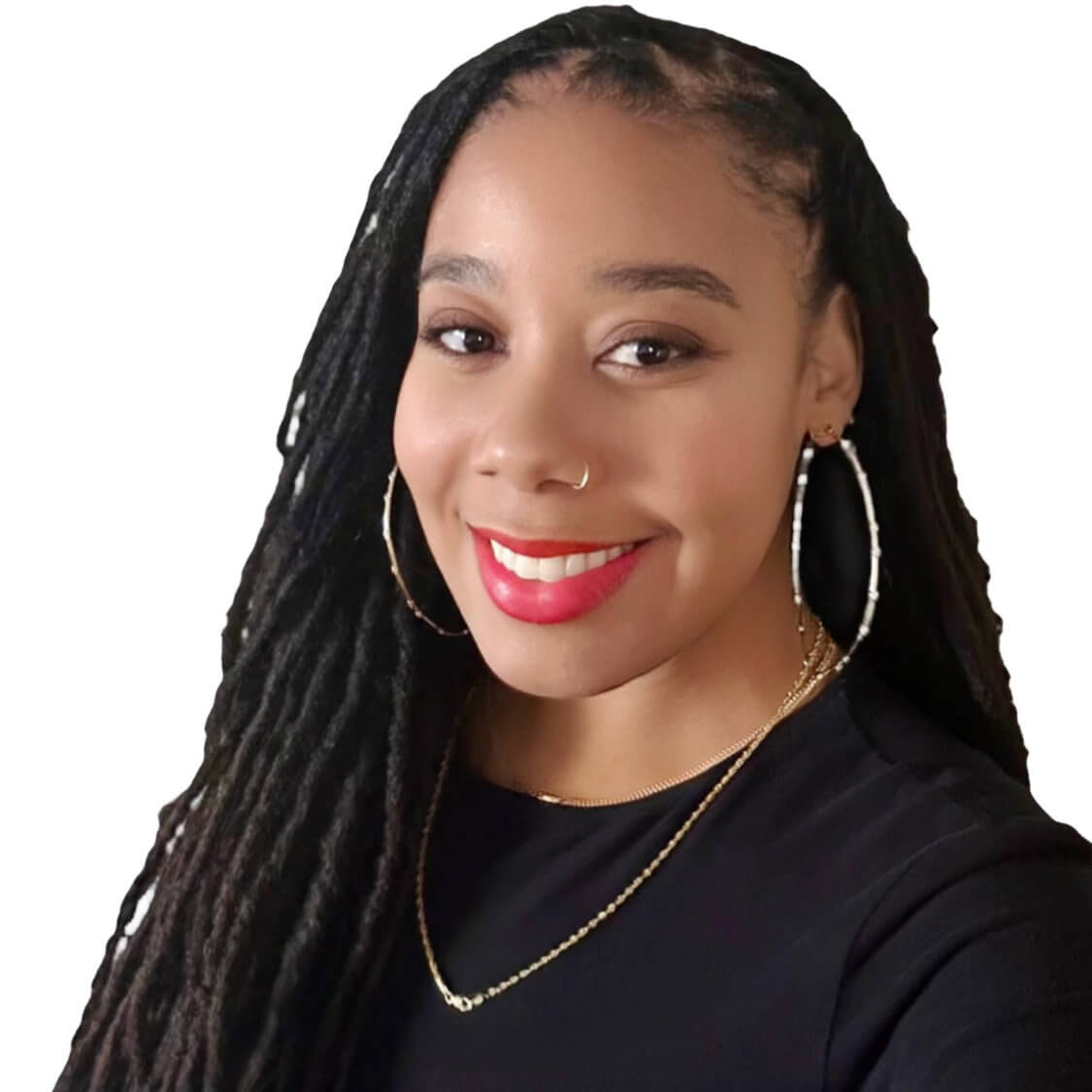
In November’s Lead the Change (LtC) interview, Dr. Honey Walrond argues that meaningful and sustained educational change requires moving beyond top-down technical policies to cultivate collaborative relationships, collective professional learning, and shared decision-making structures. Dr. Walrond is an Assistant Professor of Educational Leadership in the Department of Educational Policy Studies in Georgia State University’s College of Education and Human Development. The LtC series is produced by co-editors Dr. Soobin Choi and Dr. Jackie Pedota and their colleagues at the Educational Change Special Interest Group of the American Educational Research Association. A PDF of the fully formatted interview will be available on the LtC website.
Lead the Change (LtC): The 2027 AERA theme, “Transcending Borders and Boundaries in Education Research: Toward a Beloved Global Community,” calls on education researchers to examine and move beyond boundaries that can divide disciplines, institutions, communities, ways of knowing, and people. It asks us to build more relational, equitable, and ethically connected approaches to education research while remaining attentive to power and collective responsibility. How are you, or how do you plan to contribute to this vision?
Honey Walrond (HW): The 2027 AERA theme invites us to consider not only the boundaries that shape educational research but also how those boundaries influence whose knowledge is recognized, whose experiences are represented, and who has the opportunity to shape educational decisions. My research contributes to this vision by examining how educational leaders engage families, communities, and educators in educational policy development, organizational change, and school improvement. Across my scholarship, I am particularly interested in understanding whose knowledge informs educational decision-making and in identifying the leadership practices and organizational conditions that allow different forms of knowledge to meaningfully influence educational policy and practice.
One way I contribute to this vision is through my research on Black superintendents and their engagement with Black families and communities. Historically, educational research and policymaking have often privileged institutional perspectives while giving less attention to the knowledge, experiences, and contributions of families and communities. Yet Black families and communities have long played important roles in advocating for educational opportunities, challenging inequitable policies, and shaping the institutions that educate their children. My research examines how Black superintendents recognize and engage with this knowledge in district decision making, including how they cultivate relationships, establish opportunities for participation, and respond to community priorities. This work challenges the assumption that educational expertise resides exclusively within formal institutions or professional positions.
I am also interested in transcending the boundaries between educational research and practice. Having worked as a classroom teacher, instructional coach, and educational leader before entering academia, I recognize the importance of producing scholarship that speaks to the everyday decisions and challenges confronting educators and school systems. My research on instructional leadership, professional learning, and communities of practice examines how educational leaders develop collective capacity to interpret evidence, navigate organizational challenges, and improve educational opportunities. These studies bring together perspectives from educational leadership, policy, teacher education, and organizational learning to better understand how change unfolds across educational settings.
As I continue to develop my research agenda, I hope to create more opportunities for collaborative inquiry that brings researchers, practitioners, families, and communities into sustained conversation. This includes examining how community knowledge is translated into district policies, how educational leaders create structures for shared decision-making, and how professional learning communities support organizational improvement. I am particularly interested in moving beyond documenting participation to understanding whether and how such participation influences institutional decisions.
For me, contributing to a beloved global community requires recognizing that educational research carries responsibilities beyond the academy. It requires us to examine the power relationships embedded in knowledge production, remain accountable to the communities whose experiences inform our scholarship, and consider how our findings might contribute to more responsive educational institutions. Transcending boundaries, therefore, is not simply about connecting disciplines or expanding partnerships. It is about reconsidering how knowledge, authority, and responsibility are distributed in the collective work of improving education.
LtC: What are some key lessons that practitioners and scholars in the field of Educational Change might take from your work to foster better educational systems for all students?
HW: One of the central lessons emerging from my research is that meaningful educational change requires attention to both relationships and organizational conditions. Although educational improvement is often discussed in terms of policies, programs, interventions, and measurable outcomes, the success of these efforts depends considerably on how educational leaders engage people, develop organizational capacity, and create opportunities for collective learning and decision-making. Across my research on district leadership, community engagement, and professional learning, I have found that understanding educational change requires examining not only what leaders do but also how their decisions are shaped by institutional contexts and the people they serve.
My research with Black superintendents offers important lessons about the relationship between leadership, community knowledge, and educational policy. These leaders demonstrate how engagement with families and communities can extend beyond traditional forms of participation, such as attending school events or providing feedback on predetermined initiatives. Through advisory structures, community conversations, and sustained relationships, educational leaders can create opportunities for families and community members to inform district priorities and practices. However, an important distinction exists between inviting participation and ensuring that such participation meaningfully influences decision-making. For practitioners, this raises questions about how engagement structures are designed, whose perspectives are represented, and how community contributions are reflected in institutional decisions.
A second lesson concerns the importance of organizational learning. My research on communities of practice and instructional leadership examines how educational leaders and educators learn collectively while navigating complex organizational challenges. Educational change rarely occurs through individual leadership efforts alone. Rather, it requires opportunities for professionals to examine evidence, share expertise, question assumptions, and develop coordinated approaches to improvement. Communities of practice can provide important spaces for this work, particularly when participants have opportunities to engage in sustained inquiry and connect professional learning to decisions within their organizations.
A third lesson is that educational change must be understood within its broader historical, political, and social context. Policies and improvement initiatives do not enter neutral environments. They are interpreted and implemented within organizations shaped by existing relationships, institutional routines, resource distributions, and competing priorities. Consequently, the same policy may produce different experiences and outcomes depending on how leaders understand local conditions and respond to the needs of students, educators, and communities.
For scholars, these lessons suggest the importance of studying the processes through which educational change occurs rather than focusing exclusively on the adoption or outcomes of particular reforms. Qualitative and mixed-methods approaches can illuminate how people experience change, how decisions are negotiated, and why certain organizational conditions enable or constrain improvement.
Ultimately, I hope practitioners and scholars take from my work an understanding that improving educational systems requires more than identifying effective strategies. It requires examining whose knowledge shapes those strategies, how organizational relationships influence their implementation, and whether educational institutions have developed the capacity to learn from and respond to the communities they serve.
LtC: Where do you see the field of Educational Change heading, and where do you find hope for its future?
HW: I see the field of Educational Change moving toward a more comprehensive understanding of educational improvement, one that recognizes the interconnected roles of leadership, policy, organizational learning, and community participation. For decades, educational reform has frequently emphasized identifying effective interventions, establishing accountability systems, and scaling promising practices. Although these approaches have contributed important knowledge, they have also revealed the limitations of treating educational improvement primarily as a technical challenge. I believe the future of the field will increasingly depend on understanding how change is interpreted, negotiated, and sustained within the complex social and organizational environments of schools and districts.
One promising direction is greater attention to how educational leaders develop the organizational capacity necessary for sustained improvement. Rather than examining leadership primarily through the actions or characteristics of individual administrators, I anticipate continued interest in the relationships, routines, and professional learning structures that allow organizations to respond to changing conditions. My research on communities of practice and instructional leadership contributes to this conversation by examining how educators and leaders collectively interpret evidence, develop shared understandings of organizational challenges, and coordinate improvement efforts. These processes are especially important as educational institutions confront evolving policy expectations, resource constraints, and increasingly complex student and community needs.
I also hope the field moves toward a more substantive understanding of family and community participation in educational change. Although community engagement is widely recognized as important, questions remain about how educational institutions distribute decision-making authority and whether such engagement meaningfully influences policy and practice. Future research should examine the organizational structures and leadership practices that support meaningful collaboration, including how community knowledge is incorporated into decisions about curriculum, resource allocation, student experiences, and district priorities. This shift would move the conversation beyond whether families and communities are engaged to understanding how their participation shapes educational institutions.
Another important direction concerns the relationship between educational research and practice. I believe the field will benefit from approaches that create stronger connections between researchers and the individuals responsible for implementing and experiencing educational change. Collaborative research partnerships can help generate knowledge that is responsive to local contexts while also informing broader theoretical and policy conversations. Such partnerships require researchers to remain attentive to questions of power, representation, and accountability.
I find hope in the educators, educational leaders, families, and communities who continue to imagine and pursue better educational opportunities despite significant institutional challenges. Throughout my research, I have encountered leaders who understand their responsibilities as extending beyond the management of schools and districts to cultivating environments where students can experience academic success, belonging, and joy. I have also learned from educators who approach professional learning as a collective responsibility and from families and communities whose advocacy reflects a longstanding commitment to their children’s education.
“Educational change also emerges through relationships, collective action, professional learning, and the everyday decisions people make within educational institutions.“
These experiences remind me that educational change is not solely driven by formal reforms or policy mandates. It also emerges through relationships, collective action, professional learning, and the everyday decisions people make within educational institutions. My hope for the field is that we continue to develop research that takes these processes seriously and contributes to educational systems that are more responsive, collaborative, and accountable to the students and communities they serve.


