Category Archives: About K-12 International Education News

Minority Education in China

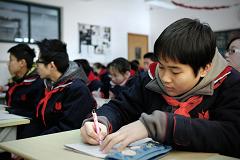
Dr. Xiaodong Lin, director of the Advisory Board of Research for China’s new National Research Center for Ethnic Minority and Multicultural Education, was the subject of a recent profile, and recently met with IEN contributor Eun Kyoung Chung to discuss the issue of ethnic minority education in China. The advisory board consists of 20 scholars, educational leaders and teachers from China, the United States and other countries. As Dr. Lin explained, the Chinese government is working to develop research, theory and policy on minority education concerns such as student performance, teacher training, as well as access to quality education for all. During its first two years, the Center will research how to improve the motivation of learning for students from different ethnic and low-income backgrounds and remote areas, particularly on STEM subjects (science, technology, engineering and mathematics). Education for multicultural students has been a growing issue in other countries such as South Korea as well.

Since the year 2000, when Education For All (EFA) was initiated by the World Conference on Education in Dakar and 164 countries, including China, pledged to meet EFA goals by 2015, compulsory education in China has expanded to cover a population of 160 million; however, universal education still has a long way to go, particularly concerning disparities between urban and rural areas, rising demands of the poor, migration, ethnic minority groups, and the changing economic situation.

The issue of unfair education policies for ethnic-minority populations has been in the news recently as the Equal Opportunities Commission has pressed the government to move more swiftly. The Commission would like schools to be provided with resources and teacher training that would facilitate cultural integration and a second-language curriculum for Chinese. One recent article also  suggested that a lack of economic or educational support ethnic minority students receive from their parents might be a contributing factor that needs to be taken into account.

President Xi Jinping noted that “the task of developing the educational cause is arduous,” especially when the country has 260 million students and 15 million teachers. With a resolute focus on reinvigorating the country through science and education, he plans to give priority to education development and the nurturing of ethnic minority talent.

Teacher Quality in India, England, Finland, and Sweden

A quick scan of the recent news on teacher quality illustrates the continuing debates over the best strategies to develop the most effective teaching force.  In India, a recent panel discussion suggested there is a divide between those who call for greater focus on attracting the most promising candidates by elevating the status of the profession, raising salaries, and establishing guidelines for professional responsibilities, and those who call for updating teacher training programs so that candidates will be better prepared for the challenges of the profession.

In England, the strategy of using financial incentives and higher standards for professional entry to increase the quality of the labor pool has been in the news again as the Mail Online reports that the number of job applicants for teaching training positions in math and physics in particular has “collapsed.”  Two years ago the UK Education Secretary, Michael Gove, sought to improve teacher quality by withdrawing funding for teacher training to students who achieved only the third class honors degree. The measure put the country in line with other high performing countries, such as Finland and South Korea, but the story reports that the cut-off score contributed to over 700 teacher training vacancies in math and almost 400 in physics. Related reforms include an increase in the number of candidates training in schools rather than teacher training colleges which Geoff Whitty discussed in a recent IEN post. ICTScoop also describes a project designed to recruit new teachers help improve literacy and numeracy in underserved areas as “getting off to a slow start.”

At EDUCA 2013, Thailand’s annual conference for teacher professional development, Pasi Sahlberg explained Finland’s approach to teacher quality. The government has accomplished this by funding teacher education, recruiting the best candidates as teachers, and giving teachers more time to prepare for classes. While what Sahlberg calls this “Less Is More” approach often emphasizes teacher preparation and recruitment, Sweden is experimenting with further investments  in professional development. For example, with funding provided by the European Union, a new project will provide coaching and observation support for teachers in select schools.

Education Reform in Singapore

Singapore’s recent education reforms have brought sweeping changes to the country’s approach to teaching, learning, and the curriculum, in an effort to promote a more “student-centered, values-centric” education.  In this post, Paul Chua, a Senior Teaching Fellow in Singapore’s Office of Educational Research of the National Institute of Education, provides a brief overview of the reform and the effort to implement a more nurturing education system.

What are the key features/steps in the current shift to a student-centric, values-driven education?

While there are many strands to the response to this question, I would put it as a 2-step process.  1) Laying out the vision of student-centric, values-driven education, and 2) Putting in place and implementing the many pieces of strategies and structures to systemically drive and support this vision.

First, the vision. The vision of student-centric, values-driven education is primarily about nurturing the children of Singapore to be equipped with the core skills and competencies to be economically productive and to flourish in the VUCA (volatile, uncertain, complex and ambiguous) world, as well as to be imbued with the Singaporean values to be successful, moral and committed citizens of the country. To unpack that vision, the ministry has spelled out four attributes: “Every Student, an Engaged Learner”; “Every School, a Good School”; “Every Teacher, a Caring Educator”; and “Every Parent, a Supportive Partner.”

On the strategies and initiatives, numerous of them have been announced to comprehensively and systemically drive and support the vision.  For example, the 21CC framework and the new Character and Citizenship curriculum has been launched and efforts have been made to embed them into the practices and culture of the school.  Yet another example is the abolition of school league tables and modification of the school achievement awards to change the incentives for schools to focus more sharply on holistic development of the students, and blunt the focus on academic achievements.  A quote in the Minister of Education’s recent work plan seminar 2013 speech to illustrate the seriousness of the ministry in its efforts to strengthen the focus on holistic development is: “To deal with the demands of a VUCA environment, good grades in school are not enough. In fact they might not even be relevant.”  Very recently, the ministry has publicly said that they have posted the most experienced and senior principals to lead heartland schools, in an effort to make “Every School, a Good School” a reality.

Why is Singapore making this shift? 

The previous quote cited that, “To deal with the demands of a VUCA environment, good grades in school are not enough. In fact they might not even be relevant” (Leo Yip, cited in Heng, 2013). This is indicative of why the Ministry of Education is making such a shift to rebalance the education system towards holistic education and values-centricity. Nurturing the students with the right competencies and core skills, as well as the right personal, moral and citizenship values is a national imperative.  The different strands of values “are intertwined and are critical for the success of the individual and society” (Heng, 2011).  Ensuring Singapore’s continued relevance and competitiveness in the new economic landscape in a globalized world is always on the minds of the policy makers. In the face of modernization and globalization, it is also imperative that the Singaporean identity and way of life is preserved.

What are the biggest concerns of policymakers, teachers, and the public in making this shift?

The biggest concern of policy makers, I surmise, is to ensure the shift is successfully carried out so that Singapore continues to be economically relevant and prosperous. The assumption is that with economic prosperity,then the social and cultural well-being of Singaporeans will be looked after.  Essentially, it has been said that the best social policy is economic growth.

For the public, we learned quite a lot about their concerns through the recently concluded series of national conversations with the different segments of the populace, called “Our Singapore Conversation.” Many of the members of the public recognize the importance of education in providing opportunities for all, despite their expressing concerns that the Singaporean society has become more stratified. Some specific worries include the high stress levels faced by our students, the over-emphasis on examinations, and the proliferation of tuitioning to supplement schools. Nonetheless, the public do acknowledge that the Singaporean children need to be adequately prepared for life in the VUCA world (Heng, 2013).

For teachers, the biggest concern is how to implement all the new initiatives effectively for the benefit of the students, as well as to manage the various work demands in a work-life harmonious manner.

What has happened so far? What should we be looking out for in the future?

While no data on the progress so far has been published, we can look forward to the upcoming release of the PISA 2012 results for some assessment of impact of the recent policies and the on-going educational efforts of the ministry.  If we see Student-Centric, Values-Driven Education as educating the children for the future, the education system in Singapore has been focused on this agenda for many years already.   So, we can take the PISA results as a good proxy of the efforts of the Ministry in educating the young for the future.

We can also look out for efforts by the Ministry to gradually shape the public’s perception of what counts as success in schools by expanding the emphasis from just academic grades alone to a broader basket of holistic education measures.  A key plank of that effort is the impending tweaking of the grading system of the national examinations for 6th graders as well as broadening of the criteria for discretionary admission to secondary schools to include more non-academic attributes such as student character and student leadership.

For more information:

Singapore Education Plans Announced

Scanning the globe

In the following scan of news and views on issues related to educational policy streaming across our screens over the past week, Thomas Hatch notes a number of links to protests and demonstrations, inter-continental educational alliances, teacher status and concerns about teacher training and “quality.”

Protests

News stories on educational policy have again demonstrated that debates over education – particularly around funding, access, and teachers’ unions – are often a source of protests.  Most recently, those protests have included school takeovers in Argentina and Greece and riots in Brazil and Mexico City.

“Globalization” of education

Reports have also highlighted “cross-over” in education systems as South Koreans are going to China for schooling, China is providing funding to support teacher education in Africa, Japan is working on education in Myanmar, and the “Finnish model” is being imported into some parts of India and Indonesia.

International Comparisons (teachers’ status)

In one of the most recent international comparisons, the Varkey GEMS Foundation compared 21 countries through their Global Teacher Status Index.  While there are of course challenges to developing any index like this, some interesting contradictions emerged:  respondents seem to trust teachers in many countries, though when asked questions related to respect and status responses varied considerably; perceptions of what teachers are paid are often inaccurate (estimates too high in some countries and too low in others); but in almost all of the countries surveyed, respondents felt teachers should be paid more; and while respondents in countries like the US and Japan thought that unions should have less influence, those in the UK and in many European countries thought unions should have more influence.

Also, see a blog by Marc Tucker and commentary from Tucker, Linda Darling Hammond, and John Jackson for a comparison of test-based approaches to improvement in the US to what they see as multi-pronged approaches in higher-performing countries.

Teachers, teaching, and teacher quality

Efforts to improve education through the recruitment and allocation of “higher quality” teachers were in the news in an initiative to staff schools in rural China, and in an IEN interview with, Geoff Whitty, former Director of the Institute of Education (IoE) in London, who laid out some of the key developments in the marketization of teacher education in England. The current Director of the IoE, Chris Husbands also reflected on the critical distinction between strategies that focus on teacher quality and teaching quality.  The importance of a focus on practice inside the classroom and out was also evident in a series of blogs from Education Week in the US drawn from the contributors to Leading Educational Change: Global Issues, Challenges, and Lessons on Whole-System Reform (Teachers College Press, 2013) edited by Helen Janc Malone.

Taken together, these stories about status, teacher recruitment, and teaching practice illustrate different ways of framing the challenges of education:  as a cultural issue, a human resource issue, and as an issue of the capacity for powerful instruction.   To what extent is it possible to take into account multiple ways of framing the problems at the same time?

The marketization of teacher education in England

Geoff Whitty

Geoff Whitty

Geoff Whitty, Professor of Public Sector Policy and Management at the University of Bath, and former Director of the Institute of Education, University of London, spoke recently at Teachers College about the marketization of teacher education in England, and in the U.S.  As he explained, the deregulation and “branding” of professionalism will have serious consequences for the future of university-based teacher education. In the following interview with Deirdre Faughey, Whitty describes the current status of teacher education in England, the debates surrounding deregulation, and how the situation in England compares with other countries.

Could you describe the current debates over the deregulation of teacher education in England?

What appears to be happening is two things. One is some teachers will no longer have to be certified through conventional training routes because our academy schools, known as charter schools in the U.S., are exempted from the requirement to employ what we call qualified, what you call certified, teachers. 63% of all secondary schools, and a growing number of primary schools, are becoming academies or charters. “Free schools” is another term we use for some of them. So, potentially there’s a situation where there’s no requirement for the teacher to get qualified. At the moment most of these schools employ qualified teachers but they won’t have to in the future. The second thing is there’s a growth in alternative routes into certification and qualification. The traditional route of university-led courses involves a university setting up a course, getting approval from national government, and working in partnership with schools to train teachers usually in a one-year post-graduate training course. Since the mid-1990s, there has been a growth in alternative routes. In the mid-90s it was about 2% of teachers trained that way, by 2010 it was about 20%. Some of these routes are school-based postgraduate qualifications, so the school designs the course and then gains certification from a university. Some of them are things like our equivalent of Teach for America, which we call Teach First, and some of them are employment-based routes, where people train while they are working in a vacant position in a school and while they are working they gain qualified teacher status, but not necessarily a university qualification.

Now, what the government has done recently is to combine the school-led route and the employment-based route, into something called School Direct, which they want to grow to 50% of all teachers by 2015, and they want to make sure that schools are in the lead and that it’s up to schools to decide whether they involve universities in the training they offer and/or offering a university qualification as well as qualified teacher status.

So, to sum that up you’ve got two things. One is deregulation of entry into the teacher workforce, the other is more competition or marketization of training routes. Now, the debate is really about whether the long-term plan on the part of government is to exclude universities effectively either from any involvement or simply to put them into a subsidiary position where they are serving the schools.

The other thing that’s happening is that academy chains, the equivalent to charter Central Management Organizations (CMOs), are setting up their own teacher training programs either with university certification or not. And that means a sort of privatization. It’s possible that companies like Pearson will enter the field on a for-profit basis.

The other part of the debate is that universities say that this is a “dumbing-down” of training, it will be absolutely focused to the specific needs of specific schools, or specific groups of schools, making it what I’ve called “branded” professionalism.  And they will not give trainee teachers the broader professional literacy – understanding the system, understanding how schooling interacts with social circumstances, that has traditionally been part of university provision, alongside practical training in the schools. So, it’s not entirely the case that in universities people are being taught chunks of theory and then got into schools and found no connection, which is how Conservative government ministers like to present it. It’s more that work in the schools is contextualized in a broader understanding of education policy and practice.

Is part of the debate the question of whether or not teachers need to know any of that broader context?

Indeed, and there are some neo-liberal politicians who say that teacher training actually makes teachers worse, partly by filling their heads with all sorts of irrelevant theory, and partly by teaching them that children from poor families can’t do well using poverty as an excuse. What university people would say is that poverty can’t be used as an excuse, but it is a reason why it’s sometimes more challenging to teach a child coming from a certain background compared with another, and if you don’t understand that context and you try and just employ formulaic approaches that are not sensitive to individual needs and social needs then you are unlikely to be successful. You are also unlikely to be able to move from one school to another, from one context to another, because what works in one situation may not work in another. If you haven’t got a more conceptual understanding – not just of what works, but of why it works and why it works in some circumstances and not others – then you have a restricted professionality rather than the wider professional literacy that university courses have traditionally provided.

And is part of the concern how you determine what works, and how you know if something is working?

There are different approaches to that. Some of the critics of teacher training will say that you pick it up, you learn it on the job, it’s intuitive. Some will say you can get formulae, you can learn what works and things like the What Works Clearinghouse here, or the Educational Endowment Foundation in the UK, provide toolkits for teachers. University people tend to say neither of those things is unhelpful in itself, but unless you understand and can reflect on why this toolkit worked for you, rather than another, then you’re not a professional in the broader sense of being able to go into a situation, sum it up, draw on all your resources – academic, experiential, and so on – to make a decision. Without that teaching is a craft and not a profession. Our senior government minister for education is very clear it is a craft, so they wouldn’t necessarily see that as a criticism. But to those who want to see education as a profession, and regard it as a profession, it is as very much about individuals able to make judgments on the basis of a combination of broader academic understandings and experience.

How does what is happening in England now compare to what is happening in other parts of the world?

Nearly all countries in the world are pushing – as are OECDMcKinsey and so on – raising teacher quality. The difference is both in how you define teacher quality, and the best way of achieving it. There are very few countries that are going in the direction of wholesale deregulation, the teaching-as-a–craft approach, but there are many countries, including the US, where the idea of clinical practice is being developed, involving more school-based practice than they have had in traditional university courses. In some countries that is the equivalent of school-based teacher training in England, in others it is more based on the clinical medical education model where it is research-based clinical practice.

The other parallel, with the US particularly, is that there is a degree of deregulation, in that charter schools in some states, like English academies and free schools, don’t have to employ qualified teachers, in that alternative routes have more restricted requirements in some states than in others, and in the casual way in which  the concept of “highly qualified” teacher in NCLB is sometimes interpreted.

The third parallel is that some charters, and charter CMOs, seem to be setting up alternative routes to certification. The big controversial provider at the moment is the Relay Graduate School of Education, which you have here in New York and is now spreading to other parts of the US.

So, there are parallels, but I think nowhere is going as far as England – not even other parts of the UK. I don’t think many places would say teaching is a craft rather than a profession, they just say there are different definitions of professionality and different ways of achieving it.

For more information about a current inquiry into the role of research in teacher education please visit the British Educational Research Association website or email g.whitty@ioe.ac.uk

Redesign of IEN

Those familiar with IEN know that we periodically adjust our site and our content as our ideas and goals evolve.  Most recently, we redesigned the site in order to make it easier to see and scan our posts on the main page and to provide more direct links to other sites with related content and resources.  Essentially, you’ll find our latest posts in the center, related links on the left, and our twitter feed and search tools on the right.  While our focus will remain on sharing links to news and research, over the next few months, Deirdre Faughey and I expect to experiment with more posts of our own, noting and reflecting on the news and research we are finding as we scan social media around the world for work related to educational policy and educational change.  When possible, we will also be linking to comments and commentaries from our colleagues from other countries.

These developments reflect our continuing effort to promote constructive discussions about what’s new, what’s good, and what’s effective in education in different contexts.  That goal and this project grew out of a year I spent in Norway with my family experiencing and studying the Norwegian educational system.  While there, I found numerous opportunities to learn about key issues and concerns about education and educational improvement in Scandinavia as well as in other parts of Europe.  But when I returned to the United States I quickly found myself immersed again in the continuing and often polarizing debates in the US and felt cut off from the many different kinds of educational discussions and the different perspectives I encountered the previous year.  In response, I created IEN with the express purpose of providing access to some of the news, research, and diverse perspectives on educational policy and educational change outside the US.  Ideally, sharing some of what’s happening in educational policy around the world – and, I hope, raising questions about what “counts” as new, good, and effective – can encourage discussions that go beyond the educational constraints of current educational systems and the often limited debates about how to improve them.

While I initially thought that there would be a wealth of conversations and examinations of education that we could tap into, engaging in this project over the past year or so has highlighted both the possibilities and challenges for using social media to learn from what’s going on in other parts of the world.  In terms of benefits and possibilities, using social media provides:

  • Access to many different kinds of sources and to diverse perspectives, ideas, and information that are often hard to come by in more traditional, national media
  • Opportunities to engage with people with whom we might never come into contact in our own locales and professional spheres
  • Speed for sharing information and links immediately, without having to wait to go through a conventional publishing process

However, these same characteristics also create problems for any effort to promote constructive and grounded exchanges of views and ideas:

  • Access is not automatic.  Although information of all kinds is available, it takes considerable work to find news and research related to educational policy in many different contexts.  The quality and veracity of the information varies; some contexts may have few if any sources for developing reports and research; and even when sources are available information and ideas may be inaccessible without local knowledge or knowledge of local languages
  • Opportunity to learn does not guarantee understanding. Examining information and ideas from different contexts does not in and of itself make it easier to understand diverse perspective and different points of view.  It’s difficult to recognize the possible contributions of diverse perspectives, particularly when they are far beyond the mainstream.  Translations, framing and contextualizing may be needed in order to make information and accessible to wide audiences across countries and cultures. But those same efforts can reduce and remove the local variations that are central to the kinds of learning this work seeks to promote.
  • Speed can lead to the spread of false information and premature conclusions.  The demand for currency, immediacy and relevance leaves little time for deep investigation, checking of sources, or discovery of alternate points of view.

Our hope is that by taking advantage of the possibilities of social media while remaining conscious of the problems, we can contribute to the development and recognition of new vehicles and forums for sharing ideas and for learning from one another about educational policy and educational improvement.  Ultimately, some new mix or yet unimagined forms of journalism and scholarship may be required.  To that end, we invite you to share with us resources and sources for information and links to educational news and research that we have not yet come across and point us as well to places and people whose work we can share.  (or with whom we should connect?).  While traditional outlets can continue to yield important and useful information about education, we also need opportunities to see beyond our own borders and into the many different local settings where educational policy and practice meet.

Education reforms in Spain, Mexico, and China

Philippe Lopez | AFP | Getty Images

Philippe Lopez | AFP | Getty Images

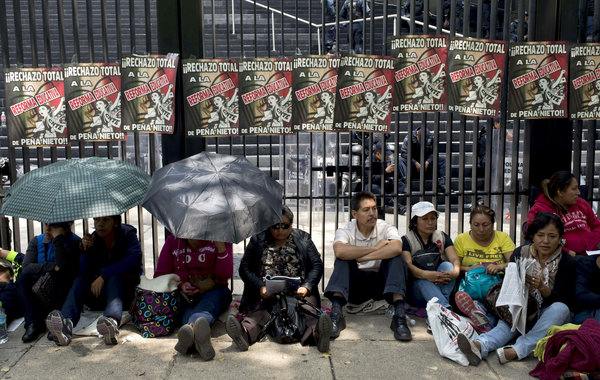
Over the past month, reports have touched on large scale reforms and resolutions. Spain’s recent reform effort includes a revised national syllabus and a proposed shift in the language of instruction, and has been met with protests, mainly over the cuts to funding, wages, and working conditions. Mexico’s Senate passed a controversial education reform bill that will institute standardized testing for teachers, and a new teacher evaluation system – measures that have led to massive protests as well. Meanwhile, China’s Ministry of Education plans to reduce homework, mandatory exams, and the “100 point” assessment system. Teachers will be expected to use confidence-building comments, such as “excellent,” “good,” “qualified” and “will-be qualified.”

Teacher evaluation at the heart of protests over Mexico education reforms

Omar Torres/Agence France-Presse — Getty Images

Omar Torres/Agence France-Presse — Getty Images

As reported in The New York Times yesterday, teachers took to the streets of Mexico City to protest the country’s education overhaul program.   The teachers occupied public spaces, blocked access to hotels and the airport, and warned of greater mobilization in coming days. They are protesting the fact that the coming education reforms promise to weed out underperforming teachers, raise hiring standards, and weaken the union. Prior demonstrations have already succeeded in pushing lawmakers to forego an evaluation requirement aimed at halting the practice of buying and selling teaching jobs. According to the article, “Teachers buy, sell or inherit positions as though they were family heirlooms. Removing poorly performing teachers is virtually impossible, even over allegations of sexual or substance abuse.”  The new law would make teacher evaluations obligatory every four years.

see prior IEN reports:

Mexico Approves Massive Education Reform

Reforms in India and Mexico in the Journal of Educational Change

Scan of Ed News: Protests, Unions, and Educational Funding

Addressing teacher quality in Australia and India

Reports over the past month show that Australia and India are countries are implementing new policies to address teacher quality, albeit with two distinctly different approaches.

In Australia, principals will be given the power to address teacher behavior as part of an $150 million reform effort to improve the quality of teaching. Education Minister Adrian Piccoli described it to the AAP as “more like a private sector approach to performance management….It’s going to be a fair process but a tougher process than what exists already.” Teachers who fail to meet the new standards of conduct could be released, demoted, fined or cautioned. Additional reforms include salaries based on meeting standards rather than employment length.

In India, the government has adopted a three-pronged strategy to improve teacher quality, which includes (i) the strengthening of Teacher Education Institutions, (ii) the revision of curriculum for teacher education in accordance with the National Curriculum Framework for Teacher Education 2009 and (iii) the laying down of minimum qualifications for Teacher Educators and their continuous professional development.

In Thiruvananthapuram, the capital of the Indian state of Kerala, the District Institute of Education and Training (DIET) will embark on a three-month study to analyze how classroom practices correspond to the prescribed curriculum of the district’s primary schools.  As Mohammed Kabir, a DIET official, explained to The Hindu, “There is an increasing need to analyze the problems faced by practicing teachers to get a complete picture. Sometimes, teachers follow textbook-based teaching while the curriculum mandates on activity-based learning. This might be out of habit or due to lack of understanding about the methodology. Here, teachers can open up on the problems they face in adapting to the methods”, said Mohammed Kabir, a DIET official.

Interview with Vicky Colbert

VIcky Colbert

VIcky Colbert

Vicky Colbert is the co-founder of Escuela Nueva in Colombia, a school with a pedagogical model known worldwide for its effectiveness in improving the quality and relevance of basic education. In this featured interview, originally published in the AERA Educational Change Special Interest Group newsletter, Colbert describes the origins, widespread adoption, and recent developments of the model.

To read the full interview, click here: Lead the Change Issue 29 Colbert