Category Archives: About K-12 International Education News

Austria

Viennese reading test: Every Fifth Student Reads Poorly

Bernadette Bayrhammer, Die Presse (May 20th, 2013)

SCHULPSYCHOLOGEN-HELFEN-BEI-ZEUGNISANGST_1369933642716572The results of this year’s Viennese reading tests are similar to those of previous years – with a little bit of hope. Approximately one in five 10-to 14-year-old student is a poor reader. In elementary school, the group of pupils at risk has declined by two percentage points, and remained about the same size at the academic secondary school and lower secondary school. About 40 percent of students in grade 4 and grade 8 are good readers.

For the test, 15,000 children fourth graders and 16,000 eighth graders were tested the third time. In addition, students who had performed poorly in elementary school in 2012 were tested, and these students provide positive messages. Students who were particularly poor readers in the previous year and were promoted, did well this year: 60 percent reached a higher reading level, and about four percent are now even considered strong readers. For this reason, there is hope that special promotion can work.

For more information:

Educational Standards first tested in Primary School

Equality of access in math and science in Finland, Sweden, and the United State

In a recent paper presented at the American Educational Research Association, “Moving on up? A framework for evaluating equality of access in education, with illustrations from Finland, Sweden and the United States,” Jennifer von Reis Saari shared the results of a study of the ways in which schools in Finland, Sweden, and the United States, track students in math and science. In this post, von Reis Saari briefly describes some of the current concerns about inequality in Sweden and Finland, as well as some of the differences she has documented in the way these countries, and the US, approach tracking.

Jennifer von Reis Saari

Jennifer von Reis Saari

The recent riots in Sweden are drawing attention to how the assumption that Nordic countries, as well as their school systems, are equitable is oversimplified. Finland, for example, is often considered untracked.  However, visitors to Finland are sometimes surprised that the country has a system of competitive school choice at the upper-secondary level, after age 16.   In fact, despite the Finnish Minister of Education, Krista Kiuru’s resistance to the publishing of league tables of individual school performance, savvy students and parents are well aware of school rankings, and lists of upper-secondary school averages on national exams are published at the end of May each year. In addition, there is an increasing appetite for more differentiation and choice.  In neighboring Sweden, comparatively liberal school choice policies and the allowance of for-profit, publicly funded schools, have coincided with increasing social disparities in educational outcomes.  In a study of student persistence in mathematics and science, I found that students I surveyed and interviewed in both countries experienced ability grouping and tracking in mathematics and science during both compulsory school, and upper-secondary school. To characterize Finnish or Swedish school systems as equal, or un-stratified, obscures the ways these systems react to, and create, inequalities.

A closer look at the experiences of students I interviewed in Finland, Sweden, and the United States, however, highlights how critical aspects of these choice and tracking systems, such as the mechanism for allocation (the how, why, and when students choose, or are selected into, particular schools or tracks), the transparency of the system (how clear the different educational choices and their consequences are), and the permeability (the degree of mobility allowed between tracks and schools), can either promote or obstruct the pathways of students who aspire to careers in mathematics and science related fields. In particular, the Finnish education system can be described as more permeable than either Sweden or the United States; the Finnish secondary school students I studied could more freely choose advanced mathematics and science courses and tracks in contrast to their counterparts in Sweden or the United States.  They could make these choices even if they were not in advanced mathematics tracks before they reached the secondary level.   This seemed to result in a greater retention of passionate, interested students, particularly young men who may have struggled earlier in their school careers.

Focusing on permeability is important not only from a standpoint of equity, but also in terms of efficiency, for retaining and fostering skilled talent in STEM fields.   The lack of permeability of math and science tracks may be a particular concern in the United States, where the high cost of post-secondary education and widening disparities between universities and community colleges, which once served to increase opportunities for mobility, compounds lost opportunities during primary and secondary school. Fostering passion for mathematics and science among students may require structures that respond to increasing commitment and performance by providing clear, built-in pathways for upward mobility.

For more information:

“Equity trends in the Swedish school system: A quantitative analysis of variation in student performance and equity from a time perspective”

“School choice and its effects in Sweden”

“Middle class children’s choices to avoid local schools”

“Tracking Effects Depend on Tracking Type: An International Comparison of Students’ Mathematics Self-Concept”


Instructional Practice in Singapore in Review of Education

coverThe most recent issue of Review of Education: An International Journal of Major Studies in Education, includes a study that explores how Singapore has been able to achieve a relatively high level of school success in recent years. In “Assessment and the logic of instructional practice in Secondary 3 English and mathematics classrooms in Singapore,” authors David Hogan, Melvin Chan, Ridzuan Rahim, Dennis Kwek, Khin Maung Aye, Siok Chen Loo, Yee Zher Sheng, and Wenshu Luo, draw on data collected in 2010 to analyze methods of instruction in secondary math and English classrooms that range from the more traditional models, which focus on memorization and tight control over student behavior, to the more student-centered models, which focus on comprehension and collaboration. The authors argue that teachers in Singapore draw from a variety of instructional practices, and that national high stakes testing has both shaped and constrained what teachers can do in the classroom.

Japan

Interview with the Minister of Education

Ministry of Education, Culture, Sports, Science, and Technology (May 7, 2013)

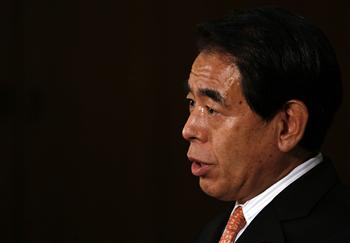
Japan's Education Minister Hakubun Shimomura. REUTERS photo

Japan’s Education Minister Hakubun Shimomura. REUTERS photo

Mr. Shimomura, the Minister of Education, Culture , Sports, Science, and Technology, has just returned form his visit to European nations. Reflecting on his tour, he commented on the urgent necessity of shifting the paradigm of Japanese language education abroad. In the past, the target population of Japanese language education abroad was children of Japanese citizens, who intended to return to Japan in the near future. Recently, there has been an increase in the number of Japanese children who are not planning to return to Japan. Many of these children are biracial, having a Japanese parent who hopes to instill and nurture his/her children’s identity as Japanese. In response to this need, the MEXT will generate an plan on how to spread Japanese language education globally.
In addition, the MEXT plans to suggest other nations to teach Japanese in public schools. For example, the UK, has a plan of teaching seven foreign languages in elementary schools soon. However, in the current plan, Japanese is not included as one of those seven languages. The MEXT will communicate the ministry of education in the U.K about how important it is to teach Japanese to prepare global citizens, who can contribute to the world economy.

For more information:

Council proposes lowering age for English education

Japan’s ambitious proposals for higher education and language sectors

LDP takes aim at English education, seeks to boost TOEFL levels

Professional Learning Communities and Collaboration

In “Leading educational transformation in Asia: Sustaining the knowledge society,” recently published in the Asia Pacific Journal of Education, Alma Harris, Michelle Jones, Sailesh Sharma, and Sathiamoorthy Kannan explore the role of professional learning communities and professional collaboration in developing and sustaining the knowledge society. In this post, Harris, currently the Director of the Institute of Educational Leadership at the University of Malaya, briefly describes how several different countries are approaching work on professional collaboration at scale, some of the issues currently being debated, and what to look out for in the next few years.

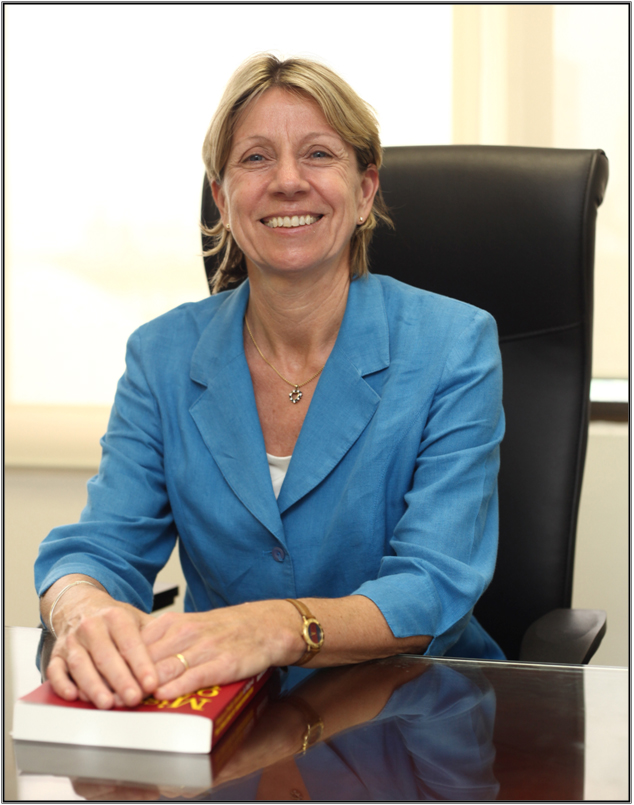
Professor Dr. Alma Harris Director Institute of Educational Leadership University of Malaya

Professor Dr. Alma Harris
Director
Institute of Educational Leadership
University of Malaya

Professional collaboration is increasingly being used in various countries to raise the performance of teachers and to improve student achievement and outcomes. Different countries are inevitably approaching this in their own way but the common denominator factor is inter-dependent professional learning. In some countries, like Singapore, Wales, Finland, and parts of Canada (e.g. Ontario), professional collaboration, in the form of professional learning communities, is a mandated part of the school reform process supported at the Ministerial level. In other countries such as Russia, Australia and Malaysia, professional collaboration is being promoted as a means of improving teacher quality and maintaining the highest standards but is not yet a national expectation.

The debates about professional collaboration range from discussions about the best models to follow, about the time and resources available to support these activities, and the issue of impact. It is important that countries investing in professional collaboration see a return on their investment in terms of better learning and better teaching.

In the next few years, it will be important to look out for how countries that engage in collaborative professional learning fare in international comparisons of educational performance like PISA, PERLS and TIMMs. Looking at high performing systems like Finland,Ontario, Shanghai, Hong Kong, and Singapore, that all invest in collaborative and focused professional learning, it would suggest that this is a potentially important and powerful lever of educational change and improvement.

Scan of Ed News: 5/1/13 – 5/15/13

International-Travel-Agency-262545-262545-1soOver the past two weeks, reports in the news have revealed that many countries around the world are addressing issues of curriculum, and teacher and student protests.

Curriculum:

Upon surveying primary teachers, the Scottish government has discovered deep concerns over the level of resources the government will provide to support the new Curriculum of Excellence. In Denmark and France, academics are concerned about plans to teach in English, yet Malaysia is introducing new English tests for young teens. The French government plans to give children lessons on “dignity, freedom and equality,” while in Japan and Russia, debate rages over the content of history textbooks.

Protests:

On April 2, Danish teachers were “locked-out” of school by the Social Democratic Party government because they rejected demands that they work extra teaching hours. With nearly 69,000 teachers barred from classrooms, 900,000 students could not go to school for almost one month. As a result, Denmark saw teacher protests and a recent survey revealed that Danish teachers have lost faith in their government.

In Chile, students have been protesting private universitiesfighting for an improved and free education, which has led them to be called  a “generation without fear.” Meanwhile, teachers in Mexico showed their anger with recent state education reforms by storming the offices of four different political parties. Spain’s education community is planning a peaceful strike for May 9th in rejection of the Education Ministry’s reform plans.

Scan of Ed News: Testing

Since 1995, children have been required to sit literacy and numeracy tests in their last year of primary school. Photograph: Martin Godwin for the Guardian

Since 1995, children have been required to sit literacy and numeracy tests in their last year of primary school. Photograph: Martin Godwin for the Guardian

Over the past month, a number of reports indicate a variety of concerns about testing around the world.  For example, Israel’s new Education Minister, Shai Pironhas decided to introduce reforms that would de-emphasize testing in order to “promote learning.” Similarly, China is taking small steps towards allowing educators to have input in test design (as opposed to government only). In contrast, the British government is acting in opposition to educators and parents to fight off an unprecedented alliance of hundreds of students, schools, local councils, and teaching unions, who brought a legal challenge over last year’s GCSE English exam grades. UK teachers are also protesting primary literacy exams, which they say leave little time for art, music, and books, and make children feel like failures. Chile has announced sweeping changes to the country’s university entrance exam, which has received criticism for flaws and bias; however, the concern in this case was not raised by educators and parents, but by Pearson, a company that describes itself as a leading provider of test development, processing and scoring services to educational institutions, corporations and professional bodies around the world. Pearson’s analysis revealed significant flaws and bias in the design of the exam.

In Singapore, surveys recently revealed that many educators and parents feel that students experience too much testing and a report on a recent visit by Dr. Dennis Shirley highlighted his suggestion that  the task of student assessment be handed over to the teachers, so that they can design their own modes of testing.  While the Singapore government has proposed several initiatives aimed at strengthening efforts to help every student succeed, none yet include substantial modifications to testing. While it might seem that the decision made by five schools in the town of Alesund, Norway, to change the date of the midterm exams so that students could attend a Justin Bieber concert in Olso, was an effort to modify testing to meet the needs of the students, it was also one for which officials saw no alternative. As one principal explained, they expected Mr. Bieber’s show would lead to sparse classroom attendance. “We considered that this was a battle that we could not win this time,” he said.

Norway

“Halvorsen get both praise and criticism for school reform”

NTB, Dagen (March 15, 2013)

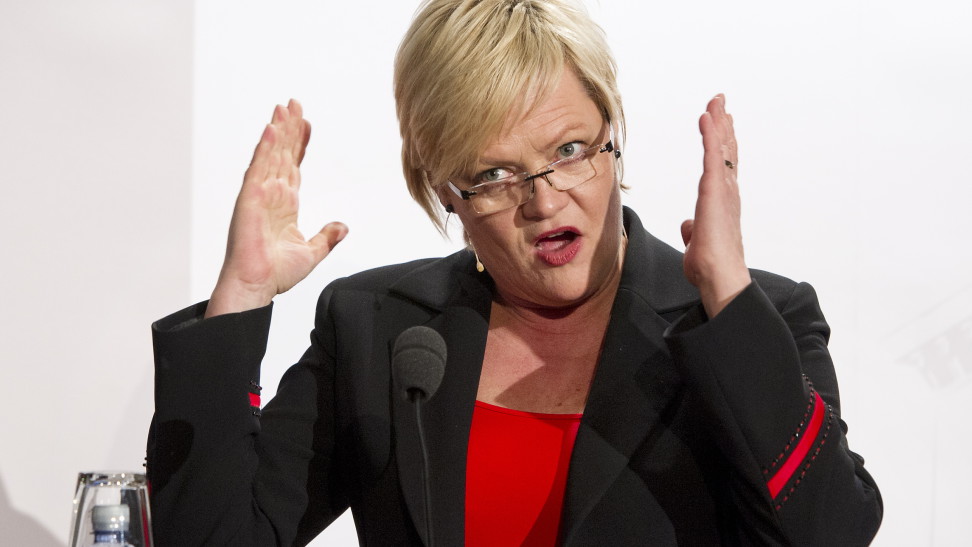
Minister Kristin Halvorsen get much praise even from opposition parties, the message of reform in secondary school. The image is from the University of Bergen, where she presented the research report last week Photo: Marit Hommedal / NTB Scanpix

Minister Kristin Halvorsen get much praise even from opposition parties, the message of reform in secondary school. The image is from the University of Bergen, where she presented the research report last week Photo: Marit Hommedal / NTB Scanpix

On March 15th, the government of Norway released a white paper report proposing that education be made more practical and relevant. The report, titled “On the Right Path: Quality and Diversity in Public Schools,” calls for students to have greater freedom to move subjects between grade levels, and between academic and workplace settings. Vocational education is under review for ways in which it can produce students who are better prepared for professional work, thereby yielding a greater impact on the labor market. In order to ensure that the curriculum meets the needs of the students, the government will appoint a committee to assess the extent to which today’s school subjects cover competencies and skills the students require.

In addition to vocational training, the government aims to focus on issues related to multicultural diversity of the population, such as bilingualism, by teaching democratic principles such as tolerance and inclusion, and introducing early intervention for children in kindergarten programs tailored to their needs. In particular, nursery staff will need to have expertise in multilingual education, and teachers will need to be prepared to introduce Norwegian as a second language and adapt instruction in all subjects. Newly arrived students of all ages will be assessed for language skills and receive customized training programs on the primary and secondary level. In addition, newly arrived adults who do not speak the language will be eligible for prolonged second language training.

The latest calls for improving the educational system in Norway follow a series of reforms over the past ten years that included the development of national tests and other means of monitoring the performance of the educational system.  While that emphasis reflects rising demands for accountability around the world, in an article in the latest issue of the Journal of Educational Change and a previous blog postIEN editor Thomas Hatch argues that the Norwegian reforms demonstrate a different approach. Rather than relying primarily on rewards and consequences, Hatch shows how the Norwegian reforms attempt to balance the need for individual accountability with efforts to foster individual and collective responsibility.

For more information:

*links in Norwegian

New impetus for future artisans

Commentary: The dance over Norwegian youth

Scan of Ed News: University Rankings, Curriculum, and Teacher Training

(links are embedded as hyperlinks)International-Travel-Agency-262545-262545-1so

Beyond the issues of protests, unions, and funding, which were highlighted in the first part of this monthly scan, part II brings together links to a number of recent articles and reports that touch on the kinds of issues raised by the latest Academic Reputation Survey.

Academic Reputation Survey

Each year, Times Higher Education and Thomson Reuters sends an email to thousands of academics worldwide inviting them to participate in the annual Academic Reputation Survey, which aims to gain insight on the reputations of academic institutions within the academic community. While this method of ranking has been controversial, education news reports show that many countries take these rankings very seriously, making improvements to their education systems that they hope will elevate their national reputation on a global scale.

In their effort to produce the most college-ready students in the world, many countries are focused inward on issues such as language and curriculum, teacher training and evaluation, and school accountability, while also paying close attention to competitive outward measures.

Language Requirements in Higher Education

Of the top 20 schools, the only one from a non-English-speaking country is Japan’s University of Tokyo; all other schools are located in the US, the UK, Australia or Canada. Since 2006, Prime Minister Abe’s has focused on fostering “global talent to reverse the nation’s declining competitiveness on the world stage,” an effort that has led him to target English-language studies as an area of improvement. His plan would mandate that people reach certain scores on the Test of English as a Foreign Language (TOEFL) to gain college admission, graduation, and to qualify for government jobs.

Seen in Beijing, a T-shirt mocking poorly spoken English. Photo: AFP

Seen in Beijing, a T-shirt mocking poorly spoken English. Photo: AFP

Meanwhile, in China, a 2010 survey showed 80% of people polled agreed that there is a language crisis. “Because students devote more effort into passing English tests, they spend less time studying for courses for their major, dealing a ‘heavy blow’ to overall education,” said Zhang Shuhua, head of the Intelligence Research Academy. In March, some of China’s top universities dropped the requirement of an English test as part of their recruitment exams, yet over 40,000 Chinese students poured into Hong Kong to take the SAT exam, and the best are opting to study at foreign universities. This “brain drain” is a trend the leadership is seeking to reverse.

Similarly, Russia will begin testing foreign migrants in the Russian language and establish a “universal history textbook,” a fact that has many concerned. Education Minister Livanov said, “A history manual must not interpret events, but list a sequence of historical facts,” and indicated that it will be the teacher’s job to assess the facts and the logic behind them.

Teacher Training and Evaluation
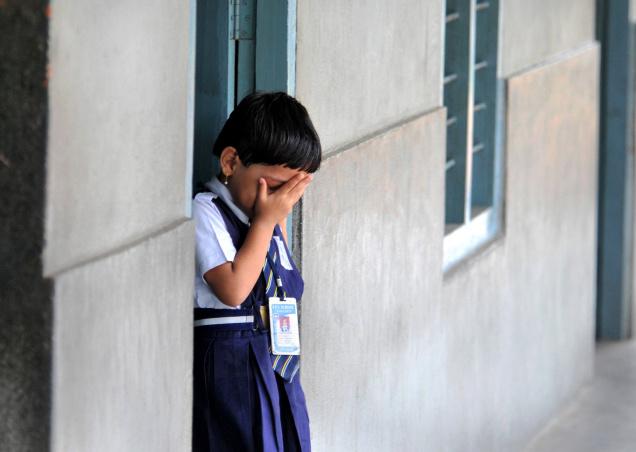
REPORT CARD: While most schools have adequate numbers of classrooms, separate toilet facilities for girls and boys, the availability of playground, school ramp, kitchen shed and boundary wall remains a major challenge in many States. Photo: K.R. Deepak

REPORT CARD: While most schools have adequate numbers of classrooms, separate toilet facilities for girls and boys, the availability of playground, school ramp, kitchen shed and boundary wall remains a major challenge in many States. Photo: K.R. Deepak

In India, low test scores on basic math and literacy assessments have led to calls for a higher standard for teacher training. Yet, private schools, which many feel provide a superior education, do not offer their teachers the same level of training. According to child rights activist Vasudev Sharma, the disparity in teacher training “is one of the major differences between private and government schools,” yet parents continue to rely on the reputation of private schools.

In a similar move to raise the bar for teachers, Australia will require all future teachers to score in the top 30% of a literacy and numeracy test, and Scotland will require that teachers become content area specialists as well as pedagogues. Yet, as we have seen in Guatemala, efforts to enforce higher standards for teachers leads to concerns about exclusion. Ireland is pushing back against this notion. According to Education Minister Quinn, “a diverse society needs a diversity of teachers, not a ‘one size fits all’ approach which ‘streamlines a particular cohort into teaching’.” At the International Summit on the Teaching ProfessionJohn Bangs went a step further, stating that “a national teacher appraisal scheme is not essential to an education system’s success…. For appraisal to work, therefore, it must be valued by teachers and be seen as a welcome addition to their professional lives.” We have seen further examples of this notion in recent research conducted in Korea, Mexico, and India.

Data Manipulation
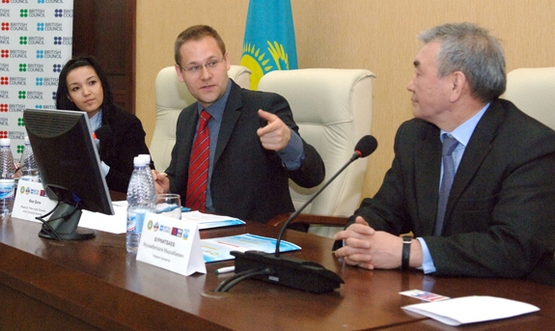
Phil Baty, Times Higher Education

Phil Baty, Times Higher Education

While teachers might struggle to see evaluations as essential to an educational system’s success, universities seem to have accepted the importance of the international ranking systems – so much so that they will go to extreme lengths. In response to the University of Cork’s recent attempt to manipulate the data, Phil Baty, editor of the international rankings of Times Higher Education, explained, “Global university rankings have become phenomenally influential in recent years – not only helping students to decide where to invest many thousands of dollars in tuition fees, but also in helping university leaders shape strategies and in helping governments to make multimillion-dollar funding decisions in some parts of the world.” Additionally, as seen in another recent example of educators manipulating data in the US, intense pressure to be successful within systems that value strict measures of evaluation can also lead to unintended outcomes.

Scan of Ed News: Protests, Unions, and Educational Funding

(links to articles are embedded as hyperlinks)International-Travel-Agency-262545-262545-1so

This month’s scan of recent educational research and news reveals a number of inter-connected issues that are arising in different places around the world.  In part one of this month’s scan, we highlight teacher and student protests, the role of teacher unions, and the uses of educational funding. Part II, which will appear later this week, will share reporting on issues of curriculum, testing, teacher and school evaluations, and higher education.

Teacher and Student Protests:

Ongoing protests highlight a globalized concern surrounding the issue of access to high quality education. Student protests in countries such as Portugal, Chile, Bulgaria, and Spain, focus on changing the system in ways that allow greater opportunity for access, while teacher protests Spain, Greece, and France, aim to preserve an established system now threatened by austerity measures. These protests highlight issues dominant in global news reports in recent weeks, such as the role of teacher unions and educational funding.

The Role of Teacher Unions in Ed Reform: Mexico and South Korea

The Hankyoreh

Korea Teachers and Education Workers’ Union (KTU), The Hankyoreh

Mexico recently witnessed the arrest of Elba Esther Gordillo, long-time president of Mexico’s teachers’ union. Charged with organized crime, Ms. Gordillo’s arrest was widely seen as a boon to education reformists and government officials because it called into question the integrity of unions and provided an example of the disruption of “business-as-usual,” at a time when the government is imposing drastic new reformsUnion leaders say these reforms will lead to students having no guarantee of free public schooling; however, the arrest of Gordillo highlights Mexico’s struggle with corruption, seen by many to be the main prohibitor of change. Two recent studies published by the Asia Pacific Journal of Education, found that school reformers should be “advised to rethink the school change model design in a way of fully capturing human aspects in the reform process.” Nevertheless, we can see direct examples of government threats against unions in South Korea, where teachers are now fighting against government efforts to withdraw recognition of the teachers’ union, and in South Africa, where politicians and lawyers are fighting to have education declared an “essential service,” a move that would make it illegal for teachers to go on strike.

Educational Funding:

While most student protests demand affordable higher education, many governments are focused on providing free education to children of all ages. One example is India, where the Karnataka High Court has declared that all private school students between six and 14 years of age are eligible for free education, not just those from poor families gaining admission under a 25% quota fixed by the Right to Free and Compulsory Education Act. However, it is also interesting to note that India’s private schools are expanding and raising their tuition rates. According to L.R. Shivarame Gowda, chairperson of the Joint Action Committee of Private Schools, tuition hikes are necessary for providing quality education: “The numbers of private schools in the city are multiplying, so schools need to provide better facilities to keep in pace with the development and retain students.”  In Japan, the issue of educational funding has become more political, as the government has decided to deny North Korean schools access to their tuition-free program. Education Minister Shimomura presented his view that schools under the influence of the General Association of Korean Residents in Japan conflict with the Fundamental Law of Education which calls for education free from any undue political influence. As reported in the International Review of Education, China’s private universities offer an example of institutions that struggle financially, yet provide the people with alternatives that might ultimately allow more students to benefit from the advantages of higher education; however, China also provides an example of how funding alone might not provide children with the education they deserve. The country’s system of residential registers favors those who live in big cities – a holdover from the era of a planned economy, originally used as the basis for rationing of food and other necessities – is fast developing into a serious social issue.

The Hindu

The Hindu