Category Archives: Newspaper Articles

Links to newspaper articles about international educational issues.

Japan

5,274 Teachers Took A Leave From Work Due to Mental Health Reasons

Nikkei Shinbun (December 24, 2012)

*Link in Japanese

The Ministry of Education, Culture, Sports, Science and Technology (MEXT) reported that the number of public school teachers who took a leave from their schools due to mental health reasons in year 2011 was 5,274. While this number is down 2.4% since 2010, the number is still twice as many compared to 10 years ago. The main reason for the increasing depression is a decrease in a healthy work-life balance.To improve the working environment for teachers, the ministry proposed two plans. One is to assign experienced teachers to new teachers as mentors. The second is to implement training programs for returning teachers, who took a leave from their work, to facilitate their re-entry.

For more information:

Depression, mental illness among Japan’s public school teachers increasing

Teachers too busy to deal with struggling students


India: Funding the Right to Education (RTE) Act

Photo: The Hindu

Photo: The Hindu

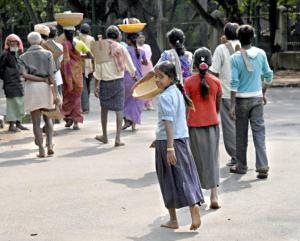
In an effort to improve the country’s economy, the Indian government has cut funding to the Right to Education (RTE) Act, which aims to provide every child between the ages of six and 14 with an elementary education. Cuts are expected to total 2-3% of the total RTE budget for 2012-2013, a substantive deduction that will affect the implementation of the RTE legislation. Civic bodies, such as Brihanmumbai Municipal Corporation (BMC), have reported that they simply cannot afford to meet the requirements of RTE.  The decrease in funding is expected to affect many, such as disabled children who rely on government supported transportation, and children in areas of conflict.

Meanwhile, cities such as Nagpur are holding seminars to inform and educate local principals about RTE implementation, in the hope of improving student achievement country-wide. Tripura is a rare example of a state that has been able to meet the requirements of RTE. Tripura admitted 44,000 students under the RTE quota this year, and plans to increase the age of students who qualify to receive a free education. Tapan Chakraborty, School Education Minister, pointed out that the Left Front government has been spending more than 20% of its annual budget on education, while the central government has spent less than 10%.

Students will begin applying to schools under RTE on January 10, 2012; however, member schools of the Karnataka State Private School Management’s Federation (KSPSMF) have warned that they will not admit disadvantaged students if the government does not reimburse them.

Ireland

Ruairí Quinn calls for “inclusive debate” on education in Ireland

Donal Walsh, SchoolDays.ie (December 18, 2012)

Ireland: Google Images

In response to the recently released TIMSS and PIRLS scores, Ruairí Quinn, Ireland’s Education Minister, wants to reassess the amount of time students spend studying each subject. While Irish students performed at an above average level, the students of Northern Ireland achieved better results in mathematics. Quinn believes that the solution is to ensure a higher standard of knowledge amongst primary school teachers, and to increase the amount of time the students spend studying math and science. He said: “I have asked the National Council for Curriculum and Assessment to review the recommended time allocations for all subjects in the primary school.”

For more information:

What will happen in education in 2013?

Chile

Chile must attract the best to the teaching profession

Marcela Andrés, Latercera (December 9, 2012)

*link in Spanish

Andreas Schleicher (Google Images)

Andreas Schleicher (Google Images)

Andreas Schleicher, Deputy Director for Education and Special Advisor on Education Policy to the OECD’s Secretary-General, has declared that Chile should embark on a campaign to obtain a better education system. He assured that compared to other Latin American countries, Chile has made gains according to PISA results; however, compared to economically developed countries, Chile presents much lower scores, and much higher disparities. Social context, such as public versus private education, has an impact on academic performance that is more significant than in many other countries.

Schleicher proposed measures to avoid the conditioning of the academic future of students according to social class. Additionally, Schleicher declared that Chile must attract the best to the teaching profession and place them in schools most in need of improvement to lessen current disparities.

Schleicher also professed modifications to the PISA test. He stated that in 2009, many students used computers and PISA assessed their ability to read digitally. In 2015, they will be evaluated on their ability to solve problems collaboratively and in  context.

For more information:

Chile should not be satisfied with being the best of the second division (link in Spanish)


Spain

Education reform puts Spain, Catalonia on collision course

The Hurriyet Daily News (December 7, 2012)

Irene Rigau EFE

Irene Rigau EFE

Education reforms and austerity measures in Spain have caused tension and separatist sentiments in the Catalonian region. At issue is the issue of teaching the Catalan language in schools. Jose Ignacio Wert (Spain’s National Education Minister) proposed that all schools focus on teaching the Spanish language in all regions, effectively removing the requirement that students in Catalonia speak Catalan in university. He also proposed that the region should fund Spanish-language private schooling for families that demanded it. Defenders of the current system, such as Irene Rigau (Catalonia regional education counselor) view the plan as an assault on cultural identity, while Wert insisted “there is no part of the reform that undervalues the importance of Catalan.”

For more information:

La Generalitat cree que las palabras de Wert responden a una “visión preconstitucional de España”

Catalans protest ‘return to Franco’ as schools are told to teach more Spanish

Barcelona soccer club defends use, teaching of Catalan language at politically sensitive time

Scan of Education News: 10/8/12 – 11/10/12

Funding

This month, the European Union’s biannual convention focused on funding for education. There is a growing concern that too many E. U. countries are implementing drastic cuts that will make it difficult to sustain growth once the economy recovers.  As reported in the New York Times, Rok Primozic, E. U. vice chairman, pointed out that “if European governments continue to cut back on education, they are also cutting back on skills.” Nevertheless, SpainGreeceIrelandItaly and Estonia, (as well as non-E.U. countries, such as Chile and Scotland) continue to implement austerity measures that cutback on education spending and lead to protests. In contrast, France,RussiaAustraliaNorway, and South Korea have all declared plans to increase education funding in the coming year, while private funding for education is on the rise in Vietnam and Cambodia.


Teacher Quality

In Guatemala, the issue of access to education becomes complicated as the government’s efforts to increase requirements for teacher qualifications have led to protests by those who see higher levels of education as an impediment to job applicants. However, a recent report from Scotland indicates a link between levels of teacher education and student performance. This link has led the United Arab Emirates to send teachers back to school, but it also might be responsible for a growing skepticism about the qualifications of teachers worldwide. For example, the governments of both France and Japan are questioning the contents of teacher-issued report cards, Malaysiahas decided to test teachers on their knowledge of English, the UK has increased Ofsted school inspections, and India plans to include students in the curriculum design process.


Major Reforms

Several major reforms spotlight the dire need for high quality education and propose drastic changes.  For example, France proposed a ban on homework and a shorter school week, Malaysia and Japan are redesigning curriculum so that it promotes creativity and innovation, and New Zealand’s Education Amendment Bill of 2012 allows for the creation of charter schools.


Pakistan

Malala Yousafzai: Pakistan observes day of prayer

BBC (October 12, 2012)
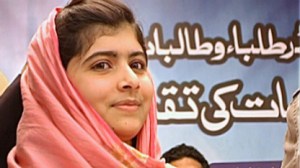
Malala Yousafzai

Malala Yousafzai, who wrote a diary for BBC Urdu about education under the Taliban, was accused by the Taliban of “promoting secularism,” and attacked by a gunman who shot her in the head and neck while on a school bus returning home from school. Using the pen-name Gul Makai, she wrote about the suffering caused by militants who had taken control of the Swat Valley in 2007 and ordered girls’ schools to close.

For more information:

Diary of a Pakistani Schoolgirl

Malala Yousafzai: Pakistan observes day of prayer

Pakistan: Quality Education Still a Long Way Off

IRIN (October 9, 2012)

Photo: Rebecca Conway/IRIN

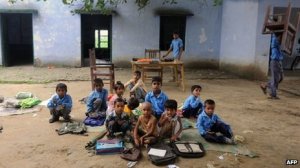
Despite the fact that state-run primary schools do not charge fees and many provide free textbooks, other expenses mean that for many poor families, schools are unaffordable. As a result, unofficial schools have been providing an education to children who live on the streets, or work in markets and houses.

Education was made a fundamental constitutional right for the children of Pakistan in 2010; however the country has made limited progress in improving the quality and reach of its education system, and millions of children are missing out on schooling altogether in what the governments of Pakistan and the UK have termed an “education emergency.” As a result, Pakistan will not be able to meet its Millennium Development Goal of universal education by 2015.

For more information:

Protection of Street Children’s Rights Linked to Education

Boards For Action Against Teachers Refusing Exam Duties

Govt Has Taken New Initiatives on Education: Minister

The News International (October 7, 2012)
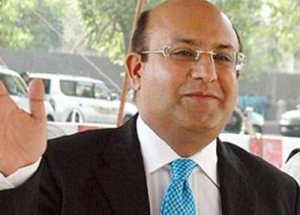
Punjab Minister for Education, Mian Mujtaba Shuja-ur-Rehman on Friday said that complete elimination of terrorism and extremism was must for peace and prosperity of the country.

The ILM Ideas Program, a three-year program funded by UKaid from the Department of International Development that is aimed at increasing access to quality education, held a launch to announce its second Request for Applications (RFA) to grant awards nationwide for increasing the access to quality education for children aged 5-16 years at a local hotel. The event included an Innovation Education Expo, which showcased ideas an innovation funded under the Ilm Ideas portfolio and demonstrated ideas such as radio learning, satellite enabled mobile vans, and digital whiteboards.

For more information:

World Bank gives $3 Million to Education

Elimination of terrorism must for peace: minister


India

Provide toilets and drinking water for every school, orders Supreme Court

AFP, The Economic Times (October 6, 2012)

The emphasis on moving from access to quality is a commonplace argument concerning schools in developing countries. India claims to have achieved close to 100% enrollment of girls and boys in primary schools and is embarking on quality strengthening interventions to retain these students; however, quality is an extremely wide concept in the context of India and in most schools it begins with providing potable water and clean and functional toilets to its students. The Supreme Court of India has recently passed a ruling making it mandatory for public schools to provide this most basic infrastructure over the period of next six months.

For more information:

Indian court orders toilets to be placed in all schools

The Times of India: School Toilets

Canada

Harper government’s First Nations education plans collapse

The Canadian Press (October 4, 2012)

National Chief Shawn Atleo

With graduation rates below 50 percent, Ottawa and the Assembly of First Nations hoped to see a legislative joint action plan by 2014, but the plans dissolved after three days of deliberation.

National Chief Shawn Atleo said, “The instructions that you have afforded here by this resolution are very clear and that is to reject, to say no, to federal legislation.”

Ottawa wanted legislation to establish school-boards that would give native governments control over their own education, but chiefs questioned the federal decision-making process and a “one-size-fits-all law that would not work for reserves whose rights are defined by treaties.”

The decision of the chiefs on Wednesday to walk away from that process is a major blow to the relatively peaceful Crown-First Nation relationship of the past few years.

For more information:

Native Leaders Reject Education Overhaul

Plans for Ottawa-First Nations Co-opperation on Education Reform Collapse

Australia

Australia: Class War in the Classroom?

Privatisation in Education Research Initiative (October 8, 2012)

Prime Minister Gillard

Amid debate over government spending on private schools, Australian Prime Minister Julia Gillard is in the process of negotiating a new school funding deal. Gillard wants to increase education funding by $6.5 billion a year, provided that reforms be implemented to improve teacher quality and student performance. As previously reported, Gillard’s goal is for Australian students to be ranked among the top five countries in math, reading, and science, by 2025. While her plan would increase funding for private as well as public schools, Opposition Leader Tony Abbott believes private schools will suffer as a result of the plan.

For more information:

Video: OECD Education at a Glance 2012

Gillard Delivers School Funding Plan

Prime Minister Julia Gillard Says That Private Schools Will Get More