“Nurturing Minds: Educational Design Policies, Finland/New York”

New York City, The Center for Architecture (October 16, 2012) 
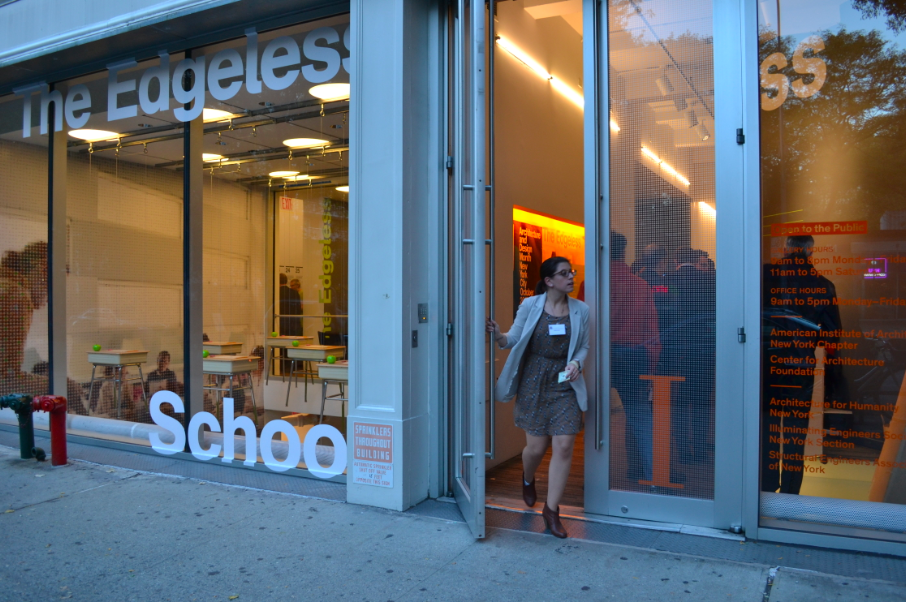
The Center for Architecture, New York City

The New York chapter of the American Institute of Architects, welcomed a group of architects and educators to “Nurturing Minds: Educational Design Policies,” a panel discussion juxtaposing learning environments in Finland and the United States. Moderated by Samuel E. Abrams, presenters included Pasi Sahlberg, Kaisa Nuikkinen, Bruce Barrett.

Display at the Center for Architecture: School desks floating mid-air

Nuikkinen (Head Architect for School Design, Helsinki City Education Department) began by noting that the framework for building a school in Finland takes into account the expectations of the community, the needs of the workplace, guidelines, rules, and regulations, benchmarking, pedagogical concerns, national policies, laws, and norms, as well as best practices. Finland’s aim is to develop school buildings that function effectively, answer the demands of the future, and combine high quality architecture with economic viability. Therefore, design must be multifunctional, flexible, interactive, and inclusive of those with special needs. Outstanding examples of designs that meet these goals include The Soininen School (Ilmari Lahdelma, architect), and The Latokartano Comprehensive School (Tuomas Silvennoinen, architect).

In contrast, Bruce Barrett (New York City School Construction Authority) began by noting that the New York City School System serves 1.1 million students and employs 77,000 teachers. The city is currently planning for a student population that is expected to increase by 31,500 new seats between the fiscal years 2010-2014, which is a real challenge in an area as dense as the city. Stakeholders need to work together to produce school spaces that meet individual needs of schools. Barrett highlighted the city’s most recent projects, which have included renovations of larger schools that have been converted to house several smaller schools under the same roof (such as Mott Haven Campus in the Bronx, and Metropolitan Avenue Campus in Queens), rehabilitations of older buildings (such as P.S 3 in Queens), and renovations that require additions (such as Midwood High School, in Queens, which had to take over the playground space of a middle school across the street in order to create new building space).

For more information:

The Edgeless School: Design for Learning

The Best School in the World: Seven Finnish examples from the 21st century


Japan

MEXT Supports Drastic Reform of College Education

Nikkei Newspaper (October 11, 2012)

*Original link in Japanese

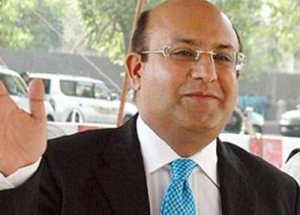
Makiki Tanaka, Minister of Education

The Ministry of Education, Culture, Sports, Science and Technology (MEXT) addressed the necessity for fundamental reform of university curriculum and teaching. Especially in meeting the needs of globalization and shift to knowledge economy, MEXT believes that development of logical thinking skills, leadership skills, and creativity among college students is crucial. In addition, to achieve these goals, MEXT suggests to reinforce alignment of university courses through close faculty communication, promote problem solving education, raise quality of teaching via teacher training, collaborate with private companies, transform university governance, and ensure financial resources.

For more information:

Interview with Tanaka, the MEXT Minister (in Japanese)

Vietnam: A Trend of Privatization

Standards for high quality schools still in debate

Vietnam.net (October 20, 2012)

Vietnam’s Ministry of Education and Training has given the green light to some schools to pilot “high quality” programs. These schools, as stipulated by the government, can charge higher tuition rates but must have all of their teachers regarded as “excellent” (determined by the possession of a university degree). In addition, 30% of the teachers must have Masters degrees, and English classes must be taught by English-speaking foreign teachers. While school leaders advocate that this distinction of “high quality” is reasonable and will benefit families, members of the community decry the privatization of state-run schools. One school leader recognized, “If only a group of students in a school can get high quality education, this may make other students think about the discrimination against poor students.”

Too many English curriculums make parents puzzled

Vietnam.net (October 16, 2012)

Though a formal English curriculum is mandated by the government, schools are charging for additional classes. As part of the Vietnamese government’s 2010 ten-year plan to reform schools, foreign language learning has become an issue taken up by the Communist party. In 2010 a compulsory English program, developed to international standards, was piloted in the country’s elementary schools. Rather than two optional periods of English a week, primary school students are required to take four periods of English a week. The plan is to gradually increase the level of English language learning so that 70% of third graders and 40% of six graders are enrolled in classes by 2015; however, schools now are offering a selection of English programs that require additional fees and are partially or wholly taught by fluent English-speaking teachers. While parents are worried that schools are too autonomous in offering these classes at extra charges, an educational official in Ho Chi Minh asserts standards for high quality schools still in debate.

For more information:

Vietnam invests $730 Million in Education and Training

Vietnam’s new primary English curriculum gets top marks

Guatemala

Ministry of Education Loses Support in Reform

Alex Rojas, Prensa Libre (October 13, 2012)

As reported last month, the Guatemalan Ministry of Education ratified a new law as part of the government’s reform program, entitled Estrategia para una Educación de Calidad para la Niñez y la Juventud (“Strategies for Quality Education for Children and Adolescents”). This law requires that teachers have a university degree in order to become certified. Despite maintaining the support of higher educational institutions since 2009, the reform has now lost the support of one major university based in Guatemala City. The University of San Carlos, a large, state-run university with affordable tuition rates, has withdrawn its support for the government’s efforts. A representative of the university says that the institution is still unclear as to the admission standards for students and says that it does not have the structural facility or the human resources to implement a new degree program.

“We need more teachers, not military brigades.” Photo by the Centro de Medios Independientes – Guatemala

Meanwhile, groups advocating for the normal schools (those which train teachers) in rural areas also continue to protest the larger reform package, including what they view as the Ministry of Education’s disregard for a stronger bilingual program in high schools and culturally relevant pedagogical training for teachers. According to the protesters, the new law not only makes it financially unfeasible for many in rural and low-income areas to attend school, but the lack of a high school curriculum that attends to the linguistic and cultural needs of people living in smaller towns leaves many at a disadvantage. Protestors view this type of reform as one step closer to the privatization of schooling. The San Carlos University representative had this to say to the Ministry (translated): “[The Ministry] should listen to the sectors that are still dissatisfied. They are right, and no one has the absolute truth. Dialogue should be opened and the points that are not clear addressed.”

For more information:

Student eviction does not stop Guatemalan movement against privatization (in English)

Teachers in Guatemala Protest Education Policy Reforms (in English)

A video from the Guatemalan Ministry of Education (in Spanish):

France

Major Changes for Schools

The Connexion (October 8, 2012)

The educational system in France has seen little change over time, but now President Hollande is making plans for widespread changes, including a four-and-a-half day week and the elimination of homework. The reforms have been introduced as a result of the Refondons l’école Rebuild Education inquiry, a report headed by Christian Forestier, which the government established in July in order to identify problems and solutions in the current system. This report found that “one in three primary pupils was judged as “poor” or “very poor”, one in five left school without real qualifications, and just one in three students gained a degree.” The educational system has therefore been blamed for the country’s high rate of unemployment.

Christian Forestier

The report called for:

  • more welcoming schools
  • respect for “children’s natural rhythms”
  • changes to holidays and length of school days
  • violence prevention
  • good learning habits introduced in early childhood
  • more group work
  • more positive teacher reports
  • an end to repeating classes (considered costly and ineffective)
  • an end to homework

For more information:

François Hollande plans to shake up education system

France’s Hollande promises pupils ‘no more homework’

New Zealand

Charter Schools Escape Scrutiny

Kate Shuttleworth, The New Zealand Herald (October 17, 2012)

Charter schools in New Zealand

The Education Amendment Bill 2012 allows for the creation of charter schools, which are given the powers to set teachers’ pay rates, hire “unregistered” teachers, and set their own hours. Associate Education Minister John Banks backed the decision to exempt sponsors from being publicly accountable under the Official Information Act, and promised that charter schools will be held more accountable for improving student outcomes. These changes were called “frightening,” by Green Party education spokeswoman, Catherine Delahunty. “The bill gives enormous powers to ‘sponsors’ who may have no educational background but will set the rules and staff pay rates,” said Delahunty.

Catherine Delahunty, Green Party, raises questions about new charter schools.

Other changes include:

•The introduction of a national student number for children aged under 6.

•Schools will be able to introduce flexible timetabling, including two schools running two timetables on one site.

•Boards of trustees will be required to be answerable for student achievement.

•Schools will have to publish annual financial statements.

For more information:

Charter school laws abuse parents rights

Charter schools legislation introduced to Parliament

Argentina

The Buenos Aires government will extend its school year as a result of the many schools that have been overtaken by demonstrators 

Clarin (October 14, 2012)

*Original article in Spanish

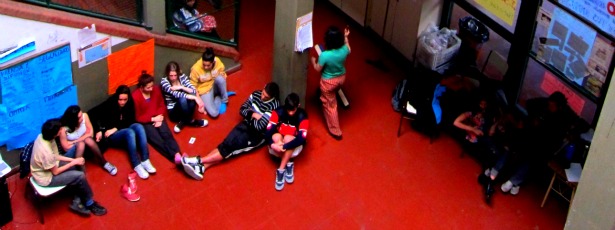
Students at Claudia Maria Falcone High School in Buenos Aires (Emma Sokoloff-Rubin)

As schools continue to be overtaken by student demonstrators in the city of Buenos Aires, the Ministry of Education has decided to extend this school year in an effort to make up for lost school days. Currently, there are still many schools that have been overtaken by demonstrators who demand an adjournment of the curricular reform proposed by the city of Buenos Aires. Demonstrators are demanding a meeting with the Minister of Education, Esteban Bullrich, to ask that their input be considered in the curricular reform that the government is attempting to implement. This coming Wednesday will mark a month since these demonstrations and school takeovers began.

For more information:

What’s Behind the Mass Student Takeover of Argentina’s High Schools? (in English)

Students life school takeovers (in English)

Argentina students stage fresh demos over education reform (in English)

Pakistan

Malala Yousafzai: Pakistan observes day of prayer

BBC (October 12, 2012)

Malala Yousafzai

Malala Yousafzai, who wrote a diary for BBC Urdu about education under the Taliban, was accused by the Taliban of “promoting secularism,” and attacked by a gunman who shot her in the head and neck while on a school bus returning home from school. Using the pen-name Gul Makai, she wrote about the suffering caused by militants who had taken control of the Swat Valley in 2007 and ordered girls’ schools to close.

For more information:

Diary of a Pakistani Schoolgirl

Malala Yousafzai: Pakistan observes day of prayer

Pakistan: Quality Education Still a Long Way Off

IRIN (October 9, 2012)

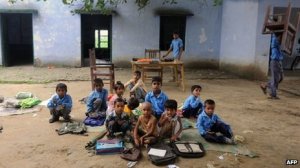
Photo: Rebecca Conway/IRIN

Despite the fact that state-run primary schools do not charge fees and many provide free textbooks, other expenses mean that for many poor families, schools are unaffordable. As a result, unofficial schools have been providing an education to children who live on the streets, or work in markets and houses.

Education was made a fundamental constitutional right for the children of Pakistan in 2010; however the country has made limited progress in improving the quality and reach of its education system, and millions of children are missing out on schooling altogether in what the governments of Pakistan and the UK have termed an “education emergency.” As a result, Pakistan will not be able to meet its Millennium Development Goal of universal education by 2015.

For more information:

Protection of Street Children’s Rights Linked to Education

Boards For Action Against Teachers Refusing Exam Duties

Govt Has Taken New Initiatives on Education: Minister

The News International (October 7, 2012)

Punjab Minister for Education, Mian Mujtaba Shuja-ur-Rehman on Friday said that complete elimination of terrorism and extremism was must for peace and prosperity of the country.

The ILM Ideas Program, a three-year program funded by UKaid from the Department of International Development that is aimed at increasing access to quality education, held a launch to announce its second Request for Applications (RFA) to grant awards nationwide for increasing the access to quality education for children aged 5-16 years at a local hotel. The event included an Innovation Education Expo, which showcased ideas an innovation funded under the Ilm Ideas portfolio and demonstrated ideas such as radio learning, satellite enabled mobile vans, and digital whiteboards.

For more information:

World Bank gives $3 Million to Education

Elimination of terrorism must for peace: minister


India

Provide toilets and drinking water for every school, orders Supreme Court

AFP, The Economic Times (October 6, 2012)

The emphasis on moving from access to quality is a commonplace argument concerning schools in developing countries. India claims to have achieved close to 100% enrollment of girls and boys in primary schools and is embarking on quality strengthening interventions to retain these students; however, quality is an extremely wide concept in the context of India and in most schools it begins with providing potable water and clean and functional toilets to its students. The Supreme Court of India has recently passed a ruling making it mandatory for public schools to provide this most basic infrastructure over the period of next six months.

For more information:

Indian court orders toilets to be placed in all schools

The Times of India: School Toilets

Norway: The National Budget 2013

Better funding:The Norwegian Folk High Schools receive 10 mill extra NOK in the 2013 State Budget

*Original article in Norwegian

Tore Skadal, Harstad Tidende (October 8, 2012)

In the 2013 state budget, the Norwegian government has proposed an increase in funding for Folk High Schools due to an increase in the number of students recent years. Folk high schools are a one-year boarding school system based on the idea of learning for life, not only for occupations and college degrees. Students are assessed based on their individual ability to take action and responsibilty for their own lives. Reflection and insight into life’s possibilities and individual wishes are central elements in a year in a Folk High School in Norway.

For more information:

Non-formal Adult Education in the Nordic Countries 2011-2012

Introducing Free Public Cultural Education

Gerhard Flaaten , Kjetil Kopren Ullebø, Bergens Tidende(October 3, 2012)

*Original article in Norwegian

Photo: Agrutxane Concellon

Starting in autumn 2013, there will be one lesson a week of cultural/arts education at primary schools and after-school clubs (years 1-4). The proposed budget for this is NOK 73.8 million. Parliament member Jette F. Christensen points out that lessons will be a full 45 minutes, and that the Ministry of Culture will legislate hours so that these classes become permanent. While those in favor of the plan do not believe it will involve additional work for teachers, Conservative party spokesperson Elisabeth Aspaker (a former teacher) expressed her concern that the municipalities will incorporate arts education with uneven results.

For more information:

Arts and Cultural Education in Norway, a study by Professor Anne Bamford, 2010-2011