Tag Archives: artificial intelligence

Teaching in the Age of Generative AI: Lead the Change Interview with Bernardo Feliciano

In October’s Lead the Change (LtC) interview Bernardo Feliciano’s discusses his work through the AITeach Co-design Lab at UMass Lowell; this work brings educators, researchers, and technologists together to co-create strategies and tools for teaching in this age of AI. The LtC series is produced by Elizabeth Zumpe and colleagues from the Educational Change Special Interest Group of the American Educational Research Association. A PDF of the fully formatted interview will be available on the LtC website.

Lead the Change (LtC): The 2026 AERA Annual Meeting theme is “Unforgetting Histories and Imagining Futures: Constructing a New Vision for Educational Research.” This theme calls us to consider how to leverage our diverse knowledge and experiences to engage in futuring for education and education research, involving looking back to remember our histories so that we can look forward to imagine better futures. What steps are you taking, or do you plan to take, to heed this call? 

Bernardo Feliciano (BF): Currently I am working with colleagues to build a co-design lab that brings together educators from very different contexts to develop approaches to teaching and learning in a world where generative AI is a reality. The lab is called the AITeach Co-design Lab @ UMass Lowell. (The hyperlink goes to one of many one-pagers we have been developing for partners representing different disciplines and sectors).

Bernardo A. Feliciano, Ph.D.

In the AITeach Co-design Lab, as collaborators we aim to create a structured space where we as a diverse group of educators, researchers, and technologists co-develop practical tools, strategies, and prototypes that respond to the reality of generative AI in education. The intention is not only to design usable products but also to study how to structure co-design itself to help schools navigate AI’s challenges and opportunities. In our co-design sessions, educators, researchers, and technology build spaces where we can address challenges in education and AI that are too complex for any one actor to solve (Snowden & Boone, 2007; Senge, 1990). The Lab functions as a structured environment where we can bring our problems of practice, iterate on small pilots, and use those cycles to build local capacity rather than waiting for top-down policy.

As an adjunct professor, I am also teaching a class on family and community engagement with schools. These roles constantly remind me that people bring distinct personal, professional, and institutional histories into every space. For me, futuring is less about projecting a single vision of “Education with a capital E” and more about the relational, actor-to-actor work of helping people shape their futures from the personal, professional, and institutional histories they inherit. That’s the direction my work is taking me.

The way I approach this is by convening diverse groups around developing tangible projects. The process matters as much as the specific product, whether it’s a research article, curriculum binder, a chatbot teaching/learning companion prototype, or a strategy for helping parents connect to schools. What is essential is how people can communicate their histories, connecting, adapting, negotiating, and reworking them to address problems in the present into a viable future. The varied personal and institutional histories participants bring are neither external resources to be tapped nor barriers to be overcome, but active materials in our negotiation of effective, situated teaching and learning. Innovation emerges as members work through these histories, adapting them in relation to one another to meet particular needs. I may not care whether my own work is labeled research, practice, or a mix of both, but as co-designers we must respect each other’s perspectives, even as those perspectives shift through negotiation. AI brings this into focus. At its core, AI is an immense bank or reservoir of the past, trained on and providing access to what is already known or has already been done. The future is not contained in the AI itself—nor can it be left to AI to imagine for us. The future comes from how we draw on that past to build something meaningful with and for the people in front of us. We explore generative AI as both a design partner and an object of study. Co-designers prototype tools like tutoring agents or parent communication bots, while also interrogating what it means to teach with, against, or around AI in everyday classrooms.

Of course, I have to use my own history, experience, and learning as a researcher, teacher, administrator, entrepreneur, and non-profit professional to leverage the network of histories that generative AI offers. But more than before, I can inform, contextualize, and connect the convening and teaching I do now with the work of so many more people and peoples (to some extent) who came before.

LtC: What are some key lessons that practitioners and scholars might take from your work to foster better educational systems for all students?

BF: One lesson is that teachers cannot be treated as passive implementers of someone else’s design. Too often, educational change is imagined as developing a curriculum or program in one place and distributing it everywhere. That assumes context does not matter and is peripheral rather than integral to learning and teaching. Our relationship to knowledge is always relational and always contextual.

Education has always lived in the complex space where cause and effect are only clear in hindsight (Snowden & Boone, 2007). Simon (1973) describes these as ill-structured domains existing in a state of dynamic heterogeneity in which diverse elements and relationships continually shift, preventing stable equilibrium and requiring ongoing adaptation (Pickett et al., 2017). Ill-structured problems cannot be solved by importing outside solutions but only by negotiation among those struggling with them. I do not believe that educational change—or improvement—comes from a fixed product or process delivered with fidelity. It is an ongoing process of learning through which people shape what they inherit—choosing what to keep, what to adapt, what to reject, and what to forget. It is a process I have found universally involves dynamics of local alliances, conflicts, and negotiations. The lesson I take from this is that if you want to improve schooling, you have to engage with the people who are doing the teaching and learning.

Working on my dissertation underscored this point. I wrote about using one-on-one meetings in a researcher-practitioner partnership to organize co-designing a computer science (CS) curriculum for middle schools. My experience brought home to me that there is no such thing as “shared understanding.” What emerges is never a single, final agreement but alignment good enough to act together, sustained through negotiation as perspectives shift. For example, teachers and researchers sometimes differed on how much detail a lesson plan should contain. Some wanted highly specified steps, others only broad outlines. Rather than force uniformity, we kept both versions and moved forward. That flexibility allowed the work to continue without pretending the difference had been resolved.

My work with different kinds of organizations has shown me how funding and infrastructure shape what is possible. This point is kind of obvious but still seems to bear repeating. Creativity and goodwill are not enough without sustainable and intentional support. For example, in the CS Pathways partnership, we shifted from MIT App Inventor to Code.org’s App Lab during remote learning. That solved one problem but created new ones around district procurement and accounts, showing how infrastructure shapes outcomes. In our recent Lab kickoff meeting, one participant noted that even when AI-enabled data tools existed, district procurement rules blocked their use — showing how funding and infrastructure filter what is possible.

At the same time, I saw that students’ and teachers’ own histories can be powerful resources for change, if we work out how to support them as they need to be supported.  In one part of the CS Pathways project, students framed their app design around civic issues in their community, such as neighborhood safety and access to resources. Their lived experiences pushed the curriculum beyond abstract coding skills into work that mattered locally. This reframed computer science as a civic as well as a technical practice and shaped how we sequenced and supported instruction in those classes. 

LtC: What do you see the field of Educational Change heading, and where do you find hope for this field for the future?

BF: In my experience, the field often moves toward building monoliths: “the system,” “the conceptual framework,” “the workforce,” “education technology.” Instead of these monoliths, we need to work with lesson plans and pacing decisions that make up “the system,” the overlapping frameworks that guide practice rather than a single “conceptual framework,” the varied teacher and student histories that constitute “the workforce,” and the specific tools and artifacts, from binders to chatbots, that become “education technology.” Monoliths can make things easier to talk about but also risk obscuring the negotiations and translations that are inseparable from those very systems. These relational dynamics are not add-ons. They are the system itself, as much as the actors are (Latour, 2005).  As in the earlier example of teachers’ differing preferences for lesson plan detail, the system took shape through the negotiation itself, not through a fixed agreement imposed from outside.

I would like to see the field shift toward paying closer attention to the actor-to-actor interactions and dimensions. That is where change takes shape: when people with different histories and contexts negotiate how to carry those histories forward. I see promising work moving in this direction: Playlab.ai’s participatory approach to AI tool-building, Victor Lee’s co-design of AI curricula with teachers, Penuel and Gallagher’s (2017) and Coburn et al.’s  (2021) and others’ emphasis on research–practice partnerships , and Bryk et al.’s (2015) improvement science cycles. The Cynefin co-design principles we are enacting in AITeach — probe, sense, respond — are themselves evidence of a field moving toward valuing negotiation and adaptation over fixed models (Snowden & Boone, 2007).

This is also where I find hope. In my dissertation research, I have seen how a small change in the structure of a meeting can reshape how colleagues relate to one another. Having a teacher go first in one-on-one meetings shifted the dynamic, allowing their concerns to set also frame a negotiation rather being a response to requirements. I have seen middle school students reframe ideas in ways that exceeded what I could have planned, such as attempting to build an app to help students and teachers share resources more effectively in school. Students translated apps they were familiar with into tools for their own purposes, which required reimagining instruction around their designs rather than trying to make pre-existing apps seem interesting. This approach may cause an instructional headache but least it provided an authentic motivation for learning an aspect of coding.

Some might call this the interest or work “micro-level,” but I avoid that term because it suggests hierarchies and fixed layers. I prefer to describe it as the translational dimension: the ongoing work of shaping futures from inherited histories by deciding what to keep, what to adapt, and what to let go.

Reimagining Coaching and Teachers’ Time: Scanning the News for Innovations in Teachers’ Professional Learning (Part 2)

This week, IEN’s managing editor Sarah Etzel continues a scan of recent news articles and research on post-pandemic developments in the teaching profession. In part two of the post, Etzel describes some of the initiatives to use technology to help to free-up time for teachers by reorganizing staffing and scheduling. Part one explored innovations in blended and remote teacher professional development models and the use of AI to provide feedback to teachers. 

What’s happened to teachers in the wake of the COVID-19 pandemic? On the one hand, in the US teacher vacancies appear to have grown substantially. One report released in the fall of 2023 showed 55,000 vacant teaching positions, an increase from 36,000 the previous year. On top of that, the report found that 270,000 teachers – almost 9% of the entire teaching force – are “underqualified,” either lacking full certification or teaching in a subject in which they are not certified. The National Center for Education Statistics also revealed that 86% of K-12 schools reported problems hiring new teachers in advance of the 2023-24 school year, and almost half of all public schools describing themselves as “understaffed.” On the other hand, the pandemic helped to stimulate experiments with new models for staffing and with virtual teachers that might help to address teacher shortages. 

Staffing Changes: Unconventional Teaching Roles

            Whether in-person or virtual, a small set of schools and organizations around the US are exploring what alternative teaching and staffing models for schools could look like. A report from FutureEd focusing on pandemic-inspired staffing strategies, for example, highlights the benefits of some co-teaching, team teaching, and mentor teaching models. Public Impact, working with a network of over 300 schools, has pioneered models designed to use teacher teams to enable teachers who have shown their effectiveness to reach more students. These “multi-classroom” leaders teach part-time and also lead small, collaborative teams of other teachers, paraprofessionals, and intern teachers in the same grade or subject. Cadence extends the reach of effective teachers by developing a national team of mentor teachers who deliver online lessons for a group of partner schools across the US. The teachers in the partner schools both learn from the mentor models and they can incorporate the lessons into the work with their own students. As Steven Wilson, a co-founder of Cadence, puts it: “It’s like being able to sit in the back of the room of the best teacher in the building for weeks at a time and see his or her moves and adapt them and make them your own.”

The FutureED report also emphasizes the potential of flexible class sizes, time blocks, and instructional cycles that allow for teachers to work with smaller groups of students outside of traditional grade-level and schedule constraints. As an example, the report highlights a particularly unusual approach from Kairos Academies in St. Louis that developed a seven-week schedule in which students attend school for five weeks, followed by two weeks off; staff have one week off, but use the other week to review data and plan for the next cycle. The report quotes, Gavin Schiffres, Kairos founder and CEO, describing what he sees as the advantages of the cycles; “With the cycle model, we operate in sprints, much like the technology industry. In a traditional calendar, you have kids in the building for such long stretches that as soon as there’s a break, everyone just wants to crash.” 

Drawing on interviews with a small group of leaders from six districts involved in staffing experiments, the Center on Reinventing Public Education issued a report on how unconventional teaching roles could help to make the profession more sustainable and increase teacher satisfaction in the process. Some of these roles include: 

  • Lead teacher: An individual who mentors a team of teachers (across content areas or grade levels) by developing curricula and co-teaching as necessary 
  • Empowered teacher: An individual who supports with school-level policies and sets learning targets 
  • Team teacher: An individual who teaches a large group of students (50-80) in collaboration with two to four other teachers 
  • Community learning guide: An individual who works with a group of educators and their students to create experiences grounded in students’ wider environment, community, or culture. 
  • Solo learning guide: An individual who independently teaches a small group students (5-15) in school or home contexts
  • Technical guide: An individual who leverages subject area expertise (e.g. robotics, architecture) to provide curriculum support and work with small groups of students 

According to the report, teachers in these roles shared that they experienced less stress and felt more motivated; working in diverse or team settings, teachers were able to share responsibilities, learn from each other, and feel connected to the purpose of teaching. Despite the potential, a review of the CRPE report from the National Education Policy Center cautions that it is too early to tell whether these kinds of staffing changes could be scaled effectively or whether they would have the desired impact. 

In order to address the shortage of teachers and support those that are in place, some schools in the US have also introduced models to support paraprofessionals to gain teaching credentials and become licensed teachers, while others have created pipelines for substitute teachers to gain teacher certifications. Beyond the US, organizations such as GPE KIX and UNICEF have been pioneering child-to-child teaching models, in which older students support the education of pre-primary learners, in areas where there are not enough teachers available (for past IEN coverage of peer-to-peer tutoring approaches, see: Education reform in MexicoAn interview with Dr. Santiago Rincón-Gallardo, and Bringing Effective Instructional Innovation to Scale through Social Movement in Mexico and Colombia).

Virtual teachers for in-person students

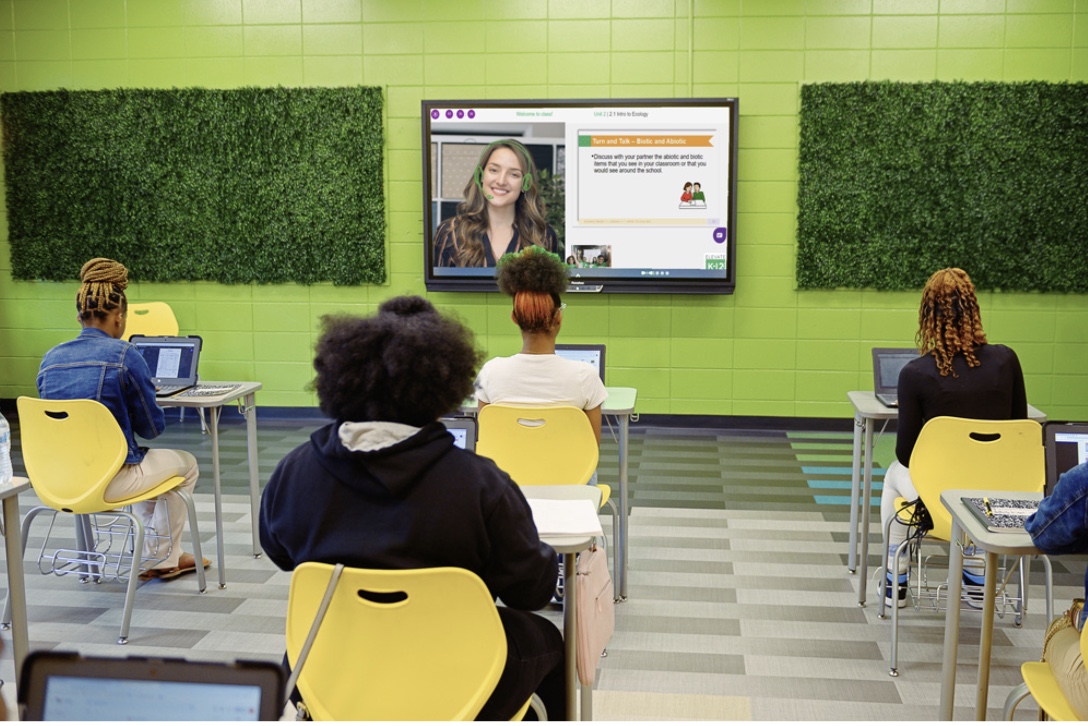
Along with developing new virtual and hybrid approaches for students to learn, during and after the pandemic, reports also note that some districts are spending millions of dollars on virtual teachers to fill-in when they can’t find the personnel they need in their local area. Among these, districts in Little Rock, ArkansasCharleston County, South CarolinaSan Jose, California, and Milwaukee Wisconsin have contracted with companies such as Elevate K-12Coursemojo, and Proximity Learning to address their teacher vacancies and to provide virtual instructors who zoom into their classes. These companies employ fully certified virtual teachers who provide “synchronized learning services” in a range of subjects. The virtual teachers interact with students completely through the online platforms, with, in some cases, in-person supervision provided by paraprofessionals or long-term substitute teachers. 

"live teaching" model

Elevate-K12’s model of “live teaching”, The 74

The benefits and drawbacks of these approaches are also being debated in the press. For some, these virtual options provide an alternative to other “quick fix” solutions that have been used to fill empty classrooms in the past, including hiring uncertified teachers, incentivizing military veterans to join the teaching force, or removing some degree requirementsAccording to the CEO of a San Jose charter school network that contracts with Coursemojo, this situation is not ideal, “but until we really, radically change the education profession here in the United States, we’re going to be looking at solutions like this.” Catherine Schumacher, Executive Director of Public Education Partners stated the importance of not shaming “districts for doing the absolute best they can do to get qualified teachers,” especially in a climate where “we have systematically underpaid…educators for years.”  

Other advocates argue that the subjects virtual teachers are teaching have historically been hard to fill, meaning many students did not have access to these educational opportunities, particularly in low-resource school districts. As the Milwaukee Public Schools talent management director put it: “when we talk equity and access, I want to ensure that if my students want to take pre-calc, if they want chemistry, if they want physics, that they have the opportunity to do so.” 

The cost-effectiveness of the virtual models also remains in question. For one school district in Milwaukee, Wisconsin, a contract with Elevate-K12 helped them fill 55 open positions at a cost of about $3.9 million, a savings from the $5 million it would have cost to hire that many in-person teachers. A district representative reported that they were able to save the $1.1 million because they did not have to provide benefits for Elevate K-12 teachers. In contrast, a school district in Charleston County, South Carolina that has used the virtual learning platform, Proximity found that these models were more expensive, as the schools needed to hire paraprofessionals to watch the students during the virtual classes. 

Critics point to the fact that there is not yet enough evidence to show that students are achieving positive learning outcomes under these models, but proponents such as Elevate K-12 founder Shaily Baranwal, argue that virtual teaching during Covid-19 took place under emergency circumstances and, with more time to prepare and focus on delivery methods, post-pandemic virtual teaching could be particularly effective. Critics also question whether students’ social experiences and sense of belonging will suffer when they have virtual teachers, and some wonder who will be held accountable for student learning under blended learning models (i.e. the paraprofessionals who are in class every day with the students, or the virtual teachers?). With all these uncertainties, many parents remain skeptical of this virtual  solution and question whether virtual teaching will be the best fit for their children. 

The bottom line? Freeing up time to teach? 

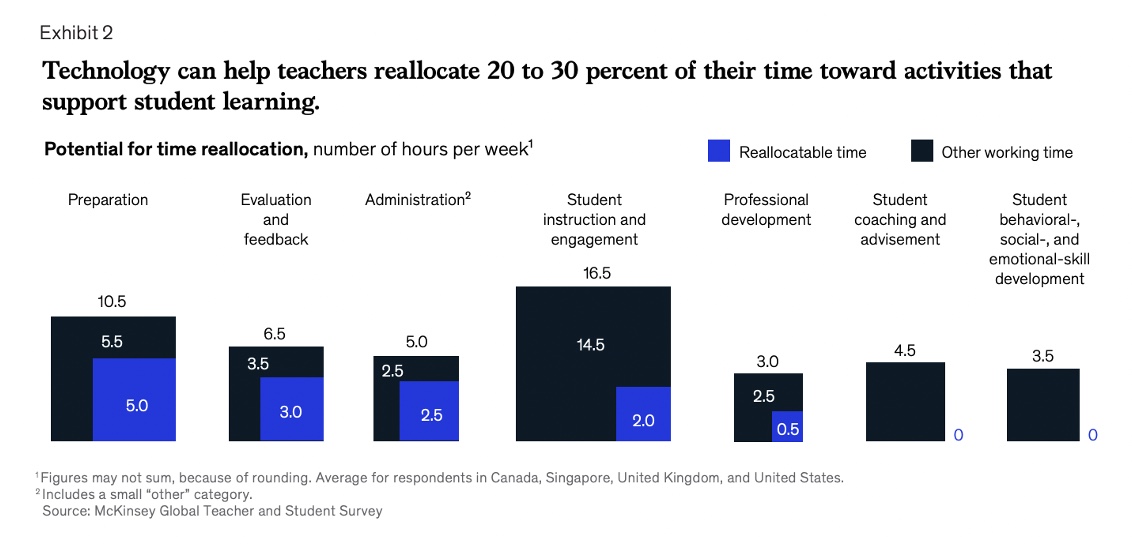
At the end of the day, the success of any of these “innovations” in professional learning depends on whether they can be put in place without adding to teachers already overloaded schedules and extensive set of responsibilities. Post-pandemic articles continue to highlight challenges like a lack of planning time for teachers and excessive time spent in staff meetings as well as hopes that AI may help address these issues by freeing up teachers’ teachers time from administrative tasks and helping teachers create differentiated assignmentsThrough a survey of 368 school-based employees across the U.S., AI-Equity found that 84% of those who used AI in the Daily/Weekly category reported they were “more excited about continuing education sector work because of AI,” compared to 52% of all respondents, while 94% of Daily/Weekly AI users shared that it made them more productive. According to research from MIT, AI can improve the performance of skilled workers in fields such as consulting by approximately 40%. A report from McKinsey and Co. estimates that teachers could free up 20-30% of their time by using AI and other technologies to support activities such as preparation, conducting evaluations and giving feedback, administrative duties, and professional development. The Christensen Institute argues that teachers may not use their reallocated time for increased student engagement without proper incentives, but freeing up teachers’ time could help to alleviate burnout and increase the attractiveness of the profession. 

How artificial intelligence will impact K-12 teachersMcKinsey

However, sources also caution that AI should not be viewed as a panacea for solving these issues, and in fact, may exacerbate some of the challenges that teachers face. As one teacher explained, the expectations developing lessons incorporating AI and other forms of technology “takes extreme planning, and that, we don’t have time for anymore.” Moreover, the increasing use of AI raises numerous questions about the potential impact on students’ learning and development. In particular, as Julia Freeland Fisher cautions, the education market doesn’t prioritize relationship building within its attainment metrics and so may fail to take into account AI’s impact on those relationships. Under those conditions, as Freeland Fisher put it, “the more commonplace that AI companions, coaches, and anthropomorphized bots in learning and support models are, the more fragile students’ social connectedness may become.”

The Threat & Promise of Advanced Technology in Education: Reflections from the Atlantic Rim Collaboratory 

This week IEN shares key ideas and resources from two meetings of the Atlantic Rim Collaboratory (ARC) that engaged policymakers and education leaders in exploring the potential of AI in education. The meetings included an ARC pre-Summit ThoughtMeet with A Focus on Democracy & AI Advanced Technology (like ChatGPT) in Schools, and the annual in-person Summit in Oslo, Norway that included a “Focus on AI and Education”. ARC co-founder and Learnlab CEO, Yngve Lindvig, offered some provocations as well as an opportunity to play with ChatGPT. 

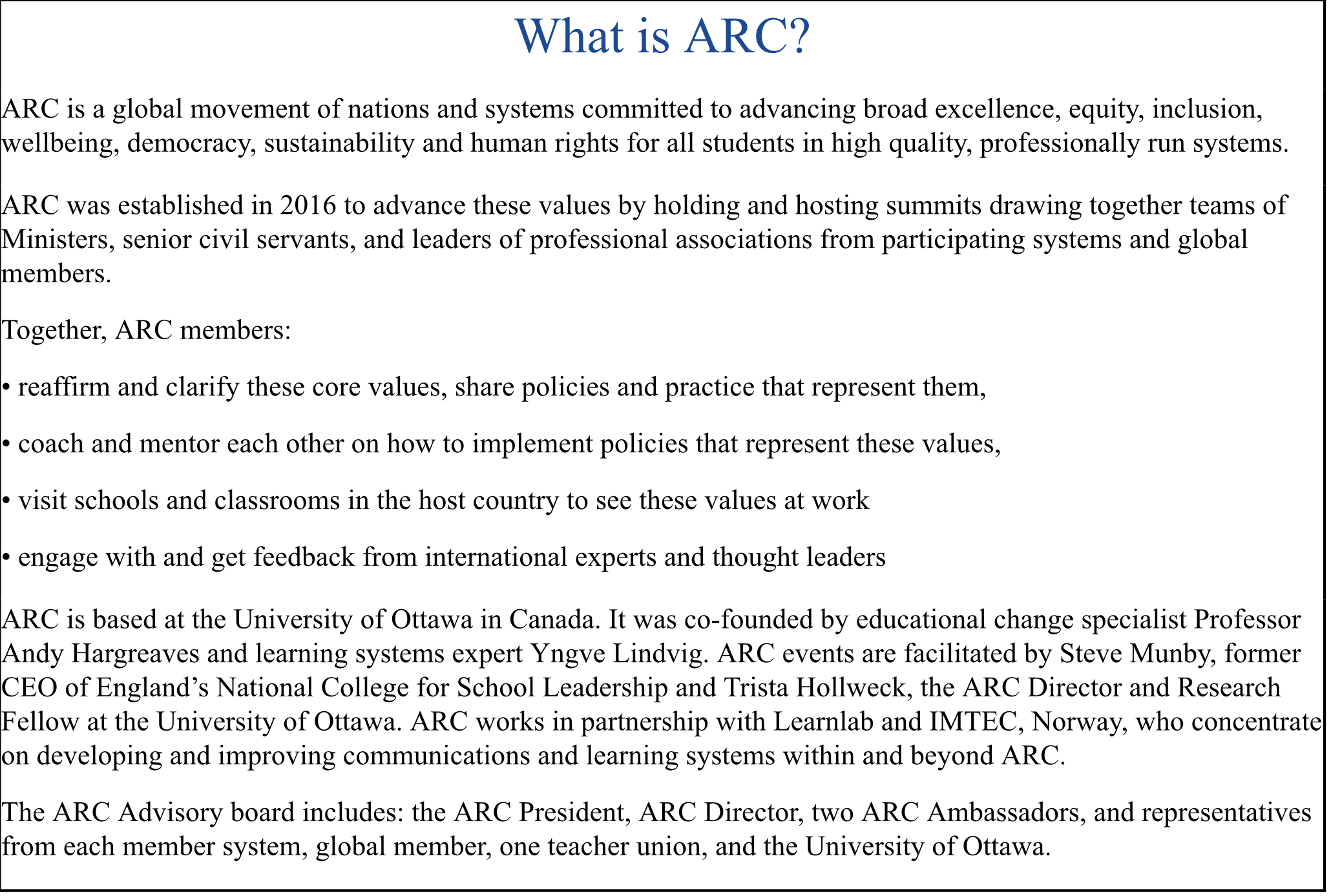
ARC brings together members of education systems and organizations such as Ireland, Iceland, Scotland, Uruguay, Wales, and the Canadian provinces of Nova Scotia, and Saskatchewan, and the International Confederation of Principals (ICP). Summaries and materials from previous ThoughtMeets are available on the ARC Education Project website. This article was written by Mariana Domínguez González, Sarah McGinnis & Trista Hollweck.  

Ready or not, advanced technology (like ChatGPT) is part of the educational landscape, Yngve Lindvig declared. Even as the debate continues on the possibilities and consequences for schools and higher education, educational leaders must make policy decisions on artificial intelligence in their systems that take into account key questions like: 

• How can we make sure that pedagogy drives technology and not the opposite?

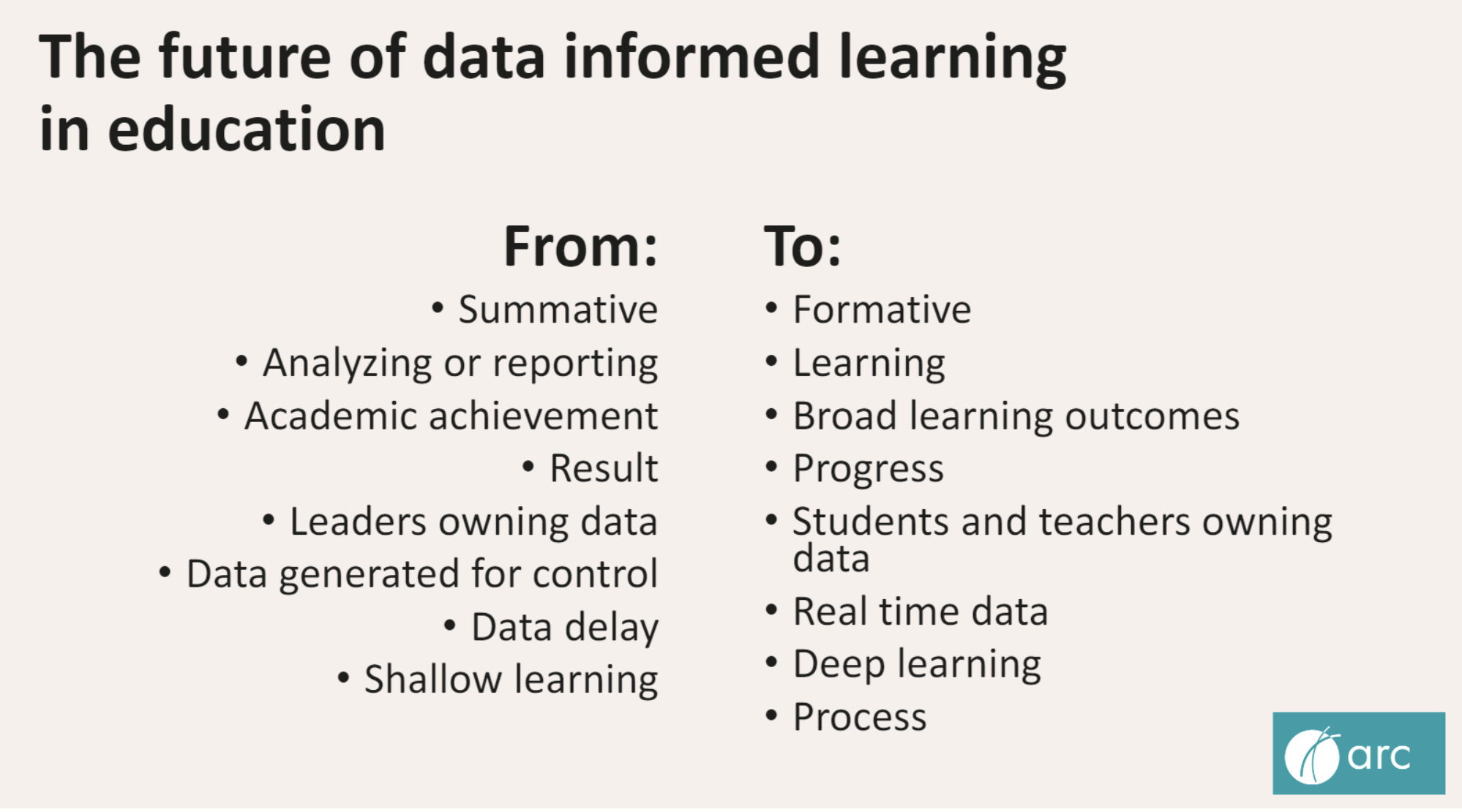
• How do we make AI generated data relevant for teachers and students to support learning?

• How can teachers and students be data generators and critical users?

• How can teachers be their own data managers and have access to effective tools for data informed feedback in real time?

• How do we know the data we use is ethical and complies with General Data Protection Regulations (GDPR)

In this context, Lindvig argued, ChatGTP and advanced technology should be embraced, rather than feared, but in a thoughtful and reflective way. Although many governments and system leaders are concerned about the speed of change and a lack of control over AI, banning its use in schools and higher education is not the answer, he continued. AI has the possibilityto disrupt established instruction and assessment practices tosupport student learning in new and powerful ways, but its threats must not be taken lightly, he warned.

Addressing both threats and opportunities, Lindvig described how data-informed learning can be a critical element of effectiveAI use in schools, where data are generated by the students andare used in the learning situation. Since the origin of content in most data management systems is unknown, however, a number of risks must be considered when using AI generated data in schools. These include lack of diversity in content, creating an echo chamber of self-reinforcing opinions and sources, and promoting content that may not be aligned with priorities in educational systems. The main problem is that when a student uses AI generated data, the output is not derived from the student’s critical thinking, reflection, ideas, or product, but it is outsourced to a machine that disconnects the student from the learning. On the other hand, Lindvig explained, if you are able to make an AI-empowered solution within your system, controlled by your system, linked to the curriculum, tagged with curriculum goals, incorporating student feedback based on the intentions in the curriculum, then we have a system that could actually change something.

For Lindvig, perhaps one of the most powerful changes that AI could bring to education is a shift from more traditional assessment practices (such as essay writing and tests) to production-based formats where students must demonstrate their learning in multiple ways using a variety of multi-modal formats. When AI is assessing multi-modal products aligned with the goals that the teacher sets for the learning experience, then the teacher also gets something in return for using advanced technology. Additionally, AI used for assessment can engagestudent learning and provide immediate feedback within the classroom. Of note, AI implementation guided by teachers’ goals ensures that the feedback provided to students is aligned with the educational system’s curriculum and not “big tech” controlled algorithms.  After testing this type of AI implementation in Scandinavian schools in May and June, Lindvig noted that teachers reported that the AI feedback on student work was aligned with the values in the curriculum and that it provided them with more time to communicate with their students.

So where do system leaders start in order to implement an AI-empowered solution that is pedagogically relevant? According to Lindvig, systems should:

• Own the login platform, even if a company runs it for the system. 

• Control the student catalog which contains the data.

• Implement very strong General Data Protection Regulations, and decide –at a federal, provincial and/or municipal level- which applications are allowed to be used.

• Own the curriculum by making sure that the applications filter the information so that it includes only the content that is relevant and pertinent to the national/provincial curriculum.

ARC Pre Summit March 2023 Yngve Lindvig

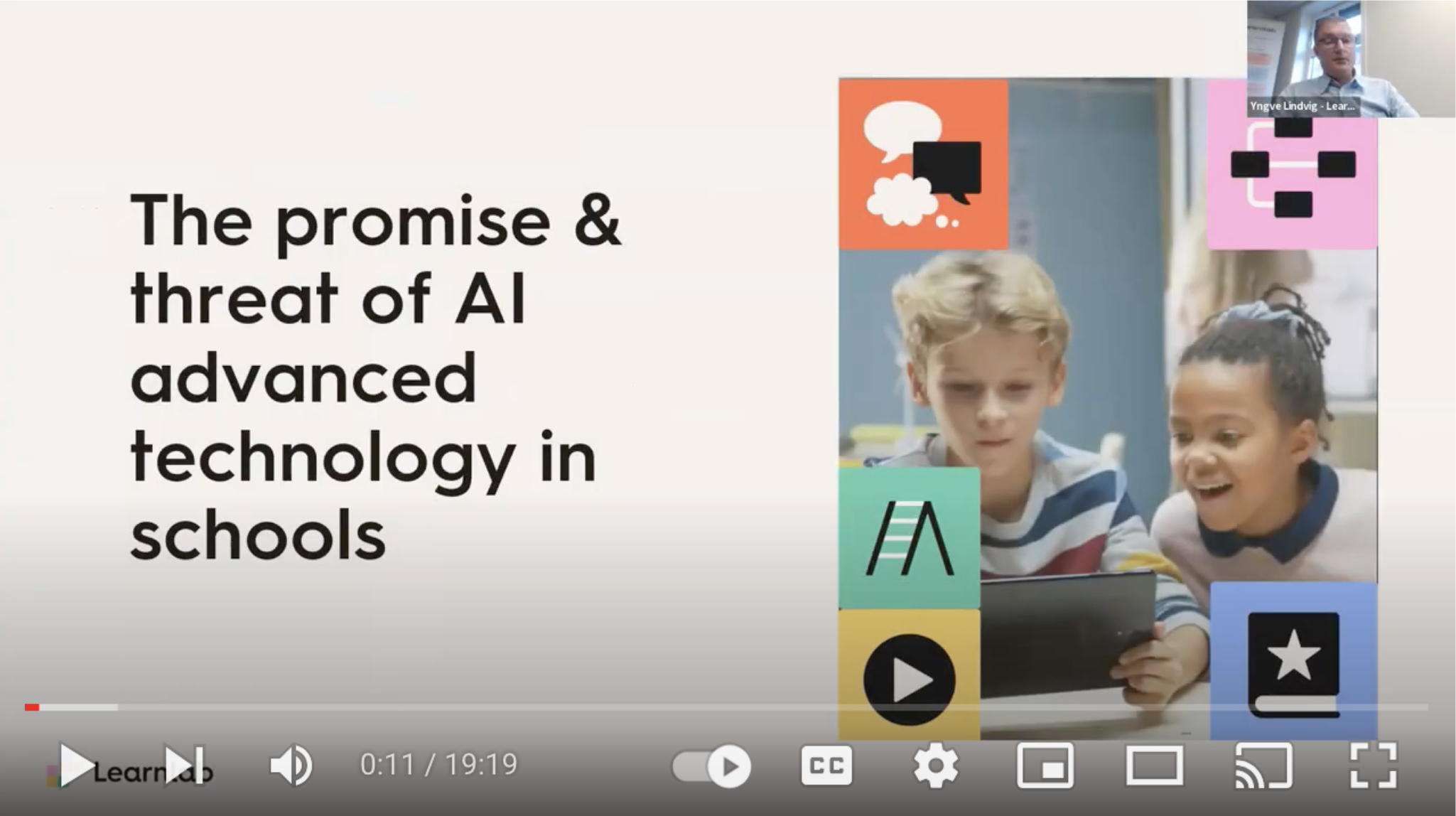
Yngve Lindvig´s ARC Talk on The Promise & Threat of Advanced Technology in Education

Previous IEN posts from ARC include A Focus on (Imperfect) Leadership: Snapshots from the 9th ARC Education ThoughtMeetWell-Being, Social Emotional Learning (SEL) and the COVID-19 Pandemic: Snapshots from the 8th ARC Education Thoughtmeet; and The ARC Education Project: Rethinking Secondary Examinations and Credentials. Previous IEN posts on AI include: ChatGPT on ChatGPT in education: Clear summaries and fake citations (The ChatGPT six month anniversary edition Part 1)Ban It or Use It? Scanning the Headlines: The Chat GPT six month anniversary edition Part 2Scanning the headlines for international perspectives on ChatGPT in schools: The Chat GPT six month anniversary edition Part 3and What difference will AI make in schools? Scanning the headlines on Chat GPT’s six-month anniversary (Part 4).