Tag Archives: education

Justice-Oriented Educational Change Through Community-Led Solutions: A Conversation with Edwin Nii Bonney

In November’s Lead the Change (LtC) interview Edwin Nii Bonney emphasizes that educational research and practice must “look back” by acknowledging colonial legacies and marginalized histories while “looking forward” by centering Indigenous, vulnerable, and community voices. His work highlights deep listening, intergenerational collaboration, and community-designed solutions as essential to dismantling deficit narratives and creating equitable educational systems. The LtC series is produced by Elizabeth Zumpe and colleagues from the Educational Change Special Interest Group of the American Educational Research Association. A PDF of the fully formatted interview will be available on the LtC website.

Lead the Change (LtC): The 2026 AERA Annual Meeting theme is “Unforgetting Histories and Imagining Futures: Constructing a New Vision for Educational Research.” This theme calls us to consider how to leverage our diverse knowledge and experiences to engage in futuring for education and education research, involving looking back to remember our histories so that we can look forward to imagine better futures. What steps are you taking, or do you plan to take, to heed this call? 

Dr. Edwin Nii Bonney

Edwin Nii Bonney (ENB): As someone who grew up in Ghana and went through K–12 and college there, I have come to appreciate the wisdom of my elders. That wisdom, often carried in proverbs and the principle of Sankofa, reminds us to look back and learn from the past so that we do not repeat its mistakes. In my scholarship, I wrestle with the reality that educational systems remain deeply embedded in coloniality. We are still grappling with the legacies of colonialism especially in the global South, and those legacies have not disappeared (Bonney, 2022). They persist in the languages we speak and use to instruct students, the books we read, our perceptions of ourselves, our standards of beauty, and even our justice systems (Bonney, 2023; Bonney et al., 2025a). Colonialism continues to shape much of who we are and how our societies function. It is essential that we acknowledge that the legacies of colonialism are still with us. It was not that long ago, and its effects continue to reverberate in our educational systems and beyond. 

Having lived and schooled in four different countries, I have come to realize that in every society there are marginalized and vulnerable groups. The dominant discourses in any context, whether social, cultural, or educational, are often so pervasive that marginalized voices, ideas, and ways of knowing are easily erased or silenced. Indigenous wisdom, local knowledge, and community customs are frequently pushed aside. This understanding shapes how I approach my scholarship. We must continually examine how educational leadership, policies, and practices have historically and presently marginalize the ways of being, speaking, and doing of those who are not part of dominant groups. Whether in the United States, Ghana, or elsewhere, there are always minoritized voices whose perspectives are excluded from how education is designed and enacted. Because of that, I believe it is vital to ask how we center the ways of speaking, knowing, and being of Indigenous, marginalized, and vulnerable communities in education. How do we ensure that their experiences and insights shape what we study, how we study it, and how we interpret what we learn?

In my own scholarship and service, I see my role as coming alongside communities and families, not as an expert above them but as a partner who recognizes them as experts of their own experiences. They understand the root causes of the challenges they face and often hold the wisdom to identify meaningful solutions. In Bonney et al. (2025a) in listening to students who had not been able to obtain passing grades in Math, many of them, after retaking the exam multiple times, I learned that they struggled to understand and make sense math concepts taught in English. They felt like failures until they went against the norm as experts of their own experiences to learn in their native languages. Learning in their own native language according to these students brought them success on the first try even though the system told them it was impossible. As we think about the future of education and research, we must keep asking: whose voices are missing from the table? Whose perspectives are absent from the design process? Which families are not engaged in our schools, and how do we empower them to participate fully? We must always ask who we are not serving well and how we can do better. When we look back at history, we see that we have not always served everyone equitably. Therefore, it must remain at the forefront of our work in education to ask, whose voices are we still not hearing?

LtC: What are some key lessons that practitioners and scholars might take from your work to foster better educational systems for all students?

ENB: Much of the work I do alongside educational leaders, students, and families begin with listening. It starts with listening deeply to the experiences of different groups and how they encounter systems of oppression. This kind of listening is to not to defend or to critique but to learn from their perspectives, their realities, and their ways of knowing and being. The next principle is building relationships across generations and forming coalitions among groups who are affected by similar problems of practice or systems of oppression. When these coalitions come together around community-informed problems and community-designed solutions, we are better able to address the issues that matter most to them. In Bonney et al. (2025b), I share about a community-based organization that brings together everyone in their village from as young as seven years to as old as 80 years. The organization gathers the elders to recount stories about the history of their community in their native language. The young people record and document the oral history and then create plays in their native language, where they dramatize the stories on digital media and on stage to be a resource for local schools because there were no resources to teach their native language other than English. This community led movement was in decreasing use of their native language. Communities understand their own challenges, and when they help design the solutions, those solutions are more authentic, effective, and sustainable (Costanza-Chock, 2020). Through these relationships and through genuine listening, we can begin to challenge deficit discourses and narratives that blame individuals instead of systems for the inequities we see in education. Deficit thinking overlooks structural causes and often misplaces responsibility. But lasting change requires us to shift our attention to the systems, policies, and practices that create and sustain inequity. 

Change in education will come only through broad coalitions that include not only researchers and educational leaders but also students, teachers, families, community members, elders and even naysayers. Their knowledge, lived experiences, and cultural wisdom are essential for reimagining a more just and equitable educational future. As we engage in this work, it is important to keep asking which solutions are working, for whom, and under what conditions (Hinnant-Crawford, 2025). Sometimes a solution may appear successful in one area but create unintended problems in another. When that happens, we must be ready to respond quickly to stop any harm. Change is not static; it is a continuous and reflective process. At the heart of this work is a simple but powerful truth: we must be intentional about involving those most affected by the problems we aim to address. We must center community expertise, engage families and students as co-creators of change, and together expose even small variations in outcomes for students as opportunities to learn. Finally, we must continue to seek out and listen to the voices and stories of those still impacted by systems of oppression or persistent inequities. Because meaningful change in education begins with listening, building relationships and broad coalitions that endure when we work together to challenge inequitable systems and co-create a more just future. These are the foundational blocks to a justice-oriented improvement approach to undo oppressive systems in education.

LtC: What do you see the field of Educational Change heading, and where do you find hope for this field for the future?

ENB: The nature of change is that it always comes with uncertainty. Sometimes that uncertainty can bring frustration on one hand or excitement on the other. We can never fully know what the future holds or what the field might look like. We cannot predict what new policies, reforms, or interventions will emerge, or what discourses will shape the field. What I do know is that we can always look back to learn. We can recognize that, as a society and as a field, there are things we’ve done well and others we have not. One of our core goals must be to serve all children well. That means preparing researchers, educational practitioners, students, and teachers so that we can meet the diverse needs of all types of learners. It also means continuing to prepare teachers for a field that is increasingly complex with diverse students who have diverse needs. It also means preparing educational leaders to create inclusive and collaborative environments that enable teachers and staff to do their best work to serve students equitably. 

So, although there is uncertainty about the future, one thing we can hold on to is that we know what we value and how to prepare for that future, whatever it looks like. More than what gives me hope is what energizes me. In Bonney et al., (2024) we created an edited volume, to center and hear from educational practitioners on the front lines and how they work with students, teachers, parents, and community to tackle problems of practice in their local schools and districts. In times of uncertainty, the best people to hear from are those on the front lines. Working alongside with these scholars, educational leaders, and practitioners, in the trenches trying to figure out how to serve all students well makes me expectant that things will change continuously for the better. They’re asking critical questions: How do we better support our teachers? How do we solve problems of practice? How do we address discipline issues or chronic absenteeism? How do we engage families more effectively? How do we reduce the overrepresentation of Black and Brown students in special education? How do we increase their representation in gifted and Advanced Placement courses? These are the kinds of questions that inspire hope for the future. Even though the future may be uncertain, we can still prepare for said future. Personally, I am not as concerned about where the field of educational change is heading but rather about preparing my students and practitioners for today’s challenges. I believe that the same justice-oriented and community-centered approach to solving today’s problems will help us address the problems of tomorrow.

Giving Thanks for Education in 2025

To celebrate Thanksgiving in the US, IEN continues its annual tradition of recognizing some of the many groups and individuals who are supporting learning and education around the world. This week, we celebrate the educators and organizations we profiled this year from China, Estonia, Vietnam,

Boundless Learning in an Early Childhood Center in Shenzen, China

Pushing the boundaries of the conventional school: Indrek Lillemägi talks about the development of a new upper secondary school in Tallinn, Estonia (Part 1; Part 2)

Responding to Local Conditions: The Evolution of Fundación Escuela Nueva’s Approach to Teaching & Learning in Rural Colombia and Beyond

Can Vietnam transform the conventional model of schooling? Educational improvement at scale (Part 1 Part 2)

Will Vietnam be leading the way in transforming the conventional model of schooling that has dominated education for more than 100 years?

Something’s Happening Here: Gregg Behr on the Evolution and Expansion of Remake Learning and Remake Learning Days (Part 1; Part 2)

Photo by Howard Lipin

Establishing the Children and Families Agency and Promoting Digital Transformation in Childcare: Hiro Yokota on the Development of a “Child-Centered Society” in Japan (Part 1; Part 2)

Bringing a Tablet-Based Foundational Learning Program to all the Primary Schools in Malawi: Joe Wolf and Kira Keane on the Evolution of Imagine Worldwide (Part 1; Part 2)

Innovations in providing children with food and nutrition:  Scanning the headlines for new ways to support students’ health and wellbeing after the pandemic (Part 2)

In part 2 of this two-part post, Sierra Bickford scans recent news and research on education to list some of the innovative approaches schools and communities have developed to make sure all students got the food and nutrients they need during and after the school closures of the COVID-19 pandemic. Part 1 outlined the essential role access to food and nutrition plays in supporting healthy development for students both in the US and around the world.  These posts are part of IEN’s ongoing coverage of what is and is not changing in schools and education following the school closures of the pandemic. For more on the series, see “What can change in schools after the pandemic?”  For examples of micro-innovations in other areas, see IEN’s coverage of new pathways for access to college and careers and new  developments in tutoring: Building Student Relationships Post-Pandemic in School and Beyond; Still Worth It? Scanning the Post-COVID Challenges and Possibilities for Access to Colleges and Careers in the US (Part 1); New Pathways into Higher Education and the Working World? Scanning the Post-COVID Challenges and Possibilities for Access to Colleges and Careers in the US (Part 2)Tutoring takes off and Predictable challenges and possibilities for effective tutoring at scale.

The school closures of the COVID-19 pandemic disconnected children around the world to critical sources of food, including school meals. Fortunately, educators, community members and others have developed a host of new mechanisms, resources, and partnerships to make sure children get access to healthy and healthier meals. These “micro-innovations” include new ways to work with community partners, including farmers, nonprofits, chefs, and local vendors and local ingredients to improve nutrition, strengthen regional economies, and increase student engagement. Other developments include using centralized kitchens and new policies and regulations to increase production and lower barriers to access. A few notable efforts also show how several countries have reworked funding structures to sustainably scale school meal programs. All these initiatives are helping to reduce costs, elevate meal quality, and ensure every child can eat with dignity and ease.

How to Use Community Partners and Local Ingredients

  • Zambia: Schools across Zambia are receiving funding from the One Hectare Program to support student run gardens and greenhouses. These gardens help supply school meals and make the community less vulnerable to drought and famine; it functions not only as extra food but also an opportunity to learn. The gardens are taken care of by the students who learn valuable skills such as “drip irrigation, organic sack gardening, and environmental protection.”
  • Kenya: In 2024, Kenya launched its national chapter of the school meals coalition and created a meals program that focuses on relying more on regional resources by employing local farmers growing region specific foods such as sorghum, cowpeas and potatoes. This not only increases the nutritional value of school meals but also supports local small business farmers. In collaboration with the Ministry of Health and the World Food Programme, the Ministry of Education is also developing a national menu guide in order to encourage the production of more sustainable and diverse meals.
  • France: Legislation has been passed to accelerate the transition to a more sustainable and healthier diet. Regulations put in place since 2021 include requirements for certain percentages of ingredients to be purchased from local and sustainable sources and specify some meal content for school lunch programs. For example, “out of 20 meals, children must be offered no more than four starters with a fat content of 15% or more; at least four fish-based meals (or a dish containing 70% fish or more), and at least 8 whole-fruit desserts.”
  • Hawai’i: The State Department of Education created a pilot meals program, the ’Aina Pono Farm to School initiative. Through the pilot program, students at schools such as Mililani High School in Oahu were able to sample various healthy, less processed dishes and give their personal feedback on menu choices. As a result, students ate far more of the meals on offer, reducing food overproduction at the school by 20%.
  • Tasmania: Schools in Tasmania are outsourcing at least one day of food preparation to local charity. Loaves and Fishes get produce from local vendors and cook the food either on or off site. These schools are selected through a competitive application process.
  •  Haiti: Local farmers in Haiti’s Northeast strengthen nutrition and economy by supplying food to school canteens. The World Food Program purchases up to 9,990 tons of local produce to support struggling farmers and supply school meals to approximately 15,000 students across 200 schools with local nutritious food.
  • New York City: The “Chefs in the Schools” initiative brings in local professional chefs to create nutritious cost effective menus for schools. The chefs also provide training for staff.
  • Canada: Canada’s first national school food program, funded by 1 Billion dollars in federal funds, is rolling out amid rising need, with provinces and local providers striving to expand hot meal offerings despite funding gaps, aging infrastructure and growing demand from families struggling with food costs.

Using Centralized Kitchens:

  • France: Centralized kitchens in France prepare 6,000 to 10,000 servings a day of high-quality food following strict food safety protocols. This cuts down on cost and increases quality.
  • Hawai’i: The Hawaiʻi’s Farm to School Action Plan connects schools with local farms to provide fresh, nutritious meals, support farmers, and promote sustainable food systems through a regional kitchen model and community collaboration. 
  • Sweden: A pilot program transforming school canteens with student-designed spaces, surplus-produce energy bars, and sustainability initiatives has boosted engagement and healthy eating while highlighting the need for long-term investment and multi-agency collaboration to sustain its success. 

Lowering barriers to food 

  • Africa: Food4Education (F4E) is transforming school feeding in Africa through a sustainable, locally sourced model that provides nutritious, affordable meals while supporting local farmers and communities. By 2030, they aim to feed 1 million Kenyan children daily and help other African governments feed 2 million more, creating a scalable blueprint to end classroom hunger across the continent.
  • New York City: In response to rising concerns about federal budget cuts to SNAP, the Supplemental Nutrition Assistance Program, a school in Brooklyn has partnered closely with the community organization El Puente and other stakeholders to support their students.
  • Colorado: All Colorado public school students will continue to have access to free school meals after voters approved two state referendums on November 5th, 2025, one of which — Proposition MM — will raise state income taxes for those earning an annual income of $300,000 or more.
  • United States: A streamlined certification structure has been implemented for a summer food assistance program launched last year. In the first year, some families missed out on Summer food benefits because of confusing enrollment, limited outreach, and short deadlines, despite the program proving highly effective for those who received it. To address the problem, more families will be enrolled automatically, if they are on certain public benefit programs, including free and reduced price school lunch.
  • Ghana: The Ghana School Feeding Programme has found most Ghanaian caregivers prefer on-site school meals over cash or take-home rations, with their choices shaped by program satisfaction, time constraints, and local food prices, suggesting school feeding programs could be more effective by tailoring modalities to regional and household needs.
  • United States: Starting in the 2027–28 school year, the USDA will ban online processing “junk fees” for students eligible for free or reduced-price school meals, aiming to expand the policy in the future to ensure all children can access healthy school meals without extra charges.
  • California: Schools are offering food trucks to boost lunch participation. Called the Cruisin’ Cafe, the food truck gets more seventh- and eighth-grade students to eat lunch during school. Students won’t have to pay anything for their meals or walk across campus to get lunch at the cafeteria.
  • New York City: New York City is investing $150 million to expand modern, café-style cafeteria upgrades to more schools after seeing that redesigned dining spaces boosted student participation in school meals and helped reduce stigma amid rising child food insecurity.
  • United States: Districts are using the federal Community Eligibility Provision to offer free school meals by strategically clustering schools to maximize reimbursement, clearly communicating and reassessing eligibility data each year, and boosting revenue through expanded breakfast programs like breakfast-in-the-classroom or breakfast-after-the-bell. 

Changing Financing Systems

  • Bolivia: Since 2000, the government in Bolivia has supported what has come to be called the Complementary School Meals Program. By 2019, with investments of more than 100 million US dollars, the program provides school meals to more than 2.2 million students –  almost 80% of all school-age children and youth. To fund the program, the government has turned to taxing natural resources, specifically hydro carbons, program. 
  • Mozambique: In Mozambique, $40 million in debt service payments were channeled to school meals by using debt swaps and broader debt relief strategies to redirect repayments toward national education and nutrition priorities. 

Access to food and school meals in the US and around the world: Scanning the headlines for new ways to support students’ health and development after the pandemic (Part 1)

One of the many repercussions from the COVID-19 pandemic was a world-wide hit to students’ health and wellbeing. In particular, proper nutrition and food insecurity was greatly affected by the pandemic and the lockdowns as many students around the world could not get food and food related support at their schools. In Part 1 of this two part series, Sierra Bickford takes stock of the impact school nutrition programs have globally and highlights the effects of these high-impact interventions. Part 2 will scan recent news and research to find  some of the many micro-innovations – new developments in practices, structures, and resources in different contexts – that have been implemented to combat this rise in student food insecurity. These posts are part of IEN’s ongoing coverage of what is and is not changing in schools and education following the pandemic school closures. For more on the series, see “What can change in schools after the pandemic?”  For related examples of micro-innovations in other areas, see IEN’s coverage micro-innovations to strengthen student relationships, to increase access to college and careers and to improve tutoring: Building Student Relationships Post-Pandemic in School and Beyond; Still Worth It? (Part 1); New Pathways into Higher Education and the Working World? (Part 2)Tutoring takes off and Predictable challenges and possibilities for effective tutoring at scale.

Food insecurity, particularly among children, was one of the critical problems exacerbated by the COVID-19 pandemic and the related societal shutdowns. Estimates suggest that, during the pandemic, the number of people experiencing food insecurity doubled from about 135 million to more than 270 million. In India alone, household food insecurity skyrocketed from 21% in December 2019 to 80% in August 2020, at the same time that diet quality decreased. By the end of 2021, the UN warned that over 43 million people in 38 countries, including Ethiopia, Somalia, South Sudan, Afghanistan, and Yemen, were at risk of experiencing famine or famine-like conditions.

Even in wealthier countries household food insecurity increased substantially. In the United States, that meant a rise in households experiencing food insecurity from 11% in 2018 to 38% in March 2020.  In a report from 2020, the US Census’s Household Pulse Survey estimated the rates of food insecurity had doubled overall, and tripled among households with children. In the wake of the pandemic, school systems, despite vastly different conditions and challenges in different contexts, are working to reestablish nutrition programs and create new strategies to get children access to nutritious balanced meals.

The impact of school based nutrition worldwide

Across the world, school meals have been shown to be a worthwhile intervention with high positive impact on health and learning outcomes. In high income countries, such as those in the United Kingdom, access to nutritious school meals are associated with lower obesity rates. In Sweden, school meals with regulated nutrition requirements have been shown to increase educational attainment, health outcomes, and income across lifetime. One study found that low income families with children in Sweden who received free school meals increased their lifetime income by 6%. The effects that these interventions have on European health care costs estimate “that the return from investment in school meal programs is at least sevenfold, up to a possible €34 for every €1 spent.”   

Graphic depicting which European Countries have an official, nationwide program for school meal provisioning

Data from low and middle income countries also support the implementation of free school meals,  particularly for increasing attendance and retention. In Burkina Faso female students who were given take-home food attended school at least 90% of the time. Similarly in Bangladesh, the introduction of free fortified biscuits “increased enrollment by 14% and reduced school dropout by 7%.” Nutrition programs in low and middle income countries have been shown to positively affect learning outcomes as well. In India, access to free school meals is associated with higher cognitive outcomes and an 18% increase in literacy test scores. As in the United Kingdom, in Brazil students who were being supplied meals at school were more likely to reduce their intake of unhealthy foods and increase the presence of nutritious food in their diet, which leads to better health outcomes.

Figure shows the regular consumption of healthy and unhealthy food markers according to consumption of school meals; from School meals consumption is associated with a better diet quality of Brazilian adolescents: results from the PeNSE 2015 survey

The impact of school based nutrition in the United States

In the US, the National School Lunch Program has long been the primary vehicle for supporting students’ nutritional needs. Around 95% of US elementary, middle, and high schools take part in the program and about 75% of the meals provided through it go to children from low-income families who qualify for free or reduced-price lunches. Students who consistently consumed these meals were more often from low-income households and more likely to be non-Hispanic Black or Hispanic compared to those who didn’t participate. As a consequence, the program is one key means of addressing  nutritional and health inequalities in the US, where non-Hispanic black and Hispanic children are more likely to be overweight or obese and have lower quality diets than white children. 

School meals matter: federal policy can improve children’s nutrition and health (Jia et al. 2020) – PMC↗

In fact, US students who eat school meals daily ate less saturated fat and sugar than students not eating school meals and had less prevalence of obesity.  In addition, in the US, school meals help to reduce food insecurity, and, in some cases, provide up to half of a child’s daily energy intake. Studies from the US show that left unaddressed, food insecurity and a lack of nutritious food can interfere with students academic and cognitive development and can have a negative impact on their social development and behavior in school.  

Despite this evidence, the budget bill promoted by the US administration and passed by Congress this past summer reduces funding for federal health and food programs. Estimates from the School Nutrition Association suggest that the bill could create a ripple effect of food insecurity for American children. This ripple effect will include fewer children automatically being eligible for SNAP and school lunch programs as well as fewer schools being able to enroll in Community Eligibility Provision. Nonetheless, even as these cuts are being made, schools and communities across the US and around the world are continuing to develop new ways of reaching more and more children and families and increasing access to higher quality and healthier food.

Next Week:  Innovations in providing children with food and nutrition:  Scanning the headlines for new ways to support students’ health and wellbeing after the pandemic (Part 2)

Teaching in the Age of Generative AI: Lead the Change Interview with Bernardo Feliciano

In October’s Lead the Change (LtC) interview Bernardo Feliciano’s discusses his work through the AITeach Co-design Lab at UMass Lowell; this work brings educators, researchers, and technologists together to co-create strategies and tools for teaching in this age of AI. The LtC series is produced by Elizabeth Zumpe and colleagues from the Educational Change Special Interest Group of the American Educational Research Association. A PDF of the fully formatted interview will be available on the LtC website.

Lead the Change (LtC): The 2026 AERA Annual Meeting theme is “Unforgetting Histories and Imagining Futures: Constructing a New Vision for Educational Research.” This theme calls us to consider how to leverage our diverse knowledge and experiences to engage in futuring for education and education research, involving looking back to remember our histories so that we can look forward to imagine better futures. What steps are you taking, or do you plan to take, to heed this call? 

Bernardo Feliciano (BF): Currently I am working with colleagues to build a co-design lab that brings together educators from very different contexts to develop approaches to teaching and learning in a world where generative AI is a reality. The lab is called the AITeach Co-design Lab @ UMass Lowell. (The hyperlink goes to one of many one-pagers we have been developing for partners representing different disciplines and sectors).

Bernardo A. Feliciano, Ph.D.

In the AITeach Co-design Lab, as collaborators we aim to create a structured space where we as a diverse group of educators, researchers, and technologists co-develop practical tools, strategies, and prototypes that respond to the reality of generative AI in education. The intention is not only to design usable products but also to study how to structure co-design itself to help schools navigate AI’s challenges and opportunities. In our co-design sessions, educators, researchers, and technology build spaces where we can address challenges in education and AI that are too complex for any one actor to solve (Snowden & Boone, 2007; Senge, 1990). The Lab functions as a structured environment where we can bring our problems of practice, iterate on small pilots, and use those cycles to build local capacity rather than waiting for top-down policy.

As an adjunct professor, I am also teaching a class on family and community engagement with schools. These roles constantly remind me that people bring distinct personal, professional, and institutional histories into every space. For me, futuring is less about projecting a single vision of “Education with a capital E” and more about the relational, actor-to-actor work of helping people shape their futures from the personal, professional, and institutional histories they inherit. That’s the direction my work is taking me.

The way I approach this is by convening diverse groups around developing tangible projects. The process matters as much as the specific product, whether it’s a research article, curriculum binder, a chatbot teaching/learning companion prototype, or a strategy for helping parents connect to schools. What is essential is how people can communicate their histories, connecting, adapting, negotiating, and reworking them to address problems in the present into a viable future. The varied personal and institutional histories participants bring are neither external resources to be tapped nor barriers to be overcome, but active materials in our negotiation of effective, situated teaching and learning. Innovation emerges as members work through these histories, adapting them in relation to one another to meet particular needs. I may not care whether my own work is labeled research, practice, or a mix of both, but as co-designers we must respect each other’s perspectives, even as those perspectives shift through negotiation. AI brings this into focus. At its core, AI is an immense bank or reservoir of the past, trained on and providing access to what is already known or has already been done. The future is not contained in the AI itself—nor can it be left to AI to imagine for us. The future comes from how we draw on that past to build something meaningful with and for the people in front of us. We explore generative AI as both a design partner and an object of study. Co-designers prototype tools like tutoring agents or parent communication bots, while also interrogating what it means to teach with, against, or around AI in everyday classrooms.

Of course, I have to use my own history, experience, and learning as a researcher, teacher, administrator, entrepreneur, and non-profit professional to leverage the network of histories that generative AI offers. But more than before, I can inform, contextualize, and connect the convening and teaching I do now with the work of so many more people and peoples (to some extent) who came before.

LtC: What are some key lessons that practitioners and scholars might take from your work to foster better educational systems for all students?

BF: One lesson is that teachers cannot be treated as passive implementers of someone else’s design. Too often, educational change is imagined as developing a curriculum or program in one place and distributing it everywhere. That assumes context does not matter and is peripheral rather than integral to learning and teaching. Our relationship to knowledge is always relational and always contextual.

Education has always lived in the complex space where cause and effect are only clear in hindsight (Snowden & Boone, 2007). Simon (1973) describes these as ill-structured domains existing in a state of dynamic heterogeneity in which diverse elements and relationships continually shift, preventing stable equilibrium and requiring ongoing adaptation (Pickett et al., 2017). Ill-structured problems cannot be solved by importing outside solutions but only by negotiation among those struggling with them. I do not believe that educational change—or improvement—comes from a fixed product or process delivered with fidelity. It is an ongoing process of learning through which people shape what they inherit—choosing what to keep, what to adapt, what to reject, and what to forget. It is a process I have found universally involves dynamics of local alliances, conflicts, and negotiations. The lesson I take from this is that if you want to improve schooling, you have to engage with the people who are doing the teaching and learning.

Working on my dissertation underscored this point. I wrote about using one-on-one meetings in a researcher-practitioner partnership to organize co-designing a computer science (CS) curriculum for middle schools. My experience brought home to me that there is no such thing as “shared understanding.” What emerges is never a single, final agreement but alignment good enough to act together, sustained through negotiation as perspectives shift. For example, teachers and researchers sometimes differed on how much detail a lesson plan should contain. Some wanted highly specified steps, others only broad outlines. Rather than force uniformity, we kept both versions and moved forward. That flexibility allowed the work to continue without pretending the difference had been resolved.

My work with different kinds of organizations has shown me how funding and infrastructure shape what is possible. This point is kind of obvious but still seems to bear repeating. Creativity and goodwill are not enough without sustainable and intentional support. For example, in the CS Pathways partnership, we shifted from MIT App Inventor to Code.org’s App Lab during remote learning. That solved one problem but created new ones around district procurement and accounts, showing how infrastructure shapes outcomes. In our recent Lab kickoff meeting, one participant noted that even when AI-enabled data tools existed, district procurement rules blocked their use — showing how funding and infrastructure filter what is possible.

At the same time, I saw that students’ and teachers’ own histories can be powerful resources for change, if we work out how to support them as they need to be supported.  In one part of the CS Pathways project, students framed their app design around civic issues in their community, such as neighborhood safety and access to resources. Their lived experiences pushed the curriculum beyond abstract coding skills into work that mattered locally. This reframed computer science as a civic as well as a technical practice and shaped how we sequenced and supported instruction in those classes. 

LtC: What do you see the field of Educational Change heading, and where do you find hope for this field for the future?

BF: In my experience, the field often moves toward building monoliths: “the system,” “the conceptual framework,” “the workforce,” “education technology.” Instead of these monoliths, we need to work with lesson plans and pacing decisions that make up “the system,” the overlapping frameworks that guide practice rather than a single “conceptual framework,” the varied teacher and student histories that constitute “the workforce,” and the specific tools and artifacts, from binders to chatbots, that become “education technology.” Monoliths can make things easier to talk about but also risk obscuring the negotiations and translations that are inseparable from those very systems. These relational dynamics are not add-ons. They are the system itself, as much as the actors are (Latour, 2005).  As in the earlier example of teachers’ differing preferences for lesson plan detail, the system took shape through the negotiation itself, not through a fixed agreement imposed from outside.

I would like to see the field shift toward paying closer attention to the actor-to-actor interactions and dimensions. That is where change takes shape: when people with different histories and contexts negotiate how to carry those histories forward. I see promising work moving in this direction: Playlab.ai’s participatory approach to AI tool-building, Victor Lee’s co-design of AI curricula with teachers, Penuel and Gallagher’s (2017) and Coburn et al.’s  (2021) and others’ emphasis on research–practice partnerships , and Bryk et al.’s (2015) improvement science cycles. The Cynefin co-design principles we are enacting in AITeach — probe, sense, respond — are themselves evidence of a field moving toward valuing negotiation and adaptation over fixed models (Snowden & Boone, 2007).

This is also where I find hope. In my dissertation research, I have seen how a small change in the structure of a meeting can reshape how colleagues relate to one another. Having a teacher go first in one-on-one meetings shifted the dynamic, allowing their concerns to set also frame a negotiation rather being a response to requirements. I have seen middle school students reframe ideas in ways that exceeded what I could have planned, such as attempting to build an app to help students and teachers share resources more effectively in school. Students translated apps they were familiar with into tools for their own purposes, which required reimagining instruction around their designs rather than trying to make pre-existing apps seem interesting. This approach may cause an instructional headache but least it provided an authentic motivation for learning an aspect of coding.

Some might call this the interest or work “micro-level,” but I avoid that term because it suggests hierarchies and fixed layers. I prefer to describe it as the translational dimension: the ongoing work of shaping futures from inherited histories by deciding what to keep, what to adapt, and what to let go.

Building Student Relationships Post-Pandemic in School and Beyond 

What’s involved in strengthening relationships among students? This week, Hannah Nguyen surveys some of the news and research that discuss the possibilities for creating a whole ecosystem of relationships to support students in schools. This post is one in a series exploring strategies and micro-innovations that educators are pursuing following the school closures of the pandemic. For more on the series, see “What can change in schools after the pandemic?”  For examples of micro-innovations in tutoring and access to college see: Tutoring takes off; Predictable challenges and possibilities for effective tutoring at scale; Still Worth It? Scanning the Post-COVID Challenges and Possibilities for Access to Colleges and Careers in the US (Part 1, Part 2). 

Strengthening student relationships can begin in schools, but ultimately it involves building a whole ecosystem of relationships that supports students and their connections with their peers, their teachers, and the members of their families and the wider communities.  Healthy relationships support students’ academic achievement, engagement in school, and social-emotional development. In particular, students’ friendships can provide emotional support that contributes to their learning, and strong connections to the members of their school community have a positive correlation to students’ level of engagement and motivation which also supports higher academic performance. In addition, students’ relationships play a crucial role in their sense of belonging – the extent to which students feel personally accepted, respected, included, and supported by others in the school environment. In turn, students with a strong sense of school belonging are more likely to report high levels of academic motivation, less likely to experience emotional distress, and less likely to be absent or drop out. A sense of school belonging has also been shown to reduce behavioral issues and promote mental health, while its absence is linked to loneliness, depression, and risk of suicide.

Despite the well-documented benefits of strong interpersonal connections in educational settings, many students today lack access to these supportive relationships. The COVID-19 pandemic compounded the challenges for developing positive relationships as the school closures and quarantines contributed to social isolation and increased loneliness, stress, and anxiety among students as well as adults. Showing just how widespread the impact has been, these disruptions to relationships extended far beyond school settings contributing to a 40% increase in babies lacking strong emotional bonds with their mothers just after the onset of the pandemic

Even with some awareness of the negative impact of the pandemic on students’ relationships, educators may underestimate the extent of the problem. Julia Freeland Fisher and Mahnaz Charania, who have written extensively about the power of peer relationships, note that over 85% of adults in K–12 schools report that they are building strong relationships with students, but only 45% of students reported experiencing such strong developmental relationships with their teachers. In addition, less than 40% of 10th graders say “‘most of the time they feel they belong at school’” while more than 60% of parents with 10th graders think they do.”

 Moreover, access to supportive relationships is not equitably distributed: factors like race, socioeconomic status, parental education, gender, and immigration status shape the extent and quality of students’ peer relationships and networks—and, consequently, the social capital available to them. For instance, LGBTQ+ students are shown to be over 10 percentage points less likely than their heterosexual and cisgender peers to feel close to others at school, while girls also report lower relational connectedness than boys by more than 10 percentage points. 

Students’ declining feeling of connectedness with consistent disparities for LGBTQ+ and female identifying students after the pandemic 2021-2023  (Peetz 2024)

Addressing challenges of disconnection like these can certainly begin in classrooms and schools, but the external relationships in which students and schools are embedded—including those with mentors, families, and the broader community—are essential sources for the development of a whole system of supportive relationships. It’s important to note that students spend only 13% of their time in school, leaving 87% of their lives dependent on the relationships and environments beyond the classroom. Studies have shown that parental support strongly predicted lower levels of work avoidance, indicating that families of students play a primary role in keeping students motivated and goal-oriented. Furthermore, community conditions play a critical role in shaping students’ academic success, often rivaling or even outweighing the influence of family support. Children in high-poverty neighborhoods may be exposed to antisocial peers, leading to diminished academic progress—even in otherwise nurturing households. Yet, supportive communities with strong social cohesion and access to resources or social capital can buffer against these disadvantages, boosting early academic outcomes even in high-poverty areas. Together, these findings emphasize that relational networks—across school, home, and the community—lays the foundation for physical, mental, and academic support.

From this perspective, students’ relationships and networks can be seen as embedded in  a broader, community-wide ecosystem rather than as a product of isolated institutions. When one part of that system falters, the entire structure can be weakened or even collapse. This underscores the importance of an interconnected educational ecosystem, where overlapping relationships between students, educators, families, and community members form a foundation for a supportive and effective learning environment. 

Interconnectedness of schools, family, and broader community are essential for building a strong foundation for educational ecosystems that support student learning and engagement 

What can be done to foster strong relationships in and beyond schools? 

Developing a stronger, more equitable educational ecosystem begins with intentionally nurturing the relationships that fuel student learning and wellbeing. Fortunately, schools do not have to wait for large-scale reform: educators and communities are already implementing micro-innovations—small but powerful and tangible shifts in practices, routines, and resources—that foster connection and support. These include efforts to make visible the connections among students and between students and teachers; to deepen family-student ties through more inclusive school-family communication; and to expand community-student connections through partnerships with local organizations.  

Connecting students and teachers

  • Relationship mapping enables teachers to document and visualize the relationships and social networks among their students. In 5 Steps for Building & Strengthening Students’ Networks, Fisher and Charania describe several relationship building strategies including relationship mapping tools. Many of those tools begin with the development of color-coded lists that teachers can use to indicate students with whom they have strong relationships as well as those who may be more socially isolated. Teachers can also engage their own students in developing maps of the peer relationship in their class, and the same social network mapping strategy can be used to document students’ relationships beyond the school with members of their families as well as with mentors and members of community organizations and health and service agencies. As Fisher and Charania  put it, “Not only does relationship mapping provide more detailed information regarding whom your students know and turn to—it can also surface relationships that you could enlist more deliberately to expand supports or opportunities at your institution.” 
  • The Relationship Check Tool assesses the quantity of relationships and the quality of those relationships as well. The tool is a free survey offered by the Search Institute and discussed as well by Fisher and Charania. The survey is designed to support self-reflection and conversation to help practitioners, educators, and families assess where their connections with young people are strong and where they could grow. This tool helps adults gain insight by asking them to reflect on the quality of their relationships with youth, not as a formal assessment, but as a prompt for intentional dialogue and improvement. It is designed to spark meaningful conversations among peers or between adults and young people about the support, care, or challenge present in those relationships. While not built as a diagnostic instrument, the tool can empower users to identify strengths and gaps in their relational practice, creating awareness that can translate into more purposeful relationship-building in classrooms, schools, or home settings.
  •  Peer Partner programs take many different forms, but they generally involve connecting two (or more) students who support each other in one or more activities. In some cases, peers may support each other in carrying out a physical activity, like running, or in getting to school or showing up for extra-curricular activities or clubs. By engaging in shared activities, students can develop relationships with peers they might not normally come in contact with. Some programs also focus specifically on connecting students to support their academic work. For example, at Acton Academy, Running Partners are peer accountability partners who help one another set daily goals, review progress, and provide encouragement throughout the school day. Students begin each morning by articulating their goals with their running partner, who then checks in to hold them accountable and offer feedback—whether by reviewing an essay, asking clarifying questions, or challenging them to aim higher. In younger grades, teachers adapt the practice by forming “housemate” groups of four, which broaden perspectives and make feedback developmentally appropriate. According to Acton educators, running partners not only help students “hold each other to a high standard of work” but also become an emotional support system, cheering one another on and offering encouragement when motivation dips. 
  • Brief, reflective writing exercises can support students’ sense of belonging. In these exercises, students read first-person accounts from older peers describing common challenges—such as homesickness, academic struggles, or difficulty connecting with professors—and then reflect in writing on their own feelings and strategies for navigating similar experiences. The goal is to normalize these challenges and reassure students that feeling out of place is a typical part of the school experience. According to the researchers who have studied these exercises, students who participated reported feeling less anxious about fitting in and experienced slight improvements in academic performance, earning fewer Ds and Fs than peers who did not engage in the intervention. 

Connecting students, schools, families, and communities

  • App-based platforms provide a relatively new way to connect parents and teachers. Apps like ClassDojo, Seesaw, Remind, and ParentPowered allow educators to share updates, videos, and messages with families in real time, giving parents a window into classroom activities they might otherwise miss. Teachers use these apps to reinforce learning at home, provide reminders, and communicate about student progress, while students can showcase work directly to their families. As Helen Westmoreland, director of family engagement at the National PTA, explains, these apps are “a starting place for good family engagement, not the ending place,” emphasizing that the tools work best when paired with thoughtful in-person connections. 
  • Two-way (virtual) town halls were designed to give students and parents the chance to voice concerns, ask questions, and offer suggestions alongside updates from administrators. During the pandemic, these town halls were adapted from the usual, largely ceremonial,  “parents’ nights”, at Knowledge and Power Preparatory Academy (KAPPA) in New York City to both learn from parents and students  about their needs and to provide critical information about the schools’ response to the school closures. . These bi-monthly meetings became a critical means for understanding students’ social-emotional needs and academic challenges, allowing the school to make adjustments—such as changing start times to address students’ concerns about social distancing. Feedback from families also directly informed advisory lessons, social-emotional learning units, and academic goal-setting activities, ensuring programming responded to students’ needs. 
  • Newcomer Liaisons and Newcomer Coordinators provide support to recently arrived immigrant students and their families. Newcomer liaisons are individuals or teams who serve as  a dedicated point of contact who can work with immigrant families on issues like enrollment, programming, communication, and bilingual services. They can help students navigate school systems and access resources such as healthcare and clothing. By centralizing support, the liaisons aim to reduce the burden on teachers, improve students’ access to services, and foster a more equitable and responsive learning environment, particularly for newcomers in historically under-resourced schools.
  • Digital Directories have been created by organizations like Remake Learning to help students and schools connect with community members and organizations who can provide mentorship, apprenticeships and other learning opportunities. contact information for network members, programs, and organizations. At Remake Learning, the directory enables participants to see themselves as part of a larger network, access available resources, and browse calendars of events and engagement opportunities, strengthening connections across the ecosystem. 
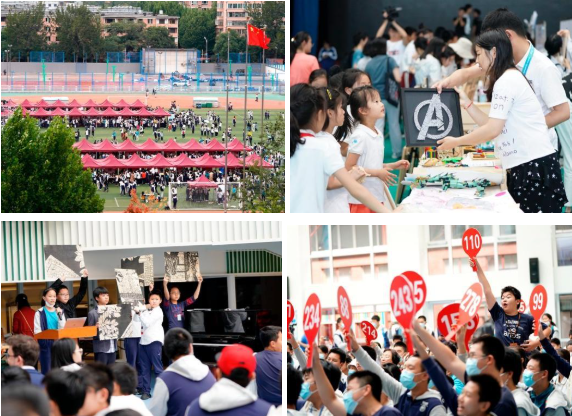
  • Learning Festivals  are events designed to bring together schools and other people and organizations to showcase some of learning opportunities across particular communities. For example, Remake Learning Days, launched initially in Pittsburgh, Pennsylvania in 2015, have now expanded to 10 different regions in four countries. These festivals provide creative, immersive learning experiences across diverse settings—including libraries, tech centers, schools, museums, parks, and community centers—who focus on hands-on, and maker-based education. Beyond providing opportunities for students to find out about learning opportunities in their community, these festivals can also help to foster connections among schools and other organizations in their communities and strengthen the whole learning ecosystem. 

By starting with micro-innovations like these for even one aspect of relationship building—supporting connections among students, between students and teachers or among students, schools and the wider community—schools can lay the groundwork for a system where every student is seen, supported, and connected.

The De-Professionalized Teaching Profession: The Lead the Change Interview with Taylor Strickland

In this month’s Lead the Change (LtC) interview, Taylor Strickland reflects on her research into teachers’ workplace conditions and the professional status of teaching. Strickland is a 4th-year doctoral student and research assistant in the Learning, Leadership, and Education Policy Program at the University of Connecticut’s Neag School of Education Policy Analysis, Research, and Evaluation. Her research uses sociological and organizational theories to study teaching as a profession, the impacts of policy on teachers’ work, and how workplace conditions shape teacher attrition and equity in under-resourced schools. The LtC series is produced by Elizabeth Zumpe and colleagues from the Educational Change Special Interest Group of the American Educational Research Association. This year, the Ed Change SIG recognized Strickland’s work with their Graduate Student Award.A PDF of the fully formatted interview will be available on the LtC website.

Lead the Change (LtC): The 2026 AERA Annual Meeting theme is “Unforgetting Histories and Imagining Futures: Constructing a New Vision for Educational Research.” This theme calls us to consider how to leverage our diverse knowledge and experiences to engage in futuring for education and education research, involving looking back to remember our histories so that we can look forward to imagine better futures. What steps are you taking, or do you plan to take, to heed this call?

Taylor Strickland: My scholarship approaches schools foremost as workplaces and teachers as professionals, a perspective too often overlooked in education research and policy. This perspective is especially urgent amid mounting attacks at federal and state levels on the financial foundations of public schooling and waning student enrollment (Goldstein, 2025; Mervosh & Goldstein, 2025a; Mervosh & Goldstein, 2025b). This financial and enrollment crisis is occurring while the number of graduates entering a teaching career, and on-the -job satisfaction of teaching, are at a 50 year all time low (Kraft & Lyon, 2024). Since the 1980s, researchers have warned that the workplace conditions of teachers are not suitable to attract and retain the highly qualified teachers that our system demands (Ingersoll, 2001; Johnson, 2006; Rosenholtz, 1989). Quite sadly, it seems their warnings have come to bear their bitter fruit, and we are starting to taste the consequences on a scale that can no longer be ignored (Kraft & Lyon, 2024). 

Source: UConn Website

Heeding this year’s AERA call to look “back to remember our histories so that we can look forward to imagine better futures,” I reflect on the history of teaching as a profession (Simon & Johnson, 2015; Sorensen & Ladd, 2020). From the conception of public schooling in the United States, the notion of “teaching as a profession” ran against the grain of traditional ideas. The gold standard examples for professions have long been considered law and medicine (Evetts, 2011), whose occupational values include lengthy training and careers and autonomy over their practice (Evetts, 2011; Lortie, 1975). Public schools, by contrast, were first conceived as a public good designed to educate white working class and European immigrant children to be moral, democratic citizens and workers (Goldstein, 2015). The white, mostly female teachers who were put in charge of this endeavor were notably temporary—not expected to pursue life-long professions—and trained quickly with an emphasis on classroom management essentials (Goldstein, 2015). Female teachers were contractually required to leave their teaching posts if marrying and/or becoming pregnant (Apple, 1985; Goldstein, 2015). Unlike professional autonomy recognized in the ‘gold standard’ professions, teachers—as Ingersoll and Collins (2018) describe—function more as middle-women/men, “which may seem similar to professional-like autonomy, but in reality are “highly constrained by larger school-wide [, district, state, and federal] decisions, over which teachers have little control or influence” (p. 168). In sum, the job of teaching from its conception has been decidedly de-professionalized and transient, or what Lortie (1975) describes as a semi-profession.

When a job, such as teaching, is not treated as a profession (Evetts, 2011), where lengthy training, degrees, and resultant expertise do not translate to autonomy of practice and respect, it is societally de-professionalized and de-valued (Ingersoll & Collins, 2018), which has great implications for the workplace environments of its employees (Ingersoll & Collins, 2018; Milner, 2013). Susan Moore Johnson and colleagues (2012) developed a measurement framework for nine key elements of the workplace conditions of teachers. Notably, six of the nine elements are related to autonomy of practice, influence in school decision making, and trust/respect of teacher expertise. Unsurprisingly, researchers found that when workplace conditions improve from the lowest quartile, teachers’ transfer intentions drop sharply (Johnson et al., 2012). These findings are quite meaningful given national trends showing that teachers—who have historically had limited professional autonomy and influence—experienced further declines in decision-making power across all key school governance categories between 1993 and 2012 (Ingersoll & Collins, 2018), with more recent research suggesting a continuing downward trend (Kraft & Lyon, 2024). It is then no wonder that the prestige of teaching, interest in the profession, and teachers’ job satisfaction are at a 50-year low (Kraft & Lyon, 2024), given the continued erosion of teachers’ professional status and workplace conditions.

LtC: What are some key lessons that practitioners and scholars might take from your work to foster better educational systems for all students?

TS: In seeking to envision a better future for the professional status and workplace conditions of teachers, I interrogate how reform is implemented in schools and how it impacts the work and professional status of teachers. My qualifying paper and upcoming dissertation focus on the novel concept of “time cultures”—the normative patterns in how time is perceived, valued, and utilized within school teams. The research examines the influence of time cultures on teacher engagement in school improvement. In an era of growing teacher work intensification marked by increasing workload, time pressure, and task complexity for teachers (Creagh et al., 2023), understanding time as a cultural construct helps to reveal how teachers experience and respond to these pressures. Increased task complexity, time pressure, and policy churn—commonplace for the 21st century teacher—are often associated with burnout (Lawrence et al., 2019), declining workplace satisfaction (Creagh et al., 2023), and teacher shortages (Diliberti & Schwartz, 2023; Harbatkin et al., 2025; Martin et al., 2012; Redding & Nguyen, 2023). Notably, work intensification and its impacts on teacher satisfaction and retention are felt most severely by teachers in schools with larger populations of historically educationally underserved students, including English learners, low-income, lower academic achievement, and racially marginalized students – including Black, Hispanic, and Native American students (Creagh et al., 2023; Goldhaber et al., 2023; Simon & Johnson, 2015). At the same time that the demands on teachers have become increasingly complex and intense, the profession has become simultaneously de-skilled and de-professionalized. An era of accountability and neoliberalism—characterized by a constant cycle of reform initiatives and top-down control over teachers’ work (Creagh et al., 2023; Hargreaves, 1992; Hargreaves & Shirley, 2009)—has contributed to the de-professionalization of teaching, declining workplace satisfaction, and teacher shortages.

My work seeks to gain teachers’ firsthand experiences with constant reform cycles and their impact on their professional standing and work. I do this using a previously unused framework in the education literature—the sociology of work time (SWT) (Perlow, 1999). The SWT recognizes time cultures as multi-dimensional and aids in building a more complete picture of teachers’ construction of time cultures through the analysis of the reciprocal exchange between the temporal context (i.e., characteristic ordering, duration, and tempo of practice), the social context, and work-interaction patterns of teachers. This framework honors the expertise of teachers by seeking to understand how their leadership and policy reform experiences intersect with the cultural-time norms of their teams in their unique contexts. 

For instance, my qualifying paper shows how the time culture of a math team, tasked with imposed reforms, shaped its attitudes and willingness to implement policy. These findings further indicate that reduced influence in school decision-making may lead teacher teams to reinterpret policy directives to be in alignment with their time culture, thereby reducing the implementation fidelity. The lesson that I hope to share with my work is that education leaders at all levels need to involve teachers—the people who are actually tasked with implementing improvement initiatives – with policy design and implementation. And to better involve teachers, leaders need to understand how teachers use and value their time, so that initiated reforms are seen as useful and sustainable. This would not only better align policy to local realities but would also go a long way in repairing the professional status of teachers.

LtC: What do you see the field of Educational Change heading, and where do you find hope for this field for the future?

TS: Looking back at the history of the teaching “profession,” we see that fundamentally the teaching role was not designed to be an occupation with professional status. The lack of professional status values and practices within the teaching field has eroded the workplace conditions of teachers to the point that teacher shortages are at an unsustainable high and interest in this career pathway is at an all-time low (Kraft & Lyon, 2024; Nguyen et al., 2024). Given this dour assessment of the teaching field, where do I find hope and what can be done to look forward to and imagine a better future?

Quite honestly, I fear the direction in which the teaching field is heading—and has been heading for some time now. To find hope, I must imagine a future where there is a fundamental cultural shift in how our society, government, states, districts, and school leaders respect the professional status of teachers. For this type of transformational cultural change to occur we will need education researchers and leaders at every level—from academia to individual schools—to work together to dismantle the deep-seated structures that have driven down the prestige, appeal, and professional standing of teaching to historic lows. State departments of education should advocate for, and districts should move towards, “revers[ing] the trend of top-down control over teachers’ practices and develop meaningful career ladders” (Kraft & Lyon, 2024, p. 1227). They should also prioritize increasing teacher pay and lowering the cost of degrees in education. Big ships turn slowly—but time is of the essence. We need to attract, train, and retain the best quality educators for our children. Without meaningful changes to how we value and support teaching, we risk a future where too few choose to enter or remain in the classroom.

References

Apple, M. (1985). Teaching and “women’s work”: A comparative historical and ideological analysis. Teachers College Record, 86(3), 455–473.

Creagh, S., Thompson, G., Mockler, N., Stacey, M., & Hogan, A. (2023). Workload, work intensification and time poverty for teachers and school leaders: A systematic research synthesis. Educational Review, 1–20. https://doi.org/10.1080/00131911.2023.2196607

Goldhaber, D., Falken, G., & Theobald, R. (2023). What do teacher job postings tell us about school hiring needs and equity? (CALDER Working Paper No. 282-0323). CALDER Center.

Goldstein, D. (2025, August 5). Public Schools Try to Sell Themselves as More Students Use Vouchers. The New York Times. https://www.nytimes.com/2025/08/05/us/public-school-enrollment-decline-vouchers.html

Goldstein, D. (2015). The teacher wars: A history of America’s most embattled profession. Vintage.

Harbatkin, E., Nguyen, T. D., Strunk, K. O., Burns, J., & Moran, A. J. (2025). Should I Stay or Should I Go (Later)? Teacher Intentions and Turnover in Low-Performing Schools and Districts Before and During the COVID-19 Pandemic. Education Finance and Policy, 1–38. https://doi.org/10.1162/edfp_a_00447

Hargreaves, A. (1992). Time and teachers’ work: An analysis of the intensification thesis. Teachers College Record, 94(1), 87–108.

Hargreaves, A., & Shirley, D. (2009). The persistence of presentism. Teachers College Record, 111(11), 2505–2534. https://doi.org/10.1177/016146810911101108

Ingersoll, R. M. (2001). Teacher Turnover and Teacher Shortages: An Organizational Analysis. American Educational Research Journal, 38(3), 499–534. https://doi.org/10.3102/00028312038003499

Johnson, S. M., Kraft, M. A., & Papay, J. P. (2012). How Context Matters in High-Need Schools: The Effects of Teachers’ Working Conditions on Their Professional Satisfaction and Their Students’ Achievement. Teachers College Record, 114(10), 1–39. https://doi.org/10.1177/016146811211401004

Kraft, M. A., & Lyon, M. A. (2024). The Rise and Fall of the Teaching Profession: Prestige, Interest, Preparation, and Satisfaction Over the Last Half Century. American Educational Research Journal, 61(6), 1192–1236. https://doi.org/10.3102/00028312241276856

Lawrence, D. F., Loi, N. M., & Gudex, B. W. (2019). Understanding the relationship between work intensification and burnout in secondary teachers. Teachers and Teaching: Theory and Practice, 25(2), 189–199.https://doi.org/10.1080/13540602.2018.1544551

Lortie, D. C. (1975). Schoolteacher: A sociological study. Chicago, IL: University of Chicago Press.

Martin, N. K., Sass, D. A., & Schmitt, T. A. (2012). Teacher efficacy in student engagement, instructional management, student stressors, and burnout: A theoretical model using in-class variables to predict teachers’ intent-to-leave. Teaching and Teacher Education, 28(4), 546–559. https://doi.org/10.1016/j.tate.2011.12.003

Mervosh, S., & Goldstein, D. (2025a, April 17). A Legal Battle Over Trump’s Threats to Public School Funding Has Begun. The New York Times. https://www.nytimes.com/2025/04/17/us/dei-public-schools-trump-administration-lawsuit.html

Mervosh, S., & Goldstein, D. (2025b, July 3). Congress Passes a National School Voucher Program. The New York Times. https://www.nytimes.com/2025/07/03/us/federal-voucher-program-congress-private-school-tuition.html

Mehta, J. (2025, March 21). How the Education Department cuts could hurt low-income and rural schools. NPR. https://www.npr.org/2025/03/21/nx-s1-5330917/trump-schools-education-department-cuts-low-income

Milner, H. R. (2013). Policy Reforms and De-Professionalization of Teaching. National Education Policy Center. https://eric.ed.gov/?id=ED544286

Nguyen, T. D., Lam, C. B., & Bruno, P. (2024). What Do We Know About the Extent of Teacher Shortages Nationwide? A Systematic Examination of Reports of U.S. Teacher Shortages. AERA Open, 10, 23328584241276512. https://doi.org/10.1177/23328584241276512

Perlow, L. A. (1999). The time famine: Toward a sociology of work time. Administrative Science Quarterly, 44(1), 57–81. https://doi.org/10.2307/2667031

Redding, C., & Nguyen, T. (2023). Teacher working conditions and dissatisfaction before and during the COVID-19 pandemic. EdWorkingPaper: 23-830. Annenberg Institute at Brown University. https://doi.org/10.26300/04xa-zz07

Rosenholtz, S. J. (1989). Teacher’s workplace: The social organization of schools. Longman.

Simon, N. S., & Johnson, S. M. (2015). Teacher Turnover in High-Poverty Schools: What We Know and Can Do. Teachers College Record, 117(3).

Sorensen, L. C., & Ladd, H. F. (2020). The Hidden Costs of Teacher Turnover. AERA Open, 6(1), 2332858420905812. https://doi.org/10.1177/2332858420905812

Collaboration, Professional Networks & Grassroots Change: The Lead the Change Interview with Kemi Oyewole

In the second part of this month’s Lead the Change (LtC) interview, Kemi A. Oyewole discusses her experiences researching institutional and organizational conditions that shape K-12 education policy. Oyewole is a Provost’s Postdoctoral Fellow at the University of Pennsylvania Graduate School of Education. Her research focuses on collaborative methods and civic education that can promote social justice. The LtC series is produced by Elizabeth Zumpe and colleagues from the Educational Change Special Interest Group (SIG) of the American Educational Research Association. This year, the Ed Change SIG recognized Oyewole’s work with their Graduate Student Award. A PDF of the fully formatted interview will be available on the LtC website.

Lead the Change (LtC): The 2026 AERA Annual Meeting theme is “Unforgetting Histories and Imagining Futures: Constructing a New Vision for Educational Research.” This theme calls us to consider how to leverage our diverse knowledge and experiences to engage in futuring for education and education research, involving looking back to remember our histories so that we can look forward to imagine better futures. What steps are you taking, or do you plan to take, to heed this call?

Kemi Oyewole: The current moment of political, anti-intellectual aggression towards the public sector has led many of us to see bleak immediate futures for education. Further, a flurry of executive orders from the Trump administration has been so overwhelming that it has distracted many of its opponents to the point of inaction. In the first 100 days of his second term (January 20, 2025 to April 29, 2025), the president issued directives that sought to limit educational, health, and sports opportunities for trans youth (EO 14168, 14187, 14201); prohibit policies that address racial disparities in school discipline (EO 14280); halt K-12 and higher education institutions’ diversity initiatives (EO 14173, 14190); and close the Department of Education (EO 14242). In the words of Toni Morrison (1975), “It’s important, therefore, to know who the real enemy is, and to know the function, the very serious function of racism is distraction. It keeps you from doing your work.” Beyond racism, other systems of oppression similarly seek to disrupt the advancement of marginalized people. However, powerful histories of resistance remind us that there are viable ways to move forward in the face of authoritarian pressure. 

Source: University of Pennsylvania Website

There are many examples of resistance across the globe, especially in the Global South where people have contended with colonialism and its vestiges. I draw upon my identity as a Black American to highlight ways the resistance of enslaved Black people speaks to their futuring. While disproportionate attention is paid to violent revolts, enslaved people resisted by many means. These include marronage (i.e., escape from slavery to form independent communities), emancipation certified by legal documents, military service, work refusal, and sabotage (Helg, 2019). Despite the brutality they experienced, these enslaved people dreamed of freedom and used many means to pursue it. Their many strategies suggest that there is immense room for futuring—there are innumerable paths to a more just educational system. We are called to dream expansively and make space for others to do so as well.

While there is value in pausing to make time for futuring (i.e., imagining or dreaming; Kelley, 2002; Oyewole et al., 2023), we must not stop there. A commitment to educational change suggests we must do the hard, often frustrating, work of bringing emancipatory futures to pass. Within my research, my futuring benefits from engaging educators. For example, teaching students through the COVID-19 pandemic offered teachers a different sense of the futures enabled by educational technology (and its limitations). Thus, I seek to incorporate practitioner insights through collaborative, participatory research methods (The Collaborative Education Research Collective, 2023). However, engaging in-service educators in research requires flexible research agendas, timelines, and design. These collaborative methods require a departure from the status quo, a worthwhile shift because valuing educators as co-inquirers allows my futuring to be informed by current educational conditions. Ideally, these methods also offer participants a humanizing, reflective, professional development experience.

ebonyjanice (2023) argues that Black women’s contribution to movement work includes dreaming, resting, playing, seeking bliss, and pursuing wholeness. She celebrates the hard-fought dreaming of enslaved Black people while offering a new vision:

“‘Dreaming’ is a form of radical resistance because it calls us to a conscious stillness, which manifests itself as ease in the body. Ease, in a Black body, is revolutionary because Black people have not, historically, as a result of chattel slavery, had access to ease in our bodies. Dreaming, however, subverts a global anti-Black unease that actively works to commodify Black bodies. Plainly, dreaming is radical resistance because the fantastic hegemonic imagination (Townes, 2006) cannot function with Black bodies at rest.” (p. 8)

I embody her sentiment by allowing my futuring for education to come from a place of rest rather than frenzy. And to imagine educational systems that create conditions of peace and healing for Black girls—trusting that their wellness will benefit all learners (Guinier & Torres, 2002).

My vision of educational research is informed by the multifaceted resistance of enslaved Black Americans, my current practice of collaborative research, and Black women’s relentless pursuit of rest.

LtC: What are some key lessons that practitioners and scholars might take from your work to foster better educational systems for all students?

KO: My research emphasizes the value of collective action for stimulating educational change. Despite its promise, collaborative efforts can falter when there is a lack of consensus around their scope and goals. Further, attention is needed to ensure the routines embedded in collaborative endeavors do not perpetuate educational injustice (Diamond & Gomez, 2023; Hinnant-Crawford et al., 2023). My recent research examines these dynamics in professional learning networks (PLNs).

My dissertation project centered on a school district PLN of school-based instructional coaches. The network of 45 coaches met once a month in person (though meetings shifted online during the Covid-19 pandemic shift to distance learning). My social network analysis showed that coaches share advice on instructional strategies, data use practices, or workplace challenges with about five colleagues in the network. My interview and survey data suggests that coaches valued the space because it gave them an opportunity to connect with role-alike peers. These relationships were especially meaningful to participants because these coaches were normally the only person at their school in the liminal space of not being a classroom teacher, but also not being an administrator. These findings stress the value of routines that facilitate educators connecting with each other beyond their local communities of practice. A cross-school PLN can build participants’ pedagogical knowledge, strengthen their professional identity, and expand their professional network (Oddone et al., 2019). These benefits suggest that beyond-school collaboration is both a tool for developing educator skills and affirming their professional status. The warmth and enthusiasm I felt when observing this PLN made me appreciate the need to invest in rejuvenating spaces for educators.

Though PLNs have immense potential, much of their value stems from purposeful participation and strategic facilitation. It is powerful to create professional spaces that adaptably meet educator needs. However, PLNs have to find a balance between organic interpersonal engagement and directed professional exchange. For example, my longitudinal social network analysis found that coaches shared advice with peers who worked at similar schools, had similar self-efficacy appraisals, or joined the network at similar times. While these relationships provided coaches information that was applicable to their local context, it could come at the expense of being exposed to ideas from different environments. I also found that experienced coaches were less likely to share advice with others in the PLN.

Observation and interview data suggest that it is because after many years, these coaches were not getting as much value from the network. Their experiences point to the need for differentiation in coach professional development. Each finding highlights the challenges and opportunities of intentionally curating PLNs.

My emphasis on collaboration presents many promising research directions. First, I am excited about the ways that studying collaboration and PLNs avails itself to social network analysis (Rodway, 2018). Not only can this network analysis be done for research purposes, it can also be an active process that promotes educators reflecting on their own relationships and environments (Kothari et al., 2014). Second, there are opportunities to better identify the routines that support the resource sharing aims of in-person, or otherwise synchronous (e.g., a Zoom meeting), PLNs. Focusing research on these settings acknowledges that these meetings have different demands and opportunities than social media PLNs. Third, I highlight the need for more research on instructional coaching. While instructional coaching has exploded in prominence, it is heterogeneously enacted (Coburn & Woulfin, 2012; Kane & Rosenquist, 2019). Better understanding coach practices offers us a valuable perspective on educational change.

LtC: What do you see the field of Educational Change heading, and where do you find hope for this field for the future?

KO: As the United States government decreases the resources it devotes to public education, educational change will rely on more local actions. In the face of authoritarian surveillance and punishment, I expect that changes to promote just educational systems will become more covert. Though the loose coupling between dictated educational policy and enacted educational practice can prove challenging for progressive top-down reforms (Anderson & Colyvas, 2021), it can be an advantage when regressive policies are imposed. So, I expect that just educational change will not be codified, but spread in ways akin to grassroots activist and labor movements.

Another factor that will influence educational change is the United States’ projected 8% decline in K-12 enrollment from 2019 to 2030 (Irwin et al., 2024). These structural changes in the student population and fewer federal dollars devoted to education suggest that educational change efforts may have to be more focused in their scope and demands. Of course, there is also a need to strike a balance between what one feels is cynical, optimistic, or realistic. I am personally working to strike that balance—dreaming while being practical enough not to be dismayed whenever I see the news.

My hope is that researchers of educational change will support burgeoning grassroots efforts by conducting their scholarship in concert with students, teachers, families, community organizations, and others close to educational practice. Such research involves more participatory approaches, including design research that supports partners creating solutions to problems of practice while considering contemporary constraints. Collaborative approaches require research designs that are adaptable to rapidly changing conditions. Such flexibility is a departure from traditional research methods, but suggests implications beyond those that can be drawn from tightly controlled conditions.

I am incredibly grateful to be in community with researchers and practitioners passionate about educational change, even in a climate that is so hostile to improving schools for all children. While I can get discouraged that my locus of control is small, “small is good, small is all” (brown, 2017, p. 37).

References

Anderson, E. R., & Colyvas, J. A. (2021). What sticks and why? A MoRe institutional framework for education research. Teachers College Record: The Voice of Scholarship in Education, 123(7), 1–34. https://doi.org/10.1177/016146812112300705

brown,  adrienne maree. (2017). Emergent strategy: Shaping change, changing worlds. AK Press.

Coburn, C. E., & Woulfin, S. L. (2012). Reading coaches and the relationship between policy and practice. Reading Research Quarterly, 47(1), 5–30. https://doi.org/10.1002/RRQ.008

Diamond, J. B., & Gomez, L. M. (2023). Disrupting white supremacy and anti-Black racism in educational organizations. Educational Researcher, 0013189X2311610. https://doi.org/10.3102/0013189X231161054

ebonyjanice. (2023). All the Black girls are activists: A fourth wave womanist pursuit of dreams as radical resistance. Row House.

Guinier, L., & Torres, G. (2002). The miner’s canary: Enlisting race, resisting power, transforming democracy. Harvard University Press.

Helg, A. (2019). Slave no more: Self-liberation before abolitionism in the AMericas. University of North Carolina Press.

Hinnant-Crawford, B., Lett, E. L., & Cromartie, S. (2023). IMPROVECRIT: Using critical race theory to guide continuous improvement. In E. R. Anderson & S. D. Hayes (Eds.), Continuous improvement: A leadership process for school improvement (pp. 105–124). Information Age Publishing.

Irwin, V., Bailey, T. M., Panditharatna, R., & Sadeghi, A. (2024). Projections of education statistics to 2030 (NCES 2024-034). National Center for Education Statistics. https://nces.ed.gov/pubsearch/pubsinfo.asp?pubid=2024034

Kane, B. D., & Rosenquist, B. (2019). Relationships between instructional coaches’ time use and district- and school-level policies and expectations. American Educational Research Journal, 56(5), 1718–1768. https://doi.org/10.3102/0002831219826580

Kelley, R. D. G. (2002). Freedom dreams: The black radical imagination. Beacon Press.

Kothari, A., Hamel, N., MacDonald, J.-A., Meyer, M., Cohen, B., & Bonnenfant, D. (2014). Exploring community collaborations: Social network analysis as a reflective tool for public health. Systemic Practice and Action Research, 27(2), 123–137. https://doi.org/10.1007/s11213-012-9271-7

Morrison, T. (1975, May 30). Black Studies Center public dialogue. https://soundcloud.com/portland-state-library/portland-state-black-studies-1

Oddone, K., Hughes, H., & Lupton, M. (2019). Teachers as connected professionals. The International Review of Research in Open and Distributed Learning, 20(3). https://doi.org/10.19173/irrodl.v20i4.4082

Oyewole, K. A., Karn, S. K., Classen, J., & Yurkofsky, M. M. (2023). Equitable research-practice partnerships: A multilevel reimagining. The Assembly: A Journal for Public Scholarship on Education, 5(1), 40–59.

Rodway, J. (2018). Getting beneath the surface: Examining the social side of professional learning networks. In C. Brown & C. L. Poortman (Eds.), Networks for learning: Effective collaboration for teacher, school and system improvement (pp. 171–193). Routledge.

The Collaborative Education Research Collective. (2023). Towards a field for collaborative education research: Developing a framework for the complexity of necessary learning. The William and Flora Hewlett Foundation.

Townes, E. M. (2006). Womanist ethics and the cultural production of evil. Palgrave Macmillan.

Racialized Expertise as Change Capital: The Lead the Change Interview with Román Liera

In this month’s Lead the Change (LtC) interview, Román Liera designs his research program to study racial equity and organizational change in higher education. Liera is an Assistant Professor of Higher Education in the Department of Educational Leadership at Montclair State University. His current research projects focus on understanding how racism operates in doctoral student socialization, the academic job market, faculty hiring, reappointment, tenure and promotion, presidential hiring, and racial equity professional development. The LtC series is produced by Elizabeth Zumpe and colleagues from the Educational Change Special Interest Group of the American Educational Research Association. This year, the Ed Change SIG recognized Liera’s work with one of two Emerging Scholar Awards. A PDF of the fully formatted interview will be available on the LtC website.

Lead the Change (LtC): The 2026 AERA Annual Meeting theme is “Unforgetting Histories and Imagining Futures: Constructing a New Vision for Educational Research.” This theme calls us to consider how to leverage our diverse knowledge and experiences to engage in futuring for education and education research, involving looking back to remember our histories so that we can look forward to imagine better futures. What steps are you taking, or do you plan to take, to heed this call?

Source: Montclair State University

Román Liera: I appreciate the theme and the question because the current anti-DEI attacks are not new and have provided an opportunity to reflect on what has been done in the past and a gut check that what is being done has not been enough to advance racial equity and justice. In studying racial equity and organizational change, I have had several opportunities to collaborate and partner with administrators, faculty, and staff taking action to create more equitable hiring practices. I have also been collaborating with other scholars who have been creative and innovative in theorizing racial equity and organizational change.

In working with leaders and practitioners who are taking actions towards change, I have learned from and with change agents who are nearing retirement or beginning their higher education careers. Listening to those who have been in higher education for decades and referring to similar instances regarding attacks on DEI in the past (e.g., the Civil Rights era) has helped me affirm that my work not only matters but also makes a difference in the face of attacks on race-focused change efforts. At the same time, working with those newer to the field has helped me slow down to acknowledge that what we have been doing has not been enough to create equitable and inclusive educational organizations.

In addition to collaborating with change agents from diverse identities and career trajectories, I am theorizing and studying how we can continue to disrupt deeply rooted forms of racism in educational organizations. An area that I have been investigating is the racial inequities in the professoriate (e.g., underrepresentation of faculty of color), particularly in recruiting, hiring, and tenure and promotion practices. For example, along with Drs. Heather McCambly and Aireale Rodgers, we designed a study on faculty cluster hiring at six research one universities. A goal was to understand how administrators, faculty, and staff leaders framed and implemented cluster hiring initiatives to disrupt how whiteness informed faculty recruitment and hiring routines, practices, decisions, and evaluations. We recently published a manuscript in the Journal of Higher Education titled “Analyzing the Purposes and Mechanisms of Faculty Cluster Hiring Initiatives to Promote Racial Equity.” In the paper, which is funded by the Alfred P. Sloan Foundation, we highlight how senior leaders, administrators, faculty, and staff leverage racialized expertise—expertise focused on addressing racial inequities and injustices—as hiring capital.

Our participants emphasized that faculty cluster hiring initiatives aimed to broaden the expertise of faculty across departments and the university, enabling them to address critical societal issues related to equity and justice. In doing so, they were also being intentional not to trigger racist stereotypes among administrators and faculty that the cluster hiring was code for hiring underqualified faculty of color. On the contrary, the faculty cluster hiring initiatives raised the criteria because the evaluation criteria included what departments typically sought and what the cluster was focused on. Moreover, these change agents also leveraged cluster hiring lines to challenge practices that perpetuate racial inequities, such as requiring academic departments to assess their retention practices to access a cluster faculty line. Our participants reflected AERA’s theme because they relied on the past of their organizations to make decisions about creating more equitable and inclusive campuses for People of Color.

LtC: What are some key lessons that practitioners and scholars might take from your work to foster better educational systems for all students?

RL: As we learned through the faculty cluster hiring study mentioned above, initiatives to promote racial equity must go beyond reallocating resources. That is, having systemic and deep-level change requires more than monetary support and changes to hiring criteria. Although we found that change agents were strategic and responsive to the racialized history of their campuses, they used their political capital to situate faculty cluster hiring as an initiative that promoted the status of their university’s intellectual enterprise. For example, to legitimize the cluster initiatives, they aligned them with university-level missions to address and, in many instances, lead the advancement of equity and justice. However, in many cases, they left intact how whiteness operated in departments that did not have the infrastructure and people to promote racial equity. That is, faculty with expertise in racial equity and justice, who often were faculty of color, were brought into departments that expected them to take on the load of racial equity issues in their departments, which went beyond their scholarly contributions to the field. I echo what we recommend in the paper: I sympathize with the precarity (e.g., having to work in organizations that hamper agency, especially agency to address racial equity issues) higher education faces, but also remind leaders that race-focused initiatives like faculty cluster hiring hold promise for promoting racial equity, and it is legally defensible because it is about transforming structures and cultures and not about hiring based on racial identities. As extensive research has convincingly found (Gonzales et al., 2025; Liera & Hernandez, 2021; White-Lewis, 2020), racial biases and ideologies are deeply embedded in recruitment, hiring, promotion, and tenure practices that, when left undisrupted, whiteness will continue to be the baseline for what and who we deem valuable in the academy. More so than ever, today is not the time to be neutral if we genuinely care about creating more equitable and just futures.

LtC: What do you see the field of Educational Change heading, and where do you find hope for this field for the future?

RL: I will draw on the AERA 2026 theme and AERA President Winn’s comments to describe the program theme. One of the questions she asked educators was to “take a long path approach by thinking and feeling beyond our individual life spans… to the impact we will have on future generations of students, educators, and education researchers” (Wallach, 2022, p. 10 as cited by Winn, 2025 paragraph 3). Admittedly, when I initially sat with this question, I had a hard time imagining the future outside my lifespan. However, I made sense of it by taking a step back and reflecting on my research approach, as well as my relationships with educational practitioners, leaders, and researchers, which helped me frame my response to the question. 

Educational change requires us to be comfortable with imagining the future beyond our lifespans. For example, in 2022, Dr. Steve Desir and I theorized about the equity-minded organization. Not long after we published our paper (Liera & Desir, 2023), Dr. Kevin McClure interviewed us about our collective work on organizational change and racial equity, as well as the equity-minded organization, for his now-published book, “The Caring University: Reimagining the Higher Education Workforce after the Great Resignation.” He asked us if there was a university or college that we would consider to be an equity-minded organization. We said no, but we have several examples of educational organizations that reflect aspects of an equity-minded organization, and we wanted to provide a framework for the possibilities of a more just and equitable future. As Dr. McClure did, based on extensive literature, original data collection, and expert interviews, Steve and I were able to theorize about a future possibility by leaning into our experiential, theoretical, and methodological differences to imagine what we want future generations to experience. 

In short, I am hopeful for the future of educational change because educators are leaning into community to imagine more equitable and just organizations for future generations (see Dr. Patricia Virella’s book Crisis as Catalyst as an example of hope and equity for the future).

References

Gonzales, L. D., Bhangal, N., Stokes, C., & Rosales, J. (2025). Faculty hiring: Exercising professional jurisdiction over epistemic matters. Journal of Higher Education, 96(1), 28–53. https://doi.org/10.1080/00221546.2024.2301915.

Liera, R., & Desir, S. (2023). Taking equity-mindedness to the next level: The equity-minded organization. Frontiers in Education, 8. https://doi.org/10.3389/feduc.2023.1199174. 

Liera, R., & Hernandez, T. E. (2021). Color-evasive racism in the final stage of faculty searches: Examining search committee hiring practices that jeopardize racial equity policy. The Review of Higher Education, 45(2), 181–209. https://doi.org/10.1353/rhe.2021.0020.

McCambly, H. N., Liera, R., Rodgers, A. J., & Park, B. M. (2025). Analyzing the purposes and mechanisms of faculty cluster hiring initiatives to promote racial equity. The Journal of Higher Education. https://doi.org/10.1080/00221546.2025.2546765.

McClure, K. R. (2025). The caring university: Reimagining the higher education workplace after the great resignation. John Hopkins Press. 

Virella, P. M. (2025). Crisis as catalyst: Equity-oriented school leadership during difficult times. Harvard Ed Press. White-Lewis, D. (2020). The facade of fit in faculty search processes. Journal of Higher Education, 91(6), 833–857. https://doi.org/10.1080/00221546.2020.1775058.

Unforgetting History, Change, and Equity: The Lead the Change Interview with Stephen MacGregor

In this month’s Lead the Change (LtC) interview, Stephen MacGregor draws from his experience researching knowledge mobilization as a mechanism for educational change, with an emphasis
on leadership practices within increasingly complex education systems. MacGregor is an Assistant Professor and Director of Experiential Learning at the University of Calgary’s Werklund School of Education. His research focuses on three interrelated strands of inquiry: (1) mapping relational networks between universities and K–12 schools, (2) exploring positive leadership in nurturing professional capital and community, and (3) co-producing knowledge to bridge education theory and practice. The LtC series is produced by Elizabeth Zumpe and colleagues from the Educational Change Special Interest Group of the American Educational Research Association. This year, the Ed Change SIG recognized MacGregor’s work with one of two Emerging Scholar Awards.
A PDF of the fully formatted interview will be available on the LtC website.

Lead the Change (LtC): The 2026 AERA Annual Meeting theme is “Unforgetting Histories and Imagining Futures: Constructing a New Vision for Educational Research.” This theme calls us to consider how to leverage our diverse knowledge and experiences to engage in futuring for education and education research, involving looking back to remember our histories so that we can look forward to imagine better futures. What steps are you taking, or do you plan to take, to heed this call?

Source: University of Calgary Website

Stephen MacGregor: I see the call to “unforget” as an imperative to intentionally surface the institutional, policy, and community narratives that have shaped current possibilities for teaching, learning, and leadership. Much of my research and leadership has been motivated by this orientation, particularly in projects that examine how educational systems respond to and often resist new ideas, and how practitioners navigate the attendant dynamics.

One step I am taking is to more deliberately position historical analysis alongside contemporary policy and practice studies in my research (e.g., MacGregor & Friesen, 2025; MacGregor et al., 2022, 2024). In my recent and ongoing research into multi-tiered systems of support (MTSS) and social-emotional learning implementation in Alberta schools, for example, my colleagues and I examine the present-day enactment of new initiatives as well as trace how prior reform cycles, funding shifts, and governance structures have left their imprint on current efforts. The historical grounding deepens our understanding of why certain approaches gain traction, why others fade, and what legacies of inequity persist beneath what can often be surface-level change.

Equally, my scholarship on knowledge mobilization in educational leadership has highlighted how selective memory (i.e., what is remembered, forgotten, or deemed irrelevant) shapes the evidence that informs decision-making. Through collaborative work with system leaders to design processes that make research use more transparent and inclusive, I aim to counteract tendencies to erase dissenting voices or inconvenient histories (e.g., experiences with failure and what can be learned from them). This has included creating tools and frameworks that explicitly prompt leaders to consider historical precedents and the perspectives of communities that have long envisioned and pursued their own futures for education, often outside formal institutional channels.

In my role as Director of Experiential Learning at the Werklund School of Education (University of Calgary), I am working to integrate a longer-term, historically grounded perspective into the design of learning experiences for undergraduate and graduate students. This means helping future and current practitioners see educational challenges as part of longer trajectories shaped by policy and shifting social priorities. To that end, I am building local and international partnerships that connect our students with varied educational histories and contexts (e.g., multiple international teaching placements through the Teaching Across Borders program). This work also involves embedding reflective and archival practices into experiential learning. I ask participants in our initiatives to document their experiences in ways that attend to historical influences (e.g., speaking with practitioners about prior reform efforts, exploring changes in governance or community engagement over time). My aim is for these experiences to leave participants better prepared to design and lead educational opportunities that are responsive to both the past they inherit and the future they help shape.

Looking ahead, I plan to expand my research on how system leaders and policymakers draw on history, explicitly or implicitly, when justifying decisions and setting priorities. I am especially interested in how prevailing narratives within leadership discourse and policy texts shape which forms of evidence are privileged and which innovations are recognized. Moreover, I aim to support leadership practices and research use that are historically informed and attentive to marginalized perspectives.

LtC: What are some key lessons that practitioners and scholars might take from your work to foster better educational systems for all students?

SM: A consistent lesson from my research is that fostering better school systems for all students requires a shift from viewing change as a series of isolated initiatives to understanding it as an
iterative, relational process. Educational change is seldom straightforward; it unfolds amid fluctuating policy landscapes, evolving priorities, and the complexities of daily practice. When leaders and practitioners treat each initiative as if it exists in a vacuum and without regard for prior efforts, contextual constraints, or the cumulative impact on educators and learners, they risk repeating past missteps and missing opportunities to build on existing strengths.

From my MTSS research, another lesson is that systems must attend to implementation drivers (Fixsen et al., 2015) as the key organizational and human supports that make new practices possible in schools and thus that enable change efforts to take root and grow. These include competency drivers such as targeted professional learning and coaching; organization drivers such as supportive policies, data systems, and resource alignment; and leadership drivers that guide decision making in response to challenges. Where these drivers are deliberately cultivated in concert, educators are better positioned to adapt initiatives for their own contexts and ensure they serve the needs of their students.

Another lesson relates to the role of failure in system improvement. Too often, unsuccessful reforms are quietly set aside without deliberate reflection, resulting in the same pitfalls being encountered repeatedly. My research points to the value of structured learning from failure, which means creating processes that allow for analysis of what went wrong or failed to produce the intended outcomes, identifying underlying mechanisms, and generating insights for future action (MacGregor & Friesen, 2025). This reframing of failure as a legitimate and even necessary part of improvement strengthens adaptive capacity. It also shifts organizational culture toward openness, candour, and a willingness to iterate rather than abandon promising work prematurely.

Finally, across my work in schools, international partnerships, and higher education settings, I have seen that strong, trust-based relationships are essential for the two previous lessons to function at their best. Competency, organization, and leadership drivers all depend on the mutual respect and shared ownership that develop when schools and broader systems engage as genuine partners. Moreover, relationships provide the foundation for honest conversations that allow people to name challenges directly and work together on responses that matter.

For practitioners, these lessons might spark reflection on ways to anchor new initiatives in an understanding of local context and history, strengthen the drivers that support implementation, build habits of learning from setbacks, and invest in relationships as a foundation for change. For scholars, they might prompt thinking about how to design research that examines the drivers of educational change in action and supports their development, which could offer knowledge that is attentive to the realities and contexts where change is being pursued.

LtC: What do you see the field of Educational Change heading, and where do you find hope for this field for the future?

SM: I see the field of educational change continuing to wrestle with complexity while becoming more deliberate in how it integrates various forms of knowledge and expertise. There is a growing recognition that meaningful change depends on aligning policy, practice, and community engagement in ways that are contextually grounded and historically informed. I am hopeful for continued attention to strengthening the foundational conditions (e.g., coherent governance structures, stable funding streams, and collaborative professional learning) that allow promising approaches to take root and adapt over time.

I also anticipate deeper commitments to equity-informed leadership, with systems increasingly
recognizing that meaningful change cannot happen without addressing the structural inequities that shape educational experiences. Among many approaches, this could involve more substantive power sharing with communities, particularly those whose knowledge has historically been overlooked or marginalized. It could also involve embedding processes for shared decision-making and transparency into the everyday work of schools and systems.

What gives me hope is the growing body of scholarship and practice that treats relationships as the core infrastructure of educational change. I see this in system leaders who intentionally create spaces for dialogue that can bridge ideological divides, in educators who invite students and families into co-design processes, in cross-sector partnerships that build locally relevant solutions, and in research-practice networks that enable long-term collaboration across institutions and jurisdictions (e.g., Hubers, 2020; Rechsteiner et al., 2024; van den Boom Muilenburg et al., 2022). I am also encouraged by how scholars and practitioners are integrating multiple ways of knowing and thus valuing both rigorous research and the lived experience of educators, students, and communities. I am hopeful that we are moving beyond asking “what works?” by appending that question with “for whom, under what conditions, and with what consequences?”(Boaz et al., 2019).

References

Boaz, A., Davies, H., Fraser, A., & Nutley, S. (Eds.). (2019). What works now? Evidence-in- formed policy and practice. Policy Press.

Fixsen, D., Blase, K., Naoom, S., & Duda, M. (2015). Implementation drivers: Assessing best practices. National Implementation Science Network.

Hubers, M. D. (2020). Paving the way for sustainable educational change: Reconceptualizing what it means to make educational changes that last. Teaching and Teacher Education, 93.
https://doi.org/10.1016/j.tate.2020.103083.

Rechsteiner, B., Kyndt, E., Compagnoni, M., Wullschleger, A., & Maag Merki, K. (2024). Bridging gaps: A systematic literature review of brokerage in educational change. Journal of Educational Change, 25(2), 305–339. https://doi.org/10.1007/s10833-023-09493-7.

van den Boom-Muilenburg, S. N., Poortman, C. L., Daly, A. J., Schildkamp, K., de Vries, S., Rodway, J., & van Veen, K. (2022). Key actors leading knowledge brokerage for sustainable school improvement with PLCs: Who brokers what? Teaching and Teacher Education, 110.
https://doi.org/10.1016/j.tate.2021.103577.

MacGregor, S., & Friesen, S. (2025). Reframing failure: Lessons from educational leaders
facilitating multi-tiered systems of support. Journal of Professional Capital and Community. Advance online publication. https://doi.org/10.1108/JPCC-09-2024-0168.

MacGregor, S., Friesen, S., Turner, J., Domene, J. F., McMorris, C., Allan, S., Mesner, B., &
Sumara, D. (2024). The side effects of universal school-based mental health supports: An integrative review. Review of Research in Education, 48, 28–57.