Tag Archives: news scan

Reform, Resistance, and More Turbulence? Scanning the Headlines for Predictions for Education in 2026

IEN’s roundup of predictions for education in 2026 anticipates an accelerating impact for AI, further calls for school and system transformation, and continuing resistance and challenges for educational reform from changing conditions and political pressures. Last week’s post focused on reviews of some of the key issues and top trends experienced by schools and education systems in 2025. For New Year’s predictions for education from previous years see: 2025, 20242023, 20222021 part 12021 part 2, and 2020.

Around the World

‘Systemic crisis’ comes for schools in Thailand, Bangkok Post

Parents hold up banners protesting the closure of Patai Udom Suksa School early this month
Source: Pornprom Satrabhaya

New order of education: Mapping the road ahead, Hindustan Times

“As India’s higher education system stands at a critical inflection point, shaped by rapid technological change, policy reforms and the demand for inclusion and global competitiveness, the HT Education Summit 2025 is set to bring together some of the most influential voices driving this transformation.”

Learning Trends 2026: The Big Academic Shifts Defining the Year, Hindustan Times

2026 Outlook: What’s next for education in Singapore?, Straits Times

Students walk to school with backpacks on
Source: Chong Jun Liang

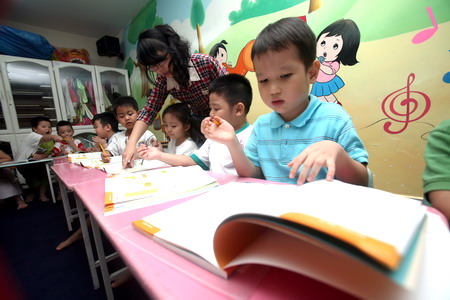
Malaysia’s preschool curriculum in 2026 to focus on reading practices , The Star

“…she [Education Minister Fadhlina Sidek] said the initiative includes the creation of dedicated reading spaces in preschools to encourage parental involvement through reading activities.”

In the US

5 School Security Technology Trends to Watch in 2026, Campus Safety

Reflecting on 2025 and Looking Ahead to 2026, Center for Assessment

2026 prediction: AI may unleash the most entrepreneurial generation we’ve ever seen, Christensen Institute

The top 5 areas where superintendents want to grow, District Administration

How AI will create new K12 opportunities in 2026, District Administration

Education in 2026: Where K–12 Schools Are Headed Next, Ed Circuit

“AI rules, cybersecurity, staffing, funding, and student well-being will shape K–12 education in 2026 as districts move from reaction to stability.”

School Funding: The 3 Big Questions to Watch in 2026, Education Week

Larry Ferlazzo’s 10 education predictions for 2026, Education Week

Source: Education Week

What’s Next: 7 Key Trends to Watch in the Education Market in 2026, Education Week

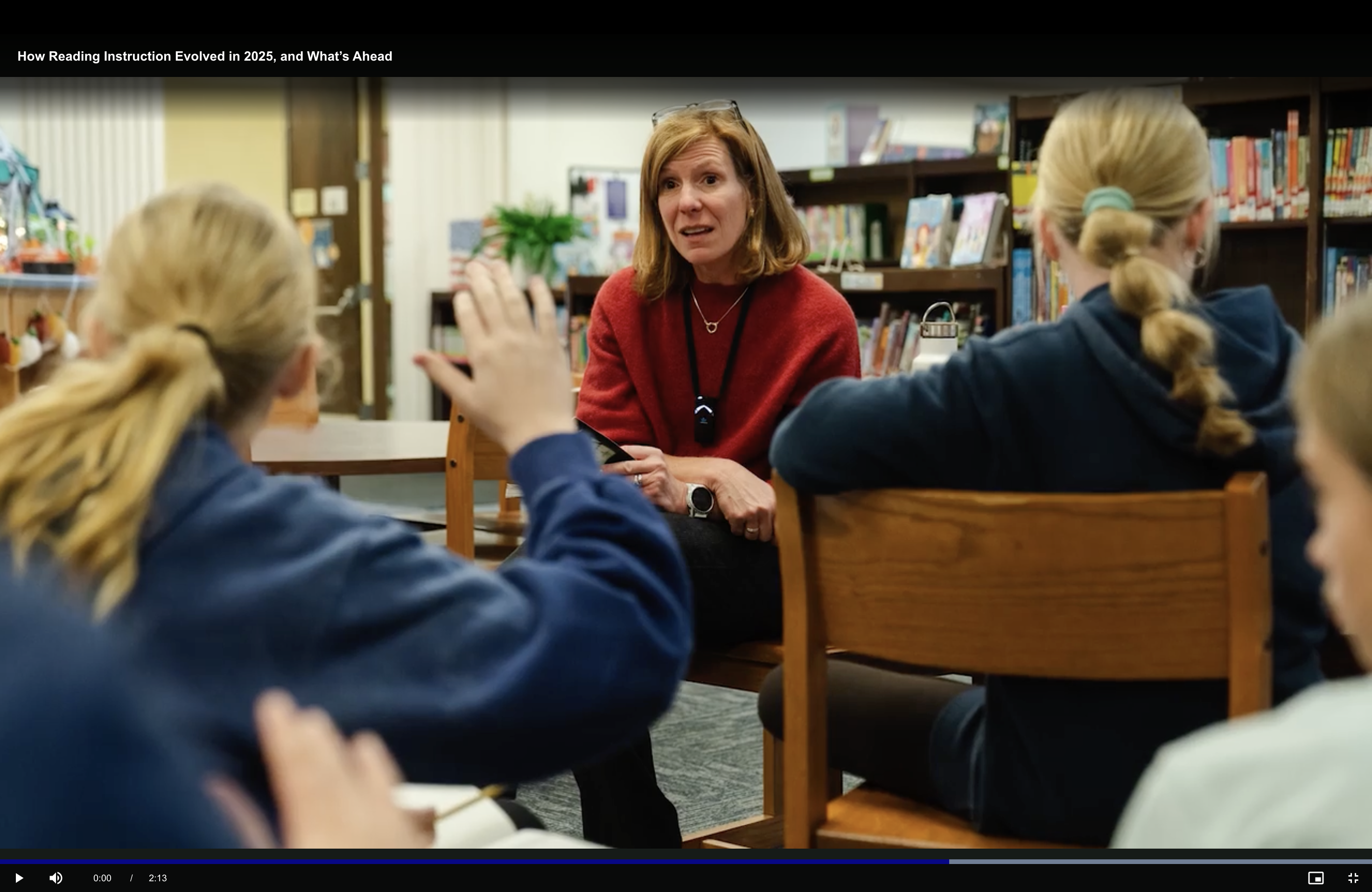
How Reading Instruction Evolved in 2025, and What’s Ahead, Education Week

Source: Education Week

11 Critical Issues Facing Educators in 2026, Peter DeWitt & Michael Nelson, Education Week

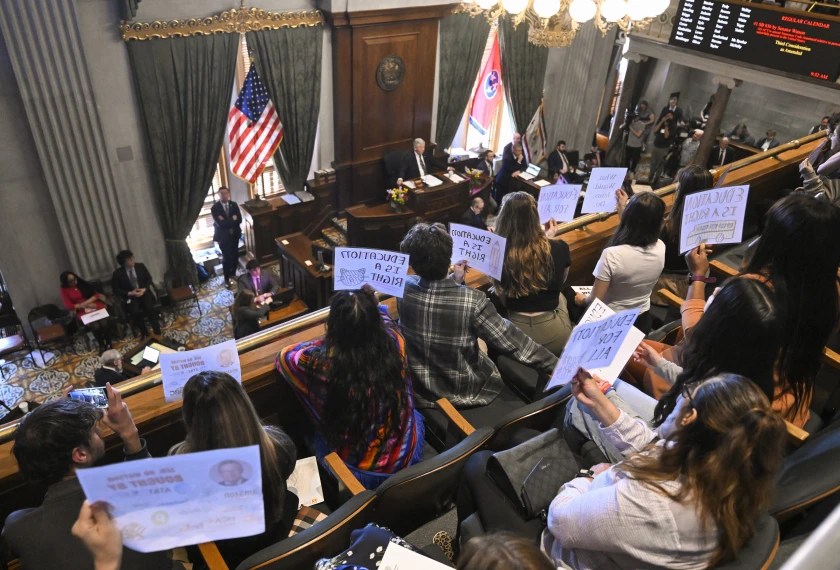
Undocumented Students Still Have a Right to Education. Will That Change in 2026? Education Week

Source: John Amis/AP

25 predictions about AI and edtech, eSchool News

“As generative AI technologies evolve, educators are moving away from fears about AI-enabled cheating and are embracing the idea that AI can open new doors for teaching and learning.”

All gas, no brakes: Tech predictions for 2026, Forbes

Some predictions about AI in education in 2026, Emily Freitag, Thomas B. Fordham Institute

What will employee learning look like in 2026? HR Drive

What We Got Right and Wrong in Our 2025 Predictions, Inside Philanthropy

What next? 2026 trends and predictions for philanthropy & civil society, Inside Philanthropy

6 trends to watch for K-12 in 2026, K12 Dive

School shootings dropped in 2025. Here’s what to know for 2026, K-12 Dive

What education news will break in 2026? Six issues we’re watching, MSN

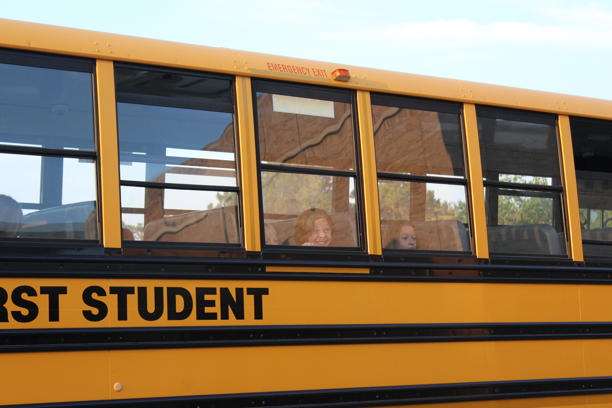
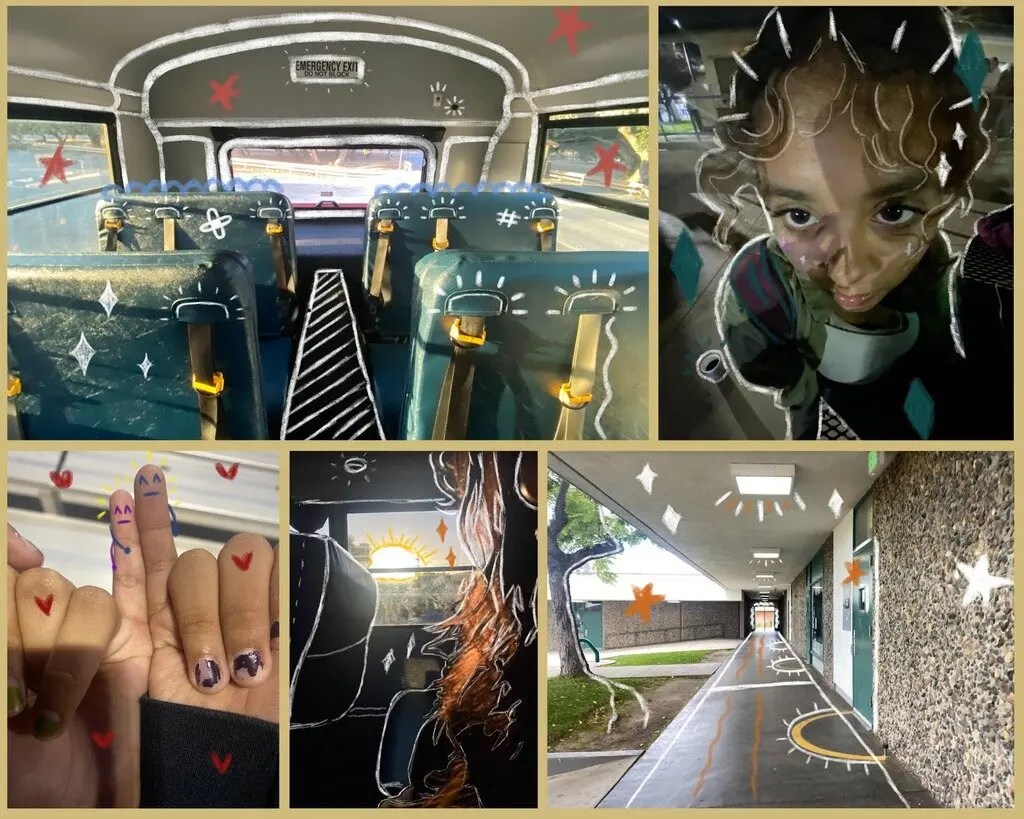
Students looking outside the window on a school bus.
Source: Danielle DuClos/Green Bay Press-Gazette

Trump’s next plan for the US education system: Lots and lots of rules, Politico

4 Early Care and Education Issues to Watch in 2026, The 74

Student Civil Rights Took Center Stage in 2025. Here’s What’s on the Horizon, The 74

10 Useful Tech Tools for Educators in 2026: A Practical Guide, The 74

5 early ed highlights from 2025, The Hechinger Report

3 Education Fights That Aren’t Going Away in 2026, Word in Black

“K-12 public schools have been through the wringer thanks to a trio of unprecedented disruptions that have rocked teachers and students alike. And in 2026, these high-stakes battles will likely continue.”

In the states

7 Colorado education issues we’re watching in 2026, Chalkbeat Colorado

Source: Getty Images

Child care, class sizes, mayoral control: Albany’s education agenda in 2026, ChalkBeat New York

Strikes, cuts, state superintendent race: Our 2026 California education predictions, EdSource

11 new laws that will impact California schools in 2026, EdSource

Education bills in the hopper for 2026 session, Florida Phoenix

New year, new priorities: It’s time to fix Michigan’s special education funding, Michigan Advance

What’s ahead in 2026 for Chicago Public Schools, WGN9

What’s Next for Schools in 2025? Scanning the Headlines for Predictions about Education in the New Year

AI, cellphones, and security – those are a few of the issues highlighted in this IEN’s scan of the predictions about education in 2025. To see the predictions for previous years, review the scans of the “looking ahead” headlines from 2024, 2023, 20222021 part 12021 part 2, and 2020. To discuss the trends and possibilities for education in the new year join Getting Smart’s annual town hall What’s Next in Learning 2025.

The education sources we follow in the US often provide predictions for schools, students, and teachers in the new year, but it’s been harder to find articles looking ahead from other parts of the world. The Ministry of Education in New Zealand, however, did offer a summary of What’s new for 2025 and the Education Review Office produced a series of best practice guides “to help educators effectively implement incoming changes for 2025.” In the US, to put developments in the new year in context, back in 2017, the National Center for Education Statistics shared Projections of Education Statistics 2025 which can be compared to their Report on the Condition of Education 2024

Education predication from the US and around the world

The education revolution: What Nigerian teachers must know for 2025, Business Day

Cleaner and better public schools in 2025 in the Philippines, Sun Star

“As we look forward to 2025, we hope that public schools will be a lot more conducive for learning. This means cleaner and properly ventilated classrooms, better classroom materials, and improved facilities for both teachers and students.

VAT, small firms, workers, education: Changes in France in 2025, The Connexion

“After disappointing results in maths and French tests at the 2024 rentrée, the Education Ministry announced there would be a “complete overhaul” of the curriculums for these subjects in 2025, ranging from maternelle to troisième (infant school to the fourth year of secondary).”

11 Critical Issues Facing Education at Home and Abroad in 2025, Education Week

5 education stories to watch in 2025, Chalkbeat

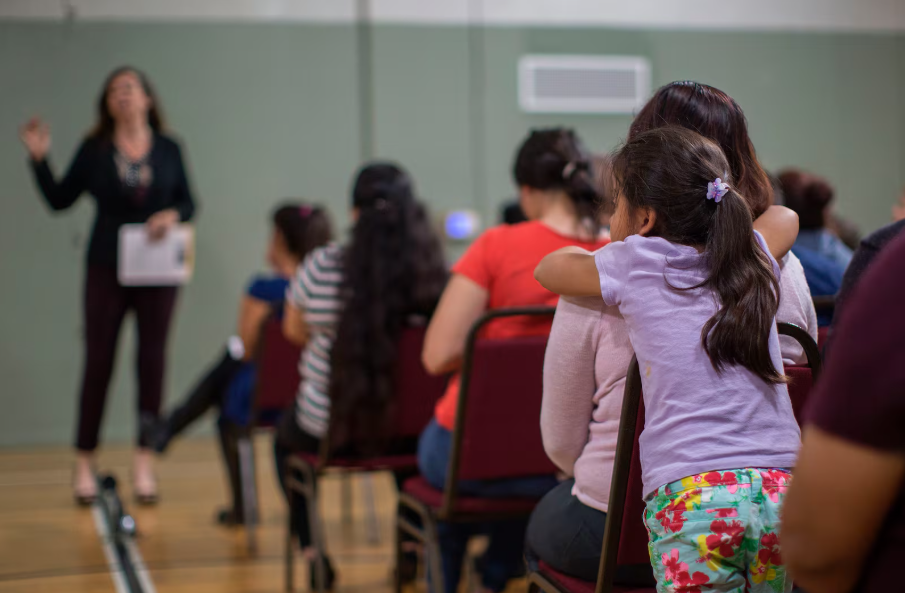
A girl watches during an immigrant rights workshop at Academia Avance charter school in Los Angeles in 2017.

Education leaders should focus on integrating AI literacy, civic education, and work-based learning to equip students for future challenges and opportunities.

Building social capital and personalized learning environments will be crucial for student success in a world increasingly influenced by AI and decentralized power structures.”


4 K-12 predictions to help you lead effectively in 2025, District Administration

K-12 trends to watch in 2025 amid budget, policy shifts, K-12 Dive

“K-12 schools are likely to face several challenges in 2025, including strained budgets due to the expiration of federal aid, cybersecurity threats and staffing shortages, particularly in special education. Additionally, the influx of AI in classrooms and the rise of book bans and curriculum restrictions are key trends to watch for in the upcoming year.”

What Should K-12 Education Focus On in 2025 and Beyond?, US Chamber of Commerce Foundation

Brown Center scholars look ahead to education in 2025, Brookings

Larry Ferlazzo’s 9 Education Predictions for 2025, Education Week

6 Predictions For Education And Workforce In 2025, Michael B. Horn, Forbes

6 Top Education Stories for 2025, Peter Green, Forbes

Five Education Predictions For 2025, Derek Newton, Forbes

 5 education innovation trends to watch in 2025, Julia Freeland Fisher, Christensen Institute

Key Trends to Watch in the Education Market in 2025, Education Week

What 2025 Could Bring for English Learners, Education Week

What’s In, What’s Out for AI, Cellphones, Cybersecurity, and Other Ed-Tech Stuff, Education Week

50 predictions about what 2025 will bring to edtech, innovation, and everything in between, eSchool News

Starring AI, VR, Microlearning and more: ETIH’s 10 predictions for edtech in 2025, EITH

Campuses will also further embrace AI, the cloud, and mobile credentials to improve effectiveness of lockdowns and guest management efforts.

Social Media Issues for Kids Shaping Up to Be ‘Unpredictable’ in 2025, Education Week

2025 Predictions for Video Surveillance in Education and Healthcare, Campus Safety

2025 Campus Lockdown, Visitor Management Predictions: More Installations, Integrations, Campus Safety

Driving Change: 5 Predictions Shaping the Future of Student Transportation in 2025, School Transportation News

2025 food trends shaping K-12 cafeterias, Food Service Director

“Chartwells K12 has identified 10 emerging food trends for school cafeterias in 2025, highlighting a shift toward diverse and nutritious options that align with the preferences of younger generations. Customizable bowls, inclusivity in the form of allergen-friendly and plant-based options and crunchy items are a few of the listed trends.”

25 Philanthropy Predictions for 2025, Inside Philanthropy

Seven Chicago education stories to watch in 2025, Chalkbeat

Five bold predictions for Ohio education policy in 2025, Aaron Churchill, Thomas B. Fordham Institute

New year starts in California with new laws impacting education, EdSource

“New California state laws will protect the privacy of LGBTQ+ students, ensure that the history of Native Americans is accurately taught and make it more difficult to discriminate against people of color based on their hairstyles.”

As lawmakers return to Albany, the fate of New York school funding looms, Chalkbeat

Politics, Policies, and Polarization: Scanning the 2024-25 Back-To-School Headlines in the US (Part 1)

As students in many parts of the northern hemisphere start a new school year, IEN begins our annual scan of the back-to-school headlines. This year, with the surge of interest in the presidential election since Kamala Harris became the democratic nominee, a number of news stories have focused on the election, the candidates, and their education policies. Harris’ choice of Tim Walz – a former teacher – to be her candidate for Vice-President contributed to a wave of stories about Walz and his record and even spawned stories about his wife Gwen Walz – also a former teacher – and other educators who are running for office. Several stories, most from Education Week, also explore whether and how teachers might try to address in their classrooms the election and the many controversial issues that divide and polarize Americans today.  Part 1 of our 2024-25 Back-to-School scan pulls together some of these election-related stories. Next week’s scan will provide a round-up of stories about many of the other issues that are in the news in the education sources that we follow as classes resume.

For some historical perspective on how the issues have evolved since the school closures of the COVID-19 pandemic, explore the back-to-school headlines from previous years:

Policies, Platforms & Issues

Decision Guide: What happens to education under Trump v. Harris, U.S. News

Harris-Walz and Trump-Vance tickets offer radically different visions of public education, EdSource

Education Policy: How Harris and Trump Differ on K-12, Higher Education and More, ABC News

4 Takeaways on What VP Picks Vance and Walz Mean for the Race to Come, PBS Newshour

Education Debates You’ll Likely Hear About in the Election, Explained, Education Week

Public education reform missing from 2024 presidential platforms, Axios

What education could look like under Trump and Vance, Hechinger Report

Trump’s Agenda47 on education: Abolish teacher tenure, universal school choice, patriotism, USA Today

Trump’s VP Pick: What We Know About JD Vance’s Record on Education, Education Week

Vance vs. Pence: How Trump’s VP picks compare on education,Thomas B. Fordham Institute

What Would Happen to K-12 in a 2nd Trump Term? A Detailed Policy Agenda Offers Clues, Education Week

The Great Project 2025 Freakout, Rick Hess, Education Week

Trump Vows Historic Cuts to Education Department in Second Term, Washington Examiner

Why ending the U.S. Department of Education is so alluring to the GOP — and so difficult, Chalkbeat

Republicans’ missing policy issue: Education, Thomas B. Fordham Institute

At Moms for Liberty National Summit, Trump Hardly Mentions Education, Education Week

Harris Could Set Democrats’ K-12 Agenda: By Reviving Ideas from 2020, The74

Where Does Kamala Harris Stand on Education? Inside the 2024 Democratic Platform, Education Week

What We Know About Kamala Harris’ Education Record, Education Week

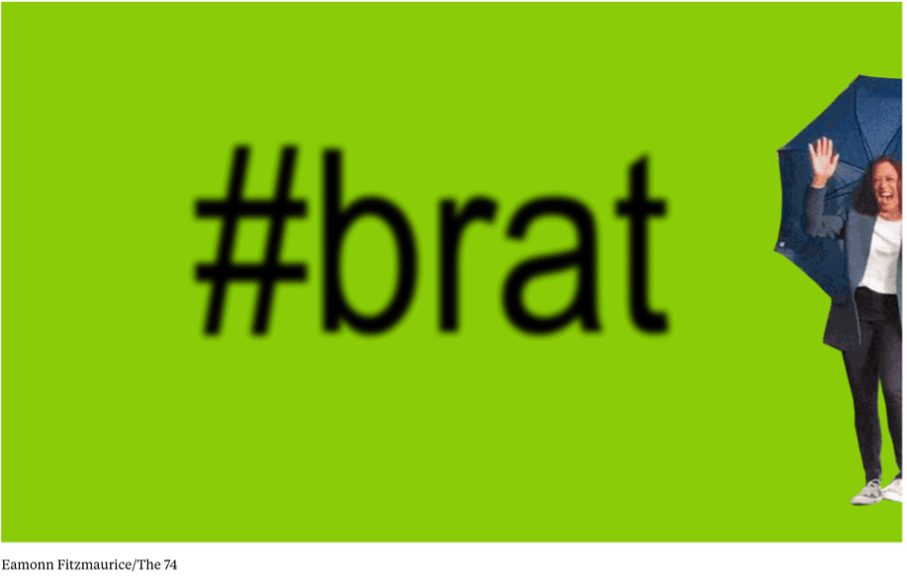
Veep, Candidate, brat: Kamala Harris Fires Up Gen Z on Social Media, The74

Kamala Harris’ Potential VP Picks: Where They Stand on Education, Education Week

What education could look like under Harris and Walz, Hechinger Report

The Education Issue Americans Agree on That’s Not Good News for Teaching, Education Week

Long a Stranger to the Spotlight, Child Tax Credit Earns Embrace of Both Parties, The74

Millions of campaign dollars aimed at tilting school voucher battle are flowing into state races, AP

The Future of Property Taxes Is on Ballots This Fall. Why It Matters for SchoolsEducation Week

What Role Should the Federal Government Play in Education Policy? NEPC

Educators/Candidates

Harris chooses Minnesota Gov. Tim Walz, a former educator, as running mate, K-12 Dive

A Teacher in the White House: What Harris-Walz Could Mean for Education, Education Week

Tim Walz is Kamala Harris’ running mate. Here’s what he’s done for education in Minnesota, Chalkbeat)

Tim Walz, a Former Teacher, Is Kamala Harris’ Running Mate

The Freshman: How Tim Walz Went From the Classroom to Congress (from 2007), Education Week

8 Things to Know About Tim Walz, the Democratic Ticket’s Top Teacher, The74

Harris Pick Tim Walz Would Be First K-12 Teacher Since Lyndon Johnson to be VP, The74

How Teaching Shaped Tim Walz’ Politics, The Nation

‘Coaching and Politics’: What Coaches See in Tim Walz’s VP Candidacy, Education Week

Gwen Walz, wife of Harris’s VP pick Tim Walz, is also a longtime teacher, Washington Post

Tim Walz’s wife Gwen, a former teacher, is a ‘champion’ of college behind bars, USA Today

Are Educators a Natural Fit for Public Office? These Candidates Think So, EdSurge

Jan. 6 Protester, Former Supe Vie to Lead North Carolina’s Schools, The74

Teaching the election

Schools Are Now Political Battlegrounds. We’ve Been Here Before, Education Week

Why Most Teachers Won’t Be Talking About the Election in Their Classrooms, Education Week

Teaching the 2024 Election: Learning Opportunity or Landmine? Education Week

Big Ideas for Upending Polarization, Education Week

How Teachers Tackle 2024 Election Discussions, Education Week

11 Ways to Teach the 2024 Election With The New York Times, New York Times

Teaching Presidential Elections Isn’t Easy. How One Teacher Manages, Education Week

How Should Educators Approach the 2024 Election? Rick Hess, Education Week

2023 in Review: Scanning the End-Of-The-Year Education Headlines

To look back on some of the key education issues and stories from 2023, Thomas Hatch shares IEN’s annual roundup of the end-of-the-year headlines from many of the sources on education news and research that we follow. For comparison, take a look at IEN’s scans of the headlines looking back in 202120202019 part 1, and 2019 part 2. The next post will look to 2024 by pulling together some of the education predictions for the coming year.

Reviews of education stories in 2023 highlighted:

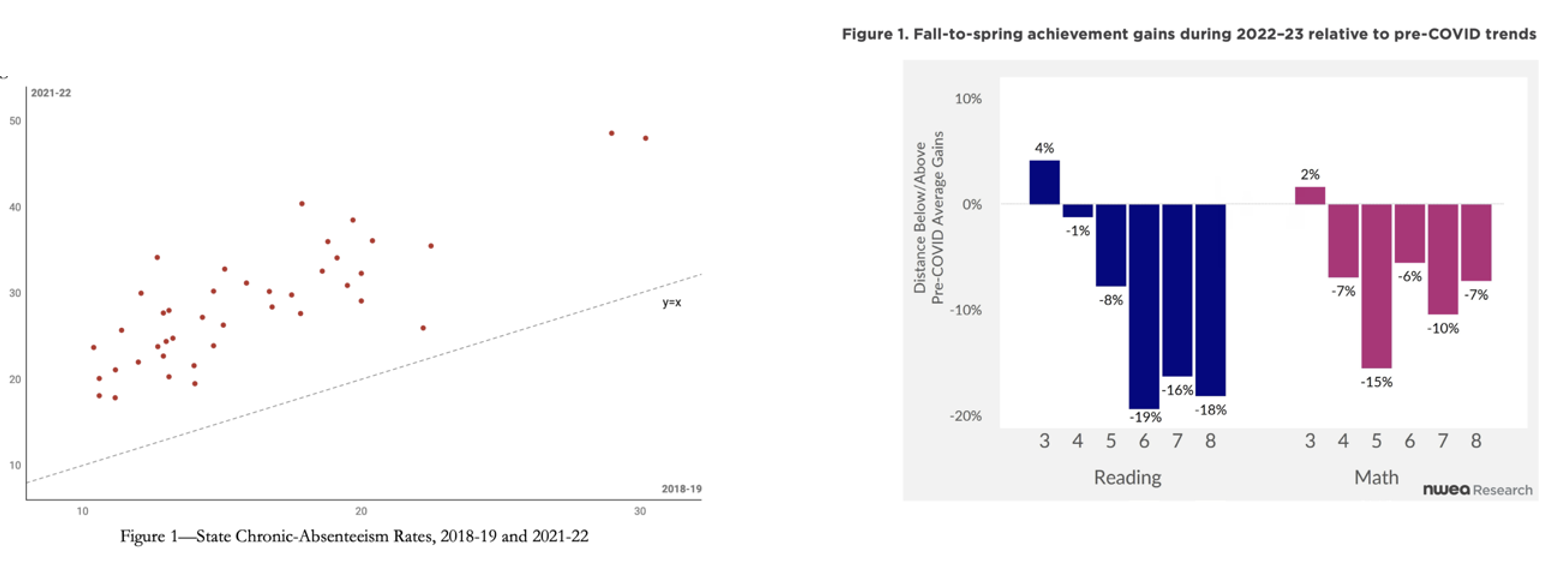
  • The continuing impact of the COVID-19 pandemic on student achievement, student absences, teacher shortages, and other aspects of student and teachers’ health and well-being
  • Pandemic recovery initiatives and concerns about a “fiscal cliff” that may cut off funding for those initiatives.
  • Developments in education technology and particularly the potential impact of artificial intelligence following the launch of ChatGPT in 2022
  • Advocacy for the “science of reading” and foundational learning in literacy and numeracy
  • Persistent concerns including inadequate education funding, inequities in educational performance and opportunities, and the challenges of innovation in assessment and instruction.

A Capture of Moments, Danna Ramirez, New York Times

What High School Is Like in 2023: 25 Essays, Poems, Videos, Photos, a Graph, a GIF, and a Diorama That
Reflect Students and Teachers’ Lives in School
, New York Times

Our Top Photos of the Year, Education Week

Key issues and trends

Funding, free school meals, education choice and student loan debt were among the policy topics lawmakers tackled in this year’s legislative sessions

The Top 10 Education Trends for 2023, National Conference of State Legislators

an unusual early childhood experiment up close; wrestling with large datasets to better understand education trends; getting over a fear of math to cover efforts to revolutionize the teaching of calculus; and, yes, talks with professors struggling with adjusting teaching to the presence of AI chatbots

Looking back on the biggest education trends of 2023, EdSurge

The 7 most memorable education stories of 2023, The Grade

from what AI can (and can’t) do to the neuroscience of brain synchrony

17 Articles About Students & Schools We Wish We Had Published in 2023, The74

The 10 Most Significant Education Studies of 2023, Edutopia

10 Education Studies You Should Know From 2023: new insights on social media, ChatGPT, math, and other topics, Education Week

These are some of the education questions Chalkbeat answered through data in 2023, Chalkbeat

Six Problems Philanthropy Barely Tried to Solve in 2023, Inside Philanthropy

2023 in education charts!

“School absenteeism is out of control” & “Catch up learning hit a wall,” The74

14 Charts that Changed the Way We Looked at America’s Schools in 2023, The74

The Teaching Profession in 2023 (in Charts), Education Week

Global and local reviews

Our top 5 education result stories of 2023, Global Partnership for Education

“changes range from advanced technical programs to revamped school initiatives and innovative examination methods”

Year in review: Five Key Changes In The Education Sector In Rwanda in 2023 , The New Times

“The Central Board of Secondary Education (CBSE) announced significant changes in 2023, including updated marking-schemes and increased number of exams that candidates can take.”

5 Important Changes Announced By The Central Board Of Secondary Education In India This Year, The Times of India

The top education issues in Massachusetts that captured our attention in 2023, WBUR

New Leaders, COVID Spending, Bus Troubles: 6 Chalkbeat Chicago Stories That Defined 2023, Chalkbeat Chicago

Chronic absenteeism, Democratic control, a fiscal cliff: These were Michigan’s big education themes of 2023, Chalkbeat Detroit

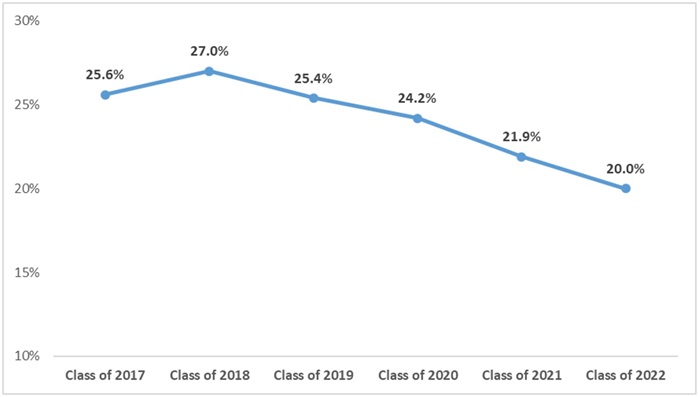
Students meeting state remediation-free standards on the ACT or SAT, class of 2017 to 2022, Thomas B. Fordham Institute

Ohio’s sluggish pandemic recovery in 2023 as seen through six charts, Thomas B. Fordham Institute

— Thomas Hatch

Tutoring takes off – Scanning the news on the emergence of tutoring programs after the school closures (Part 1) 

How effective are tutoring programs likely to be? What kinds of challenges need to be addressed for tutoring to contribute to real improvements in schooling on a large scale? In this extended series of posts, IEN continues to scan the news and research on the emergence of tutoring as a key strategy to help students “recover” from the school closures of the COVID-19 pandemic. The first part of this series describes some of the funding initiatives contributing to the emphasis on “high-dosage” tutoring as a “recovery” strategy, as well as some of the initiatives to expand access to tutoring being pursued in the US in particular. Part 2 of this scan will describe some of the challenges educators are experiencing as they try to develop and implement tutoring approaches, and Part 3 will survey some of the specific new developments and “micro-innovations” that could make tutoring more effective in the future. This series is part of IEN’s ongoing coverage of what is and is not changing in schools and education following the school closures of the pandemic. For more from the series, see “What can change in schools after the pandemic?” and “ We will now resume our regular programming.” For IEN’s previous coverage of news and research on tutoring, see Scanning the News on High Dosage Tutoring, Part 1: A Solution to Pandemic Learning Recovery, and Part 2: Initiatives and Implementation So Far. This post was written by Thomas Hatch and Jonathan Beltran Alvarado.

In the wake of the COVID-19-related school closures, “high dosage” tutoring represents a rare instance of a “recovery” strategy that seems to have wide support, willing funders, and available resources. Under the circumstances, it’s no surprise that over the past two years, tutoring initiatives have taken off around the world, particularly in the US. 

Tutoring around the world 

The global interest in tutoring has always been reflected in the enormous investments in “shadow education” – often private programs that children attend to supplement and support their schooling. In China, survey estimates suggest that while 65% of families with school-aged children took advantage of private tutoring in 2016, that number may have surged to 92% by 2021. In response, the Chinese government passed regulations designed to ban for-profit companies from tutoring in core curriculum subjects. 

In China, survey estimates suggest that while 65% of families with school-aged children took advantage of private tutoring in 2016, that number may have surged to 92% by 2021

Although the size, scale, and pressure of private tutoring are often highlighted in Asian countries, the interest in tutoring is evident across the globe. In England, according to the Sutton Trust’s 2023 report “Tutoring: The New Landscape,” almost 1 in 3 young people aged 11 – 16 report they have had private tutoring, up from 18% in 2005.  In Spain, nearly half of families pay for children to get private lessons, with those families spending about 1.8 billion dollars (USD) on classes with languages – particularly English – as the main priority. In Egypt, the New York Times reports, “Students in Egypt are flocking to private tutoring centers as the country’s public schools remain overcrowded and underfunded,” explaining that estimates suggest that Egyptian families are spending over one and a half times more on pre-college education than the government does.  A “mind-blowing” amount, as Hania Sobhy, an expert on Egyptian education, described it. 
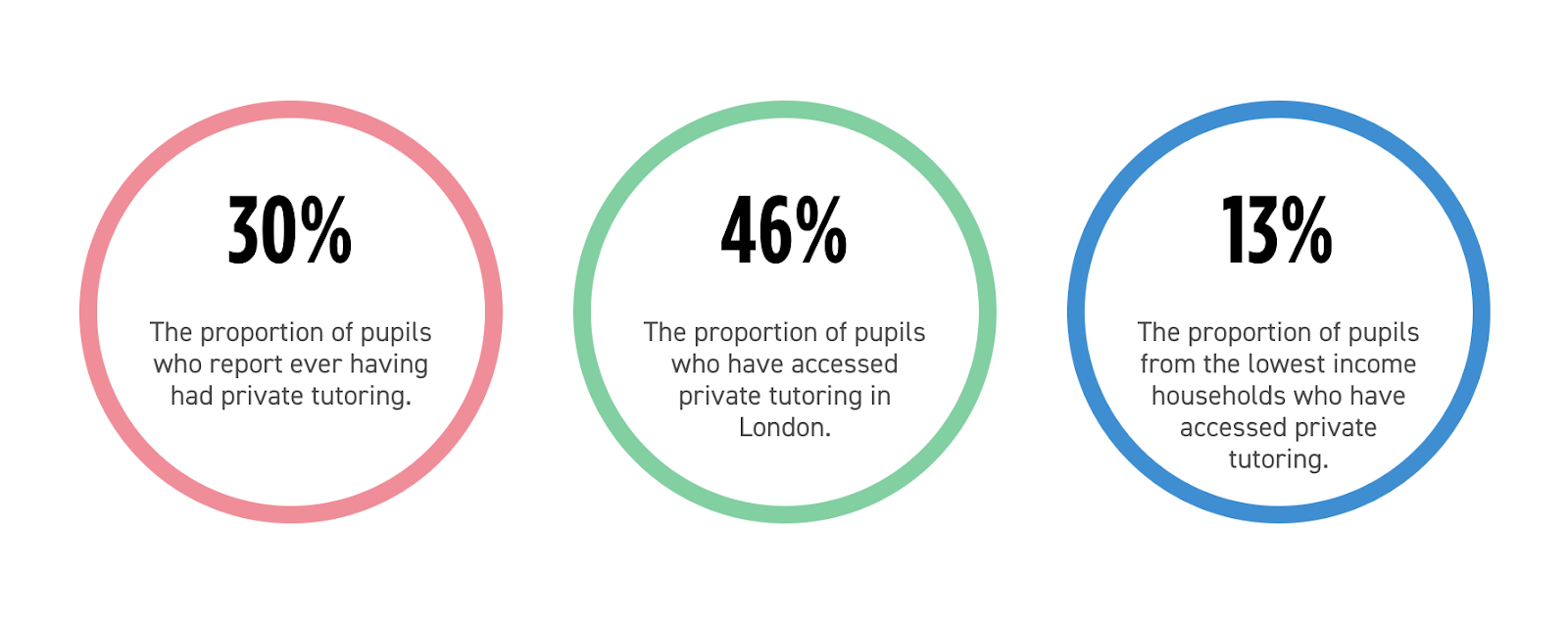
Tutoring: The New Landscape, The Sutton Trust

At least for wealthy elites, private tutoring may have no international boundaries or many other constraints.  Sarah Thomas, in “My Surreal Years Tutoring the Children of the Super-Rich,” explained: “I wanted a job that allowed me free time, so I registered with a tutoring agency. A few weeks later, I found myself in a speedboat cutting across the Indian Ocean towards a superyacht the size of a ferry.” That job soon led to other tutoring arrangements where her “classrooms would be on yacht decks surrounded by dolphins, in Monaco penthouses with infinity pools, and in Mayfair townhouses with halls full of Mapplethorpes.”

I wanted a job that allowed me free time,” she writes, “so I registered with a tutoring agency. A few weeks later, I found myself in a speedboat cutting across the Indian Ocean towards a superyacht the size of a ferry. – Sarah Thomas, My Surreal Years Tutoring the Children of the Super-Rich

To some extent, the recent growth in tutoring has been fueled by the pandemic (as predicted by the Economist). In South Korea, for example, post-pandemic spending on private supplementary education reached a record high of 20 billion dollars. As that headline put it, “Korean households spend more on tutoring than food, housing.” In places like South Africa, private initiatives like Ikamva Youth and the Kliptown Youth have long drawn on tutoring as a crucial strategy to improve learning. Still, a number of new tutoring ventures have been launched since the school closures of the COVID-19 pandemic (Nonprofit help2read steps in to help save a ‘lost generation’; Free maths and science tutoring for all grade 11 and 12 learners).

On top of these private initiatives, numerous countries have also made significant public investments in expanding tutoring both in school and out in response to concerns about learning loss related to school closures. England was one of the first countries to embark on a major, public tutoring initiative (£1bn catch-up tutoring fund for England’s pupils; Funding for national tutoring programme in England to be doubled next academic year); but public tutoring initiatives are also being pursued in places like the Netherlands (Are the Dutch Solving the Covid Slide with Tutoring? Netherlands to spend €105 million to reduce classroom sizes, add tutoring); Australia (New South Wales Labor promises permanent tutors, end to ‘underfunding’ public schools; Victoria and NSW are funding extra tutors to help struggling students); and New Zealand (where 20 million dollars have been dedicated to additional teaching and tutoring services). 

Tutoring takes off in the US 

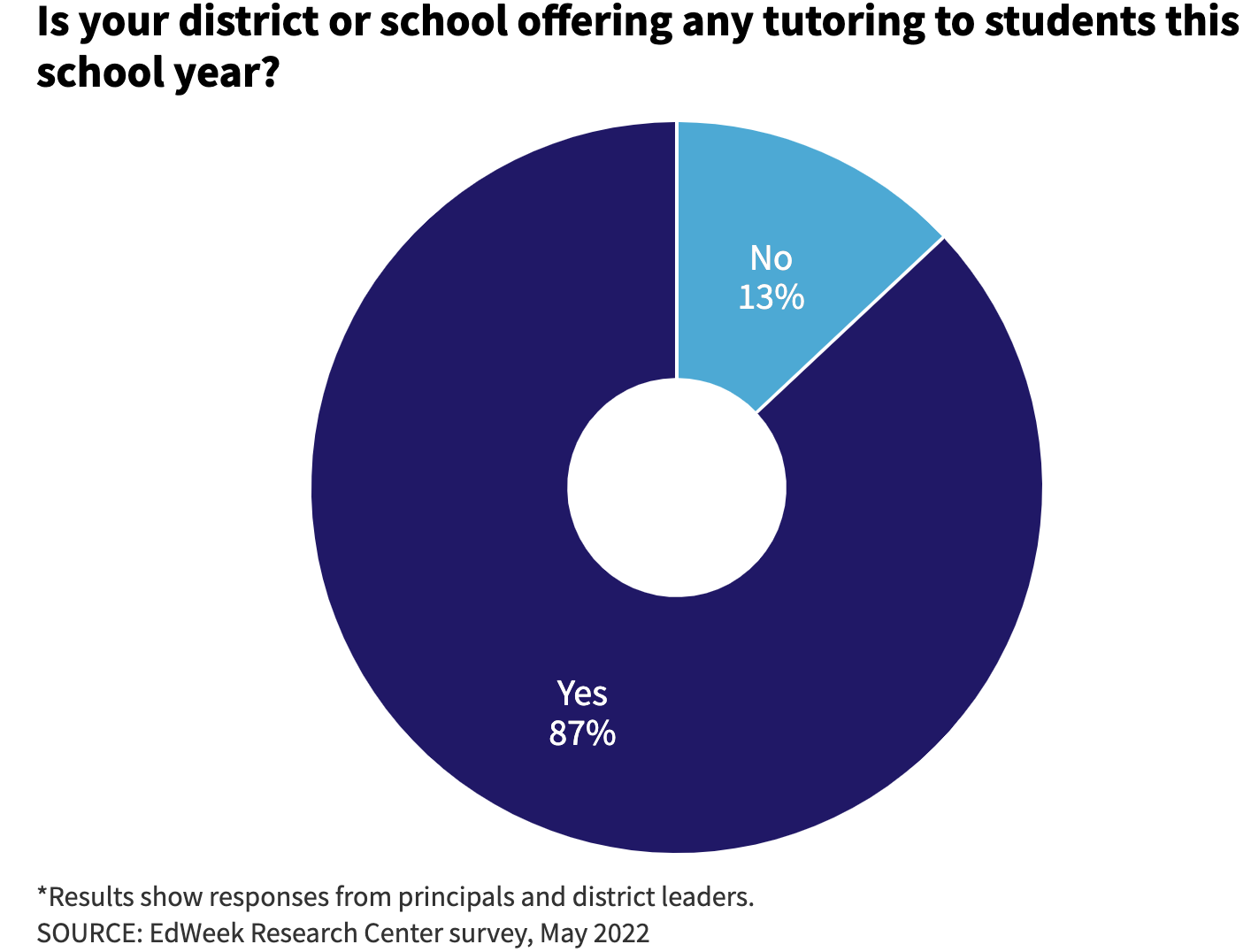
In the US, tutoring has always been a popular strategy for providing “extra help,” but following the school closures, tutoring is emerging as a more integral part of schooling across the US. According to a Education Week survey of school leaders and teachers in 1,287 districts at the end of the 2021-22 school year, almost 90% of those responding said that their school or district was offering some kind of tutoring (interesting, only 75% said that they “somewhat agreed” or “completely agreed” that “tutoring is an effective intervention for students in my district or school”).  Backing up those numbers, by the spring of 2022, estimates suggest that districts had dedicated over $1.7 billion in Federal funding to tutoring-related efforts and predicted spending could reach 3.6 billion by 2024. Correspondingly, the Department of Education reported that in the 2023-24 school year, more than four out of five schools reported offering tutoring programs, ranging from traditional after-school homework help to intensive tutoring. 
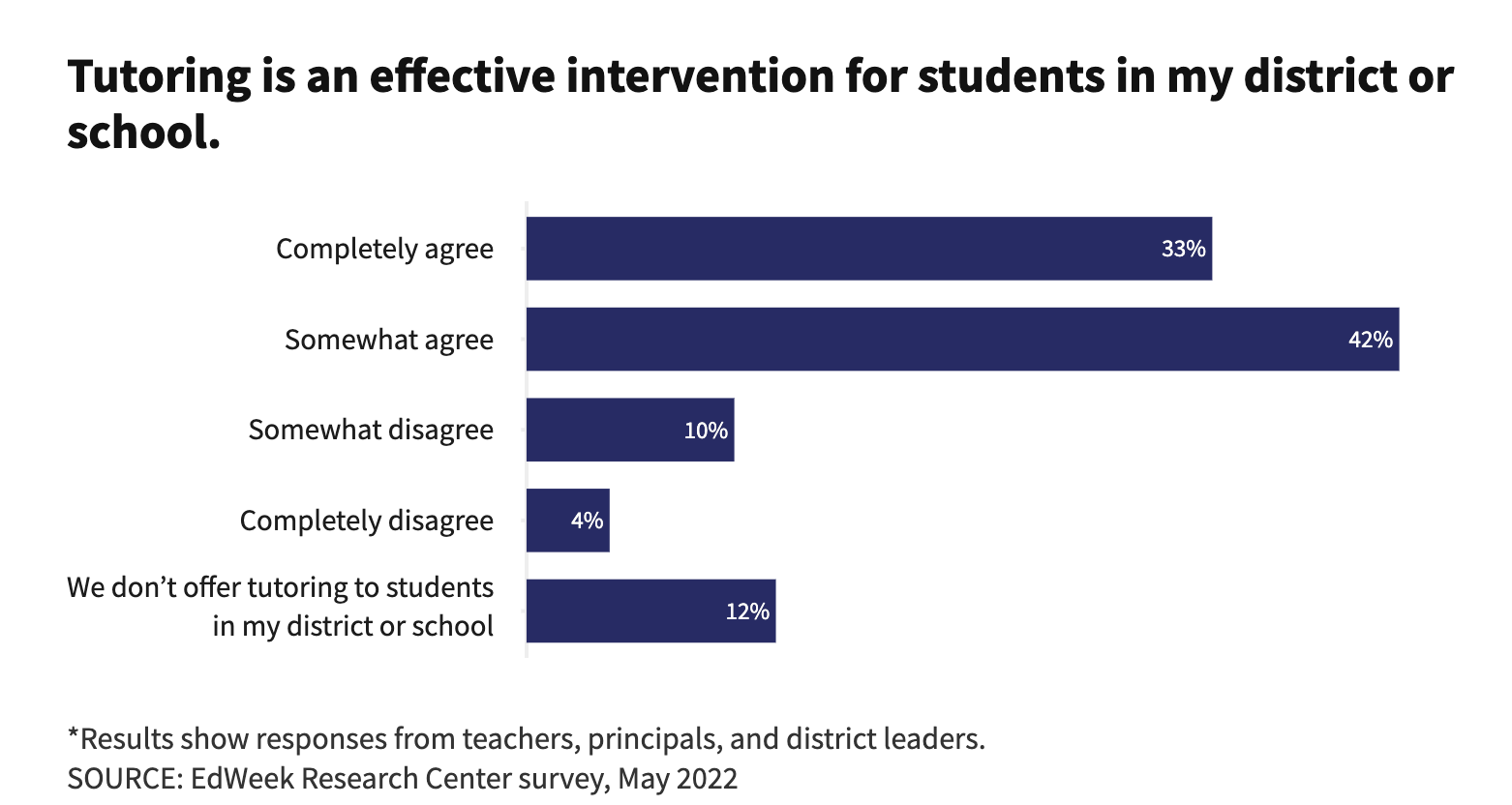
The Rise of Tutoring and Where It Falls Short, in Charts, Education Week

A whole series of funding initiatives have contributed to this widespread use of tutoring. With (unusual) bipartisan support, Congress and the Biden administration included support for tutoring in the package of $123 billion in emergency federal aid to schools. The U.S. Secretary of Education, Miguel Cardona, has urged schools to use their funds to provide at least 90 minutes of weekly tutoring to students most affected by the pandemic. Furthermore, in 2022, the Biden administration launched the National Partnership for Student Success – a three-year effort to create a coalition of organizations to “recruit, screen, train, support, and engage an additional 250,000 caring adults in roles serving as tutors, mentors, student success coaches, wraparound service coordinators, and post-secondary transition coaches”.

Private funders are also supporting tutoring efforts by establishing Accelerate, a new organization dedicated to developing and scaling affordable “high-impact” tutoring programs across the country. With funding from The Bill & Melinda Gates Foundation, Arnold Ventures, and the Overdeck Family Foundation, Accelerate set out to raise at least 100 million dollars to develop a network and make grants to support some of the most innovative tutoring models. According to later reports, Accelerate has provided 10 million dollars to 31 organizations developing “innovative” tutoring models and a million dollars to five different states to establish support and “infrastructure” for integrating tutoring into the regular school day that can serve as a model for other states.

States and cities have also participated in increasing the number of tutoring programs available around the country. New Hampshire’s approach includes offering a Yes, Every Student scholarship providing $1,000 for private tutoring from “state-approved educators” for “any young person whose education was negatively impacted by the pandemic.”  New Hampshire Education Commissioner Frank Edelblut described the reaction to the program this way: “When I explain the program to [parents], they become very excited, like, ‘Oh, this is great. In some cases, they’re almost like, ‘It’s too good to be true. How can this possibly be?’”

“When I explain the program to [parents], they become very excited, like, ‘Oh, this is great. In some cases, they’re almost like, ‘It’s too good to be true. How can this possibly be?’”

–New Hampshire Education Commissioner Frank Edelblut Quoted in ‘Too Good to Be True’: NH Gives Students $1,000 for Tutoring, The74

 Tennessee has launched a three-year tutoring project called Tennessee Accelerating Literacy and Learning Corps (TN ALL Corps), expected to cost almost 200 million dollars. The initiative hopes to serve 150,000 in 79 districts students who are just below proficiency in reading or math. In Texas in 2021, the state legislature passed a bill requiring schools to provide at least 30 hours of tutoring for students who did not pass the state tests in math or reading in grades three, five, or eight. To help meet the ensuing demand for tutoring, the Texas Education Agency established the Vetted Texas Tutor Corps, which seeks to offer support for over one million students by reviewing and approving eligible tutoring providers and offering a High Impact Tutoring Toolkit. 

In Ohio, most families now qualify for $1,000 to pay for tutoring. Through its Afterschool Child Enrichment program, called ACE, the Ohio State Department of Education supports educational activities for students who “experienced learning disruptions during the COVID-19 pandemic.” In Ohio’s case, however, families who meet the income restrictions can use those funds for a range of activities, including summer camps, language and music lessons, and after-school programs, in addition to tutoring. 

Next week: “Predictable challenges and possibilities for effective tutoring at scale – Scanning the news on the emergence of tutoring programs after the school closures (Part 2)

Scanning the globe

Photo by Dao Ngoc Thach

Photo by Dao Ngoc Thach

Several reports over the past month highlight the variety of causes that are blamed for failures to improve educational performance around the world. This short scan of reports focusing on issues like school quality and test-score performance, reveals typical concerns about teacher training and teacher quality, questions about the language of instruction and equality of education, as well as questions about the choices policymakers have made and the “policy churn” that can undermine implementation.
 

School Quality

Earlier this year in Sweden, 11,000 students were left without a school to attend when the private education firm that operated it went bankrupt. According to an article published online by Reuters, additional concerns raised about the quality of education in these schools led the opposition Green Party, a long-term proponent of school choice, to issue a public apology in a Swedish newspaper, with the headline: “Forgive us, our policy led our schools astray.”

In Vietnam, concerns have been expressed over the quality of care and education children receive in privately operated preschools. Referring to the government policy to privatize education as a failure, thanhniennews.com writes that limits placed on the growth of public preschool facilities has allowed private preschools “of dubious quality to mushroom.” Another article, posted on Vietnam.net, points out the additional problem of inadequate teacher training in provincial and privately operated preschools.

Test-Score Performance

In Malaysia, we see a debate over the cause of the decline of TIMSS scores. The World Bank released a report that found the decline to be caused by the switch in the language of instruction from Bahasa Malaysia to English. However, an article in The Malay Mail online cites the Parent Action Group for Education (PAGE), for pointing out that in 2007 (the year scores declined sharply), the students had yet to receive their instruction in English. Instead, PAGE attributed the decline to the poor quality of teachers and insufficient teaching hours. The Education Ministry announced plans to form a panel to investigate Malaysian students’ decline in performance.

Finnbay.com reports that Krista Kiuru, Finland‘s Minister of Education and Science, has allocated €22.5 million in state aid to promote equality in education for the period 2014-2015 to regain Finland’s top seat in PISA. “Success of Finnish education in international comparisons must be regained by having educational equality and non-discrimination,” said Kiuru.

Educational Improvement and “Policy Churn”

Despite declines in New Zealand students’ test scores, The Otago Daily Times reports that Education Minister Hekia Parata will not do anything differently. Parata attributes the slide to 10 years of a changing education system and not its controversial National Standards assessments, or a lack of school funding. According to Parata, Andreas Schleicher, Deputy Director for Education and Skills and Special Advisor on Education Policy to the OECD’s Secretary-General, has assured her that the country is already doing “what they recommend should be done when you want a whole of system change.”

The Nation has reported that the recent political upheaval in Thailand could mean that the sweeping curriculum-based overhaul of the education system might not come to fruition. The country had planned radical changes, such as decreasing the number of school hours for primary students from 800 to 600 per year, and requiring that students learn outside of the classroom for up to 400 hours per year. In addition, the Pheu Thai party’s controversial, yet “much-touted election policy” called the One Tablet PC Per Child Project, might not be implemented. Other policies at risk of being shelved include changes to the university admission system, promotion of vocational education, and the ongoing effort to improve Thailand’s international educational ranking.

Scanning the Globe: Access, Protests, and PISA 2012

A quick review of the headlines on education and educational policy we’ve seen from around the world over the last few weeks reveals continuing concerns about issues of access and financing in both developed and developing countries.  Australian Teacher Magazine reported on concerns about the extent to which the current Australian government will support the previously approved “Gonski” reforms, and Education International raised questions about a bill that will introduce an income cap to Japan’s tuition-free program for public high schools. An article in The Hindu described how school cancellations caused by excessive holidays and weather can interfere with the requirements for increased instructional time in India’s Right to Education Act. Euronews reported on the difficulties that students in countries like Uganda, Kenya, and Mexico face just getting to school.

Protests over the past few weeks included those over conditions for education and support for educators in the Ukraine that took place as part of the demonstrations against the government’s efforts to delay an association agreement with Europe; rallies against education cuts in Spain; and protests by students at the University of Copenhagen in response to a working paper from the University administration describing proposals designed to get students to complete their courses on time.

But the big news, at least for a moment, was OECD’s release of the 2012 PISA results including overviews, country-specific notes, full reports and data.  We pulled together headlines from around the world, many of which labeled the results “bad news,” except in countries like Lichtenstein, Poland, Estonia and the usual high-performing Asian countries and portions of countries (like Shanghai).  Alexander Russo rounded-up the responses in the United States and The Times Education Supplement put together their own list of news and opinion.

Concerns about the orchestration of the announcement and the media blitz surrounding it were raised on both sides of the Atlantic, by Paul Morris on the Institute of London Blog as well as Richard Rothstein and Martin Carnoy from the Economic Policy Institute in the US. While Marc Tucker and Tom Friedman agreed on some of the multiple factors that might contribute to Shanghai’s success, Adam MinterJunheng Li, and Diane Ravitch pointed to some of the problems and concerns about the Chinese education system expressed both inside and outside China (as well with some of the concerns about vast numbers of students in Shanghai who are unrepresented in the PISA tests).

Although slipping a bit in math, Finland – along with several other European high-performers like Estonia (discussed by Pasi Sahlberg), Poland (discussed by Amanda Ripley), and Liechtenstein – still serves as a focus for some examinations of the ingredients of a successful education system. Given the domination of the rankings by the Asian high-performers however, some of the main story lines for the next few years seem to be set. On the one hand, stories about success on PISA will highlight how hard students’ work and the amount of time students spend on schoolwork while mentioning concerns about the amount of pressure on students and the need to support the development of higher-order skills. (See for example, reports from the BBC about South Korea and a report in the Japan News that credits Japan’s strong performance on PISA 2012 in part to a decision by the Japanese Ministry to back-off a commitment to “pressure-free” education and an increase in the volume of study content and the number of class hours). On the other hand, others will continue to point to the many issues of inequality and the social and economic factors that play into these results and other comparisons (see for example stories from France, and the US; while it does not focus on PISA, a recent article from the Asia Pacific Journal of Education explores the inequitable distribution resources across schools in South Korea).

Scan of news: Teachers

Scotland: Susan Quinn, Union president, highlighted members' concerns.

Scotland: Susan Quinn, Union president, highlighted members’ concerns.

Over the past month, reports from various countries have shown both the concerns of teachers and concern about teachers. For example, reports of teacher concerns include India and Argentina, where teachers are looking for reliable salary payments, decent facilities, and quality education for allFinland, where teachers are concerned about a sharp increase in violent student behavior in the classroom; and Greece, where teachers are fighting for the right to protest in the midst of austerity measures that threaten the country’s education system itself. Additionally, in Scotland teachers are protesting a new curriculum and an unmanageable workload.

Reports of concerns about teachers include Lithuania, where students recently outperformed teachers on an exam created by the European Union; Israel, where teachers’ lack of expertise in mathematics has been blamed for student difficulties with the subject; and Malaysia, where the Education Ministry plans to conduct diagnostic exercises to benchmark Science teachers in terms of their content knowledge and pedagogical skills in the field.

Scan of news: Access and Funding

Sources in many countries over the past few weeks highlight issues ranging from educational access and funding, to quality curriculum and government corruption. Here is a quick glimpse of what we’ve seen on the issues of access and funding:

Pia Philip Michael and Bridget Nagomoro visited the UK to discuss the challenges to girls' education in South Sudan. Photograph: Leapfrog Public Relations

Pia Philip Michael and Bridget Nagomoro visited the UK to discuss the challenges to girls’ education in South Sudan. Photograph: Leapfrog Public Relations

Reports have shown that the United Arab Emirates is struggling with the issue of high tuition and long student wait lists, while Singapore’s Senior Minister of State for Education has suggested that the government link educational subsidies with evidence of high quality. Australia and the Philippines seek to increase investment in educational research by launching a partnership that aims to raise the quality of education in the Philippines through investing in research to support K-12 education. Meanwhile, union leaders in Peru met to develop policies that would defend the right of indigenous peoples to public education. Sudan aims to keep young girls in primary school by involving officials in the effort to spread the national message on educating girls. India is about to launch the second round of the Right to Education Act admissions, which will include a reservation of 25% seats in private schools for disadvantaged groups; however, reports reveals that word has not yet reached parents who would benefit most from the new provision. 

Scan of Ed News: Testing

Since 1995, children have been required to sit literacy and numeracy tests in their last year of primary school. Photograph: Martin Godwin for the Guardian

Since 1995, children have been required to sit literacy and numeracy tests in their last year of primary school. Photograph: Martin Godwin for the Guardian

Over the past month, a number of reports indicate a variety of concerns about testing around the world.  For example, Israel’s new Education Minister, Shai Pironhas decided to introduce reforms that would de-emphasize testing in order to “promote learning.” Similarly, China is taking small steps towards allowing educators to have input in test design (as opposed to government only). In contrast, the British government is acting in opposition to educators and parents to fight off an unprecedented alliance of hundreds of students, schools, local councils, and teaching unions, who brought a legal challenge over last year’s GCSE English exam grades. UK teachers are also protesting primary literacy exams, which they say leave little time for art, music, and books, and make children feel like failures. Chile has announced sweeping changes to the country’s university entrance exam, which has received criticism for flaws and bias; however, the concern in this case was not raised by educators and parents, but by Pearson, a company that describes itself as a leading provider of test development, processing and scoring services to educational institutions, corporations and professional bodies around the world. Pearson’s analysis revealed significant flaws and bias in the design of the exam.

In Singapore, surveys recently revealed that many educators and parents feel that students experience too much testing and a report on a recent visit by Dr. Dennis Shirley highlighted his suggestion that  the task of student assessment be handed over to the teachers, so that they can design their own modes of testing.  While the Singapore government has proposed several initiatives aimed at strengthening efforts to help every student succeed, none yet include substantial modifications to testing. While it might seem that the decision made by five schools in the town of Alesund, Norway, to change the date of the midterm exams so that students could attend a Justin Bieber concert in Olso, was an effort to modify testing to meet the needs of the students, it was also one for which officials saw no alternative. As one principal explained, they expected Mr. Bieber’s show would lead to sparse classroom attendance. “We considered that this was a battle that we could not win this time,” he said.