As schools in the US and other parts of the world make difficult decisions about how to reopen this fall, Thomas Hatch looks at some of the concrete steps that, over time, could make schools healthier places and transform the basic parameters of schooling. This post expands on comments made at the Education Disrupted/Education Reimagined convening sponsored by WISE and the Salzburg Global Seminar in April and summarized in a volume sharing the conference proceedings.This post was published originally on Thomashatch.org
Have the wide-spread school closures changed schools forever? The history of school reform efforts shows that schools are much more likely to change slowly and incrementally than they are to suddenly transform, even in the face of a deadly virus. Yet we can take advantage of what we know about how students learn and how schools change to address a critical problem with the design of conventional schools: Schools are a better medium for spreading disease than they are for supporting meaningful learning.
Learning depends on healthy, safe conditions for students, educators, and all those who work in schools; but schools cram too many people into too little space, and the typical lay-out of age-graded classrooms along labyrinthian hallways limits collaboration, exploration, and engagement with the world. We’ve made things worse in the US by leaving buildings in disrepair, and failing to provide adequate ventilation, air conditioning or heating, particularly in low-income communities. Add on a draconian schedule with little time for exercise, lunch, or other healthy activities; and then ramp up stress levels with high stakes tests where students have to sit in rows in silence for hours facing a ticking clock.
But things can change. We can make schools safer for students and staff as schools reopen, and we can create a foundation for much healthier and more powerful educational opportunities in the future.
We can make schools safer for students and staff as schools reopen, and we can create a foundation for much healthier and more powerful educational opportunities in the future.
Focus on learning that matters
The school closures and the inequities of access to online learning immediately launched a spate of proposals for dealing with “learning loss.” Many of these proposals rely on intensifying work on academic subjects, yet these proposals ignore the mile-wide and inch deep curriculum and age-graded pacing that make it almost impossible for those left behind to catch-up. Addressing academic learning loss begins by concentrating on a small set of key skills and concepts and providing educators with the tools to ensure that every student actually meets those learning goals.
Although academic needs have to be met, the challenges that students face as they return to school go far beyond academic achievement and a “less is more” approach to academics creates the efficiencies that provide time and space for supporting other critical aspects of children’s development. Back in school, learning will be enhanced by creating educational opportunities for students to reflect on their experiences during the outbreak; to develop coping strategies; to rebuild positive relationships with their peers and teachers; and to get engaged in meaningful and constructive work in areas they care about. When that happens, educators can shift their focus from covering the entire curriculum to addressing the critical needs of every child.
Addressing academic learning loss begins by concentrating on a small set of key skills and concepts and providing educators with the tools to ensure that every student actually meets those learning goals.
Break down the barriers between learning “inside” and “outside” schools
As we remake schools to help stop the spread of the virus, we can stagger schedules to fit students’ sleep patterns and development as they get older. We can make sure that students have regular chances to take the breaks and get the exercise that we know benefits learning and productivity. As we limit the number of people using school facilities at any given time, we can rotate students in and out of schools and expand support for students’ learning far beyond school walls. In addition to online learning, we can take advantage of possibilities for education outside on playgrounds, in the natural world, and in the neighborhood in gyms, museums, libraries, community organizations, and businesses. In the process, we can shift the focus from getting children into schools to enabling them to explore the world.
Expand the power of the education workforce
To increase the reach and power of teachers who have been limited largely to working with students in classrooms, we can engage a host of people who have the time and the capacity to play a positive role in learning inside and outside schools. Organizations like City Year and Citizen Schools already demonstrate how to mobilize volunteers young and old who can provide targeted academic support as tutors, act as mentors, or guide students’ in projects, apprenticeships, and community service. Numerous proposals could help meet the demand, whether it’s through the kind of education “Marshall Plan” discussed by Robert Slavin or by expanding National Service and Americorps as outlined by David Brooks, John Bridgeland and Alan Khazei, or bills being developed in the Senate.
Condense schooling and increase learning
All of these changes are within our reach right now. They do not require new curricula, massive professional development for teachers, or new technologies. Reimagining education depends on re-orienting our priorities, making schools healthy and safe, and focusing first and foremost on students’ needs and interests, particularly those of Black, Latinx, and immigrant students, students from low-income communities and the communities hardest hit by this pandemic. But as we change our priorities and take these initial steps, a more radical possibility emerges: Condense the school day.
Instead of extending the school day and requiring students to spend even more time on basic skills, we can concentrate more efficient academic support in more limited time slots, with educators able to utilize sophisticated materials and coordinate contributions from colleagues with specialized expertise as well as volunteer tutors, mentors, and online and offline guides. In a sense, every day could be a half-day, opening up opportunities for students to have lunch, get outside, and participate in a host of school-based, community-based, or online activities; to get any counseling they need; to pursue their own education interests; and to participate in activities that foster a much wider range of developmental and educational goals. Such an approach rejects the tacit assumption that limits education to schooling and embraces the possibilities for supporting students’ learning and development wherever and whenever it occurs.
ENJOY THE BREAK! IEN will be on hiatus until September when we will return with more news and views of schooling and education around the world
This week’s post features a Lead the Change interview with Brahm Fleisch, Professor of Education Policy in the Division of Education Leadership, Policy and Skills at the University of the Witwatersrand, Johannesburg. Fleisch has been a District Director in the Guateng Department of Education and advisor for the national Department of Basic Education in South Africa. His books include: Managing educational change: The state and school reform in South Africa, and The Education Triple Cocktail: System-wide Instructional Reform in South Africa. His recent work focuses on impact evaluation of large-scale instructional improvement models.
This is the fourth in a series of interviews inviting some of the authors of earlier Lead the Change interviews to review their previous responses and consider how they might modify/ adjust/add to what they wrote based on their experiences and insights since publication. The fully formatted interview will be posted on the LtC website of the Educational Change Special Interest Group of the American Educational Research Association.
Lead the Change: How, and in what ways, has your work evolved since the first publication of this piece? What ideas/points still hold true? Which might you revise?
Brahm Fleisch: Since the publication of our first piece in Lead the Change, our collective knowledge of educational change in the context of the large-scale instructional improvement in the Global South (and South Africa in particular) has been bolstered by seven years of experimental research. This research programme is a response to the challenge currently faced by many resource constrained systems (World Bank, 2019), in which children are enrolled in and attending school, but are, in the majority of cases, also failing to learn to read or to do basic mathematics. The focus of our research is to identify scalable rigorous and robust change knowledge to address this challenge. The core of what we have learnt is the efficiency of a particular change model, what we have come to call, the “education triple cocktail” (Fleisch, 2018) (a reference to the successful drug treatment for HIV/AIDS). Drawing on international experience, the model combines (a) prescriptive lesson plans, (b) the provision of quality learning materials and (c) on-site instructional coaching. Our experimental studies show consistent, positive, and compelling evidence of the model’s effectiveness in multiple settings (Fleisch & Schoer, 2014; Fleisch et al., 2016; Fleisch et al., 2017; Cilliers et al., 2019; Kotze et al., 2019; Fleisch & Dixon, 2019).
We have demonstrated the value of mix-method impact evaluations (MMIE) that include qualitative case studies nested in representative sample cluster randomised control trials. It is our view that MMIE has the potential to contribute to building a more rigorous educational change knowledge base. Examples of the qualitative research include our study (Fleisch & Dixon,2019) that explores lesson plan mechanisms and how they link to the reconstruction of micro and macro teaching time. Alsofrom’s (2019) case studies also show the central role instructional coaches play in addressing teachers’ emotions of change.
At the centre of our contribution is not only findings of ‘what works’ (measured as effect sizes), but an opportunity to understand ‘why’ they work. For example, case studies show teachers both adopt and adapt lesson plans they are given, and that, contrary to assumptions about de-skilling, most teachers find scripted lesson plans to add to their professional authority and instructional repertoire. The coherence embedded in the education triple cocktail approach helps teachers to shift their thinking about instructional time and space in the classroom. Other case studies point to emotional labour of instructional coaching and thus show the central role coaches play in addressing teachers’ feelings of failure and anxieties about change as well as in building professional accountability.
LtC: What do these shifts suggest to you about the field of educational change more broadly?
BF: There is a growing recognition that the change problems that have animated much of the field of educational change in the past three decades were primarily learning, school, and system problems of the Global North, particularly North America, Europe, and Australia/New Zealand. Both the change problems and potential productive approaches to addressing these problems look very different from the perspective of poorer parts of Latin America, sub-Saharan Africa, and South Asia. Successful systems in East Asia again have a unique set of challenges. Scholars are increasingly recognizing that to speak of a single and coherent field of educational change is difficult. That is not to say that productive dialogues across geopolitical contexts are not possible. Quite the contrary.
There is a growing recognition that the change problems that have animated much of the field of educational change in the past three decades were primarily learning, school, and system problems of the Global North
That said, I think we need to speak of change knowledge that addresses common contextual realities. In much of the Global South, for example, the challenge is defined by the fact that many of their educational systems have only recently succeeded in achieving near-universal school enrollment. The problem they are currently managing is that the vast majority of those enrolled in the early grades are failing to reach minimum proficiency in literacy and numeracy – what the World Bank has termed “learning poverty”.
LtC: What most excites you about the direction of the field of educational change is going?
BF: I’m excited to see new scholars working in the field. Very powerful ideas are emerging out of the work of Santiago Rincon Gallardo (2016) and his research on bottom-up tutor networks in Mexico, Benjamin Piper and Stephanie Zuilkowski (2015) and their experimental research on structured pedagogic models in Kenya and other parts of sub-Saharan Africa, and Rakmini Banerjee et al. (2010) and their work on teaching at the right level in India.
LtC: What advice might you have for those interested in affecting change and improvement?
BF: For me, the most exciting frontier of research on educational change is in the so-called Global South, and particularly in resource-constrained systems. Not only are the change challenges huge and pressing, but I find many policymakers are eager to dialogue around research. It is also a space that allows us to really challenge many taken-for-granted assumptions about system-wide change. Building change knowledge anywhere is difficult and is made that much more challenging in settings with very little financial resources or established capacity to implement effectively.
The Global South is a space that allows us to really challenge many taken-for-granted assumptions about system-wide change
LtC:What are the future research directions that should be addressed in the field of educational change?
BF: Understanding the levers of change and how they work in resource constrained contexts, in places where government ministries and departments, district staff, school leaders and ordinary teachers lack essential education infrastructure and capacity, should be a future research thrust for scholars working in the field of educational change. It is critical that, as we move forward, we see this knowledge building as a cumulative process with scholars working together adding empirical findings, engaging with case study insights, and taking on substantive critiques. If we work in silos, if we neglect large-scale quantitative research on effects, if we fail to engage with internal and external critics, progress is likely to be slow.
References
Alsofrom, K (2019) How and why does coaching work to improve teaching practices in the EGRS2? An examination of causal mechanisms. Paper Presented at the UKFIET meeting, Oxford University.
Banerjee, A. V., Banerji, R., Duflo, E., Glennerster, R., & Khemani, S. (2010). Pitfalls of participatory programs: Evidence from a randomized evaluation in education in India. American Economic Journal: Economic Policy, 2(1), 1-30.
Cilliers, J., Fleisch, B., Prinsloo, C., & Taylor, S. (2019). How to improve teaching practice? An experimental comparison of centralized training and in-classroom coaching. Journal of Human Resources, 0618-9538R1.
Fleisch, B. (2018). The education triple cocktail: System-wide instructional reform in South Africa. UCT Press/Juta and Company (Pty) Ltd.
Fleisch, B., & Dixon, K. (2019). Identifying mechanisms of change in the Early Grade Reading Study in South Africa. South African Journal of Education, 39(3).
Fleisch, B., & Schöer, V. (2014). Large-scale instructional reform in the Global South: insights from the mid-point evaluation of the Gauteng Primary Language and Mathematics Strategy. South African Journal of Education, 34(3).
Fleisch, B., Schöer, V., Roberts, G., & Thornton, A. (2016). System-wide improvement of early-grade mathematics: New evidence from the Gauteng Primary Language and Mathematics Strategy. International Journal of Educational Development, 49, 157-174.
Fleisch, B., Taylor, S., Schöer, V., & Mabogoane, T. (2017). Failing to catch up in reading in the middle years: The findings of the impact evaluation of the Reading Catch-Up Programme in South Africa. International Journal of Educational Development, 53, 36-47.
Kotze, J., Fleisch, B., & Taylor, S. (2019). Alternative forms of early grade instructional coaching: Emerging evidence from field experiments in South Africa. International Journal of Educational Development, 66, 203-213.
Piper, B., & Zuilkowski, S. S. (2015). Teacher coaching in Kenya: Examining instructional support in public and nonformal schools. Teaching and Teacher Education, 47, 173-183.
Rincón-Gallardo, S. (2016). Large scale pedagogical transformation as widespread cultural change in Mexican public schools. Journal of Educational Change, 17(4), 411-436.
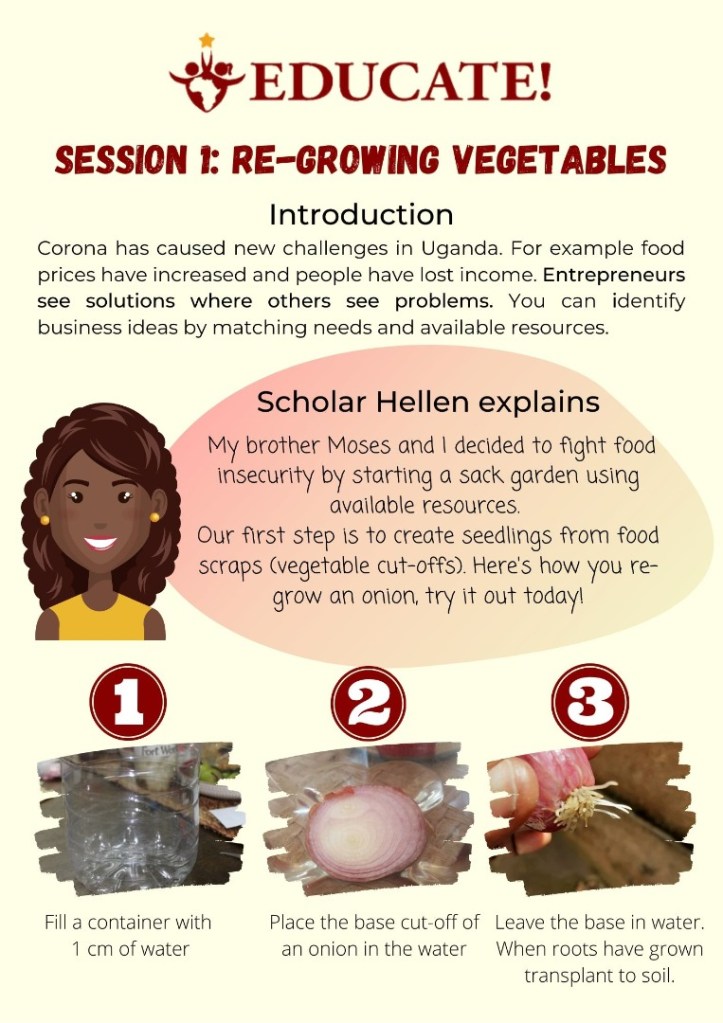
This week’s post provides a glimpse of what is happening in Uganda during the school closures. The post begins with short email interviews with two Associate Teachers from Educate! and then includes some examples of how Educate! has adapted their work in response to the coronavirus outbreak. The excerpts are drawn from an article published on Medium by Boris Bulayev, one of Educate!’s Co-founders.
In 2009, Educate! launched an experiential model for secondary education focusing on entrepreneurship. The key components of that model include a skills course in the last two years of secondary school, mentoring to help students start enterprises and community initiatives, and a professional development network for course leaders and mentors. Since that time, Educate! has scaled their approach in Uganda, expanded to Rwanda and Kenya and established partnerships with governments to support skills-based education nationally.
With the school closures in Uganda and most of Africa since March, As Boris Bulayev, put it in the article on Medium, “given our business model is rooted in in-person delivery, we were effectively out of business.” Although the Ugandan government is expected to make an announcement about reopening in September, in the meantime, the lockdown has been challenging for teachers as well as students and parents.
Alisio, an Associate Teacher with Educate! in Northern Uganda, and Akello, an Associate Teacher from the Lira District, shared their experiences in an email interview with IEN:
What’s happening with you and your family/friends?
Alisio: I am fine, doing farming work and family work. Friends are also busy on the farm doing agriculture, but a few in the town have been left with no source of revenue since small- scale businesses have been closed. Life is harder in urban centers than the village.
Akello: Life is a bit difficult due to the lock-down since we cannot move anywhere. But I’m pushing on well.
What’s happening with education/learning in your community?
Alisio: It’s been hard, lessons going on in the radio station from primary to secondary school. Five radio stations are conducting different lessons but I am uncertain of the education outcomes.
Akello: There is no serious learning taking place, some lessons are happening on Radio, TV but very few students pay attention to it and most parents are not also ensuring that the students get to listen and learn.
What do you/your community need help with?
Alisio: Relief food, agricultural inputs, repair of water sources. For education: financial sponsorship after lock down, both in primary and secondary especially as many parents have lost their source of livelihood.
Akello: It’s hard to determine the specifics, people want the lock down to end, and there are a lot of domestic violence related cases in families and this will affect the children. The help that can be given would be aimed at supporting orphans and designing projects that can respond to domestic violence cases.
What resources/links/supports have you found most useful?
Alisio: History textbooks.
Akello: Reading the text books and making notes for students in preparation of the school opening.
What are you reading, watching, listening to that you would recommend to others?
Alisio: Reading books – preparing notes for students, conducting behavioral research on the community.
Akello: Listening to/ watching the lessons on radio and TV respectively. Managing the students who are either watching or listening to the TV or Radio to be attentive. In my free time, I make briquettes.
What have you found most inspiring?
Alisio: I have shifted my mindset to have a positive attitude towards life. I have established other sources of income and now have a piggery project (7 pigs) and I hope to diversify my revenue stream.
Akello: Value everybody irrespective of status, put what you have learnt in practice.
While the schools have been closed and their direct relationships with students have largely had to stop, Educate! has also been trying to adapt. Drawing on resources like the Bain CEO plan for coronavirus and an article from Deloitte on resilient leadership, Bulayev described Educate!’s response as moving quickly into “defense” – ensuring they had the funds to survive for at least a year – and going on “offense” – essentially digitizing key aspects of their services and in-person delivery models. To carry out that strategy, Educate! created three different teams, each focused on a different product:
A version of their in-person, direct-to-school curriculum that can be delivered over a combination of radio, phone and SMS/text
A government partnership to continue student learning of core subjects by USSD [“Unstructured Supplementary Service Data] and radio
A light-web e-learning platform focused on youth, but open to others, on how to start and run hygienic motorbike delivery businesses during the coronavirus pandemic and stay safe while doing it, with potential to expand into informal retail and other informal sectors.
As Bulayev explains, although these strategies are designed to maintain their core services and impact over the short term, the crisis has also spawned the hope that over the long-term, the “digital will be blended with in-person to ideally achieve greater impact, scale, and sustainability.”
This week’s post features an e-mail interview that Aidi Bian conducted for IEN with Emma Hua. Hua and Bian are teachers at the HD school, a school with campuses in Shanghai, Ningbo, Beijing and Qingdao. These four schools have close to 3000 enrolled students in total. A fifth campus, in Nanjing, will open in 2021. The school describes itself as a “private experimental school” and each homeroom has one “national teacher” and one “international teacher.” HD school is one of a growing number of bilingual schools in China that have been gaining popularity. Bilingual and international schools in China have been particularly hard hit by the virus because of visa restrictions that have made it hard to find teachers from outside China.
Across China, schools were closed for some time, but most cities reopened schools in April, with schools in heavily affected areas like Beijing and Wuhan opening later. After a small outbreak in Beijing in late June, Beijing’s schools were closed throughout the spring semester. Nationwide, the annual “Gaokao” exam was postponed until July 7, one month later than a normal year. Current regulations in Shanghai require every school to track the temperatures and health status of their students every day and report to the district government.
IEN: What’s happening with you and your family/friends?
Emma Hua: I was originally from Wuhan, Hubei, where Covid19 firstly broke out. I went back to Wuhan for Spring Festival during the winter break and stayed at home since Wuhan was locked down in late January. Things were not too bad after we got used to the situation. Our community in general was in good order: volunteers helped with information collection, people ordered food and things online and got delivery in time. I worked at home from early February to middle April, and then successfully returned back to Shanghai, after I was tested negative for the coronavirus in Wuhan.
IEN: What’s happening with education/learning in your community?
EH: Our school started remote classes since February. For primary school, most of the courses were recorded as 10 or 15-minute videos and uploaded to an online platform where students can download and watch every day at their convenience. This is a deliberate design since it would be hard for young kids to stay focused for a long time in an online live class, and many parents have concerns with their children in front of screens for too long. All the materials and resources were uploaded online, and students took picture of their homework and sent them to teachers. We suggested a timetable for the students, which they could adjust, and many students gradually developed a more regular and feasible timetable for themselves with the help from parents. At the end of each day around 4 or 5 pm, each class would have a Q&A live session where teachers talked about common mistakes in the homework and got updates from students.
We suggested a timetable for the students, which they could adjust, and many students gradually developed a more regular and feasible timetable for themselves with the help from parents.
The online class lasted until April when the situation in Shanghai was basically in control. An interesting discovery was that after students got back to school, some students made better progress than expected as they studied more online at home than at school. We hypothesized this happened because some of them could better individualize the pace of their learning as they watched the videos at home.
IEN: What do you/your community need help with?
EH: At first, many teachers were not familiar with teaching online or making slides and videos, so the school organized some trainings to help teachers with making powerpoints and video editing. Courses and materials were prepared within a grade, where every teacher was responsible for several sessions of the whole week, to separate the tasks among the grade group. Some traditional teachers especially needed help with technology support from younger teachers. There were also struggles and pains when the internet of some teachers or students was not stable. In particular, when kids were young, they did not know how to deal with the technical problems. Teachers were tired, too, because the working time could be extended when communication with parents wasn’t smooth.
Courses and materials were prepared within a grade, where every teacher was responsible for several sessions of the whole week, to separate the tasks among the grade group.
IEN: What resources/links/supports have you found most useful?
EH: We used DingTalk as the main online platform for our second grade. After students selected their school and class, they could do a lot of things such as check in, download lessons and materials, submit homework, get feedback from teachers, etc. A good thing about this platform is that it did evolve and developed many good features that fit educational uses. For example, at first, students could see one another’s homework without any restriction, which could lead to copying. Later the new version changed the rule so that only students who had submitted their homework could access others’ work. Also, the platform allowed teachers to rate and exhibite the best work to the whole class.
IEN: What have you found most inspiring?
EH: I am appreciative that our school principals were very helpful and supportive to teachers. We have both foreign and Chinese principals, and they were responsible for the international teacher and Chinese teacher team respectively. I belong to the Chinese team, and the principal would participate in curriculum design and preparation and gave us support and suggestions. The school also has small gifts for teachers on national holidays. Another inspiration in the latter stage of remote learning was that we were trying to add more elements and activities to the online routine, such as weekly guided reading, which gave students a more diverse and similar-to-school experience even when studying online.
This week’s post features a Lead the Change interview with Carol Campbell (@CarolCampbell4), Associate Professor of Education at the Ontario Institute for Studies in Education, University of Toronto. Campbell is a member of the International Council of Education Advisors for the First Minister and Deputy First Minister of the Scottish Government. She has held education, academic and government roles in Canada, the UK and the USA
Lead the Change: How, and in what ways, has your work evolved since the first publication of this piece? What ideas/points still hold true? Which might you revise?
Carol Campbell: Re-reading my 2014 Lead the Change Q & A, there are many points I still consider to be important and there is much that continues into my current work – the importance of educational system improvement for excellence and equity, the role of research and evidence-informed policy and practice, and the need to carefully attend to the processes of educational change balancing and valuing professional voice, agency, and judgement alongside the role of government directions, policies, and resources. In my 2014 comments, I said:
There remain perennial issues of how to truly achieve educational excellence and equity, and there will be new emerging issues associated with global and local changes.
Over the following six years, there have indeed been changes in the field of educational change. Below, I highlight some evolutions in my work since my 2014 Q &A.
First, evolutions in my work concerning the substance of educational change. In 2014, Ontario had just established a new vision for education – expanding the previous focus on raising achievement and closing gaps in performance to become a broader vision of excellence, equity, and well-being (Ontario Ministry of Education, 2014). It is clear that alongside the importance of academic achievement, persisting systemic and structural inequities in access, opportunities, and outcomes from schooling, and increased prevalence of mental and emotional health issues for students and staff require priority attention (Campbell, 2020a). These issues need new, and additional, educational priorities, strategies, and resources. The genuine quest to improve equity and well-being for students requires also fundamentally rethinking the core of schooling and classroom practices too. For example, in our review of Ontario’s assessment system (see Campbell, Clinton et al., 2018), our recommendations for changes to support teachers’ approaches to student assessments for their classes and to transform large-scale standardized testing have implications also for: student voice, agency, equity and diversity; professional judgement and pedagogy; curriculum; integration of technology; and communication and engagement with parents or guardians.
Second, shifts in my work about the processes by which educational changes are developed, implemented, and evaluated. In 2014, I wrote:
The next phase of Ontario’s change strategies will require further evolution… in valuing, developing and integrating educators’ leadership, voices, capacities and actions.
That idea turned out to be very important. By 2014, the limits of top down reform were increasingly apparent internationally and also in Ontario. In the Ontario collective bargaining negotiations between teachers’ federations, school boards, and the government in the 2014 period, priority issues included initiative overload, workload, and work intensification. Agreement was reached to establish a joint working group involving all education and related organizations and government to co-develop new ways of working between labor and management. The resulting Policy and Program Memorandum (PPM) formally enshrined Collaborative Professionalism:
In Ontario, collaborative professionalism is defined as professionals – at all levels of the education system – working together, sharing knowledge, skills and experience to improve student achievement and well-being of both students and staff. (Ontario Ministry of Education, 2016, p. 1)
In my recent research both in Canada and internationally, there is growing and substantial evidence indicating the importance of valuing, investing in, developing, and trusting the education profession to lead educational change. This approach benefits not only the people who work in education, but also, importantly, the students they serve and wider system improvement (Campbell, Osmond-Johnson et al., 2017; Campbell, Zeichner et al., 2017; Campbell, Lieberman et al., 2018; Cordingley et al., 2019; Darling-Hammond et al., 2017; Lieberman et al., 2017).
Such educational change processes have, however, been challenged by austerity and adversity towards the education profession in many contexts, including Ontario during 2018-20. As we look around the world at governments who have attempted to mandate austerity and created adversity for the education profession, we find these change efforts generally do not succeed in bringing about long-term successful and sustainable change. When professional judgement, agency and empowerment have been developed; governments cannot unilaterally revert to top-down mandates. Successful educational change is co-developed with the education profession and enables professionally-led improvements in educational practices. The need for professionalism and teacher leadership are especially important in the context of the global pandemic, as discussed further below. Therefore, my work has shifted in considering professionally-led educational change and collaborative professionalism in times of support for innovation and improvement, challenges of austerity and adversity, and now to prioritize professional judgement and professional capital in responding to the educational impact of the COVID-19 pandemic.
“Successful educational change is co-developed with the education profession and enables professionally-led improvements in educational practices.”
LtC: What do these shifts suggest to you about the field of educational change more broadly?
CC: In terms of the substance of educational change, the field is becoming both broader and more diffuse in the range of policies and practice being researched; yet it is also becoming more precise and deeper in seeking to unpack the realities, implications, and possibilities of educational change. Increasingly, schools and educators are being asked to do more to meet the current and predicted future needs of students in a rapidly changing global and economic context, for example, by considering the competencies and skills to be incorporated into curricula, pedagogy, assessments and integration of technology. Teachers are also being asked to meet the increasing diversity of student populations and complexity of educational, mental, emotional, and physical needs present in classrooms. Already emerging in the light of COVID-19 is an expanding range of educational, health, and social needs for students and staff – from the logistics of physical distancing, hand washing, and hygiene in schools to how to address issues of trauma, anxiety and well-being for students and staff, and how to ensure adequate and equitable access to quality teaching and learning whether at home or in school (Campbell, 2020b).
Regarding the processes of educational change, the now long-standing tensions between bottom up and top down reform have not fully gone away but they have shifted somewhat in current evidence and debate. I have been a contributor to the ‘Flip The System’ movement – which prioritizes and values teacher-led educational change rather than top-down government directives – from the start (Elmers & Kneyber, 2015) and this is growing in momentum. For example, the findings from both TALIS and PISA emphasize the importance of professional ownership and leadership of educational change (Schleicher, 2019, 2020). There are examples of countries, including Scotland where I am a member of the International Council of Education Advisors, taking this shift to a professionally-led education system seriously. At the same time, there is still the tendency of many governments to mandate, micro-manage, and expand the scope and details of influence they seek over the day-to-day work of educators. In the emergency rapid response to COVID-19, it is understandable that governments made decisions quickly; however, this mode of governing needs to be re-balanced through partnership with the education profession whose leadership, knowledge and judgement are essential to protecting and educating all students (Education International, 2020).
LtC:What most excites you about the direction of the field of educational change is going?
CC: I am excited about the vibrancy and growth of the educational change community. As a field, educational change has become established over time while also evolving as a wider range of people becoming actively involved in investigating a diverse range of topics to grow the field further. My 2014 Q & A included discussion of research, policy and practice connections, I am excited to see the growth of ‘boundary spanners’ who work collaboratively within and across these communities and the increasing number of ‘pracademics’ – practitioners and policy-makers who are researching, writing, active on social media, and speaking out about educational change. Nevertheless, we have more work to do to further increase the diversity of people involved in the educational change field; including those of us who are already established scholars in the field introducing, encouraging, mentoring, sponsoring and collaborating with people who are currently under-represented in the field, for example Black, Indigenous and People of Color (BIPOC) students and practitioners. These connections and intersections are vital.
“We have more work to do to further increase the diversity of people involved in the educational change field.”
“Excites” is not the appropriate verb, but if we go to the Latin origin of “call forth”, the implications and impact of COVID-19 for educational change cannot be understated. At the height of the pandemic, over 91% of students globally were not in school and 63 million teachers were affected (UNESCO, 2020a, 2020b). The human tragedy and trauma of COVID-19 are horrendous and our first duty is to protect people and save lives. As countries start to shift from emergency response remote learning to what the provision of education for school children will look like and require whether at home, in school, or blended learning; there are significant questions about all aspects of schooling, teaching, and learning (Campbell, 2020b; Osmond-Johnson et al., 2020). The immediate COVID-19 response suspended many of the traditional conventions, structures, and routines of schooling – these emergency responses should not necessarily become the ‘new normal’ but neither should there be a full return to the previous status quo.
Long-standing and new inequities for students and schools have been brought into very sharp attention currently. As I write this, anti-racism, particularly anti-Black racism, protests are happening in every state of the USA and around the world. In my home country of Canada, systemic and structural racism, including anti-Black racism, are long-standing issues too that have not been fully addressed by our governments and school systems (Campbell, 2020a). It is also one year since the publication of the National Inquiry into Missing and Murdered Indigenous Women and Girls, which concluded: “this violence amounts to a race-based genocide of Indigenous Peoples” (MMIWG, 2019, p. 1). This report further amplified the Calls to Action from the previous Truth and Reconciliation Commission (TRC, 2015) investigating the historical trauma and legacy of abuse and violence perpetrated by the Residential School system for Indigenous people.
With the new challenges of a global pandemic combined with the unacceptably long-standing history of inequities, injustices, and systemic and structural racism which are being brought to the fore right now; part of the solution must be in and from the education system. If ever there was a time for a serious rethinking of the purposes, structures, content, processes and outcomes of schooling and the need for evidence-informed educational change, it is now. I hope the educational change community will be ‘called forth’ to rise to this incredible and urgent challenge to collaborate to generate ideas, provide evidence, and to offer concrete suggestions to create new possibilities for genuinely equitable and excellent education systems which also embody a duty of care, protection and well-being for all people (students and staff) involved.
LtC:What advice might you have for those interested in affecting change and improvement?
CC: Educational change is essentially and ultimately about people and the relationships between people. Of course, when you work to bring about change there are a host of educational, political, and practical factors involved. Educational change should also be evidence-informed, drawing on research and data, professional expertise and judgement, and engagement of affected communities.
“Educational change is essentially and ultimately about people and the relationships between people.”
My advice is to always be very thoughtful about the human dimensions and implications of whatever change you are attempting. This includes:
working in partnership to identify needs and priorities for change;
engaging collaboratively in mutually respectful interactions to co-develop plans and details for change;
supporting and trusting the people who will be directly involved in the day-to-day development, adaptation and implementation of changes;
considering as many possible potential consequences (positive, negative, intended and unintended) before actually proceeding with change; and
having those continuing, trusting relationships to listen, learn, revise, or even abandon changes due to the emerging experiences and evidence.
The purpose of education is the betterment of humanity and that applies to both the substance and processes of educational change (Campbell, 2018).
LtC:What are the future research directions that should be addressed in the field of educational change?
CC: There are many potential and important future research directions. We have been living with many tensions in educational change – for example:
a rapidly changing world, yet the tendency for changes in curriculum and assessment systems to be slow, incremental, and often additive rather than transformative;
the commitment to be inclusive, culturally responsive, support diversity and advance equity, yet unacceptable continued evidence concerning systemic, structural and sustained inequities in and from schooling;
the rise of the importance of leadership and professional judgement throughout all levels of the education system, yet the complex and contested balance between the exercise of formal and informal power and authority;
the desire to learn how to appropriately integrate and manage technology and online media in teaching, learning and the work of the profession, yet ever increasing needs to mitigate the ethical, privacy, and safety risks involved;
the growing recognition of the importance of well-being for students and staff, yet changing pressures in students’ lives and work intensification for educators contributing to stress, anxiety, and related health issues, which are compounded by the profound impact of COVID-19.
It is even more urgent now to address these priorities specifically to understand the details of changes needed for each issue and holistically for interconnected, substantial changes in education systems.
We are witnessing educational change during a global pandemic combined with protests and social movements advocating for significant change to address long-standing discrimination and inequities. It is an extremely difficult time for many people. No one has all of the answers, so more than ever we need to come together as a global community to learn from each other. We know from history that from times of ruptures in society, social movements calling for action, and paradigm shifts in knowledge; change will evolve. I encourage the educational change community to be proactive in considering and supporting the possibilities for constructive, positive future changes.
References
Campbell, C.(2018). Developing teacher leadership and collaborative professionalism to flip the system: Reflections from Canada. In D.M.
Netolicky, J. Andres & C. Paterson. Flip the System Australia: What Matters in Education. London, UK: Routledge.
Campbell, C., Zeichner, K., Osmond-Johnson, P. & Lieberman, A. with Hollar, J., Pisani, S. & Sohn, J. (2017). Empowered educators in Canada: How high-performing systems shape teaching quality. San Francisco, CA: Jossey Bass.
Darling-Hammond, L., Burns, D., Campbell, C., Goodwin, A.L., Hammerness, K., Low, E.L., McIntyre, A., Sato, M. & Zeichner, K. (2017). Empowered educators: How high-performing systems shape teaching 1uality around the world. San Francisco, CA:Jossey Bass.
Elmers, J. & Kneyber, R. (Eds.) (2015). Flip the system: Changing education from the ground up. London, UK: Routledge.
Lieberman, A., Campbell, C. & Yashkina, A. (2017) Teacher learning and leadership: of, by and for teachers. London, UK: Routledge/Taylor & Francis.
National Inquiry into Murdered and Missing Indigenous Women and Girls (MMIWG) (2019). Reclaiming power and place: Executive summary of the national inquiry into murdered and missing Indigenous women and girls. Canada: MMIWG.
Ontario Ministry of Education (2014). Achieving excellence: A renewed vision for education in Ontario. Toronto, ON: Queen’s Printer for Ontario.
Truth and Reconciliation Commission (TRC) (2015). Honouring the truth, reconciling for the future: Summary of the final report of the truth and reconciliation Commission of Canada. Ottawa, Ontario: TRC.
ABOUT THE LTC SERIES: The Lead the Change series, featuring renowned educational change experts from around the globe, serves to highlight promising research and practice, to offer expert insight on small- and large-scale educational change, and to spark collaboration within the Educational Change SIG, Kristin Kew, Chair; Mireille Hubers; Program Chair; Na Mi Bang, Secretary/Treasurer; Min Jung Kim, Graduate Student Representative; Jennie Weiner, LtC Series Editor; Alexandra Lamb, Production Editor.
This month for the Lead the Change series we pause to reflect and to stand in solidarity with our Black brothers and sisters. We pledge to fight against entrenched racism, white supremacy, and oppression in all its forms and to honor and remember those murdered by the police. Black Lives Matter.
For the past several years, IEN has shared the monthly Lead the Change Series interviews from AERA’s Educational Change Special Interest Group. This week, we join them in supporting the Black Lives Matter movement and in fighting systemic racism, white supremacy and oppression wherever it occurs.
This week’s post features an e-mail interview conducted by Maretta Silverman with Abba Karnga Jr., Program Manager at the Luminos Fund in Liberia, where the school lockdown continues. During the Ebola crisis, Karnga also served as Director of the Stop the Spread of Ebola Campaign. In partnership with the Country Health Team, he created an Ebola Emergency Response program responsible for social mobilization, case identification, and distribution of emergency supplies to affected homes. In 2019, he also reflected on his own educational journey in a Luminos staff profile: The Fight for Education Equality in Liberia: Living Up to My Father’s Example.Diaries from the Frontlines from the Center for Global Development provides additional perspectives on the outbreak and school closures from Luminos Fund staff as well as staff from The Citizens Foundation.
This interview is the sixth in a series that includes posts from Scotland, from Chile, from Japan, and from the Netherlands. The “A view from…” series editors are IEN’s Thomas Hatch and Karen Edge, Reader/Associate Professor in Educational Leadership at University College London’s Institute of Education
Maretta Silverman: What’s happening with you and your family/friends?
Abba Karnga Jr.: My family are like every family in Liberia: on lockdown, staying home, and not doing normal things. All of Liberia is in a state of emergency and there are lots of rules. We’re observing curfew, wearing masks when we go out in public, and handwashing constantly!
Right now, my kids are with my mom who lives in another county, doing the same thing. The major challenge my mom faces is trying to find activities for the kids to keep them occupied. It is the same for my friends and neighbors. Everyone’s kids are idle. My family has it better than most in Liberia, especially regarding food: we were able to prepare well for this crisis, have food, and can stay at home. But many families are having a lot of difficulty finding food. People aren’t eating regular meals. I feel like I have a responsibility, as someone who has a little, to share with those who are less fortunate. It’s a very weird and strange situation in Liberia. I think it’s much harder on children than adults.
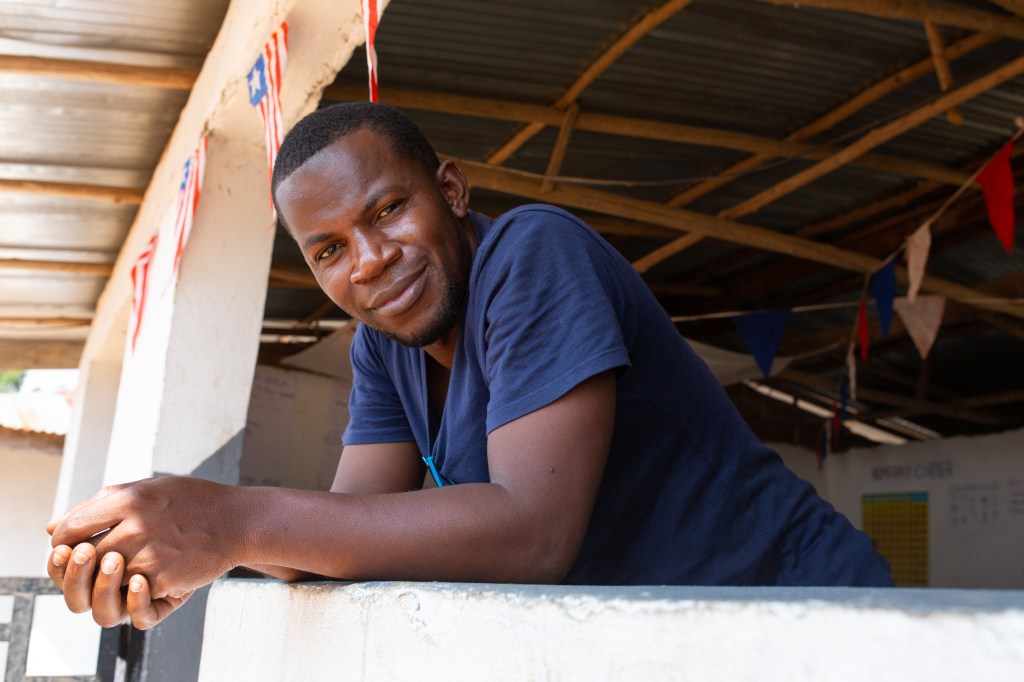
LOWAH, LIBERIA: November 27, 2019 – Luminos Liberia Project Manager Abba Karnga Jr. Carielle Doe for The Luminos Fund.
MS: What’s happening with education/learning in your community?
AK: Liberia’s Ministry of Education has ideas and strategies to help schools reach children and to help programs like us at the Luminos Fund to reach our students. One major thing they are concentrating on is radio programs. This is a great effort but I do see challenges because, in some places like the rural communities where Luminos works, either radio stations don’t reach, or families don’t have radios, or people haven’t heard about the program schedule so don’t know to listen. I’m afraid many students aren’t paying attention. I think everyone realizes the limitations, but radio is perhaps the best tool in the national toolkit to reach children.
Education is very, very slow in most of our communities. Some school systems have created lessons to send home but, anecdotally in my friend group, most kids aren’t really doing them. In Liberia, we know most learning happens at school. Parents are busy and may not be educated, so it’s hard to expect them to guide learning at home.
At the Luminos Fund, we offer a 10-month program to help out-of-school children catch up on their learning: to learn to read, write, and do math. In March, all our classes closed because of COVID. We decided to focus on learning that students could continue at home, as well as to distribute materials directly to our students’ homes: readers, math workbooks, and worksheets. We believe this is good practice for students, helps them continue engaging in education, and it’s useful for them to know their teachers are thinking about them. There are challenges, of course. I’d estimate that about forty percent of our facilitators (teachers) live in the community they serve and can easily assign lessons and check on students regularly by walking past their homes, which is great. In communities where there aren’t facilitators, one of our supervisors goes to check in with students once a week.
About forty percent of our facilitators live in the community they serve and can easily assign lessons and check on students regularly by walking past their homes
MS: What do you/your community need help with?
AK: Two things. First, food. There’s extremely high unemployment right now in Liberia. Most people depend on a daily hustle or contracts to survive, and much of that work has stopped due to the Coronavirus and lockdown. The Liberian government proposed a stimulus package some weeks ago, but it hasn’t moved forward. Families are really suffering.
Second, I wish children had more home recreation options during this period. Most homes in Liberia don’t have electricity, so TV isn’t realistic. Board games would be nice. It’s lockdown, but many kids still try to play outside and people have to chase them away. It’s risky. Parents are trying to make ends meet.
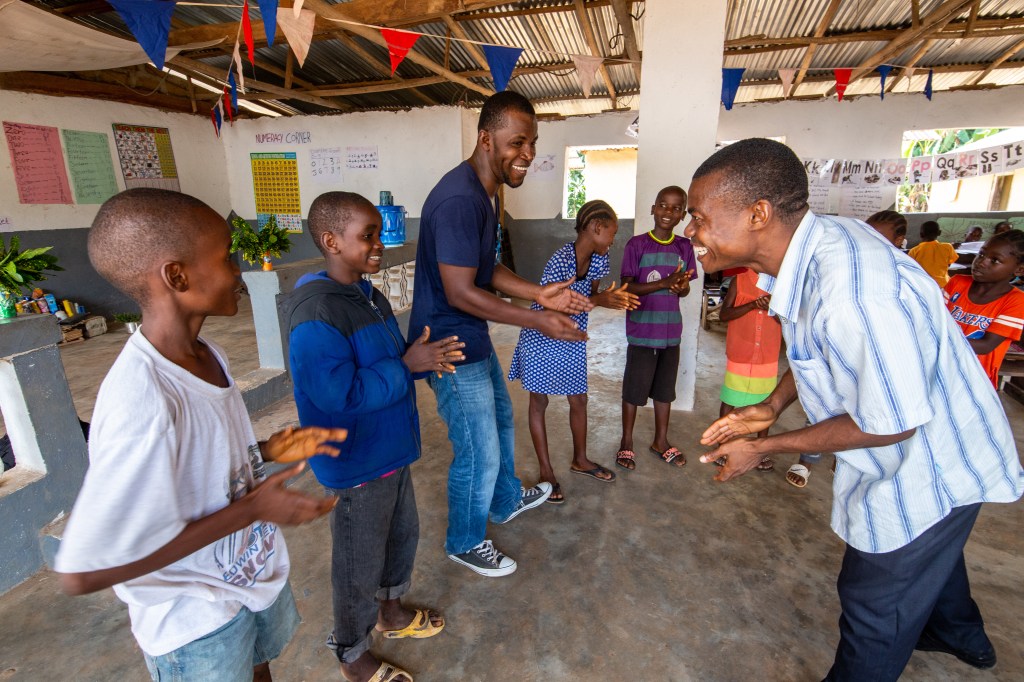
LOWAH, LIBERIA: November 27, 2019 – Abba Karnga, center, playing a learning game with students before the Covid-19 school closures. Carielle Doe for The Luminos Fund.
MS: What resources/links/supports have you found most useful?
AK: I’m excited about the support we’re witnessing from people in communities across Liberia, who have created local Coronavirus awareness teams. I’m on the team in my community. I think this community-level action comes, in part, from our experiences with Ebola a few years ago. Right now, we’ve set up handwashing sites. We ensure people coming into the community wash their hands and wear a mask. We go around with flyers (practicing social distancing) or loudspeakers on cars to raise awareness about COVID and share good information. It’s motivating and useful. I think it’s great when people mobilize themselves.
MS: What are you reading, watching, listening to that you would recommend to others?
AK: I listen to the Liberian Ministry of Health press releases that are shared every Friday on certain radio stations. They are credible and have the latest information.
MS: What have you found most inspiring?
AK: Our program! Luminos is an education organization but pivoted quickly to provide relief to students’ families during this crisis, including learning materials, soap, detergent, barrels for water, and food. Recently, we distributed food to over 1,600 of our students’ homes. For more than a week after, we received calls from parents. Some parents were literally crying in appreciation of what Luminos did. They said they never expected it and it was so timely. Some families were out of food and hadn’t known where they would find their next meal. We even heard from other community members and local leaders who heard what we did and called – not even parents. So, seeing the humanitarian aspect of this work is what’s most inspiring for me. I’m grateful we can do this for these families, and to be involved.
This week’s post comes from Alex J. Bowers who draws from his recent working paper published by the OECD using the newly released TALIS 2018 dataset. Bowers is an Associate Professor of Education Leadership at Teachers College, Columbia University.
Across countries, what is the role of school leaders and to what extent do teachers in schools agree with the leader on perceptions of their leadership practices? How many different types of leaders are there and how do these different types distribute across countries?
I examined these issues by analyzing the responses of over 152,000 teachers, across more than 9,000 schools with their principals, in 47 countries/economies on their perceptions of practices linked with the concepts of leadership for learning. I found three very different types of schools based on the alignment and mis-alignment of teacher and leader perceptions, and the results suggest that the proportions of the three different types of schools varies in important ways across national contexts.
I found three very different types of schools based on the alignment and mis-alignment of teacher and leader perceptions, and the results suggest that the proportions of the three different types of schools varies in important ways across national contexts.
Over the last few decades, researchers, policymakers, and school system leaders across the globe have shifted their conception of school leadership from the heroic single leader appointed at the top of the organization, to more distributed and shared conceptions of school leadership between teachers and principals. These new conceptions include leadership for learning, which encompasses aspects of transformational leadership – engaging teachers in the collaborative work of improving instructional practice – and instructional leadership – setting the vision, mission, and goals of the school, leading professional development, and supervising instruction. Importantly, leadership for learning also includes human resource development through mentorship and induction of teachers and strong management of resources to address specific student needs, community outreach, and student behavior and discipline.
To understand the extent to which teachers and leaders agreed across key aspects of leadership for learning, I analyzed data from the newly released TALIS 2018 survey items that asked teachers and principals similar questions around issues in their school of:
Student assessment
Feedback on teacher practices
Teacher self-efficacy and a common set of beliefs about teaching and learning
Professional development and trust
Professional collaboration around lessons
Mentoring and induction of teachers
Engagement of stakeholders, such as teachers and parents
A shared discipline climate
My results showed three different patterns of responses among teachers:
A high response type that has the highest responses across the eight domains and is the majority of teachers. These teachers have the highest work satisfaction, more often chose teaching as a career, and are the most experienced.
A low response type in which about a quarter of teachers responded with some of the lowest levels of perceptions of leadership for learning in their schools. These teachers reported the lowest job satisfaction and the highest workload stress.
A mixed response type in which about a fifth of all teachers reported high levels of self-efficacy, professional development, trust, stakeholder engagement, and a shared discipline climate, yet low levels of teacher feedback, professional collaboration, and mentorship and induction by the principal. These teachers have high job satisfaction and the lowest workload stress.
Second, I found three different patterns of responses between these three different types of teacher responders and their principals. In the first type, the principals have the highest responses across the leadership for learning domains, and thus are generally well aligned with the majority teacher type. In the second school pattern, principal responses are somewhat more in the middle providing a moderate response type. The third type of school, however, is typified by principals who disagree primarily around issues of mentorship and induction of teachers.
Importantly, while a large percentage of the school leadership research is grounded in the USA context and education research literature, the results from this analysis suggest that the USA may have only two of the three types of school leadership identified. The third type, in which leaders disagree more often across the survey, is a type of school that is more often found in countries such as Finland, as well as Portugal, Spain, Chile, Austria, and Argentina among others.
…it is intriguing that although the research that supports both theories of instructional leadership and leadership for learning, and the TALIS 2018 items, depends to a large extent on research from the USA context, the results of this study suggest that the USA has only two of the three types globally of leadership for learning schools… Given the global conversation on both leadership for learning, as well as policy in many nations attempting to implement instructional leadership theories and ideas, this finding that the United States is missing one of the three types of schools is intriguing. I will note, that I am not arguing here that the USA research is wrong, but rather that it may be incomplete, as USA researchers have not had access in their context to this third school type in the typology… The point that this model with the TALIS 2018 data captures the current global research issue that indicates that at the education policy level, mentorship by principals is “contested practice” across multiple national contexts provides a means to extend leadership for learning frameworks to include a wider global lens of schooling practice that includes these types of differences across national contexts (p.53-54).
Although no causal interpretations can be made, the results do provide an opportunity to surface previously unknown patterns and similarities across schools and countries, increasing the opportunity for collaboration and dialogue. For instance, in considering professional development and instructional improvement, the three different types of schools may need quite different types of supports and professional development resources. An intriguing professional development opportunity would be to bring together the principals and teachers from each of the three different school clusters, and provide them with the opportunity to collaborate, discuss, and surface the issues for instructional improvement that matter most to their type of school and their instructional practice with students in their community. Countries with similar patterns of leadership for learning across national contexts, may also find interesting and useful collaborative opportunities for improvement around shared interests and conceptions of teaching and school leadership.
Bowers, A.J. (2020) Examining a Congruency-Typology Model of Leadership for Learning using Two-Level Latent Class Analysis with TALIS 2018. Organisation for Economic Co-Operation and Development (OECD) Publishing: Paris, France. https://doi.org/10.1787/c963073b-en
This week’s post features an e-mail interview with Maureen McKenna, Executive Director of Education, Glasgow City Council. This is the fourth in a series that includes posts from Chile, from Japan, and from the Netherlands. The “A view from…” series editors are IEN’s Thomas Hatch and Karen Edge, Reader/Associate Professor in Educational Leadership at University College London’s Institute of Education
IEN: What’s happening with your family and friends?
Maureen McKenna: Since the UK and Scottish Governments announced lockdown, I have been working between home and the office. My youngest son has moved back home with us from Belfast and he has set up his IT equipment in the back room. He has managed to complete his probationary period with the company during this lockdown. My oldest son has been placed on furlough (a government scheme where you get 80% of salary) with a major sports company – it is hard financially for him but he is grateful to still be employed. My daughter is expecting her second child in early July and is desperate to get back to work in her nursery school but that is looking increasingly unlikely as the lockdown continues. She is helping her six year old son with his school work, completing the transition records for the four year old children in her key group to support them when they go to primary school in August and doing lots of on-line professional learning. We live outside the city so we are managing long walks most days. However, like most people, as this lockdown continues it is becoming more challenging to maintain work patterns.
IEN: What is happening with education/learning in your community?
MM: In Glasgow, in normal times we have around 68,500 children in our primary and secondary schools. A further 12,000 are in our nurseries. Almost all closed on 23rd March 2020. We have kept some nurseries and schools open for the children of key workers. We have only around 500 children coming in to the schools and about 400 in nurseries. This has been increasing recently and in the last week we have around 650 primary-aged children in schools. Glasgow has some of the highest levels of deprivation in the UK. Many of our families’ lives are impacted by poverty, alcohol and drugs. When we consider how to support our families we think of them as thriving, coping, just coping and chaotic. In normal times, most families are thriving and coping – some are just coping and a number are chaotic mainly due to addiction. In our ‘new normal’ fewer families are thriving and coping and notably more are just coping.
Wellbeing, compassion and care had to be our focus – if we got that right then learning would follow.
Our priority for Glasgow schools and nurseries was to ensure we remained connected – in a world where news bulletins were incessant in their spread of fear, raising the anxiety of all. Therefore, wellbeing, compassion and care had to be our focus – if we got that right then learning would follow. Heads of nurseries and schools were asked to create contact trees where each member of staff would have a named contact and put in place arrangements for staff to contact families regularly, particularly vulnerable families. This has worked well. Relationships have remained strong in the main which will be essential for the next phase. Phone calls, social media, Apps, STEM e-bulletins, and YouTube channels have all been used. Teachers have sent home lesson packs as well as “sensory boxes” for students with visual and hearing impairments. A partnership with the local city newspaper produces twice weekly two-page spreads with activities in math, in STEM, and other subjects to help families support learning at home, and some inserts into national news have all worked well – all with the consistent message of ‘we care’.
Before 23rd March we were part-way through the roll-out of 50,000 iPads to staff and pupils. We had a carefully planned programme of support for staff and pupils that launched in August 2019. Our ambitious plan had all secondary-aged pupils getting their own iPad, along with upper stage primary pupils. Other stages would have access to class sets of iPads. At the time, there were some in the educational world who criticised us for being so ambitious and told us via social media that digital learning was not all it was cracked up to be – now, there are some in the education world highlighting how awful it is that some children don’t have access to digital learning and what are we doing about it. Given our new situation, we have plans to accelerate the issuing of iPads to secondary staff and we are exploring how quickly we can accelerate the issuing of iPads to senior pupils in secondary schools, recognising that the whole of academic session 2020/21 is likely to be our new normal. So our staff are providing pupils’ work using on-line links; where this is not possible, packs of work are prepared for parents to collect or they are delivered to homes. Other staff are volunteering with our third sector partners to deliver much needed food parcels to families all across the city.
Now we are starting to think about recovery – the longer our children are out of school the wider the attainment gap is becoming between those from the least disadvantaged and the most disadvantaged communities. In the last ten years, we had made tremendous progress closing the attainment gap – I worry a lot about our children and young people who were so dependent on the structure and support of school.
IEN: What are you working on now?
MM: We need to continue to focus on the wellbeing of our school communities. In our recovery plans, we are planning on how we use the nurturing principles which are so embedded in our everyday work to help us build the confidence of staff, parents and pupils to re-establish learning. We are structuring our plans around Recovery, Resilience and Re-connection. Our psychological service has developed really good advice for schools and nurseries to support their planning. Wellbeing, compassion and care must continue to be central to our plans – recent events have been traumatic for even the most resilient of people – so it is critical that we take time to build resilience and think carefully about how we re-connect with each other, with children and young people and with families.
Recent events have been traumatic for even the most resilient of people – so it is critical that we take time to build resilience and think carefully about how we re-connect with each other, with children and young people and with families
This past week, we engaged with groups of headteachers from across the city to discuss what physical distancing will mean in their buildings, what steps will they need to take to re-connect and what will academic session 2020/21 look like in our ‘new normal’. We are gathering the findings from these discussions and we will share them more widely so that ideas are shared, promoting more discussion encouraging heads to start to include their staff. We have a strong culture of relational trust and collaboration across our schools and nurseries – this will help us build for the future. I am also linking with Directors of other local authorities in Scotland, sharing ideas while we try to find innovative and creative ways to continue to deliver high quality learning and teaching to our children and young people.
IEN: What are you most proud of?
MM: I am always proud of the achievements of the children and young people and the commitment of our staff. It is no different through this challenging time. We have staff who are continuing to come to work in the hubs we have set up to provide childcare. They are integrating learning with fun activities for the children. The numbers are increasing as support is offered to more of our just coping families. We also have staff who have worked with health colleagues to design face shields which can be made from 3D printers and other staff who are making scrubs out of bed linen, including my mum (she’s not a member of staff – she has just volunteered to keep herself busy!). They are working in our schools doing this great work. Three of our secondary schools are being used as food distribution centres through a partnership with third sector organisations. School staff are working with them to link with families in the greatest need. I have just ordered £25,000 worth of sanitary products which will be included in packs to families.
We will all have to dig deep in the coming months drawing on our own resilience but I know that we will come back just as strong, hopefully with a better sense of community. I know our staff will rise to the challenge – it will not be easy but education is too important. We know that education is key to reducing the impact of poverty on people’s lives so we have no choice – our children and young people continue to deserve the very best we can give.
This week’s post features an e-mail interview with Melanie Ehren, Professor and Director of Research of LEARN! at Vrije Universiteit Amsterdam. This post is the third in a series that includes posts from Chile and from Japan. The “A view from…” series editors are IEN’s Thomas Hatch and Karen Edge, Reader/Associate Professor in Educational Leadership at University College London’s Institute of Education.
IEN: What’s happening with you in Amsterdam?
Melanie Ehren: The Netherlands has been in ‘intelligent lock down’ for over a month now. Starting the 12th March, cafés, restaurants, hairdressers and many shops closed. Initially, schools were to stay open following advice from the Dutch National Institute for Public Health (RIVM) that there was a minor risk of children spreading the disease. Widespread concern over teachers’ health and national outrage however resulted in a closure of all primary, secondary schools and vocational schools on the 14th. I was at the Dutch Ministry of Education on the 12th to give a talk about ‘trust and accountability’ when the announcement was made. It was a surreal experience to leave the building at the end of the day and say farewell to colleagues, knowing that it would be a while before we would meet in person again. With so much time in lock-down the world has become quite small. In a short amount of time, all national and international events, meetings and conferences were cancelled and the days are now filled with a continuous stream of online meetings interspersed with attempts to write papers, develop proposals for new research (much of it now concerned with the consequences of COVID-19), finish a book on ‘trust and accountability’ with Jacqueline Baxter, and write up case study work from South Africa on the same topic. At LEARN!, as a research institute, we’ve worked hard to build a knowledge bank with our relevant research work. We have been publishing a series of articles on education and COVID-19 for parents and educators as well as a series of blogs on the relevant education news here and internationally. That work is informed by the weekly meetings I have on Friday afternoon with a rapid response network of practitioners in the field. The crisis is bringing unprecedented change to teaching here and to how schools are organized, and we have doubled up our efforts to map these changes as well as help schools and policy-makers to make the best evidence-informed decisions.
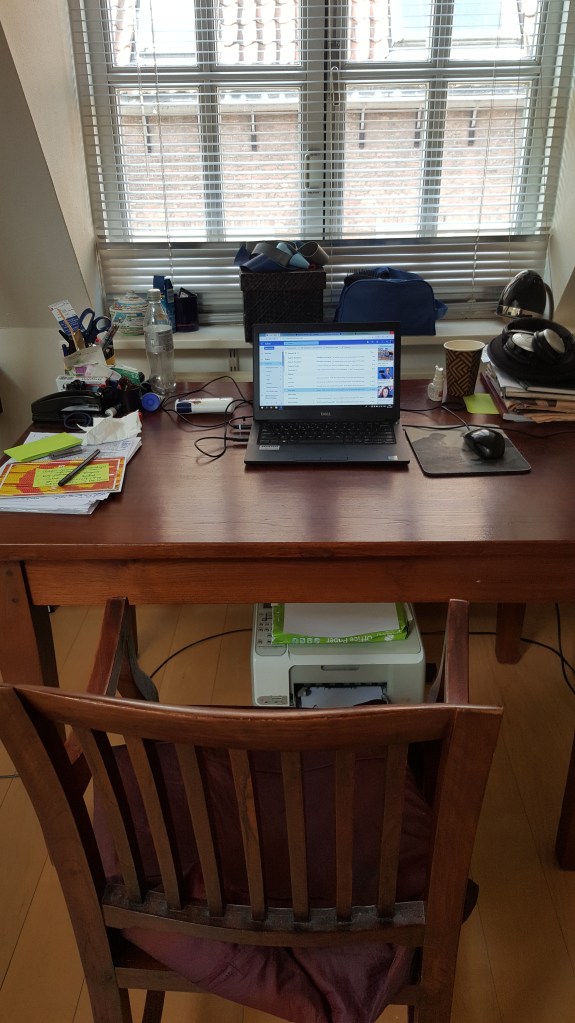
The view from the author’s desk, picture courtesy of M. Ehren
IEN: What’s happening with education/learning in your community?
ME: Our university also closed on Thursday 12th March, one day before I was teaching my group of students on the MA ‘Education and Innovation’. The first week was really hectic with moving all teaching online, finding out about which platform to use for online lectures, allowing for small break out groups. Most of us are now using Zoom with break out rooms for small group work. My own teaching ended after that first week but we are now preparing to move all our courses, even those that are scheduled for the fall online, including assessments with online proctoring. It has been a major challenge and learning curve for many, and we are collaboratively learning about how to teach well in an online learning environment where large seminars just don’t work that well and students don’t show up for them. There is also a real challenge in connecting to students who go off radar, where some also experience anxiety, a lack of motivation or opportunity to study due to living in small, shared and noisy housing or losing a sense of purpose when family and friends have health concerns.
There is a real challenge in connecting to students who go off radar, where some also experience anxiety, a lack of motivation or opportunity to study due to living in small, shared and noisy housing or losing a sense of purpose when family and friends have health concerns.
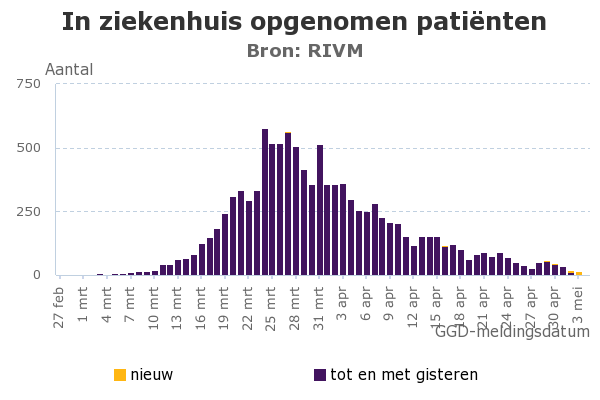
The National Institute for Public Health have reported that there are over 40,000 positive COVID-19 cases in the Netherlands, but with new hospitalization falling below 50 each day, they suggest that control measures appear to be working. Consequently, primary schools are now set to reopen again on May 11, though with lessons in smaller, alternating groups of students. Secondary schools will reopen on June 1.
ME: We have seen over the past weeks that schools have had to ramp up their offer of online teaching, rethinking their educational partnership with parents. Schools serving pupils from deprived backgrounds have had to think of ways in which to connect to these pupils, given that some did not even have a laptop at home and where many are still unable to understand how to access online teaching. Schools have worked with youth services and municipalities to reach these children and have come up with solutions that work best for the pupils involved. All these solutions have been highly context-specific as the reasons for why pupils are not involved vary and the best solutions capitalize on existing high-trust relations. After schools had a couple of weeks to adapt to the situation, more substantive questions have arisen, such as how to ensure the quality of teaching when schools remain closed for longer periods of time or when they only open in a phased manner and some type of blended online and classroom-based teaching is required.
IEN: What resources/links/supports have you found most useful?
ME: The problem is that there is just too much out there and it is hard to sift through all the resources, links and support. Many reports also highlight similar issues, particularly on how the current situation increased inequality. I find the weekly conversations with practitioners most helpful to understand the questions that still need answering and to hear alternative views. One of the practitioners in my network, responsible for inclusive education for example told me that some children are actually doing quite well in the current situation of home-schooling; the safety and structure of the home environment enables them to learn much better then in school.
The problem is that there is just too much out there and it is hard to sift through all the resources, links and support.
IEN: What are you reading, watching, listening to that you would recommend to others?
As my days are filled with so much COVID-19 related work these days I really want to read, watch and listen to something unrelated. I’ve downloaded archived podcasts like ‘Freakonomics’ and ‘Revisionist History’ and tend to listen these during long hikes in the weekend.