Category Archives: Interviews

The search for a more equitable education system in Chile

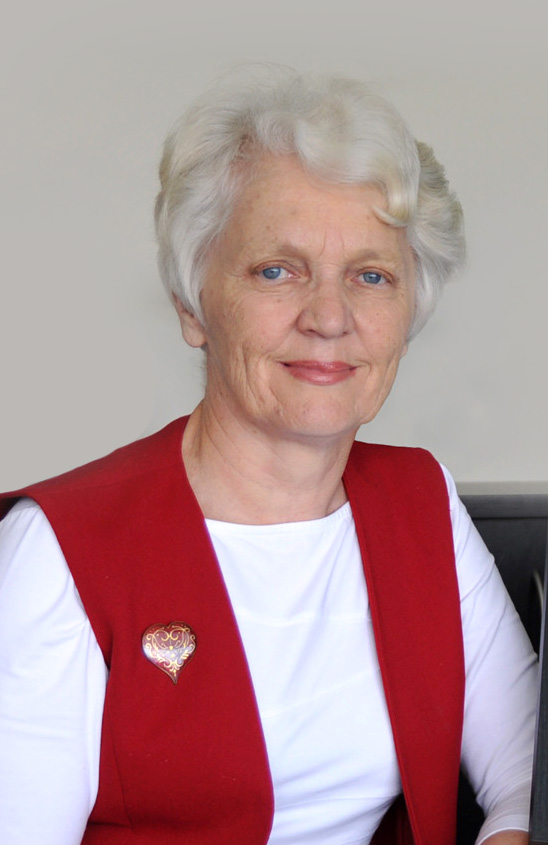
Recently, I spoke with Dr. Beatrice Avalos-Bevan, Associate Researcher at the Center for Advanced Research in Education, at the University of Chile, in order to follow-up on an earlier post about the recent reforms in Chile. In that post, we noted that reports on educational reforms in Chile made it seem that the country might be putting an end to private education. Diane Ravitch also commented on these reports and followed up with Mario Waissbluth. As we explained in our earlier post, while the country is not ending private education, President Michelle Bachelet aims to eliminate parental payments or co-funding of subsidized private schools and increase funding for all schools by implementing new education and tax reforms that would help pay for a more equitable education system.

In conversation with Dr. Avalos-Bevan, we spoke about the issues of educational inequality that have captured the attention of teachers and students, leading to the large and sometimes violent protests over the past decade. Beginning in 2006, protests were organized by secondary students during the first term of President Michelle Bachelet’s administration – a movement that came to be known as the “Penguin Revolution” (after the white shirts and dark jackets of students’ school uniforms). The protests became more numerous and violent during the following Sebastián Piñera administration. When Bachelet returned for a second term as President in 2014, she was elected on an education reform platform that was embraced by students and teachers, and she even brought some of the former student leaders in to work in her administration.

As Mario Waissbluth explained in our last post, the “first wave of legislation” was sent to Congress in May; however, students continue to be dissatisfied because initial actions did not consider as yet changes in the administration and improvement of municipal or public schools, although these have been announced for the second semester of this year. This has caused students and teachers to reconvene their street protests as a way to put pressure on the administration and call attention to their ongoing concerns this past June. Those protests ended with the use of tear gas on thousands of university students

School Funding and Student Protests

As Dr. Avalos-Bevan explained, in the current system there are public or municipal schools, subsidized private schools, and elite private schools. The concern over inequality stems from the fact that the subsidized private schools are able to collect money from the government while also charging tuition. As a result, these schools receive a level of funding that the public or municipal schools cannot attain. Over time, the student population attending public schools has been shrinking, as more families strive to place their children in well-resourced subsidized schools.

The student protests have honed in on school funding because the students personally experience the increasingly segregated school system and the differences in the quality of education provided by the public or municipal schools versus the subsidized private schools. They also pay attention to the country’s poor performance on international assessments, such as Pisa and TIMSS, and attribute it to the flaws they see in the system.

Dr. Avalos-Bevan explained that in order to create a more equitable system, all schools need to receive a higher amount of government funding. For this reason, President Bachelet has suggested increasing taxes by 3% of gross domestic product, and increasing the corporate tax rate to 25% (up from 20%). President Bachelet will also stop funding of current private subsidized schools that operate on a for-profit basis, making all subsidized primary and secondary education free, creating more universities and increasing kindergarten funding and pre-K institutions.

Quality and Teacher Education

Colegio de Profesores, the largest teachers’ union in Chile, joined the student effort and held a strike last month to protest President Bachelet’s reform efforts, which they say don’t go far enough to address the fundamental issues of inequality that plague Chilean schools. Despite what some have seen as indicators of significant reform, others are concerned that the process has not encouraged “adequate public participation in the bill-writing process.”

In addition to refining school funding in Chilean schools, Dr. Avalos-Bevan says that there is a similar problem with private universities and the teacher preparation programs they have created. In the years between 2004-2010, private colleges have increased and are now being criticized for what many identify as an increase in profits without sufficient evidence of quality education. These institutions are known to admit students to their teacher education programs with very low qualifications, who graduate without adequate skills. According to Dr. Avalos-Bevan, the government has created a test (the Prueba Inicia, or Start Test) that aims to assess the students’ content knowledge as they leave university, but the test is currently administered on a voluntary basis. Therefore, many teachers graduate without taking this assessment. Of the few who take this test, many perform poorly.

Despite this issue of teacher education, Dr. Avalos-Bevan believes the main problem has to do with teachers’ working conditions. Salaries are low compared with those who enter professions that require the same level of education (4-5 years), and 75% of a teacher’s contract time has to be spent teaching in the classroom (27 hours per week, which is the highest of all OECD countries, according to the latest TALIS survey), leaving little time for planning, grading, and meeting with other teachers. Dr. Avalos-Bevan would like to see the establishment of a teaching career, with specifications as to how teachers may progress, what kinds of salaries they may achieve, and paths for them to move into other positions in the education system. Currently, there is a strong civil society movement pushing for changes in this direction that expects to propose a plan for the President to consider.

Deirdre Faughey

Education reform in Mexico

Dr. Santiago Rincón-Gallardo

Dr. Santiago Rincón-Gallardo

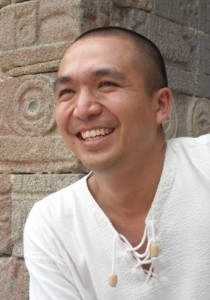
The following post is based on a conversation with Dr. Santiago Rincón-Gallardo. I reached out to Dr. Rincón-Gallardo to learn more about his work in Mexican schools and to better understand how the current political climate in Mexico has influenced the grassroots reform efforts of Redes de Tutoría, a small NGO that catalyzed a movement to transform conventional classrooms in public schools into learning communities where independent learning and tutorial relationships are practiced by students and teachers. An excerpt of our conversation appears below. Click here to read more of the interview.

As we have covered in earlier IEN posts, when President Enrique Peña Nieto was elected in 2012 he introduced education reforms that sought to address issues of educational quality and governability through what Andres Delich called a “mix of centralization and decentralization.” As covered in the Harvard Policy Review, lackluster Pisa scores have called attention to the fact while enrollment and basic skills have improved, repetition rates remain high and resources are distributed inequitably. The country’s system for hiring and paying teachers has been pinpointed as a problematic issue. In Mexico, all teachers join the union (SNTE), and the union assigns teachers to schools; teachers earn lifetime tenure after just six month of service. In an effort strengthen government control, President Peña Nieto bolstered the power of the national evaluation agency (INEE), and established higher professional standards and accountability measures for teachers. Peña Nieto also arrested union President, Esther Gordillo, on charges of embezzlement and money laundering, and teachers have been protesting the reforms everywhere from Mexico City to Guerrero.

In the context of all of this change, we wanted to learn more about how the new policies influence the practice of education and, as Dr. Santiago Rincón-Gallardo explains, the social and political aspects of pedagogical reform.

Deirdre Faughey:

Can you tell us about your work in Mexico, and the ways in which political changes in the country have been influential?

Dr. Santiago Rincón-Gallardo:

Let me tell you a little bit about the Learning Community Project (LCP), which provided the context for my research. In 2004, I was part of a small NGO called Convivencia Educativa, A.C. (now Redes de Tutoría, S.C.) that started working with a few teachers in a small number of schools, providing very intensive classroom-based support for teachers interested in turning their classrooms into Learning Communities. We started working on a very small scale, about eight schools total, working with voluntary teachers in middle schools that were built in marginalized communities with very small populations. We started working with some teachers there, providing coaching and training, but also spending a lot of time in classrooms working with them to turn their conventional classroom into a learning community. We would spend a whole week with each teacher every month in their classrooms, trying to understand what we needed to do and what we could do to turn the classrooms into Learning Communities.

Even though the scale was very small there was a strong impact on the engagement and excitement of the teachers and students who joined the project: students were learning better and they were gaining a lot of confidence to undertake individual study, to engage in research and learn on their own, but also to express their views and their learning in public, both in writing and in oral presentations. Maybe most importantly, they also started to work as tutors to other students who were interested in learning what the students had come to master.

The excitement that we started seeing in this small number of schools started to spread through the outreach of teachers themselves, and some local authorities who started to get excited to see what these young kids were capable of and how excited they were about learning. They started reaching out to other teachers in other schools, other local authorities in other regions, visiting other classrooms to showcase or display the practice, and then having other people come to their classrooms to see what was going on there. There was a lot of movement and excitement.

In four years we had moved from eight schools to about 400 schools that were engaged in this new practice of Learning Communities – we call it the Tutorial Relationships Practice. At that point the Deputy Minister of Education at that time visited one of our schools, and he was very impressed with what he saw there, in terms of the engagement and the skill of the students, so he decided to adopt the model and bring it to scale to 9,000 schools all over the country.

At the same time that the movement at the grassroots was taking place, one of the key leaders of the NGO, whose name is Dalila López, was invited to join the Department of Innovation at the Ministry of Education at the national level, and she was able to bring in people from our organization to the ministry. So we were able to create a team within the Ministry to support the kind of work that we felt was worth supporting, which was developing the conditions for teachers to learn the new practice of tutorial relationships and disseminate it to other places. What the leadership at the top did was create opportunities and mobilize infrastructure for teachers to be able to visit other schools in their regions or in other states so that there was the exchange of information and practice all over the country. We found really good results really quickly.

The large-scale project started in 2010. By 2012, the schools that had data available, but also the ones that had been engaged in this model for a long time, since 2010, increased the percentage of kids scoring with an excellent levels, at a faster pace than and surpassing the national average. This happened in 2012, everything was moving very smoothly and powerfully. There has not been any other program or initiative in Mexico that has shown a clear and significant impact on student learning, even as measured by standardized tests. We started getting a lot of international attention. We had Richard Elmore from the Harvard School of Education, come to visit our schools. He experienced being tutored by a girl from a rural community, Maricruz, a 13 year old girl who was just amazing at guiding him through his own thinking, and identifying some of the weaknesses in his own thinking about how to solve a geometry problem. She was very masterful in supporting him. Throughout that visit, Richard and I were able to write a paper for the Harvard Education Review that discusses this model, and he got very excited about it. He’s been talking about it in his classes, and in 2012 and 2013 we welcomed about 10 students from Harvard’s Educational Leadership Doctorate program to come and learn about the model and report back to their cohorts about what they have learned. We had that for two years, so in total we have had 21 visitors or so. The work has been attracting the attention of several other international experts.

What’s happened since that pinnacle of performance? We had a change in administration at the presidential level, and also a change in the Ministry of Education. They came with a very clear agenda of cutting down any relationship with union leadership, in particular Esther Gordillo and her people. And it so happened that the Deputy Minister who had been supporting this work at the national level, and the one who invited us into the Ministry, was the son-in-law of Gordillo, the leader of the teachers’ union. As soon as this new administration came, they decided to cut down any relationship with them which meant also kicking out the whole team that had been building and supporting this work from the top. So the the leaders who launched and disseminated the Learning Community Project are again grouped around a small NGO called Redes de Tutoría, and they’ve continued to support the work on a smaller scale, but at a deeper level. Right now they’re working with five states that have expressed very clear interest in continuing this work. So the idea is to still go to scale – not at the national level, but at the state level. The strategy is to create “Regions of Excellence,” where you would have several schools who are engaged in this practice and sites where people could come and see what’s possible but also having this as a professional development site for others interested in learning the practice. We’re not entirely sure how many schools are going to continue with this work. As we are putting the pieces together we are trying to find ways in which we can continue to support teachers who are committed to this work but not getting a lot of support from the state-level authorities. We are trying to find a strategy to help continue this work. We’re doing the lobbying that we can because we know that there is some vibrancy in this work that won’t disappear unless somebody wants to really shut it down. I don’t think that’s going to be the case, but we don’t have the political backing at the national level so that teachers can feel free to innovate. The practice has gone underground, it’s invisible but it’s still there.

Please continue reading.

Interview with Louise Stoll


Dr. Louise Stoll

Dr. Louise Stoll

Louise Stoll is Professor of Education at the London Centre for Leadership in Learning at the Institute of Education, University of London, as well as a freelance researcher and an international consultant. Her research and development activity focuses on how schools, districts and national systems create capacity for learning and improvement, focusing especially on leadership, learning communities and learning networks. This interviewwhich is part of the Lead the Change Series of the American Educational Research Association Educational Change Special Interest Group, appears as part of a series that features experts from around the globe, highlights promising research and practice, and offers expert insight on small- and large-scale educational change. Recently, Lead the Change has also published interviews with Diane Ravitch, and the contributors to Leading Educational Change: Global Issues, Challenges, and Lessons on Whole-System Reform (Teachers College Press, 2013) edited by Helen Janc Malone, have participated in a series of blogs from Education Week.

Centralized-Decentralization emerging in Singapore

In this post, Corresponding Editor Paul Chua briefly describes an emerging conception of “centralized-decentralization” in Singapore’s efforts to enable schools and educators to support the development of students’ 21st century skills. The post grows out of Chua’s recent conversations with IEN editors Thomas Hatch and Deirdre Faughey, and with Dennis Shirley, who was visiting Singapore to discuss some of his work on convergence pedagogy and mindful educational change.

News and research on education around the world often focuses on issues of autonomy – the extent to which schools and the educators in them have flexibility in decision-making—and the role of central authorities in dictating practices and maintaining system quality.

In Singapore, while strong central decision-making was credited with contributing to high performance on international tests like TIMMS and then PISA, concerns were also raised about the degree of responsiveness and innovation that such a centralized system could support, especially when trying to shift schools to a focus on 21st century skills.

As a consequence, the Singapore education Ministry started to give increased autonomy to schools to make local decisions.   For example, the Ministry developed the Teach Less, Learn More (TLLM) initiative to take the emphasis off rote learning and to encourage schools to develop learning experiences that engage students, promote critical and creative thinking, and support students’ holistic development.  As part of the TLLM initiative, schools were given the flexibility to develop their own pedagogical approaches (e.g. inquiry-based learning approaches, problem-based learning, Socratic questioning) as long as those approaches were aligned to the intent of TLLM.  The Ministry also created “white spaces” in the schedule in which schools were free to develop their own unique courses and learning programs, such as “Introduction to Film Studies” and the like.

At the same time, however, concerns about maintaining system coherence and quality also led the ministry to retain the layer of supervision (centralization) between the Ministry and schools by creating the position of superintendent.  Among other tasks, superintendents were charged with forming and facilitating principal learning communities designed to help school leaders to deepen their understanding of the rationale of the policies to be implemented.  In this way, the Ministry hoped to lessen the pressure on schools to comply with every detail of policies and to encourage them to make adaptions for their local context that were still consistent with the overall intent of the policies.

Since that time, Singapore has pursued several other policies that reflect this centralized decentralized approach (or what Charlene Tan and Pak Tee Ng have described as decentralized centralism). For example, for many years, Singapore maintained relatively high class sizes of about 40 students per teacher. When the Ministry decided to reduce class size several years ago, however, it did not dictate a particular size for all classes. Instead, it created a new matrix of student-teacher ratios that determined the overall allocation of teachers to schools, but left schools with the flexibility to determine the optimal class size for different kinds of classes. Thus, some schools have decided to have larger classes of higher ability students while creating smaller sizes for students who are making progress more slowly (e.g. 20 students per teacher or even smaller like 10 to 15 students per teacher).

Thus, centralized decentralization is built on the premise that decision making needs to be made “on the ground” by principals and teachers since they are closest to the students and can make the decisions that respond to local conditions.  However, much as the flip side of increasing autonomy has been increasing accountability for results, from the Ministry’s perspective, centralized guidance (such as  the parameters of the schools student-teacher ratio) is needed to maintain some semblance of coherence as a system. Ultimately, the approach is designed to enable the system to reap all the benefits associated with tight coupling and a strong central authority without overly constraining the local actors, which would deprive the system of innovation and creativity.  Making centralized decentralization work, however, may well depend on the professionalism and capacity of superintendents and school leaders to resist rote compliance and learn how to make local adaptations that do not stray too far from policymakers’ expectations.

Centralized decentralization: the calibrated application of the forces of centering and calibrated release of the force of centering (resulting in decentering) in order to achieve coherence and optimal results and outcomes for a system. The approach rests on the ability of the policy maker to anticipate the responses of schools to the policy, to understand how the policy sits within the system, and to calibrate the level or point at which to apply the system’s constraining force.

The Global Intensification of Supplementary Education

The following post was originally published by the Asia Pacific Memo on February 18, 2014.

Memo #271

Featuring Julian Dierkes

Recently, Ee-Seul Yoon of the Faculty of Education at UBC in coordination with the Asia Pacific Memo sat down with Dr. Julian Dierkes, Associate Professor and Keidanren Chair in Japanese Research at UBC’s Institute for Asian Research, to pose a few questions about Professor Dierkes’ recently co-edited volume, Out of the Shadows: The Global Intensification Of Supplementary Education, which was published in December 2013.

In our discussion, Dr. Dierkes presents an overview of the changing status and burgeoning popularity of supplementary education (that is, informal education received outside the traditional classroom) and what ramifications this is having on students, teachers, parents, education policy, and the political process—in Canada, Japan, Asia and even more globally. Finally, he touches upon how supplementary education itself is evolving as well as the present status of academic interest in the phenomenon of informal education.

Julian Dierkes is an Associate Professor and the Keidanren Chair in Japanese Research at the Institute for Asian Research at the University of British Columbia, where his research interests are in the area of comparative political sociology and the sociology of education.

Links

Janice Aurini, Scott Davies, and Julian Dierkes, Out of the Shadows: The Global Intensification Of Supplementary Education (Emerald, 2013)

Jukupedia, “Shadowing Education,” February 2014

Julian Dierkes, “Is South Korea’s Hyper-Education System the Future?,” Asia Pacific Memo #2

Husaina Kenayathulla, “Private Tutoring in Malaysia: Regulating for Quality,” Asia Pacific Memo #126

Education Reform in Japan

Dr. Christopher Bjork’s most recent publication, Japanese education in an era of globalization, which he co-edited with Gary DeCoker, was published in May of 2013 by Teachers College Press. The following post is based on a conversation in which he discussed educational reform in Japan.

As Dr. Bjork explained, education reforms in Japan in the 1990s aimed to “relax” strict educational standards and policies that many viewed as contributing to anti-social student behaviors, such as bullying and violence. In an attempt to relieve students of stress caused by high stakes testing, long hours spent in school, and rote learning, Japan implemented progressive, student-centered policies that privileged creative thinking and collaboration.  These changes were designed augment student interest in learning.

Teachers tended agreed with the goals of the relaxed education (yutori kyoiku) reforms, but often had difficulty implementing the initiatives in their classrooms.  Secondary instructors, in particular, were reluctant to diverge from practices that had proven effective in the past.  Dr. Bjork attributes this resistance to the cogent influence of entrance examinations, which act as gatekeepers and determine students’ future level of education attainment. Concerns about student performance on these exams made teachers reluctant to adopt strategies that they saw as unrelated to the content of the exam, and parents less willing to rely on the school system to sufficiently prepare their children for the challenges that lay ahead. As a result, many parents looked to private tutoring programs to fill what they saw as a gap in the children’s education.

Today, despite the country’s superior performance on the 2012 PISA test, the conservative government of Japan has a new agenda for overhauling the education system, which includes improving English fluency among teachers and students, teaching morals, and revamping the college entrance exam. A flurry of reports over the past few months also show that there is much debate over the government’s plan to revise curricula to state Japan’s territorial claims over disputed islands in teaching guidelines.  Although some vestiges of the relaxed education policies remain in place, their impact fell far short of the Ministry of Education’s initial projections.  The goal of alleviating pressure in the schools proved more ambitious than had been anticipated.

Interview with Beatriz Pont

Beatriz Pont

Beatriz Pont

Beatriz Pont is Senior Education Policy Analyst in the OECD Education Directorate. At the OECD since 1999, she has focused on education policy analysis and advice. She has managed and contributed to a range of education policy comparative reviews in the area of school improvement, school leadership, equity, adult learning and adult skills. This interviewwhich is part of the Lead the Change Series of the American Educational Research Association Educational Change Special Interest Group, appears as part of a series that features experts from around the globe, highlights promising research and practice, and offers expert insight on small- and large-scale educational change. Recently, Lead the Change has also published interviews with Diane Ravitch, and the contributors to Leading Educational Change: Global Issues, Challenges, and Lessons on Whole-System Reform (Teachers College Press, 2013) edited by Helen Janc Malone, have participated in a series of blogs from Education Week.

Education reform in East Asia

Dr. Philip Hallinger

Dr. Philip Hallinger

This post is drawn from a conversation with Dr. Phillip Hallinger, the Joseph Lau Chair Professor and director of the Asia Pacific Centre for Leadership and Change at the Hong Kong Institute of Education.  He spoke with us about some of the issues surrounding the last two decades of education reform in East Asia, which he addresses in his most recent article, Synthesis of findings from 15 years of educational reform in Thailand: lessons on leading educational change in East Asia,” published in the International Journal of Leadership in Education: Theory and Practice. 

East Asian countries have been actively pursuing education reform over the past two decades. Largely, goals of such reforms have included student-centered learning, teaching with technology, school-based management, and teacher empowerment – ideas that have originated in either the US, the UK, or Australia, and travelled around the world on what Hallinger calls “the winds of globalization.” As Hallinger explained, where Asian societies years ago were once much more isolated, cultural and national boundaries today are permeable. While this “policy borrowing” can be interpreted as a move to build a more modern education system, it belies a “cultural mismatch” that can render the policy ineffective in practice. As Hallinger (2013) suggests, “where educational changes conflict with fundamental cultural values, the process is likely to encounter even greater resistance and require a longer time frame for implementation” (p. 17).

Hallinger’s (2013) recent article, written with Darren A. Bryant, focuses on Thailand and identifies lessons that can apply broadly to the region and beyond. As Hallinger and Bryant explain, Thailand aimed to expand access to education during the 1990s by increasing compulsory education from six to nine years, and finally to 12 years of free schooling, in an effort to improve the knowledge and skill level of the labor force. However, with the increase in access came concerns over educational quality, and in 1999 the National Education Act (1999) was passed, setting ambitious new goals for teaching and learning that many today feel the country has not attained in the ten years since the initial implementation of the reform. Some have also  linked the country’s recent social unrest to the perception of unequal access to quality education.

Hallinger and Bryant also note that in countries such as Malaysia, Hong Kong, Singapore, China and Taiwan, there is a similar gap between the vision of educational change and the reality on the ground. In Thailand, for example, despite the government directive that all teachers implement student-centered learning, a survey of 1800 principals found that only about a one-third reported that their teachers actively engaged the reforms in their teaching practice. Hallinger attributes this disappointment to “over-promising,” rather than faulty strategy, and explains that a successful implementation would require more than a decade in any country. In Thailand, “local factors,” such as budget constraints, cultural mismatch, and political instability, have further tested reform efforts.

Interview with Richard Gerver

dbnews_Richard_Gerver

Richard Gerver

In 2005, Richard Gerver won the prestigious School Head Teacher of the Year Award in Britain for leading one school from the brink of closure to innovation and success. This interview, which is part of the Lead the Change Series of the American Educational Research Association Educational Change Special Interest Group, appears as part of a series that features experts from around the globe, highlights promising research and practice, and offers expert insight on small- and large-scale educational change. Recently, Lead the Change has also published interviews with Diane Ravitch, and the contributors to Leading Educational Change: Global Issues, Challenges, and Lessons on Whole-System Reform (Teachers College Press, 2013) edited by Helen Janc Malone, have participated in a series of blogs from Education Week.

A view from Australia

Dr. Leila Morsy Eckert

Dr. Leila Morsy Eckert

Recent reports from Australia question how the changes outlined in the Gonski school funding reform would be impacted by the outcome of the nation’s recent election, in which Prime Minister Julia Gillard was replaced by her opponent, Kevin Rudd. We asked Dr. Leila Morsy Eckert, a Lecturer in the School of Education at the University of New South Wales, to provide us with some background information on the reform effort, different perspectives on the issue, and the implications of this reform for education in Australia.

What does this reform mean for education in Australia? How will it change?

The Better Schools: A National Plan for School Improvement, colloquially known as the Gonski reforms, are in principal meant to account for the real cost of educating a child. Funding is allocated to schools on the basis of the average cost of a student’s education. A base amount of funding will be allocated per child. Additional funding, or “loadings,” will be given to schools based on whether the children who attend that school are, on average, disadvantaged. Disadvantage will be measured on the basis of socio-economic status, language background other than English, indigeneity, rural or small schools, and disability. Funding is sector-blind, meaning that the Catholic Schools Sector and the Independent (Private) Schools Sector will also receive money. 

What are some of the different perspectives on the issues? 

Overall, there is consensus that the current funding system is unclear and unequal (much funding is duplicated, and it is difficult to trace where funding is coming from and where it is going to). However, Catholic School and Independent School representatives have been concerned that they will lose money under the new policy. Others still believe that the premise of the new funding mechanism itself is flawed. Indeed, the Federal Government in Australia funds non-government schools. Many education researchers believe that this has resulted in a system where any family that can afford to send their child to a private or Catholic school does so. One consequence is that public schools have become a place of last resort for all those who cannot afford a private education. The Gonski reforms continue this trend of federal funding of non-government schools. 

What do you expect will be happening in the near future? 

While the reforms have passed in the Senate, it is unclear what will happen next. Politically, there has been a change of leadership—Julia Gillard, the driving force behind the reforms, was replaced as Prime Minister last week by Kevin Rudd, who supports the reforms but to a less fervent degree than Gillard. Also, not all Australian states and territories have signed up to the federal reforms. So, it may be a slow start for any actual change to roll out across the country. 

For more information:

Independent schools sign up to Better Schools plan in $1bn deal

Giles digs in on Better Schools funding scheme

Gonski reforms in ‘chaos’: Pyne