Tag Archives: Teaching

Lead the Change Interview with Patricia Virella, Tayeon Kim, Lauren Bailes, and Elizabeth Zumpe

This month’s Lead the Change (LtC) interview features the new leaders of the Educational Change Special Interest Group of the American Educational Research Association, Patricia Virella, Tayeon Kim, Lauren Bailes, and Elizabeth Zumpe. This week IEN shares excerpts from those interviews focusing on the connections between their work and the work of the SIG and the wider field of educational change. The LtC series is produced by Elizabeth Zumpe and sponsored by the Educational Change SIG. A pdf of the full interview will be available on the LtC website.

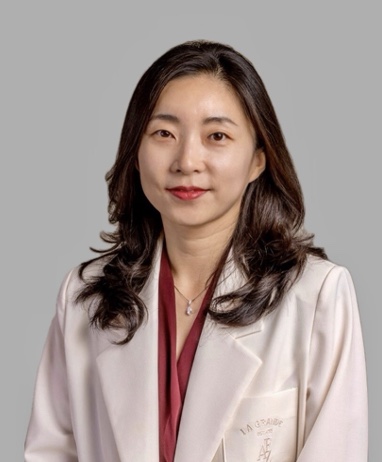
Lead the Change Interview with Patricia Virella

Lead the Change (LtC): What are some of the ideas that you hope the field of Educational Change can learn from your work to inform practice, policy, and scholarship?

Patricia Virella (PV): Over the past year, I prioritized immersing myself in school environments, spending approximately 30 days actively engaging with students, teachers, and staff. This hands-on experience allowed me to gain profound insights into the unique challenges that students are facing in today’s educational landscape, including mental health issues, ongoing crises, and persistent inequities. Witnessing the resilience and joy demonstrated by students in the face of these challenges was incredibly inspiring. It reinforced the importance of understanding the realities of schooling in the present moment. All of us must pause and truly comprehend the current state of education before forging ahead with our plans and initiatives. This firsthand exposure has deepened my commitment to advocating for comprehensive support systems that address the multifaceted needs of students and educators alike. It has also fueled my passion for promoting holistic approaches to education that prioritize well-being and equity. I am driven to leverage these insights to inform my work and to champion initiatives that empower schools to create environments where every student can thrive.

LtC: What excites you about the field of Educational Change, and how might we further those ideas through the work of the Educational Change SIG?

PV: The idea of change is inherently exhilarating. While change often implies embracing entirely new approaches, I also ponder whether it involves a return to foundational concepts and theories that have yet to manifest their full potential, such as liberation, transformation, and experiential learning. This dual perspective prompts me to consider how we, as a collective of academics, can effectively support change that embodies the spirit of equity. I recognize that achieving equity can sometimes feel elusive, but it does not have to remain this way. My commitment to exploring the multifaceted nature of change and equity has deepened my resolve to advocate for inclusive and transformative practices within academic and institutional settings. By critically examining the intersections of change and equity, I am dedicated to fostering environments where all individuals have equal opportunities to thrive and contribute meaningfully. I am driven to channel these reflections into actionable strategies that promote systemic change and advance the realization of equity within educational and academic spheres.

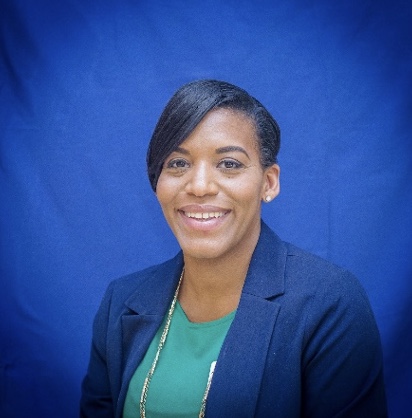
Patricia Virella

Dr. Patricia M. Virella is an Assistant Professor in the Department of Educational Leadership at Montclair State University. Dr. Virella’s research focuses on implementing equity-oriented leadership through leader responses, organizational transformation and preparation. Dr. Virella also studies equity-oriented crisis leadership examining how school leaders can respond to crises without further harming marginalized communities.

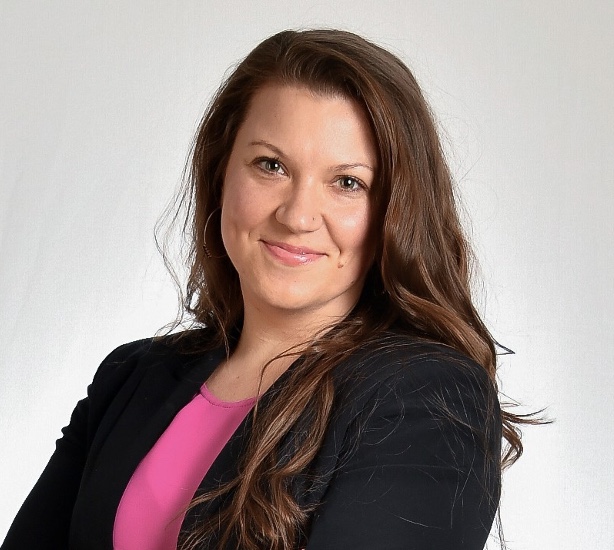
Lead the Change Interview with Taeyeon Kim

LtC: What are some of the ideas that you hope the field of Educational Change can learn from your work to inform practice, policy, and scholarship?

TK: My research offers several contributions to the field of Educational Change, focusing on three main areas: revisiting policy through the voices of equity leaders, critically examining policies and systems by centering racially and linguistically marginalized communities, and promoting cross-cultural dialogue using transnational and decolonial perspectives. Given that my work was previously featured in the Lead the Change series (See the Lead the ChangeOctober issue of 2023), I would like to highlight some insights from my recent publication on leadership learning.

As a leadership educator, I view learning as a core tenet of leading educational change. My scholarship on educational leadership and policy has led me to explore how to guide meaningful learning for aspiring leaders who pursue equity and social justice. My recent work, published in the Journal of School Leadership (Kim & Wright, 2024), presents a conceptual-pedagogical framework that on guides students through emotional discomfort when learning about inequities and injustice. This research underscores the importance of emotion in learning, which can drive change at both individual and social levels. When negative emotions are not properly addressed and processed, meaningful learning cannot occur, undermining leaders’ efforts to redress inequities, injustice, and harm. However, with appropriate guidance, emotional discomfort can be a valuable source for transformative learning and changes (see Mezirow 1997). Traditional scholarship on educational change often relies on rationalistic approaches; however, my recent study emphasizes the role of emotions and the holistic aspects of learning in effecting change. It also highlights the crucial role of facilitators and educators in developing equity leaders. 

Thus, my work reveals that effective leadership learning involves addressing the emotional dimensions of learning about social justice issues. By integrating these emotional and holistic aspects, educational leaders can foster more profound and lasting changes in their practice, policy, and scholarship. This approach can help prepare leaders, better equipping them to navigate and address the complex challenges of inequity and injustice in education.

LtC: What excites you about the field of Educational Change, and how might we further those ideas through the work of the Educational Change SIG?

TK: The field of Educational Change is particularly exciting due to its emphasis on partnerships and interdisciplinary approaches, and its appreciation for international perspectives. As a transnational scholar, I often notice that AERA’s discourse tends to be US-centric and predominantly features scholarly thoughts and contexts published in English. This observation underscores the importance of the Educational Change SIG’s foundations and history, as it can potentially extend the boundaries of our educational scholarship.

To advance the field, I urge educational change scholars to critically engage with issues of geopolitics, coloniality, and global whiteness (e.g., Chen, 2010; Mignolo, 2008; Leonardo, 2002) that influence knowledge creation and dissemination. When we embrace “interdisciplinary” and “international” perspectives, it is crucial to interrogate whose knowledge is being prioritized and how it is being represented.

With our new leadership team, I aim to extend the field of Educational Change through several focuses. First, I urge the field to integrate diverse onto-epistemological understandings. The field can benefit significantly from including non-Western, indigenous, and other marginalized ways of being and thinking. By incorporating these perspectives, we can challenge the dominance of Eurocentric paradigms and enrich our understanding of educational practices and policies. Second, educational change scholars need to consider the power dynamics involved in knowledge production and dissemination. This means questioning who has access to academic platforms, whose voices are amplified, and whose are marginalized. Future activities organized by the Educational Change SIG could better support multilingual scholarship and inclusive platforms that are accessible to scholars from various regions and backgrounds, ensuring that a variety of voices are heard and valued. This will eventually promote cross-cultural and transnational collaborations. Finally, integrating critical theories such as postcolonial theory, critical race theory, and feminist theory can provide valuable lenses through which to examine and address systemic inequities in education. These theories can help scholars and practitioners understand the historical and structural factors that perpetuate educational inequalities and identify pathways to more just and equitable educational systems.

By taking these steps, the Educational Change SIG can play a pivotal role in promoting a more inclusive and globally informed approach to educational change, ensuring that the field continues to evolve and respond to the complex needs of educational communities worldwide.

Taeyeon Kim

Taeyeon Kim is an assistant professor in the department of Educational Administration at the University of Nebraska Lincoln. Her scholarship explores intersections of policy and leadership, with a particular focus on how educational leadership can challenge unjust systems and humanize educational practices to empower marginalized students and communities.The Educational Change SIG would like to acknowledge and congratulate Taeyeon Kim as the recipient of the 2024 Educational Change SIG Emerging Scholar Award. Her work was featured in the Lead the Change in October, 2023.

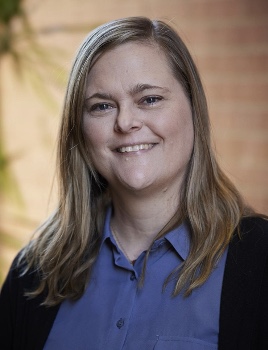
Lead the Change Interview Lauren Bailes

LtC: What are some of the ideas that you hope the field of Educational Change can learn from your work to inform practice, policy, and scholarship?

LB: I aim to share with the field a clear emphasis on systems change for equity, especially in the ways we think about who leaders are. My research focuses on identifying the systems, practices, and mindsets that perpetuate inequities in the careers of educational leaders. Most of my work problematizes the notion of ‘pipelines,’ especially in educational leadership and how career experiences like preparation, promotion, and evaluation are differentially distributed by race and gender (e.g., Bailes & Guthery, 2020; Bailes et al., 2023). When we consider careers to be pipelines, we might wrongly believe those pipelines are neutral, and that everyone has an equal chance of entering or flowing through the pipeline. That is fundamentally untrue: Women and People of Color, as well as people with intersectional identities, experience sorting at every career juncture, even when they are equivalently qualified relative to white or male peers. Further, these career inequities often result in adverse outcomes for faculty and students—especially faculty and students of color. 

A second thing I hope to share is the critical importance of partnering with current practitioners and myriad ways of incorporating their perspectives to deepen, clarify, and implement approaches to and findings of research. The profound systems changes required to shift unjust organizational practices are unlikely to come only from the academy. While research like mine can and does inform practice, I value, seek, and incorporate the perspectives of folks who have experienced injustice in their career trajectories. They are uniquely capable of showing me what I might be missing and how to better capture and learn from what they have experienced or what they know might work to change the system. I also want to be clear that there is much I am still learning from colleagues in this SIG and throughout our field. I’m looking forward to deepening those connections and bringing my own learning to bear on my research and partnership efforts to shift systems in service of equity. 

LtC: What excites you about the field of Educational Change, and how might we further those ideas through the work of the Educational Change SIG?

LB: I think there is a broad appetite—among researchers, policymakers, practitioners, and families—for change in education. That appetite often results in misguided and harmful movements toward neoliberalism, isolationism, or the erosion of schooling as a public good, but there may be opportunity for broad and supportive coalitions for some of the interventions, innovations, and structures that do preserve and enhance equitable and accessible education for every student. 

Lauren Bailes

Lauren P. Bailes is an associate professor of education leadership in the School of Education at the University of Delaware, where she is the coordinator of UD’s EdD in Educational Leadership. After teaching middle school language arts in New York City, she earned her doctorate at The Ohio State University. Now, she researches school leadership preparation, promotion, and evaluation; school organizational characteristics; and the intersection of school leadership and policy. Lauren’s favorite days are still the ones spent in schools alongside teachers and leaders. 

Lead the Change Interview with Elizabeth Zumpe

LtC: What are some of the ideas that you hope the field of Educational Change can learn from your work to inform practice, policy, and scholarship?

EZ: Prevailing ideas about Educational Change tend to come from scholars and policymakers who work far from the realities of schools. Too often, these ideas rest upon wildly false assumptions about existing capacities in schools, overlooking how many operate amid chronic adversity. Chronic adversity occurs when schools regularly face inadequate resources to meet their community’s needs, unproductive pressures to improve, and a lack of support for the profession. When designed from afar, educational reforms tend to presume that school challenges stem from educators’ ‘lack’ of motivation or competence and that improvement thus depends upon intensive intervention from the outside. 

My research offers a different perspective: school improvement amid adversity as a struggle to develop collective agency (Zumpe, 2024). Agency is an inherent driver of human motivation and of educational improvement. But agency can become constrained when people are regularly subjected to demands for which they do not have adequate resources and experience inevitable failure.

As part of one RPP described above, I collaborated closely with a school facing challenging circumstances (Zumpe, 2024). At the start of our collaboration, we realized that our partnership’s theory of action had not considered this school’s needs and context. Across years of being labeled as ‘failing’ and facing daily struggles to ‘reach’ students and cover classrooms, the school’s leaders had tried various initiatives to improve. However, most of their efforts faltered and sputtered out, leaving conflict and cynicism behind.  By their own account, the faculty struggled with the “basics” to get along well enough to launch and sustain improvement. 

When the school’s leadership team invited me to help, I tried to capture their efforts to develop a foundational capability to work together to solve problems, which I called collective agency. Through participant observation with several work groups, I traced how their collective agency became enabled and what shut it down. I also launched and studied a new group using action research.

Comparing groups, I found that efforts to develop collective agency collapsed when educators faced overwhelming and complex problems for which they could see no solutions within reach. In these situations, they avoided their problems, pointed fingers at each other, and expressed a sense of helplessness that nothing could be done. On the flip side, efforts to develop collective agency surged when someone charged the group to ‘do something,’ and when this initiative was combined with a simple solution that the group felt they had the capacity to enact. In these situations, members affirmed each other, perceived the group’s potential for success, and pulled together to make progress towards addressing a problem.

These findings suggest a need for policies and reforms aimed at enabling school improvement in the ‘next level of work’ (City et al., 2010). To do this, we need to partner with educators in challenging circumstances to define and frame goals for improvement within reach and incrementally build organizational problem-solving capacity. Policymakers and scholars need to recognize educators as partners in research and development, without whom our educational system cannot remedy or repair.

LtC: What excites you about the field of Educational Change, and how might we further those ideas through the work of the Educational Change SIG?

EZ: I find hope in the growing number of education researchers seeking answers to existential questions about the role of research in education. Many educators and scholars are deeply concerned about the future of our planet and our democratic values. Looking around at the pernicious grip of racism, the fracturing of civic values, and the erosion of our public education system, many scholars are asking, how does our research relate to this? What are we – as scholars– doing about it? Out of our collective angst comes a growing willingness to expand how we think about academic research and to innovate.

I am excited by the growing number of scholars, especially early career scholars, working to build a more humanistic and justice-forward academic culture. Within our Educational Change SIG and scholarly communities working in RPPs and continuous improvement in education, I am inspired by efforts to actively build a culture in which academics care about each other as people, carry our status with humility, open ourselves to be vulnerable as learners, and treat social impact as a core value. 

To further those ideas, I think the Educational Change SIG should reimagine how we organize and schedule AERA sessions with the intention involving more PK-12 practitioners. One way the SIG can do this is to develop a conference call and session formats that encourage and elevate practitioners’ voices and expertise. The SIG might consider offering sponsored conference registration awards for presenting practitioners. The SIG executive committee can also advocate with AERA to schedule specially designated conference sessions for practitioners that are held during after work hours.

I think the Educational Change SIG should support the diversification of our membership and international learning as a facilitator of cross-national and trans-global exchange. One way to do this is by furthering our existing partnerships with the International Congress for School Effectiveness and Improvement (https://www.icsei.net/about-icsei/) and journals that explicitly seek scholarship with an international perspective, including the Journal for Educational Change. I would also like to see our SIG do more to promote and support international participation in AERA and other remote events for scholarly exchange throughout the year.

Elizabeth Zumpe

Elizabeth Zumpe is an assistant professor in the Department of Educational Leadership and Policy Studies at the University of Oklahoma. A former K-12 public school teacher for over a decade with National Board Certification, Elizabeth holds a Ph.D. in Education from the University of California, Berkeley.

References

Freire, P. (1970). Pedagogy of the oppressed. Herder and Herder.

Virella, P., & Liera, R. (2024). Nice for what? The contradictions and tensions of an urban district’s racial equity transformation. Education Sciences14(4), 420.

Chen, K. H. (2010). Asia as method: Toward deimperialization. Duke University Press.

del Carmen Salazar, M. (2013). A humanizing pedagogy: Reinventing the principles and practice of education as a journey toward liberation. Review of Research in Education37(1), 121-148.

Kim, T., & Mauldin, C. (2022). Troubling unintended harm of heroic discourses in social justice leadership. Frontiers in Educationhttps://doi:10.3389/feduc.2022.796200

Kim, T., & Wright, J. (2024). Navigating emotional discomfort in developing equity-driven school leaders: A conceptual-pedagogical framework. Journal of School Leadership, 10526846241254050.  

Leonardo, Z. (2002). The souls of white folk: Critical pedagogy, whiteness studies, and globalization discourse. Race Ethnicity and Education, 5(1), 29–50. doi:10.1080/13613320120117180 

Mezirow J. (1997). Transformative learning: Theory to practice. New Directions for Adult and Continuing Education, 1997(74), 5–12.

Mignolo, W. D. (2008).  The geopolitics of knowledge and the colonial difference. In M. Moraña, E. Dussel & C. Jáuregui (Ed.), Coloniality at large: Latin America and the postcolonial debate 

Bailes, L. P., Ahmad, S., Saylor, M., & Vitale, M. N. (2023). Quality or control: High-needs principals’ perceptions of a PSEL-based evaluation system. Journal of Research on Leadership Education18(4), 622-648.

Bailes, L. P., & Guthery, S. (2020). Held down and held back: Systematically delayed principal promotions by race and gender. Aera Open6(2), 2332858420929298.

City, E. A., Elmore, R. F., Fiarman, S. E., & Teitel, L. (2009). Instructional rounds in education (Vol. 30). Cambridge, MA: Harvard Education Press.

J., & Steup, L. (2021). Research-practice partnerships in education: The state of the field. William T. Grant Foundation.

Mintrop, R., & Zumpe, E. (2019). Solving real life problems of practice and education leaders’ school improvement mind-set. American Journal of Education125(3), 295-344.

Mintrop, R., Zumpe, E., Jackson, K., Nucci, D.,& Norman, J. (2022). Designing for deeper learning: Challenges in schools and school districts serving 

Schooling around the World (from Larry Cuban)

This week, IEN reposts part 2 of a series of blog posts in which Larry Cuban reflects on the endurance of “two dominant patterns of organizing schools and teaching lessons” in the US: the age-graded school and “teacher-centered instruction.” In part 2, Cuban begins exploring whether the patterns he has seen in the US appear in other countries, in this case France. The original post appeared on Larry Cuban’s Blog on May 7th.

In Part 1, I asked the question whether or not the ways that U.S. schools have organized (i.e., the age-graded school) and the dominant ways that teachers teach in American classrooms (i.e., teacher-centered instruction) are unique to the U.S. So in a series of posts over the next few weeks, I will sample how different nations organize their systems of schooling and offer photos of classrooms and descriptions of lessons to see how actual students and teachers appear. 

The organization of schools in other countries and photos of lessons suggest a strong similarity to the U.S.’s age-graded structures and classroom organization. While diagrams of a nation’s schools are helpful to readers in getting a sense of how each country organizes their public schools and while snapshots do convey how classroom furniture is arrayed, the importance of wall clocks, and national flags, neither charts nor photos tell viewers the ways these teachers teach multiple lessons thereby revealing patterns in teaching. Finally, snapshots fail to show student learning since they capture a mere instant of what a class is doing. So charts and photos can inform but they have definite limits.

Another shortcoming to relying upon photos is that I may have used non-representative samples of a nation’s classrooms, given that I pulled photos from the Internet. But those photos are all I have at the moment. I do invite readers to offer other photos and text that challenge the generalizations I make about school structures, given the limited evidence I offer. 

In this post, I will focus on one country–France–and offer photos of “typical” public school classrooms over the past few years including the aftermath of the Covid-19 pandemic. 

France has a centralized system of schooling for its 13 million students. A Ministry of Education establishes the curriculum for all levels of schooling and allocates both staff and funds to the 31 regions or academies headed by a rectuerresponsible to the national Ministry of Education. 

The historically high degree of uniformity in curriculum and instruction has lessened in recent years as the Ministry of Education has delegated to local regions, curricular discretion. Moreover, local variation in schooling and classroom lessons–Brittany in the northeast of France and Marseilles on the Mediterranean Sea–Inescapably exists. 

In France, education is compulsory for children between the ages of three and 16 and consists of four levels:

Students are required to attend school from age six to sixteen. All schooling between kindergarten and university is free except for private schools where parents pay fees. Seventeen percent of French children attend private schools.

Schools open in September and end in June with two weeks of vacation every few months. Also, most French schools are open Monday, Tuesday, Thursday, and Friday. Wednesdays are often a half-day. The school day usually runs from eight AM to four PM. French students usually have over an hour for lunch and many go home to eat. 

Class sizes in public schools vary. For instance, in primary grades, one teacher and a teaching assistant typically will be in charge of 25 children; in secondary school, teachers commonly have 30 or more students.

Even with these similar features, there are differences in schooling across France (e.g., urban/rural, small/large schools, heavily immigrant/mostly middle and upper middle class, public/private). Thus, what some authorities call a “typical” lesson may simply be what they believe (or want to believe) is a common instance of classroom teaching. Readers should keep that in mind.

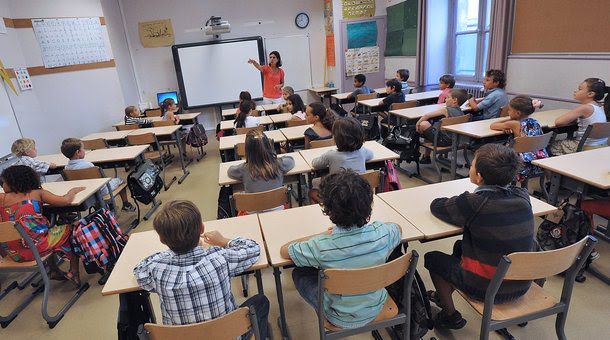
Here are a few photos of “typical” elementary and secondary classrooms in France. 

Second grade classroom
Secondary school classroom
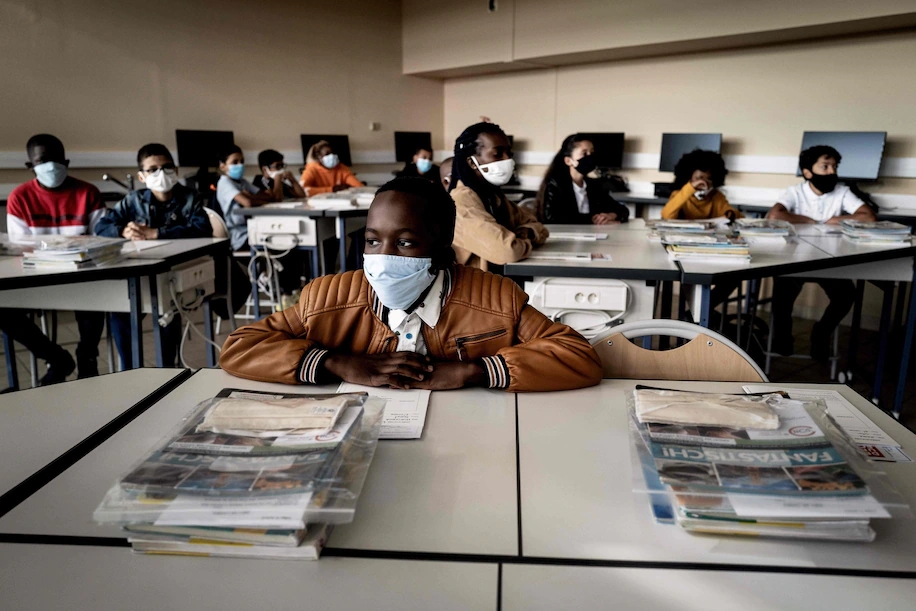
During pandemic, students wearing protective masks sit in a classroom in a middle school in Bron, France (Jeff Pachoud/AFP/Getty Images)
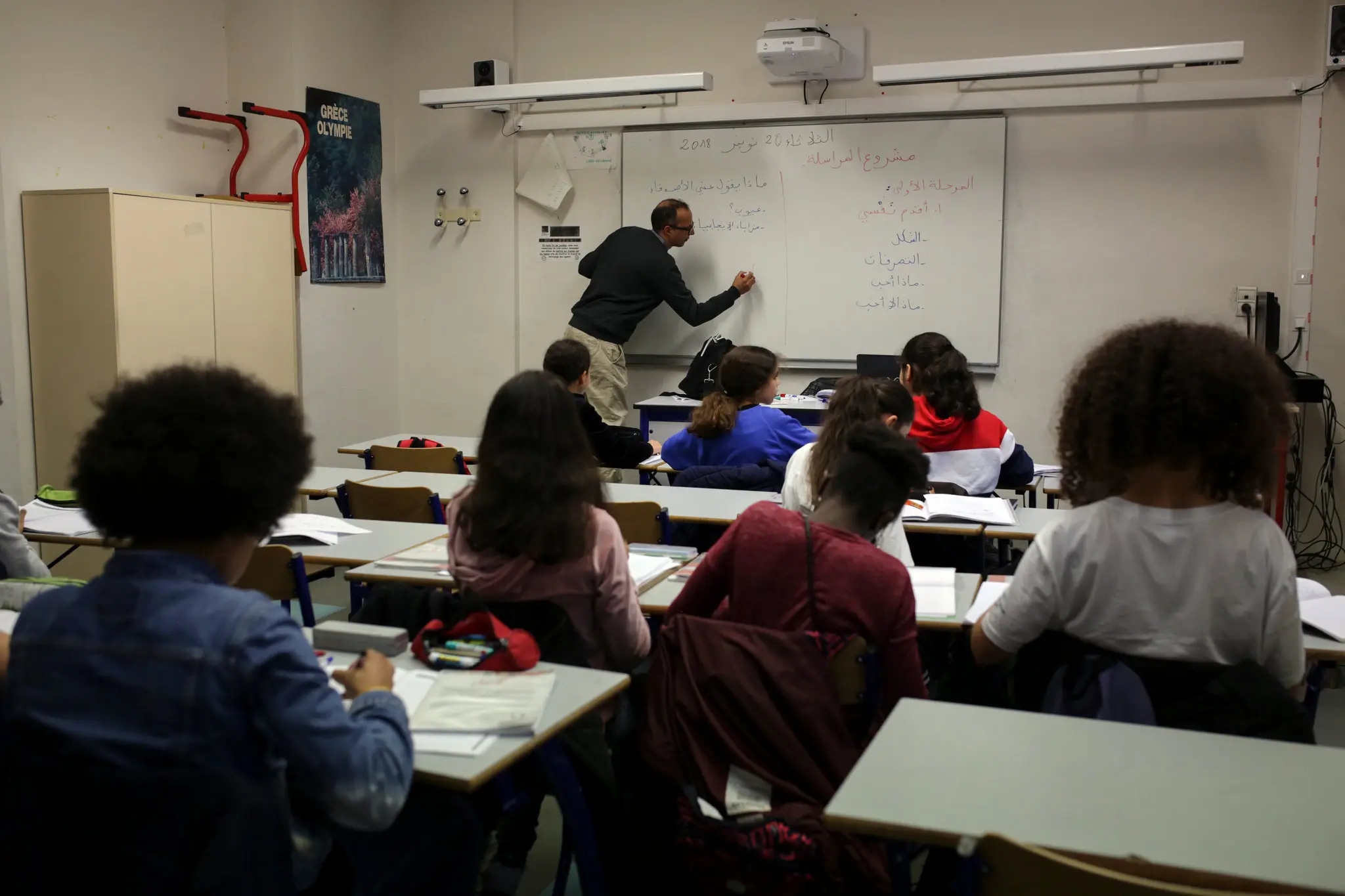
Arabic-language students at the Claude Monet high school in Paris. Here, the teacher opens the lesson by using LinkedIn to show students how many jobs are open to them if they speak Arabic.Credit…Sara Farid for The New York Times
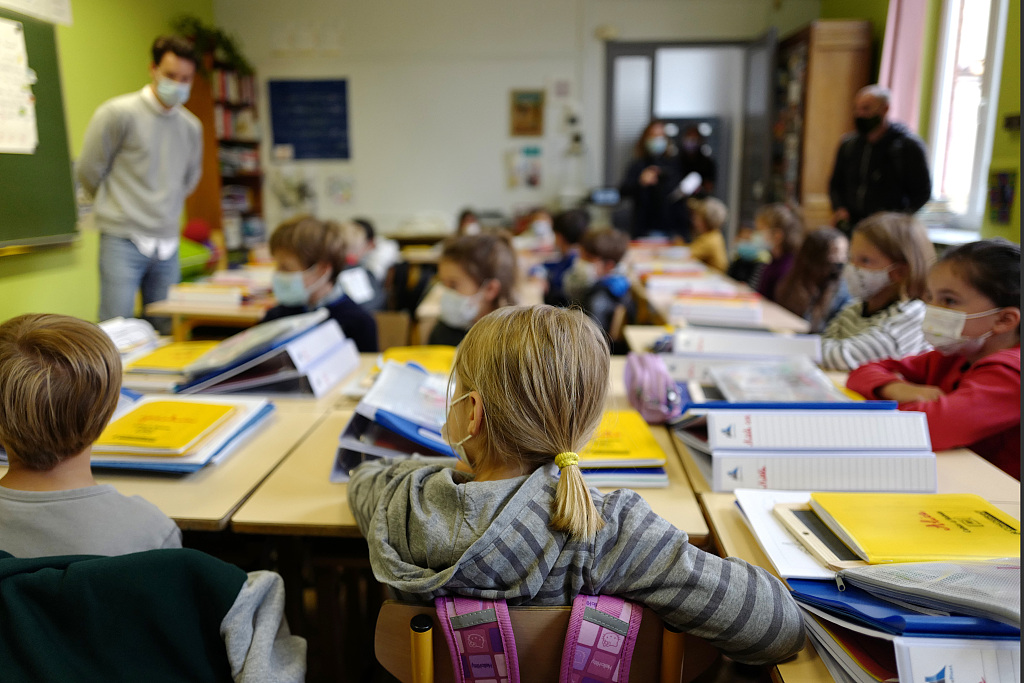
Some 12 million French children returned to school for the first day of the new academic year on September 2, 2021. © Jeff Pachoud, AFP
High School classroom Paris France
A classroom in Nice, southern France. (File photo/September 2020) © Reuters/Eric Gaillard
Students listen the teacher during the first day of school for the 2021-2022 year at Gounod Lavoisier’primary school, Lille, northern France, Thursday, Sept.2 2021. 
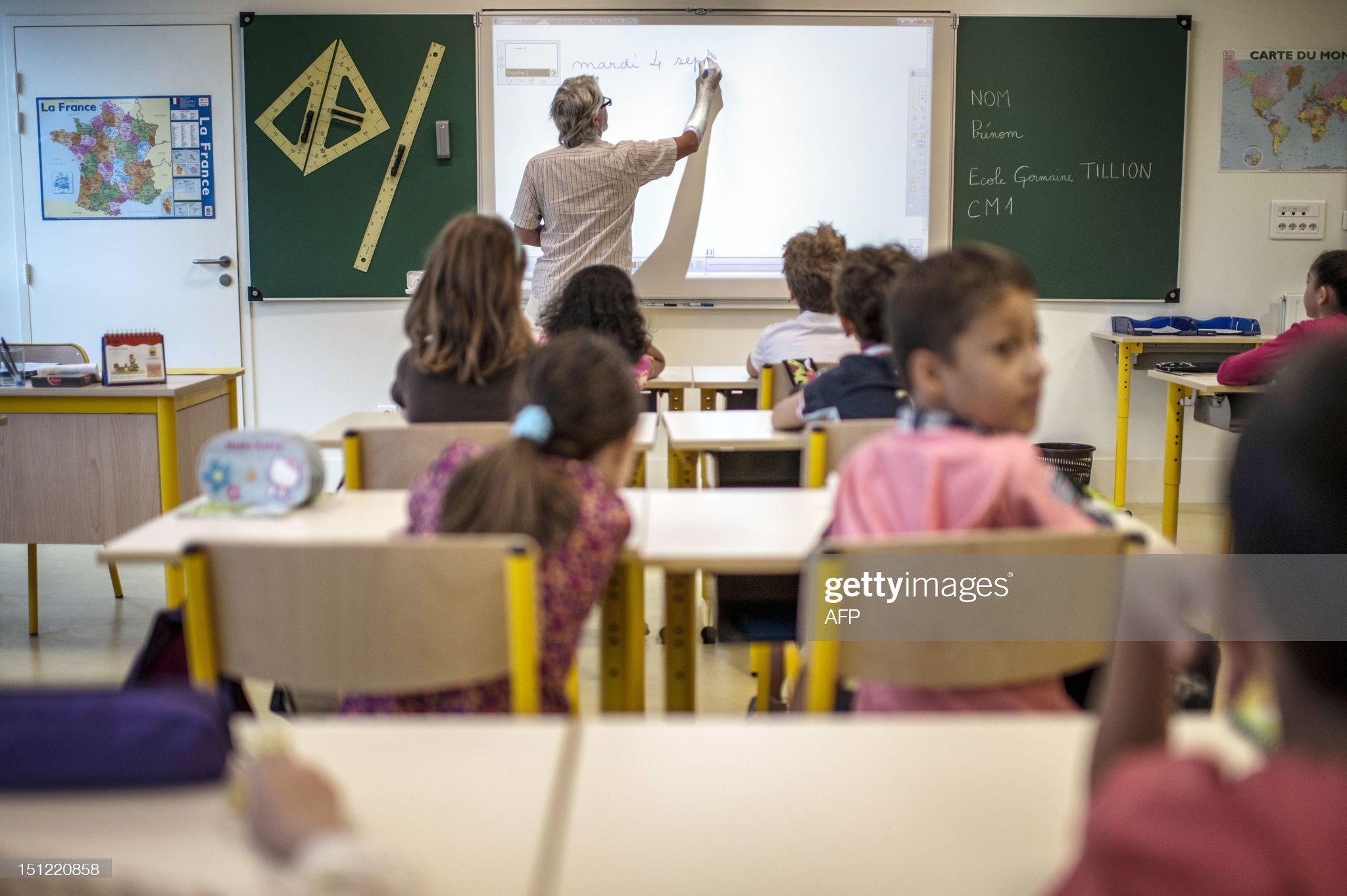
A teacher uses an interactive whiteboard in a classroom at Germaine Tillion primary school, on September 4, 2012 at the start of the new school year in Lyon, eastern France (Photo credit should read JEFF PACHOUD/AFP via Getty Images).
Schoolchildren listen to a teacher showing how to use “GraphoLearn”, an application on a digital tablet, to learn to read, in a primary school on January 8, 2018 in Marseille, southern France. (Photo credit should read BERTRAND LANGLOIS/AFP via Getty Images)

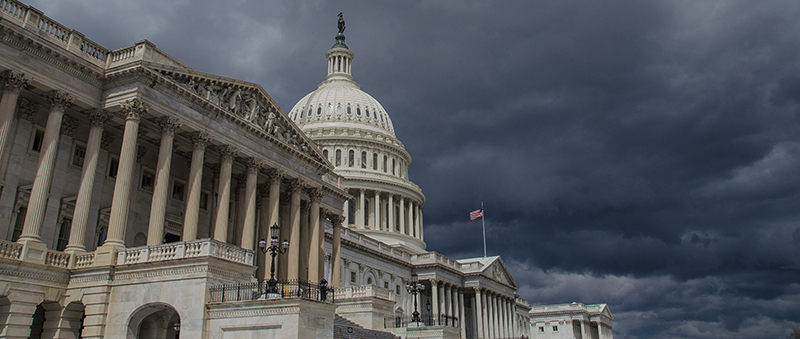
How are educators responding to the insurrection at the US Capitol?

Last week, IEN rounded up headlines from articles trying to make sense of what happened in education in 2020. This week, we had planned to look ahead at predictions for what might happen in education in 2021. Instead, we found numerous articles discussing how educators have been and could be talking with their students about the insurrection at the US Capitol incited by Donald Trump.  A few of these articles also explicitly discuss the racism made visible both by the insurrection and the responses to it, and we encountered several other articles that talked more broadly about the teaching of controversial topics in the wake of the insurrection.

https://www.historians.org/news-and-advocacy/everything-has-a-history/the-assault-on-the-capitol-in-historical-perspective-resources-for-educators

Insurgency at the U.S. Capitol: A dreaded, real-life lesson facing teachers, Madeline Will & Stephen Sawchuck, Education Week

‘You have to address it.’ How San Diego educators are teaching about the Capitol mob, The San Diego Union-Tribune

Vermont’s educators grapple with insurrection at the Capitol, Lola Dufort, VTdigger

Teachers Shift Lessons to Focus on US Capitol Attack, Suevon Lee, Honolulu Civil Beat

Lessons from an insurrection: A day after D.C. rampage, how 15 educators from across U.S. helped students make sense of the chaos, The74

Ways to teach about today’s insurrection, Larry Ferlazzo, Education Week

Responding to the insurrection at the US Capitol, Facing History and Ourselves

Resources for educators in response to the insurrection in Washington, Generation Citizen

Preparing yourself for tomorrow…, Tamisha Williams & Lori Cohen, Tamisha Williams Consulting Newsletter

Resources for teachers on the days after the attack on the U.S. Capitol, Alyssa Hadley Dunn, Beyond the Stoplight

The Assault on the Capitol in Historical Perspective: Resources for Educators, American Historical Association

Three ways to teach the insurrection at the U.S. Capitol, PBS NewsHour

How to talk to children about the Capitol riots: An age by age guide, Meghan Holohan, Today

How to talk to kids about the riots at the U.S. Capitol, Anya Kamentz, NPR

Don’t talk about the Capitol siege without mentioning white privilege, Ellen McGirt & Aric Jenkins, Fortune

The lies we tell ourselves about race, Sam Sanders, NPR

Mobs of white citizens rioting have been commonplace in the United States for centuries, Joshua D. Rothman, Hechinger Report

Confused and angry, young teachers seek guidance on discussing current events with students, Jennifer Rich, The Hechinger Report

Teachers of color more likely than white peers to tackle ‘controversial’ civics topics, Sarah Schwartz, Education Week

A View of School Closures and Remote Learning From Emma Hua in Shanghai

This week’s post features an e-mail interview that Aidi Bian conducted for IEN with Emma Hua. Hua and Bian are teachers at the HD school, a school with campuses in Shanghai, Ningbo, Beijing and Qingdao. These four schools have close to 3000 enrolled students in total. A fifth campus, in Nanjing, will open in 2021. The school describes itself as a “private experimental school” and each homeroom has one “national teacher” and one “international teacher.” HD school is one of a growing number of bilingual schools in China that have been gaining popularity. Bilingual and international schools in China have been particularly hard hit by the virus because of visa restrictions that have made it hard to find teachers from outside China.

Across China, schools were closed for some time, but most cities reopened schools in April, with schools in heavily affected areas like Beijing and Wuhan opening later. After a small outbreak in Beijing in late June, Beijing’s schools were closed throughout the spring semester. Nationwide, the annual “Gaokao” exam was postponed until July 7, one month later than a normal year. Current regulations in Shanghai require every school to track the temperatures and health status of their students every day and report to the district government.

This post is the ninth in a series that includes views from Chile, from Japan, from the Netherlands, Scotland, Liberia, Pakistan, Australia, and Canada. The “A view from…” series editors are IEN’s Thomas Hatch and Karen Edge, Reader/Associate Professor in Educational Leadership at University College London’s Institute of Education.

IEN: What’s happening with you and your family/friends? 

Emma Hua: I was originally from Wuhan, Hubei, where Covid19 firstly broke out. I went back to Wuhan for Spring Festival during the winter break and stayed at home since Wuhan was locked down in late January. Things were not too bad after we got used to the situation. Our community in general was in good order: volunteers helped with information collection, people ordered food and things online and got delivery in time. I worked at home from early February to middle April, and then successfully returned back to Shanghai, after I was tested negative for the coronavirus in Wuhan.

IEN: What’s happening with education/learning in your community? 

EH: Our school started remote classes since February. For primary school, most of the courses were recorded as 10 or 15-minute videos and uploaded to an online platform where students can download and watch every day at their convenience. This is a deliberate design since it would be hard for young kids to stay focused for a long time in an online live class, and many parents have concerns with their children in front of screens for too long. All the materials and resources were uploaded online, and students took picture of their homework and sent them to teachers. We suggested a timetable for the students, which they could adjust, and many students gradually developed a more regular and feasible timetable for themselves with the help from parents. At the end of each day around 4 or 5 pm, each class would have a Q&A live session where teachers talked about common mistakes in the homework and got updates from students.

We suggested a timetable for the students, which they could adjust, and many students gradually developed a more regular and feasible timetable for themselves with the help from parents.

The online class lasted until April when the situation in Shanghai was basically in control. An interesting discovery was that after students got back to school, some students made better progress than expected as they studied more online at home than at school. We hypothesized this happened because some of them could better individualize the pace of their learning as they watched the videos at home.

IEN: What do you/your community need help with?

EH: At first, many teachers were not familiar with teaching online or making slides and videos, so the school organized some trainings to help teachers with making powerpoints and video editing. Courses and materials were prepared within a grade, where every teacher was responsible for several sessions of the whole week, to separate the tasks among the grade group. Some traditional teachers especially needed help with technology support from younger teachers. There were also struggles and pains when the internet of some teachers or students was not stable. In particular, when kids were young, they did not know how to deal with the technical problems. Teachers were tired, too, because the working time could be extended when communication with parents wasn’t smooth.

Courses and materials were prepared within a grade, where every teacher was responsible for several sessions of the whole week, to separate the tasks among the grade group.

IEN: What resources/links/supports have you found most useful? 

EH: We used DingTalk as the main online platform for our second grade. After students selected their school and class, they could do a lot of things such as check in, download lessons and materials, submit homework, get feedback from teachers, etc. A good thing about this platform is that it did evolve and developed many good features that fit educational uses. For example, at first, students could see one another’s homework without any restriction, which could lead to copying. Later the new version changed the rule so that only students who had submitted their homework could access others’ work. Also, the platform allowed teachers to rate and exhibite the best work to the whole class.

IEN: What have you found most inspiring?

EH:  I am appreciative that our school principals were very helpful and supportive to teachers. We have both foreign and Chinese principals, and they were responsible for the international teacher and Chinese teacher team respectively. I belong to the Chinese team, and the principal would participate in curriculum design and preparation and gave us support and suggestions. The school also has small gifts for teachers on national holidays. Another inspiration in the latter stage of remote learning was that we were trying to add more elements and activities to the online routine, such as weekly guided reading, which gave students a more diverse and similar-to-school experience even when studying online.

SCANNING THE HEADLINES FOR RESULTS FROM TALIS 2018: TEACHING, LEARNING, AND LEADERSHIP

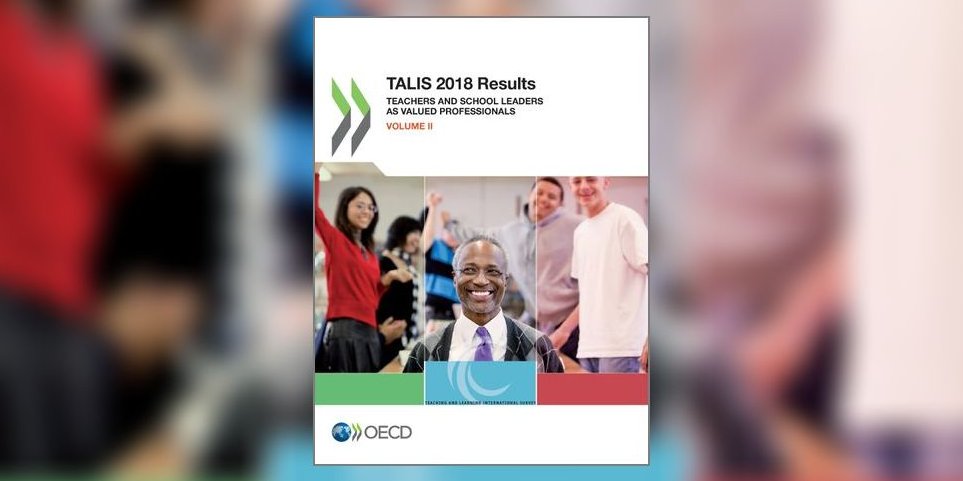
This week IEN provides a glimpse of how a few media outlets around the world have characterized the results from the OECD’s recent release of Volume II of the TALIS 2018 results, Teachers and School Leaders as Valued Professionals. This volume summarizes the results of a survey of teachers and school leaders from 48 countries, with a focus on questions related to 1) how society and teachers view the teaching profession, 2) employment contracts and salaries, 3) how teachers work together and 4) how much control teachers and leaders have over their work. This week’s online search for “TALIS 2018 volume II OECD” turned up very few stories in English. However, there were a number of headlines in smaller outlets and other languages, some of which were (google) translated below. More English headlines appeared in a scan of the TALIS headlines last June following the release of Volume I.

Australia

TALIS 2018: Valuing teachers and school leaders as professionals, Teacher Magazine (Australia)

9 out of 10 teachers from all OECD countries and economies are satisfied with their job, but only 26% think the work they do is valued by society; 14% believe that policy makers in their country or region value their view, and only 24% believe that they can influence education policy.

Croatia

Teachers overwhelmingly feel they have control over things (translated), srednja.hr

“About 98% of Croatian teachers believe that they have control over the choice of teaching methods and student evaluation, 93% of them have control over the discipline of students (92% in secondary school), 94% of them have control over the choice of homework.”  But only 9% of teachers agree that the teaching profession is valued in society.

Denmark

Danish teachers are more stressed than their Nordic colleagues (translated), folkeskolen.dk

43% of Danish teachers are considering another job, and 31% of “feel that their job has a negative impact on their mental health to some extent. In comparison, only 24 per cent of Swedish teachers, 23 per cent of Icelandic, 13 per cent of Finnish and 10 per cent of Norwegian teachers.”

England

England’s teachers ‘most stressed’ in developed world, Times Education Supplement

“70% of lower secondary teachers report being stressed either ‘a lot’ or ‘quite a bit’… 77% of teachers are ‘all in all’ satisfied with their job, however, this is the lowest rate in the OECD, with all the other countries having rates of above 80%.”

France

Talis: The French teachers, the most despised in the world? (translated), Café Pedagogique

“85% of French teachers feel satisfied with their work, but Talis demonstrates that French teachers are not only isolated and underpaid but also despised by their institution.”

Italy

80% Italian teachers perceive various degrees of stress, low salary always a reason for dissatisfaction (translated), Orizzontescuola.it

“Only 12.1% of teachers in upper secondary schools feel valued, without particular differences by geographic areas and by order of school. The data also shows that 7% of the entire teaching staff think they are listened to by the country’s political leadership class.”

Japan

TALIS — Teachers’ stress factors: “Amount of work” “Parents” (translated), Kyoiku Shimbun

“The percentage of Japanese elementary and junior high school teachers who have a lot of administrative work and stress on dealing with parents exceeded the average in participating countries. Principals at elementary and junior high schools were also stressed about their responsibility for their students’ abilities and dealing with parents.”

Korea

1 out of 4 middle school teachers “will quit teaching in the next 5 years” (translated), Chosun Edu

“Nevertheless, the proportion of teachers who agree that the teaching profession is valued is 67%, much higher than the OECD average of 26%.” However, only 54% OF teachers and 62% of principals said they were satisfied with their working conditions, slightly lower than the OECD average (66%).

Latvia

Almost all Latvian teachers are satisfied with their work, the survey shows (translated), nra.lv

“23% of teachers surveyed agree or totally agree with the statement that their profession is valued in the community, while 91% of Latvian teachers indicate that they are generally satisfied with their work”

Norway

Norwegian teachers work well together (translated), NEA Radio

95% of teachers say that there is a good culture for supporting each other and working together at the school…Teachers also feel that they have good control over their own teaching.”

Slovakia

Survey: Our educators receive little respect (translated), Felvideck.ma,

“Only 4.5% of teachers in Slovakia feel that teachers’ work has a high degree of social appreciation, while only 2.1% of school principals believe it”

Slovenia

They are not appreciated by the public or by policy makers (translated), Večer

The majority of “Slovenian teachers and principals were satisfied with their profession and workplace, and slightly less satisfied with their salary… but only 3% of teachers say policy makers value their views and opinions.”

  • Thomas Hatch

Instructional Practice in Singapore in Review of Education

coverThe most recent issue of Review of Education: An International Journal of Major Studies in Education, includes a study that explores how Singapore has been able to achieve a relatively high level of school success in recent years. In “Assessment and the logic of instructional practice in Secondary 3 English and mathematics classrooms in Singapore,” authors David Hogan, Melvin Chan, Ridzuan Rahim, Dennis Kwek, Khin Maung Aye, Siok Chen Loo, Yee Zher Sheng, and Wenshu Luo, draw on data collected in 2010 to analyze methods of instruction in secondary math and English classrooms that range from the more traditional models, which focus on memorization and tight control over student behavior, to the more student-centered models, which focus on comprehension and collaboration. The authors argue that teachers in Singapore draw from a variety of instructional practices, and that national high stakes testing has both shaped and constrained what teachers can do in the classroom.