Category Archives: education reform

Justice-Oriented Educational Change Through Community-Led Solutions: A Conversation with Edwin Nii Bonney

In November’s Lead the Change (LtC) interview Edwin Nii Bonney emphasizes that educational research and practice must “look back” by acknowledging colonial legacies and marginalized histories while “looking forward” by centering Indigenous, vulnerable, and community voices. His work highlights deep listening, intergenerational collaboration, and community-designed solutions as essential to dismantling deficit narratives and creating equitable educational systems. The LtC series is produced by Elizabeth Zumpe and colleagues from the Educational Change Special Interest Group of the American Educational Research Association. A PDF of the fully formatted interview will be available on the LtC website.

Lead the Change (LtC): The 2026 AERA Annual Meeting theme is “Unforgetting Histories and Imagining Futures: Constructing a New Vision for Educational Research.” This theme calls us to consider how to leverage our diverse knowledge and experiences to engage in futuring for education and education research, involving looking back to remember our histories so that we can look forward to imagine better futures. What steps are you taking, or do you plan to take, to heed this call? 

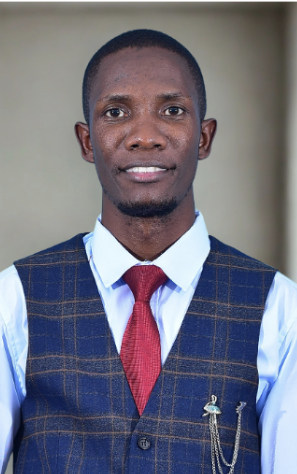
Dr. Edwin Nii Bonney

Edwin Nii Bonney (ENB): As someone who grew up in Ghana and went through K–12 and college there, I have come to appreciate the wisdom of my elders. That wisdom, often carried in proverbs and the principle of Sankofa, reminds us to look back and learn from the past so that we do not repeat its mistakes. In my scholarship, I wrestle with the reality that educational systems remain deeply embedded in coloniality. We are still grappling with the legacies of colonialism especially in the global South, and those legacies have not disappeared (Bonney, 2022). They persist in the languages we speak and use to instruct students, the books we read, our perceptions of ourselves, our standards of beauty, and even our justice systems (Bonney, 2023; Bonney et al., 2025a). Colonialism continues to shape much of who we are and how our societies function. It is essential that we acknowledge that the legacies of colonialism are still with us. It was not that long ago, and its effects continue to reverberate in our educational systems and beyond. 

Having lived and schooled in four different countries, I have come to realize that in every society there are marginalized and vulnerable groups. The dominant discourses in any context, whether social, cultural, or educational, are often so pervasive that marginalized voices, ideas, and ways of knowing are easily erased or silenced. Indigenous wisdom, local knowledge, and community customs are frequently pushed aside. This understanding shapes how I approach my scholarship. We must continually examine how educational leadership, policies, and practices have historically and presently marginalize the ways of being, speaking, and doing of those who are not part of dominant groups. Whether in the United States, Ghana, or elsewhere, there are always minoritized voices whose perspectives are excluded from how education is designed and enacted. Because of that, I believe it is vital to ask how we center the ways of speaking, knowing, and being of Indigenous, marginalized, and vulnerable communities in education. How do we ensure that their experiences and insights shape what we study, how we study it, and how we interpret what we learn?

In my own scholarship and service, I see my role as coming alongside communities and families, not as an expert above them but as a partner who recognizes them as experts of their own experiences. They understand the root causes of the challenges they face and often hold the wisdom to identify meaningful solutions. In Bonney et al. (2025a) in listening to students who had not been able to obtain passing grades in Math, many of them, after retaking the exam multiple times, I learned that they struggled to understand and make sense math concepts taught in English. They felt like failures until they went against the norm as experts of their own experiences to learn in their native languages. Learning in their own native language according to these students brought them success on the first try even though the system told them it was impossible. As we think about the future of education and research, we must keep asking: whose voices are missing from the table? Whose perspectives are absent from the design process? Which families are not engaged in our schools, and how do we empower them to participate fully? We must always ask who we are not serving well and how we can do better. When we look back at history, we see that we have not always served everyone equitably. Therefore, it must remain at the forefront of our work in education to ask, whose voices are we still not hearing?

LtC: What are some key lessons that practitioners and scholars might take from your work to foster better educational systems for all students?

ENB: Much of the work I do alongside educational leaders, students, and families begin with listening. It starts with listening deeply to the experiences of different groups and how they encounter systems of oppression. This kind of listening is to not to defend or to critique but to learn from their perspectives, their realities, and their ways of knowing and being. The next principle is building relationships across generations and forming coalitions among groups who are affected by similar problems of practice or systems of oppression. When these coalitions come together around community-informed problems and community-designed solutions, we are better able to address the issues that matter most to them. In Bonney et al. (2025b), I share about a community-based organization that brings together everyone in their village from as young as seven years to as old as 80 years. The organization gathers the elders to recount stories about the history of their community in their native language. The young people record and document the oral history and then create plays in their native language, where they dramatize the stories on digital media and on stage to be a resource for local schools because there were no resources to teach their native language other than English. This community led movement was in decreasing use of their native language. Communities understand their own challenges, and when they help design the solutions, those solutions are more authentic, effective, and sustainable (Costanza-Chock, 2020). Through these relationships and through genuine listening, we can begin to challenge deficit discourses and narratives that blame individuals instead of systems for the inequities we see in education. Deficit thinking overlooks structural causes and often misplaces responsibility. But lasting change requires us to shift our attention to the systems, policies, and practices that create and sustain inequity. 

Change in education will come only through broad coalitions that include not only researchers and educational leaders but also students, teachers, families, community members, elders and even naysayers. Their knowledge, lived experiences, and cultural wisdom are essential for reimagining a more just and equitable educational future. As we engage in this work, it is important to keep asking which solutions are working, for whom, and under what conditions (Hinnant-Crawford, 2025). Sometimes a solution may appear successful in one area but create unintended problems in another. When that happens, we must be ready to respond quickly to stop any harm. Change is not static; it is a continuous and reflective process. At the heart of this work is a simple but powerful truth: we must be intentional about involving those most affected by the problems we aim to address. We must center community expertise, engage families and students as co-creators of change, and together expose even small variations in outcomes for students as opportunities to learn. Finally, we must continue to seek out and listen to the voices and stories of those still impacted by systems of oppression or persistent inequities. Because meaningful change in education begins with listening, building relationships and broad coalitions that endure when we work together to challenge inequitable systems and co-create a more just future. These are the foundational blocks to a justice-oriented improvement approach to undo oppressive systems in education.

LtC: What do you see the field of Educational Change heading, and where do you find hope for this field for the future?

ENB: The nature of change is that it always comes with uncertainty. Sometimes that uncertainty can bring frustration on one hand or excitement on the other. We can never fully know what the future holds or what the field might look like. We cannot predict what new policies, reforms, or interventions will emerge, or what discourses will shape the field. What I do know is that we can always look back to learn. We can recognize that, as a society and as a field, there are things we’ve done well and others we have not. One of our core goals must be to serve all children well. That means preparing researchers, educational practitioners, students, and teachers so that we can meet the diverse needs of all types of learners. It also means continuing to prepare teachers for a field that is increasingly complex with diverse students who have diverse needs. It also means preparing educational leaders to create inclusive and collaborative environments that enable teachers and staff to do their best work to serve students equitably. 

So, although there is uncertainty about the future, one thing we can hold on to is that we know what we value and how to prepare for that future, whatever it looks like. More than what gives me hope is what energizes me. In Bonney et al., (2024) we created an edited volume, to center and hear from educational practitioners on the front lines and how they work with students, teachers, parents, and community to tackle problems of practice in their local schools and districts. In times of uncertainty, the best people to hear from are those on the front lines. Working alongside with these scholars, educational leaders, and practitioners, in the trenches trying to figure out how to serve all students well makes me expectant that things will change continuously for the better. They’re asking critical questions: How do we better support our teachers? How do we solve problems of practice? How do we address discipline issues or chronic absenteeism? How do we engage families more effectively? How do we reduce the overrepresentation of Black and Brown students in special education? How do we increase their representation in gifted and Advanced Placement courses? These are the kinds of questions that inspire hope for the future. Even though the future may be uncertain, we can still prepare for said future. Personally, I am not as concerned about where the field of educational change is heading but rather about preparing my students and practitioners for today’s challenges. I believe that the same justice-oriented and community-centered approach to solving today’s problems will help us address the problems of tomorrow.

Innovations in providing children with food and nutrition:  Scanning the headlines for new ways to support students’ health and wellbeing after the pandemic (Part 2)

In part 2 of this two-part post, Sierra Bickford scans recent news and research on education to list some of the innovative approaches schools and communities have developed to make sure all students got the food and nutrients they need during and after the school closures of the COVID-19 pandemic. Part 1 outlined the essential role access to food and nutrition plays in supporting healthy development for students both in the US and around the world.  These posts are part of IEN’s ongoing coverage of what is and is not changing in schools and education following the school closures of the pandemic. For more on the series, see “What can change in schools after the pandemic?”  For examples of micro-innovations in other areas, see IEN’s coverage of new pathways for access to college and careers and new  developments in tutoring: Building Student Relationships Post-Pandemic in School and Beyond; Still Worth It? Scanning the Post-COVID Challenges and Possibilities for Access to Colleges and Careers in the US (Part 1); New Pathways into Higher Education and the Working World? Scanning the Post-COVID Challenges and Possibilities for Access to Colleges and Careers in the US (Part 2)Tutoring takes off and Predictable challenges and possibilities for effective tutoring at scale.

The school closures of the COVID-19 pandemic disconnected children around the world to critical sources of food, including school meals. Fortunately, educators, community members and others have developed a host of new mechanisms, resources, and partnerships to make sure children get access to healthy and healthier meals. These “micro-innovations” include new ways to work with community partners, including farmers, nonprofits, chefs, and local vendors and local ingredients to improve nutrition, strengthen regional economies, and increase student engagement. Other developments include using centralized kitchens and new policies and regulations to increase production and lower barriers to access. A few notable efforts also show how several countries have reworked funding structures to sustainably scale school meal programs. All these initiatives are helping to reduce costs, elevate meal quality, and ensure every child can eat with dignity and ease.

How to Use Community Partners and Local Ingredients

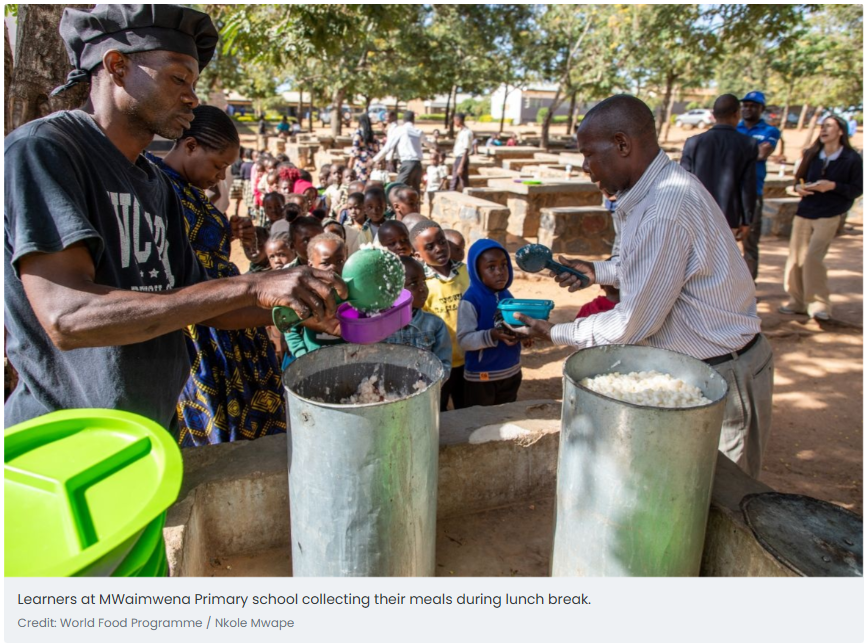
  • Zambia: Schools across Zambia are receiving funding from the One Hectare Program to support student run gardens and greenhouses. These gardens help supply school meals and make the community less vulnerable to drought and famine; it functions not only as extra food but also an opportunity to learn. The gardens are taken care of by the students who learn valuable skills such as “drip irrigation, organic sack gardening, and environmental protection.”
  • Kenya: In 2024, Kenya launched its national chapter of the school meals coalition and created a meals program that focuses on relying more on regional resources by employing local farmers growing region specific foods such as sorghum, cowpeas and potatoes. This not only increases the nutritional value of school meals but also supports local small business farmers. In collaboration with the Ministry of Health and the World Food Programme, the Ministry of Education is also developing a national menu guide in order to encourage the production of more sustainable and diverse meals.
  • France: Legislation has been passed to accelerate the transition to a more sustainable and healthier diet. Regulations put in place since 2021 include requirements for certain percentages of ingredients to be purchased from local and sustainable sources and specify some meal content for school lunch programs. For example, “out of 20 meals, children must be offered no more than four starters with a fat content of 15% or more; at least four fish-based meals (or a dish containing 70% fish or more), and at least 8 whole-fruit desserts.”
  • Hawai’i: The State Department of Education created a pilot meals program, the ’Aina Pono Farm to School initiative. Through the pilot program, students at schools such as Mililani High School in Oahu were able to sample various healthy, less processed dishes and give their personal feedback on menu choices. As a result, students ate far more of the meals on offer, reducing food overproduction at the school by 20%.
  • Tasmania: Schools in Tasmania are outsourcing at least one day of food preparation to local charity. Loaves and Fishes get produce from local vendors and cook the food either on or off site. These schools are selected through a competitive application process.
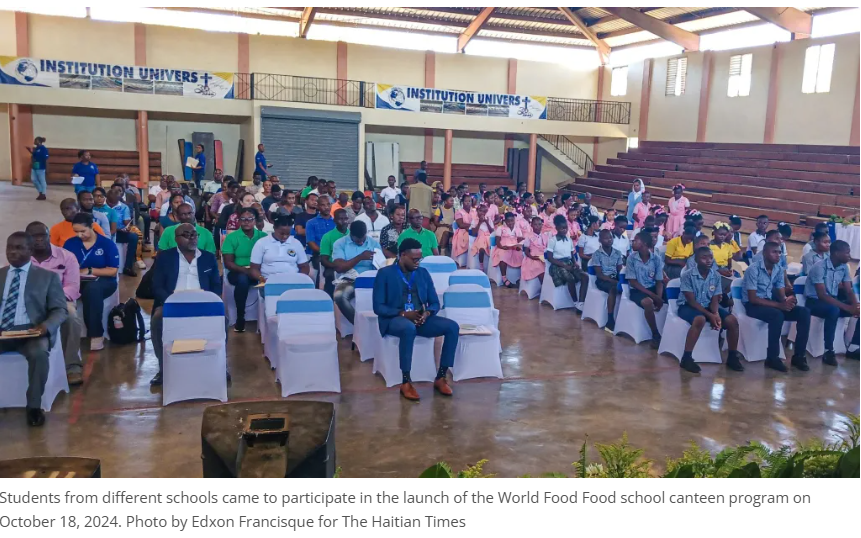
  •  Haiti: Local farmers in Haiti’s Northeast strengthen nutrition and economy by supplying food to school canteens. The World Food Program purchases up to 9,990 tons of local produce to support struggling farmers and supply school meals to approximately 15,000 students across 200 schools with local nutritious food.
  • New York City: The “Chefs in the Schools” initiative brings in local professional chefs to create nutritious cost effective menus for schools. The chefs also provide training for staff.
  • Canada: Canada’s first national school food program, funded by 1 Billion dollars in federal funds, is rolling out amid rising need, with provinces and local providers striving to expand hot meal offerings despite funding gaps, aging infrastructure and growing demand from families struggling with food costs.

Using Centralized Kitchens:

  • France: Centralized kitchens in France prepare 6,000 to 10,000 servings a day of high-quality food following strict food safety protocols. This cuts down on cost and increases quality.
  • Hawai’i: The Hawaiʻi’s Farm to School Action Plan connects schools with local farms to provide fresh, nutritious meals, support farmers, and promote sustainable food systems through a regional kitchen model and community collaboration. 
  • Sweden: A pilot program transforming school canteens with student-designed spaces, surplus-produce energy bars, and sustainability initiatives has boosted engagement and healthy eating while highlighting the need for long-term investment and multi-agency collaboration to sustain its success. 

Lowering barriers to food 

  • Africa: Food4Education (F4E) is transforming school feeding in Africa through a sustainable, locally sourced model that provides nutritious, affordable meals while supporting local farmers and communities. By 2030, they aim to feed 1 million Kenyan children daily and help other African governments feed 2 million more, creating a scalable blueprint to end classroom hunger across the continent.
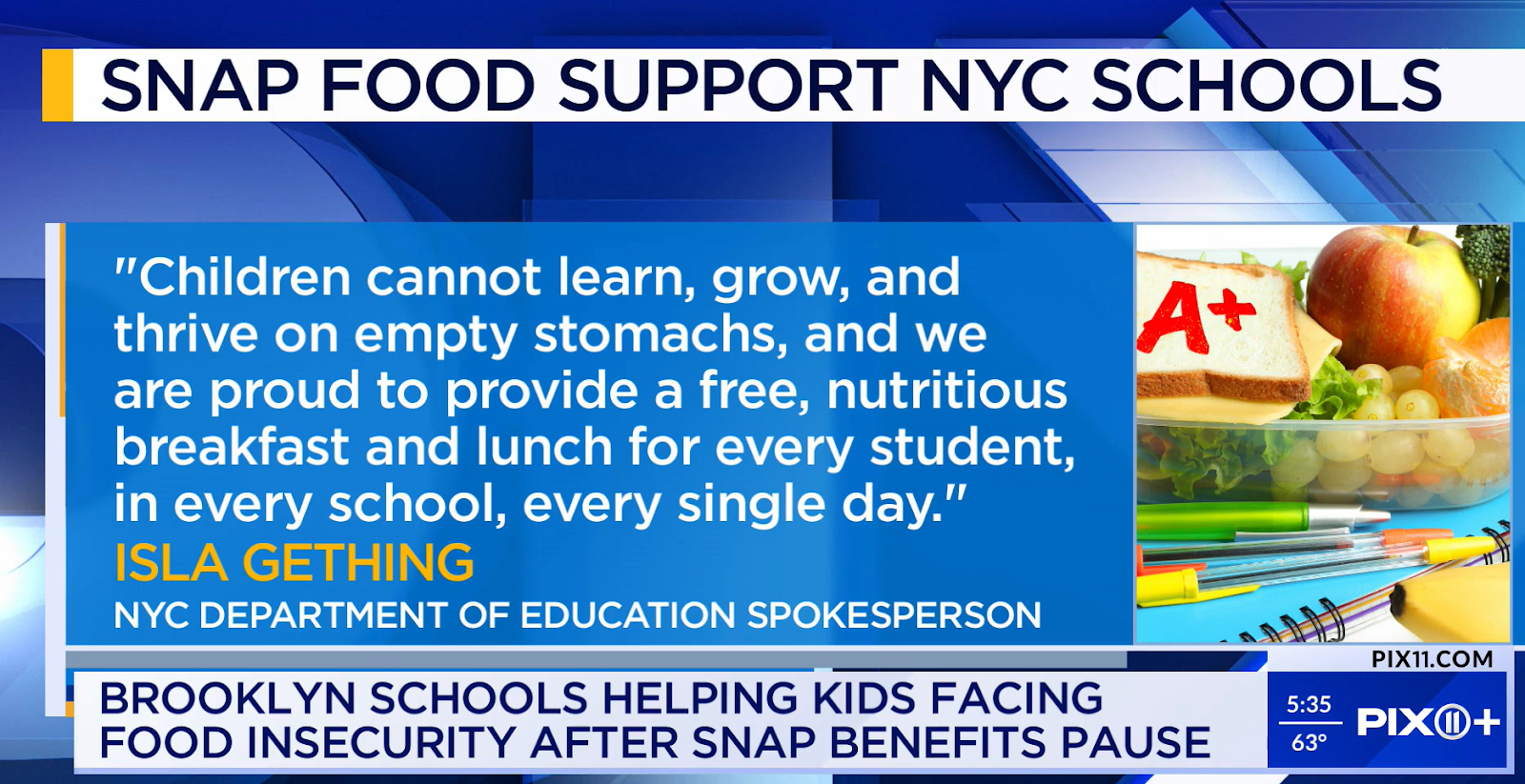
  • New York City: In response to rising concerns about federal budget cuts to SNAP, the Supplemental Nutrition Assistance Program, a school in Brooklyn has partnered closely with the community organization El Puente and other stakeholders to support their students.
  • Colorado: All Colorado public school students will continue to have access to free school meals after voters approved two state referendums on November 5th, 2025, one of which — Proposition MM — will raise state income taxes for those earning an annual income of $300,000 or more.
  • United States: A streamlined certification structure has been implemented for a summer food assistance program launched last year. In the first year, some families missed out on Summer food benefits because of confusing enrollment, limited outreach, and short deadlines, despite the program proving highly effective for those who received it. To address the problem, more families will be enrolled automatically, if they are on certain public benefit programs, including free and reduced price school lunch.
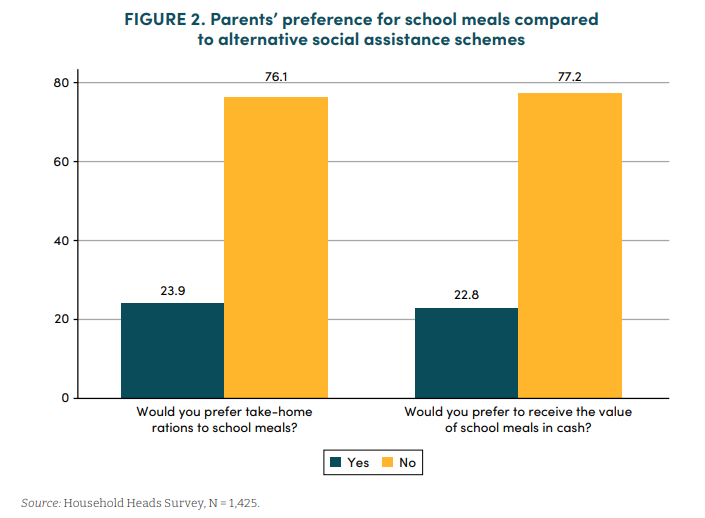
  • Ghana: The Ghana School Feeding Programme has found most Ghanaian caregivers prefer on-site school meals over cash or take-home rations, with their choices shaped by program satisfaction, time constraints, and local food prices, suggesting school feeding programs could be more effective by tailoring modalities to regional and household needs.
  • United States: Starting in the 2027–28 school year, the USDA will ban online processing “junk fees” for students eligible for free or reduced-price school meals, aiming to expand the policy in the future to ensure all children can access healthy school meals without extra charges.
  • California: Schools are offering food trucks to boost lunch participation. Called the Cruisin’ Cafe, the food truck gets more seventh- and eighth-grade students to eat lunch during school. Students won’t have to pay anything for their meals or walk across campus to get lunch at the cafeteria.
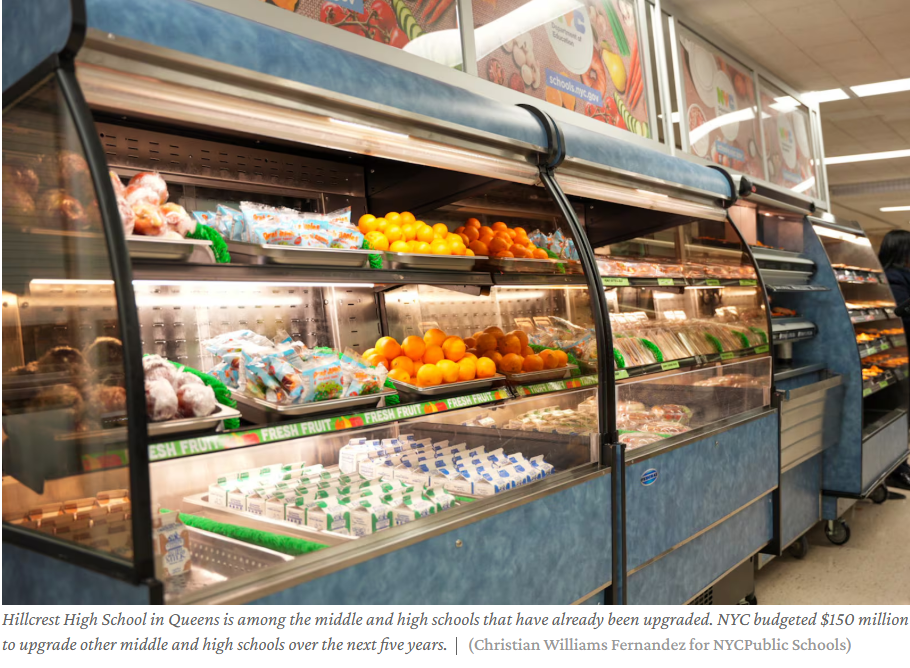
  • New York City: New York City is investing $150 million to expand modern, café-style cafeteria upgrades to more schools after seeing that redesigned dining spaces boosted student participation in school meals and helped reduce stigma amid rising child food insecurity.
  • United States: Districts are using the federal Community Eligibility Provision to offer free school meals by strategically clustering schools to maximize reimbursement, clearly communicating and reassessing eligibility data each year, and boosting revenue through expanded breakfast programs like breakfast-in-the-classroom or breakfast-after-the-bell. 

Changing Financing Systems

  • Bolivia: Since 2000, the government in Bolivia has supported what has come to be called the Complementary School Meals Program. By 2019, with investments of more than 100 million US dollars, the program provides school meals to more than 2.2 million students –  almost 80% of all school-age children and youth. To fund the program, the government has turned to taxing natural resources, specifically hydro carbons, program. 
  • Mozambique: In Mozambique, $40 million in debt service payments were channeled to school meals by using debt swaps and broader debt relief strategies to redirect repayments toward national education and nutrition priorities. 

Access to food and school meals in the US and around the world: Scanning the headlines for new ways to support students’ health and development after the pandemic (Part 1)

One of the many repercussions from the COVID-19 pandemic was a world-wide hit to students’ health and wellbeing. In particular, proper nutrition and food insecurity was greatly affected by the pandemic and the lockdowns as many students around the world could not get food and food related support at their schools. In Part 1 of this two part series, Sierra Bickford takes stock of the impact school nutrition programs have globally and highlights the effects of these high-impact interventions. Part 2 will scan recent news and research to find  some of the many micro-innovations – new developments in practices, structures, and resources in different contexts – that have been implemented to combat this rise in student food insecurity. These posts are part of IEN’s ongoing coverage of what is and is not changing in schools and education following the pandemic school closures. For more on the series, see “What can change in schools after the pandemic?”  For related examples of micro-innovations in other areas, see IEN’s coverage micro-innovations to strengthen student relationships, to increase access to college and careers and to improve tutoring: Building Student Relationships Post-Pandemic in School and Beyond; Still Worth It? (Part 1); New Pathways into Higher Education and the Working World? (Part 2)Tutoring takes off and Predictable challenges and possibilities for effective tutoring at scale.

Food insecurity, particularly among children, was one of the critical problems exacerbated by the COVID-19 pandemic and the related societal shutdowns. Estimates suggest that, during the pandemic, the number of people experiencing food insecurity doubled from about 135 million to more than 270 million. In India alone, household food insecurity skyrocketed from 21% in December 2019 to 80% in August 2020, at the same time that diet quality decreased. By the end of 2021, the UN warned that over 43 million people in 38 countries, including Ethiopia, Somalia, South Sudan, Afghanistan, and Yemen, were at risk of experiencing famine or famine-like conditions.

Even in wealthier countries household food insecurity increased substantially. In the United States, that meant a rise in households experiencing food insecurity from 11% in 2018 to 38% in March 2020.  In a report from 2020, the US Census’s Household Pulse Survey estimated the rates of food insecurity had doubled overall, and tripled among households with children. In the wake of the pandemic, school systems, despite vastly different conditions and challenges in different contexts, are working to reestablish nutrition programs and create new strategies to get children access to nutritious balanced meals.

The impact of school based nutrition worldwide

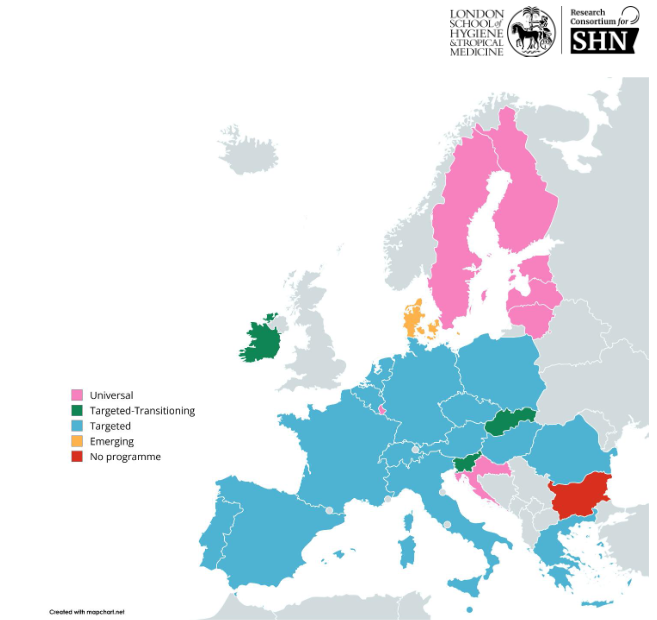
Across the world, school meals have been shown to be a worthwhile intervention with high positive impact on health and learning outcomes. In high income countries, such as those in the United Kingdom, access to nutritious school meals are associated with lower obesity rates. In Sweden, school meals with regulated nutrition requirements have been shown to increase educational attainment, health outcomes, and income across lifetime. One study found that low income families with children in Sweden who received free school meals increased their lifetime income by 6%. The effects that these interventions have on European health care costs estimate “that the return from investment in school meal programs is at least sevenfold, up to a possible €34 for every €1 spent.”   

Graphic depicting which European Countries have an official, nationwide program for school meal provisioning

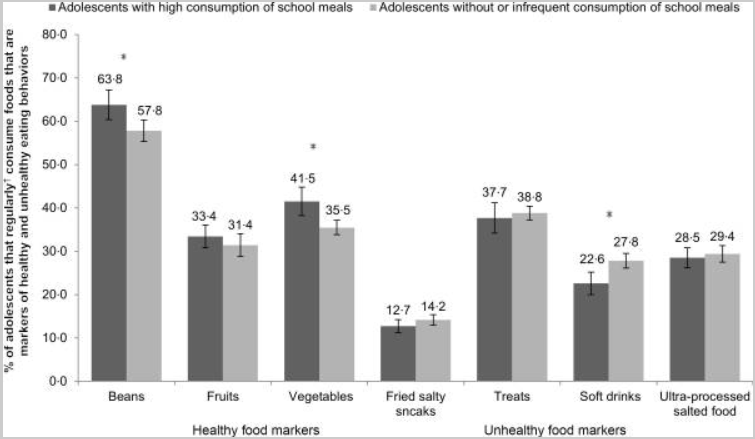
Data from low and middle income countries also support the implementation of free school meals,  particularly for increasing attendance and retention. In Burkina Faso female students who were given take-home food attended school at least 90% of the time. Similarly in Bangladesh, the introduction of free fortified biscuits “increased enrollment by 14% and reduced school dropout by 7%.” Nutrition programs in low and middle income countries have been shown to positively affect learning outcomes as well. In India, access to free school meals is associated with higher cognitive outcomes and an 18% increase in literacy test scores. As in the United Kingdom, in Brazil students who were being supplied meals at school were more likely to reduce their intake of unhealthy foods and increase the presence of nutritious food in their diet, which leads to better health outcomes.

Figure shows the regular consumption of healthy and unhealthy food markers according to consumption of school meals; from School meals consumption is associated with a better diet quality of Brazilian adolescents: results from the PeNSE 2015 survey

The impact of school based nutrition in the United States

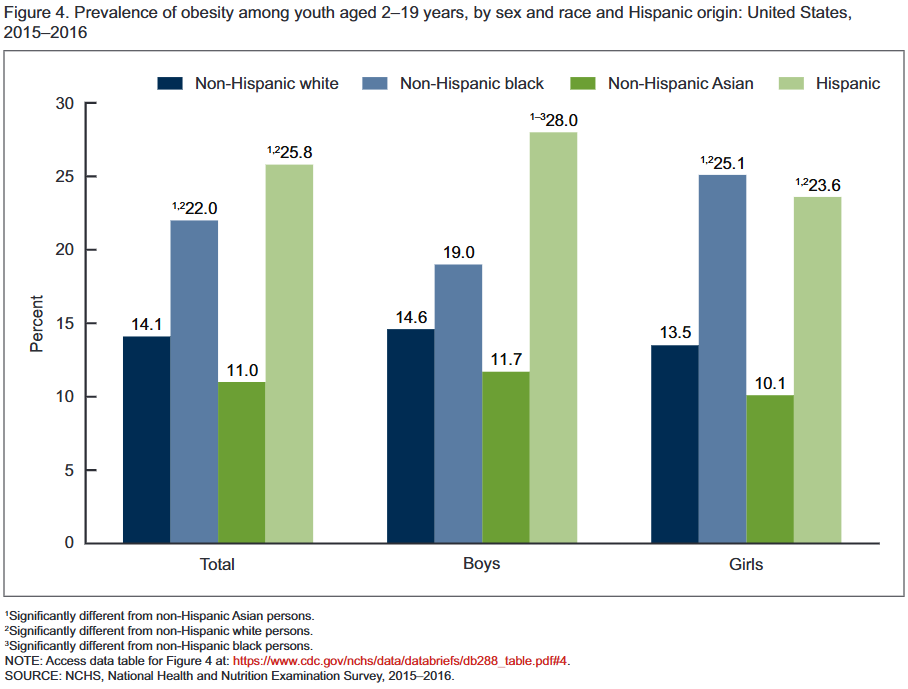
In the US, the National School Lunch Program has long been the primary vehicle for supporting students’ nutritional needs. Around 95% of US elementary, middle, and high schools take part in the program and about 75% of the meals provided through it go to children from low-income families who qualify for free or reduced-price lunches. Students who consistently consumed these meals were more often from low-income households and more likely to be non-Hispanic Black or Hispanic compared to those who didn’t participate. As a consequence, the program is one key means of addressing  nutritional and health inequalities in the US, where non-Hispanic black and Hispanic children are more likely to be overweight or obese and have lower quality diets than white children. 

School meals matter: federal policy can improve children’s nutrition and health (Jia et al. 2020) – PMC↗

In fact, US students who eat school meals daily ate less saturated fat and sugar than students not eating school meals and had less prevalence of obesity.  In addition, in the US, school meals help to reduce food insecurity, and, in some cases, provide up to half of a child’s daily energy intake. Studies from the US show that left unaddressed, food insecurity and a lack of nutritious food can interfere with students academic and cognitive development and can have a negative impact on their social development and behavior in school.  

Despite this evidence, the budget bill promoted by the US administration and passed by Congress this past summer reduces funding for federal health and food programs. Estimates from the School Nutrition Association suggest that the bill could create a ripple effect of food insecurity for American children. This ripple effect will include fewer children automatically being eligible for SNAP and school lunch programs as well as fewer schools being able to enroll in Community Eligibility Provision. Nonetheless, even as these cuts are being made, schools and communities across the US and around the world are continuing to develop new ways of reaching more and more children and families and increasing access to higher quality and healthier food.

Next Week:  Innovations in providing children with food and nutrition:  Scanning the headlines for new ways to support students’ health and wellbeing after the pandemic (Part 2)

New Policies, New mandates, Uncertainty and Chaos: Scanning the Back-To-School Headlines in the US for 25-26 (Part 2)

This second part of IEN’s annual scan of the back-to-school stories brings together some of the headlines that focused on the effects of a flurry of executive orders and policy changes from Washington. The first part of the scan shared stories from outside the US, and, next week, we’ll review some of the other back-to-school headlines in the national and local press in the US. 

For back-to school headlines from Fall 24: Politics, Policies, and Polarization: Scanning the 2024-25 Back-To-School Headlines in the US (Part 1); Supplies, Shortages, and Other Disruptions? Scanning the Back-to-School Headlines for 2024-25 (Part 2); Banning Cell Phones Around the World? Scanning the Back-to-School Headlines for 2024-25 (Part 3); Fall 23: Crises and Concerns: Scanning the Back-to-School Headlines (Part 1), (Part 2), (Part 3). Fall 22: Hope and trepidation: Scanning the back-to-school headlines in 2022 (Part 1)(Part 2) (Part 3); Fall 21: Going back to school has never been quite like this (Part 1)(Part 2)(Part 3); Fall 20: What does it look like to go back to school? It’s different all around the world…; Fall 19: Headlines around the world: Back to school 2019 edition.


Tracking Trump: His actions on education, The Hechinger Report 

Introducing the Trump K-12 education litigation tracker, Brookings

As Students Return to School, Educators Grapple With Chaos From Washington, The74


Funding

Your Guide to the Evolving Federal Budget and What It Means for Schools, Education Week

State Funding for Schools Is a Mess This Year, Too. Here’s Why, Education Week

$5 Billion in Federal Funding for Nine K–12 Formula Grant Programs Hangs in the Balance Between White House and Senate Proposals, LPI

House panel approves 26% cut to Title I funding for FY26, K-12 Dive

The House meets to vote on the bill that would cut the U.S. Department of Education’s budget by 15% for fiscal year 2026. Source: K-12 Dive

House Lawmakers Endorse Some—But Not All—of Trump’s Education Cuts, Education Week

Trump administration cancels dozens more grants, hitting civics, art, and higher ed, Education Week

Trump shifts millions of dollars to HBCUs and tribal schools amid deep education cuts, USA Today

Trump administration boosts HBCU funding after cutting grants for Hispanic-serving colleges, CNN

Trump Department of Education rolls out latest step to expand school choice nationwide, Fox News

Half of the states won’t comply with Trump’s push to defund schools over DEIThe74

Nation’s Report Card at risk, researchers say, The Hechinger Report

How At-Risk Federal Data Is Being Rescued and Preserved, New America

Trump Admin. Wants to Scale Back Data Collection on Career and Technical Programs, Education Week

How Schools Will Feel the Federal Funding Cuts to Libraries and Museums, Education Week

Trump administration axes federal Blue Ribbon program that recognized high-achieving schools, Chalkbeat

FCC proposal would disconnect school bus Wi-Fi, hotspots from E-rate coverage, K-12 Dive

Students, schools race to save clean energy projects in face of Trump deadline, The Hechinger Report

 Colorado state capitol rally in support of “The Green New Deal for Colorado Schools.” Source: Emma Weber, The Hechinger Report

Most—But Not All—Imperiled Federal Grants for Special Education Will Continue, Education Week

Trump Canceled Millions for Special Education Teacher Training. What’s Next?, Education Week


Health

Schools prepare for the worst as RFK Jr. reshapes the vaccine landscape, The Hill

Confusion as Kids Head Back to School and RFK Jr. Calls the Shots on Vaccines, The74

Decreasing immunization rates among kindergarteners, Source: The74

Childhood Vaccinations Are Down. Schools Are Bracing for Outbreaks, Education Week

Schools brace for federal changes to lunch, The Hill

Trump law will cut food stamps for 2.4 million people as work rules widen, The Guardian


Civil Rights

How the Education Department is using civil rights laws to bring schools to heel, NPR

Trump’s Civil Rights Agenda Comes for Public Schools, Education Next

See Which Schools Trump’s Education Department Is Investigating and Why, Education Week

Some State Leaders Cheer as Trump’s Ed. Dept. Investigates Their Schools, Education Week

Schools Sue Trump, But It’s Getting Harder for Them to Recoup Money, Education Week

Trump administration targets race-focused school programs, The New York Times

Programs for vision and hearing loss harmed by Trump’s anti-diversity push, ProPublica

40 states could lose federal funds for sex ed if they keep gender identity in curriculum, ChalkBeat

“Posters are displayed in a Los Angeles Unified high school health education classroom in 2018. The Trump administration told 40 states to remove references to gender identity from a federally funded sex ed program and stripped California of its funding when it refused to do so.” Source: ChalkBeat

Ed. Dept. Will Release New Guidance on School Prayer, Trump Says, Education Week

Trump administration rolls back pivotal guidance about educational rights of English learners, Chalkbeat

For mixed status families, deportation fears cast shadow over new academic year, NPR

Next Week: Supplies, Support, Lunch and Fear: Scanning the National and Local Back-To-School Headlines in the US for 25-26 (Part 3)

Bringing a Tablet-Based Foundational Learning Program to all the Primary Schools in Malawi: Joe Wolf and Kira Keane on the Evolution of Imagine Worldwide (Part 1)

What does it take to scale a tablet-based foundational learning program to all the primary  schools in Malawi? In this 3-part interview, Joe Wolf and Kira Keane describe how Imagine Worldwide has approached that challenge and share some of what they have learned in the process.  The tablet-based program at the center of Imagine Worldwide’s work, developed by software partner onebillion, serves as a supplement for regular instruction, with each child in a school spending a targeted 150 minutes per week working independently on problems related to reading and mathematics. Imagine Worldwide partnered with the Government of Malawi to rollout the program in 500 primary schools in 2023-24, with the ultimate goal of expanding to all 6000 primary schools in Malawi, serving 3.8 million learners in standards [grades] 1-4 annually. Joe Wolf is the Co-CEO and Co-Founder of Imagine Worldwide and Kira Keane is the Director of Communications. (Photos/graphics are from Imagine Worldwide unless otherwise noted.)

TH: Can you describe for us some of the key steps or phases you went through as you developed your work to test and then to scale-up this tablet-based program in Malawi? 

Joe Wolf: The first phase of our work was all research oriented. We wanted to see if these learner-centric tablet models could work – were they really effective for children? – before asking under-resourced systems to spend time, energy, and capital on them. That meant we had a prolonged research phase that included nine randomized controlled trials. That was across different contexts, different languages, different implementation models, different countries – really exhaustively trying to prove that these solutions can, in fact, add significant value. 

The second phase was what we call “learning to scale:” What are the processes that need to be done repeatedly well to scale within these contexts? We purposely spread our work out across seven countries, with different implementation models, different implementation partners, different types of structures to really test what needs to be done repeatedly well so that these systems can adopt the work at scale. Then, only in the last three years, we’ve put the pedal down and said, “Okay, I think we’re ready to really think about scaling.” And we were only able to act on scaling thanks to the leadership of the government of Malawi, who saw the learning gains of our pilot programs and saw how this edtech intervention could support their national goals of improving foundational skills.  At that point in 2022, we served around 6000 children, but we increased it to about 700,000 children by the beginning of 2025. That’s a 100x increase in the last two years, which I think is a testament to the scalability of the model, the execution of the team, and the leadership of our government partners. 

A map of africa with a yellow circle

AI-generated content may be incorrect.

TH: What’s the third phase? Implementation? 

JW: I would say it’s scale plus continuous improvement. Now, our research is less efficacy oriented and more implementation oriented. How do we make it better and better and better? To address that, we have four levers we focus on: 

  • Access: How do we serve more and more children and make the solutions easier and easier to implement? 
  • Cost-effectiveness: How do we bring down the recurring costs to be as low as possible? We’ve brought costs down around 75% in the last five years, and we think there’s still room to go. Our key inputs are all highly deflationary, so we’re getting better economies of scale as we grow. Right now, we’re at about seven dollars (USD) per child per year. We think we can get that under five dollars (USD) as we get better economies of scale. 
  • Advocacy: How do we use data to improve the implementation model in the software so that the efficacy of the program continues to go up and up and up? It’s one of the beauties of technology that it can iterate and improve. You’re not building a building and putting in books and then five years later it’s deteriorated. We actually have the ability to use data to continuously improve through this flywheel of innovation.
  • Sustainability. How do we work with our government partners to build operational and financial sustainability?  And how do we do it starting day one, where we’re building the “muscles” within the existing education system, as opposed to the classic approach of starting off outside the system and then trying to hand it off to the system. Too often, if you haven’t done a good job of building that internal muscle, and then things fall apart. So we’ve really taken the system strengthening approach, acknowledging that there are capacity and infrastructure gaps within the countries where we work and that there are key functions that need to be built that don’t currently exist within some of these systems. We’ve tried to give it time so that, by the end of the implementation phase, the system has already been doing the work for an extended period of time. That way, you don’t have this fall off as you try to hand-off everything to the system itself.

Kira Keane: I just want to underscore a couple of points that Joe made. For Imagine, this notion of the continuous improvement loop, it’s not like we did things, something went wrong and we’re like, “Oh, we have to fix this.” This was an intentional design element from the very beginning: How do we get continuous feedback to improve both the software itself and the implementation model? And the other point is that our key question is “How do we serve as many children as possible?” The need is so immense and the population growth will be so intense over the next 10-15 years so we really need to be focused on scale. That means working with our government partners to aim for generational impact, really looking at country-wide scale, and focusing on how we design for that.

JW: I’ll add two more things to what Kira said. The ecosystem is exhausted by pilots – by small things that don’t scale, that don’t have evidence, that take a lot of time and resources. Scale from day one very much aligns with where the governments are. They have a big problem with the lack of foundational learning among their students, and they need big solutions. Little, tiny things are just distracting and take too much time and energy. The second thing is that we have positioned our organization to be temporary in nature, so our job is to put ourselves out of business as quickly as we possibly can. We don’t see these as “Imagine Worldwide” programs in Malawi or “Imagine Worldwide” in Sierra Leone. These are programs of the government in Malawi and of the government in Sierra Leone that we are helping to support. We’re helping to build capacity and infrastructure to build muscle within the systems. But as soon as the government is ready to maintain this on its own, we are more than pleased to step out of the way and to move on to the next challenge. I think that positioning is really important for the governments. It’s really important for the funders. It’s really important for us and our team. Too many times, an NGO establishes itself and 50 years later, the NGO is still there, doing the work. We need this work to be sustainable within existing systems. Part of that is a commitment for us to get out of the way. We have to believe in sovereignty and the power of governments to run themselves, while also acknowledging that the use of technology in a place like Malawi is new, and so there is going to be a period of time where we have to build some functions that do not currently exist.

TH: That certainly resonates with my experiences in the US where we’ve seen multiple improvement efforts collide in schools in ways that can actually undermine their capacity for improvement. What made Malawi a good context for you to work on scale-up?  

JW: The work in Malawi actually predates the partnership with Imagine. There was a program called “Unlocking Talent,” with the software developer onebillion that became our partner. The onebillion CEO went to Malawi, I think, 15 years ago, fell in love with the country, and developed the product. The first product they developed was in Chichewa, in Malawi. In other words, this was not developed in the West and then adapted to the context. This actually was developed within the Malawian context. We became a research partner to look at impact and to help do the RCT work. That has now evolved into a much more scalable model that we call the BeFIT Program. It’s serving standards [grades] one through four, whereas the first program was only standard two. 

A person holding a tablet

AI-generated content may be incorrect.
Key elements of the BeFIT program in Malawi

There have been a whole bunch of iterations along the way to develop our general approach, but it basically evolved by thinking about what it would take to actually scale the program much more cost effectively to many more students in more systems. If you look at the other places that we worked, you’ll see that we started with finding local partners, mostly local NGOs, some local social-oriented businesses, and then turned over a lot of the functions to those local partners to see what worked in different contexts. From that, we have built a series of centralized functions that we’re now drawing on in our country partnerships, as opposed to having it be completely decentralized. We learned a lot from the initial more decentralized exploration, but we’re now in the process of creating more standardization. Part of scaling depends on acknowledging that you can’t have fifty different bespoke operations. You need to have systems and standards and data systems. When you have 6000 children in Malawi, using a total of 1000 devices, you can do some things by hand; but now we’re trying to serve millions of children in Malawi, with hundreds of thousands of tablets. We now need data driven systems in order to be able to manage that equipment in the field. 

TH: Let’s follow the arc of that evolution in Malawi. What are some of the steps that were crucial to your learning and to the development of the model?

JW: In Malawi, we took seven or eight years to do the research and to get the right level of government buy-in to understand what was working. That included learning things like what’s the infrastructure for the typical school in Malawi? Just to give you the context, that means more than 100 children per teacher and inadequate levels of teacher training. There’s very rarely basic infrastructure in place, so no electricity and certainly no internet connectivity. That’s the reality of the average class in Malawi. So as you think about the components of our model that have emerged the first was what you would call the infrastructure component. We put solar power into all of our schools, addressing questions like: 

  • Where do solar panels go? 
  • How does the solar electricity feed a bank of lithium batteries? 
  • How do the tablets get stored and secured overnight so that they’re charged and they’re safe? 
  • How does all that equipment get distributed to children in a really efficient manner, so that you’re getting as much asset utilization as possible and as much learning time as possible? 

In the end, our research consistently shows that the number of minutes each student uses the content is directly correlated to the level of learning. So we’re addressing these 101 things that need to be done in terms of the infrastructure and operations to maximize that time on task. And that has to take into account that the school day and the school periods are very short in Malawi and you have a lot of children in the classroom. So even just getting kids in and out of a classroom is a lot harder than in many other contexts.

A group of children raising their hands

AI-generated content may be incorrect.
A classroom in Malawi

TH: You just described those complexities really effectively, but for those of us who aren’t familiar with the context, can you go into it even more deeply? What does it really take to get a program like this up and running at scale? 

JW: I think that in addition to a foundational learning organization, we are, in a lot of ways, also a supply chain logistics company. Learning gains are still our north star, but the reality is you’re talking about a phase one of BeFIT that involved launching the program in five hundred schools in five months across half of the country of Malawi, including very rural districts. So we have to deal with the logistics of getting five hundred secure storage cabinets into those schools. We have to deal with the logistics of getting 100,000 tablets distributed across those 500 schools and of getting the solar equipment put into 500 schools. That’s a significant operational lift, and you have to approach that with a level of rigor in terms of those key functions, if you’re going to be able to scale, and you’re going to be able to do that on time. And we had to do that on budget in the middle of a huge macro-economic meltdown in terms of currency and raw materials. In the grand scheme of things, once the equipment is in place, kids can get learning very, very quickly. There’s not a huge lift in terms of adult training. There’s not a huge lift in terms of the role of the adult in the model itself; the content has been built to be autonomous, meaning the child can be self-directed. The tablets themselves have been built to be very robust. A lot of enhancements have been made to make the tablet durable. There’s a long battery life so it can be used throughout the day. Every part of the tablet has been built with screws so that a component can be swapped out if something breaks. So every part of the context has been taken into account in order to get that equipment into the field and utilized. This is one of the big learnings: you have to start with the context in mind, and you have to start with the learning objectives in mind. You then make a series of software decisions, and then you make a series of hardware decisions. Too often in education, it goes the other direction, where people buy stuff, but then they haven’t really thought about what’s going to go on the stuff? What’s the training required? What are the charging and security components of it? What is our learning objective at the end of the day? You have to start with learning, move into the context, and think about all the infrastructure decisions that need to be made in order to make that learning possible in that context. 

KK: I think it’s also important to flag that in working on the logistics we included the government from day one. That means things like using the delivery trucks the government already had. Trying to manage that coordination may have been a little slower or less efficient in some ways, but too often people design an implementation model, put a bow on it, and then hand it to the government without including them from inception. 

Next Week: Building the Capacity to Improve and Sustain Foundational Learning Through Government and Local Partnerships in Malawi: Joe Wolf and Kira Keane on the Evolution of Imagine Worldwide (Part 2)

Still Worth It? Scanning the Post-COVID Challenges and Possibilities for Access to Colleges and Careers in the US (Part 1)

How have the pathways into higher education and the workforce changed in the US since the school closures of the COVID-19 pandemic? In the first part of this two-part post, RJ Wicks scans recent news and research to summarize some of the current conditions students in the US face as they try to find their way into adulthood. The second post explores some of the “micro-innovations” that educators are developing to help eliminate some of the barriers that limit access to learning opportunities and good jobs after high school. These posts are part of IEN’s ongoing coverage of what is and is not changing in schools and education following the school closures of the pandemic. For more on the series, see “What can change in schools after the pandemic?”  For examples of micro-innovations in other areas see IEN’s coverage of the emergence of tutoring programs after the school closures: Tutoring takes off and Predictable challenges and possibilities for effective tutoring at scale.

Despite the continuing hope that college can be a gateway to economic mobility, the COVID-19 pandemic contributed to the already considerable challenges that many students face in getting into college and finding their way into the workforce. Illustrating the depths of the problem around the world, OECD’s analysis of survey responses from 690,000 15- and 16-year-old students from more than 80 countries concluded that “students are now expressing very high levels of career uncertainty and confusion. Job expectations have changed little since 2000 and bear little relationship to actual patterns of labour market demand.”

The report, comparing survey results from each of the PISA assessments shows that almost 40% of the students participating in the survey in 2022 are “career uncertain,” up from about 12% in 2000. In addition, almost 50% of all participates agreed or strongly agreed with the statement that “school has done little to prepare me for adult life” and almost 25% agreeing that “school has been a waste of time.” 

A graph with purple bars

AI-generated content may be incorrect.
% of 15–16 year-old students classified as “career uncertain” by year of PISA assessment
The State of Global Teenage Career Preparation, OECD
A white text with black text

AI-generated content may be incorrect.
Concerns reported by 15-16 year-old students on the 2022 PISA assessment
The State of Global Teenage Career Preparation, OECD

In the US, concerns about getting in to the workforce combine with challenges that can limit access to college and other post-secondary options. Although recent enrollments in college in the US have begun to increase again, students’ opportunities remain restricted by growing financial barriers, expanding inequities, and a lack of alignment between what students learn in school and what the workforce demands. Additionally, a lack of career pathways for students who may not pursue traditional four-year degrees, limited information about the existing possibilities, and lack of personalized support make it particularly difficult for first-generation college students and other historically disadvantaged groups to navigate both conventional and new post-secondary opportunities. Addressing any of these challenges is likely to get even more difficult in a context where some now question the value of a college education and where the current US administration has attacked many institutions of higher education and the funding streams that support them.

Enrollment dropped—especially at community colleges—though enrollment rates appear to be rising again
Between 2019 and 2021, undergraduate enrollment in the US fell by nearly 1 million students, the largest two-year decrease in more than 50 years. As Doug Shapiro, from National Student Clearinghouse explained in 2022, “enrollment in undergraduate and graduate programs has been trending downward since around 2012, but the pandemic turbocharged the declines at the undergrad level.”

In community colleges, in particular, 90% of those responding to a national survey reported enrollment declines in the first year of the pandemic, with 50% reporting declines of more than 10%. Those declines at community colleges continued, amounting to about a 13% enrollment drop over the course of the pandemic.  By 2022, entry into two-year colleges was more than 20% lower than it was before the pandemic, with larger drops in Black- and Hispanic-majority colleges. In contrast, entry into four-year colleges declined by about 6%. 

Sparking some hope that the enrollment declines are only temporary, more recent figures show that enrollments have begun to rise again. Fall enrollments in 2024 grew by almost 5% in comparison to fall 2023 and slightly exceeded fall enrollments in 2019 before the pandemic began.  Enrollment gains were particularly strong in associate programs (up 6.3 percent), bachelor’s programs (up 2.9 percent), master’s programs (up 3.3 percent), and doctoral programs (up 2.0 percent).

College is unaffordable for most low-income students

The recent rise in college enrollments provides some hope that more students will take advantage of post-secondary education, but access to college remains limited by substantial financial barriers, particularly for students from historically disadvantaged communities. The average federal student loan debt in the U.S. is approximately $37,850, contributing to a national student loan debt total exceeding $1.6 trillion. This substantial debt burden influences life choices, with one-third of borrowers indicating it has impacted their ability to continue education, and 14% reporting it has affected decisions such as starting a family. Such financial constraints force many students to forgo higher education or work excessive hours, diminishing their focus on academic and career readiness.

Beyond tuition, textbooks, transportation, housing, and emergency expenses often make higher education inaccessible, even with financial aid. The National College Attainment Network (NCAN) defines an institution as affordable if its total cost —including tuition, fees, and $300 for emergency expenses — can be covered by the sum of grants, loans, Federal Work Study, a proxy for expected family contribution (EFC), and estimated summer wages. When the cost exceeds these combined resources, there is an “affordability gap.” 

According to the National College Attainment Network (NCAN) Affordability Report:

  • Only 12 states had affordable public four-year institutions in 2024.
  • In only 10 states were more than 50% of public BA programs affordable (AK, AR, FL, IL, ME, NM, OK, WA, WV, and WY)
  • On average, community colleges were unaffordable in 28 states, and four states had no affordable community colleges (HI, NH, RI, and UT)
  • All community colleges were affordable in only three states (IN, ME, VT) and at least 75% of community colleges were affordable in only ten states.

Equity gaps continue to shape enrollment and completion of higher education

Students from higher-income families remain significantly more likely to attend college. Reflecting the challenges for those from lower-income backgrounds, as the Institute for Higher Education Policy puts it:  “Students with unmet need take out more loans, work more hours, face higher degrees of food and housing insecurity, and are at greater risk of forgoing higher education or leaving school without a credential.” 

Furthermore, students from the lowest-income backgrounds would need to contribute almost 150% of their household income to cover the full-time cost of a four-year college, even after accounting for grant and scholarship aid.  As one illustration of the disproportionate financial burden on low-income families, the share of household income required to pay for college increases dramatically from the highest- to the lowest-income households.

Illustrating the depth of the equity issues, first-generation college students, English learners, and students with disabilities face barriers that make it much more likely that they will drop out before getting a degree. Nationally, 89 percent of low-income first-generation students leave college within six years without a degree. More than a quarter leave after their first year — four times the dropout rate of higher-income second-generation students. Furthermore, the six-year graduation rate of students with disabilities at four-year colleges is 49.5%, compared to roughly 68% for students without disabilities. 

Students are unprepared for college and careers

Contributing to the enrollment challenges, high school curricula often fail to align with postsecondary expectations, resulting in high rates of remedial courses particularly for students of color:

  •  According to New America and the National Postsecondary Student Aid Study (NPSAS) 2020 Undergraduate data (NPSAS:20), 40% of students attending a public 2-year college and one-quarter of students from public 4-year colleges took a remedial course at some point.
  • Students of color and low-income students continue to be placed into remedial courses at higher rates than their more advantaged peers, and almost half of Black and Latinx students attending public 2-year colleges, and 30% at 4-year institutions have enrolled in at least one remedial course.

The focus on four-year college degrees also overlooks the value of Career and Technical Education (CTE) and other pathways that align with workforce needs.

Black and Hispanic learners also tend to be overrepresented in service-oriented professions such as health sciences or education and training; these professions tend to have lower wages, in contrast to higher wage STEM fields where they are underrepresented.

Next Week: New Pathways into Higher Education and the Working World? Scanning the Post-COVID Challenges and Possibilities for Access to Colleges and Careers in the US (Part 2)

New Frontiers for Educational Improvements in India? Critical educational issues in India post-pandemic (Part 2)

What are the critical education issues facing India following the school closures of the pandemic? What are some of the practices and initiatives that could serve as building blocks for improving one of the largest educational systems in the world? Haakon Huynh explores these questions in the second part of a two-part series on K-12 education improvement efforts in India. The first part looked at some of the long-standing barriers hindering the development of India’s educational system. For previous posts related to education in India see: From a “wide portfolio” to systemic support for foundational learning: The evolution of the Central Square Foundation’s work on education in India (Part 1 and Part 2); and Sameer Sampat on the context of leadership & the evolution of the India School Leadership Institute.

Beyond the largely school-based, academic concerns of foundational learning and increasing access to colleges and careers, four other interwoven issues – including chronic absence, mental health, nutrition and sustainability – have been receiving increasing attention in the aftermath of COVID-19 related pandemic in India. The discussion of these issues illustrate both the critical challenges as well as the kinds of initiatives and innovations that are already being pursued that can give hope for the future in India and beyond. 

Chronic absenteeism: When enrollment isn’t enough

For some time, the Indian government has focused on increasing enrollment, but in recent years, chronic absenteeism may have taken over as a critical issue. In fact, the Annual Status of Education Report (ASER) 2024 shows that enrollment now exceeds 98% among 6–14-year-olds. Encouragingly, early childhood enrollment has also risen significantly, and digital access among adolescents has become nearly universal. At the same time, data from ASER 2021 showed that over 20% of rural primary school children were not attending school at all even after reopening, and school-level data reported that 21% of schools had fewer than half their students attending regularly, though the extent of absences varied extensively by region. In some states, absence rates were slightly more than 10%, but in places like Bihar, West Bengal and Madhya Pradesh they ranged from 40% to 50%. In rural Telangana 75% of students missed 10 % or more of all school days and more than 50% missed 15% or more.

As in the United States and other countries, poor attendance and chronic absenteeism in India are connected to negative learning outcomes and increased chances of dropping out, particularly for already disadvantaged populations (National Collaborative on Education and Health, 2015; Uppal et al., 2010). Although research in India has been limited, common factors contributing to absences include disinterest in school, illness, weather, transportation, work demands, family obligations, (Malik, 2013) poor peer relations and being overage  (Shah, 2021). Girls also have a  lower attendance rate than boys, reflecting cultural and gender-related issues such as menstruation, child marriage, household responsibilities, and societal expectations (Raj et al., 2019). Although programs like mid-day meal offerings can increase attendance for part of the day, students may still leave after lunch, so that even students who are counted in a morning roll-call may still miss a substantial part of the school day. Complicating matters, most schools in India still rely on a manual system for tracking attendance which makes it difficult to collect, review, and act on the data in a timely way at the school level, and a lack of digitization means it’s difficult to aggregate and analyze the data across schools. All of which means reporting of attendance is subject to fraud and manipulation.

Responding to some of these specific issues, one pilot effort in ten schools – the Chronic Absenteeism Assessment Project (CAAP) – in the state of Telangana developed a way to measure student attendance using a fingerprint scanner connected to a tablet which allowed data to be analyzed relatively quickly. Beyond the technology, this approach included the development of “Education Extension Workers” (EEWs) who could follow-up with absent students and their families, investigate the reasons for absences, and respond appropriately. 

Mental health: Entering the mainstream?

Although attendance and chronic absence began receiving attention before the pandemic, mental health has been a neglected and often taboo topic. None of India’s 22 languages have words for “mental health,” “depression,” or many other mental illnesses, yet a national survey in 2016 documented 50 derogatory terms used for people suffering mental illnesses. At the same time, even before the pandemic, India had one of the highest suicide rates in Asia. Furthermore, according to the same national survey, over 80% of those who did report mental health problem could not access adequate treatment – not surprising given that India only had three psychiatrists for every million people and even fewer psychologists (in contrast, the US has almost 400 psychiatrists and psychologists for every million people). 

The pandemic and associated lockdowns only made the situation worse. Even by the middle of 2020, surveys were suggesting that as many as 40% of participants reported suffering mental health problems and more than 65% of mental health professionals surveyed reported in increase in self-harm behaviors among their patients. By 2021, the mental health of Indian university students had worsened significantly, with over 75% experiencing moderate to severe depression and nearly 60% experiencing moderate to severe anxiety. School counselors have also noted rising mental health concerns, with one study reporting that counselors are dealing with challenges ranging from heightened anxiety and social isolation to increased aggression and cyberbullying.

 These increases, however, also may reflect a growing willingness to recognize, report and seek treatment for mental health issues. Furthermore, as early as 2020, the Indian government launched the Manodarpan initiative to provide psychosocial support for students, families, and educators. Among other things, the initiative provides counseling resources, a national helpline, and school-based mental health programs.   

Source: The Manodarpan Website

Attention to socio-emotional learning is also growing in some schools in India as approaches like “feelings check-ins” are supported by programs like the Simple Education Foundation and Apni Shala. This practice invites students to begin the school day by identifying and sharing how they feel, often using a simple visual chart or prompt. Other initiatives include POD Adventures, a smartphone-based mental health intervention co-developed with Indian adolescents. Among other components, the app prompts youth to identify their feelings, name the source of their stress, and plan responses. 

A group of children looking at a book

AI-generated content may be incorrect.
Source: HundrED

Nutrition: India’s triple burden

Nutrition is another concern receiving more attention post pandemic. India faces a so-called “triple burden” of undernutrition, micronutrient deficiency, and obesity. About 6% of children are overweight or obese and over 65% are anemic

Although some progress had been made on these health issues, the pandemic set that work back.  Disruptions to India’s food systems included interruptions of food programs, reduced access to healthy foods, and increased costs. Illustrating the challenges, the COVID-19 lockdown in the state of Karnataka led to the suspension of the Mid-Day Meal (MDM), iron–folic acid (IFA) supplements, and deworming programs. In turns, those disruptions likely contributed to increases in the rates of children who were underweight from about 30% in 2017 to 45% in 2021 while anemia rates nearly doubled from 21% to 40% during the pandemic. 

These disruptions, however, along with government and civil society awareness campaigns may also have brought greater attention to these issues in recent years. Even before the pandemic, the Ministry of Education sought to support children’s nutrition and healthy eating by implementing School Nutrition (Kitchen) Gardens. That national program, launched in 2019, recommends that every class spend one to two hours per week in the school’s garden and encourage the integration of garden activities into the school curriculum. The produce from these gardens is intended to supplement school meals, supporting both nutrition and experiential learning. 

Although India has issued national guidelines mandating school nutrition gardens in all schools, progress has been uneven. Some states have taken it further by encouraging families to develop their own gardens. The Nutrition Garden program, implemented in rural areas of the states of Tamil Nadu and Odisha, trained families to cultivate diverse vegetables and offered structured nutrition education. In a similar program in rural schools in in the state of Andhra Pradesh, a 2025 study found that after receiving gardening kits and nutrition education through their government schools, students established kitchen gardens at home and increased their vegetable consumption by 90%. 

Sustainability: Preparing for a warmer planet

Climate change has also emerged as both a critical challenge but also a potential driver of innovation in education in India. In 2019, India was ranked number seven among a list of the countries affected by the changing environment, but 65% of the Indian population had not heard of climate change. As one step in raising awareness about the issue, India’s 2020 National Education Policy (NEP), emphasized the need for environmental education in schools and suggested a shift from content-based learning to skill-based learning in climate education. At the same time, some Indian universities have emerged as global leaders in sustainability with India being the best-represented nation in the 2024 Times Higher Education Impact Rankings assessing universities’ contributions to each of the 17 United Nations sustainable development goals (SDGs). Institutions such as Saveetha Institute, Shoolini University, and JSS Academy are ranked among the world’s top performers, contributing to clean energy (SDG7), health (SDG3), and sanitation (SDG6). 

Although the costs can be prohibitive, architects in India have also been exploring sustainable schools designed explicitly to respond to and take advantage of the environmental conditions in their local contexts. One of those schools serves a desert township in Ras that houses families of those working in a cement plant. To minimize the impact of the harsh sun and make the structure as energy-efficient as possible, the architects created a fragmented layout of sheltered and semi-enclosed spaces to maximize shade and ventilation. A Central Board of Secondary Education school run by the Rane Foundation in a rural village of Tamil Nadu relied on local and recycled materials to create a design that eliminates the need for air-conditioning. Another private, international school in Bengaluru sought to take advantage of its setting near a national park to cultivate respect and curiosity in the natural environment. To do so, the design creates both inside and outside learning spaces and allows students to get perspectives on the trees and plantings from multiple perspectives. 

A collage of different buildings

AI-generated content may be incorrect.
Sustainable schools (top left to bottom right) designed for a desert climate in Ras, Rajasthan; for rural Tamil Nadu, and for a natural setting in Bengalaru

The green economy’s rapid expansion and the promise of high-paying jobs in fields like renewable energy and environmental policy have also contributed to a surge in the numbers of students interested in sustainability education.  Supporting those interests, several initiatives seek to engage students in learning about and promoting sustainable practices. For example, the Green School Initiative involves over 35,000 students, more than a 1000 teachers across 110 schools in supporting student-led efforts to promote sustainability in their local communities. In addition to providing environmentally-based curricula, the Initiative sponsors action projects and capacity-building activities related to the UN’s Sustainable Development Goals, particularly in areas of Energy, Water, Forests & Biodiversity, and Waste. 

The Green Schools Programme and other efforts support student engagement in issues of sustainability by giving them the opportunity to both study and grade their schools on their environmental performance. For example, Birla Vidya Niketan a school of 4,000 students in New Delhi has become known for its attention to sustainability and its student-led electricity audits. By appointing student monitors to ensure fans and lights are switched off when classrooms are empty, the school promotes peer-led accountability in daily energy use. The chosen students complete simple forms to track behavior and encourage energy-saving habits among classmates. To assess impact, the school analyzes changes in its electricity bills. Principal Minakshi Kushwaha emphasized the role of peer education, noting that students are more receptive to feedback from fellow students than from teachers alone. Another public school in Delhi, RK Puram, involves students in energy audits and also involves them in projects related to renewable energy and waste management that build on the school’s commitment to developing sustainable facilities. Demonstrating the international power of these efforts, student audits and related projects can also be found in the  PowerSave Schools Program in Southern California in the Let’s Go Zero campaign in the UK

Common denominators and synergies?

The challenges of mental health, chronic absence, nutrition, and sustainability are deeply rooted and disproportionately impact the most marginalized; but these are not isolated challenges. The challenges interconnect and build on each other creating a set of barriers that can undermine learning and development. Although the complexity and scale of the education system in India compounds the challenges, coordinated efforts to address these critical challenges could also provide cascading benefits in the largest education system in the world. 

From foundational learning to colleges and careers: Critical educational issues in India post-pandemic (Part 1)

The pandemic disrupted educational services and exacerbated inequalities in India, but did it also create opportunities to improve education more broadly? In this 2-part series, Haakon Huynh explores some of the initiatives that aim to deliver more inclusive, high-quality education for the next generation in the world’s most populous nation. This week, part 1 outlines some of the enduring issues in education in India and shares a few examples of the programs and practices trying to address them. A second post will focus on some of the efforts to address concerns that are taking on increasing importance in India post-pandemic including chronic absence, mental health, nutrition, and sustainability.  For previous posts related to education in India see: From a “wide portfolio” to systemic support for foundational learning: The evolution of the Central Square Foundation’s work on education in India (Part 1 and Part 2); and Sameer Sampat on the context of leadership & the evolution of the India School Leadership Institute

Foundational learning and academics

With 248 million people enrolled in the education system, no single description can capture all the educational issues being pursued in India. But by almost any measure, foundational learning has been one of India’s major concerns for the government and funders for some time. According to India’s Annual Status of Education Report (ASER) in 2018, approximately 80% of grade 3 students in rural areas could not read a grade 2 text or solve basic subtraction problems

A diagram of a group of people

AI-generated content may be incorrect.

On top of long-standing concerns about improving foundational learning, the school closures also heightened concerns about academic learning overall. The National Achievement Survey, for example, showed a significant decline in test scores, particularly in high school, as class 10 scores fell by about 13% in Mathematics, 18% in Science, and 9% in Social Science. A survey of students in 200 schools in Assam between 2018 – 2022 showed that, during the pandemic, students had lost the equivalent of nine months of learning in math and eleven months in language. A study in Tamil Nadu, in 2021 also found significant learning deficits (or about .7 standard deviations in math and almost .4 standard deviations in language) compared to similar students tested in 2019; however, in contrast to other countries like the US, some recovery took place relatively rapidly, as two-thirds of the deficit was made up within six months after school reopening.

To address these long-standing academic concerns, the Indian government has launched education policies such as the National Initiative for Proficiency in Reading with Understanding and Numeracy (NIPUN Bharat). Major efforts to develop and scale-up effective approaches for foundational learning are also supported by groups based in India like the Central Square Foundation and international donors like the Gates Foundation

A screen shot of a chart

AI-generated content may be incorrect.
NIPUN Bharat, Department of School Education & Literacy

Within this context, states and schools in India are pursuing a host of specific innovations aiming to support students’ ability to read, write and count. These include tech-enabled approaches supported by the Central Square Foundation like digital microlearning video modules delivered weekly to teachers and school leaders in Bihar and a Mentor mobile app used for real-time classroom observations. The HundrED collection of global innovations also features a number of resources and practices that have demonstrated some effectiveness in supporting foundational learning in India. Among them, Building Blocks, a maths app, provides over four hundred interactive games that children from grades 1 – 8 can explore at their own pace to supplement their instruction in school. 

At the same time, limited access to computers and the internet in India – where just 4% of rural households own a computer – continue to constrain the reach of tech-dependent efforts to support foundational learning. As a result, other initiatives recognized as part of HundrED’s collection of global innovations are trying to develop approaches that do not rely on the internet. Building on the fact that a billion Indians watch nearly four hours of TV every day, BIRD (the Billion Reader’s Initiative) adds Same Language Subtitling (SLS) on mainstream entertainment on television & streaming platforms.  TicTacLearn (TTL) endeavors to increase access to educational content through a free digital education platform that provides over 14,000 curriculum-aligned videos and assessments in seven Indian languages. While the videos are available on YouTube, TTL also distributes them via pen drives, making it possible to load the content onto school computers in remote areas with limited internet. 

A group of children playing on a tablet

AI-generated content may be incorrect.

HundrED’s Global Collection this year also features the Raster Master Three-Generational (3G) Learning Model which shows what’s possible without reliance on the internet, television or other technologies. This initiative transforms unused walls in streets and courtyards into learning spaces for the “Teachers of the Street.” Painted with chalkboard paint, these walls provide a cost-effective, visible, and accessible platform for teaching letters, numbers, and basic lessons, which are often led by children themselves. Like the Hope House project in Rwanda where secondary school students paint educational murals featuring world maps, alphabets, numbers in English and Kinyarwanda, these low-tech approaches are particularly well-suited to lowering the barrier to participation for first-generation learners and out-of-school children. 

A group of people sitting on a wall

AI-generated content may be incorrect.

Increasing access to college and careers 

Although India has rapidly expanded access to higher education, the pandemic has also intensified concerns about future readiness in India and helped to drive efforts to create new pathways into college and careers. In terms of access, a recent government press release highlights that between 2011–12 and 2021–22, enrollment in state public universities rose from 23.4 million to 32.4 million students, while private universities experienced a staggering 497% increase in enrollment.  

A graph on a white background

AI-generated content may be incorrect.

These increases included significant gains in access to higher education among marginalized groups. According to the Ministry of Education, enrollment among indigenous communities rose by over 100%, among protected castes by more than 75%, and among Muslim minorities by 60%. The Gender Parity Index also improved from 0.87 in 2011–12 to 1.01 in 2021–22, meaning 1.01 women were enrolled for every man. At the same time, concerns about equity remain, particularly in private institutions that now account for over a quarter of all higher education enrollment. Private universities are not legally required to follow affirmative action mandates even though they often benefit from public support like land grants and tax exemptions. Under these conditions, the share of historically marginalized students in private higher education has increased moderately, but hasn’t kept pace with the increased access in public institutions. Furthermore, although increasing the diversity of the faculty might help to build the enrollment of students from historically marginalized backgrounds, only 4.1% of faculty in top-ranked private universities belong to protected caste communities; and faculty positions reserved for such communities in public institutions like Indian Institutes of Managements remain largely vacant with over 83% of these posts unfilled.  

In addition to issues surrounding equity, as in other countries, there is a disconnect between the skills taught in academia and what’s in demand in industry. This has contributed to high levels of youth unemployment and estimates that only about half (51%) of Indian graduates are considered employable. This underemployment crisis is especially acute among highly educated youth. Two-thirds of India’s unemployed are young people with secondary or higher education, many of whom delay entering the job market while holding out for “white-collar” roles. Correspondingly, in sectors like healthcare and engineering a lack of alignment between curricula and labor market needs contributes to a situation where millions of trained graduates are unable to find meaningful employment. The current education system, critics argue, emphasizes degrees over real-world skills, leading to large pools of underutilized talent at a time when India is on the cusp of its so-called demographic dividend – the time where the largest part of its population is in working age.

Output image

The paradox of educated unemployment has become one of India’s most pressing post-pandemic challenges. According to the Periodic Labour Force Survey (2023–24), the unemployment rate among those with secondary education or higher stands at 6.5%, significantly higher than among those with less education, which is just about 1% for middle school graduates and just 0.2% for those with no formal education. The situation is especially dire for educated urban women, who face an unemployment rate of about 13%, more than double that of their male counterparts at 6%. Despite small year-on-year improvements, these figures show that more education no longer translates to better economic outcomes, and in fact, often exacerbates social inequality. 

In one effort to address these challenges following the disruptions of the pandemic, The 2020 National Education Policy (NEP) introduced several innovations including academic credit banks, digital systems that allow students to accumulate and transfer credits earned across different institutions. By enabling learners to pause, resume, and combine coursework flexibly, these kinds of innovations could support more personalized pathways to completing degrees. The policy also places greater emphasis on vocational education aiming to expose at least 50% of learners to vocational education by 2025. Of course, putting these elements into policies is only one step, and it remains to be seen to what extent these policies will be implemented and exactly who might benefit. 

Next week:  New Frontiers for Educational Improvements in India? Critical educational issues in India post-pandemic (Part 2)

How Do You Build a Learning Ecosystem? Gregg Behr on the Evolution and Expansion of Remake Learning and Remake Learning Days (Part 2)

What does it take to expand support for learning in and across communities? In the second part of this 2-part interview, Gregg Behr talks about the development of the first Remake Learning Days in Pittsburgh, Pennsylvania and how they spread to community-wide efforts in 15 different regions in 4 countries. In 2007, Behr, the executive director of The Grable Foundation, founded Remake Learning as a network of educators, scientists, artists, and makers supporting future-driven opportunities for children and youth in Pittsburgh. Celebrating its 10th edition this month. Remake Learning Days began in 2016 as a local learning festival with hands-on learning events for children of all ages at libraries, schools, parks, museums, and other community spaces. Behr is also the author with Ryan Rydzewski of When You Wonder, You’re Learning, sharing the science behind the  work and words of Fred Rogers and Mister Rogers Neighborhood, a well-known television show that ran for over thirty years.  This interview has been edited for length and clarity.

TH:  Let’s turn to one of the activities that I think has become a signature of your work – Remake Learning Days. What were some of the critical “aha’s” in their development? 

GB: The first “aha” happened in one of the human centered design sessions. In Pittsburgh, we had a firm called Maya Design, and they had a retreat room surrounded by whiteboards where they would facilitate these amazing sessions. In 2015, we convened about 30 people, including folks who came from the White House Office of Science and Technology Policy. We were asking these big questions about how far Remake Learning had come and where we might go – asking, essentially, how do you build out a learning ecosystem? What would that look like? It was during that session that it became clear that the network was serving professionals like teachers and afterschool directors, librarians, and designers really well, but that we weren’t really designed to serve parents, families and caregivers. There was a clear “aha” that if we didn’t seriously engage with these members of our community, we’d risk being incredibly faddish, and we started wrestling with what we could do to engage this group. There wasn’t an obvious way to just plug parents and families into our different programs and activities, but through this user design process two things came to light. One was that someone talked about how open houses were one of the singular moments when parents, families and caregivers really come to schools and engage with educators, as surface level as it might be. Then totally separately, someone talked about how, at least in Pittsburgh, we have lots of neighborhood festivals like the Pickle Festival, the Perogie Festival, etc. I can’t even remember who it was, but someone said “Hey, what if we put these two ideas together? This idea of neighborhood festivals with the idea of an open house?” And so we started to talk about having a kind of festival of open houses of all of these places for kids and learning that had been built over the past couple of years. At that point, we had dozens, if not hundreds of makerspaces. We had STEM labs. We began to wonder what might happen if there was a chance for parents, families and caregivers together with their kids to get into all of these spaces and to get beyond their schools and to go into into the Carnegie Museum of Art or whatever it might be. That was the germ of the idea of what became Remake Learning Days, but I can’t even recall what it was called initially. 

A screenshot of a website

AI-generated content may be incorrect.

Within a year, we had the first Remake Learning Days in 2016 because all sorts of organizations said they wanted to participate. There were more 250 events over the course of about nine days. 25,000 people came out in that very first year! That was the second aha – seeing all of those people come out and realizing “Oh, there’s something here!” The other big realization was that there were 250 events that were self-organized: they did it and they weren’t paid to do it. Clearly something had traction, in 2025 in Pittsburgh, we’ll celebrate 10th edition of Remake Learning Days. 

TH: That’s an incredible story. In 2019, other cities in the US and in other countries started hosting their own Remake Learning Days: How did they start to spread? 

GB: The same people from the White House Office of Science and Technology Policy challenged Remake Learning to document its work in what became the Playbook. In fact, someone from that Office left the White House to work with the Sprout Fund in designing the Playbook. The basic idea behind the Playbook was to create something that would be as helpful to people and organizations in Pittsburgh as it would be to Flint, Michigan or Oklahoma City. After seeing how the Remake Learning Days had taken hold in Pittsburgh, we started looking for financial support to develop the Playbook. We got some funding primarily from the Carnegie Corporation of New York, and created what we initially called a toolkit that communities could use to host their own Remake Learning Days.  At the time, Remake Learning was deeply involved with other national organizations and associations that were involved with STEM, the maker movement, and other things like that. We just put the toolkit out there to say, “Who else might want to host Remake Learning Days?” And that’s how they began to spread. 

TH: As I understand it, you’ve tried to let these Remake Learning Days grow and spread more or less on their own?  Are there any particular lessons you’ve learned, either any lessons you’ve learned, either vicariously or from your interactions with those in other communities? 

GB: In terms of letting them spread, yes and no. We’ve tried to provide just enough guardrails so that, if a Martian comes down and goes to Remake Learning Days in Pittsburgh and then Doncaster, England and then southern Wisconsin, it would seem like these things are connected.  If Remake Learning Days are going to be successful, you have to have that connection, but they also have to feel contextualized in these different places. 

Along the way, the team has learned a thousand lessons. They’re going to continue to iterate as they look ahead to years 11 and 12, but like so many other community-based initiatives, you need to have that “backbone” organization; you have to have that clear champion who’s going to lead the work. In one instance, there was an amazing woman who made Remake Learning Days happen where she lived. But after she left, it hasn’t been the same thing. It was so tied to one person and one organization that it just didn’t stick; so we’ve learned that lesson. We’ve also learned the lesson that sometimes things have beginnings and ends. Chattanooga and Chicago hosted phenomenal Remake Learning Days, and they met the needs of the Public Education Foundation in Chattanooga and the Chicago Learning Exchange. But they plateaued in their utility, and both said, essentially, “We’ve loved this, but we’re not going to continue with this,” and we’ve learned that’s totally fine. We’ve seen places like Sarasota and Doncaster completely adopt this approach; raise lots of local money; and Remake Learning Days are now integral to their local efforts. If we were to shut down Remake Learning here in Pittsburgh, they would continue on in some of these other places. We’ve learned all sorts of lessons about leadership, about local financing, about making it local so people feel connected to it. It’s not just a franchise that someone imports; the Remake Learning team has worked hard in terms of monthly meetings and all sorts of things to make sure there’s quality control for successful festivals. 

A group of people standing outside

AI-generated content may be incorrect.
Gregg Behr at a Remake Learning event (photo: Ben Filio)

TH: I didn’t realize how much work the Remake Learning team is putting into these. I thought you put the Playbook out there, and then just let people use it. But you actually have a team that coordinates with these other places, and in a sense sanctions these other events, and says, “Yes, these are Remake Learning Days. This is one of our partner events”? 

GB: Again, the answer is yes and no. Everything that Remake Learning has done, maybe to its detriment, is through Creative Commons licensing, so people have used the Remake Learning Network playbook and also the Remake Learning Days toolkit to their own effect. In New Hampshire, they have used the playbook to support the development of their local learning networks but never with any formal coordination with Remake Learning— – and that’s okay. Places like Qatar have had “Doha Learning Days” and have used the Remake Learning Days playbook. I’d say it’s a loosely sanctioned process. But then there are two producers of Remake Learning Days, and they in turn work with the team in Sarasota or the team in Doncaster, or wherever it may be. 

TH: How does that work? Does Sarasota have to pay the producers or are they providing pro bono services to the places that want to do it? 

GB: Yes, they have a remarkable team supported by The Patterson Foundation in Sarasota; and, for Sarasota and elsewhere, Remake Learning has borne the costs for some of the regional and national marketing, because with an event like this, the most significant costs are marketing. 

TH: Have you run into challenges where you wish that some place wouldn’t call their events Remake Learning Days? 

GB: There have been some challenges along the way, with some places that want to call it something else like “STEM Days,” and the team has had some tough conversations with some cities, saying if we’re going to be part of this, then there are a few things you need to do. Some cities have just said, “We’re going to have our own thing.”  There are also challenges around quality control and questions about what kinds of events to connect with.  There are now some pop-up festivals which have been hugely successful.  People have staged events in Tel Aviv and Antarctica, but sometimes these are singular events on a particular day, and they’re branded and connected to Remake Learning Days, and they’re on the website, but it’s not a multi-day festival the way it is in Sarasota or southern Wisconsin or Kansas City. 

Dates are also difficult. Even with the pop-up events, Remake Learning Days have had a set date range, something like April 23rd through May 23rd. For example, the six regions in Pennsylvania that now host Remake Learning days, they all happen at the same time. That is very deliberate, and they are coordinated statewide. But in 

Tennessee, they valued Remake Learning Days, but May didn’t work for them because of state testing, and it turns out that May is not a great time for Remake Learning Days in Uruguay. That raises the question: does it have to be around the same dates around the world for it to be called Remake Learning Days? The team is wrestling with a whole bunch of questions like this as they go forward. They’re trying to provide greater flexibility while maintaining quality control. 

TH: Can you say anything more about the next steps or the challenges ahead for Remake Learning Days and Remake Learning? 

GB: In terms of challenges, like a lot of these things, no one ever imagined there being a 10th edition. But even with that, ongoing fundraising is a challenge. Yet, for corporate funders, sponsoring an event like Remake Learning Days is a lot easier than sponsoring a network. For fundraising, it certainly helps that they have built up a body of data, including qualitative evidence – write-ups and videos – to support it. Quantitative data, too! For example, they worked with Heather Weiss, who led the Harvard Family Research Project to document their impact on parents. Their goals included helping parents understand how learning is being remade; helping parents understand how they can support their own kids if they find their kids are lit up by art and design or coding or maker-centered programs; and building up demand among parents so they might go to school board meetings, parent-teacher conferences, or their local library to ask questions about these approaches to learning that are clearly lighting up their kids. Heather’s work demonstrated that parents were gaining familiarity with STEAM and new approaches to learning and building their interest and support for those approaches.  

Looking toward the future, I think we’ll see fewer sites that host Remake Learning Days, but they will be more embraced by their region, with significant regional funding. In addition to seeing that in southern Wisconsin, on the west coast of Florida, and Doncaster, the Pennsylvania Department of Education has invested significantly in Remake Learning Days and different units from the state government are also providing in-kind support. I think we may see more changes like that where public funding also helps to drive further engagement and support from local and state governments.  

TH: Looking to the future, let’s return to Remake Learning in Pittsburgh. What do you think it will take to sustain and deepen this work overall?  Are there particular problems that have to be addressed or changes that have been made? 

GB: There are always lots of answers to a question like that!  One thing we have to address is leadership. The leadership has evolved over the years. When it was time for the Sprout Fund to sunset, and they wrapped up their work, we hired what amounted to a director for Remake Learning, and there have been a number of directors since that time, each of whom has held the position for at least two or three years. But incredibly, it wasn’t until around 2014 or 2015 that we convened what we call the Remake Learning Council. This is a council of CEOs, learning scientists, leaders of cultural institutions and others who meet regularly with the director and the Remake Learning team and provide advice and support.  Of course, the people in these roles change positions all the time. There are new museum directors, new superintendents and so on. We have to pay attention to that churn and make sure we have the right people and the right support, and that’s a great leadership challenge. It’s also what makes Remake Learning sustainable – it’s crucial to have a large number of leaders across the community who value this work, who are contributing to the design of it and advancing it. 

Relatedly, Remake Learning, if you can believe it, has never been its own separate 501 (c) (3) [which would allow it to be a charitable organization collecting tax exempt donations]. That’s because part of the strategy in the beginning was to demonstrate that this was not going to be something that competed for funding with other charitable organizations, like museums and some of our other charitable partners. Instead, Remake Learning has been fiscally sponsored by other organizations, and I think that’s been a real benefit – so that the focus could be the work itself. Initially, Remake Learning was fiscally sponsored by the Sprout Fund; then it was fiscally sponsored by our regional association of grantmakers called Grantmakers of Western Pennsylvania. It’s currently fiscally sponsored by the Allegheny Intermediate Unit, our region’s educational service agency. But we always have to check in on our structure: Do we have the right home? Do we have the right governance? That’s an ongoing challenge for the network. 

Another challenge with any organization that reaches 20 years is that you’ve got people who’ve been involved for nearly 20 years, and there are people who just joined two weeks ago. We have to keep the work fresh and relevant for the newcomers as much as for the veterans. This is a programmatic challenge.  It’s hard to keep things fresh for most everyone involved. As one example of “keeping things fresh,” Remake Learning started in the past few years to distribute what they call Moonshot Grants. Regionally, I think they’ve spent about three or four million dollars in grants to local organizations and schools that are really trying to push the edge of what constitutes great learning, especially as such much around us is changing. That’s one example that’s kept the work really fresh. 

Remake Learning has also really leaned into some of its national and international partnerships, which has pushed its work forward. Just last week Remake Learning announced ten national moonshot grants, which came out of the Forge Futures Summit, which brought together organizations involved in learning ecosystems from around the US, and even a few other places worldwide. This speaks to the spread and the tension: Remake Learning is committed to being a regional organization and it has to continue to do basic things brilliantly at the regional level. It’s not a national or international organization, but it sometimes has – or could have – a national and international role to play. That’s what Remake Learning Days have done, and Remake Learning is figuring out how to do that as a network while not distracting ourselves from our core mission regionally. 

TH: Can you say a bit more about what Remake Learning has done internationally? 

GB: Remake Learning has partnerships with a number of international organizations including HundrED in Finland, Big Change out of London, OECD, and the Global Education Leadership Partnership.  Just as an example, Remake Learning got connected to Big Change pre-pandemic because they had done a report and Remake Learning ended up being one of their case studies. Now Remake Learning and Big Change are funding a loose federation of international organizations that meet almost monthly. Along with Remake Learning and Big Change, it includes Learning First out of Bermuda, People for Education in Canada, Learning Creates Australia, Innovation Unit, Zizi Afrique in Kenya, Fundacio Bonfill in Spain, Educate! in Uganda, and Dream a Dream out of India. You’ve got people who represent different geographies. In some cases, they are more metropolitan like Remake Learning, but in others are more nationwide, like Uganda Educate! The first meeting focused on Bermuda’s transforming education system. The second one was a showcase of some of the work in Australia. It’s become a global learning community.

Building the capacity for high quality education at scale: Can Vietnam transform the conventional model of schooling (Part 2)?

Despite a much more limited budget and a much larger population than “high performing” countries like Finland and Singapore, some common factors help explain Vietnam’s educational success. Drawing on observations from a trip to Vietnam, the second post in this 4-part series from Thomas Hatch focuses on some of the key elements that helped Vietnam make substantial improvements in education. Future posts explore Vietnam’s subsequent efforts to shift to a competency-based approach and some of the critical issues that have to be addressed in the process. For other posts related to Vietnam, see part 1 of this series, Can Vietnam transform the conventional model of schooling? Educational improvement at scale, and earlier posts including Achieving Education for All for 100 Million People: A Conversation about the Evolution of the Vietnamese School System with Phương Minh Lương and Lân Đỗ Đức (Part 1); Looking toward the future and the implementation of a new competency-based curriculum in Vietnam: A Conversation about the Evolution of the Vietnamese School System with Phương Lương Minh and Lân Đỗ Đức (Part 2); The Evolution of an Alternative Educational Approach in Vietnam: The Olympia School Story Part 1 and Part 2; and Engagement, Wellbeing, and Innovation in the Wake of the School Closures in Vietnam:  A Conversation with Chi Hieu Nguyen (Part 1 and Part 2).

What does it take to create a “high-performing” education system? For long-standing top-performers like Singapore and Finland a comprehensive educational infrastructure includes: 

  • Technical capital – adequate funding, facilities, curriculum materials, and assessments 
  • Human capital – well-prepared, well-supported, and well-respected educators
  • Social capital – shared understanding and strong connections and relationships among educators, policymakers, community members and between schools and the education sector and other parts of the society.

In Vietnam, a more limited budget and a much larger population have made it harder to produce and sustain high-quality facilities, a well-prepared and supported workforce, and a tightly connected and coherent education system. Nonetheless, the Vietnamese education system has been able to draw on and develop some key aspects of technical, human, and social capital that have contributed to the establishment of a system that provides almost universal access to education through 9th grade at a relatively high level of effectiveness.

Technical capital: Funding, Facilities, and Textbooks 

In terms of funding, the Vietnamese government demonstrated its commitment to education by increasing public spending on education from about 1% of GDP in 1990 to about 3.5% in 2006. Those investments were essential for the construction of large numbers of new primary and lower secondary schools in the 1990s and for the production and distribution of free textbooks for students whose families could not afford them. In turn, these efforts contributed to the substantial increases in enrollment and access to education during that time. 

Vietnam has continued that financial commitment to education by spending nearly 20% of its budget (almost 5% of its GDP) on education from 2011 – 2020,  a level of spending higher than countries like the US and even Singapore. That commitment was put into a law passed in 2019 that stipulates that the government should spend at least 20% of its budget on education moving forward, though it has not quite reached that level. Notably, the government commitment has included an investment in equity as Vietnam allocates more spending per capita to disadvantaged provinces and municipalities and pays higher salaries to teachers serving in those areas.

A graph of red bars

Description automatically generated with medium confidence

Government-produced textbooks have also played a critical role in the evolution of Vietnam’s education system. These textbooks served as the “de facto” curriculum for some time, with teachers trained to deliver the content in the textbooks and large classes of students moving through the textbooks in a lock-step fashion. Like “managed instruction” approaches that have raised test scores and achievement levels in some districts in the US, textbooks produced by the government with centrally established learning goals may have provided the rapidly increasing student population with access to a common educational experience aligned to conventional assessments and international tests. As a history of the education system in Vietnam explained it, the replacement of textbooks at all school levels in the early 1990s “brought consistency to general education across the nation.” 

Human Capital: Respect for teachers and teachers’ expertise 

In Vietnam, explanations of the development of the educational system often cite the respect for teachers and their work and dedication as critical factors in the development of the education system. Notably, in OECD’s 2018 TALIS survey of teachers and teaching 92% of Vietnamese teachers report feeling valued by society, some of the highest rates among all OECD countries and astoundingly high compared to the OECD average of 26%. By comparison, slightly over 70% of teachers in Singapore (#2 in the rankings) and slightly less than 60% of teachers in Finland say they feel valued by society. In addition, 93% of teachers in Vietnam reported that teaching was their first choice of career (versus an average of 67% of teachers in other OECD countries).  Correspondingly, teacher absenteeism is virtually unknown in Vietnam. 

There is also some evidence to suggest that, overall, teachers in Vietnam have a relatively high level of expertise. For example, data from the Young Lives project shows that primary school math teachers’ pedagogical skills are the one school variable that explains a significant amount of the difference in the gap between the scores of students in Vietnam and their counterparts in India and Peru. Furthermore, the variance in the effects that teachers have on their students’ learning is much smaller in Vietnam than it is in many other countries, suggesting that there are relatively few really bad teachers. 

A graph of the teacher's values

Description automatically generated with medium confidence

Social capital: Shared values, common commitment, and relationships

Along with Asian countries like China and Singapore, Vietnam shares Confucian traditions that have placed high value on education for hundreds of years. That commitment to education has also been a critical part of the economic and social development of Vietnam over the last half century of the 20th Century. In 1945, for example, Ho Chi Minh declared Vietnam’s future depended on the education of its children, and that same year, the government issued decrees announcing a call for “anti-illiteracy” campaigns and the establishment of literacy classes for farmers and workers. Shortly thereafter, 75 thousand literacy classes with nearly 96 thousand teachers were serving 2 and a half million people. 

The intertwining of education and national development was also evident in the 1980’s as Vietnam’s shift towards a more market-based economy aligned well with the interests of international NGO’s like the World Bank and the Asia Development Bank. These and other international organizations have provided crucial funding and guidance for economic and educational development in Vietnam since the 1990’s.  

Those I talked to in Vietnam also emphasized the importance of the commitment to education that parents demonstrate in their support for schools. Vietnam’s education minister in 2015, put it succinctly:  “Vietnamese parents can sacrifice everything, sell their houses and land just to give their children an education,”

Importantly, students also demonstrate a belief in the power of education and respect for their teachers. 94% of the Vietnamese students surveyed as part of the PISA tests in 2015 agreed with the statement that “It is worth making an effort in math, because it will help us to perform well in our desired profession later on in life,” and surveys from the latest PISA test in 2022 showed that the proportion of class time teachers in Vietnam have to spend keeping order in the primary classroom (9%) is one of the smallest among all participating countries. 

Along with these shared values and commitments, Vietnam also appears to have developed some strong relationships between educators, government officials, and community leaders and parents.  Attention to these relationships may have played a particularly valuable role in the effort to extend and support schooling in rural ethnic minority areas. Phương Minh Lương, who has worked and conducted research with several ethnic minority communities, explained it to me this way:  “That is the power of the collective or what we might call the ‘power with.’  There’s close coordination between authorities at grassroots levels and schools, with monthly meetings between the village or what we call the commune authorities and school leadership and educators. These include school officials like the headmaster and representatives of mass organizations like the Women’s Union, Youth Union, and Study Promotion Associations at the village level. These meetings are organized by the commune authorities, and they discuss all the problems related to the life of the local people in the village and in the school.  Then if there is a problem, like there are children who have dropped out, then the authorities can support the school in that area and they can come to see what are the reasons these children dropped out, and are there any solutions to get these children back to school.”