Tag Archives: education

Practices, Programs and Policies for Instructional Coaching: Lead the Change Interviews with Lynsey Gibbons, Abby Reisman, Jacy Ippolito, Rita M. Bean, and Sarah L. Woulfin

This week, IEN explores what  instructional coaching with teachers look like from “micro-“ and “macro-perspectives.” This post is the first in a series featuring excerpts of interviews with presenters participating in the Educational Change Special Interest Group sessions at the upcoming Annual Conference of the American Educational Research Association in Philadelphia in April. This post includes presenters from the session titled: “A Roundtable Discussion to Examine a Synthesis of Micro- to Macro-level Coaching Research.”  These interviews are part of the Lead the Change series produced by AERA’s Educational Change Special Interest Group. The full interviews can be found on the LtC website. The LtC series is produced by Alex Lamb.

The Micro-level Work of Coaching: Examining the Content and Purpose of Coach-Teacher InteractionsLynsey Gibbons, University of Delaware, Abby Reisman, University of Pennsylvania

LtC: The 2024 AERA theme is Dismantling Racial Injustice and Constructing Educational Possibilities: A Call to Action. How does your research respond to this call?

Lyndsey Gibbons & Abby Reisman (LG & AR): Instructional coaching has been widely utilized as a strategy both for school reform and improving learning opportunities for students by providing teachers with ongoing, job-embedded professional learning (Darling-Hammond et al., 2017). Instructional coaches are uniquely positioned to assist teachers to develop justice-oriented teaching that works toward transforming personal and power relationships in classrooms, as well as support them to interrogate the larger policies and practices of schooling (Duncan-Andrade & Morrell, 2008). One way coaches do this is through supporting teachers to understand and respond to the roles of language, identity, culture, and power in learning (Baldinger, 2017; Marshall & Buenrostro, 2021). Coaches can also support teachers to interrogate policies and practices and make changes when they produce inequities or cause harm.

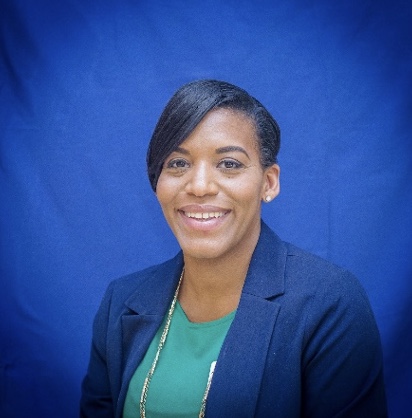
Lyndsey Gibbons (left) & Abby Reisman (right)

The larger theory of action of instructional coaching rests on resources that are made available to teachers through social interactions with coaches (Coburn & Russell, 2008). Coaching is job-embedded in nature, and coaches can take an active role in the work of teaching. As such, coaches can orchestrate professional interactions that make visible the complex reasoning work in justice-oriented teaching (Saclarides & Munson, 2021), such as considering when to ask a student to revoice another student’s contribution and the implications of such a choice. Professional discourse is central to how teachers learn and shapes what they have an opportunity to learn (Lefstein et al., 2020). Professional discourse is essential for productive discussions about justice-oriented teaching and learning because it allows teachers and coaches to name critical aspects of instructional practice and student learning. Coaches can help establish professional discourse to name aspects of teaching and help make it visible to teachers.

Particular features of social interactions can be more or less conducive to accessing appropriate resources and creating a normative environment that supports and enables change in teachers’ instructional practices. In our session, we will explore the features of coach-teacher interactions that provide productive learning opportunities to teachers. For example, we found that history teachers whose coaches focused on posing open-ended questions and anticipating students’ responses grew more in their discussion facilitation than teachers whose coaches focused on historical thinking skills. Identifying features of coach-teacher interactions is critical to supporting the professional learning of coaches, as well as researching the effectiveness of coaching. Guiding questions for our roundtable discussion include: How can coach-teacher interactions be shaped to consider how to dismantle racial injustice in the classroom and beyond? How do coaches’ orientations toward teacher learning and toward justice influence their interactions with teachers? We then will consider how we might craft a research agenda moving forward that attends to examining coaching interactions that support teacher learning.

LtC: What are some of the ideas you hope the field of Educational Change and the audience at AERA can learn from your work related to practice, policy, and scholarship?

In this session, we are intentionally bringing together scholars who study teacher learning, instructional coaching practice, and policies that impact coaching. By design, we will be examining practice and policies around coaching, as well as consider future directions for scholarship.  The workgroup will break into three smaller groups to grapple with the logics, conceptualizations, and visions that shape their work researching coaching. The smaller groups will identify research gaps and consider new approaches. For example, a gap that might be identified is how coaches can help teachers attend to students’ identities and strengths as they plan for and enact instruction, as well as how coaches can help teachers learn to navigate the social and political dimensions of teaching (Marshall & Buenrostro, 2021). We then will come back together as a whole workgroup to synthesize discussions across domains to consider future, potentially collaborative, research agendas. We hope this session will be the genesis of long-term conversations organizing scholars who study coaching. Stemming from these initial conversations could be considerations for a special issue in a journal or creating a practitioner-facing document informing policies around coaching.

Widening Our Lens to Consider Coaching Models and Programs: The Benefits and Challenges of Programmatic ThinkingJacy Ippolito, Salem State University, Rita M. Bean, University of Pittsburgh

Lead the Change (LtC): The 2024 AERA theme is Dismantling Racial Injustice and Constructing Educational Possibilities: A Call to Action. How does your research respond to this call?

Jacy Ippolito & Rita M. Bean (JI & RMB): Our joint work has traditionally focused on the roles, responsibilities, and impact of instructional coaches (and literacy coaches specifically) across grade levels and school settings. In our latest book (Ippolito & Bean, 2024), we propose a new framework for understanding and synthesizing coaching research findings. The framework is an initial response to the Kraft et al. (2018) meta-analysis call to identify effective elements of coaching programs with simultaneous attention paid to both specific instructional practices and larger school and district contexts. Towards this end, our Content and Context Framework (CCF) for coaching reframes the notion of effective coaching. Instead of thinking of coaching success as solely the product of individual coaches’ work, we instead detail the ways in which coaching efficacy may be more accurately described as the alignment of instructional content with coaching programs and processes, all within a supportive school and district context. 

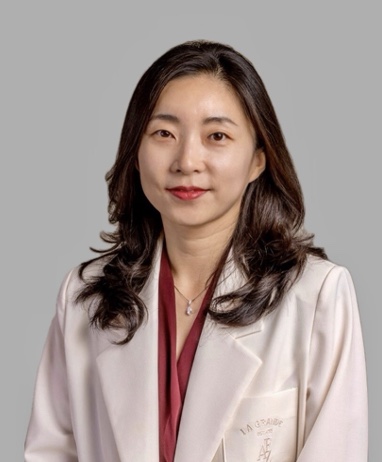
Jacy Ippolito (left) & Rita M. Bean (right)

This more content- and context-dependent way of thinking about coaching success paves the way for coaches, teachers, and leaders to identify more clearly the ways in which issues of equity, diversity, and racial justice are influenced by coaching in schools. If coaching work is unable to influence the instructional core by creating more equitable opportunities and outcomes for all students, then we might be hard-pressed to say that the coaching program is successful. Likewise, if school and district contexts (i.e., leadership structures, coaching policies, systematic evaluations of coaching) are unable to fully support a coaching program that has diversity and equity as a core mission, again we might be unable to call a coaching program entirely successful. 

As we have begun to look across the past ten years of coaching research (Bean & Ippolito, 2023)—literacy coaching specifically, as well as research on instructional coaching more broadly—we found very few studies to date address content, coaching, and context simultaneously (e.g., Galey-Horn, 2020; Zoch, 2015). If alignment of these three domains is what we hypothesize may provide the best opportunities to address issues of equity and to dismantle racial injustice in classrooms, then we must incentivize future coaching researchers to attend carefully to content, coaching, and context together in larger-scale studies. Implications of this work are far-ranging, from influencing future research to shifting the ways that coaching programs are constructed, refined, and evaluated over time. 

LtC: What are some of the ideas you hope the field of Educational Change and the audience at AERA can learn from your work related to practice, policy, and scholarship?     

JI & RMB: Instructional coaching has long been heralded as a gold standard for job-embedded professional learning for educators (Kraft et al., 2018). At its best, coaching is: personalized; responsive to teachers’ needs; attentive to school and district needs; sensitive to students’ unique learning successes and challenges; and implemented over long periods of time to help teachers shift instructional practices in meaningful ways. However, coaching research suggests that many coaching programs do not quite live up to their promise of supporting broad and deep changes in teaching and learning.

Our Content and Context Framework (CCF) for coaching suggests that part of the reason that many coaching programs do not fully succeed is due to a misalignment or inattention to content, coaching, and context simultaneously. For example, when all three elements are aligned, coaches can provide content-specific guidance to teachers that furthers schools’ and districts’ goals while simultaneously supporting teachers’ own identified needs. In cases where content, coaching, and context are misaligned, coaches and teachers’ work may run counter to school and district goals, and/or school or district needs (e.g., for coaches to step in as classroom substitutes) may subvert coaching work completely. A number of implications arise from our framework’s suggestion that coaching success results from the alignment of purpose and practices across content, coaching, and context.

For researchers, the implications of this framework include conducting studies that focus equally on classroom-level teaching and learning, coaching practices, and school/district contextual factors. Smaller-scale studies of individual coaches and/or coaching programs can be mined for guidance on the direction and questions of larger-scale longitudinal studies and meta-analyses. Future coaching research, regardless of scale, may best serve the field by always including: (a) data collected from and about teachers’ and students’ work in classrooms; (b) coaching practices and collaborations with both teachers and leaders; and (c) information collected from/about school and district leaders, school/district policies, and related coaching and professional learning initiatives. Such comprehensive research on coaching work—attending equally to content, coaching, and context—is what the field most needs to support future policy and practice.

For U.S. policymakers, implications include providing better guidance to schools, districts, and states about the interdependence of content, coaching, and context. Coaching guidance can no longer be provided as if content- and context-factors were neutral or irrelevant. Based on emerging content- and context-specific coaching research (e.g., Hannan & Russell, 2020), policymakers may be better equipped to provide funding and guidance to support the success of coaching practices best suited to different disciplinary initiatives (e.g., coaching practices within literacy vs. math initiatives) and different contexts (e.g. within large urban school districts vs. smaller rural districts). Ultimately, we must move away from one-size-fits-all policies for coaching, and instead move towards more nuanced content- and context-dependent guidance.

Finally, for practicing coaches and leaders, our framework suggests that the development, refinement, and evaluation of coaching programs must consider the alignment (or misalignment) of content, coaching, and context. This suggests that teachers, coaches, and leaders must partner even more closely to define coaching roles, responsibilities, and routines. School and district leaders must work with coaches to develop role descriptions, coaching schedules, and menus of service that are content- and context-specific. Finally, coaches and teachers must develop common communication and collaboration practices that are content- and context-specific, to meet teachers’ and students’ needs most effectively.

The 30,000 Foot View: Mapping the Institutional Landscape of CoachingSarah L. Woulfin, University of Texas at Austin

Lead the Change (LtC): The 2024 AERA theme is Dismantling Racial Injustice and Constructing Educational Possibilities: A Call to Action. How does your research respond to this call?

Sarah L. Woulfin (SLW): My research responds to this year’s AERA theme by paying close attention to how infrastructure and leadership shape instructional reform efforts in ways that exacerbate—or disrupt—inequities in educational organizations. For instance, my research on the policies and practices of coaching has explored how district and school leaders structure and conceptualize coaching as a tool for reaching equity-oriented objectives. I’m currently co-facilitating professional development sessions for principals and coaches on equity-oriented coaching. And my research on the implementation of turnaround reform considers how school leaders promote curriculum use to improve outcomes for Black and Brown students.

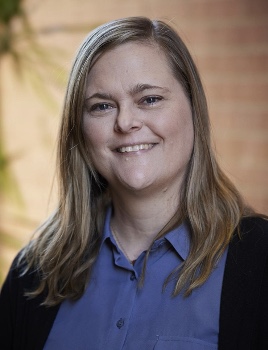
Dr. Sarah L. Woulfin

LtC: What are some of the ideas you hope the field of Educational Change and the audience at AERA can learn from your work related to practice, policy, and scholarship?     

SLW: One major branch of my work addresses the role of people in the implementation of education policy. In particular, the daily practices of leaders and teachers can “add up” to make significant changes. I hope the AERA and Educational Change audiences devote more attention to the power of and possibilities for individuals to catalyze crucial change to improve schools and communities. Additionally, the field should consider how to support the policy knowledge development of educators ranging from district leaders and principals to coaches and teachers. That is, how do we ensure that all educators hold the capacity to analyze and ask needed questions about reforms they are experiencing.

LtC: What excites you about the direction of the field of Educational Change, and how might we share and develop those ideas at AERA 2024?

SLW: I am excited about the ways the Educational Change field is examining a wide array of policies and programs, including discipline, attendance, school counseling, and EdTech in addition to accountability-oriented and instructional reforms. I believe this points to the utility of an Educational Change perspective for analyzing numerous aspects of districts and schools. And I encourage featuring scholarship that expands our understanding of educational change while looking at diverse reform efforts.

References (Gibbons & Reisman):

Baldinger, E. M. (2017). Maybe it’s a status problem”: Development of mathematics teacher noticing for equity. In E. O. Schack, J. Wilhelm, & M. H. Fisher (Eds.), Teacher noticing: Bridging and broadening perspectives, contexts, and frameworks (pp. 231–250). Springer. 

Biancarosa, G., Bryk, A. S., & Dexter, E. R. (2010). Assessing the value-added effects of literacy collaborative professional development on student learning. The Elementary School Journal, 111(1), 7-34.

Coburn, C. E., & Russell, J. L. (2008). District policy and teachers’ social networks. Educational Evaluation and Policy Analysis, 30(3), 203-235.

Darling-Hammond, L., Hyler, M. E., & Gardner, M. (2017). Effective teacher professional development. Learning Policy Institute.

Duncan-Andrade, J. M. R., & Morrell, E. (2008). The art of critical pedagogy: Possibilities for moving from theory to practice in urban schools (Vol. 285). Peter Lang.

Ippolito, J. & Bean, R. (2024). The Power of Instructional Coaching in Context: A Systems View for Aligning Content and Coaching. The Guilford Press.

Kazemi, E., Granger, J. C., Lind, T., Lewis, R., Resnick, A. F., Gibbons, L. K. (in preparation). Children Thrive When Teachers Thrive. Harvard Education Press.

Kraft, M. A., Blazar, D., & Hogan, D. (2018). The effect of teacher coaching on instruction and achievement: A meta analysis of the causal evidence. Review of Educational Research, 88(4), 547-588.

Lefstein, A., Louie, N., Segal, A., & Becher, A. (2020). Taking stock of research on teacher collaborative discourse: Theory and method in a nascent field. Teaching and Teacher Education88, 102954.

Marshall, S. A., & Buenrostro, P. M. (2021). What makes mathematics teacher coaching effective? A call for a justice-oriented perspective. Journal of Teacher Education72(5), 594-606.

Robertson, D. A., Padesky, L. B., Ford Connors, E., & Paratore, J. R. (2020). What does it mean to say coaching is relational?. Journal of Literacy Research, 52(1), 55 – 78.

Saclarides, E. S., & Munson, J. (2021). Exploring the foci and depth of coach teacher interactions during modeled lessons. Teaching and Teacher Education105, 103418.

References (Ippolito & Bean):

Bean, R. M., & Ippolito, J. (2023, December). Interactions of content, coaching, and context in recent literacy coaching research. Presented at the Annual Meeting of the Literacy Research Association (LRA), Atlanta, GA.

City, E. A., Elmore, R. F., Fiarman, S. E., & Teitel, L. (2009). Instructional rounds in education. Harvard Education Press.

Galey-Horn, S. (2020). Capacity-building for district reform: The role of instructional coach teams. Teachers College Record, 122(10), 1-40.

Hannan, M. Q., & Russell, J. L. (2020). Coaching in context: Exploring conditions that shape instructional coaching practice. Teachers College Record, 122(10), 1–40. Ippolito, J., & Bean, R. M. (2024). The power of instructional coaching in context: A systems view

Looking Ahead in 2024: Scanning the Predictions for Education in the New Year

This week, Thomas Hatch shares IEN’s annual scan of headlines that are trying to anticipate key trends and development for education in the New Year. For comparison, review the previous scans of the “looking ahead” headlines from 20222021 part 12021 part 2, and 2020. Last week’s post featured articles that looked back on the key issues and stories from 2023; previous posts looking back on the year in education also can be found for 2022, 20212020, and 2019 part 12019 part 2.

         In some ways, the predictions for schools and education in 2024 reflect “more of the same” – continuing discussions of the influence of technology and AI on education; the impact of the COVID-19 pandemic on attendance, academic outcomes, and wellbeing; the challenges of education financing as pandemic funding runs out; and problems caused by teacher shortages and divisive politics:

This is a critical year as the nation grapples with the long-term effects of the pandemic amid a technological revolution, a still-unfolding refugee crisis, and a presidential election that could intensify political tensions.

In 2024, expect new debates about AI, gender, and guns, New York Times

Educators should expect debates over school choice, teacher pay measures, artificial intelligence, and standardized testing in state legislatures and on Capitol Hill in 2024

What 2024 Will Bring for K-12 Policy: 5 Issues to Watch, Education Week

Budget projections will be easier and more reliable, at least for the calendar year, as the economy continues settling fairly smoothly to a slower pace with inflation easing and interest rates drifting down with it… absent the usual unforeseeables like new wars, oil shocks and pandemics — public finance is returning to something resembling business as usual.

For Public Finance, a Year for Stability and Cautious Optimism, Governing

5 Key Predictions for the Education Market in 2024, EdWeek Market Brief

One of the biggest forces impacting education in 2024 will be labor shortages—and not just in the classroom. Pressures on the wider U.S. workforce caused by a lack of employees with the requisite skills will drive more collaboration between K12 schools and employers… It will also drive a surge in popularity in career and technical education programs.

Education in 2024: Breaking Down 8 Big Trends, District Administration

What Will Teacher Shortages Look Like in 2024 and Beyond? Education Week

“While the rest of us are buying gym memberships we probably won’t use, school leaders are facing far more ambitious New Year’s resolutions: regaining academic ground, tightening those belts, weathering divisive politics, and ensuring more students show up to class.”

Five challenges school district leaders will face in 2024, Education Week

Brown Center scholars look ahead to education in 2024, Brookings

Education Stories We’re Watching In 2024, Chalkbeat

Three Education Stories To Watch In 2024, Peter Greene, Forbes

In 2024, 5 Big Issues Will Shape Education, Vicki Phillips. Forbes

9 Education Predictions for 2024, Larry Ferlazzo, Education Week

3 education innovations to watch in 2024 (hint: it’s not just about skills and AI), Julia Freeland Fisher, Christensen Institute

Looking ahead globally and locally

Five changes the new Government has planned for schools, Stuff (New Zealand)

Top 10 Education trends to watch out for in 2024, Times of India

Literacy, vouchers, an IPS overhaul, and more: Five Indiana education issues to watch in 2024, Chalkbeat Indiana

“New York’s Board of Regents has called for increased investments in the state’s information technology infrastructure, a bolstered educator pipeline, and additional money to update the state’s learning standards.”

Special education data and the teacher pipeline: NY education officials share budget priorities, Chalkbeat New York

Fiscal considerations may weigh on Massachusetts Legislature’s session priorities, Spectrum News

California education issues to watch in 2024 – and predictions, EdSource

Education Technology

“AI is the phrase on everyone’s lips heading into 2024, with 19 education technology experts believing its advantages will range from virtual tutors and faster student feedback to engaging, compelling presentations and better data analysis for teachers. Other predictions include more immersive and multisensory learning experiences, flexible learning locations, and leveraging and reaching community-based help groups.” 

How Will EdTech Change in 2024? TechRound

State of Global E-Learning Market- Ongoing Trends and Seizing Opportunities, EdTech Review

5 Trends Set To Revolutionise Education In 2024, India Today

5 K–12 Ed Tech Trends to Follow in 2024, EdTech Magazine

65 predictions about edtech trends in 2024, eSchoolNews

7 Artificial Intelligence Trends That Will Reshape Education in 2024,The74

AI’s education impact in 2024 could be bigger than many predict, Thomas Arnett, Christensen Institute

Giving Thanks for Education Around the World 2022

Every year, during the week of Thanksgiving in the US, IEN highlights opportunities to support some of the organizations that we have featured that are making a difference in children’s lives and in their educational opportunities. This year, we also want to emphasize the drastic needs to support children who are suffering from war, famine, natural disasters, climate change, and disrupted education, and to highlight ways to donate to some of the organizations that are working to respond to those crises, particularly in places like Ukraine, Afghanistan, Pakistan, and East Africa.

Over 27 million children at risk as devastating floods set records across the world, Unicef

How women and girls vulnerable to climate change are fighting back, Independent

Inside Somali hospitals where climate change-induced hunger is killing children, CBSMornings

To Keep The Trauma At Bay, Ukrainian Refugee Children Are Given More Time To Play, Radio Free Europe

In Afghanistan, a drive to continue education – and confront the Taliban, The New Humanitarian

Take action to help those affected by catastrophic flooding in Pakistan, Obama Foundation

Take Action to Protect Children from the Impacts of Climate Change, Unicef

Help save children in Somalia, Save the Children

How To Donate To Ukraine Relief Efforts, Forbes

Afghanistan is the only country in the world that forbids girls to go school: Donate, Malala Fund

Fount For Nations

Donate Here

IkamvaYouth (South Africa)

Donate Here

Kliptown Youth Program (South Africa)

Donate Here

The Citizens Foundation (Pakistan)

Donate Here

Hope and Despair? Scanning Education Stories that look back at 2021

This week, Thomas Hatch pulls together some of the blog posts and news stories that look back at 2021. Next week: A roundup of predictions for 2022.

Schools Week in the UK summed up what many may have been feeling, declaring “The year a return to normal only got further away” while US News & World Report looked for a silver lining, exploring “How 2021 set the the stage for a seismic overhaul of education.” For my own part, I tried to both look back and look ahead in a commentary for the Journal of Educational Change on what can change in schools (“We will now resume our regular programming”):

“What if this is a moment when we can re-imagine education?” But “What if it isn’t? What if, despite the changes wrought by the pandemic, the conditions that sustain conventional schooling remain in place?”

Here, in no particular order, are a few more headlines from the “reviews” of 2021 from some of our regular sources.

Around the World

From learning recovery to the futures of education, UNESCO

Grave violations of children’s rights in conflict on the rise around the world, UNICEF

Meet Gen Covid: Growing up under the shadow of Covid-19, the young in Asia talk about loss, gain and hope, Straits Times

2021 in education: a year in review (UK), Twinkl Digest

The year a return to normal only got further away (UK), Schools Week

2021 in Review, FreshEd Podcast (Will Brehm with Susan Robertson & Mario Novelli)

In the US

Education in 2021: 10 Photos That Capture a Chaotic Year, Education Week

Protesters against a COVID-19 mandate gesture as they are escorted out of the Clark County School Board meeting at the Clark County Government Center, on Aug. 12, 2021, in Las Vegas.
Bizuayehu Tesfaye/Las Vegas Review-Journal via AP

2021 in pictures: Images that captured the tragedy and resilience that marked 2021, Hechinger Report

16 charts that changed the way we looked at America’s schools in 2021, The 74

Education data legislation review 2021: State activity, Data Quality Campaign

Top 2021 education legislative trends, Education Commission of the States

Survival Mode: Educators Reflect on a Tough 2021 and Brace for the Future, EdSurge

After A Year Of Uncertainty, College Presidents Reflect On COVID-19’s Impact, EdSurge

2021 education year in review, The Report Card with Nat Malkus (in conversation with and Erica GreenLaura Meckler, and Eesha Pendharkar)

Proof Points 2021 Year in Review: A reading mystery, test-optional admissions and the problem with small classes, Hechinger Report

Philanthropy Awards, 2021, Inside Philanthropy

Scanning the headlines for results from OECD’s Education at a Glance: September 2021 Edition

OECD’s Education at a Glance 2021 provides annual international comparisons of education statistics. This year, the report focuses on equity and also highlights the measures countries have implemented to the educational response during the pandemic. This week’s scan reveals the aspects of the findings that media outlets around the world have emphasized. For a comparison, see IEN’s Education at a Glance scan from 2019.

Australia

Australian children at risk of being left behind on early learningMirage

Australia has the fourth highest level of reliance on parent out-of-pocket costs to fund pre-primary education and ranks 41 out of 44 OECD nations on preschool attendance in the year before school.

Austria

OECD study: Austria takes first place in vocational training, APA OTS News

Austria achieved first place with 75.6% in the ranking of pupils who complete upper secondary level with a professional qualification. This value is well above the OECD average of 38.4% and also above the EU average of 43.5%.

Brazil

OECD points to Brazil’s low investment in basic education during the pandemicDire

About two-thirds of OECD member and partner countries reported increases in the budget allocated to primary schools to help them deal with the crisis in 2020. Compared to the previous year, Brazil had no changes in the education budget for primary education, both in 2020 and in 2021

Finland

(Translation) OECD comparison: The socio-economic background still influences educational choices to a great extent – small regional variations in the level of education in FinlandValtioneuvosto Statsrådet

Even in Finland, students with a lower socio-economic background are more likely to continue in vocational education than in upper secondary school after lower secondary school. Of those who chose vocational education, 59% of the parents had not completed a university degree, compared to 27% of students who chose upper secondary school.

Hungary

(Translation) According to the OECD, Hungary has performed at a high level in educationMagyar Hírlap

...Hungary is one of the countries that provided targeted support to education actors during the epidemic, such as the state’s continued provision of free and discounted childcare and additional benefits for educators working in disadvantaged settlements for their work to prevent dropout.

Ireland

Ireland ranks in last place in OECD for investment in educationThe Irish Times

The annual Education At A Glance 2021 report from the Organisation for Economic Co-operation and Development shows spending on education – ranging from primary to higher and further education – in Ireland accounts for 3.3 per cent of our GDP in 2018. This compares to an EU average of 4.4 per cent and is significantly behind top-performers such as Norway with 6.6 per cent

Israel

(Translation) The huge gap in schooling in the corona year was revealed: Israel versus the world in educationY Net

The report shows that during the Corona period, high schools in Israel were closed for more days than in OECD countries, as were middle schools. High schools were closed for 76 days compared to an average of 70 days in the OECD, and middle schools were closed for 93 days compared to 65 days. On average in other developed countries, however, primary schools and kindergartens were closed for fewer days – 52 primary days were closed compared to 58 in OECD countries, while kindergartens were closed for 36 days compared to 43 days in the OECD.

Japan

OECD: Japan lowest in women studying scienceNHK World-Japan

Stressing the high level of Japanese women’s knowledge and ability, the OECD noted the effects of the strong imposition of stereotypical images for women’s career options in Japan, and the lack of role models in science fields.

Latvia

The unemployment rate among young adults in Latvia is higher than the OECD averageDiena

In Latvia, the unemployment rate among adults aged 25-34 without secondary education was 19.7% in 2020, which is six percentage points more than in the previous year. This was a higher increase than the OECD average, where the unemployment rate for young adults was 15.1% in 2020, two percentage points higher than in 2019.

Norway

Norway among countries with lowest proportion of women in vocational studies, The Local.no

In total, women make up less than 40 percent of students on vocational courses—this is more than five percent below the OECD average. Among Norway’s Nordic neighbours Finland has the highest proportion, 51 percent, of women studying vocational subjects followed by Denmark, 43 percent, and Sweden, 41 percent. However, depending on the subject, the gender disparity could vary massively. For example, women made up just 8 percent of people studying electrical engineering. This is around half the OCED average.

South Korea

S. Korea has larger classes, lower employment rates among college graduates than OECD averages: Education MinistryKorea Herald

In terms of public education funding, the report showed the South Korean government took a lesser financial burden than other OECD nations.

Spain

Spain has second-highest percentage of young people who neither work nor study in EUEl País

According to a new report, 19.9% of youngsters between the ages of 18 and 24 fell into the NEET category (neither in employment nor in education or training) in 2020 – a problem that was exacerbated by the coronavirus pandemic.

Switzerland

Educational inequalities highlighted by Covid-19 pandemic, Expatica

In Switzerland there have been concerns that some disadvantaged pupils fell through the learning net during the shutdown of schools in spring 2020 – by not having anywhere quiet to study, access to computers or not turning up to online lessons. Switzerland…was not among the countries that allocated additional funds to ensure resources targeted those who needed them the most.

UK

England has highest university tuition fees in developed world – OECD, Evening Standard

Universities in England can charge up to £9,250 per year for an undergraduate degree, and even more to overseas students. Scottish students do not pay tuition fees in Scotland, and Northern Irish students benefit from a lower tuition fee cap in Northern Ireland.

– Correne Reyes

How are educators responding to the insurrection at the US Capitol?

Last week, IEN rounded up headlines from articles trying to make sense of what happened in education in 2020. This week, we had planned to look ahead at predictions for what might happen in education in 2021. Instead, we found numerous articles discussing how educators have been and could be talking with their students about the insurrection at the US Capitol incited by Donald Trump.  A few of these articles also explicitly discuss the racism made visible both by the insurrection and the responses to it, and we encountered several other articles that talked more broadly about the teaching of controversial topics in the wake of the insurrection.

https://www.historians.org/news-and-advocacy/everything-has-a-history/the-assault-on-the-capitol-in-historical-perspective-resources-for-educators

Insurgency at the U.S. Capitol: A dreaded, real-life lesson facing teachers, Madeline Will & Stephen Sawchuck, Education Week

‘You have to address it.’ How San Diego educators are teaching about the Capitol mob, The San Diego Union-Tribune

Vermont’s educators grapple with insurrection at the Capitol, Lola Dufort, VTdigger

Teachers Shift Lessons to Focus on US Capitol Attack, Suevon Lee, Honolulu Civil Beat

Lessons from an insurrection: A day after D.C. rampage, how 15 educators from across U.S. helped students make sense of the chaos, The74

Ways to teach about today’s insurrection, Larry Ferlazzo, Education Week

Responding to the insurrection at the US Capitol, Facing History and Ourselves

Resources for educators in response to the insurrection in Washington, Generation Citizen

Preparing yourself for tomorrow…, Tamisha Williams & Lori Cohen, Tamisha Williams Consulting Newsletter

Resources for teachers on the days after the attack on the U.S. Capitol, Alyssa Hadley Dunn, Beyond the Stoplight

The Assault on the Capitol in Historical Perspective: Resources for Educators, American Historical Association

Three ways to teach the insurrection at the U.S. Capitol, PBS NewsHour

How to talk to children about the Capitol riots: An age by age guide, Meghan Holohan, Today

How to talk to kids about the riots at the U.S. Capitol, Anya Kamentz, NPR

Don’t talk about the Capitol siege without mentioning white privilege, Ellen McGirt & Aric Jenkins, Fortune

The lies we tell ourselves about race, Sam Sanders, NPR

Mobs of white citizens rioting have been commonplace in the United States for centuries, Joshua D. Rothman, Hechinger Report

Confused and angry, young teachers seek guidance on discussing current events with students, Jennifer Rich, The Hechinger Report

Teachers of color more likely than white peers to tackle ‘controversial’ civics topics, Sarah Schwartz, Education Week

What in the world is happening in the US? Scanning the Headlines for News on Education and the Election

Given the elections in the United States on November 3rd, this week IEN scanned the headlines and found a few links to news stories related to education both before and after voting took place.

In addition to summarizing the presidential election results so far (using the headline “Trump sets U.S. on course for institutional crisis”), Politico’s Global Translations provided links to headlines from around the world.

Before the election, Education Week focused on 7 Big Questions for Schools and Education and noted as well that Educators Prefer Governors With a More Cautious Approach to COVID-19.

Chalkbeat previewed 8 big consequences the election could have for America’s K-12 schools and after the election continued to report on a series of education related issues in Indiana, Colorado, and Michigan:

The74 continues to curate a live blog with updates on key education related votes across the country, including results of state and local elections for governors, senators, and school board members, along with outcomes of several different ballot initiatives:

2020 Liveblog — Education on the Ballot: Rolling Updates, Results & Analysis From 50 Key Votes That Could Reshape Education PolicyThe74

  • Pre-K Wins Big in Colorado, San Antonio, St. Louis, and Multnomah County
  • California Ban on Affirmative Action in College Admissions Likely to Stay in Place
  • Washington State Passes Sex Education Bill
  • Florida Voters Choose to Amend State Constitution to Say ‘Only a Citizen’ Can Vote

Ballotpedia provides links to an extensive set of overviews and results of national elections, ballot measures/issues, state-by-state elections, and school board elections, and google searches of education and elections turns up many stories on local ballot measures and school board races.

Beyond the results, even before the election, some educators were thinking about how to address what many predicted would be contested and uncertain outcomes:

— Thomas Hatch

After the Bushfires: A View of the Pandemic and School Closures from Amanda Heffernan in Melbourne, Australia

This week’s post features an e-mail interview with Amanda Heffernan, a lecturer in Educational Leadership at Monash University, Melbourne. Having previously worked as a school principal and principal coach and mentor for Queensland’s Department of Education, Amanda’s key research areas include leadership, social justice, and policy enactment. 

This post is the seventh in a series that includes views from Chile, from Japan, from the Netherlands, from Scotland, from Liberia and from Pakistan. The “A view from…” series editors are IEN’s Thomas Hatch and Karen Edge, Reader/Associate Professor in Educational Leadership at University College London’s Institute of Education.

IEN: What’s happening with you and your family?

Amanda Heffernan: I’ve been working from home since early March when Australia’s restrictions were put into place. Our state government’s advice was that if we can work from home, we must work from home, to stop the spread of COVID-19. After the first week or so I realised how much I needed to stop horror-scrolling through the internet and the news, and found routines that let me focus while still taking note of the state of the world. I’m fortunate in many ways, in that my husband is also an academic and began working from home at around the same time, so we were able to establish an easy-enough routine of work that could shift with the rhythms of how academic work ebbs and flows throughout the semester.

Being an academic often means being mobile, so while I moved to Melbourne a number of years ago (Victoria, Australia) to take up an academic position at Monash University, the rest of my family are in my home state of Queensland, Australia where it seems to feel much safer than it does in my chosen-home state of Victoria. Active case numbers in Queensland and other states are incredibly small, while ours rose so quickly and posed such risk that we have now been placed back into strict lockdown for 6 weeks (only permitted to leave our homes for work, compassionate reasons, outdoor exercise, or grocery shopping). One thing this experience has done for me is make me really realise how far away I am from ‘home’ even though I am still in Australia. The ways our different state governments & communities responded to COVID-19 meant that we all had very different experiences of the last few months. But – with that said – I am so grateful that we are in such a fortunate position in Australia, in comparison to a lot of other countries.

IEN: What’s happening with education/learning in your community?

AH: Universities (for the most part) are working online where they can. My Master’s students are mostly studying while working so they are able to use our critical educational leadership courses as a way of understanding and reflecting on their experiences in dealing with rapidly changing policy and community conditions at the moment. Schools here worked online for a few weeks, while remaining physically open to children of essential workers. As of June 9, schools were back in face-to-face mode, with really careful structures around social distancing where they can, though this is understandably incredibly difficult in many circumstances. School drop-offs and pick-ups are carefully managed, there are extra cleaning procedures in place, and staff are required to socially distance in their staff rooms. Many people are expecting a shift back to online learning in the future – and a back and forth of online & face-to-face until a vaccine is found.

IEN: What do you/your community need help with?

AH: One thing Australia’s schools need help with is making sure that their work is being recognised by the public, politicians, and the media as being incredibly complex right now. The public discourse about schooling and education has shown some increase in appreciation from parents and carers who have realised how difficult the job is after trying to support their children through remote learning, and seeing how much work teachers are putting in to try to make sure students remain connected and supported. At the same time, though, we saw schools being treated as a political football between conflicting goals from our Federal and State governments, with the Federal government wanting schools to remain open, while Victoria’s state government closed them to flatten the curve. Teachers have been positioned in the middle of these tensions, and have had to respond quickly to changing requirements and directives.

One thing Australia’s schools need help with is
making sure that their work is being recognised
by the public, politicians, and the media
as being incredibly complex right now.

Earlier this year a research team I am part of at Monash University, launched a research report that showed Australia’s teachers across all states and territories felt undervalued and that it was having a significant effect on their intentions to stay in the profession. Teachers need to be publicly recognised as experts and professionals who are doing an exceptional job in incredibly difficult circumstances right now. We’ve already seen the economic effects of the pandemic affecting employment conditions (e.g. pay cuts or pay freezes, cancelled teaching contracts, staff layoffs) for education workers, after months of putting themselves at risk and being considered ‘frontline workers’.

We also need help from our politicians and policymakers remembering that education workers very rightfully have concerns about their own health and safety and the safety of their own families, as well as their school communities. There’s a real tension for teachers who want to do the best for their students while still being at risk themselves in their workplaces.

We also need help from our
politicians and policymakers remembering
that education workers very rightfully have
concerns about their own health and safety
and the safety of their own families,
as well as their school communities.

IEN: What resources/links/supports have you found most useful?

AH: Something I have found useful is reading Monash Lens – it’s a collection of analysis and commentary on current issues by experts from our university, and it means I have access to a range of perspectives beyond just my field of expertise and interest.

IEN: What are you reading, watching, listening to that you would recommend to others?

AH: I’m reading Twitter a lot, after carefully curating my news feed. I’d recommend Pat Thomson (from the University of Nottingham) and Anuja Cabraal‘s Virtual Not Viral website and twitter chat for anyone who works with postgraduate research students, and for anyone completing a PhD in the current circumstances. It’s not just for graduate students – it has important points to think about for anyone working in research right now.

I’ve been revisiting Foucault over the last few months and would recommend a book I recently read: Feminism, Foucault, and Embodied Subjectivity by Margaret A. McLaren. It’s almost 20 years old now but does a fantastic job of positioning Foucault’s work within feminist perspectives.

I’d also recommend anything that gives a little bit of escapism and nostalgia right now – I’m one of the millions of people who have been playing Animal Crossing on the Nintendo Switch, and I’ve been working my way through Rolling Stone’s Top 500 Albums of All Time as part of my work playlist.

We came to COVID-19 off the end of a summer of ferocious bushfires that covered much of the country and many of our schools and communities were affected. Teachers and leaders have been working non-stop since the end of 2019, many of them have been personally affected by tragedy and loss after the bushfires, and they haven’t really had a break to rest yet.

IEN: What have you found most inspiring?

AH: Seeing how the teachers and school leaders I work with have risen to the challenges that COVID-19 keeps throwing their way. We came to COVID-19 off the end of a summer of ferocious bushfires that covered much of the country and many of our schools and communities were affected. Teachers and leaders have been working non-stop since the end of 2019, many of them have been personally affected by tragedy and loss after the bushfires, and they haven’t really had a break to rest yet. They shifted to online learning, then shifted back once schools returned face-to-face, and now they face an uncertain future with our numbers starting to rise again. Their dedication and their efforts mean our students have been connected and supported through all of this.

A view from The Citizens Foundation in Pakistan: Neha Raheel on school closures and the pandemic

This week’s post features an e-mail interview with Neha Raheel, (@NehaRaheel), Manager, Learning Experience & Assessment Design, Partnership Schools, at The Citizens Foundation (TCF) in Pakistan. Neha was also recently selected as a WISE Emerging Leader for her work at TCF. As described in an IEN post in 2019, TCF was launched by six friends in Karachi Pakistan who saw education as a key to addressing a wide range of social problems. Since establishing five new schools in 1996, TCF has developed a network of over 1600 schools in Pakistan.

This post is the sixth in a series that includes views from Chile, from Japan, from the Netherlands, from Scotland, and from Liberia. The “A view from…” series editors are IEN’s Thomas Hatch and Karen Edge, Reader/Associate Professor in Educational Leadership at University College London’s Institute of Education.

IEN: What’s happening with you, your family/friends, and co-workers?

Neha Raheel: The lockdown in Sindh (one of Pakistan’s provinces, located in the southeastern part of the country), where I currently live and work, was announced on March 23rd, 2020 (initially for a period of 15 days, which extended till early June). The government began to lift the lockdown gradually in the first week of June, despite the number of cases being on the rise. Currently, education institutions, marriage halls, beauty parlors, cinemas, etc. remain closed while businesses have been allowed to operate between the hours of 06:00 am – 7:00 pm (five days a week) in certain parts of the country. The government also began putting several localities under “smart lockdowns” as the number of cases was surging. However, some of these localities have now started to re-open, and the government has announced that it will be making a decision regarding the re-opening of government schools and educational institutions on July 2nd.

Credit: The Citizens Foundation

TCF, as an organization, had announced that at the discretion of the Heads of individual departments, we were allowed to begin working from home from March 16th onwards, so my colleagues and I have been doing so since then. My team and I work on curriculum and assessment design for TCF’s Public-Private Partnership schools (340+ schools adopted by the organization from the governments of Sindh and Punjab, with a mandate to improve access to, and quality of education).

Work from home has presented a whole host of challenges for us. We started this project by working with a team of content developers: part-time employees whose main task was to help us create lesson plans for the Teacher Guides that we are currently designing for our Partnership schools (a majority of our Partnership contracts mandate us to use the government’s syllabus, instead of the one designed by TCF for its flagship schools). These content developers do not always have access to technology (they create handwritten content for us, which is then typed at the Head Office). The quality of the lesson plans has always been heavily reliant on feedback; which pre-COVID, was given and discussed in weekly in-person meetings. Since these meetings can no longer take place in person due to the lockdown, we have been struggling with shifting the feedback sessions to take place over phone calls (a lot of people who work part-time with us do not have access to a laptop/computer or a stable internet connection at home). We also had a lot of drop-outs from the project because the women that we work with simply could not cope with the demands of managing their caregiver duties with a part-time project. As a result, we had to innovate and come up with an alternate recruitment and onboarding strategy. We are now relying heavily on the grace and magnanimity of a team of volunteers who graciously have agreed to assist us with our work on various projects (1100+ people have applied to volunteer with our department in the past month, alone). We are still grappling with the task of working remotely, not only within the team, but also with our volunteers.

IEN: What’s happening in the communities where you work?

NR: Especially where our Partnership schools are housed, TCF works within communities with some of the lowest average incomes in the country and, as such, the digital divide has prevented us from using traditional education technology-based solutions for distance learning. TCF has, instead, been working on creating multi-grade content for a national TV channel: creating a televised show that focuses on student wellbeing (including physical movement through the yoga/exercise section of the program), joy, and basic literacy and numeracy skills (storytelling section and guided activities/assignments). Students also send in their artwork and assignments to TCF in response to the content broadcast in the program. TCF is also piloting a magazine to assess the effectiveness of paper-based Self Study Materials. The aim is to try to be as inclusive as possible and to try to reach as many students as we possibly can, especially those who are most impacted by the digital divide and learning losses.

At the same time, we are also thinking ahead to what will happen when schools eventually reopen. As such, my team’s biggest project this year is creating Teacher Guides for our Partnership Schools, with the purposes of improving the quality of teaching and learning activities in what are often rote learning based and teacher-centered classrooms; to reduce teacher workload of lesson planning (the majority of our teachers spend the entire day in the classroom, teaching all subjects and, as such, do not find time to research and create learner-centered lesson plans); and to serve as a developmental tool, building teacher capacity. These Teacher Guides are being made for the post-pandemic/post-lockdown world that our teachers and students will return to. The trauma-informed approach to education tells us about the importance of bringing joy, safety, trust, and hope in the lives of learners who have been through a trauma. As our students deal with potential losses of life, learning, and/or livelihood, our focus has primarily been on designing interventions keeping the principles of teacher and student wellbeing at the front and center: we are thinking deeply about how to restore stability, joy, hope, and trust in their lives, while being cognizant of the large learning losses that most of our students will likely face. The curriculum in these Guides, along with the restructuring of the school day, will allow us to include engaging learner centered activities, brain breaks and movement-based activities (to energize students, provide them with processing time, and bring a sense of joy in their lives); opportunities for guided and free play, and meditation and mindfulness activities. We are also mindful of the loss of connection, anxiety, and stresses that students might face in their absence from school (which is more often than not a safe and joyous space for our kids) and we hope that classroom routines such as mindfulness, meditation, yoga, play, storytelling, collaborative pair/group work, gratitude journaling, and understanding, acknowledging, and knowing how to express one’s feelings will restore that sense of connectedness and will bring back joy and hope in the lives of our students when they return to school.

As our students deal with potential losses of life, learning, and/or livelihood, our focus has primarily been on designing interventions keeping the principles of teacher and student wellbeing at the front and center: we are thinking deeply about how to restore stability, joy, hope, and trust in their lives, while being cognizant of the large learning losses that most of our students will likely face.

IEN: What do you/your community need help with?

NR: The digital divide is becoming increasingly tied with learning losses and is likely to result in a widening of the already prevalent achievement gaps in our country. At the policy level, we need to think about ways of lessening the impact of the digital divide on student learning (perhaps beginning with a drive of providing students/communities with access to electricity/basic tech/internet). At the same time, we are drawing our inspiration from several innovative (and low/no cost resource based) initiatives, such as the remote learning work being done by Pratham, India and Teach for Pakistan’s WhatsApp school. TCF is a not-for-profit and, as such, relies heavily on the philanthropic donations of people from across the world. To be able to continue fighting the good fight, we need people to keep donating for the cause, and also (if possible) volunteer their expertise for the various programs that we have. TCF is also actively thinking about the potential increase in drop-out rates once schools open (as evidenced by the drop-outs following the Ebola crisis), especially with relation to the gendered nature of the drop-outs. A question that we are currently thinking deeply about is: How can we re-engage students whose parents might find an extra set of earning hands to be more useful than continuing their education? As we continue working on our television program and pilot our magazine, we would appreciate any and all advice/resources/connections that would help us create, curate, and disseminate content.

IEN: What resources/links/supports have you found most useful?

NR: There are several websites that are providing their content/lesson plans/lesson activities free of charge, including but not limited to the following:

  1. Learning Activities and Play Ideas for Pre-K-II:
    a. Pre-Kinders
    b. Play Ideas
    c. Steamsational
    d. DREME TE (Math activities for early years)
  2. Lesson Plans/Unit Plans (for all grades):
    a. National Geographic Education
    b. Teachnology
    c. PBS Learning Media (also includes videos)
    d. The Teacher’s Corner
    e. Scholastic
    f. Harvard Graduate School of Education’s Virtual School Lesson Plan Database
  3. Stories
    a. Storyweaver
    b. Bookdash
    c. Global Digital Library
  4. Mindfulness/Meditation Exercises
    a. Kids Relaxation
    b. Mindful Teachers
    c. Teach Starter

IEN: What are you reading, watching, listening to that you would recommend to others?

NR: Twitter has been a great source of connecting with educators from across the globe and has allowed me to watch/read/listen to the ways in which educators are responding to the crisis. Some of the accounts that I have found to be most useful include, but are not limited to: Teaching Tolerance, Social Emotional Learning, WISE, Design for Change, Pratham Education Foundation, Rising Academies, Math and Movement, CASEL, Recipes for Wellbeing, Karanga, SELinEdu, and many more. Webinars and conferences, so many of which have become freely available, have also been a great source of information (e.g. WISE Words, the T4 Education Conference, RISE Webinars, Catalyst 2030; Karanga’s Global SEL Conference, Education Disrupted, Education Reimagined, Elevating Education in Emergencies: Securing Uninterrupted Learning for Crisis-affected Children, etc.).

Credit: The Citizens Foundation

IEN: What have you found most inspiring?

NR: Videos/comments/thoughts from TCF school leaders and teachers have allowed me to stay connected with the communities where we work and have also inspired me with their messages of resilience, hope, gratitude, and positivity. Reading about stories of inspiring teachers from different parts of the world has been an additional source of inspiration. Doing a daily virtual gratitude journal with my team members has brought several moments of positivity and gratitude to my life: reading each other’s responses and thoughts about simple and positive moments brings smiles to all of our faces. Playing games (including a Harry Potter themed escape room) and doing mindfulness check-ins with my team as we all navigate work from home and feelings of isolation and anxiety/uncertainty has been both grounding, as well as inspiring, as we all try to collectively navigate the new reality. More so than anything else, my dog (we rescued her a few months prior to the pandemic): the amount of joy and hope that she brings in my life is unparalleled.

A view from Japan: Hirokazu Yokota on school closures and the pandemic

This week’s post features an e-mail interview with Hirokazu Yokota, a government officer at Japan’s Ministry of Education, Culture, Sports, Science and Technology (MEXT). At MEXT, he has tackled such missions as increasing the number of public school teachers, encouraging Community School initiatives, promoting special needs education, and spearheading a ministerial reform. Recently, he published an article on school leadership in Japan in Journal of Educational Administration. The post shares his own views and does not necessarily represent the views of MEXT. This post is the second in a series launched by IEN last week with a post from Chile. The “A view from…” series editors are IEN’s Thomas Hatch and Karen Edge, Reader/Associate Professor in Educational Leadership at University College London’s Institute of Education.

1. What’s happening with you and your family?

Hirokazu Yokota: I was taking a paternity leave from October 1 of 2019 to April 7  in order to take care of my second child (who has just turned one year last week!). As you might know, being a stay-at-home dad is as hard a job as working for the government. Although I enjoyed such things as playing with my son, cooking lunch for my wife and helping my four-year-old daughter with reading and writing letters, I sometimes needed a pastime. That’s why once a week, I was looking forward to having lunch with my old friends – just to chat and do a little catch-up. That has completely changed over the past three months. During weekdays, I refrained from going outside – to avoid getting infected and to make sure that my son and I did not spread it if we had it. What was especially concerning was my son had been sick early in March for nearly two weeks – but his fever did not go as high as the threshold of 37.5 Celsius. Now he is doing fine and has finished the phase-in at a nursery school which started on April 1, but I’m kind of feeling guilty about not being able to continue my paternity leave despite this COVID-19 outbreak.

“What is extremely challenging is that education is the act of human interaction, and now we must stay away from that”

2. What’s happening with education/learning in your community?

HY: Although almost all of the public elementary, junior high, and high schools in Japan have been closing after March 2, this does not apply to nursery schools. Therefore, my daughter was going to her nursery as usual, although I kept her at home for a week or so at the beginning of March. Because the nursery refrained from taking children outside, my daughter seemed to feel stressed, so I oftentimes could not help going to the playground, while practicing social distancing (which, I admit, is very difficult for kids).

My children at the playground (Photos from Hirokazu Yokota)

HY: Nationally, as of March 24th, MEXT announced new guidelines for the reopening of schools after spring break (e.g. necessary measures for local governments to implement in order to prevent further spread of the COVID-19) and for temporary closures in the new school term (e.g. how to determine whether the school should be closed on a temporary basis, in case of an infection of children, students or teachers. At that time, this policy decision was reasonable given the relatively slow rise of confirmed cases in Japan, although MEXT revised the latter guideline on April 1 to suggest how to determine the temporary closure based on the overall situation in the community, even if there are no infected people in the school. However, due to the recent rapid increase of confirmed cases, the Prime Minister Shinzo Abe declared a state of emergency, which took effect from April 8 to May 7. At first this measure had been targeted at seven prefectures (mostly metropolitan areas), but later was expanded to all the forty-seven prefectures on April 16. Accordingly, on April 10, MEXT issued a notification on the instruction to students who cannot go to schools owing to the temporary closure. In this notice, MEXT asked Boards of Education to ensure that schools couple instruction and assessment by teachers with appropriate learning opportunities at home (based on the instructional plan devised by schools), while taking into account the current status of infection in each area. Additionally, it mentions that after schools open, they should assess learning that occurred at home during the temporary closure and implement measures to supplement the lost learning opportunities. Although schools are supposed to make maximum efforts to ensure learning and to reteach material that should have been learned at home during the closure, schools do not have to cover the same content again if and only if assessments confirm that students fully understand the material (NOTE: this measure is an exception rather than a rule).

3. What do you/your community need help with?

HY: Before the COVID-19 outbreak, our ministry published an ambitious policy package to ensure every student in elementary and junior high schools will have access to an ICT device at school by the Fiscal Year (FY) 2023. The official document in Japanese is here, and English version is here (p23-24) (you might find this article by the Japan Times helpful). Moreover, given the importance of ICT as a tool to ensure student learning during such temporary closure, on April7, the aforementioned policy package was revised so that MEXT can subsidize ICT devices in order for each student to have an access at the end of THIS YEAR (FY2020, not 2023) (p12 here, although it’s in Japanese). Now is the time to fully expand the potential of ICT devices, but when it comes to implementation, there are so many issues to be resolved – from teachers’ capacity to use ICT devices, internet access at home, and from security concerns to measures for tracking student progress. What is extremely challenging is that education is the act of human interaction, and now we must stay away from that. However, at the same time, I’m hopeful that after this pandemic is over, we can find a proper balance between face-to-face teaching and remote learning, and accordingly the desirable roles of teachers/schools in this era.    

In this period of turbulence and uncertainty, we, regardless of our own positions, have to collaborate with each other to protect ourselves, our family, our community, and our society

4. What resources/links/supports have you found most useful?

HY: Thanks to the great efforts of my colleagues, our ministry opened a new web portal (in Japanese), to support children’s learning during this temporary closure – just ONE DAY after we asked schools to temporarily close. This website includes such contents as textbooks of each subject, “how to make masks on your own,” “museums at home,” and “my sports menu.” Of course, private companies are working on providing inspiring contents for children – such as NHK for school and Katariba online.  Personally, as a father, I found textbooks with intriguing pictures and sounds useful as a tool to help my daughter learn Japanese, math and English.

My daughter learning phonics

5. What have you found most inspiring?

HY: In this period of turbulence and uncertainty, we, regardless of our own positions, have to collaborate with each other to protect ourselves, our family, our community, and our society. But I’m deeply encouraged by, and grateful for, the fact that people around the world are combating, to the best of their ability, this unprecedented predicament. It was not until what we take for granted was taken away that it brought home to me that I, and we, are protected by our society. Since I restarted my journey of public service, we as government officers also work from home every two days in order to considerably reduce contacts with other people. Of course, you can easily imagine that while we have far more tasks than usual due to the coronavirus outbreak, we cannot maintain the same productivity as when we stay at the office every day. This reality becomes even harsher when our nursery schools ask parents who work from home to refrain from sending their children – that is exactly the case with me. It’s like going through a long tunnel, just trying to manage two extremely important, but sometimes conflicting, missions – working for the government and being a father of two at the same time. But I know what keeps me going forward in such a difficult time – my sincere desire to dedicate myself to helping those who are affected by COVID-19!

My workplace (only 9 out of 24 people in this room were at the office)