Tag Archives: Educational change

The HundrED Global Collection for 2025

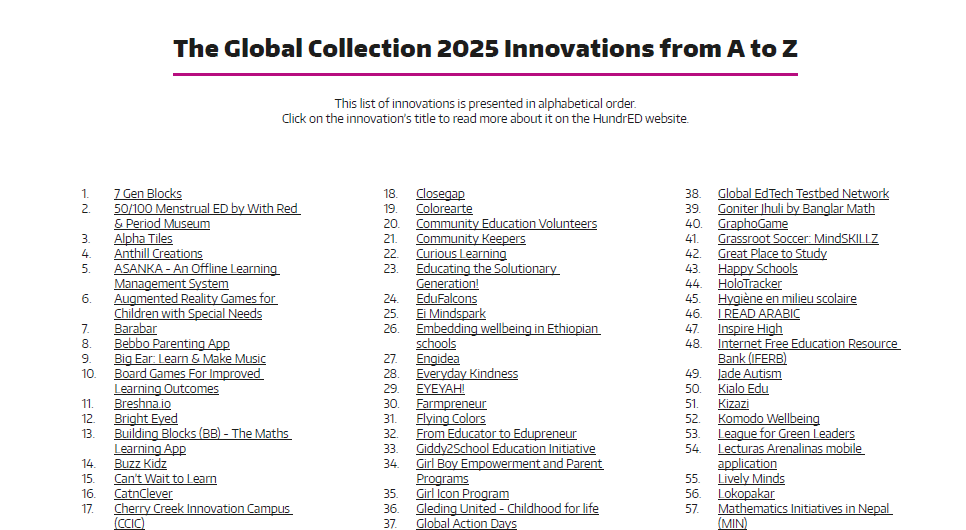
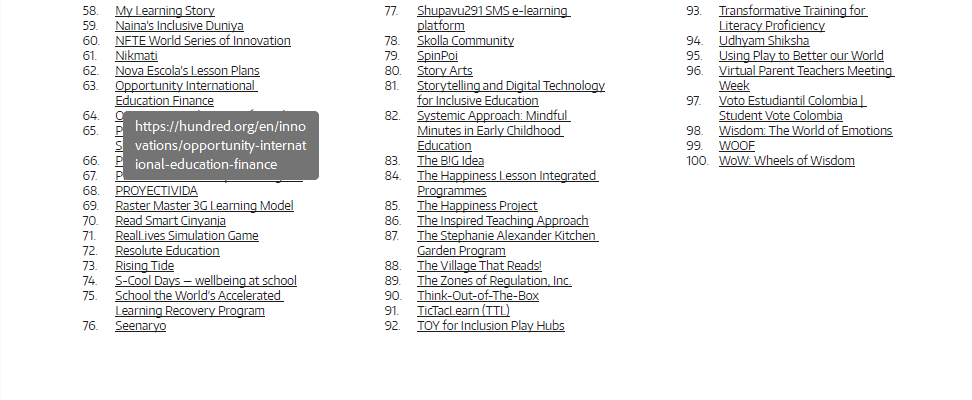
This week’s post highlights the 2025 HundrED Global Collection of education innovations and shares links to some of the panels from the HundrED Innovation Summit.  This year’s Global Collection featured one hundred solutions from six continents selected from more than 700 submissions. Major themes in this year’s collection were access to education, equity, wellbeing, and creativity as well as a 100 percent increase in the number of innovations using some form of educational technology. To see how this year’s collection of innovation compares to previous years, see the IEN posts on the HundrED Global Collection for 2024, 2023, 2022, 2021, & 2019.

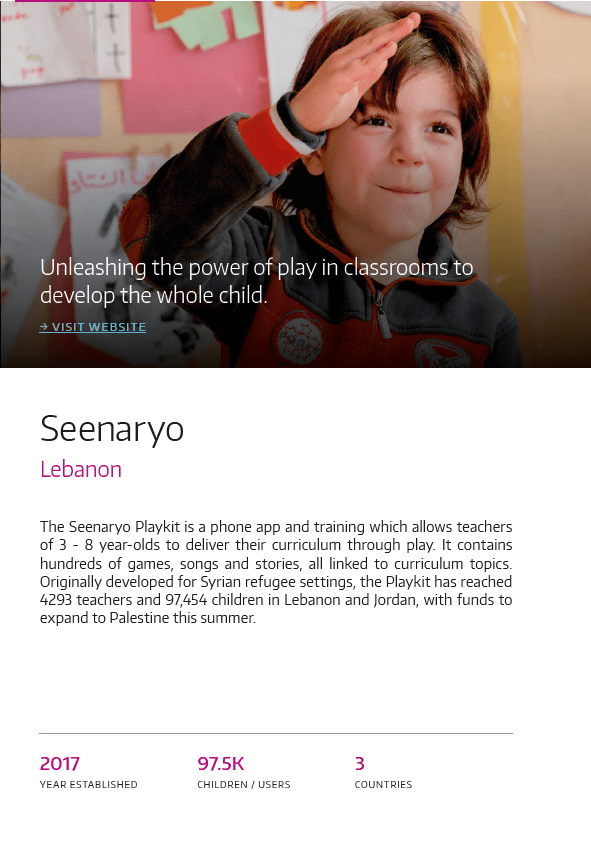
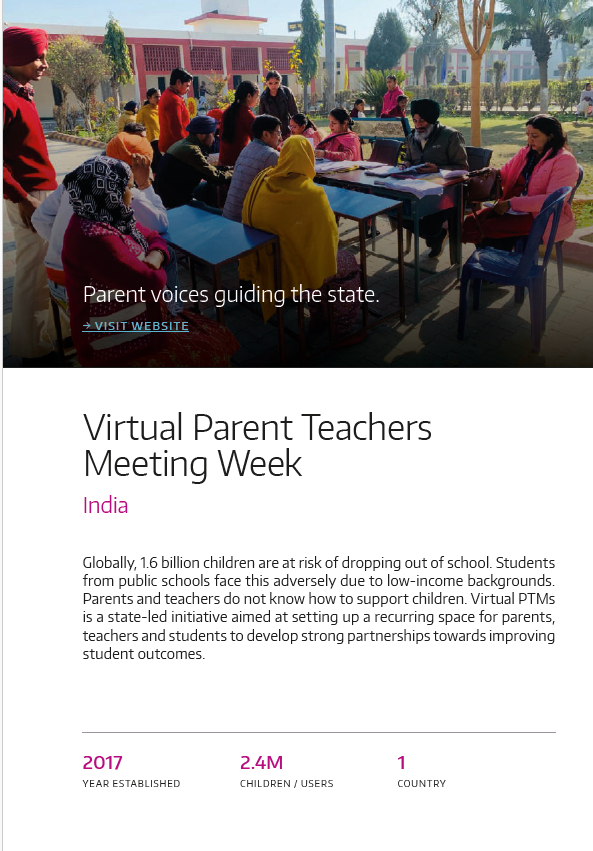
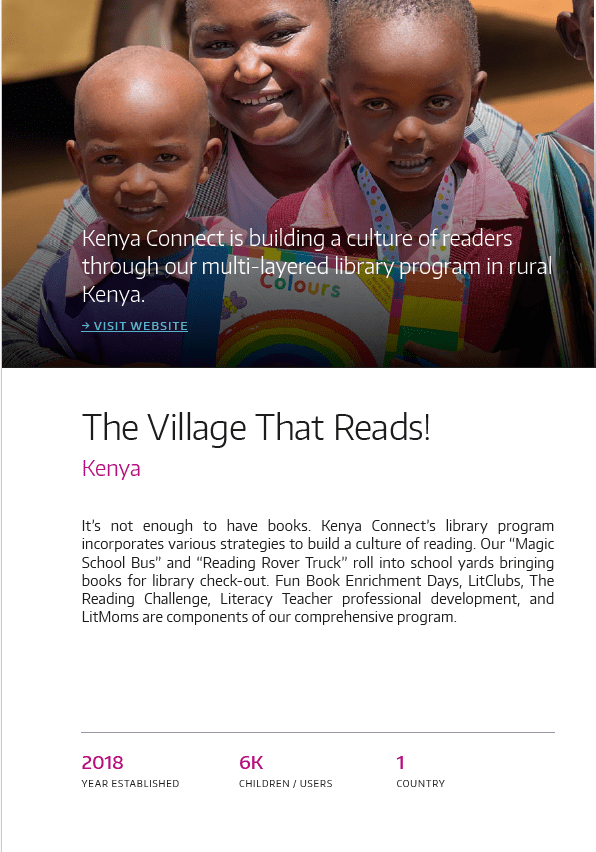
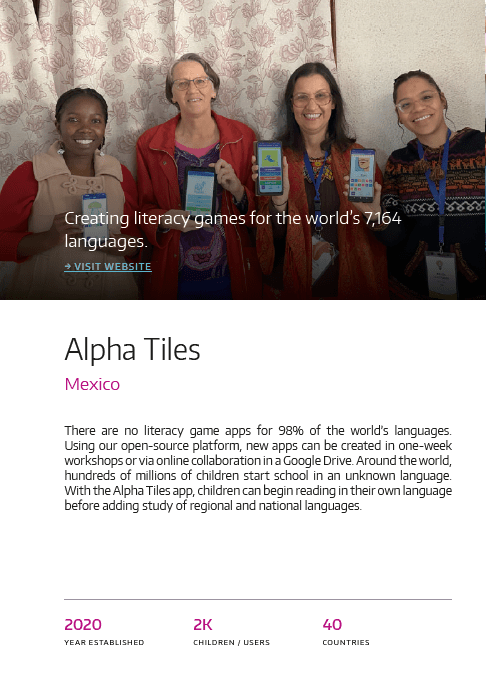
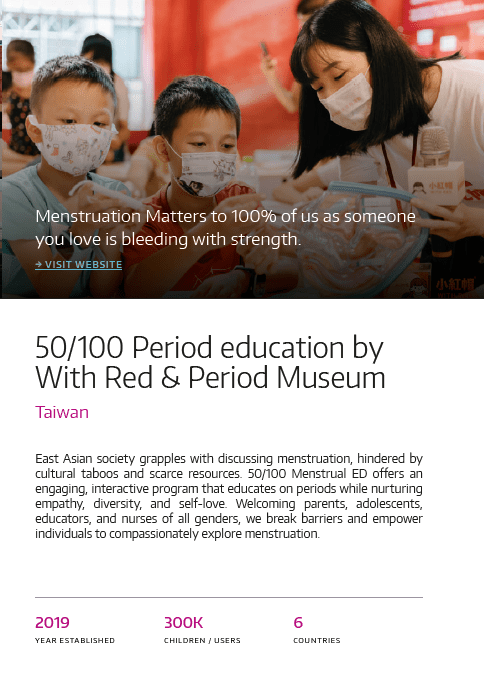
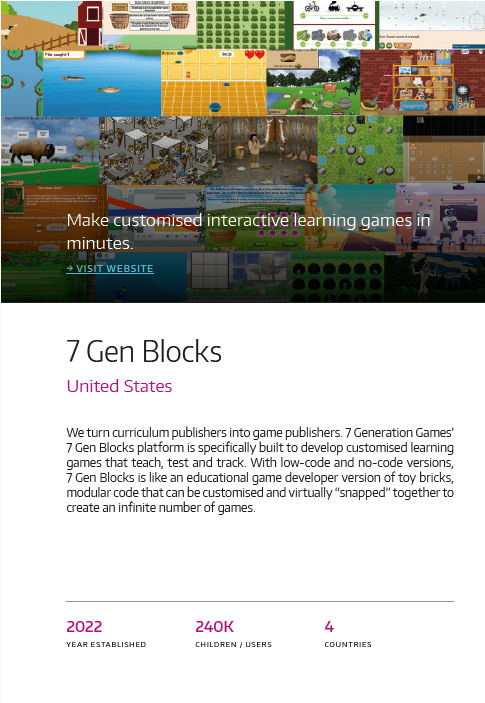
Images & excerpts from the the HundrED Global Collection 2025 report

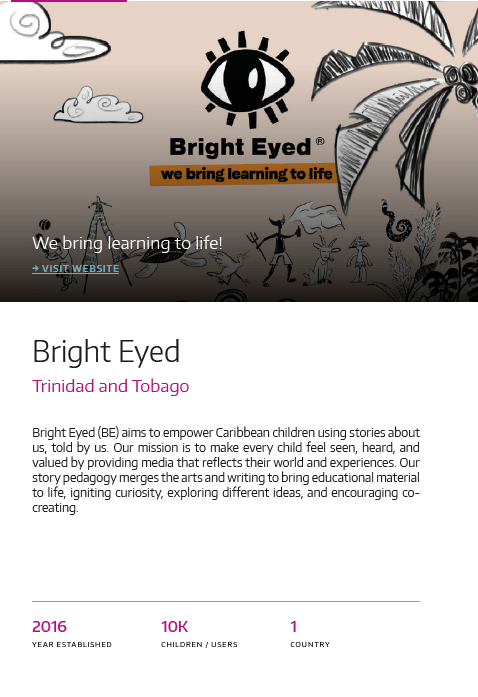
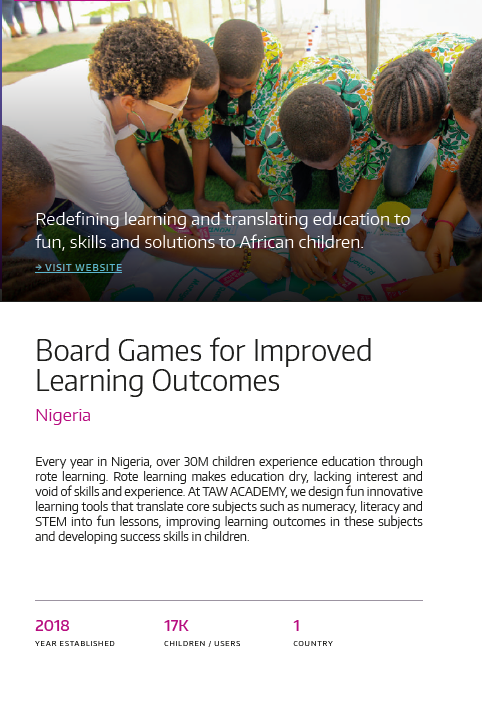
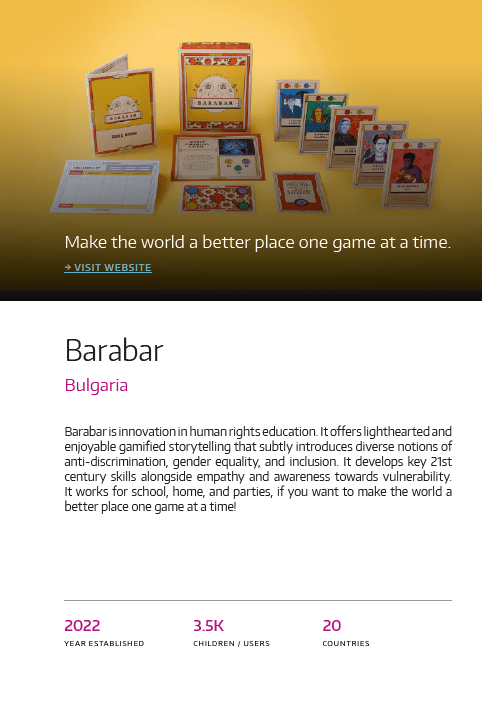
This year’s selections for the global collection include: Alpha Tiles (Mexico); 50/100 Period Education (Taiwan); Bright Eyed (Trinidad and Tobago); Board Games for Improved Learning Outcomes (Nigeria); Barabar (Bulgaria); 7 Gen Blocks (United States).

Politics, Policies, and Polarization: Scanning the 2024-25 Back-To-School Headlines in the US (Part 1)

As students in many parts of the northern hemisphere start a new school year, IEN begins our annual scan of the back-to-school headlines. This year, with the surge of interest in the presidential election since Kamala Harris became the democratic nominee, a number of news stories have focused on the election, the candidates, and their education policies. Harris’ choice of Tim Walz – a former teacher – to be her candidate for Vice-President contributed to a wave of stories about Walz and his record and even spawned stories about his wife Gwen Walz – also a former teacher – and other educators who are running for office. Several stories, most from Education Week, also explore whether and how teachers might try to address in their classrooms the election and the many controversial issues that divide and polarize Americans today.  Part 1 of our 2024-25 Back-to-School scan pulls together some of these election-related stories. Next week’s scan will provide a round-up of stories about many of the other issues that are in the news in the education sources that we follow as classes resume.

For some historical perspective on how the issues have evolved since the school closures of the COVID-19 pandemic, explore the back-to-school headlines from previous years:

Policies, Platforms & Issues

Decision Guide: What happens to education under Trump v. Harris, U.S. News

Harris-Walz and Trump-Vance tickets offer radically different visions of public education, EdSource

Education Policy: How Harris and Trump Differ on K-12, Higher Education and More, ABC News

4 Takeaways on What VP Picks Vance and Walz Mean for the Race to Come, PBS Newshour

Education Debates You’ll Likely Hear About in the Election, Explained, Education Week

Public education reform missing from 2024 presidential platforms, Axios

What education could look like under Trump and Vance, Hechinger Report

Trump’s Agenda47 on education: Abolish teacher tenure, universal school choice, patriotism, USA Today

Trump’s VP Pick: What We Know About JD Vance’s Record on Education, Education Week

Vance vs. Pence: How Trump’s VP picks compare on education,Thomas B. Fordham Institute

What Would Happen to K-12 in a 2nd Trump Term? A Detailed Policy Agenda Offers Clues, Education Week

The Great Project 2025 Freakout, Rick Hess, Education Week

Trump Vows Historic Cuts to Education Department in Second Term, Washington Examiner

Why ending the U.S. Department of Education is so alluring to the GOP — and so difficult, Chalkbeat

Republicans’ missing policy issue: Education, Thomas B. Fordham Institute

At Moms for Liberty National Summit, Trump Hardly Mentions Education, Education Week

Harris Could Set Democrats’ K-12 Agenda: By Reviving Ideas from 2020, The74

Where Does Kamala Harris Stand on Education? Inside the 2024 Democratic Platform, Education Week

What We Know About Kamala Harris’ Education Record, Education Week

Veep, Candidate, brat: Kamala Harris Fires Up Gen Z on Social Media, The74

Kamala Harris’ Potential VP Picks: Where They Stand on Education, Education Week

What education could look like under Harris and Walz, Hechinger Report

The Education Issue Americans Agree on That’s Not Good News for Teaching, Education Week

Long a Stranger to the Spotlight, Child Tax Credit Earns Embrace of Both Parties, The74

Millions of campaign dollars aimed at tilting school voucher battle are flowing into state races, AP

The Future of Property Taxes Is on Ballots This Fall. Why It Matters for SchoolsEducation Week

What Role Should the Federal Government Play in Education Policy? NEPC

Educators/Candidates

Harris chooses Minnesota Gov. Tim Walz, a former educator, as running mate, K-12 Dive

A Teacher in the White House: What Harris-Walz Could Mean for Education, Education Week

Tim Walz is Kamala Harris’ running mate. Here’s what he’s done for education in Minnesota, Chalkbeat)

Tim Walz, a Former Teacher, Is Kamala Harris’ Running Mate

The Freshman: How Tim Walz Went From the Classroom to Congress (from 2007), Education Week

8 Things to Know About Tim Walz, the Democratic Ticket’s Top Teacher, The74

Harris Pick Tim Walz Would Be First K-12 Teacher Since Lyndon Johnson to be VP, The74

How Teaching Shaped Tim Walz’ Politics, The Nation

‘Coaching and Politics’: What Coaches See in Tim Walz’s VP Candidacy, Education Week

Gwen Walz, wife of Harris’s VP pick Tim Walz, is also a longtime teacher, Washington Post

Tim Walz’s wife Gwen, a former teacher, is a ‘champion’ of college behind bars, USA Today

Are Educators a Natural Fit for Public Office? These Candidates Think So, EdSurge

Jan. 6 Protester, Former Supe Vie to Lead North Carolina’s Schools, The74

Teaching the election

Schools Are Now Political Battlegrounds. We’ve Been Here Before, Education Week

Why Most Teachers Won’t Be Talking About the Election in Their Classrooms, Education Week

Teaching the 2024 Election: Learning Opportunity or Landmine? Education Week

Big Ideas for Upending Polarization, Education Week

How Teachers Tackle 2024 Election Discussions, Education Week

11 Ways to Teach the 2024 Election With The New York Times, New York Times

Teaching Presidential Elections Isn’t Easy. How One Teacher Manages, Education Week

How Should Educators Approach the 2024 Election? Rick Hess, Education Week

Towards a Collaborative, Open-Minded, Respectful Community of Global Learning: Lead the Change Interview with Tracy X. P. Zou

In the latest Lead the Change (LtC) interview, Tracy X. P. Zou discusses her efforts to develop a collaborative approach to scholarship and to incorporate global, international, and intercultural dimensions into the teaching and learning. Zou is an assistant professor in the Department of Educational Administration and Policy at the Chinese University of Hong Kong. The LtC series is produced by Elizabeth Zumpe and colleagues from the Educational Change Special Interest Group of the American Educational Research Association. A pdf of the fully formatted interview is available on the LtC website.

Lead the Change (LtC): The 2025 AERA theme is “Research, Remedy, and Repair: Toward Just Education Renewal.”  This theme urges scholars to consider the role that research can play in remedying educational inequality, repairing harm to communities and institutions, and contributing to a more just future in education. What steps are you taking, or do you plan to take, to heed this call? 

Tracy Zou (TZ):  I believe that cultivating collaborations can be a meaningful approach to addressing inequality, repairing harm, and contributing to a more just future by giving voice to important stakeholders to enhance the relevance and impact of educational change research. In many education change projects in higher education, faculty members and students are only informed about, not involved in, the change. Such projects do not usually lead to a desirable impact on teaching and learning practices. To be impactful, changes need to be initiated with people, not imposed on them. 

Globally, many scholars are calling for a collaborative approach to scholarship, but in practice, we encounter many barriers, including faculty members’ heavy workload. Faculty face increasing demands to generate more research more quickly and with higher impact. This means that, in many parts of the world, including Hong Kong where I am based, engaging in educational change is less rewarded than doing research. Against this backdrop, much of my research has involved teaching and learning-focused collaborations among faculty members and between faculty members and students. My studies have included research on students as partners (SaP) and faculty member collaborations for cultivating communities of practice. 

The SaP study (Zou et al., 2023a) involved working with 43 undergraduates as partners in three research projects across two research-intensive universities in Hong Kong. SaP is considered challenging in Asia because it requires an equal relationship in teacher-student collaborations, and there is typically a larger power distance in many Asian regions. We show SaP is achievable in Hong Kong with proper alignment between SaP project designs and the student partners’ roles. Conducive designs include involving students in project configuration, providing them with peer collaboration opportunities, and designing project topics that interest the larger student community. We found that faculty who were previously skeptical about collaborating with students as ‘equals’ came to see the potential and became inspired to experiment with this practice.

In a faculty member collaboration study (Zou et al., 2022; 2023b), I investigated four government-funded cross-institutional teaching enhancement projects involving faculty from six universities in Hong Kong and Mainland China. While these collaborations aimed to bring systemic changes to teaching practices and curriculum design, we encountered various challenges including heavy workload of faculty members and incompatible credit systems in different universities. Our findings show that creatively aligning the larger project outcomes with the priorities of the institutions or departments of individual faculty members can tackle some of these challenges. Achieving this alignment requires faculty members to adjust elements of the larger project outcomes to match local needs and negotiate with the research team about new ways of achieving the planned outcomes. In this process, faculty members have opportunities to exercise considerable leadership at a local level.  These findings suggest a possibility of breaking down inequities in higher education by providing means for faculty—especially teaching-track faculty at research-intensive universities—to have voice and provide leadership in large-scale projects on educational change. 

I believe that this research on collaboration can enable a more equal and just educational system in two ways. First, the research involves carefully designed interventions that bring small, yet important collaborative initiatives that have the potential to be scaled up, introducing changes developed from the bottom up. Additionally, the findings provide implications that can encourage similar projects for a wider impact collectively. 

LtC: Your work has involved collaborative approaches to researching how teachers and students in higher education develop professional capacity and problem solving skills. What are some of the major lessons that practitioners and scholars of Educational Change can learn from your work and experience?

TZ: The most important lesson that can be learned from my research on collaborative approaches is that faculty members should involve students in educational change, trust them, and provide them with autonomy and freedom to experiment. This is easier said than done. One challenge is that project funding mechanisms, at least those in Hong Kong, tend to hold faculty members accountable if project outcomes deviate from the proposal. In some of my projects, faculty members have been concerned that giving students the autonomy to make decisions would be risky. 

However, our findings showed that giving students autonomy typically enhances their engagement. In a project about students’ learning experiences during the COVID-19 pandemic, we involved students as co- researchers starting from the project planning stage, giving them voice in defining the specific topic and the scope of the research (e.g., what aspects of learning, which groups of students to be researched), designing the methodologies, and constructing the budget. These are tasks that are not typically handled by students, but we found that students became extremely committed to the project as they focused on the matters that were most relevant and exciting to them. For example, one group of students investigated the impact of the pandemic on international students studying in Hong Kong from developing countries and revealed how financial and resource constraints influenced students’ learning and well-being. 

Another important lesson learned is about proper and flexible project designs. Collaborative endeavors cannot be fully predicted up front and often require revision and re-direction in project outcomes. Our research findings provide evidence for the need for embedding flexibility in the research design.

Thirdly, my research suggests that practitioners, scholars, and grant-makers interested in collaborative research need to allow creativity in conveying the project outcomes. If you want to involve students, for example, you might find that students are less enthused about or academically prepared for writing rigorous reports—which scholars and grant-makers might typically expect as a project outcome—but can get excited about making a short video and creating memes to demonstrate their learning. Allowing creativity empowers students to use their expertise rather than being required to conform to traditional methods. 

Finally, regarding projects and initiatives that involve collaborations among faculty members, my research suggests that intervention designers, researchers, and grant-makers need to take into consideration the holistic professional development needs of the faculty members involved and build those needs into the design of the collaborative initiatives. For example, the collaborative projects could take into account how the research can result in learning and artifacts that might become part of participating members’ portfolios that they may need for longer-term career development. It is important to note that an equal and respectful relationship is the key to any collaborative professional capacity building.

LtC: One major strand of your work has focused on the internationalization of teaching and curriculum in higher education. What might practitioners and scholars take from this work to foster better school systems for all students?

TZ: Internationalization of teaching and the curriculum concerns the incorporation of global, international, and intercultural dimensions into the teaching and learning processes and the curriculum (Leask, 2015). It is basically about creating an open-minded, respectful community of global learning that aims to benefit all students. The notion of internationalization is sometimes misunderstood as merely developing intercultural skills or including international examples in teaching material. Internationalization fundamentally involves not only acknowledging other cultures but also deeper transformational work to become critically aware of one’s own identity and the cultural and political assumptions underpinning our curriculum and teaching practice. 

In my research, facilitating internationalization of teaching and the curriculum starts from understanding how faculty members make sense of the concept of internationalization and how they relate it to their courses and programs (Zou et al., 2020). This initial step helps build a common understanding between academic/educational developers and faculty or practitioners, engaging everyone in an open and critical discussion. For example, we discussed with a journalism faculty member about what it looks like to be an ethical and professional journalist in a global world, and which parts of the curriculum prepare students (or not) for the relevant attributes. We reached a consensus that, while there are international learning opportunities in the existing curriculum, they remain insufficient. This understanding allowed for further discussion on what actions to take. 

Furthermore, we found that educational developers should start these conversations by connecting internationalization efforts with specific faculty members’ disciplines. This connection is important because our study (Zou et al., 2023c) shows that faculty members from different disciplines engage internationalization differently according to what is seen as ‘knowing’ and ‘being’ in their disciplines. For example, in hard disciplines such as science, learners are expected to acquire foundational scientific knowledge before they can develop the identity of a scientist. In soft disciplines such as humanities, ‘knowing’ is achieved as learners use their own perspectives and experiences to make sense of the content. Accordingly, internationalization of the curriculum in hard disciplines may make more sense at a later stage of the learning process, such as through a capstone. In contrast, soft disciplines may productively leverage students’ diverse cultural experiences throughout their programs to develop multiple perspectives and critical thinking. Situating internationalization in disciplinary contexts also allows for deeper learning beyond superficial approaches such as language and skills training, becoming embedded in students’ development of professional identities and civic capacity to work and live together with people from different backgrounds. 

The SaP concept discussed earlier can also contribute to internationalization of teaching and the curriculum. Faculty members and scholars of Educational Change can consider involving students in collaboratively re-designing teaching materials and curricula, such as by asking students to share which topics inspire them and how they prefer to learn these topics. It is important to involve students from all backgrounds, particularly with representatives from local communities as well as from abroad, to build an open-minded, inclusive, and respectful community in which every student can find their place and thrive. 

LtC: Educational Change expects those engaged in and with schools, schooling, and school systems to spearhead deep and often difficult transformation. How might those in the field of Educational Change best support these individuals and groups through these processes?

TZ: Indeed, transformation is often difficult. Resistance to change is common in many school systems. I believe those in the field of Educational Change can offer support by encouraging more diversity in the formats through which we share our knowledge about transformation in various contexts at various scales and forms. For example, typically, the research field prefers journal articles written in the educational research genre. However, my previous 6-year experiences of editing a teaching and learning e-newsletter in a research-intensive university in Hong Kong taught me that some faculty members have important educational change expertise to share but lack skills and time to publish in venues designed for educational research. To encourage more diverse authors and perspectives, the journal, International Journal for Academic Development, for which I serve as an associate editor, welcomes ‘reflection on practice,’ a shorter piece (1,000-1,500 words) about the authors’ conceptualizations and reflections on academic development practices in their work contexts. This format offers a platform for practitioners to share their practices and thoughts, which helps engage more stakeholders and move the field towards a more inclusive space. 

The Educational Change field can also offer support by creating collaborative spaces that bring scholars and educators from different disciplines and cultures together. The space could be physical or virtual. What is important is to define a shared area of interest and create attractive themes within that area. Some scholars might describe these spaces as communities of practice (Wenger, 1998). In my own collaborative research with faculty members from different disciplines, including science, social science, engineering, and business, we cultivated many synergies when we focused on themes (e.g., undergraduate research, SaP) that interested all of us. Many of my research ideas emerged from the collaborative process, and some of my collaborators found my ideas useful to their teaching enhancement or course development. 

LtC: Where do you perceive the field of Educational Change is going? What excites you about Educational Change now and in the future? 

TZ: I am excited about how the field of Educational Change is changing and growing towards a focus on more just and sustainable futures. In recent years, I have noticed more studies that focus on disadvantaged and marginalized groups and communities (e.g., Walker, 2023; Zumpe, 2023) that did not receive much attention before. Stronger criticality can be seen in these studies as scholars work to challenge the dominance of certain theories and assumptions. I think these changes are necessary to move the field forward. 

What I feel most excited about Educational Change now is that change initiatives and research about them more often involve teachers’ and students’ engagement and development. When an educational change initiative starts and records even a small achievement, I have seen that the experience of success and the involvement of participants in the success lead to more conducive student learning and teacher satisfaction from the work. As a researcher, I feel proud to design effective interventions that generate positive changes or at least some insights about how to make improvement in the next implementation. 

I am excited about the huge potential of scholarship about Educational Change to elevate the quality of education at all levels. In this complex world, changes are inevitable, and the field of Educational Change can prepare students and teachers to adapt to changes, solve problems, and innovate through designing interventions that are supported by theories and attuned to the local contexts. For example, we know that the emergence of generative artificial intelligence (GenAI) and other technological advancement will bring substantial changes to educational experiences. In the absence of support and knowledge about how to adapt to and incorporate these technological advances, there might be undesirable consequences such as students uncritically relying on GenAI and failing to achieve intended learning outcomes. Scholars of Educational Change should work collaboratively with teachers from all backgrounds to design learning experiences and assessments that are valid and meaningful in a GenAI-mediated world. 

That said, I also see that there is still much room to improve in the field of Educational Change. Many scholars and practitioners in disadvantaged areas suffer from resource shortages that create systemic barriers for educational change to happen and for their work to be seen and valued. I believe that the field of Educational Change needs to cultivate inclusion and open-mindedness to diverse perspectives and different practices. We especially need to recognize how practices that are established in developed regions may involve significant learning and innovations to establish in more marginalized or under-resourced contexts. An open-mindedness is needed to keep the field moving towards a more just world. 

References

Leask, B. (2015). Internationalizing the curriculum. Routledge.Walker, M. (2023). Towards just futures: A capabilitarian approach to transforming undergraduate learning outcomes. Cambridge Journal of Education53(4), 533-550. https://doi.org/10.1080/0305764X.2023.2189227

Wenger, E. (1998). Communities of Practice:Learning, Meaning, and Identity. Cambridge University Press.

Zou, T.X.P., Chu, B., Law, L., Lin, V., Ko, T.,Yu, M., & Mok, P. (2020). University teachers’ conceptions of internationalisation of the curriculum: A phenomenographic study. Higher Education80, 1–20. https://doi.org/10.1007/s10734-019-00461-w

Zou, T.X.P., Hounsell, D., Parker, Q.A., &Chan, B.Y.B. (2023b). Evaluating the impact of cross-institutional teaching enhancement collaborations using a professional capital framework. Journal of Professional Capital and Community, 9(1)68-82https://doi.org 10.1108/JPCC-03-2023-0021

Zou, T.X.P., Kochhar-Lindgren, G., Hoang, A.P., Lam, K., Barry, T. J., & Leung, L. Y. Y. (2023a). Facilitating students as partners: Co-researching with undergraduates in Asian university contexts. Educational Reviewhttps://doi.org/10.1080/00131911.2023.2246674

Zou, T.X.P., Law, L. Y. N., & Chu, B.C.B.(2023c). Are some disciplines ‘hard to engage’? A cross-disciplinary analysis of university teachers’ approaches to internationalization of the curriculum. Higher Education Research & Development, 42(5), 1267-1282. https://doi.org/10.1080/07294360.2023.2217092

Zou, T.X.P., Parker, Q.A., & Hounsell, D.(2022). Cross-institutional teaching enhancement and distributed leadership: An empirical study informed by activity theory. Journal of Higher Education Policy and Management, 44(3), 276-292. https://doi.org/10.1080/1360080X.2021.2002791

Zumpe, E. (2023). School improvement at thenext level of work: The strugglefor collective agency in a school facing adversity. Journal of Educational Changehttps://doi.org/10.1007/s10833-023-09500-x

Schools Don’t Change, but They’re Always Changing: A Conversation with Yong Zhao on the Evolution of the Chinese Education System (Part 2)

What’s changing in the China’s education system? What might change in the future? Those are some of the questions that Thomas Hatch asked Yong Zhao about in preparation for a visit to China last month. Zhao was born in China and now works all over the world, including in China, exploring the implications of globalization and technology on education. In part two of this interview, Zhao offers his impressions of recent changes in addressing students’ mental health and discusses the broader context of the Chinese education system and some of the challenges and opportunities for changes in the future. In the first part of the interview, Zhao shared his observations about some of the educational innovations he’s seen, and he’s been involved in China.

Thomas Hatch (TH): In the first part of our conversation, you shared a number of examples some new schools and educational developments in China. In other places like Finland, the US, and even in places like Vietnam and Singapore, I’ve also seen more attention to students’ mental health. Have you seen any initiatives related to supporting students’ healthy development or mental health and well-being in China?

Yong Zhao (YZ): I think that is happening because they’re adding more psychiatrists, more psychologists or “psychological teachers” to schools. Those never existed in China until recent years. So that’s a beginning. But also, traditionally, teachers of Chinese have had a responsibility for psychological support, though they may not have specific training for it. But the approach in Chinese culture is also different from the western way of constructing psychological and mental well-being. In the West, I think we sometimes misunderstand psychological issues because we just describe them, we measure them, we test them.  And we have a handbook that defines what’s considered mental health.  I’m quite worried about this. Is this a good thing to do? 

It’s similar with what’s considered special education in China. Asian countries definitely have a very different definition. There the term applies primarily to those who have a major disability. But now the Western movement of attending to ADHD and learning differences is slowly spreading, though they are not being addressed in schools.

TH: When you say you think that the approach to psychological well-being and health is different in China, how would you describe it?

 YZ: First, I’m not a researcher in that area, so I cannot describe it, but I’m very worried about the Western definition going into China and getting applied in that cultural context. I’ve always worried about what is China and what is the Western way of doing things? I’m struggling with this.

Yong Zhao

But one thing I want to emphasize is people always think I’m critical of China, but I’ve said, “I’m critical of everybody.” This is very important. I don’t think anyone has got it right. If someone had it right, we could retire.  And some people say, “you’re pro- America.” And the truth is, I’m more critical of American education than other places. I think there is an interesting question about whether the Western way is the right way of doing this. when you think about well-being, I’m not sure because when you look you can see there is widespread misuse of special education, misuse of mental health issues, and I think there are a lot of problems that arise with psychiatrists and psychoanalysts. Many things are happening

TH: One of my goals is to understand what’s changing within a Chinese context and to think about the cultural, economic, and geographical conditions or “affordances” and what they can tell us about the possibilities of educational change. Can you give us your sense of the Chinese conception of development overall and the purposes and aims that underlie Chinese education?

YZ: Right now, I think China is quite misunderstood. People are easily influenced by media stories. You and I started this conversation talking about how schools don’t change, but like Larry Cuban has said, changes are like a breath on the window in the wintertime. You breathe on the window, and something happens, but then you’re gone, and it’s gone. We need to keep that in mind. Schools do not change, but they’re always changing. This is what I love about it. It’s happening all the time. Every week, for example, I receive emails from someone who is discussing innovation somewhere.  Innovation is still there. But how come most schools don’t change? But schools actually do change because they do little things. When you refer back to the grammar of schooling, the grammar in schools hasn’t changed in a long time. But at the same time, there are activities that are changing. So, we need to consider how big a change is a change. That’s another thing to think about.

TH: Your comments about change and the grammar of schooling are fascinating because the “grammar” hasn’t changed, but only if you look back within the modern, industrial era. Because if you think back beyond 100 or 120 years — if you go back far enough – some key aspects of schooling have definitely changed. So, it’s a question of perspective.  If today, instead of trying to produce changes that we’re going to see tomorrow, we’re actually looking ahead to 40 or 50 years, we might be much more successful if we can be strategic in terms of enabling schools to shift over the long-term. As you look ahead and think about what could or what might happen in terms of Chinese education, do you see ways that it is changing or that it could change in the future?

YZ: What is going to happen in China? First of all, in any foreseeable future, China will not drop the Gaokao, the national exam to select students for university. The Chinese people value college credentials very much. I used to joke about how much Chinese love credentials. Even if they don’t know how to drive, they want to buy a driver’s license, they just want that damn thing. So that will not change. But the Chinese government has been trying very hard to adjust the numbers of students going to high schools and universities and to vocational high schools. Now, at the end of 9th grade, the students are divided into two groups by the Gaokao. It’s like the German system used to be. The highest scorers on the test go to the general high school and then they go to college. Another group goes to the vocational, technical high school, and then you go to the workforce. There’s a lot of problems with that, and right now they’ve changed the quotas so that more students are supposed to be sent to vocational schools. So, they’re trying to adjust that.

But my view is this. I think I wrote in my book “Who’s Afraid of the Big Bad Dragon” that in China, the big problem is that no matter what you do, people will think there is always one best college – for example, Tsinghua or Peking University – and you can only take in so many kids no matter what you do. So, no matter how you change the exam, there are only so many kids who can go in. That is a huge problem. So, the Gaokao will dominate for a long time, and you will have a lot of kids dropping out of the education system before 9th grade if they’re not getting on the path to the best universities. It’s just that, basically, there’s no point to stay in the system. So, that’s not going to change.

Who’s Afraid of the Big Bad Dragon, Book Cover

What is going to change? Is after school, weekends. I also think that because of the access to technology and the quick spread of AI, you will have a group of students who, in a sense, are already pre-selected to get into general high schools and to prepare for the colleges. But you will also have a lot of students who have decided “I’m not going to college. I can’t go to college.” Those places with those students might see some changes, and those schools that have those students are not visited and are not understood by people. You know, if you go to a county level, they have high schools, and those high schools don’t have the best students because the best students have been sent to the provincial capital. I don’t think people understand the experiences of those kids who aren’t going to college, what their life is, and you might see some significant changes in those places.

TH: That’s fascinating, and it connects with Clayton Christensen’s notion that disruptive innovation emerges when there are people who are unserved, and I think you’re identifying in China that there are students who in a sense are not served by their schools or colleges. It could be fascinating to see what might develop there, particularly given the development of technologies and the spread of internet and AI. 

YZ: There’s another thing that will affect China a lot, and that’s the drop-in birth rate. Right now, China is graduating over 11,000,000 college students, but the birth rate last year in China was closer to 9 million. As a result, a lot of elementary schools and kindergartens are closing because they don’t have enough students. But now there are groups of private colleges, smaller colleges, and they’re actually trying very hard to get kids in because that’s how they make money.  Imagine what would happen if you opened all those places and take in every kid into college?

Dr. Yong Zhao is a Foundation Distinguished Professor in the School of Education at the University of Kansas and a professor in Educational Leadership at the Faculty of Education, University of Melbourne in Australia. He previously served as the Presidential Chair, Associate Dean, and Director of the Institute for Global and Online Education in the College of Education, University of Oregon, where he was also a Professor in the Department of Educational Measurement, Policy, and Leadership. Prior to Oregon, Yong Zhao was University Distinguished Professor at the College of Education, Michigan State University, where he also served as the founding director of the Center for Teaching and Technology, executive director of the Confucius Institute, as well as the US-China Center for Research on Educational Excellence. He is an elected member of the National Academy of Education and a fellow of the International Academy of Education

The Desire for Innovation is Always There: A Conversation with Yong Zhao on the Evolution of the Chinese Education System

What’s changing in China’s education system? What might change in the future? Those are some of the questions that led Thomas Hatch to spend almost a month in China this spring. In preparation for that visit, he talked with Yong Zhao to get his perspective on what’s been happening in education in China in the past few years. Zhao was born in China and now works all over the world, including in China, exploring the implications of globalization and technology on education. In the first part of this two-part post, Zhao shares his observations about some of the educational innovations he’s seen in China and about some of the work he’s been involved in there. In part two, Zhao offers his impressions of recent changes in addressing students’ mental health and discusses the broader context of the Chinese education system and some of the challenges and opportunities for changes in the future. 

Thomas Hatch (TH): You’ve written extensively about China in the past, but I’m particularly interested in what’s happening in the Chinese education system over the last few years. Are you seeing some innovations or changes in classrooms and schools in China since the COVID-19 pandemic and the school closures? 

Yong Zhao (YZ): I think there’s a huge hunger for innovation in China. Let me give you an example. I was just talking to a group of school principals and heads of the Education Commission in the Chaoyang District in Beijing. It’s the largest district in Beijing, and it’s where most of the embassies and many foreign companies are located. We were planning to do a summer camp for students from different countries based on my education philosophy, which is very much child-centered, focused on uniqueness, personalization, project-driven instruction, and problem-solving. We wanted to make the camp very big, involving kids from different countries, and they were open to the idea. Alongside the camp, we planned to organize learning festivals to discuss topics like artificial intelligence and what I call “Re-globalization.”

We started this conversation in January, and the issue is that very few schools outside China are willing to send their students and teachers here at the moment, so we’re planning to do it next year. But this kind of summer camp is something I began working on before COVID, in May 2018 in Chongqing. Every year since, we’ve been running similar innovative programs in the summer. Even during COVID, we tried it out. The first year in Chongqing, we had students from US schools, Australian and British schools, with hundreds of students and teachers staying in the same dorms, interacting. 

In addition, in the public schools in Chongqing, we have students enrolled in a special course I helped design called ICEE, which stands for innovation, creativity, and entrepreneurship education. It’s expanding in the public schools even though students have to pay extra to participate, which shows that parents and schools are interested in it. Beijing Academy is another school that is particularly innovative. I was partially responsible for co-designing that school. We formed a global advisory group, including people like Richard Elmore and Kurt Fischer and Ron Beghetto. It was an international collaboration. They built a brand-new school based on our advice. It just celebrated its 10th anniversary in Beijing. Now they have over 9 or 10 campuses. 

I think this shows that many parents and students and teachers actually want change. You cannot make massive changes like, for example, saying, let’s forget about the major policies like the double reduction policy, but many people are still trying to find ways to change. It also shows that working in the Chinese education system might be one of the most difficult things in the world. On the one hand, you have to do this. On the other hand, you have to do that. But ultimately, your school’s reputation matters, and innovation as a school leader in China is crucial. 

TH: So, on the one hand, you can’t do anything, but on the other hand, you have to do something…

YH: Yes, exactly. It’s fascinating. I’m puzzled by this system, you know? Right now, I’m getting older. When I was younger, I didn’t really think a lot about it, but I cannot think of how human societies can be organized like that. You cannot do anything, but you have to do something. It’s a fascinating way to think about it, isn’t it?

 TH: It is! But if we step back for a second and try to characterize what’s happening with educational innovation overall right now, my understanding is that the education ecosystem in China has contracted. There were more innovative schools and smaller schools starting, more tutoring programs, more after-school programs. But now, following the school closures and the double reduction policy, in a sense, this seems to be period of consolidation. People I’ve talked to say it’s not a prime time for innovation. Is that the way you see it? (For more on the double reduction policy see “Surprise, Controversy, and the “Double Reduction Policy” in China” and “China reiterates implementation of ‘double reduction’ policy”)

YZ: Yes, your description is right from a general, outside perspective. You can see the contractions. Even the Gaokao has become more nationalized. It was decentralized, with some differences across regions, but it’s gotten more centralized. Now they’re all saying they are using the national tests and very few provinces use their own. The curriculum has become more centralized too with more centrally required courses and teaching materials. But honestly, I think the beauty of the Chinese ecosystem is that, at the same time, children are children, and parents understand that their children, growing up, need innovative education.

They do see the power of artificial intelligence, and AI is becoming more prevalent. They also see new geopolitical conflicts, or what I call “re-globalization.” China always has this happening, and what’s underground is different. Yes, some international schools have closed, and private schools are becoming public. But at the same time, public schools have to become more innovative. The desire for innovation is always there. It’s bubbling up everywhere, but it’s happening. Many local schools have to think about innovation, and even the government, if you look at the most recent speech by the Minister of Education, talks a lot about AI. They are thinking about it in every part of teaching and teacher training. I don’t know how well it’s been implemented, because it’s still very new, but the same is true in the US. China also issued a call last year for schools that were willing to be part of experiments with AI in education. The central government awarded several hundred of these grants to create pilot sites and to spread the message to other places. So, it’s a lot more complex in China than what many people think. The whole system is evolving.

TH: Despite that, have you seen some schools or initiatives or afterschool programs or other things that you think are particularly interesting or innovative in the Chinese context?

YZ: In the book Let the Children Play, Pasi Sahlberg and William Doyle described an approach in the Zhejiang Province near Shanghai that developed genuine playhouses for preschool and kindergarten (Anji Play). It was really play-driven, play-based, and it started in one kindergarten and then it spread around the whole province. It wasn’t country-wide, but it was a model recognized by the Chinese Ministry of Education, and they began to promote it across the country. I don’t know how it’s going now, but that is something that I think it’s definitely worth looking at.

There are also a number of schools that are trying to do something different. The Beijing City International School just had me visit for three days. Their student population is over 90% Chinese students, and they are struggling with the fact that parents have invested significant amounts of money, expecting their children to attend prestigious universities like Harvard and Columbia.  But they also want to change, so they had me over to discuss transitioning to personalized education. Whenever someone has me presenting, they are willing to be challenged.

The Beijing National Day School and a couple of other public schools are also known for being innovative. Another interesting school is the one called #80 Secondary School in Beijing. I was just there, and I was impressed. If you are a good student in some areas, then you don’t have to take certain courses. They would allow you to explore on your own, which shocked me. It’s a Chinese government high school, and it’s quite powerful. 

Thomas Hatch: Coming from Teachers College, where there’s a history of connection with China through John Dewey’s visits, I’m fascinated to see that there has been a long-term interest in China in progressive education. As I began to get ready for my trip, I’ve realized there are a number of educators in China over the years, who have become very well known for being innovative and supporting innovative education. Can you talk about any of those enduring traditions related to alternative education?

Yong Zhao: It’s a very interesting question. But first of all, let’s not underestimate the power of the Gaokao – the college entrance examination. Similar pressure is widespread, happening not only in China but also in Japan, South Korea, Vietnam, Hong Kong, Macau, and Taiwan. Let’s not forget that the Gaokao and the imperial exam tradition, dominates and controls parents’, students’, and teachers’ minds. But continuously, there has been talk about change in China, and I’ve found that the conversation about needing a different kind of student from the “Gaokao type” has never stopped. It’s always been there. 

Even in the 1950s, Mao was very against the Gaokao exam. Regardless of who he was or what he is – I’m not debating that – he was actually very innovative in education. Ideologically, he never really wanted exams. During the Cultural Revolution, people think he destroyed the Chinese education system. But on the other hand, he was basically saying education does not need to be so pedantic, does not need to be traditional and academic in an ivory tower. He started education in my village. That’s how I went to school.  He said education needs to be shorter. It only has to be 10 years and it can happen in rural villages or in factories. If you think about that, that’s very much the progressive tradition. But the long tradition of using exams to select government officials has also always stayed in the Communist education philosophy, and the tradition of using exams to select and reward people is a long-standing cultural problem.

Next Week: Schools do not Change, But They’re Always Changing: A Conversation with Yong Zhao on the Evolution of the Chinese Education System (Part 2)

Dr. Yong Zhao is a Foundation Distinguished Professor in the School of Education at the University of Kansas and a professor in Educational Leadership at the Faculty of Education, University of Melbourne in Australia. He previously served as the Presidential Chair, Associate Dean, and Director of the Institute for Global and Online Education in the College of Education, University of Oregon, where he was also a Professor in the Department of Educational Measurement, Policy, and Leadership. Prior to Oregon, Yong Zhao was University Distinguished Professor at the College of Education, Michigan State University, where he also served as the founding director of the Center for Teaching and Technology, executive director of the Confucius Institute, as well as the US-China Center for Research on Educational Excellence. He is an elected member of the National Academy of Education and a fellow of the International Academy of Education

2023 in Review: Scanning the End-Of-The-Year Education Headlines

To look back on some of the key education issues and stories from 2023, Thomas Hatch shares IEN’s annual roundup of the end-of-the-year headlines from many of the sources on education news and research that we follow. For comparison, take a look at IEN’s scans of the headlines looking back in 202120202019 part 1, and 2019 part 2. The next post will look to 2024 by pulling together some of the education predictions for the coming year.

Reviews of education stories in 2023 highlighted:

  • The continuing impact of the COVID-19 pandemic on student achievement, student absences, teacher shortages, and other aspects of student and teachers’ health and well-being
  • Pandemic recovery initiatives and concerns about a “fiscal cliff” that may cut off funding for those initiatives.
  • Developments in education technology and particularly the potential impact of artificial intelligence following the launch of ChatGPT in 2022
  • Advocacy for the “science of reading” and foundational learning in literacy and numeracy
  • Persistent concerns including inadequate education funding, inequities in educational performance and opportunities, and the challenges of innovation in assessment and instruction.

A Capture of Moments, Danna Ramirez, New York Times

What High School Is Like in 2023: 25 Essays, Poems, Videos, Photos, a Graph, a GIF, and a Diorama That
Reflect Students and Teachers’ Lives in School
, New York Times

Our Top Photos of the Year, Education Week

Key issues and trends

Funding, free school meals, education choice and student loan debt were among the policy topics lawmakers tackled in this year’s legislative sessions

The Top 10 Education Trends for 2023, National Conference of State Legislators

an unusual early childhood experiment up close; wrestling with large datasets to better understand education trends; getting over a fear of math to cover efforts to revolutionize the teaching of calculus; and, yes, talks with professors struggling with adjusting teaching to the presence of AI chatbots

Looking back on the biggest education trends of 2023, EdSurge

The 7 most memorable education stories of 2023, The Grade

from what AI can (and can’t) do to the neuroscience of brain synchrony

17 Articles About Students & Schools We Wish We Had Published in 2023, The74

The 10 Most Significant Education Studies of 2023, Edutopia

10 Education Studies You Should Know From 2023: new insights on social media, ChatGPT, math, and other topics, Education Week

These are some of the education questions Chalkbeat answered through data in 2023, Chalkbeat

Six Problems Philanthropy Barely Tried to Solve in 2023, Inside Philanthropy

2023 in education charts!

“School absenteeism is out of control” & “Catch up learning hit a wall,” The74

14 Charts that Changed the Way We Looked at America’s Schools in 2023, The74

The Teaching Profession in 2023 (in Charts), Education Week

Global and local reviews

Our top 5 education result stories of 2023, Global Partnership for Education

“changes range from advanced technical programs to revamped school initiatives and innovative examination methods”

Year in review: Five Key Changes In The Education Sector In Rwanda in 2023 , The New Times

“The Central Board of Secondary Education (CBSE) announced significant changes in 2023, including updated marking-schemes and increased number of exams that candidates can take.”

5 Important Changes Announced By The Central Board Of Secondary Education In India This Year, The Times of India

The top education issues in Massachusetts that captured our attention in 2023, WBUR

New Leaders, COVID Spending, Bus Troubles: 6 Chalkbeat Chicago Stories That Defined 2023, Chalkbeat Chicago

Chronic absenteeism, Democratic control, a fiscal cliff: These were Michigan’s big education themes of 2023, Chalkbeat Detroit

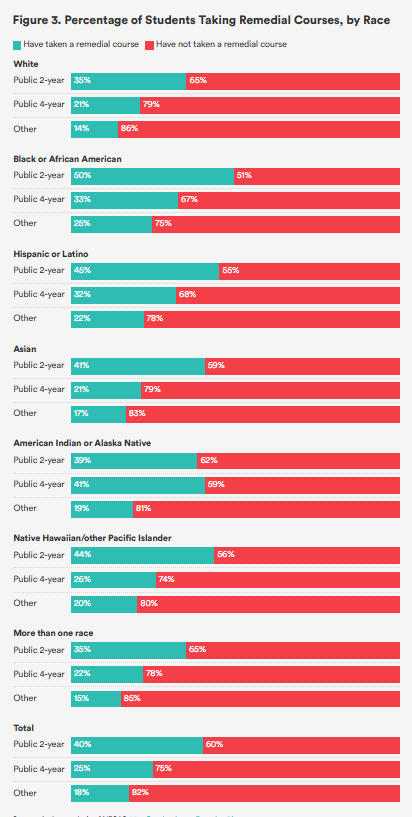
Students meeting state remediation-free standards on the ACT or SAT, class of 2017 to 2022, Thomas B. Fordham Institute

Ohio’s sluggish pandemic recovery in 2023 as seen through six charts, Thomas B. Fordham Institute

— Thomas Hatch

Tutoring takes off – Scanning the news on the emergence of tutoring programs after the school closures (Part 1) 

How effective are tutoring programs likely to be? What kinds of challenges need to be addressed for tutoring to contribute to real improvements in schooling on a large scale? In this extended series of posts, IEN continues to scan the news and research on the emergence of tutoring as a key strategy to help students “recover” from the school closures of the COVID-19 pandemic. The first part of this series describes some of the funding initiatives contributing to the emphasis on “high-dosage” tutoring as a “recovery” strategy, as well as some of the initiatives to expand access to tutoring being pursued in the US in particular. Part 2 of this scan will describe some of the challenges educators are experiencing as they try to develop and implement tutoring approaches, and Part 3 will survey some of the specific new developments and “micro-innovations” that could make tutoring more effective in the future. This series is part of IEN’s ongoing coverage of what is and is not changing in schools and education following the school closures of the pandemic. For more from the series, see “What can change in schools after the pandemic?” and “ We will now resume our regular programming.” For IEN’s previous coverage of news and research on tutoring, see Scanning the News on High Dosage Tutoring, Part 1: A Solution to Pandemic Learning Recovery, and Part 2: Initiatives and Implementation So Far. This post was written by Thomas Hatch and Jonathan Beltran Alvarado.

In the wake of the COVID-19-related school closures, “high dosage” tutoring represents a rare instance of a “recovery” strategy that seems to have wide support, willing funders, and available resources. Under the circumstances, it’s no surprise that over the past two years, tutoring initiatives have taken off around the world, particularly in the US. 

Tutoring around the world 

The global interest in tutoring has always been reflected in the enormous investments in “shadow education” – often private programs that children attend to supplement and support their schooling. In China, survey estimates suggest that while 65% of families with school-aged children took advantage of private tutoring in 2016, that number may have surged to 92% by 2021. In response, the Chinese government passed regulations designed to ban for-profit companies from tutoring in core curriculum subjects. 

In China, survey estimates suggest that while 65% of families with school-aged children took advantage of private tutoring in 2016, that number may have surged to 92% by 2021

Although the size, scale, and pressure of private tutoring are often highlighted in Asian countries, the interest in tutoring is evident across the globe. In England, according to the Sutton Trust’s 2023 report “Tutoring: The New Landscape,” almost 1 in 3 young people aged 11 – 16 report they have had private tutoring, up from 18% in 2005.  In Spain, nearly half of families pay for children to get private lessons, with those families spending about 1.8 billion dollars (USD) on classes with languages – particularly English – as the main priority. In Egypt, the New York Times reports, “Students in Egypt are flocking to private tutoring centers as the country’s public schools remain overcrowded and underfunded,” explaining that estimates suggest that Egyptian families are spending over one and a half times more on pre-college education than the government does.  A “mind-blowing” amount, as Hania Sobhy, an expert on Egyptian education, described it. 

Tutoring: The New Landscape, The Sutton Trust

At least for wealthy elites, private tutoring may have no international boundaries or many other constraints.  Sarah Thomas, in “My Surreal Years Tutoring the Children of the Super-Rich,” explained: “I wanted a job that allowed me free time, so I registered with a tutoring agency. A few weeks later, I found myself in a speedboat cutting across the Indian Ocean towards a superyacht the size of a ferry.” That job soon led to other tutoring arrangements where her “classrooms would be on yacht decks surrounded by dolphins, in Monaco penthouses with infinity pools, and in Mayfair townhouses with halls full of Mapplethorpes.”

I wanted a job that allowed me free time,” she writes, “so I registered with a tutoring agency. A few weeks later, I found myself in a speedboat cutting across the Indian Ocean towards a superyacht the size of a ferry. – Sarah Thomas, My Surreal Years Tutoring the Children of the Super-Rich

To some extent, the recent growth in tutoring has been fueled by the pandemic (as predicted by the Economist). In South Korea, for example, post-pandemic spending on private supplementary education reached a record high of 20 billion dollars. As that headline put it, “Korean households spend more on tutoring than food, housing.” In places like South Africa, private initiatives like Ikamva Youth and the Kliptown Youth have long drawn on tutoring as a crucial strategy to improve learning. Still, a number of new tutoring ventures have been launched since the school closures of the COVID-19 pandemic (Nonprofit help2read steps in to help save a ‘lost generation’; Free maths and science tutoring for all grade 11 and 12 learners).

On top of these private initiatives, numerous countries have also made significant public investments in expanding tutoring both in school and out in response to concerns about learning loss related to school closures. England was one of the first countries to embark on a major, public tutoring initiative (£1bn catch-up tutoring fund for England’s pupils; Funding for national tutoring programme in England to be doubled next academic year); but public tutoring initiatives are also being pursued in places like the Netherlands (Are the Dutch Solving the Covid Slide with Tutoring? Netherlands to spend €105 million to reduce classroom sizes, add tutoring); Australia (New South Wales Labor promises permanent tutors, end to ‘underfunding’ public schools; Victoria and NSW are funding extra tutors to help struggling students); and New Zealand (where 20 million dollars have been dedicated to additional teaching and tutoring services). 

Tutoring takes off in the US 

In the US, tutoring has always been a popular strategy for providing “extra help,” but following the school closures, tutoring is emerging as a more integral part of schooling across the US. According to a Education Week survey of school leaders and teachers in 1,287 districts at the end of the 2021-22 school year, almost 90% of those responding said that their school or district was offering some kind of tutoring (interesting, only 75% said that they “somewhat agreed” or “completely agreed” that “tutoring is an effective intervention for students in my district or school”).  Backing up those numbers, by the spring of 2022, estimates suggest that districts had dedicated over $1.7 billion in Federal funding to tutoring-related efforts and predicted spending could reach 3.6 billion by 2024. Correspondingly, the Department of Education reported that in the 2023-24 school year, more than four out of five schools reported offering tutoring programs, ranging from traditional after-school homework help to intensive tutoring. 

The Rise of Tutoring and Where It Falls Short, in Charts, Education Week

A whole series of funding initiatives have contributed to this widespread use of tutoring. With (unusual) bipartisan support, Congress and the Biden administration included support for tutoring in the package of $123 billion in emergency federal aid to schools. The U.S. Secretary of Education, Miguel Cardona, has urged schools to use their funds to provide at least 90 minutes of weekly tutoring to students most affected by the pandemic. Furthermore, in 2022, the Biden administration launched the National Partnership for Student Success – a three-year effort to create a coalition of organizations to “recruit, screen, train, support, and engage an additional 250,000 caring adults in roles serving as tutors, mentors, student success coaches, wraparound service coordinators, and post-secondary transition coaches”.

Private funders are also supporting tutoring efforts by establishing Accelerate, a new organization dedicated to developing and scaling affordable “high-impact” tutoring programs across the country. With funding from The Bill & Melinda Gates Foundation, Arnold Ventures, and the Overdeck Family Foundation, Accelerate set out to raise at least 100 million dollars to develop a network and make grants to support some of the most innovative tutoring models. According to later reports, Accelerate has provided 10 million dollars to 31 organizations developing “innovative” tutoring models and a million dollars to five different states to establish support and “infrastructure” for integrating tutoring into the regular school day that can serve as a model for other states.

States and cities have also participated in increasing the number of tutoring programs available around the country. New Hampshire’s approach includes offering a Yes, Every Student scholarship providing $1,000 for private tutoring from “state-approved educators” for “any young person whose education was negatively impacted by the pandemic.”  New Hampshire Education Commissioner Frank Edelblut described the reaction to the program this way: “When I explain the program to [parents], they become very excited, like, ‘Oh, this is great. In some cases, they’re almost like, ‘It’s too good to be true. How can this possibly be?’”

“When I explain the program to [parents], they become very excited, like, ‘Oh, this is great. In some cases, they’re almost like, ‘It’s too good to be true. How can this possibly be?’”

–New Hampshire Education Commissioner Frank Edelblut Quoted in ‘Too Good to Be True’: NH Gives Students $1,000 for Tutoring, The74

 Tennessee has launched a three-year tutoring project called Tennessee Accelerating Literacy and Learning Corps (TN ALL Corps), expected to cost almost 200 million dollars. The initiative hopes to serve 150,000 in 79 districts students who are just below proficiency in reading or math. In Texas in 2021, the state legislature passed a bill requiring schools to provide at least 30 hours of tutoring for students who did not pass the state tests in math or reading in grades three, five, or eight. To help meet the ensuing demand for tutoring, the Texas Education Agency established the Vetted Texas Tutor Corps, which seeks to offer support for over one million students by reviewing and approving eligible tutoring providers and offering a High Impact Tutoring Toolkit. 

In Ohio, most families now qualify for $1,000 to pay for tutoring. Through its Afterschool Child Enrichment program, called ACE, the Ohio State Department of Education supports educational activities for students who “experienced learning disruptions during the COVID-19 pandemic.” In Ohio’s case, however, families who meet the income restrictions can use those funds for a range of activities, including summer camps, language and music lessons, and after-school programs, in addition to tutoring. 

Next week: “Predictable challenges and possibilities for effective tutoring at scale – Scanning the news on the emergence of tutoring programs after the school closures (Part 2)

Around the world in education innovations: The HundrED Global Collection for 2024

Around the world in education innovations: The HundrED Global Collection for 2024

This week’s post highlights the latest additions to the HundrED Global collection of education innovations and shares links to some of the panels from the HundrED Innovation Summit held in Helsinki in the beginning of November. HundrED was established in 2016 to highlight the importance of innovation in education, and since that time it has been adding 100 education innovations a year to their global collection. Along with the announcement of this year’s innovations, the Summit included presentations and panel discussions that are available to stream online, How can education innovations change systems? (with Olli-Pekka Heinonen, Leslie Udwin, Asmaa Alfadala, Marjo Kyllönen and Lauren Ziegler) and Embracing the Messy Middle: Examples from the Field (with Jorge Elô, Janica Magat, Md. Shefatul Islam, and Romana Kropilova, moderated by IEN Founder Thomas Hatch).

         What is happening in the world of education innovation? HundrED’s report on the latest 100 innovations in education added to their global collection reflects the explosion of work in education technology as well as interest in AI spawned by the release last fall of ChatGPT. The 22 innovations focusing on Ed Tech and 4 on AI make up over 25% of the 2024 collection. Recent concerns about health in the wake of the COVID-19 school closures are also reflected in the collection as 10 different innovations focus on some aspect of wellbeing such as mental health, self-esteem, compassion, physical health, and mindfulness. At the same time, concerns about long-standing issues are also reflected in the inclusion of thirteen innovations designed to support professional development and thirteen dedicated to addressing “future skills” such as critical thinking.  

This year’s innovations have been established in 47 different countries, with the most coming from Asia (32%), including more than half from India. 62% of the innovations are in operation in two or more countries, and one, Girl Rising, operates in 144 countries.

This year’s selections for the global collection include: Canopy Nepal; Career Quest (India); Sustainability Compass from Compass Education; Konnect (Bangladesh); Livebook (Iran); In their Shoes (Spain); Partners for Possibility (South Africa); Sapieduca (Brazil); Street Racket (Switzerland);

Leveraging Teacher Leadership for Innovation and Equity: Lead the Change Interview with Justin Reich

In this month’s Lead the Change interview, Justin Reich reflects on his work on educational systems improvement by targeting the instructional core through adaptive design models. Reich is an associate professor of digital media in the Comparative Media Studies/Writing department at MIT and the director of the Teaching Systems Lab. He is the author of Iterate: The Secret to Innovation in Schools and Failure to Disrupt: Why Technology Alone Can’t Transform Education, and he is the host of the TeachLab Podcast. He earned his doctorate from the Harvard Graduate School of Education and was the Richard L. Menschel HarvardX Research Fellow. The LtC series is produced by Alex Lamb and colleagues from the Educational Change Special Interest Group of the American Educational Research Association. A pdf of the fully formatted interview is available on the LtC website.

Justin Reich: I’ve had the great privilege of doing a little bit of work with AERA Past President Rich Milner. In a webinar in 2021, Rich explained that twenty years ago he felt isolated and off the beaten path in his work on advancing racial equity in schools. Then, he expressed his excitement at the current surge of interest in these crucial issues. The field caught up to where Rich had been for many years. His welcoming frame reminds me that some work in educational change and improvement hasn’t always centered these issues, and there are other scholars who have been building in this domain for many years. So, as any of us take up this “call to action” to dismantle injustice and construct possibility, we’d do very well to look back on prior bodies of research to discover what we can learn from folks who have been doing the work for some time. 

Justin Reich

When you ask about “steps,” it reminds me of some of the research that I did for Iterate. Over the last decade, human-centered design has developed and become more prevalent, as has the field of “Design Justice,” the name of a book by my colleague Sasha Costanza-Chock. And, of course, human centered design has encountered the same turn to anti-racism/ anti-oppression that education reform and many other humanistic endeavors have in recent years. My question was this: In design models that take design justice seriously, does this entail new “steps” in design processes, or new attitudes, frames, and moves within existing steps? In Plan-Do-Study-Act or Design Based Implementation Research or ideo/d.school style Design Thinking, does design justice show up as a new “step” or as modifications to existing phases? My investigation revealed the near universal consensus is that there isn’t a “justice” step. It’s a set of values, mindsets, and actions that affect all the parts of our work.

All that’s to say, in improvement cycles, there probably isn’t a “justice step” or an “anti-racist step” but rather a commitment to those principles throughout our work. 

JR: A distinctive feature about improvement work in schools is that the changes that matter most happen in what Richard Elmore called the instructional core, the place where teachers, students, and the resources for learning connect. Schools have lots of other parts–HVAC systems, busses, cafeterias, parking lots, standardized tests, intercoms, and on and on–but if you are interested in improving learning, the action is in the instructional core. 

Schools have lots of other parts–HVAC systems, busses, cafeterias, parking lots, standardized tests, intercoms, and on and on– but if you are interested in improving learning, the action is in the instructional core.

The work that teachers do in this instructional core is astonishingly varied and fine grained. On any given school day, we teach kids to sound out diphthongs, tie their shoes, stand in line, factor polynomials, convert carbohydrates to ATP in the Krebs Cycle, conjugate Spanish verbs, hit a shuttlecock with a badminton racket, how to have sex safely, why they should not have sex until marriage, to obey their government, to challenge their government, and on and on and on. So if you are a superintendent with an idea like, “let’s use formative assessment more frequently to guide our instruction,” and you want the school system to use those assessments weekly, then, functionally, you’ve just placed an order for 45 weeks of assessment multiplied by 13 grades multiplied by the number of subjects that you teach in your district. These are not interchangeable assessments: if someone makes a great formative assessment about factoring polynomials it probably won’t help you in evaluating students sounding out diphthongs. In fact, a formative assessment in your earth science unit on meteorology may not help you much in the next unit on plate tectonics.  

The only people in the system numerous enough to generate the variety of specific, contextual innovations needed to implement a straightforward change like “add more formative assessment” are teachers. There are simply not enough coaches, TOSAs, APs, principals, central office people, etc. to do that work. So, this is my first point: teacher leadership is absolutely essential to innovation. The only people who can make the fine-grained modifications to each local classroom context are teachers. 

So how do teachers choose to adopt new practice? How do they pick up new innovation? If you ask them, as John Diamond did in his article “Where the Rubber Meets the Road” they will tell you their main source of inspiration is “other teachers.” So, every change leadership or innovation problem is actually a peer learning problem. 

When you put these two stylized facts together—that teacher leadership is essential to generating innovation and teacher peer learning is essential to scaling innovation, in my mind, you have the basic model for the conditions of innovation. Want new things? Teachers will have to build and adapt them. Want new things to spread and scale? There need to be time and space for teacher to teacher peer learning. Even when you see things that look top down, like some of the science of reading initiatives going on, look under the hood and you’ll see this same basic process. A small cohort of enthusiastic teachers chooses to adopt a new practice, while the bulk are patient pragmatists–participating in limited compliance until they see results and learn from their peers. 

In Iterate, I call this the Cycle of Experiment and Peer Learning, and it’s the core model that I use to explain how schools change, and how we can think about supporting that change. 

If there were known, immediate, dependable, effective steps to improve educational environments or to make them more equitable, we would do them! Even things that work well in one place, do not easily translate to new spaces. They need to be broken apart, reassembled, and grafted into their new environment. 

So, to me, “immediate change to more equitably serve students” is not a realistic option. There is only the slow, steady, shoulder-to-the-wheel work of tinkering and incremental improvement. I happen to think iterative cycles of experiment, testing, feedback, and sharing are great ways of doing this shoulder to the wheel work, but there are other more linear models as well. 

Change takes time! Start today!

JR: I have a few thoughts in Iterate about this.  One is to take joy seriously, and to cultivate environments where faculty sincerely enjoy working with each other, because it’s fun. With the incentives and career ladders that we have in schools, and with the demands we have on teachers contracted time, work on systems improvement essentially takes place during teacher discretionary time. Maybe they’ll make schools better. Or maybe they’ll grade or go home and play with their kids. In my experience, the schools where faculty effectively collaborate with each other are places where the teachers really enjoy their time working together to make schools better. So, joy, enjoyment, satisfaction matter. 

On the flipside, we need to acknowledge that all change involves loss. Doing new things involves saying good-bye to old things. Launching new ideas requires leaving old practice behind. That means experienced teachers needing to grieve as they say goodbye to old practices. Even when there is a certain joy in picking up something new, there needs to be time to mourn what we leave behind. Robert Evans The Human Side of Change has good ideas on this.

Take joy seriously and cultivate environments where faculty sincerely enjoy working with each other because it’s fun...the schools where faculty effectively collaborate with each other are places where the teachers really enjoy their time working together to make schools better. So, joy, enjoyment, satisfaction matter. 

I also share some research in Iterate that my colleague Peter Senge did with folks at the MIT Sloan School of Management and others. I like to tell the story this way. Peter and colleagues are trying to figure out how to make firms better. Where does work get done in firms? In teams. What do teams do? Well, fundamentally, they communicate and collaborate. What are some of the best predictors of effective communication? One turns out to be “the quality of listening.” Typically, we listen to hear moments in a conversation where we can break in with our ideas, or we listen to see if people agree or disagree with us. But we can also choose to listen to sincerely understand the perspective of others– not to wait to say our next piece, but to really hear another person out. I love this story because these nerdy MIT guys look at firms and economic success and they identify “the quality of listening” as an essential element of success.  But of course, the other thing to do is to pay teachers more, which is probably the best way to show and offer support. 

JR: There are many folks who know a lot more about the field than I do; in some respects, I approach it much more like a practitioner than a researcher. As an observer of the field, I’m excited about growing interest in issues of racial injustice. I’m also heartened by a general consensus across multiple models–design based implementation research, networked improvement communities, some of Peter Senge’s work on Learning Organizations, and others– about how schools get better. I don’t think Iterate pushes a whole lot of new ground forward in terms of theory or principles, it’s really about getting these ideas to educators in an accessible format. Put another way, we know a lot about the broad contours of how effective school improvement can work: the core challenges are how to implement these sound ideas in the infinite variety of contexts and specifics. Even if we don’t have a map for every context, we have a pretty good compass. 

[W] e know a lot about the broad contours of how effective school improvement can work: the core challenges are how to implement these sound ideas in the infinite variety of contexts and specifics. Even if we don’t have a map for every context, we have a pretty good compass.

To me the most exciting thing about this particular moment for working in school change is this: while the pandemic was devastating in many respects for schools, teachers, and students, it also showed how incredibly malleable schools are. Everything we thought was fixed turned out to be contingent–schedules, buildings, routines, busses, grades. As a teacher in Madison, Wisconsin told me, “We know how to change. We’ve been changing every three weeks for the past 18 months.” Teachers are tired and beaten down, but I think this newfound sense of possibility remains a latent seed that we can cultivate and help grow. 

The Threat & Promise of Advanced Technology in Education: Reflections from the Atlantic Rim Collaboratory 

This week IEN shares key ideas and resources from two meetings of the Atlantic Rim Collaboratory (ARC) that engaged policymakers and education leaders in exploring the potential of AI in education. The meetings included an ARC pre-Summit ThoughtMeet with A Focus on Democracy & AI Advanced Technology (like ChatGPT) in Schools, and the annual in-person Summit in Oslo, Norway that included a “Focus on AI and Education”. ARC co-founder and Learnlab CEO, Yngve Lindvig, offered some provocations as well as an opportunity to play with ChatGPT. 

ARC brings together members of education systems and organizations such as Ireland, Iceland, Scotland, Uruguay, Wales, and the Canadian provinces of Nova Scotia, and Saskatchewan, and the International Confederation of Principals (ICP). Summaries and materials from previous ThoughtMeets are available on the ARC Education Project website. This article was written by Mariana Domínguez González, Sarah McGinnis & Trista Hollweck.  

Ready or not, advanced technology (like ChatGPT) is part of the educational landscape, Yngve Lindvig declared. Even as the debate continues on the possibilities and consequences for schools and higher education, educational leaders must make policy decisions on artificial intelligence in their systems that take into account key questions like: 

• How can we make sure that pedagogy drives technology and not the opposite?

• How do we make AI generated data relevant for teachers and students to support learning?

• How can teachers and students be data generators and critical users?

• How can teachers be their own data managers and have access to effective tools for data informed feedback in real time?

• How do we know the data we use is ethical and complies with General Data Protection Regulations (GDPR)

In this context, Lindvig argued, ChatGTP and advanced technology should be embraced, rather than feared, but in a thoughtful and reflective way. Although many governments and system leaders are concerned about the speed of change and a lack of control over AI, banning its use in schools and higher education is not the answer, he continued. AI has the possibilityto disrupt established instruction and assessment practices tosupport student learning in new and powerful ways, but its threats must not be taken lightly, he warned.

Addressing both threats and opportunities, Lindvig described how data-informed learning can be a critical element of effectiveAI use in schools, where data are generated by the students andare used in the learning situation. Since the origin of content in most data management systems is unknown, however, a number of risks must be considered when using AI generated data in schools. These include lack of diversity in content, creating an echo chamber of self-reinforcing opinions and sources, and promoting content that may not be aligned with priorities in educational systems. The main problem is that when a student uses AI generated data, the output is not derived from the student’s critical thinking, reflection, ideas, or product, but it is outsourced to a machine that disconnects the student from the learning. On the other hand, Lindvig explained, if you are able to make an AI-empowered solution within your system, controlled by your system, linked to the curriculum, tagged with curriculum goals, incorporating student feedback based on the intentions in the curriculum, then we have a system that could actually change something.

For Lindvig, perhaps one of the most powerful changes that AI could bring to education is a shift from more traditional assessment practices (such as essay writing and tests) to production-based formats where students must demonstrate their learning in multiple ways using a variety of multi-modal formats. When AI is assessing multi-modal products aligned with the goals that the teacher sets for the learning experience, then the teacher also gets something in return for using advanced technology. Additionally, AI used for assessment can engagestudent learning and provide immediate feedback within the classroom. Of note, AI implementation guided by teachers’ goals ensures that the feedback provided to students is aligned with the educational system’s curriculum and not “big tech” controlled algorithms.  After testing this type of AI implementation in Scandinavian schools in May and June, Lindvig noted that teachers reported that the AI feedback on student work was aligned with the values in the curriculum and that it provided them with more time to communicate with their students.

So where do system leaders start in order to implement an AI-empowered solution that is pedagogically relevant? According to Lindvig, systems should:

• Own the login platform, even if a company runs it for the system. 

• Control the student catalog which contains the data.

• Implement very strong General Data Protection Regulations, and decide –at a federal, provincial and/or municipal level- which applications are allowed to be used.

• Own the curriculum by making sure that the applications filter the information so that it includes only the content that is relevant and pertinent to the national/provincial curriculum.

ARC Pre Summit March 2023 Yngve Lindvig

Yngve Lindvig´s ARC Talk on The Promise & Threat of Advanced Technology in Education

Previous IEN posts from ARC include A Focus on (Imperfect) Leadership: Snapshots from the 9th ARC Education ThoughtMeetWell-Being, Social Emotional Learning (SEL) and the COVID-19 Pandemic: Snapshots from the 8th ARC Education Thoughtmeet; and The ARC Education Project: Rethinking Secondary Examinations and Credentials. Previous IEN posts on AI include: ChatGPT on ChatGPT in education: Clear summaries and fake citations (The ChatGPT six month anniversary edition Part 1)Ban It or Use It? Scanning the Headlines: The Chat GPT six month anniversary edition Part 2Scanning the headlines for international perspectives on ChatGPT in schools: The Chat GPT six month anniversary edition Part 3and What difference will AI make in schools? Scanning the headlines on Chat GPT’s six-month anniversary (Part 4).