Tag Archives: Educational Policy

Italy’s response to the COVID-19 school closures from a comparative persepctive – A Conversation with Barbara Gross (Part 2)

In Part 2 of this interview Barbara Gross talks with Thomas Hatch about the effects of the school closures on Italian schools and discusses some her comparative studies with colleagues in Austria, England, and Germany during the height of the COVID-19 pandemic. Part 1 focuses on Gross’ research and observations of the immediate response to the school closures in Bozen-Bolzano, a multi-lingual region in Northern Italy.  Gross is currently Junior Professor in Educational Science with a Focus on Intercultural Education at the Faculty of Philosophy at the Chemnitz University of Technology in Germany. Until October of 2022, she was an Assistant Professor at the Free University of Bozen-Bolzano, in Northern Italy. Some of Gross’ work explores this linguistic diversity as Italian is the language of instruction in Italian language schools and taught as a second language in German-language schools; German is the language of instruction in German-language schools and taught as a second language in Italian-language schools (Further Language Learning in Linguistic and Cultural Diverse Contexts: A Mixed Methods Research in a European Border Region). Because of the right to schooling in these official languages teacher education also has to prepare future teachers to work in the respective systems(Approaches to Diversity: Tracing Multilingualism in Teacher Education in South Tyrol, Italy).

This interview is one in a series exploring what has and has not changed in education since COVID. Previous interviews and posts have looked at developments in PolandFinlandNew ZealandSouth Africa, and Vietnam.

Thomas Hatch: What about now? Have their been changes in terms of the uses of technology and “digitization”? Is that something that’s still going on or that is a focus for professional development during the summer? 

Barbara Gross: The focus on digitalization was also there in the beginning of the pandemic and that’s an emphasis that’s continuing. But there was very different handling of this depending on the capacity of the school and the capacity of the teachers. The teachers often had to have their own devices, and they had to have digital competencies. The response depended on the individual effort of teachers, not just what the government expected teachers to do. 

TH: Were there other issues that the government tried to address? 

BG: They thought about trying to be innovative with buildings and facilities. In fact, they bought a lot of chairs during this period. The aim was to provide chairs with wheels, but soon it emerged that to ensure for social distancing that wasn’t really helpful. There were also some governmental decisions about how to use funding which weren’t always supported by the community or by teachers.

TH: What about other repercussions from the pandemic? Are there particular concerns around education that have emerged or is it more like the pandemic is over and we’re moving on?

BG: What is still discussed are teachers’ and students’ digital competencies. In addition, there have been some concerns about student learning and also about drop-out rates. There were higher dropouts because students didn’t see the necessity any more of going back to school. This is especially a problem for students from families who are already marginalized. There are also reports stating that students from families with the lowest levels of economic resources decided not to go to a secondary school or to a university, but instead to do more vocational training. So there has been some “catch-up” discussion, particularly about having longer school hours or schooling on Saturdays, or adding school time in June. But there were also many voices that were opposed to this, and one of the things we’ve written about is that learning isn’t so linear, so just adding more school hours doesn’t necessarily mean you are adding more learning. We know that learning is much more complex. We can’t just say “you lost 10 hours, so now we’ll give you 10 more back.”

There was also some data that children from vulnerable families were not getting enough healthy food or getting as many support services during the COVID lockdown as they were before. Many of those children before COVID went to school and afterschool all day and got a proper meal at lunch; but during COVID, when the schools were closed, they didn’t have those services either and that affected their health. There have also been a lot of reports about the wellbeing of all students and how they missed out on all the social aspects of schools. The consequences are likely to continue to affect their lives. 

TH: Can you tell me a little bit about the comparative research you’ve done about how different education systems are talking about and responding to the COVID crisis in education? 

BG: In our comparative research we looked at educational policy responses to the pandemic in countries like Italy, Austria, Germany and England. We’ve seen it’s all about trust and what research governments trust. The priorities have been on health, security, and on the economy so policymakers have been listening to the medical experts and economists. Educational research has not been referred to and included very much. For example, in Italy we’ve seen that a lot of women have lost their jobs because of the pandemic, so now there’s more interest in having more early childhood services and more interest in creating special programs for enhancing specific competencies for women. 

We’ve also seen that differences among countries depending on how states define who is “vulnerable” or “in need.”  For example, we have seen that the focus in Italy has been on inclusive schooling. From the 70’s on, Italy has had schools for all, including children with disabilities or learning difficulties. During COVID, in the discussions of which students needed support, there was a focus on making sure that students with disabilities and learning difficulties got extra support, but it was mostly left up to the teachers to figure out how to give them more attention or other kinds of support. In Italy, there was not as much focus on other aspects of diversity, for example, on children whose home language is different from the language of instruction, and, compared to other countries, less focus in Italy on socioeconomically disadvantaged learners.

TH: And how did the Italian response compare to what you saw in other countries?

BG: In Italy, the reopening of schools was more delayed, as there wasn’t as much of a focus on reopening as there was in England, Germany and Austria. In Germany and Austria, for example, there were re-openings at least for some students in May of 2020. There were also differences in terms of who was considered “vulnerable.” In Germany, there was more of a focus on immigrant students and less on students with special educational needs. In Austria, in the government documents we see the focus on linguistic diversity and the children who did not speak German. They argued that if these students didn’t go to school, then they would not learn to speak German, and the consequences would be severe. 

There were also differences in terms of digitization. Both England and Austria were well-prepared before the COVID outbreak, but Germany was not. In Germany digitization overall is still an issue, and there were discussions about it during the pandemic. In Italy, they were aware of the digital gap so the focus during COVID was on filling this gap. In terms of “catch-up,” we’ve also seen that equality was prioritized of equity. After the first wave, in Germany, England and Italy there was a discussion about who was most in need, but then when it came to actually giving support, no differentiation in the provision of support measures was made. Of course, this is also a source of inequality – equity does not come with equality. 

We also found in our work in Italy and Austria that schools have also learned from COVID that they have to emphasize wellbeing, particularly the social aspects of wellbeing and students’ relationships with their peers. If those relationships are missing, if students can’t go to school, they don’t have the same opportunities to develop their social competencies. We found that how the schools and teachers in different countries have responded to that depends on how “output oriented” they are – how much they focus on producing particular outcomes. For example, we’ve seen a stronger output-orientation in England than Italy.  But in all the countries, one of the main messages of the pandemic in education has been that already existing difficulties exacerbated.

The Response To The COVID-19 School Closures In Italy  – A Conversation with Barbara Gross (Part 1)

In this interview, Barbara Gross talks with Thomas Hatch about her research with schools in Italy and what she observed during the COVID-19 related school closures. Gross is currently Junior Professor in Educational Science with a Focus on Intercultural Education at the Faculty of Philosophy at the Chemnitz University of Technology in Germany. Until October of 2022, she was an Assistant Professor at the Free University of Bozen-Bolzano, in Northern Italy. Bozen-Bolzano is in South Tyrol, a region bordering Austria, where almost 70% of the population speaks German as their primary language. Some of Gross’ work explores this linguistic diversity as Italian is the language of instruction in Italian language schools and taught as a second language in German-language schools; German is the language of instruction in German-language schools and taught as a second language in Italian-language schools (Further Language Learning in Linguistic and Cultural Diverse Contexts: A Mixed Methods Research in a European Border Region). Because of the right to schooling in these official languages teacher education in the region also has to prepare future teachers to work in each system (Approaches to Diversity: Tracing Multilingualism in Teacher Education in South Tyrol, Italy).This interview is one in a series exploring what has and has not changed in education since COVID. Previous interviews and posts have looked at developments in PolandFinlandNew Zealand, South Africa, and Vietnam.

Thomas Hatch: Can you share a little about what happened in schools in Italy when the COVID-19 pandemic erupted, and then how the education system there has responded?

Barbara Gross: Obviously, Italy was one of the first societies to feel the effects of COVID so the schools closed very early, with the first school closures in Europe taking place in Northern Italy on the 21st of February, 2020. Then, because Italy has a centralized education system, the decision was made to close schools and universities nationwide on March 4, but initially they only announced a closure until March 15th. The governments’ decision to close the schools focused on protecting the health of children and young people, and they ultimately decided to leave schools closed until September 2020. I assume the long lockdown was influenced by the fact that there are a lot of schools in Italy with small classrooms and a lack of teachers which made it difficult for social distancing and for staffing smaller groups.

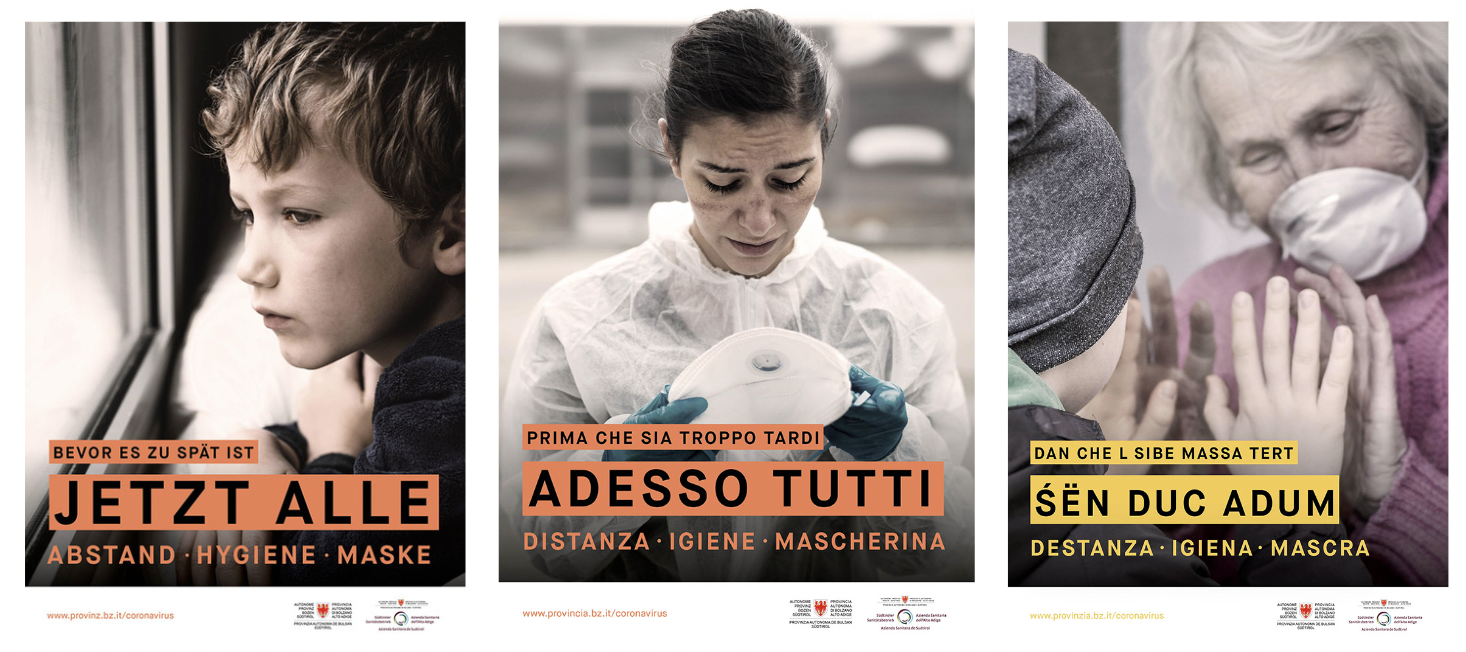
Bozen-Bolzano Province started a multilingual campaign, “before it is too late,” to sensitize citizens to the risks of the COVID-19 pandemic

When the government closed schools, they also announced there should be an immediate switch to online teaching, but in Italy there is something called “school autonomy” and within it “didactic autonomy,”which meant that schools also had autonomy to decide how to deal with online teaching and remote teaching. School autonomy took effect in 2000, and within the School Autonomy Regulations there are rules regulating teaching autonomy (art. 4) and organisational autonomy (art. 5). The application of these rules is the direct responsibility of the school, which implements them with flexible criteria, but respecting the families’ freedom of educational choice and, in any case, recognising and valuing diversity, promoting the potential of each pupil, and adopting all the initiatives useful for achieving educational success. The educational institutions ensure the implementation of remedial and support, continuity and school and career guidance initiatives for pupils. On the basis of autonomy, educational institutions can change the annual number of hours of teaching disciplines (subjects) by a quota of 20%.

In terms of the response to the closures, generally, the tendency was for schools to go to remote teaching immediately and to do a lot of online teaching.  That was a challenge, because neither the teachers nor the children were well prepared for the transition. It was difficult also in some regions where the internet connections still are not very good. In those areas, the Ministry of Education encouraged teachers to contact children via phone if they didn’t have access to the internet or to send materials to children or parents. Locally, there were also a schools where teachers would leave materials for the students and then return to pick up the work that the parents brought back to the school after the students worked on them In some primary schools, it went on like that until the end of the 2020 school year so those schools never even had remote teaching. However, some schools reopened for children whose parents had to go back to work, and the government did discuss opening up some “catch-up programs” during the summer, but the teachers’ unions said that the health of teachers also had to be safeguarded.  That’s why schools didn’t open up again until September, 2020.

TH:  What about other aspects of the response? Was there a local or regional effort to get people connected or to get them devices?

BG: Because the internet access in some places was so sporadic, getting everyone devices wasn’t really a viable solution. But there were funds for devices, especially for what they considered “vulnerable children.” However, from the beginning of the outbreak the decision was to leave the schools closed to protect the health of children, so the focus wasn’t really on education. The expertise that was considered was always the expertise of medical experts. Then the government started to consider the economy and opening up businesses, and it wasn’t until after that that they thought about education.

[F]rom the beginning of the outbreak the decision was to leave the schools closed to protect the health of children, so the focus wasn’t really on education. The expertise that was considered was always the expertise of medical experts. Then the government started to consider the economy and opening up businesses, and it wasn’t until after that that they thought about education.

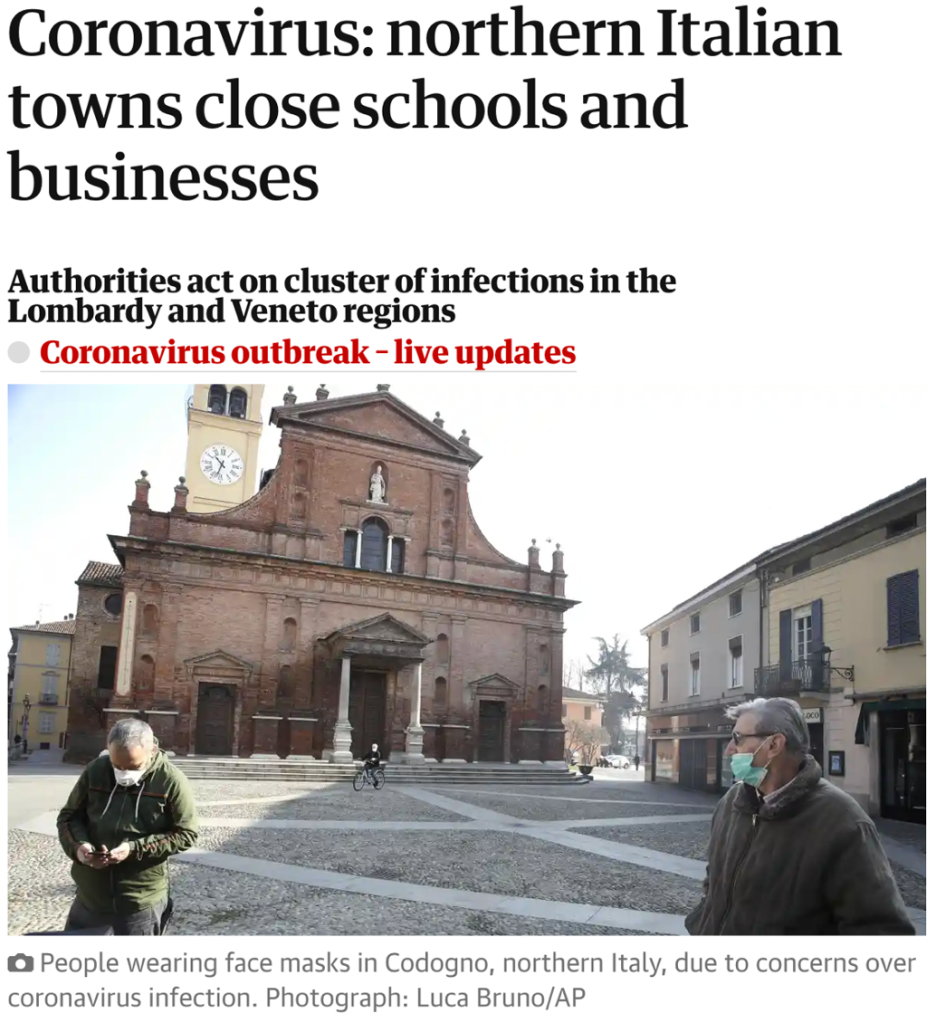
The Guardian depicts the effects of COVID-19 in Northern Italy

TH:  And what happened with the exams during the closures?

BG: Generally, the government had a very pragmatic way of dealing with exams, stating that grading should not disadvantage learners. In high schools, for example, exit exams for graduating students were simplified, and in the composition of the final grade, the oral part received a higher weight; however, the oral part was held in person, with social distancing.  For younger students, you can see from the data that students’ grades for the year were higher than normal. That probably reflects the concern about inequality and not wanting to penalize students who didn’t have the support to study at home or to get the help they would have gotten in schools. They didn’t want the students’ grades during the closures to hold anyone back.  

TH:  What happened when the schools came back in person in September 2020?

BG: After the schools reopened, there was no other national shutdown, but in the spring of 2021 there were some local school closures. Again, these decisions were made at the national level, in response to data health, for example, on the number of cases in a particular area. When the students did come back in September 2020, schools in certain regions tried different kinds of social distancing. Some had different entrances and exits. Some schools also continued with hybrid education, having some students in class at school and some at home online at the same time. There was also priority placed on keeping schools open for younger children, to try to make sure they can be in school, every day, in person, but then for secondary school students, it was more of a hybrid mixture.

In terms of other changes, primary schools in my area in South Tyrol introduced a new period of  “self-organized learning” during the first hour of the school day. This was supposed to allow for flexible entrances – and thus lower the risk for infections – and, at the same time, help students to adjust to going back to school and catch up on possible learning losses.

“As far as the newly introduced learning format of self-organized or independent learning is concerned, around 80 percent of the teachers and pupils in primary and secondary schools stated that they got along well with the learning format of self-organized or independent learning. A similar picture emerges for parents and guardians: 82 percent believe that their child coped well with this learning period. A point of criticism in connection with self-organized learning is that, especially in primary school, the pupils were often given too few challenging tasks in this learning area. It was also criticized that the use of digital media was limited at this school level.”

From the School year 2020/21: External evaluation of the South Tyrolean Provincial Administration

The national government also took other steps, for example, they were very committed to enhancing or fostering the wellbeing of students. Even though Italy doesn’t normally have school psychologists, they provided funding so that schools could get a psychologist or find other ways to support students and even teachers and parents, if needed – the aim was preventing and treating negative consequences that emerged during COVID-19. That was a national decision, and it meant that schools had a right to a certain number of hours of support from a psychologist in 2022 – however, they also discussed the need for a permanent  systemic introduction of the function of psychologists in educational institutions.

References

Gross, B., Kelly, P., & Hofbauer, S. (2022). ‘Making up for lost time’: neoliberal governance and educational catch-up for disadvantaged students during the COVID-19 pandemic in Italy, Germany and England. Zeitschrift für Diversitätsforschung und -management 2, 161-174. doi: 10.3224/zdfm.v7i2.04

Kelly, P., Hofbauer, S., & Gross, B. (2021). Renegotiating the public good: Responding to the first wave of COVID-19 in England, Germany and Italy. European Educational Research Journal, 20(5), 584-609. doi: 10.1177/14749041211030065

Francesconi, D., Gross, B., & Agostini, E. (2021). The role and facets of wellbeing during the first wave of the COVID-19 pandemic: A qualitative analysis of Austrian and Italian educational policy. Psihološka istraživanja, 24(2),141-162. doi: 10.5937/PSISTRA24-32602

Gross, B., Francesconi, D., & Agostini, E., (2021). Ensuring equitable opportunities for socioeconomically disadvantaged students in Italy and Austria during the first wave of the COVID-19 pandemic: A qualitative analysis of educational policy documents. Italian Journal of Educational Research, 27, 27-39. doi: 10.7346/sird-022021-p27

School Closures, Internet Access and Remote Instruction in Vietnam:  A Conversation with Chi Hieu Nguyen (Part 1)

This week, Chi Hieu Nguyen talks with Thomas Hatch about the after effects and developments in education in Vietnam following the COVID-19 school closures. Nguyen is the CEO, and co-founder of Innovative Education Group (IEG). Innovative Education Group is an umbrella group of more than 10 education ventures. The interview includes a brief discussion of IEG’s work before Nguyen discusses what happened in Vietnam’s schools following the COVID-19 outbreak, how the education system has responded and what has happened since.

Thomas Hatch: Before we talk about the school closures, can you give us a sense of the kind of work you and your colleagues at IEG do in Vietnam?

Chi Hieu Nguyen: We serve the entire spectrum of the education landscape in Vietnam. We work with policymakers, researchers, school leaders, teachers, parents, and students, and each venture tackles a different problem. We manage education consulting companies but we also run full scale K-12 school systems; we’re involved in publishing, assessment, online learning models, and after school learning models, and even a nonprofit foundation to rebuild public schools in remote areas or provide scholarships and mentorship to underprivileged college students. But the majority of my work focuses on K-12 schools in terms of building new schools, upgrading schools, and transforming old schools. I focus mainly on the academic operation side.

The School Closures in Vietnam

Thomas Hatch: Can you give us a sense of what happened in schools in Vietnam after the COVID-19 outbreak?

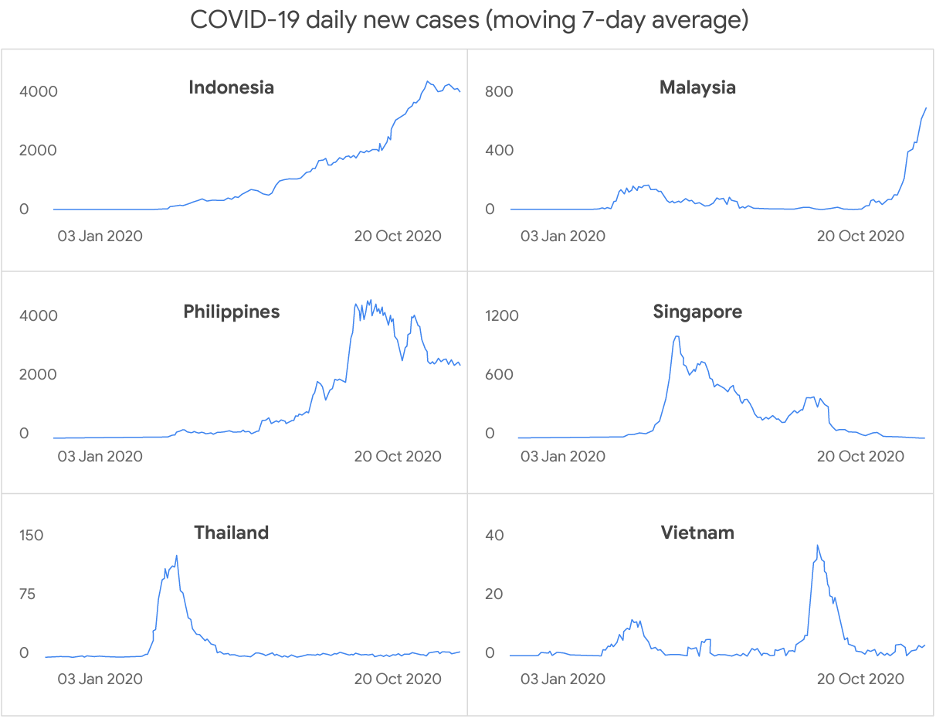
Chi Hieu Nguyen: I think Vietnam is a very interesting case. If you look at the data, for example, in South Asia in general, during COVID-19, Vietnam had a longer stretch of lockdown compared to other countries because we were quite late in getting vaccinations going. So the closures started in March 2020, and, in total, we were probably online for a year and a half, and, at least for certain areas, it could be longer.

Thomas Hatch: Was that a government-wide shutdown? Was there any discussion or planning up to it? Or was it one day the schools were open, and the next day they were closed and online?

Chi Hieu Nguyen: In Vietnam it’s usually a top-down decision of the Government to shut down. But this time, it wasn’t uniform across the country. They started shutting things down depending on where the outbreak took place. Shutdowns could also happen based on the district. For example, there are 16 districts, and when a district had an outbreak, that district got shut down, and the others districts could stay open. So the school system operated in a very flexible way, but only in the beginning.  Then there was an intense period with the biggest outbreaks in summer and fall of 2020. That’s when pretty much the entire country got shut down, including the schools. Then, as we recovered, opening schools was really based on the city again – which had the highest amount of a percentage of vaccination and things like that. But the Government decided to have a target of 100% vaccination, and that is the reason why when it got back to normal it was pretty much every city and every province that came back to normal schooling. That happened around February–March of 2022. It was almost 2 years or a year and a half on and off, but mostly off.

Source: WHO & Google, Temasek and Bain, e-Conomy SEA 2020

Thomas Hatch: Who was making the decision about closing down schools? Was it the central government who would essentially say, okay, if you have an outbreak, you need to close? Or was it up to the local officials?

Chi Hieu Nguyen: It was the local authorities. Each province or municipality made those decisions depending on the outbreak. The central government gave a very general directive, but it was the authority of the province or the city that made the decision to shut down.

Thomas Hatch: Is that typical of decision making in the Vietnamese education system? Or is it usually more centrally controlled than that?

Chi Hieu Nguyen:  Over time, they have tended to give more leeway for local authorities to make the decisions. In 2018, after many years, we had an entire revamp of the national curriculum. That revamp produced the first competency-based curriculum nationally. But before that there was only a “one textbook” approach. That meant that, before 2018, for the entire public school system, we used the same textbook. From 2018 onwards, there’s a set of textbooks to choose from, so there’s a lot more leeway and flexibility for schools in different districts and different provinces and cities. It’s still a centrally controlled system, but there is increasing flexibility for the local authority to make those decisions. Over the past 5 or 6 years, there’s certainly more loosening of regulations to support the growth of the private sector as well, but it’s more obvious in education.

“Like a Survival Instinct” – The Initial Response to the School Closures

Thomas Hatch: What was the first step, the first reaction in terms of the school closures? Was it that people said, “oh my, we’re going to have to teach online and nobody has broadband access? And nobody has computers?”

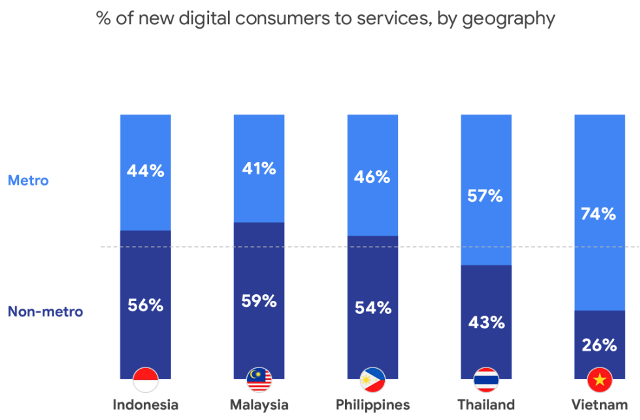
Chi Hieu Nguyen: That’s really what it was. It was like a survival instinct. Everyone got online as much as they could. It’s actually accelerated the speed of adoption of technology and the Internet in a lot of schools. Many people and schools got online quickly, within about one or 2 months. But in contrast to many other Asian countries, in Vietnam, most of the new adoption of the Internet and digital devices — almost 75% — were in the metro areas. That means that in terms of the continuity of education, the metro areas did pretty well, but that the gap between the metro areas and rural areas widened because of COVID-19. For the Metro areas, COVID was a big kick that got a lot of people online, and now there are a lot of new digital products and services that are available. But in my work, even now, we still have to provide computers and teachers to teach online for students in the most remote area of Vietnam.

Source: Google, Temasek and Bain, e-Conomy SEA 2020

Thomas Hatch: That’s a pretty incredible increase in digital use in the metro areas. How was that response possible? Was it led by the Government? Or by local authorities? Or business?

Chi Hieu Nguyen: For private schools, the schools did it themselves, but I think the local education departments were also very responsive. For example, my province, the leadership of the public schools didn’t even need to wait for the local government or the central government to decide. They got students connected very quickly. I think there’s also that agility in the teachers. It’s a very young generation of teachers in Vietnam, and many of them are technologically enabled in their daily life. I think there’s just this passion in Vietnamese teachers in general that might have helped even in more rural areas where there was less internet penetration and technology is very limited. But, overall, I think the infrastructure was in place except for the very poorest areas. Vietnam is a very fast adopter of technology in general, and we saw that kind of a quick transformation in education. Students at most of the schools I know, both private and public schools, get online very quickly within just about 2 months.

Vietnam is a very fast adopter of technology in general, and we saw that kind of a quick transformation in education. Students at most of the schools I know, both private and public schools, get online very quickly within just about 2 months.

Thomas Hatch: What about devices? Did the schools have to hand out devices or did kids have enough mobile phones?

Chi Hieu Nguyen: Phones are something very common in Vietnam. Vietnam is a very e-commerce economy so the infrastructure is there. Almost every house has a smartphone with a data plan connected with the Internet.  I think it’s only with those with the lowest incomes or in the most remote areas where infrastructure is not strong enough. The majority of the country is pretty much connected.

Managing through Remote Instruction

Thomas Hatch: Then what? What were some of the first steps in terms of making sure that remote education would be effective? Was it training teachers in zoom and things like that? Was it creating a curriculum? And was that done centrally at the national level or at the local level?

Chi Hieu Nguyen: For one thing, the Ministry of Education worked together with the national television station to produce learning programs for every subject from grade 1 all the way to grade 12, so that even when students didn’t have internet they could actually watch the TV and learn the programs. But at schools, the effort was focused on just getting kids online and using the internet as a medium to get connected with students within the first, maybe 6 months to 9 months. There was not much of any conversation about teaching methods. But then, towards the end of 2020, and for most of 2021, there were more conversations and conferences about pedagogies, methods, and how to use technology. There was also new explosion of technological products and services in 2021. But for the first 6 months it was pretty much just getting online as much as possible.

Thomas Hatch: That’s very helpful. It’s really interesting the way you describe the COVID-19 response in phases, with an explosion of edtech technologies and things that teachers could use. It wasn’t necessarily focused on pedagogy. Can you give some examples of some of the more interesting edtech developments from your perspective?

Chi Hieu Nguyen: In just about 2 months it seemed like Zoom or Microsoft Teams were in every school. Then in 2021 Microsoft education came in, and suddenly there was an explosion in the number of teachers going for Microsoft education training to become a Microsoft Education Expert or to learn how to use the entire suite of packages and services. Google education followed as well. Vietnamese parents in general are also very keen on learning English with technology, and suddenly there is an explosion of pronunciation apps, reading apps, grammar apps, tons of this. There’s even an investment company translating the entire Khan Academy in Vietnamese.

For me, I also started using ClassIn. It’s a product from China, and it’s a platform that was built for the classroom. It’s different from things like Zoom that were designed as platforms for meetings and were hijacked into the classroom. On Zoom, for example, if you want to us another education tool, you have to ask students to switch platforms: “Okay, let’s go to Padlet” or you have to share a screen. And the moment you share a screen, with limited broadband, you often can’t stream a video or anything. Everything is just disrupted. But ClassIn brought everything together in one platform. You have a blackboard. You have a timer. You can store your video and your lesson plan, or whatever you want to share in ClassIn. Even if the students have very low broadband, they can still watch the video without distraction. It’s called like an online-offline model.

Thomas Hatch: But are schools still using these technologies and online tools?

Chi Hieu Nguyen: There are different aspects. Schools are more aware that something like COVID-19 could happen again and disrupt everything, so they’ve converted from paper-based into more digital resources. Now you see Vietnamese schools are starting to think about learning management systems like Canvas and everything digital lives there.

Schools are more aware that something like COVID-19 could happen again and disrupt everything, so they’ve converted from paper-based into more digital resources.

The second aspect is the way they approach the lessons. There now might be a combination between online activities and in person activities. The students before class, during class, and after class spend a lot of time on the digital platform, and of course, in class, they have discussions and they have in-person activities. The third aspect is that classroom organization may be more flexible. It’s no longer just one teacher and the entire class. You can have the class study from a different location, doing something for a field trip and then have a class study online, for example. You can start to invite teachers from all over the world to teach and start to explore other possibilities. Of course, you see this most at pioneering schools. One I’m involved in is The Olympia Schools, a private K-12 school system that is a part of our school network. They’ve started talking about deeper learning, about virtual reality, how to take advantage of AI and virtual reality. Now they’ve started to bring ChatGPT into daily teaching as well so there is almost no resistance to the wave of technology anymore because of that COVID-19. Now they have that mentality that we have to be very agile with every new technology coming out.  I think every city, in every major city in Vietnam, there should be about 4 or 5 schools like that. They are really pushing the boundaries, and they become like model schools that others can learn from.

A view from Poland (Part 2) – Jacek Pyżalski discusses the effects of the COVID-19 pandemic on students, teachers and wellbeing

In the second part of this three-part interview, Jacek Pyżalski draws from his own research to discuss the effects of the COVID-19 pandemic on the well-being of students and teachers in Poland and discusses some specific steps that teachers and schools could take to support their students. In Part 1, Pyżalski provides an overview of the school closures in Poland and how the education system responded to the COVID-19 pandemic.  Part 3 will focus on how the Polish education system has responded to the influx of refugees caused by Russia’s war on Ukraine. Jacek Pyżalski is the Professor in the Faculty of Educational Studies (Adam Mickiewicz University in Poznan). He is experienced in researching the problems connected to social and educational aspects of ICT usage by children and adolescents. He was a pioneer in Poland in the field of cyberbullying research, and he has extensively studied the impact of crisis remote education on wellbeing of students, teachers and parents.

Thomas Hatch: I want to turn now to what you’ve learned in your research in terms of the effects of the pandemic and school closures on teachers and students in Poland. Are there a couple of things that you want to highlight?

Jacek Pyżalski: The information is that it touched not only the students, but all the other groups. When we did our research in the thirty-two schools, we used a couple of indicators of mental health and also dynamic indicators. For example, “Do you feel better, worse or the same as before the pandemic?” Although people were mostly publicly talking about the young generation, when we used the same indicators for all three groups – parents, students, and teachers – for mental and physical health the teachers felt the worst, then the  parents, and then the students. So in some indicators adults were touched by the situation more severely than young people (Polish teachers’ stress, well-being and mental health during COVID-19 emergency remote education).

The second thing is it’s not justified to say that everybody in each group was touched the same. For young people, I would say that about 1 in 5 or 1 in 6 [about 15-20%] were touched severely. A lot of them were more or less indifferent as if nothing happened. But for 1 in 20, this was almost a blessed time, and they reported a lot of advantages. Some people wondered how in such an apocalyptic time anyone could have responded this way, but we found it was very consistent.  In all the questions we asked, there seemed to be the same group of 4-5% percent of people saying “I feel better”; “I have a better relationship with my peers”; “I’ve got a better relationship with this student.”

it’s not justified to say that everybody in each group was touched the same. For young people, I would say that about 1 in 5 or 1 in 6 [about 15-20%] were touched severely. A lot of them were more or less indifferent as if nothing happened. But for 1 in 20, this was almost a blessed time, and they reported a lot of advantages.

We said, “What’s going on here?” And we went deeper. When I was meeting teachers, I asked “Do you have any students who are getting better?” Nearly all the teachers could think of such students. I asked the details, “Who is in this group?” and I learned there were young people who were totally withdrawn, socially withdrawn, before the school closures; they would never say a word during the lesson before the school closed. Now with the computer mediated communication, it was easier for them to respond to their teacher. There were also some young people who were the target of school bullying, and this was a time when they were physically protected. They could be cyber bullied, but it’s easier to be protected physically. Additionally, some students from the autism spectrum were able to adjust the volume and the pace for example. There was a lot of diversity in this group. For these kinds of students, the threat was to go back. To go back and to sit at the table in the class means they could lose everything they had achieved. For example, you are not talking before the pandemic. You started talking and being active in education and in contact. What does it mean that you go back to the state you were before the pandemic when you go back to school? Some said this not a lot of people, but still it’s real people that are coming back, and for them, it was a real threat. As a result, when I was preparing the teachers for reopening, I was also saying “identify those students and give them specific support, because those are the ones that need the support the most.” 

There were some other general things we learned about. Everyone was saying that peer relations generally declined, but really it was about 50% of young people who said so. About 40% of students said their peer relations were the same, the same level and quality as before the pandemic. Why? One thing was that they were using computer mediated communication but the contact was not always that different. Some were meeting physically outside school for instance. There was also this five percent saying my relationships are better than before. It was the same with teacher-student relations. It was not everybody that said those relations declined a lot, the majority stayed the same. It was interesting, and in our research we found correlations between the quality of the important peer and student-teacher relationships and the mental health indicators. Those who said their relations declined suffered from lower indicators of mental health in many respects. So if anybody asked me, what would you do? I would invest in the quality of relations because this seems to be a factor that most profoundly impacts the well-being and mental health status of young people.

[I]f anybody asked me, what would you do? I would invest in the quality of relations because this seems to be a factor that most profoundly impacts the well-being and mental health status of young people.

Thomas Hatch: Earlier you mentioned the book you and your colleagues wrote: Education in the time of Covid-19: With distance to what we do as the teachers. Can you tell me about some of the advice you gave and the work you did to help teachers respond to the pandemic?

Jacek Pyżalski: We were really very practical in the book. We said let’s start with wellbeing, with contact with the students. What are some small things you can do in the lesson, not only to teach, but to create and keep the community in the classroom? We were really focusing not only on the teacher as the producer of the lessons, but as the context. Of course, it was not only us, there were also big NGOs supporting schools. For example, this book was followed by a series of webinars that went deeper into each chapter. Live, during the webinars, we might have 4,000 participants, and when we looked the next day we might see that it was opened by 60,000 people. It was so needed.  People were so lost in this new reality and were looking for solutions to achieve basic educational goals. There were a lot of these kinds of initiatives. People were organizing things like workshops where teachers would present some techniques and methodologies they used to keep the classroom together or to engage the students online.

People were also having a lot of problems, specific problems. For example, I would say one of the problems I heard many times from teachers of all levels was the issue of young people switching off the cameras. Some teachers were very angry about this, because for them, that was a sign that the students were not engaged and they wanted to withdraw from the lessons. But for me, it was not clear. So, with a colleague at my University, we asked our students anonymously if they were for or against switching off their camera. We were interested in the justification of both answers. What we learned was that those who were switching off their cameras were not just those who were lazy or who wanted to disengage, but they had many other reasons. For example I remember one student wrote something like: “I’ve got a scar on my cheek and normally it’s not seen in the physical classroom. But online, it’s magnified, and everyone can see it. So if I switch on my camera, I’ll think about nothing else.” Or young people said, “my home situation is not okay, and during the lesson someone could come in and scream or do something strange and everyone would witness it.” We learned that not everything is as easy as it seems. The most important thing during the pandemic was to have this kind of feedback, and to get the learners’ perspective, because sometimes we, as teachers, force our own understanding of what’s going on and it’s not necessarily true. It’s better to go deeper with other perspectives.

Thomas Hatch: Did you do a webinar that focused on how to deal with turning off the camera? Did you have a particular recommendation on how teachers could deal with students turning off the cameras?

Jacek Pyżalski: Yes, I had a lot of recommendations. The starting point is diagnosis, really asking how it looks in the student’s microenvironment. Then I would talk with teachers about things like using a step by step approach. They could ask their students, “Okay, if I’m talking directly to you, please switch the camera on.” That’s easier than having it on all the time. Some of the students also gave the argument that if everybody switched on their cameras and they see everybody moving, it’s harder to concentrate. So, step by step, and sometimes to find something funny. For example, tell the students “tomorrow, let’s have everyone wear something yellow. Maybe what I’m saying is very plain, and very modest, but actually those small things matter.

Also, I told them that it’s not that easy to make big generalizations like, “remote education is not engaging students.” For example, you can give a task like recording an interview with your grandmother, publishing it, and then listening to them and discussing them as a class. Or when we are teaching new vocabulary in a foreign language, go to the kitchen and take a photo of some equipment, and then we could create a PowerPoint Presentation together, showing photos with subtitles we’ve written underneath in Spanish, or any language. Generally, our message for the teachers was that remote education is what you make it. You can make it work based on your educational goals.

Our message for the teachers was that remote education is what you make it. You can make it work based on your educational goals.

Thomas Hatch: Despite some concerns about well-being in the US, I don’t think there has been as much talk about teacher-student and peer relationships, though I suspect we might find these same kinds of results. These relationship factors might help explain some of the findings related to learning loss. Have there been discussions of learning loss in Poland?

Jacek Pyżalski: There were a few threads of this discussion, including how to measure it. There was a big pressure on lowering the standards for the exam, because they said, “Okay, it’ll be impossible to use the same standards as in traditional learning.” They did some of this, and then they learned there was some loss. Another thing was the issue of assessment, that it’s not fair because you can cheat. It might not be mirroring the real situation because of this.

There has also been a big general discussion about whether you can do online education that is at the same level of traditional education. There was also the big question, to what extent should we use online education afterwards at all levels of education (university, secondary, primary, kindergarten, levels). We are so “zoom fatigued” that young people have problems with this. They use it too much, they use it at night, they use it all the time, they are multitasking. There are some indicators of this lack of digital wellbeing. We also had an interesting finding that these indicators were sometimes even more prevalent in teachers than they were in students. What is normally understood as the younger generation’s problem is also ours. So if you ask me about the most important factors for the wellbeing of all interested, I would first name the quality of important relations, and the second one, the quality of digital wellbeing.

So how do we tackle ICT? How do we tackle technology in our life in terms of multitasking and the length of what we are doing? This was also for teachers, things like work-home balance, there were a lot of factors. Not only Poland, but a lot of countries, took care of young people forgetting that the mental health of teachers is also really impacting young people even though we know there is a connection. You cannot aim for high quality wellbeing for young people without thinking about how the teachers feel, the teachers emotions, and how the teachers cope. I think it was neglected.

You cannot aim for high quality wellbeing for young people without thinking about how the teachers feel, the teachers’ emotions, and how the teachers cope.

Thomas Hatch: This is really fascinating. Are there any other promising innovations from the Covid era in schools or other lessons that you think we should remember?

Jacek Pyżalski: Oh, yes. I think there are some hybrid methodologies like design thinking, projects or some things like innovative usage of technologies for cooperation or technologies for producing some common things by the students. But I would say that the COVID situation was really a kind of cold-water bucket on the heads of Utopian people who thought that just digitizing education would be a big step into the future. They learned that that technology itself is nothing, and I think we learned, and we are more realistic about what technology can do, what it cannot do, and how to use it. I think that those who are wise should have learned – and I know that some of them have learned – that we really have to learn how to use technology.

References

Pyżalski, J., & Poleszak, W. (2022). Polish teachers’ stress, well-being and mental health during COVID-19 emergency remote education–a review of the empirical data. Lubelski Rocznik Pedagogiczny, 41 (2), 25-40.

What’s changing in classrooms and schools right now? (Part 2) Micro-innovations supported by private and public sources

In the second post of a two-part series, Dulce Rivera Osorio explores what’s changing in schools by scanning news articles that report on educational “micro-innovations” developing by in the US and internationally by non-profit organizations, private companies, and states and education systems. In Part 1, Thomas Hatch introduced micro-innovations and then Rivera shared a number of examples of micro-innovations being made in instruction or school/district operations that have been described in media articles from the US. To learn more about  the numerous proposals to change schools and “reimagine education” post-COVID, read IEN’s previous post: Is anything changing in US schools post-pandemic? Possibilities for rethinking time, place and supports for well-being.

In addition to changes in structures, resources, and practices at the classroom and school/district level, news articles have discussed a variety of micro-innovations that have been introduced by nonprofits and private companies in the US. To give a sense of the variety of initiatives, companies like Highland Electric Fleets and Thomas Built Buses have worked with school districts to cover the upfront costs involved in shifting from conventional buses to electric buses (US schools can subscribe to an electric school bus fleet at prices that beat diesel).

Airbnb, working in partnership with the National Education Association, has developed an adaptation to their hosting approach that provides extra income to teachers based in the US who share their homes through Airbnb (NEA, Airbnb partnership aims to help teachers supplement income). Nonprofits like the YMCA and the Boys and Girls Clubs have provided before and after-school programs for some time, but during the school closures of the pandemic they helped provide child care, academic support and access to recreational and arts activities by implementing socially distanced “learning camps” in some parts of the country (New Players Fill Child-Care Gap as Schools Go Remote). The Boys and Girls Clubs have also been actively developing new programs to support career and workforce learning.  As the The Hechinger Report describes, clubs in Indiana, Washington State, and Montana have been working with Transfr, a technology start-up, to use virtual reality to develop “immersive” career and workforce training simulations for manufacturing, carpentry, public safety, hospitality and automotive industries (Future of learning with virtual reality).

State and national education systems have also been developing responses to the challenges arising from the COVID-19 pandemic and the school closures that rely on a variety of new structures and programs. Alaska is creating its own digital content delivery system to aid rural communities and areas with poor internet connectivity (From Alaska Schools Creating Digital Networks to Aid Remote Learning to a Homework Freeze in Texas to Limit Screen Time, 9 Ways States Are Aiding Schools Amid COVID-19). Texas is implementing a state-wide telemedicine program so that school children can access therapists in school (State telemedicine program allows Texas children to see therapists at schools).

New policies and changes in policies are also encouraging districts and schools to develop new resources and mechanisms to support teachers and schools. In California, lawmakers made innovative changes in zoning policies that allow school districts to build staff housing on any property the district owns without requiring zoning changes from city or county officials (California removes hurdles to building teacher housing). At the national level in the US, federal agencies like the EPA are providing funding for states to take advantage of new technologies and developments that can both save schools money and support the environment (EPA nearly doubles funding to districts for clean school bus rebates). The passage of a $430 trillion spending package designed to address the global climate crisis includes a host of provisions that provide creative ways schools and districts can save money and support the planet. As a new guide from the Aspen Institute and the World Resources Institute (K12 Education and Climate Provisions in the Inflation Reduction Act) reports, districts can now get tax credits to support energy-reducing innovations in the form “direct pay” – cash payments to the district instead of through credits claimed by a third party that made the whole process problematic (Quick Hacks: How Schools Can Cut Costs and Help the Environment).

Outside the US, NGO’s, companies, and education systems are also looking for new ways to address issues as varied as a shortage of bus drivers, “remote learning,” and mother-tongue language instruction. In Australia and New Zealand, GoKid, a carpooling app, hopes to aid the shortage of school bus drivers by making carpooling more accessible and easier for parents (GoKid partners to address school transportation crisis). The app helps parents to find carpool partners in a school or school district by providing a rough location map of nearby families and suggesting optimized routes.

In India, as a recent Brookings report explains, the development of young mothers’ groups created new ways to support learning at home during school closures. With the support of the Pratham Education Foundation, groups of 4 – 6 mothers met weekly or fortnightly to share experiences and access “idea cards” sent via WhatsApp containing games, activities, and recipes. For children in grades three to six, youth volunteers led small groups of children in “mini learning camps” for one to two hours per day using simple instructional activities and materials made by the children. In Bangladesh, BRAC dealt with the school closures by creating “phone schools.” In these “schools,” locally-recruited and trained teachers conducted virtual classes in group calls with three to four children. BRAC reported that those calls reached over 180,000 students in more than 7,000 schools (The power of community as a catalyst to tackle disrupted learning).

With emerging evidence supporting the expansion of mother tongue instruction, South Africa has instituted policies to support mother tongue instruction in grades 1, 2, and 3, but now the Eastern Cape education department allows high school students who are taking the matric exams to answer using their home language (Policy options to crack the mother tongue versus English riddle in South African schools). That kind of development can encourage schools to offer mother-tongue instruction through grade 12.  As provincial education official Fundile Gade put it, “China, Singapore and Germany use their own languages. English is a secondary language, like other languages, so it can’t be given preference as if pupils can’t learn and develop outside of English (Matric pupils to write exams in isiXhosa and Sotho at Eastern Cape schools).

US schools can subscribe to an electric school bus fleet at prices that beat diesel, Canary Media

NEA, Airbnb partnership aims to help teachers supplement income, K-12 Dive

New Players Fill Child-Care Gap as Schools Go Remote, Education Week

Future of learning with virtual reality, Hechinger Report

From Alaska Schools Creating Digital Networks to Aid Remote Learning to a Homework Freeze in Texas to Limit Screen Time, 9 Ways States Are Aiding Schools Amid COVID-19, The 74

State telemedicine program allows Texas children to see therapists at schools, KUT 90.5

California removes hurdles to building teacher housing, EdSource

K12 Education and Climate Provisions in the Inflation Reduction Act, World Resources Institute

EPA nearly doubles funding to districts for clean school bus rebates, K-12 Dive

Quick Hacks: How Schools Can Cut Costs and Help the Environment, Education Week

GoKid partners to address school transportation crisis, Benzinga

The power of community as a catalyst to tackle disrupted learning, Brookings

Policy options to crack the mother tongue versus English riddle in South African schools, The Conversation

Matric pupils to write exams in isiXhosa and Sotho at Eastern Cape schools, Times Live

Critical tensions in educational policy and practice: Lead the Change interview with Davíd G. Martínez

In this month’s Lead the Change interview Davíd G. Martínez highlights challenges and opportunities for students and educators to work toward fostering systemic equity in schools. Martinez is an Assistant Professor in the Department of Educational Leadership and Policies at the College of Education of the University of South Carolina where he focuses on connecting policy knowledge and praxis through multi-method inquiry. The LtC series is produced by Alex Lamb and colleagues from the Educational Change Special Interest Group of the American Educational Research Association. A pdf of the fully formatted interview is available on the LtC website.

Lead the Change: The 2023 AERA theme is “Interrogating Consequential Education Research in Pursuit of Truth” and charges researchers and practitioners with creating and using education research to disrupt institutionalized forms of discrimination. The call urges scholars to challenge traditional methods of inquiry in order to create increasingly useful, responsive, and equity-oriented research that can be used by schools to develop informed policies and practices to better support students. What specific responsibility do educational change scholars have in this space? What steps are you taking to heed this call?

Davíd G. Martínez: Educators, practitioners, and scholars often work together to ameliorate the challenges in education, (e.g, lack of sufficient school funding, educator and leadership burnout and churn, anti-Blackness, and lack of cultural context) (Baker et al., 2021; DeMatthews et al., 2022; Martínez & Vasquez-Heilig, 2022; Watson & Baxley, 2021). Change is occurring, and all stakeholders should be hopeful, but transformation is slow in public schools. At times, seemingly indifferent political regimes exacerbate pre-existing challenges (Tran et al., 2022). Schools are extremely intricate organizations teeming with energy and nuanced in so many ways, and hardworking partners in practice (i.e., students, teachers, administrators) work tirelessly to maintain schools despite these challenges.

The membership of AERA is a community of thought-provoking individuals who care deeply about education, kids, teachers, leaders, parents, and each other. AERA’s 2023 theme focused on systemic inequity continues to guide this focus through an intellectual and spiritual community of Educational Change scholars. The 2023 AERA theme reminds scholars that to support education is an act of daring and an act of strength. To realize this power, scholars must act in solidarity with practitioners. AERA urges its members to critically consider the potential for supporting equitable educational praxis through research that directly informs policy and practice. The 2023 AERA theme is meaningful because it asks scholars as individuals in unique positions of power to acutely recognize our unfinished-ness, recognize our partners in practice, and recognize how we can best support their work.

So, what can the AERA community do? Many of AERA’s members are already engaged in positive practices that build community. Many scholars collaborate with partners in practice to understand the intricacies of education. From my purview, many of AERA’s members listen to practitioners and do so intently. We seek partners in practice who can support our working knowledge of students, classrooms, schools, and districts, and the daily challenges they face. Many of us seek this knowledge to understand how we can best situate our work so it is practical and useful. The 2023 AERA theme is a positive way to acknowledge that our work is not done and to challenge our academic community to continue cultivating the solidarity we require to create positive change in schools.

LtC: In your work, you use legal, policy, and finance frameworks to examine funding inequity and its dire consequences for minoritized school districts, arguing that poverty and racism are systemic issues to be addressed as such. What are some of the major lessons the field of Educational Change can learn from your work and experience?  

DM: In my research, I seek to provoke and create purposeful, critical tension. From my perspective, I want to make explicit that historical policy and law which persecuted people of color, or sanctioned our murder, lead to modern socio-economic constraints (Bell, 2004; Martínez & Vasquez-Heilig, 2022; O’Connell, 2012). To understand modern socio-economic constraints, we must acknowledge the oppression of minoritized peoples, and the advent of laws entrenched in white supremacy that prevented minoritized people from accumulating wealth (Osworth, 2022; Rothstein, 2017). This system of oppression still exists and a cursory, even anecdotal, assessment of schools as a microcosm of this reality requires our consideration.

For instance, one of the major sources of funding for districts/schools are local property tax levies (Green, 2021; Martínez, 2021). Those districts with higher community wealth, and greater commerce, then leverage this community wealth through levies to fund their schools (Kelly, 2020; Knight, 2017). Often the districts with the most severe school funding and resource disparity are districts serving higher proportions of Indigenous, Black, and LatinX students (Baker et al., 2020; Kelly & Maselli, 2022). This then envelopes how I engage in my own research.

In my research, it is important to center the historical context of modern policy. How does policy extend from history and impact communities here and now? For instance, in Martínez et al. (2019) we wanted to understand school finance disparity in the current policy landscape of Arizona and the historical treatment of Indigenous Peoples. This includes the abject degradation of Indigenous sovereignty and policies that have historically, and continue to, impede sovereignty. From my purview, it is important to think about the history of the phenomena we are studying, and how this can help us illuminate the disparities in school funding we found in real time.

“Historical policy and law which persecuted people of color, or sanctioned our murder, lead to modern socio-economic constraints.”

Another lesson I have learned is to understand the phenomena I am interested in from the purview of practice. Before I engage in research, I go out and seek knowledge and guidance from partners in practice. There are many great ideas for research, but our partners in practice who operate our schools are inundated with challenges they must address. Before putting code to program, I’ll often take a little time to ask questions to understand my phenomena of interest from this practitioner perspective. I’ll then sit and think about why school finance disparity persists and whom the disparity targets. Grounding myself in this knowledge helps me a great deal to understand the phenomena I’m studying.

LtC: In your recent work you argue that persistent school finance disparity matters for BIPOC communities, is an equity issue, and must be ameliorated as civil right. How might your findings help scholars and practitioners imagine and implement changes to school finance policy and practice more effectively?

DM: Nationally, schools are about much more than learning. For example, public schools/districts across this country are often one of the largest employers in the geographical area (Jenkins, 2007; Tieken & Williams, 2021). Many public schools/districts across this country offer students public transportation services to and from school, especially in areas with no other public transportation (Buehler, 2009; Phillips et al., 2007; Zhang & Du, 2022). Every public school/district across this country provides full-service meals twice a day, not including mid-day or after school snacks. Many public schools/districts offer healthcare services, and at the very least every school/district offers in-house medical personnel (i.e., nurse).

“Society does not need another Theranos, we do need schools, and to applaud one, and denigrate the other, is a national failure.”

Many, but unfortunately not all, provide temperature-controlled workspaces, working plumbing, and fresh clean drinkable water. Public schools/districts provide entertainment and cultural enrichment (i.e., recitals, theater, arts, live music; cultural celebrations). Public schools/districts provide large scale organized athletic events. Public schools/districts provide mental-health counseling. Public schools/districts provide skills training as part of the curriculum and often as a secondary duty (e.g., photography club, car club, coding club, game club, math club). Many public schools/districts across the country provide post-graduation counseling including test-preparation to support students’ long term educational goals. Most of all, every public school/district across the country provides content, curriculum, and pedagogical experts who have trained to support our kids’ learning. Oh, and we can’t forget the Chief Executive management that keeps the entire organization working as smoothly as possible every day, helping our communities flourish.

Schools/districts provide a high level of service and forcing them to operate with sparse funding for all the services they provide is a tragedy. Billions of dollars flow to start-ups annually, yet school leaders are forced to operate their schools with meager funding increases. I’ll be clear, society does not need another Theranos, we do need schools, and to applaud one, and denigrate the other, is a national failure. To open the faucet of funding to one, while starving the other is a failure of national and state policy. Hopefully, my work in some small way supports discourse about the complications of funding, how we direct funding to schools, which students are served at the highest level, and which are not.

LtC: Educational Change expects those engaged in and with schools, schooling, and school systems to spearhead deep and often difficult transformation. How might those in the field of Educational Change best support these individuals and groups through these processes?

DM: Work directly with practitioners and grass roots advocates/activists! I cannot overstate this enough. We must, as a research community, from a certain position of power, value our partners in practice and our educational community to make certain we are supporting schools in meaningful, practical ways. We must think of how we can go beyond publication, or partnerships to obtain grant funding that supports our career. What practical things are we doing, and what can we do every day?

I admire those scholars who’ve run for school board, or get involved in their children’s schools, or engage in areas outside of their research agenda. I admire those scholars who build pipeline programs for students to access higher education, or support services. I admire those scholars who build coalitions to ameliorate oppressive policy agendas. I think these are practical ways many of us can help support our schools. Many of us are engaged, and it is inspiring to see my peers so committed.

LtC: Where do you perceive the field of Educational Change is going? What excites you about Educational Change now and in the future?

DM: I think the field of school finance continuing to focus on disparities in funding and resources as a function of racism, white supremacy, and segregation is exciting. Thus far, I have exclusively focused on this area. I recently published a paper (Martínez & Spikes, 2021) that examined school finance disparity through a critical policy lens. We sought to understand how Arizona funded its English Learners and found that, by and large, the higher the proportion of English Learners in a district, the less English Learner targeted funding. Baker et al. (2020) recently published a paper examining the disparities between high proportion LatinX districts, and low proportion LatinX districts. The authors found that as the share of LatinX students increases, per pupil spending and revenue decrease. This type of research focuses on much more than socio-economic status and elicits dialogue about the historical nuances of racism that impede economic mobility, and thus educational opportunities. Expounding this type of research can inform policy, and practical solutions, to equitably fund schools that educate our Indigenous, Black, and LatinX students.

I am excited to read work that focuses on policy coalitions and the strength of communities to inform the political and educational landscape for all students. Coalitions cultivate political resistance to ameliorate the status-quo (Tran et al., 2022; Weiss & McGuinn, 2017). There is so much potential then to continuing supporting grassroots organizations engaged in coalition with educational advocates/activists to inform policy agendas.

I am excited about the possibilities of expanding our ontology of education and schools. What phenomena will scholars study? What policy or practice decisions will scholars support through research? How will scholars ensure that partners in practice are practically supported through scholarship? How will scholars use research to resist educational oppression and persecution? Is there space for visceral resistance? I am excited to see how we continue to confront white supremacy and fight the encouragement of fascism through research and scholarship in the United States of America.

“My excitement for the future is grounded in Educators’ power to resist oppressive policy through praxis and scholarship.”

MacLean’s (2017) book Democracy in Chains, describes an historical assault on democratic participation by the “Radical Right” that includes controlling the policy landscape, the Supreme Court of the United States, the United States Senate, the economic stability of the country, and dismantling public education. MacLean’s depiction is quickly becoming the reality, the United States Supreme Court is under a conservative majority that overturned Roe v. Wade, and conservative state legislators across the country passed or proposed legislation that threatened public schools with economic sanctions if Critical Race Theory was taught in public schools (Epps & Sitaraman, 2022; South Carolina House Bill 4325, 2021). My excitement for the future is grounded in educators’ power to resist oppressive policy through praxis and scholarship. Finally, freedom and democracy are rooted in collective action to seek justice and transformation. Transformation of a country that is intimately comfortable with violence against people of color, violence against the LGBTQIA+ community, violence against women, violence against prisoners, violence against the unhoused, and certainly violence against educators. Through collective action with partners in practice, scholars can support justice for those communities who do not know the luxury of higher education, academia, or the safety of academic spaces.

References

Baker, B. D., Weber, M., & Srikanth, A. (2021). Informing federal school finance policy with empirical evidence. Journal of Education Finance, 47(1), 1-25.

Baker, B. D., Srikanth, A., Cotto Jr, R., & Green III, P. C. (2020). School funding disparities and the plight of Latinx children. Education Policy Analysis Archives, 28(135), n135.

Bell, D. (2004). Silent covenants: Brown v. Board of Education and the unfulfilled hopes for racial reform. Oxford University Press.

Buehler, R. (2009). Promoting public transportation: Comparison of passengers and policies in Germany and the United States. Transportation Research Record, 2110(1), 60-68.

DeMatthews, D. E., Knight, D. S., & Shin, J. (2022). The principal-teacher churn: Understanding the relationship between leadership turnover and teacher attrition. Educational Administration Quarterly, 58(1), 76-109.

Epps, D., & Sitaraman, G. (2019). How to save the Supreme Court. Yale Law Journal, 129(1), 148-206.

Green III, P. C., Baker, B. D., & Oluwole, J. O. (2020). School finance, race, and reparations. Washington & Lee Journal of Civil Rights & Social Justice, 27(2), 483-558.

Kelly, M. G. (2020). The curious case of the missing tail: Trends among the top 1% of school districts in the United States, 2000–2015. Educational Researcher, 49(5), 312-320.

Gardner Kelly, M., & Maselli, A. (2022). School finance policies, racial disparities, and the exploding educational debt: Egregious evidence from Pennsylvania. Journal of Education Human Resources, e20220003.

Jenkins, C. (2007). Considering the community: How one rural superintendent perceives community values and their effect on decision-making. Rural Educator, 28(3), 28-32.

Knight, D. S. (2017). Are high-poverty school districts disproportionately impacted by state funding cuts? School finance equity following the Great Recession. Journal of Education Finance, 169-194.

MacLean, N. (2017). Democracy in chains: The deep history of the radical right’s stealth plan for America. New York, NY: Penguin.

Martínez, D.G. (2021). Interrogating social justice paradigms in school finance research and litigation. Interchange: A Quarterly Review of Education, 52(1), 297-317. https://doi.org/10.1007/s10780-021-09418-4

Martínez, D.G., & Vazquez-Heilig, J. (2022). An opportunity to learn: Engaging in the praxis of school finance policy and civil rights. Minnesota Journal of Law and Inequality, 40(2), 311-334. Retrieved from https://lawandinequality.org/wp-content/uploads/2022/05/Vol.-402-Full-Issue.pdf.

O’Connell, H. A. (2012). The impact of slavery on racial inequality in poverty in the contemporary U.S. South. Social Forces, 90(3), 713-734.

Osworth, D. (2022). Looking toward the field: A systematic review to inform current and future school takeover policy. Research in Educational Policy and Management, 4(1), 1-21. https://doi.org/10.46303/repam.2022.1

Phillips, R., Harper, S., & Gamble, S. (2007). Summer programming in rural communities: Unique challenges. New Directions for Youth Development, 2007(114), 65-73.

Rothstein, R. (2017). The color of law: A forgotten history of how our government segregated America. New York, NY: Liveright Publishing.

South Carolina House Bill 4325, 124th Session (2021).

Tieken, M., & Williams, S. (2021). Commentary: Times article on rural school misses half the story—Educational success. The Rural Educator, 42(3), 72-73. DOI: https://doi.org/10.35608/ ruraled.v42i3.1289

Tran, H., Martínez, D. G., Aziz, M., Frakes Reinhardt, S., & Harrison, T. (2022). Of coalition and resistance in Abbeville v. South Carolina: A policy regimes analysis. Educational Studies, 1-21.

Watson, T. N., & Baxley, G. S. (2021). Centering “Grace”: Challenging anti-Blackness in schooling through motherwork. Journal of School Leadership, 31(1-2), 142-157.

Weiss, J., & McGuinn, P. (2017). The evolving role of the state education agency in the era of ESSA and Trump: Past, present, and uncertain future. Philadelphia, PA: Consortium for Policy Research in Education.Zhang, Y., & Xu, D. (2022). The bus is arriving: Population growth and public transportation ridership in rural America. Journal of Rural Studies, 95, 467-474.

Scanning the headlines for results from OECD’s Education at a Glance: October 2022 Edition

This week, IEN scans the headlines of stories reporting on OECD’s Education at a Glance for 2022. OECD’s Education at a Glance 2022 provides an annual overview of comparative education statistics. The scan includes aspects of the report emphasized by media outlets around the world. See IEN’s Education at a Glance 2021 Scan and Education at a Glance 2019 Scan for comparison.

The unparalleled growth in tertiary education was the focal point of this year’s Education at a Glance report. The OECD notes women now make up the majority of young adults with a tertiary degree, at 57% compared to 43% for males. Across all 25-34 year olds, tertiary education has become the most common educational attainment level, which the OECD attributes to the labor-market advantages tertiary degrees provide. The indicators in the report included student participation, progress, and outcomes, as well as the resources countries invested in tertiary education. Additionally, the report explored educational outcomes from the second year of the COVID-19 pandemic, described by OECD as “a return to normalcy.” Correspondingly, many of the headlines, both those discussing the report in general and highlighting results from particular countries, focused on the results related to tertiary education. As in the past, a number of headlines emphasized problems that the report revealed (Australia; Finland; Ireland; Israel; Italy; Japan) with only a few highlighting more positive findings (Portugal; Spain). 

Figure 1: Trends in the share of tertiary-educated 25-34 year-olds (2000 and 2021), OECD

International 

Education at a Glance 2022: Higher Education Still Pays Off, OECD and NCEE

We must grow multiple pathways to success through an array of post-secondary options, including, of course, the rich array of some baccalaureate options and apprenticeships. ” – Amy Loyd, President of the Kentucky Council on Postsecondary Education

Tertiary education rates reach record high, with more efforts, Mirage News

“The share of young adults with advanced qualifications across the OECD, driven by the growing need for advanced skills in labor markets, reached a record 48% of 25-34 year-olds in 2021, compared to just 27% in 2000. Shares of tertiary educated 25-34 year olds are highest in Korea (69.3%) and Canada (66.4%), according to a new OECD report.”

Many students choosing useless decrees over learning skills, OECD official says, The National

“We have large shares of young people choosing degrees that actually may not exist when they graduate.” – Andreas Schleicher, OECD director for Education and Skills

Education at a Glance: Addressing the need to build a more effective and equitable education system, International Education

“Only three countries reported mainstreaming all four aspects of the SDG 4.7.1 on Global Citizenship Education and Education for Sustainable Development which includes policies, curricula, teacher education, and assessment, (Brazil, France, and Spain).”

Australia 

Australia’s public education funding went backwards during COVID pandemic, ABC

“The latest OECD Education at a Glance report shows Australian public education expenditure was cut by nearly 2 per cent from 2019 to 2020, by comparison the OECD average rose by around 1.5 per cent.”

Finland

OECD comparison: educational attainment of Finnish young people fallen below average, Finnish Ministry of Education

“In 2000, the proportion of highly educated younger adults in Finland was among the highest in the OECD countries, in the same league as the United States and South Korea. In 2021, instead, Finland’s position had dropped well below the OECD average, ranking at the level of Chile and Turkey.”

Ireland 

Ireland is worst in OECD for education spending as percentage of GDP, report finds, The Irish Times
“Ireland spends less than 36 other developed countries on its education system, when spending is measured as a portion of countries’ gross domestic product (GDP), according to a new report from the OECD.”

Israel 

The OECD report: about a quarter of the young Israelis are neither working nor in school, Globes

“According to the report, the rate of young people neither working nor in school (NEET) is considered quite high in Israel, standing at 22%, compared to 16% in the OECD average.”

Italy

OECD says 34.6% of 25-29-yr-olds in Italy are NEETS [Not in Education, Employment or Training], ANSA

“The proportion of young people in Italy who are not in education, employment or training (NEET) has increased significantly since the start of the COVID-19 pandemic… the proportion of 25-to-29-year-olds who are NEETS climbed to 31.7% in 2020 and then rose further to 34.6% in 2021.”

Figure 2: Trends in the share of NEETs among 18-24 year-olds (2019 and 2021, annual date), OECD

Japan

Japan ranked last in women staff in tertiary education: OECD, The Japan Times

“Japan had the lowest share of female staff in tertiary education in 2020 among 32 comparable member countries of the Organization for Economic Cooperation and Development, at 30%…Women represent 45% of academic professionals across OECD countries on average.”

New Zealand 

How NZ education compares to other OECD countries, RNZ

“The number of young New Zealanders with tertiary qualifications had grown in the past 10 years, but not as much as in most other OECD nations… In New Zealand the percentage of 25 to 34-year-olds with tertiary qualifications rose 16 percentage points from 29 percent in 2000 to 45 percent in 2021.”

Portugal

University graduates in Portugal earn more than double salaries of those that left school at 18, Portugal Resident 

“The findings appear to show that graduates everywhere receive higher salaries in the workplace than colleagues without degrees – particularly in Portugal where they can end up earning double the salaries of less qualified counterparts. The report cites Information Technology and Communication as the sector in Portugal paying the highest salaries.”

Scotland 

How do Scottish head teacher salaries compare?, TES

“Scottish head teachers tend to be paid more than the average earned by their counterparts in countries such as Finland, New Zealand and France – but they lag behind heads in England, new figures show.”

Spain

Nearly 50% of Spanish Students Aged 25-34 have a Higher Education Degree, Erudera News

“This was an increase of 8.4 points more than in 2011 and nearly 15 points or 34 percent compared to 2000. Moreover, the figure is above the average for the OECD countries, where the percentage is 46.9 percent, and also above the average for 22 EU countries (45.9 percent), Erudera.com reports.”

Switzerland

Vocational training drives tertiary qualification rise in Switzerland 
“The proportion of 25- to 34-year-olds with a tertiary qualification has doubled in Switzerland within 20 years, and at a faster pace than many other countries, according to an OECD study. A key factor in this: Swiss-style higher vocational training and degrees for apprentices.”

United States

U.S. Teachers work more hours than their global peers. Other countries are catching up. EducationWeek 

“U.S. elementary school teachers’ work hours haven’t changed much since 2019, but at more than 1,000 a year on average, American educators work more than 200 more hours than their peers worldwide.”

Teacher shortages (Part 2)? Scanning the headlines from around the world

Teacher shortages are in the news around the world, not just in the US. This week we share Part 2 of the teacher shortage related stories that we encountered during our annual scan of back-to-school headlines. This week’s review draws together headlines from a variety of countries and continents. Last week, Part 1 (“Are students going back to school without teachers? Scanning the headlines on the “teacher shortage” in the US“) focused on articles from the US.

Australia  

Australian education ministers agree to draft national plan to combat teacher shortages, The Guardian

Plans to raise teacher salaries to $130,000 a year to stop sector hemorrhage, 9 News

Short versus long-term solutions to the teaching shortage crisis, School News Australia

Canada 

Despite teacher shortages, some new grads still face roadblocks getting into classrooms, CBC News

“Ongoing teacher shortage ‘a significant crisis for the country,’ says British Columbia education dean”

France 

France to fast-track training of school teachers to fill 4,000 vacancies, rfi

“More than 4,000 teaching jobs have yet to be filled just over a week before some 12 million French pupils go back to school.”

Hong Kong

Teacher exodus creates shortage as Hong Kong schools scramble to hire experienced staff, fresh graduates, YP

Record number of teachers resigned over past two years, in wake of 2019 social unrest

Jamaica  

Retired teachers to be employed to fill shortage, Jamaica Observer

“The Ministry of Finance and the Public Service has granted approval for retired teachers and those who are on long-leave to fill areas of specialization where schools are not able to find adequate replacements.”

Netherlands

Four-day school week: some Dutch schools cut classes due to teacher shortage, Dutch Review

New Zealand

Thanks For The Bandaid, But Where’s The Actual Cure For Our Teaching Workforce?, Scoop

Peru 

Government works to appoint some 80,000 teachers in Peru, Andina

Poland and Hungary

Teacher shortages grow worrisome in Poland and Hungary, The Associated Press

“Black-clad teachers in Budapest carried black umbrellas to protest stagnant wages and heavy workloads on the first day of school Thursday. Teachers’ union PSZ said young teachers earn a ‘humiliating’ monthly after-tax salary of just 500 euros (dollars) that has prompted many to walk away.”

UK

Colleges in England struggle to find teachers for critical skills subjects, Financial Times

Secondary schools face 6,000 trainee teacher shortfall, Schools Week

Venezuela

Pay pushes Venezuelan teachers to protest, consider quitting, Independent

Public school teachers across Venezuela had planned to use their annual vacation bonus to buy uniforms for their children, waterproof leaky roofs and get new prescription glasses

Are students going back to school without teachers? Scanning the headlines on the “teacher shortage” in the US

Teacher shortages, at least the news about them, seems inescapable this year. For the next two weeks, we share many of the teacher shortage related stories that we encountered during our annual scan of back-to-school headlines. This week’s post focuses on articles from the US that discuss the shortage, describe the problems with the available data, and explore some of the efforts to deal with the challenges of hiring and retaining teachers; next week, Part 2 will draw together headlines about teacher shortages in other parts of the world.

As students headed back to school in the US in 2022, education news from many major education outlets raised concerns about shortages of teachers. Predictably, headlines describing a teacher shortage crisis were quickly followed by articles questioning whether there was a crisis at all.  Matt Barnum, for example, noted both the reports describing a “catastrophic” teacher shortage as well as those expressing skepticism that there is sufficient evidence to support those claims (Is there a national teacher shortage? Here’s what we know and don’t know).

“The public narrative has gotten way ahead of the data and is even misleading in most cases,” Chad Alderman quoted in The Atlantic

Scanning the stories from the US suggests that there are indeed many places where districts and schools are having difficulty finding teachers to fill available positions. But whether or not and how much of a shortage there is varies from place to place, and by differences in the nature of the position (National Teacher Shortage? New Research Reveals Different Realities Between States). One recent report from the Annenberg Institute estimates that 36,504 full-time teaching positions in the US are unfilled — but shortages are localized in nine states. As one of the report authors, Tuan D. Nguyen, described it to Marianna McMurdock of The74 “There are substantial vacant teacher positions in the United States. And for some states, this is much higher than for other states. … It’s just a question of how severe it is” (National Teacher Shortage? New Research Reveals Different Realities Between States). Joshua Bleiberg and Matthew A. Kraft add in another analysis published by the Annenberg Institute that a lack of up-to-date, consistent data also makes it hard to track any shortages and complicates efforts to explain what might be happening and why (Inconsistent Data Inflate Concerns of Teacher ‘Mass Exodus,’ Paper Argues).

There may be many reasons for teachers to quit. In particular, one survey showed that fifty-nine percent of teachers say they’re burned out, compared to 44 percent of other workers. But it’s not clear the extent to which the number of teachers leaving the profession is significantly greater than it has been previously. Richard Ingersoll and colleagues have long highlighted challenges of staffing schools, pointing to problems with retaining as well as hiring new teachers (NEPC Talks Education). Furthermore, the shortages of teachers are being reported at the same time there have been recent declines in student enrollment and an increase in hiring of teachers and other support staff that has come along with the influx of federal funding to combat the effects of the COVID-19 pandemic. “[I]s it useful to use the term shortage,” Derek Thompson wondered in The Atlantic, “when, compared with staff numbers before the pandemic, more teachers might be employed in America’s public schools right now than in 2019?” (There Is No National Teacher Shortage).

Headlines:

‘Never seen it this bad’: America faces catastrophic teacher shortage, The Washington Post

 Even Schools Flush With Cash Can’t Keep Up With Teacher Shortage, Bloomberg

PBS News

Teacher Shortages a Reality as Schools Struggle to Fill New Positions, PBS News

Is there a teacher shortage? It’s complicated, CNN

Is there a national teacher shortage? Here’s what we know and don’t know, Chalkbeat

Vox

Are Teachers Leaving the Classroom En Masse?, Vox

How bad is the teacher shortage? It depends on where you live, The New York Times

Teacher Shortages Are Real, But Not For The Reason You Heard, AP News

Yes, There’s a Shortage of Special Education Teachers. And That’s Nothing New , The 74

Why teachers are leaving and what we can do about it, Marshall et. al., Phi Delta Kappan

Respect, pay, support: Why these former teachers quit and what could have helped, Chalkbeat

Schools Are Looking in Unusual Places to Deal With Teacher Shortage, Wall Street Journal

Biden-Harris Administration Announces Public and Private Sector Actions to Strengthen Teaching Profession and Help Schools Fill Vacancies, U.S. Department of Education

Biden administration partners with job firms to address teacher shortage, The Hill

Breaking the Legacy of Teacher Shortages, Linda Darling-Hammond, Educational Leadership

Hope and trepidation:  Scanning the back-to-school headlines in the US

This year’s scan of the back-to-school headlines begins with a focus on the issues, fears, and (a few) hopes expressed in some of the major sources of US education news over the past few weeks. A future post will look specifically at how schools will be dealing with the continuing COVID-19 pandemic; one will provide a roundup of back-to-school headlines we are seeing from around the world; and one will survey the many discussions and debates about the realities and challenges of the “teacher shortage”  For back-to school headlines from fall 2021 see Going Back to School Has Never Been Quite Like This (Part 1): Pandemic Effects in the US; Going Back to School Has Never Been Quite Like This (Part 2): Quarantines, Shortages, Wildfires & Hurricanes; For fall 2020 see What does it look like to go back to school? It’s different all around the world…; for 2019 see Headlines Around the World: Back to School 2019 Edition.

“It’s not going to be pretty, but it’s going to be better,” Lydia McNeiley, a college and career coordinator from Hammond Indiana, summed up the sentiments reflected in many US back-to-school stories this year. Quoted in an Education Week story on “Student Wellness Issues for Schools to Watch This Year”, McNeiley captured the mixed feelings expressed in many of the headlines.

“It’s not going to be pretty, but it’s going to be better,” Lydia McNeiley quoted in Education Week

Despite occasional optimism, for the most part, the talk of “re-imagining” schools has been replaced with stories about the realities of dealing with concerns about missing students, money, socio-emotional development, health, safety, and, particularly with the recent release of the latest results from the National Assessment of Educational Progress, learning.

Reports of some positive changes and offerings of hopeful advice are also pprinkled among the headlines For his part, US Education Secretary Cardona noted the importance of addressing issues like how to provide more support for teachers, but he also looks forward to a “return to normal:” “I’m really thrilled that students are feeling that back-to-school excitement the way it was before. It’s not back to school with a caveat.” (U.S. Secretary Cardona: how to fix teachers shortages, create safer schools, EdWeek).

Back-to-school headlines from around the US:

Bracing for the worst, hoping for the best: A country holds its breath as children return to school, U.S. News

As a new year starts, schools prepare for fewer masks, more learning and joy, NPR

Hope, relief and lessons learned: Teachers anticipate a smoother school year , EdSource

COVID-19 ‘shocked’ education with steepest declines in half-century, K-12 Dive

The pandemic erased two decades of progress in reading and math scores, New York Times

Some Students Are Routinely Denied Challenging Work. The Pandemic Made That Worse, Education Week

Cities face crisis as fewer kids enroll and schools shrink, AP 

School is back in session in LA. Where are the students?, NPR

Public School Enrollment Continues to Stagnate, Education Week

49.5 million students were enrolled in public schools in fall 2021…well below the 50.8 million students who were in public pre-K-12 before the pandemic began. Where are the other 1.3 million kids?” – Education Week

Fearing ‘Fiscal Cliff,’ District Leaders Reluctant to Hire Full-Time Teachers, The74 

As pandemic aid runs out, America is set to return to a broken school funding system, Chalkbeat

Inflation weighs on back-to-school buying for many families, AP

Edtech Funding Falls Sharply in 2022Crunchbase

As Free School Meals End, School Nutrition Directors Brace for Challenges, Education Week

As students go back to school, many face a school lunch bill for the first time in two years, NPR

Inflation means teachers who buy their own supplies have to spend more or ask for help, Marketplace

For the first time in 20 years, teachers can deduct more for school supplies, NPR

Teachers Take to Twitter to Crowdfund Classroom Supplies, Education Week

Youth mental health is in crisis. Are schools doing enough?, AP

Kids are back in the classroom, and laptops are still spying on them, Wired

5 Big Technology Challenges Teachers and Administrators Will Face This School Year, Education Week

Eighty-three percent of school district technology leaders report that they will expand their cybersecurity initiatives, with a majority (62 percent) also increasing their cybersecurity budgets…By contrast: in 2020, only 31 percent said they were increasing their cybersecurity budgets. Education Week

‘Heat day’ school closures on the rise because the climate crisis is already here, Daily Kos

First day of school? Nationwide heat waves say ‘not so fast’, District Administration

Another year, another reason to cancel classes: soaring school heat worsened by faulty or non-existent air-conditioning. School closures due to heat are not new but they have been increasing significantly, with numbers doubling in cities such as Baltimore, Cleveland, Denver and Philadelphia”, District Administration and Daily Kos.

Stress, Harassment, Censorship: What Educators Face as Politics Roils Schools, Education Week

“Sixty-one percent of principals and 37 percent of teachers surveyed by the RAND Corporation reported experiencing harassment about these politicized topics, which contributed to burnout, frequent job-related stress, and symptoms of depression…. And there are signs this contention has led to a chilling effect: 1 in 4 teachers have been told to stay away from conversations about political and social issues in class. Seventeen states have imposed bans and restrictions on how teachers can discuss racism and sexism, either through legislation or other avenues” Education Week

Back to school in DeSantis’ Florida, where teachers are looking over their shoulders, New York Times

How the Overturning of ‘Roe v. Wade’ Will Reverberate Through Classrooms, Education Week

For some students, back to school will mean better-ventilated classrooms, NBC news 

Let the kids sleep: California becomes first state to mandate later school starts, Today

The Best Advice for New Teachers, in 5 Words or Less: 2022 Edition, Education Week

5 Strategies for a Successful Start to the School Year, Getting Smart

– Thomas Hatch