
Scan of Education News: 10/8/12 – 11/10/12

Funding

This month, the European Union’s biannual convention focused on funding for education. There is a growing concern that too many E. U. countries are implementing drastic cuts that will make it difficult to sustain growth once the economy recovers.  As reported in the New York Times, Rok Primozic, E. U. vice chairman, pointed out that “if European governments continue to cut back on education, they are also cutting back on skills.” Nevertheless, SpainGreeceIrelandItaly and Estonia, (as well as non-E.U. countries, such as Chile and Scotland) continue to implement austerity measures that cutback on education spending and lead to protests. In contrast, France,RussiaAustraliaNorway, and South Korea have all declared plans to increase education funding in the coming year, while private funding for education is on the rise in Vietnam and Cambodia.


Teacher Quality

In Guatemala, the issue of access to education becomes complicated as the government’s efforts to increase requirements for teacher qualifications have led to protests by those who see higher levels of education as an impediment to job applicants. However, a recent report from Scotland indicates a link between levels of teacher education and student performance. This link has led the United Arab Emirates to send teachers back to school, but it also might be responsible for a growing skepticism about the qualifications of teachers worldwide. For example, the governments of both France and Japan are questioning the contents of teacher-issued report cards, Malaysiahas decided to test teachers on their knowledge of English, the UK has increased Ofsted school inspections, and India plans to include students in the curriculum design process.


Major Reforms

Several major reforms spotlight the dire need for high quality education and propose drastic changes.  For example, France proposed a ban on homework and a shorter school week, Malaysia and Japan are redesigning curriculum so that it promotes creativity and innovation, and New Zealand’s Education Amendment Bill of 2012 allows for the creation of charter schools.
 

Brazil

ENEM Exam Highlights Education in Brazil

Ben Tavener, The Rio Times (November 6, 2012)

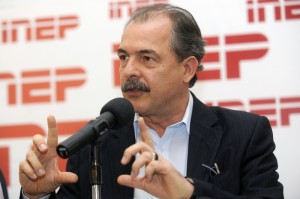
Education Minister Aloizio Mercadante

The Exame Nacional do Ensino Médio (National High School Exam), better known as the ENEM, is a non-compulsory end-of-high school exam that has come under fire due to attendance levels, disruptions and leaked questions. While 5.8 million people registered for the exam, 28 percent failed to attend nationally (25 percent in Rio). Since 2009, the MOE proposed all universities should use the exam as a standard entrance qualification test. Therefore, ENEM exam results are essential to student’s success within a university system that has limited spaces available. Education Minister Aliozio Mercadante noted that space is further limited for many white middle-class students after a fifty-percent quota was introduced to increase the number of university students from diverse socioeconomic backgrounds.

For more information:

Brazil’s University Affirmative Action Law

India

CBSE course committees to have student nominees

Press Trust of India, The Hindu (October 26, 2012)

The Indian Central Board of Secondary Education (CBSE) has declared its plan to include students in its course committees as well as in the process of framing the syllabus. These students will be nominated by the schools and will be selected on the basis of their performance in the 12th grade examinations. The course committees comprise of professors from universities, NCERT experts, teachers and subject experts, private and public schools and working teachers. According to CBSE Chairman Vineet Joshi, this commitment to student voice is motivated by a desire to make the courses and syllabus more inclusive and application-based. Mr. Joshi hopes that student involvement will improve the continuous and comprehensive evaluation-based educational system initiated by CBSE.

For more information:

CBSE students get voice in deciding what to study

Malaysia

Education innovation: Well-Rounded – End Result is a More Marketable Graduate

The New Straits Times (October 27, 2012)

Coming in the wakes of the launch of the Malaysian Education Blueprint, the Malaysian Higher Education Ministry will work with the Education Ministry to tweak the school education system, including the curricula, so that students would become more creative and innovative. The purpose is to increase the human capital value and marketability of the various graduates of the education system. The plan calls for a seamless education in creativity and innovation, with outcomes ranging from creativity for Pre-Schoolers and Primary students and creativity, innovation, collaborative and entrepreneurial skills for tertiary students.

For more information:

Malaysia draws up education blueprint: Effective or not?

‘Let students speak up’


“Nurturing Minds: Educational Design Policies, Finland/New York”

New York City, The Center for Architecture (October 16, 2012) 

The Center for Architecture, New York City

The New York chapter of the American Institute of Architects, welcomed a group of architects and educators to “Nurturing Minds: Educational Design Policies,” a panel discussion juxtaposing learning environments in Finland and the United States. Moderated by Samuel E. Abrams, presenters included Pasi Sahlberg, Kaisa Nuikkinen, Bruce Barrett.

Display at the Center for Architecture: School desks floating mid-air

Nuikkinen (Head Architect for School Design, Helsinki City Education Department) began by noting that the framework for building a school in Finland takes into account the expectations of the community, the needs of the workplace, guidelines, rules, and regulations, benchmarking, pedagogical concerns, national policies, laws, and norms, as well as best practices. Finland’s aim is to develop school buildings that function effectively, answer the demands of the future, and combine high quality architecture with economic viability. Therefore, design must be multifunctional, flexible, interactive, and inclusive of those with special needs. Outstanding examples of designs that meet these goals include The Soininen School (Ilmari Lahdelma, architect), and The Latokartano Comprehensive School (Tuomas Silvennoinen, architect).

In contrast, Bruce Barrett (New York City School Construction Authority) began by noting that the New York City School System serves 1.1 million students and employs 77,000 teachers. The city is currently planning for a student population that is expected to increase by 31,500 new seats between the fiscal years 2010-2014, which is a real challenge in an area as dense as the city. Stakeholders need to work together to produce school spaces that meet individual needs of schools. Barrett highlighted the city’s most recent projects, which have included renovations of larger schools that have been converted to house several smaller schools under the same roof (such as Mott Haven Campus in the Bronx, and Metropolitan Avenue Campus in Queens), rehabilitations of older buildings (such as P.S 3 in Queens), and renovations that require additions (such as Midwood High School, in Queens, which had to take over the playground space of a middle school across the street in order to create new building space).

For more information:

The Edgeless School: Design for Learning

The Best School in the World: Seven Finnish examples from the 21st century


Japan

MEXT Supports Drastic Reform of College Education

Nikkei Newspaper (October 11, 2012)

*Original link in Japanese

Makiki Tanaka, Minister of Education

The Ministry of Education, Culture, Sports, Science and Technology (MEXT) addressed the necessity for fundamental reform of university curriculum and teaching. Especially in meeting the needs of globalization and shift to knowledge economy, MEXT believes that development of logical thinking skills, leadership skills, and creativity among college students is crucial. In addition, to achieve these goals, MEXT suggests to reinforce alignment of university courses through close faculty communication, promote problem solving education, raise quality of teaching via teacher training, collaborate with private companies, transform university governance, and ensure financial resources.

For more information:

Interview with Tanaka, the MEXT Minister (in Japanese)

Vietnam: A Trend of Privatization

Standards for high quality schools still in debate

Vietnam.net (October 20, 2012)

Vietnam’s Ministry of Education and Training has given the green light to some schools to pilot “high quality” programs. These schools, as stipulated by the government, can charge higher tuition rates but must have all of their teachers regarded as “excellent” (determined by the possession of a university degree). In addition, 30% of the teachers must have Masters degrees, and English classes must be taught by English-speaking foreign teachers. While school leaders advocate that this distinction of “high quality” is reasonable and will benefit families, members of the community decry the privatization of state-run schools. One school leader recognized, “If only a group of students in a school can get high quality education, this may make other students think about the discrimination against poor students.”

Too many English curriculums make parents puzzled

Vietnam.net (October 16, 2012)

Though a formal English curriculum is mandated by the government, schools are charging for additional classes. As part of the Vietnamese government’s 2010 ten-year plan to reform schools, foreign language learning has become an issue taken up by the Communist party. In 2010 a compulsory English program, developed to international standards, was piloted in the country’s elementary schools. Rather than two optional periods of English a week, primary school students are required to take four periods of English a week. The plan is to gradually increase the level of English language learning so that 70% of third graders and 40% of six graders are enrolled in classes by 2015; however, schools now are offering a selection of English programs that require additional fees and are partially or wholly taught by fluent English-speaking teachers. While parents are worried that schools are too autonomous in offering these classes at extra charges, an educational official in Ho Chi Minh asserts standards for high quality schools still in debate.

For more information:

Vietnam invests $730 Million in Education and Training

Vietnam’s new primary English curriculum gets top marks

Guatemala

Ministry of Education Loses Support in Reform

Alex Rojas, Prensa Libre (October 13, 2012)

As reported last month, the Guatemalan Ministry of Education ratified a new law as part of the government’s reform program, entitled Estrategia para una Educación de Calidad para la Niñez y la Juventud (“Strategies for Quality Education for Children and Adolescents”). This law requires that teachers have a university degree in order to become certified. Despite maintaining the support of higher educational institutions since 2009, the reform has now lost the support of one major university based in Guatemala City. The University of San Carlos, a large, state-run university with affordable tuition rates, has withdrawn its support for the government’s efforts. A representative of the university says that the institution is still unclear as to the admission standards for students and says that it does not have the structural facility or the human resources to implement a new degree program.

“We need more teachers, not military brigades.” Photo by the Centro de Medios Independientes – Guatemala

Meanwhile, groups advocating for the normal schools (those which train teachers) in rural areas also continue to protest the larger reform package, including what they view as the Ministry of Education’s disregard for a stronger bilingual program in high schools and culturally relevant pedagogical training for teachers. According to the protesters, the new law not only makes it financially unfeasible for many in rural and low-income areas to attend school, but the lack of a high school curriculum that attends to the linguistic and cultural needs of people living in smaller towns leaves many at a disadvantage. Protestors view this type of reform as one step closer to the privatization of schooling. The San Carlos University representative had this to say to the Ministry (translated): “[The Ministry] should listen to the sectors that are still dissatisfied. They are right, and no one has the absolute truth. Dialogue should be opened and the points that are not clear addressed.”

For more information:

Student eviction does not stop Guatemalan movement against privatization (in English)

Teachers in Guatemala Protest Education Policy Reforms (in English)

A video from the Guatemalan Ministry of Education (in Spanish):

France

Major Changes for Schools

The Connexion (October 8, 2012)

The educational system in France has seen little change over time, but now President Hollande is making plans for widespread changes, including a four-and-a-half day week and the elimination of homework. The reforms have been introduced as a result of the Refondons l’école Rebuild Education inquiry, a report headed by Christian Forestier, which the government established in July in order to identify problems and solutions in the current system. This report found that “one in three primary pupils was judged as “poor” or “very poor”, one in five left school without real qualifications, and just one in three students gained a degree.” The educational system has therefore been blamed for the country’s high rate of unemployment.

Christian Forestier

The report called for:

  • more welcoming schools
  • respect for “children’s natural rhythms”
  • changes to holidays and length of school days
  • violence prevention
  • good learning habits introduced in early childhood
  • more group work
  • more positive teacher reports
  • an end to repeating classes (considered costly and ineffective)
  • an end to homework

For more information:

François Hollande plans to shake up education system

France’s Hollande promises pupils ‘no more homework’

New Zealand

Charter Schools Escape Scrutiny

Kate Shuttleworth, The New Zealand Herald (October 17, 2012)

Charter schools in New Zealand

The Education Amendment Bill 2012 allows for the creation of charter schools, which are given the powers to set teachers’ pay rates, hire “unregistered” teachers, and set their own hours. Associate Education Minister John Banks backed the decision to exempt sponsors from being publicly accountable under the Official Information Act, and promised that charter schools will be held more accountable for improving student outcomes. These changes were called “frightening,” by Green Party education spokeswoman, Catherine Delahunty. “The bill gives enormous powers to ‘sponsors’ who may have no educational background but will set the rules and staff pay rates,” said Delahunty.

Catherine Delahunty, Green Party, raises questions about new charter schools.

Other changes include:

•The introduction of a national student number for children aged under 6.

•Schools will be able to introduce flexible timetabling, including two schools running two timetables on one site.

•Boards of trustees will be required to be answerable for student achievement.

•Schools will have to publish annual financial statements.

For more information:

Charter school laws abuse parents rights

Charter schools legislation introduced to Parliament