Argentina

The Buenos Aires government will extend its school year as a result of the many schools that have been overtaken by demonstrators 

Clarin (October 14, 2012)

*Original article in Spanish

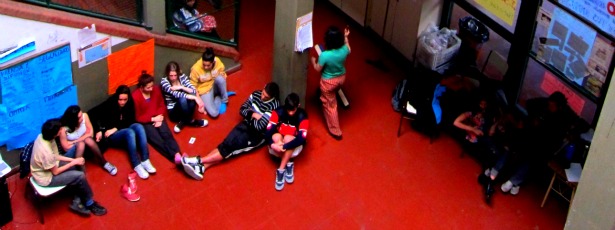
Students at Claudia Maria Falcone High School in Buenos Aires (Emma Sokoloff-Rubin)

As schools continue to be overtaken by student demonstrators in the city of Buenos Aires, the Ministry of Education has decided to extend this school year in an effort to make up for lost school days. Currently, there are still many schools that have been overtaken by demonstrators who demand an adjournment of the curricular reform proposed by the city of Buenos Aires. Demonstrators are demanding a meeting with the Minister of Education, Esteban Bullrich, to ask that their input be considered in the curricular reform that the government is attempting to implement. This coming Wednesday will mark a month since these demonstrations and school takeovers began.

For more information:

What’s Behind the Mass Student Takeover of Argentina’s High Schools? (in English)

Students life school takeovers (in English)

Argentina students stage fresh demos over education reform (in English)

Pakistan

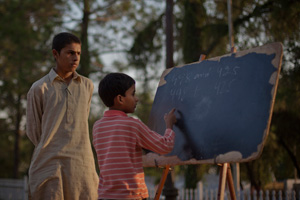
Malala Yousafzai: Pakistan observes day of prayer

BBC (October 12, 2012)

Malala Yousafzai

Malala Yousafzai, who wrote a diary for BBC Urdu about education under the Taliban, was accused by the Taliban of “promoting secularism,” and attacked by a gunman who shot her in the head and neck while on a school bus returning home from school. Using the pen-name Gul Makai, she wrote about the suffering caused by militants who had taken control of the Swat Valley in 2007 and ordered girls’ schools to close.

For more information:

Diary of a Pakistani Schoolgirl

Malala Yousafzai: Pakistan observes day of prayer

Pakistan: Quality Education Still a Long Way Off

IRIN (October 9, 2012)

Photo: Rebecca Conway/IRIN

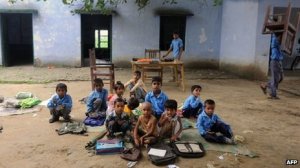
Despite the fact that state-run primary schools do not charge fees and many provide free textbooks, other expenses mean that for many poor families, schools are unaffordable. As a result, unofficial schools have been providing an education to children who live on the streets, or work in markets and houses.

Education was made a fundamental constitutional right for the children of Pakistan in 2010; however the country has made limited progress in improving the quality and reach of its education system, and millions of children are missing out on schooling altogether in what the governments of Pakistan and the UK have termed an “education emergency.” As a result, Pakistan will not be able to meet its Millennium Development Goal of universal education by 2015.

For more information:

Protection of Street Children’s Rights Linked to Education

Boards For Action Against Teachers Refusing Exam Duties

Govt Has Taken New Initiatives on Education: Minister

The News International (October 7, 2012)

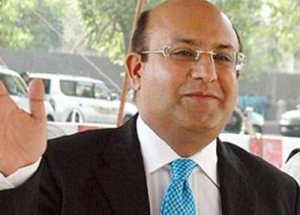
Punjab Minister for Education, Mian Mujtaba Shuja-ur-Rehman on Friday said that complete elimination of terrorism and extremism was must for peace and prosperity of the country.

The ILM Ideas Program, a three-year program funded by UKaid from the Department of International Development that is aimed at increasing access to quality education, held a launch to announce its second Request for Applications (RFA) to grant awards nationwide for increasing the access to quality education for children aged 5-16 years at a local hotel. The event included an Innovation Education Expo, which showcased ideas an innovation funded under the Ilm Ideas portfolio and demonstrated ideas such as radio learning, satellite enabled mobile vans, and digital whiteboards.

For more information:

World Bank gives $3 Million to Education

Elimination of terrorism must for peace: minister


India

Provide toilets and drinking water for every school, orders Supreme Court

AFP, The Economic Times (October 6, 2012)

The emphasis on moving from access to quality is a commonplace argument concerning schools in developing countries. India claims to have achieved close to 100% enrollment of girls and boys in primary schools and is embarking on quality strengthening interventions to retain these students; however, quality is an extremely wide concept in the context of India and in most schools it begins with providing potable water and clean and functional toilets to its students. The Supreme Court of India has recently passed a ruling making it mandatory for public schools to provide this most basic infrastructure over the period of next six months.

For more information:

Indian court orders toilets to be placed in all schools

The Times of India: School Toilets

Norway: The National Budget 2013

Better funding:The Norwegian Folk High Schools receive 10 mill extra NOK in the 2013 State Budget

*Original article in Norwegian

Tore Skadal, Harstad Tidende (October 8, 2012)

In the 2013 state budget, the Norwegian government has proposed an increase in funding for Folk High Schools due to an increase in the number of students recent years. Folk high schools are a one-year boarding school system based on the idea of learning for life, not only for occupations and college degrees. Students are assessed based on their individual ability to take action and responsibilty for their own lives. Reflection and insight into life’s possibilities and individual wishes are central elements in a year in a Folk High School in Norway.

For more information:

Non-formal Adult Education in the Nordic Countries 2011-2012

Introducing Free Public Cultural Education

Gerhard Flaaten , Kjetil Kopren Ullebø, Bergens Tidende(October 3, 2012)

*Original article in Norwegian

Photo: Agrutxane Concellon

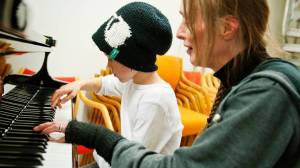
Starting in autumn 2013, there will be one lesson a week of cultural/arts education at primary schools and after-school clubs (years 1-4). The proposed budget for this is NOK 73.8 million. Parliament member Jette F. Christensen points out that lessons will be a full 45 minutes, and that the Ministry of Culture will legislate hours so that these classes become permanent. While those in favor of the plan do not believe it will involve additional work for teachers, Conservative party spokesperson Elisabeth Aspaker (a former teacher) expressed her concern that the municipalities will incorporate arts education with uneven results.

For more information:

Arts and Cultural Education in Norway, a study by Professor Anne Bamford, 2010-2011

Canada

Harper government’s First Nations education plans collapse

The Canadian Press (October 4, 2012)

National Chief Shawn Atleo

With graduation rates below 50 percent, Ottawa and the Assembly of First Nations hoped to see a legislative joint action plan by 2014, but the plans dissolved after three days of deliberation.

National Chief Shawn Atleo said, “The instructions that you have afforded here by this resolution are very clear and that is to reject, to say no, to federal legislation.”

Ottawa wanted legislation to establish school-boards that would give native governments control over their own education, but chiefs questioned the federal decision-making process and a “one-size-fits-all law that would not work for reserves whose rights are defined by treaties.”

The decision of the chiefs on Wednesday to walk away from that process is a major blow to the relatively peaceful Crown-First Nation relationship of the past few years.

For more information:

Native Leaders Reject Education Overhaul

Plans for Ottawa-First Nations Co-opperation on Education Reform Collapse

Australia

Australia: Class War in the Classroom?

Privatisation in Education Research Initiative (October 8, 2012)

Prime Minister Gillard

Amid debate over government spending on private schools, Australian Prime Minister Julia Gillard is in the process of negotiating a new school funding deal. Gillard wants to increase education funding by $6.5 billion a year, provided that reforms be implemented to improve teacher quality and student performance. As previously reported, Gillard’s goal is for Australian students to be ranked among the top five countries in math, reading, and science, by 2025. While her plan would increase funding for private as well as public schools, Opposition Leader Tony Abbott believes private schools will suffer as a result of the plan.

For more information:

Video: OECD Education at a Glance 2012

Gillard Delivers School Funding Plan

Prime Minister Julia Gillard Says That Private Schools Will Get More

South Korea

South Korea’s government to increase childcare subsidies for 3 to 5 year-olds

Yonhap News (September 26, 2012)

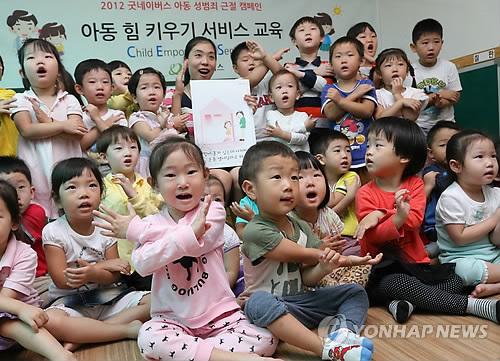
Under a government plan to expand public welfare benefits and help relieve families of the financial burden of childcare, all South Korean households with kindergarten children between the ages of 3 and 5 will be paid 220,000 won (US$196) per child every month. The Ministry of Education, Science and Technology, has announced that the monthly childcare subsidy for families with 5-year-olds attending kindergarten or daycare centers will rise by 20,000 won (US$18) per child from the current 200,000 won (US$179). Young children not at kindergarten or daycare centers will not be covered by the subsidy program. 

For more information:

Link to article (in Korean)

Link to the Finance Ministry’s final budget plan for 2013 (in English)

//

Scan of Education News: September 19th – October 7th

In 1994, UNESCO declared October 5th World Teachers’ Day in order to call attention to the fact that “all over the world, a quality education offers hope and the promise of a better standard of living.” UNESCO identifies teacher shortage as a major problem in 2012, and recent reports confirm their claim. In the latter half of September, teacher shortages were reported in countries such as India, the Dominican Republic, and in a total of 114 countries worldwide. This fact presents a significant problem for countries such as North KoreaBrazilSouth AfricaIndia, and Barundi, which have all made efforts to increase the amount of time students spend in the classroom. In contrast, Spain has seen education cuts that have left many teachers desperate for work, Guatemala has instituted new teacher education requirements that make it more difficult, and expensive, to enter the teaching profession, and Austria’s conservative party (ÖVP) has proposed a radical reform (“Mission Austria 2025”) that would alter teachers’ working conditions, including an increase in the number of hours teachers spend in the classroom.

Several reports have also shown that many countries have differing opinions about the ease of access to education through testing. While the UK has been debating whether or not it would be “cruel” to make university entrance exams any easier, India has taken steps to ease the entry process.  Ultimately, the UK decided to replace the GCSEs with an English Baccalaureate Certificate that officials say will raise standards and streamline a overly complicated system. In a similar move, South Korea adopted a new English-language exam (NEAT), which they intend to use in place of  the American TOEFL exam in the college application process in 2013.

Meanwhile, countries such as Vietnam and Malaysia have been looking for ways to make school curricula more creative and interesting to students, in a move they believe will foster higher order thinking and cut down on test-prep approaches to schooling.  Sweden is going so far as to rethink school building design in an effort to promote collaboration and creativity in primary school students, while South Korea is implementing policy that aims to prevent excessive “prior learning,” or tutoring, sought by parents in an effort to make sure their children are well-prepared for upcoming high-stakes tests. The high standards that many countries have put in place to promote academic achievement have led countries such as Romania and Switzerland to seek vocational alternatives to higher education.

For more news related to educational policy and change around the world, please follow us by subscribing to our email updates, following us on Twitter, or “liking” us on Facebook.  
Sweden

Mathematics Boost for Teachers

Niklas Arevik, Lärarnas Nyheter (October 1, 2012)

*Original article in Swedish

Photo: Lena Granefelt /imagebank.sweden.se

More lessons and more active and varied teaching from teachers are the main features of Sweden’s new “Mathematics Initiative.” This fall, The Swedish National Agency for Education is prescribing measures to reverse the negative trend of Swedish pupils’ mathematical skills. International comparisons show that Swedish students have less instructional time in math than the average among EU and OECD countries. Government has directed the National Agency for Education to examine how mathematics teaching can be expanded and improved. The result is the “Mathematics Initiative,” starting on a trial basis in 33 selected schools in October.

For more information:

Mathematics Initiative (in Swedish)

Billions to stop Sweden’s maths skills slide (in English)

Education in Sweden: Lessons for Life (in English)

South Korea

South Korea’s Ministry of Education, Science, and Technology leads education reform to prevent excessive prior learning from private tutoring 

*Original article in Korean

Joongang News (September 26, 2012)

Prior learning in Korea refers to educational programs offered via private institutes, which teach above-grade-level school curricula to students in advance. Subjects are taught a year ahead of  schedule, and even three years in certain cases. South Korea’s Ministry of Education, Science, and Technology announced that the excessive prior learning has caused problems in students’ cognitive, social and emotional, and educational development. The ministry has presented an outline for a new policy that plans to solve the problems through:

-Examination of public school curricula that might encourage prior learning.

-Examination of the effects of prior learning on the entrance exams for high schools and colleges.

-Exploration of the successful public school models with regard to curriculum management.

-Conducting scientific and practical research on the disadvantages of prior learning.

-Probing of private tutoring programs.

For more information:

Link to the article from the blog of the Korean Ministry of Education, Science, and Technology (Korean)

Prior Learning (English)

36% of parents spend W910,000 on tutoring 

 Growing debt worries for South Korea